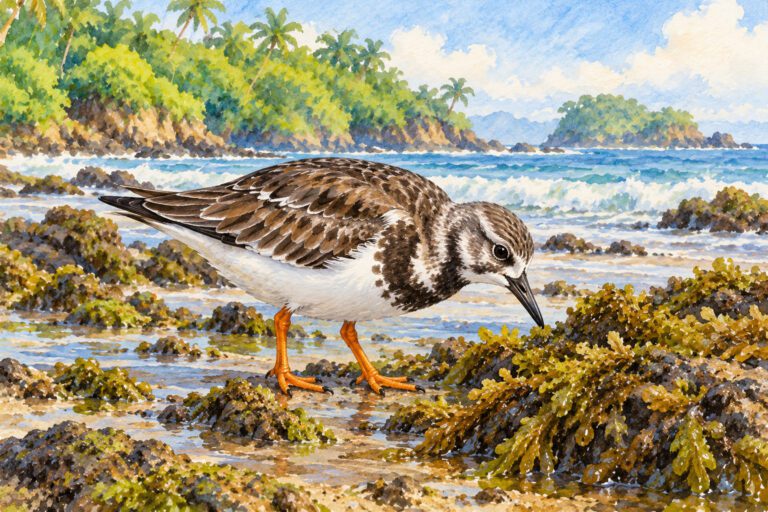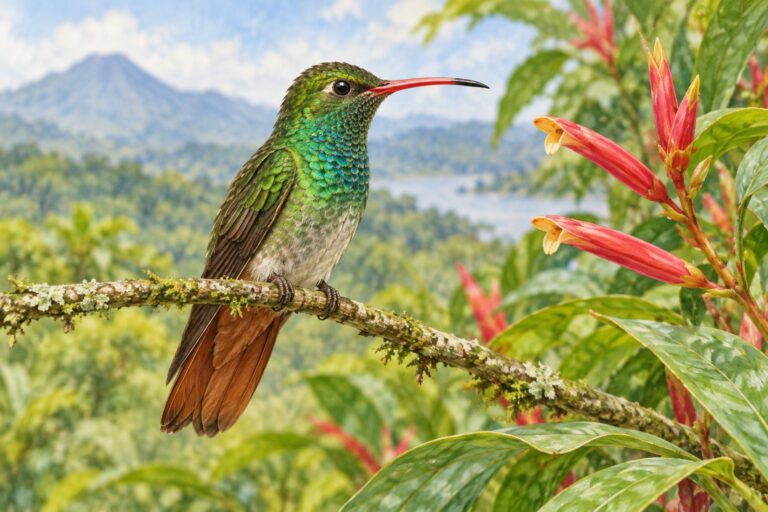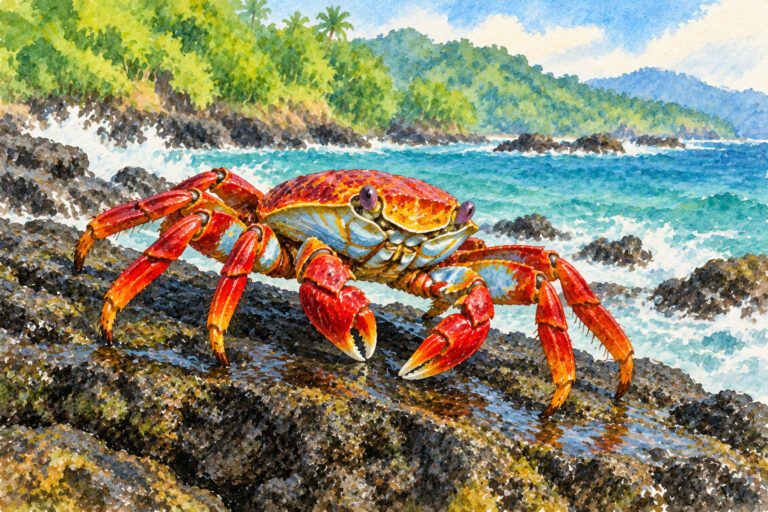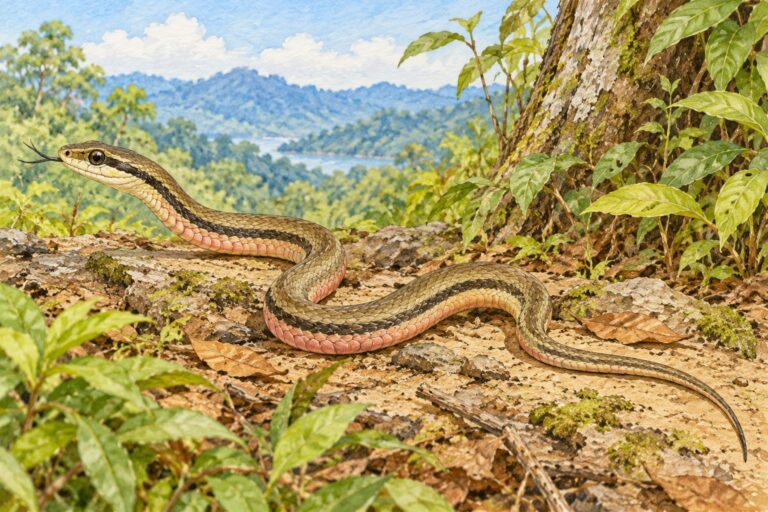
Tico Explorers

explore tamarindo + surrounding areasA World to Discover by the Sea

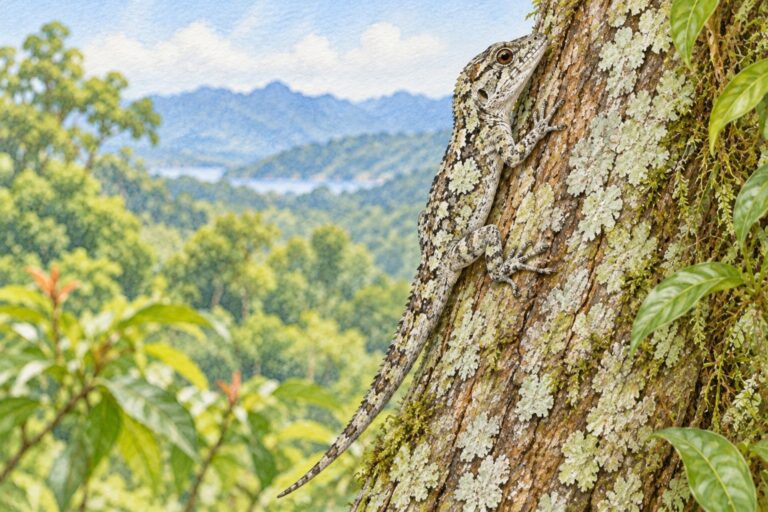
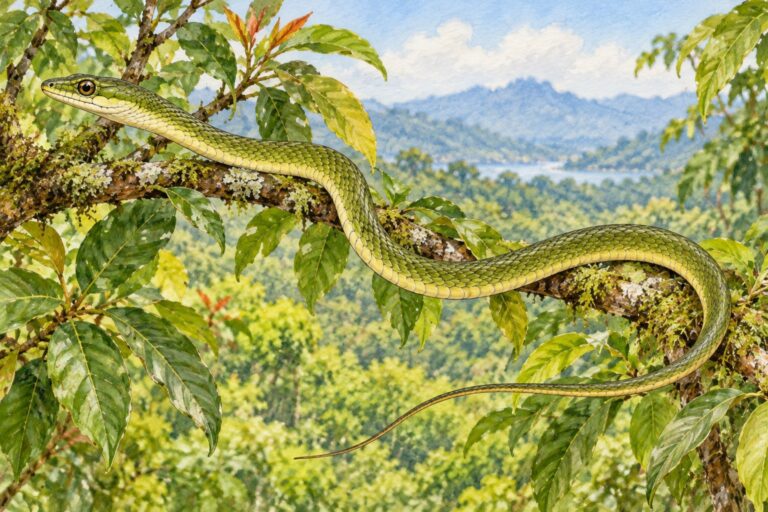
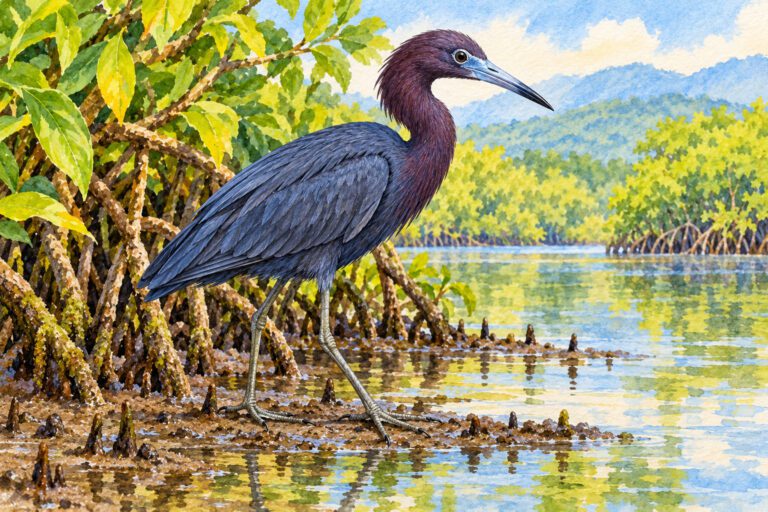
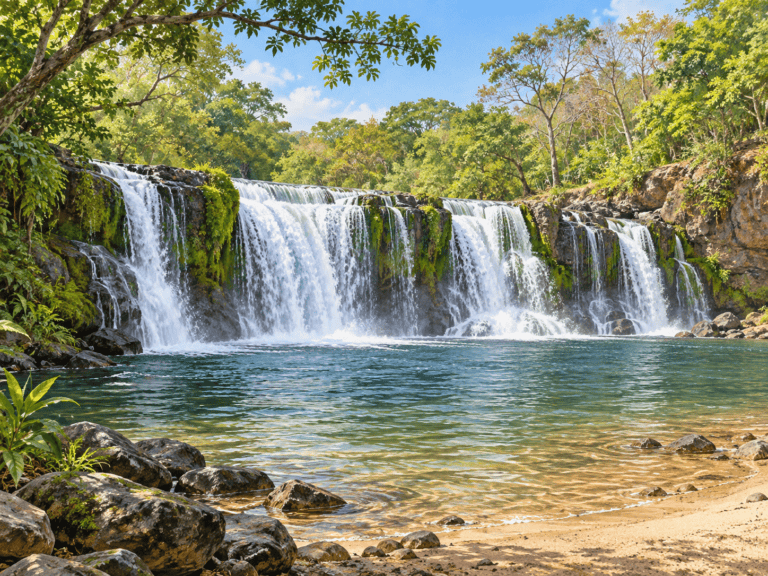
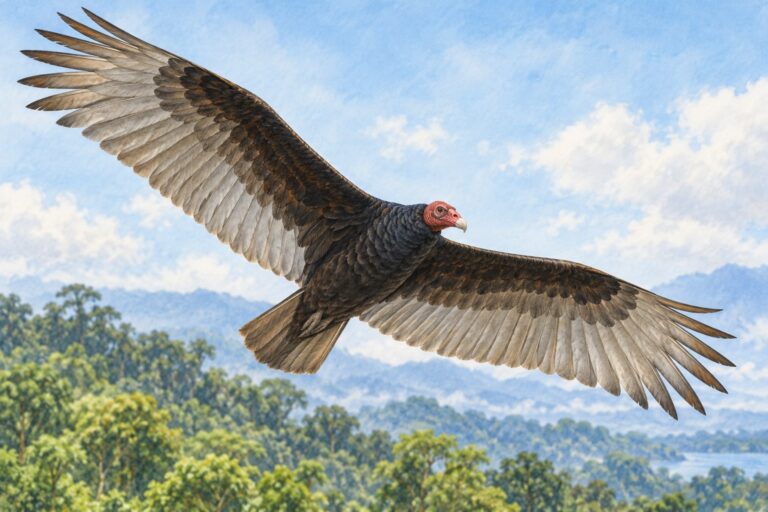
Welcome to Tamarindo! Pico and Tati are ready to show you one of their favorite places in Costa Rica. Along the way, we’ll explore sunny beaches, discover amazing wildlife, search for clues in nature and learn how we can help protect the places animals call home.

Keep your eyes open. Every explorer has something new to discover.

Ready? Let’s explore Tamarindo!

Isla Capitán

Pico wonders what the shoreline looks like from out at sea. Tati wonders how an island changes the way waves move around it. Together they learn that a distant landmark can start an adventure in observation, drawing and imagination.

Langosta Tide Pools

Pico imagines each pool as a tiny world. Tati wonders which shapes belong to rocks and which might be living things. They practice patient observation and learn that a good explorer can discover plenty without touching.

Las Baulas National Marine Park

Follow Pico and Tati from the sandy shore to the edge of a mangrove forest. Look closely. Listen carefully. Each discovery is a chance to ask a new question. What connects the beach to the forest and the ocean beyond?

Playa Langosta

Pico follows the changing shapes along the shore. Tati compares smooth sand with the rough edges of exposed rocks. Their questions lead them from a beach landscape to the idea that every habitat offers a different kind of home.

Playa Tamarindo

Pico watches the surfers while Tati looks for patterns in the sand. They discover that a familiar beach can feel different each day. A wave, a footprint or a changing cloud gives them a fresh question to explore.

Tamarindo Estuary

Pico wonders where the winding waterway will lead. Tati studies the shapes of roots near the water. They learn to slow down, listen and let a guide help them understand what they are seeing.

TAMARINDO WEATHER

local life + insider tipsA Little Local Know-How

There’s more to Tamarindo than finding your spot on the sand. Get to know the town through its neighborhood kitchens, evening markets and remarkable coastal habitats. A little local knowledge helps you plan around the weather, understand what you’re seeing and connect with the people who call this place home. Start with these useful discoveries, then leave room for a few of your own.

In Costa Rica, a soda is a small restaurant serving home-style food. Look for a casado, a mixed plate commonly built around rice, beans and accompaniments. Ask “¿Qué hay de casado hoy?”—what’s today’s casado? It’s an easy way to discover what the kitchen is preparing.

Don’t wade or swim across the Tamarindo estuary, even when it looks shallow. This is crocodile habitat, and the river mouth is a natural waterway rather than a pedestrian crossing. Arrange your route with an established local operator or travel by road.

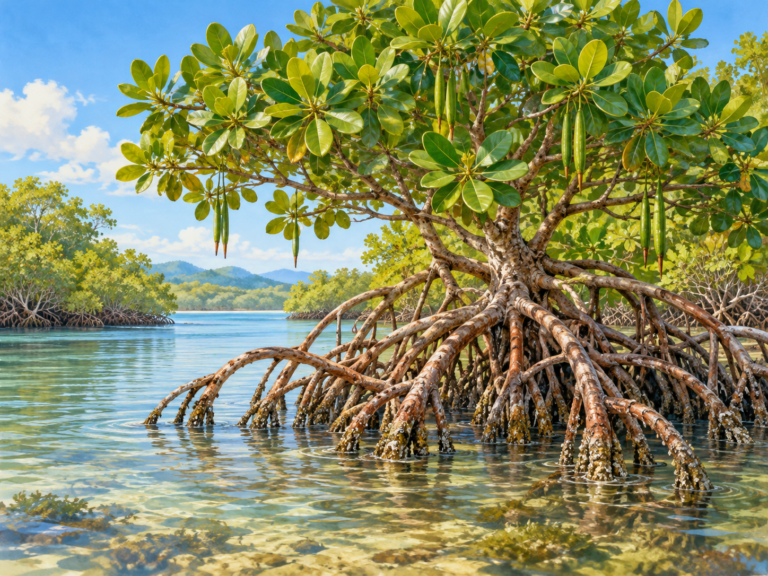
Tamarindo’s mangrove estuary is part of the area’s protected natural heritage. A guided visit reveals a different coastal landscape: winding channels, tangled roots and wetland wildlife. Ask your guide how the tides influence the habitat rather than treating the estuary as simply a shortcut to another beach.

The Tamarindo Moonlight Market at Plaza Palmas brings together crafts, food and live entertainment. Every Thursday evenings from 5 p.m. Ask vendors about their materials, recipes or artwork—you may leave with a story as well as a souvenir. Check the organizer’s latest schedule before visiting.

Not necessarily. On the Pacific side, rainy-season showers often arrive in the afternoon or early evening, although longer wet spells happen. Plan weather-sensitive outings earlier when the forecast supports it, then leave room for a relaxed lunch or indoor activity. A morning plan is a useful starting point, not a weather guarantee.

A familiar-looking beach can offer different conditions as tides, swell and weather change. Ask a local instructor where today’s beginner lesson is suitable. Choose your lesson around the conditions and your experience rather than assuming the same stretch of beach works every day.

Yes. Las Baulas National Marine Park was established to protect leatherback nesting habitat at Playa Grande, Ventanas and Langosta. These beaches matter even when no turtle is visible. Ask park staff about current access and wildlife-viewing arrangements rather than assuming a nighttime turtle tour is available.

Leave a little space in your schedule. Take an unhurried beach walk, ask someone about a dish you haven’t tried, or browse a maker’s stall without rushing to the next stop. You don’t need to fit everything into one afternoon to come away knowing the town a little better.

things to doLittle Adventures Around Tamarindo.

Start the Day on Tamarindo Beach

Take an early walk along Tamarindo’s broad, curving bay before settling into breakfast in town. Fishing boats, surfers and the headlands give the beach its character. Leave time for sandcastles or a beachfront café, and keep your walk on the beach rather than crossing the estuary.

Catch Your First Wave

Make surfing part of your Tamarindo story with a lesson tailored to your family’s experience. Begin with positioning, paddling and standing on the sand before heading into the water. A local instructor can choose a teaching spot based on the tide, waves and other surfers that day.

Meet the Birds of the Bay

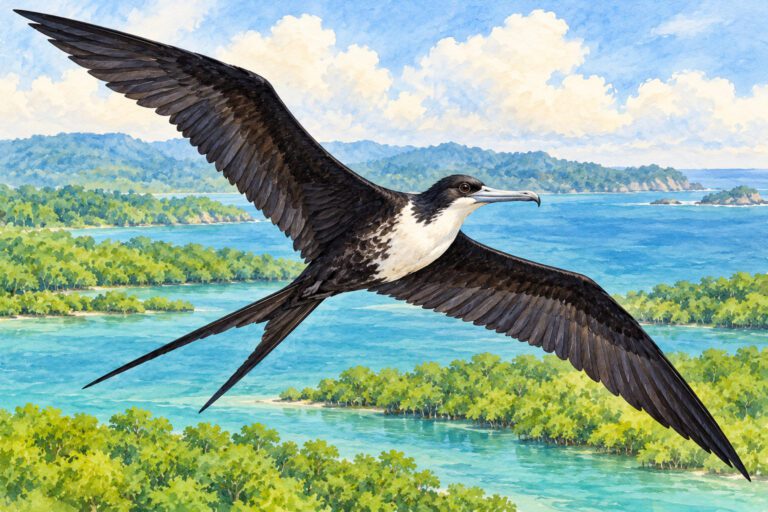
Brown pelicans skim above the waves while frigatebirds circle high over the coast. Bring binoculars on your beach walk and spend time watching how these seabirds fish and glide. Children can compare the pelican’s broad wings and long bill with the frigatebird’s distinctive forked tail.

Make Time for a Tamarindo Sunset

Set aside an evening to enjoy Tamarindo’s ocean-facing sunset without rushing to another activity. Choose a spot on the sand, watch surfers catch their final waves and stay as the colors change after the sun disappears. Follow your beach time with dinner or an ice cream in town.

Explore the Tamarindo Estuary

Trade the open beach for winding mangrove waterways on a guided estuary boat tour. This part of Las Baulas National Marine Park provides habitat for waterbirds, monkeys and crocodiles. A local guide can explain how the roots shelter wildlife and how tides shape the forest. Explore by boat; never wade across the estuary.

Ride Beyond the Beach

Discover the countryside around Tamarindo on a guided horseback ride through ranch land and wooded trails. Nearby operators such as Black Stallion Eco Ranch offer a different perspective on the area beyond its busy shoreline. Share each rider’s experience when booking so the operator can recommend suitable horses and a route.

Fly Through the Coastal Canopy

Add an inland adventure with a guided canopy tour near Tamarindo. At nearby Black Stallion Eco Ranch, zip lines combine forest scenery with elevated views toward the coast. Plan this as a separate outing from the beach, and confirm the operator’s age, size and participation requirements before booking your family.

See Tamarindo From the Water

Make an afternoon catamaran trip for a wider view of the Pacific coastline. Depending on the operator and sea conditions, your outing may include a sheltered swimming or snorkeling stop before the return journey in the evening light. Ask about shade, boarding arrangements and children’s flotation equipment when choosing your trip. Tamarindo


Nature Field Guide

Discover Nature in Guanacaste

Explore wildlife, plants and trees. Learn what to look for and where to find them.

413 profiles
Nature Field Guide

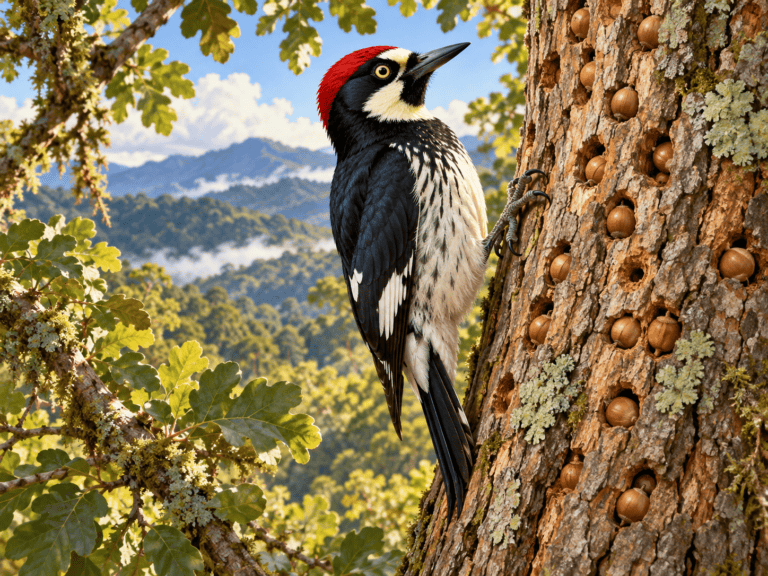
Acorn Woodpecker

Spanish name
Carpintero careto
Scientific name
Melanerpes formicivorus

What Do Pico & Tati Think?

Pico: “That face has bold black, white and red shapes!”

Tati: “Let’s look for clues on the tree without touching them.”

Identification

Key Features of the Acorn Woodpecker

  • Red cap, pale face and black patch around the bill.

  • White wing patches and white rump in flight.

  • Straight bill and stiff supporting tail.

Habitat & range

Mainly middle and high elevations in the Central and Talamanca ranges, especially oak landscapes. South Pacific refers to upland slopes, not the coastal plain.

Conservation & care

Stay on authorized trails or viewing routes. Give birds space, keep voices low and leave nests undisturbed. Observe without bait, feeding or recorded calls.

View full profile →

Nature Field Guide

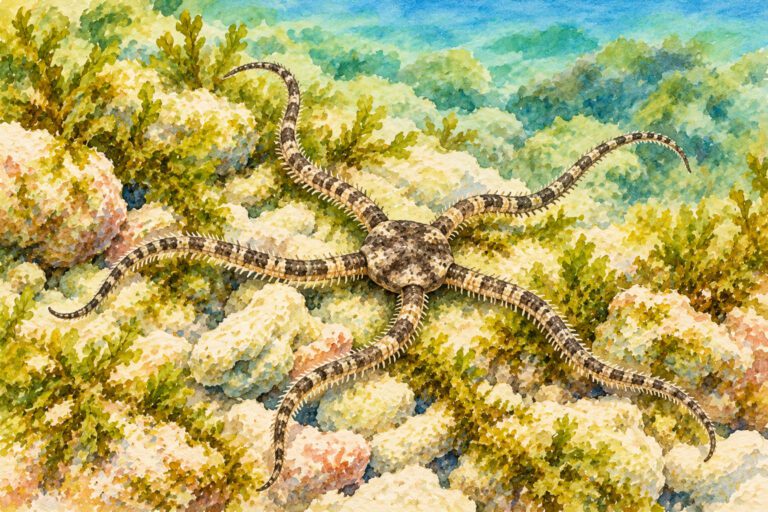
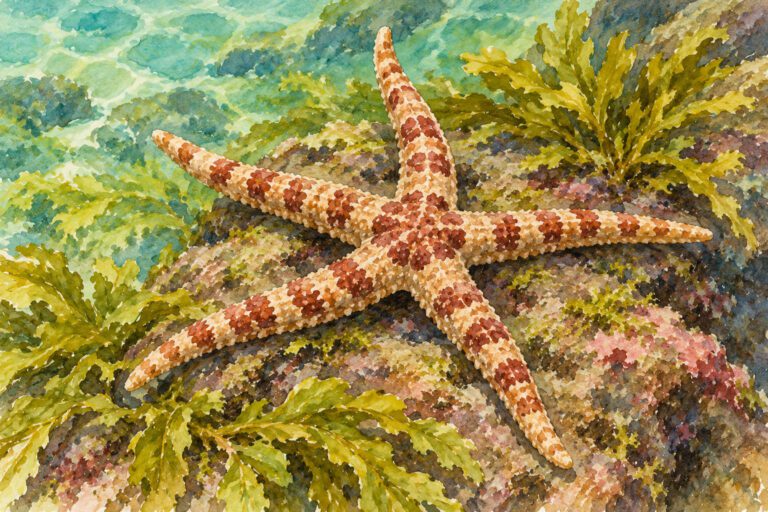
Alexander’s Spiny Brittle Star

Spanish name
Ofiura espinosa de Alexander
Scientific name
Ophiocomella alexandri

What Do Pico & Tati Think?

Pico and Tati discover that a brittle star’s scientific name can change as scientists learn more about its relatives.

Identification

Key Features of the Alexander’s Spiny Brittle Star

  • A clearly defined central disc

  • Long flexible arms

  • Check both current and older scientific names when reading a reference

Habitat & range

Suitable underwater coastal habitat. Use a permitted guided snorkeling or viewing activity appropriate to your family; do not enter the sea just to find this animal.

Conservation & care

Watch without touching, lifting, feeding or collecting. Keep fingers and equipment away from spines and other surface structures. Leave the animal submerged and its habitat undisturbed.

View full profile →

Nature Field Guide

Almendro de Rio

Spanish name
Almendro de río / Almendro de montaña
Scientific name
Andira inermis

What Do Pico & Tati Think?

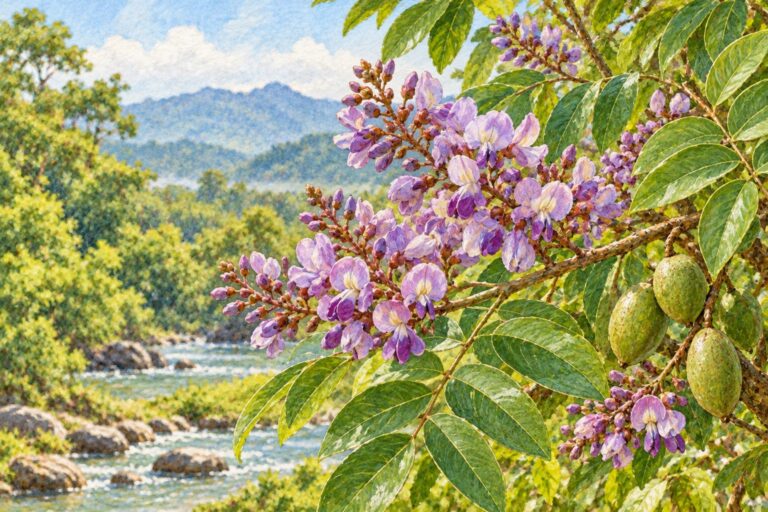
Pico: “Purple flower clusters stand out against a dense green crown.”

Tati: “Let’s notice the leaves, flowers and habitat without disturbing the plant.”

Identification

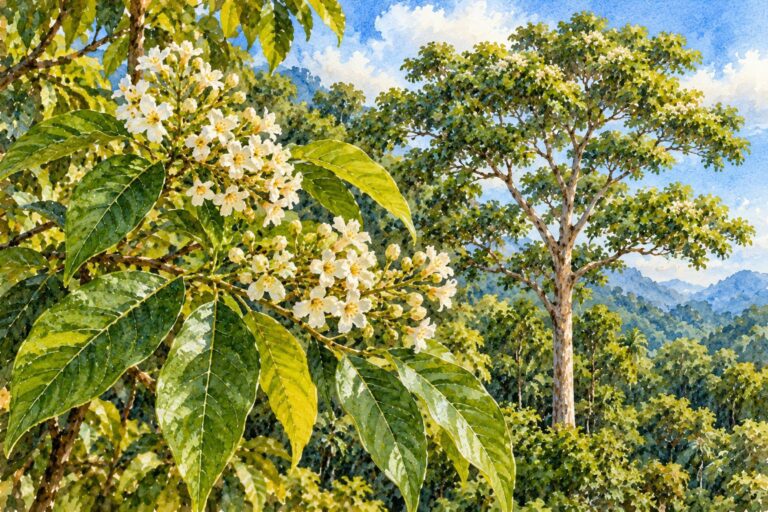
Key Features of the Almendro de Rio

  • Pinnate compound leaves

  • Clusters of lavender-purple flowers

  • Oval fruits and a dense leafy crown

Habitat & range

Dry and humid forests across both slopes, including Guanacaste, Nicoya, the Central Valley, Caribbean lowlands and Osa.

Conservation & care

Explore with an adult on permitted paths. Observe and photograph without picking leaves, flowers or fruits. Do not taste plants or let pets chew them. Avoid climbing trees and disturbing roots, seedlings or visiting wildlife.

Threats & pressures

Protect suitable habitat, mature trees and natural regeneration. Avoid trampling, unauthorized clearing and collection.

View full profile →

Nature Field Guide

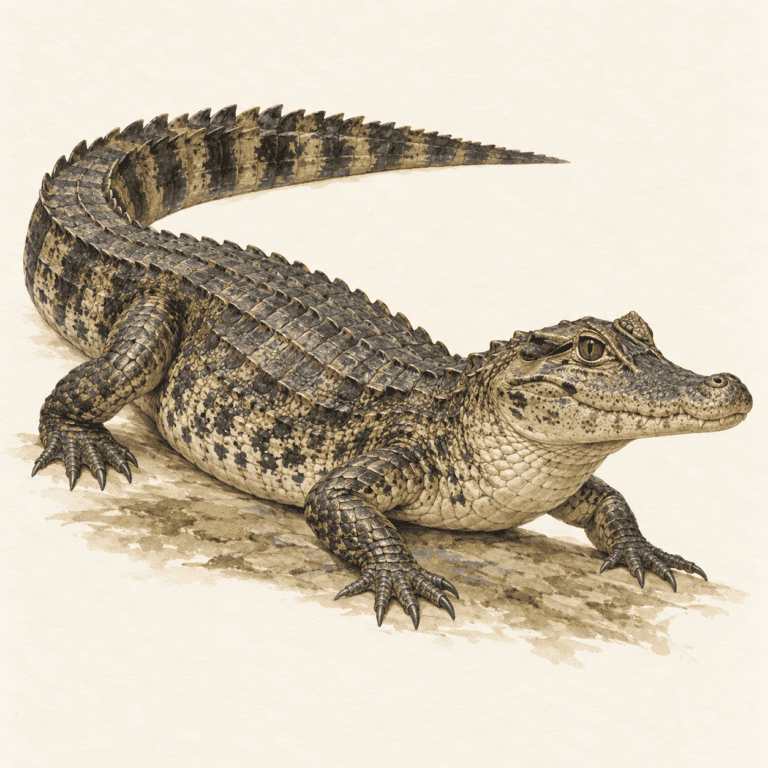
American Crocodile

Spanish name
Cocodrilo americano
Scientific name
Crocodylus acutus

What Do Pico & Tati Think?

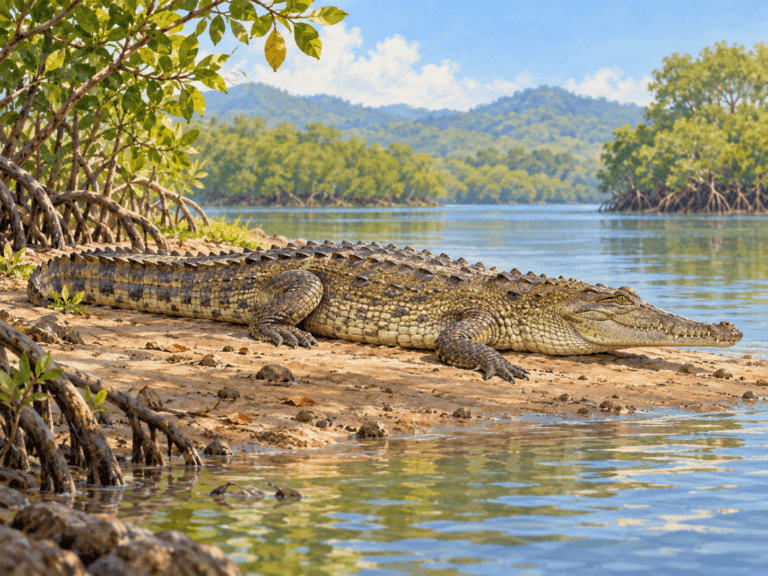
Pico: “It blends into the riverbank so well.”

Tati: “We can observe from here with our guide. We don’t need to move closer.”

Identification

Key Features of the American Crocodile

  • A long snout and narrow head.

  • An olive-brown adult body with a long, strong tail.

  • Much of the body may be concealed in water or beside a bank.

Habitat & range

Rivers, estuaries, mangrove channels and other aquatic habitats. Observe only from a guide-approved boat or designated viewing place.

Seasonal Calendar

Egg-laying

General species biology; local schedule unverified

Apr, May

General species reference: April–May egg-laying and about 9–10 weeks of incubation. Tamarindo-specific nesting dates have not been verified. Never approach nests.

Event source ↗

Conservation & care

Never feed, approach or provoke crocodiles. Stay in the boat, keep hands inside, and follow local signs and guide instructions. Keep children and pets away from water edges.

View full profile →

Nature Field Guide

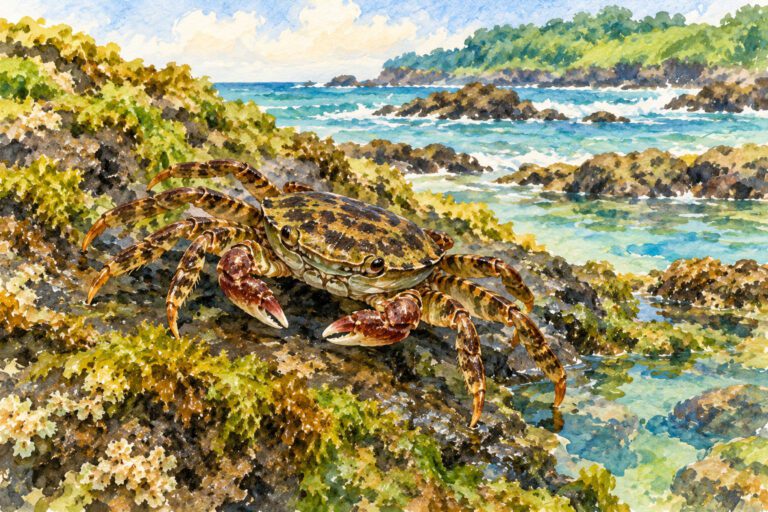
American Pebble Crab

Spanish name
Cangrejo piedra americano
Scientific name
Daira americana

What Do Pico & Tati Think?

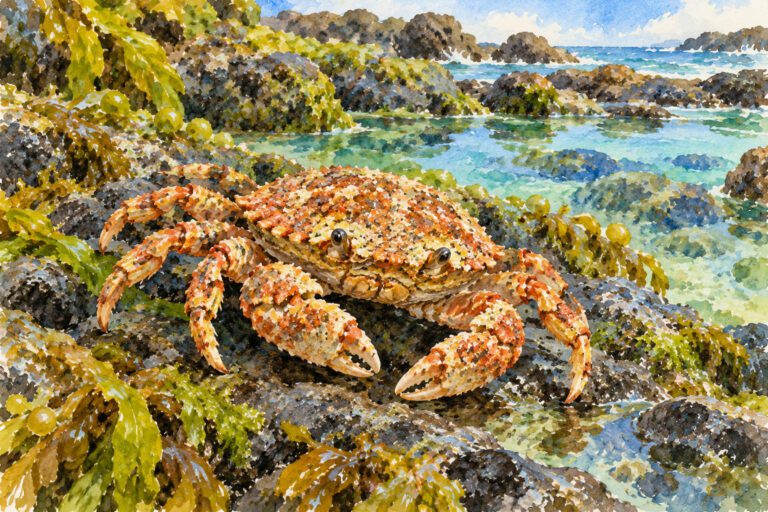
A crab can blend into a rocky neighborhood. Pico watches patiently while Tati compares the outline with the stones around it.

Identification

Key Features of the American Pebble Crab

  • A compact crab body

  • A textured carapace

  • Confirm the identification from a detailed photograph

Habitat & range

Rocky shore and naturally visible tidal habitat. Choose a permitted observation point with an adult; do not turn rocks or reach into holes.

Conservation & care

Give claws and burrow entrances space. Do not handle, feed, chase or collect crabs. Leave rocks and shells where they are, and follow your adult’s route and local signs.

View full profile →

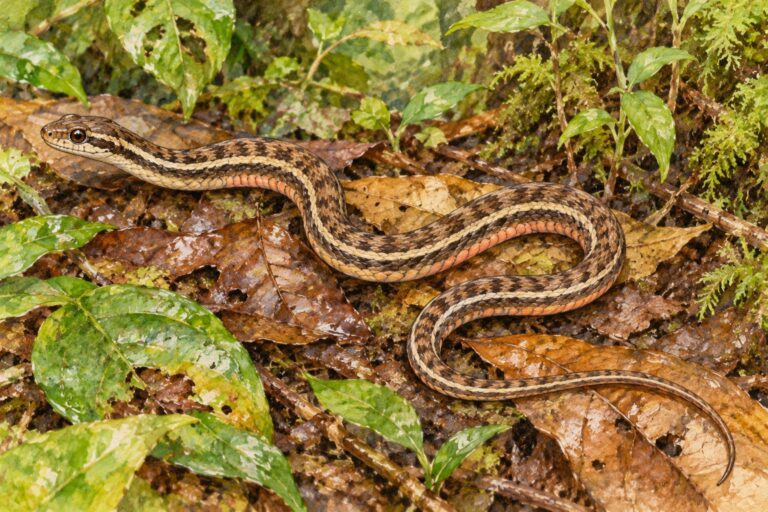
Nature Field Guide

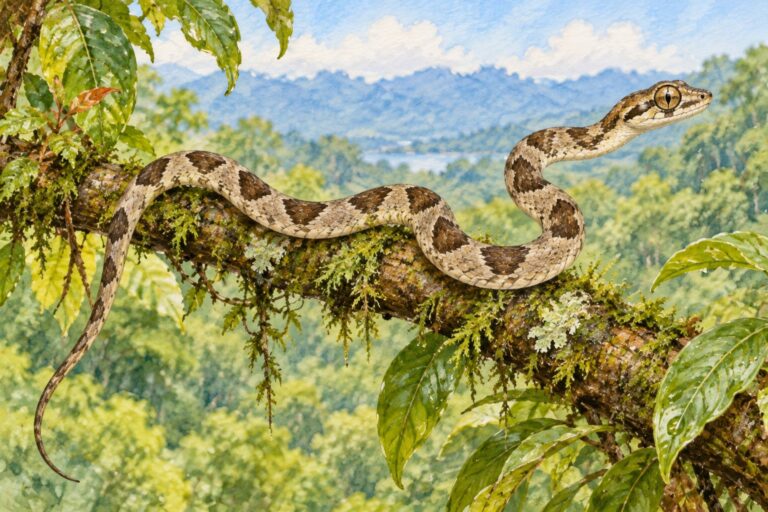
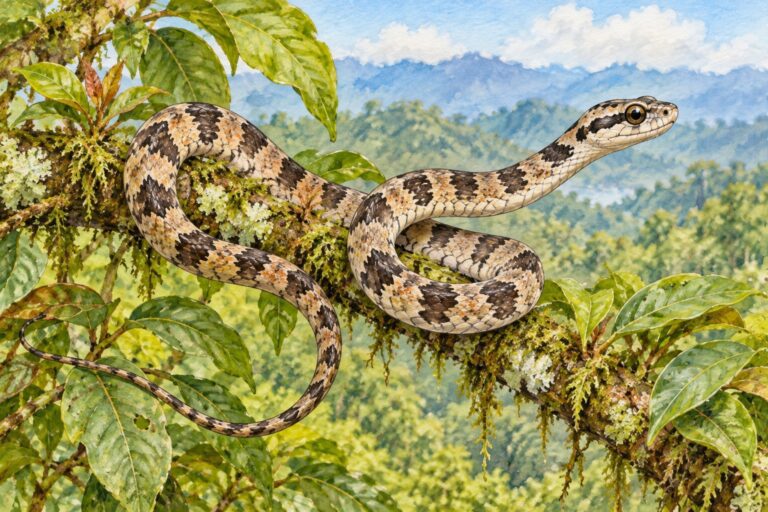
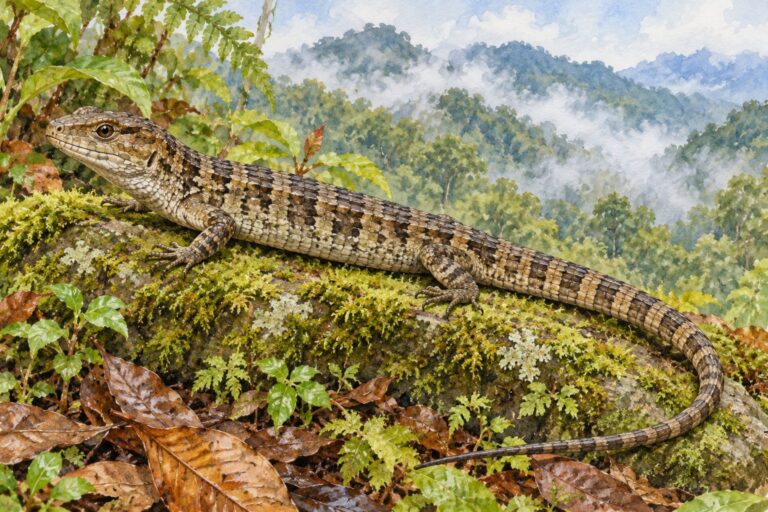
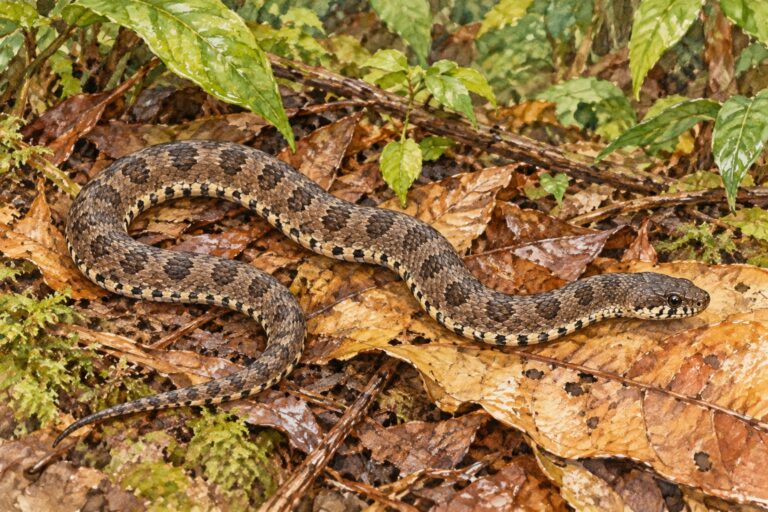
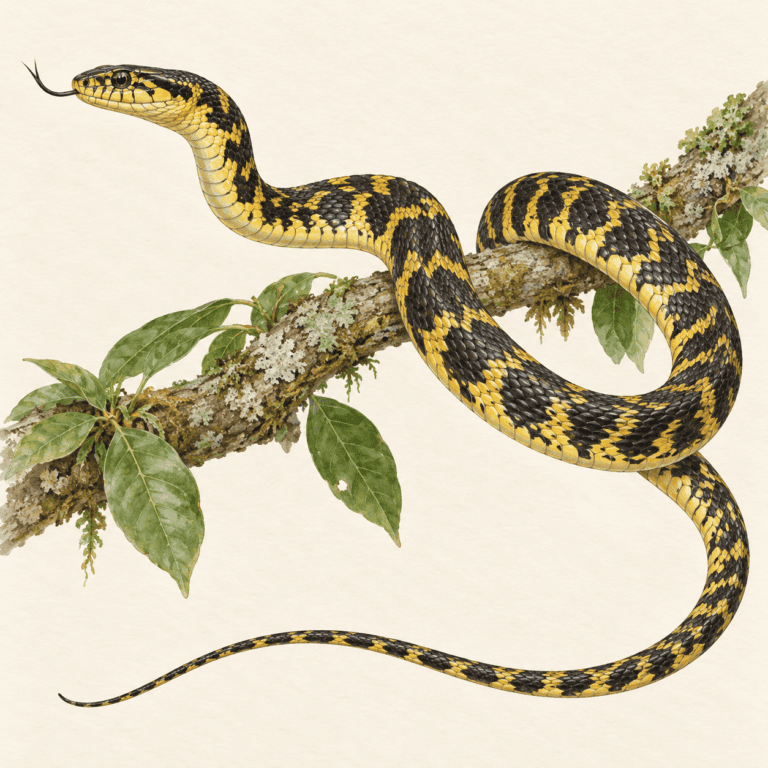
American Snail-eater

Spanish name
Caracolera articulada
Scientific name
Dipsas articulata

What Do Pico & Tati Think?

Pico: “What helps this reptile fit into its habitat?”

Tati: “Let’s look at its shape, colors and surroundings while giving it plenty of space.”

Identification

Key Features of the American Snail-eater

  • Slender body and narrow neck

  • Relatively large head and eyes

  • Dark blotches on a lighter background

Habitat & range

Humid forest and foothill vegetation on the Caribbean slope and in southwestern Costa Rica.

Conservation & care

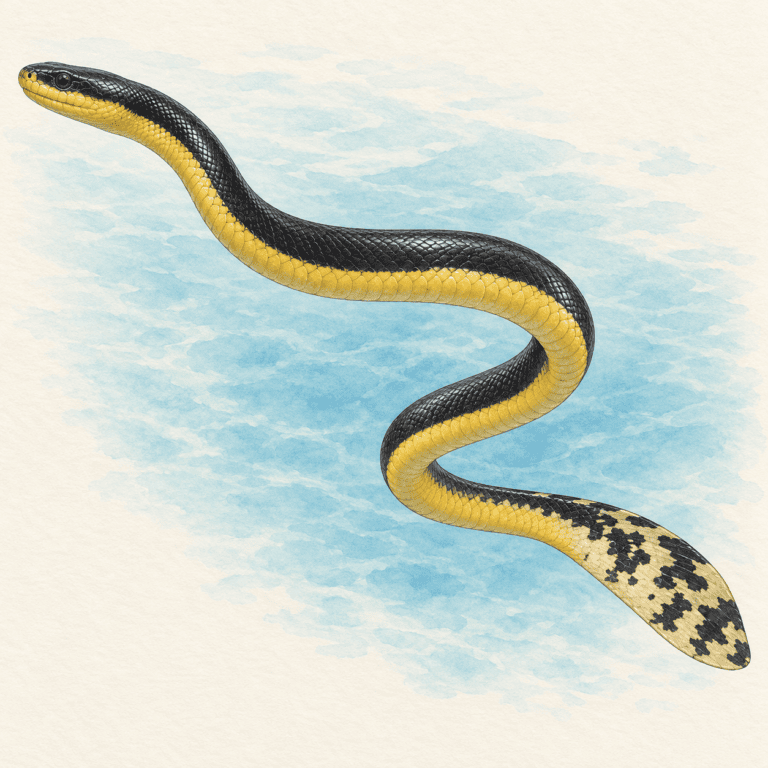
Observe from a distance with an adult or qualified guide. Do not touch, catch, corner, feed or move any snake. Keep children and pets away. Colors, head shape and pupil shape must never be used to decide a snake is safe.

Threats & pressures

Protect connected habitat and natural shelters. Avoid collection, unnecessary clearing and deliberate killing. Leave wildlife in place and support responsible observation.

View full profile →

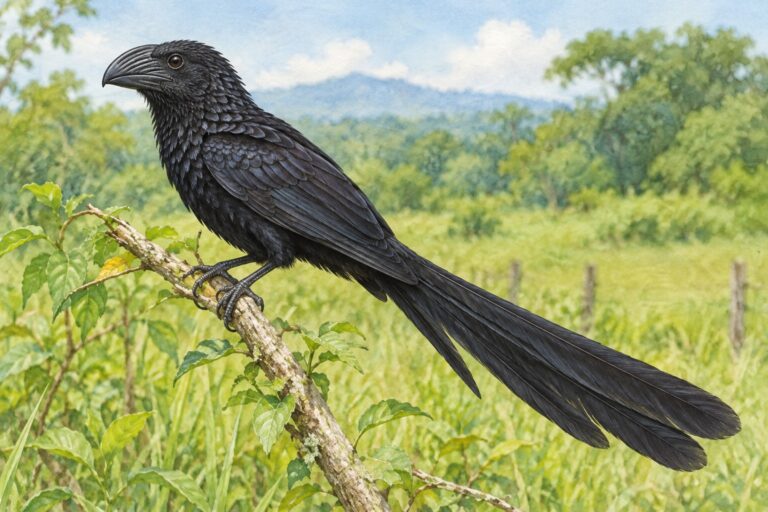
Nature Field Guide

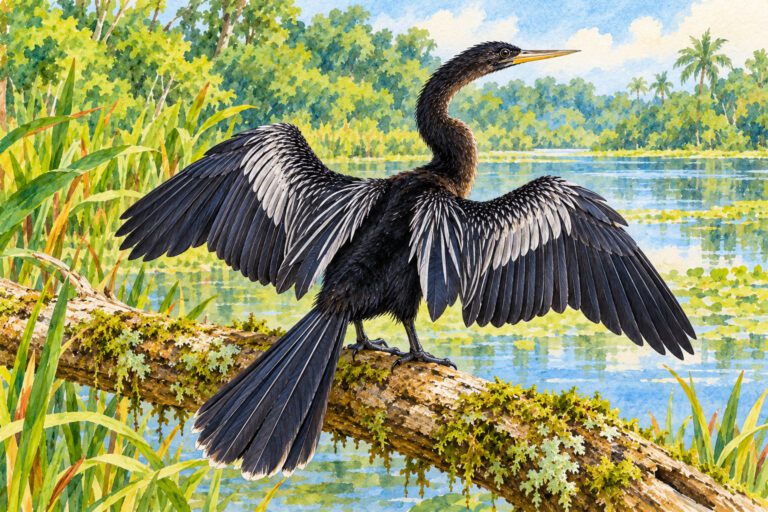
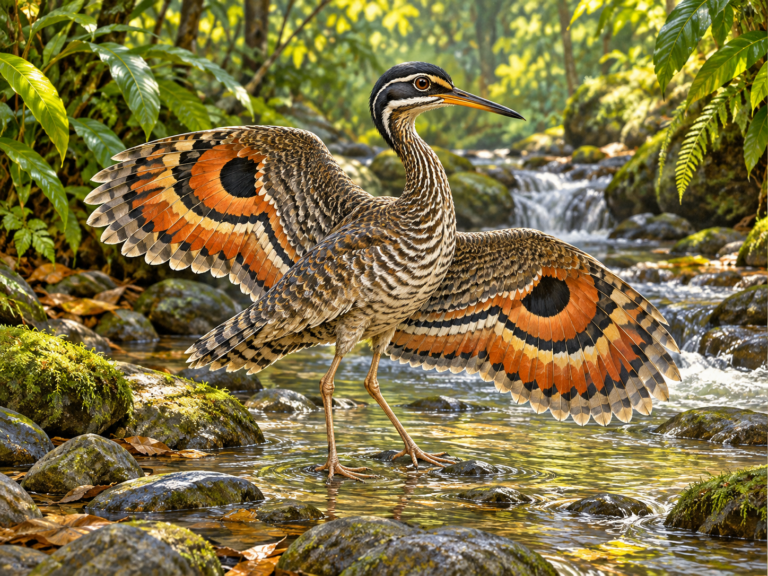
Anhinga

Spanish name
Aninga o pato aguja
Scientific name
Anhinga anhinga

What Do Pico & Tati Think?

A long neck rises above the water like a question mark. Pico waits while Tati looks for the rest of the bird.

Identification

Key Features of the Anhinga

  • Very long slender neck

  • Straight pointed bill

  • Long tail and pale wing markings

  • Often rests with wings spread

Habitat & range

Scan sheltered freshwater wetlands and wooded lagoon margins for swimming birds or a resting bird on a branch. Observe from a permitted viewpoint.

Conservation & care

Give feeding and resting birds space. If a bird stops feeding, repeatedly looks at you or moves away, increase your distance. Keep dogs away from flocks, avoid playback and feeding, and leave nests and natural shoreline debris undisturbed.

View full profile →

Nature Field Guide

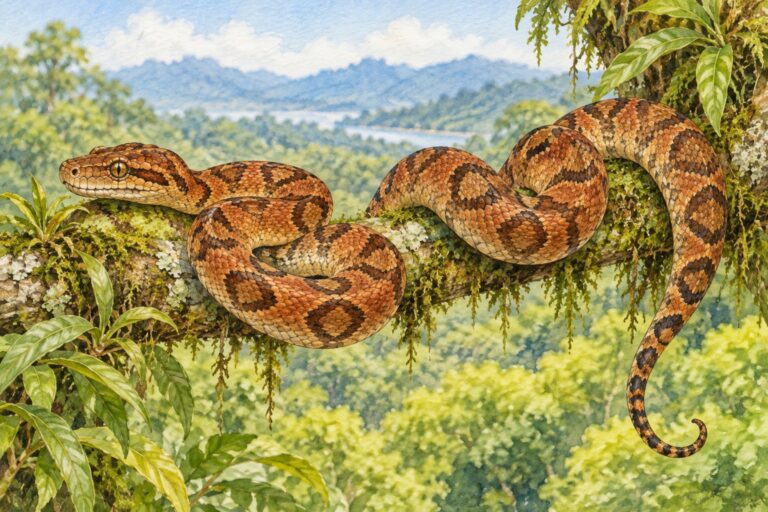
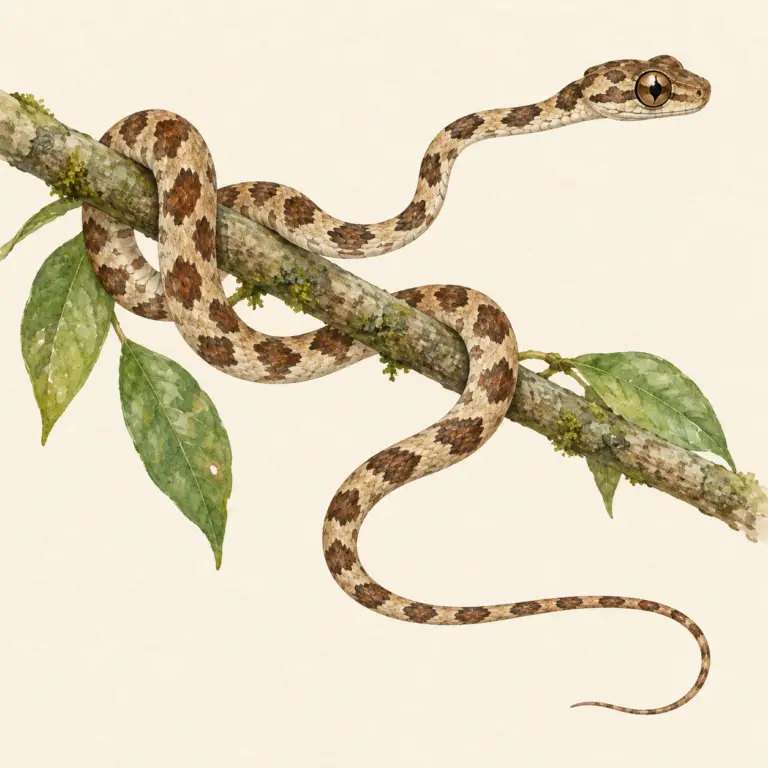
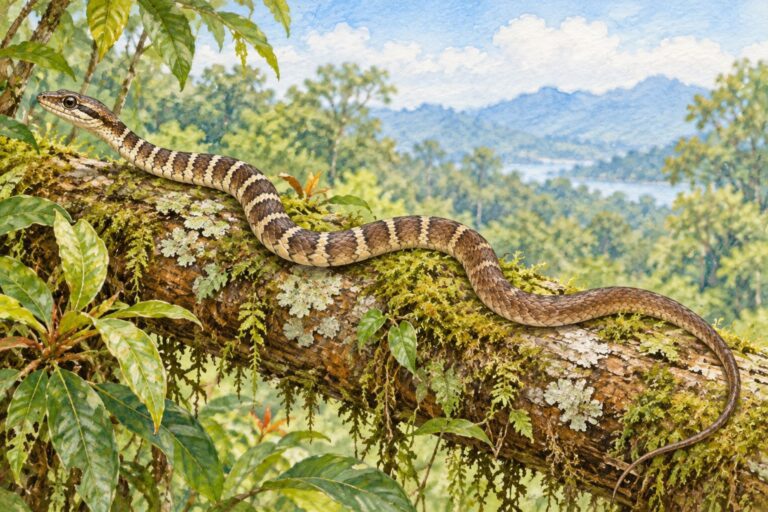
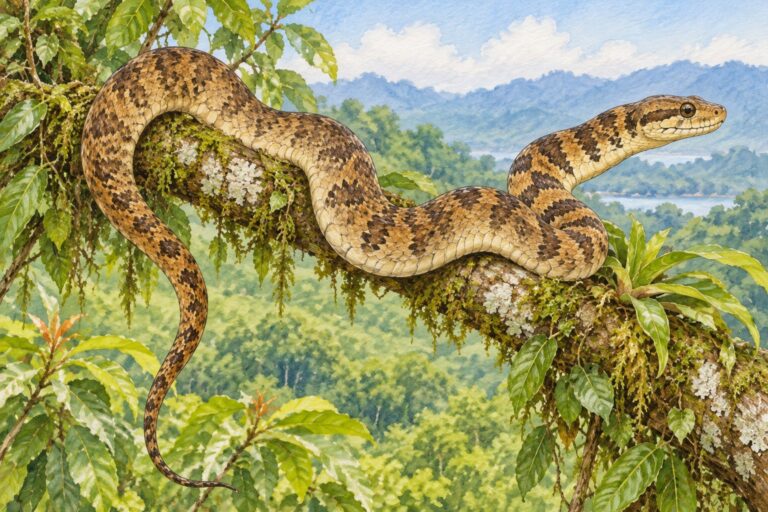
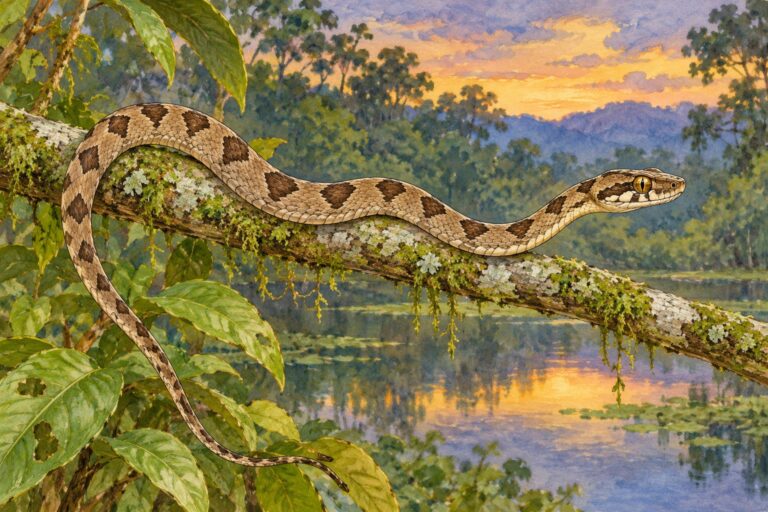
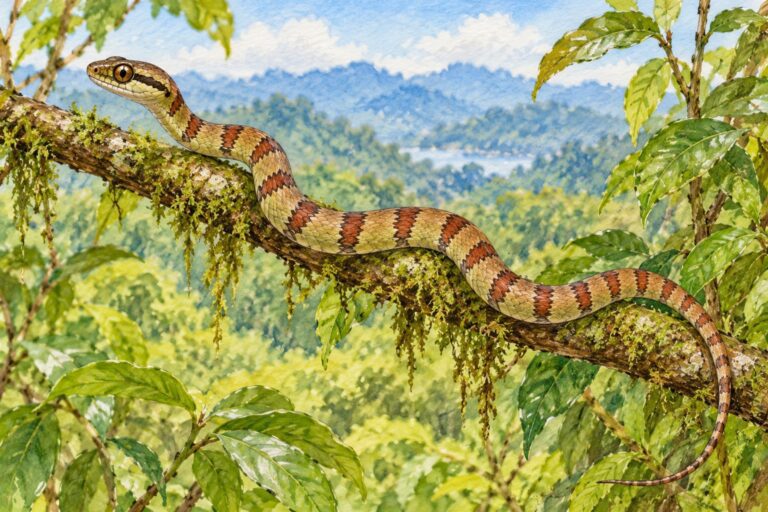
Annulated Tree Boa

Spanish name
Boa arborícola anillada
Scientific name
Corallus annulatus

What Do Pico & Tati Think?

Pico: “What helps this reptile fit into its habitat?”

Tati: “Let’s look at its shape, colors and surroundings while giving it plenty of space.”

Identification

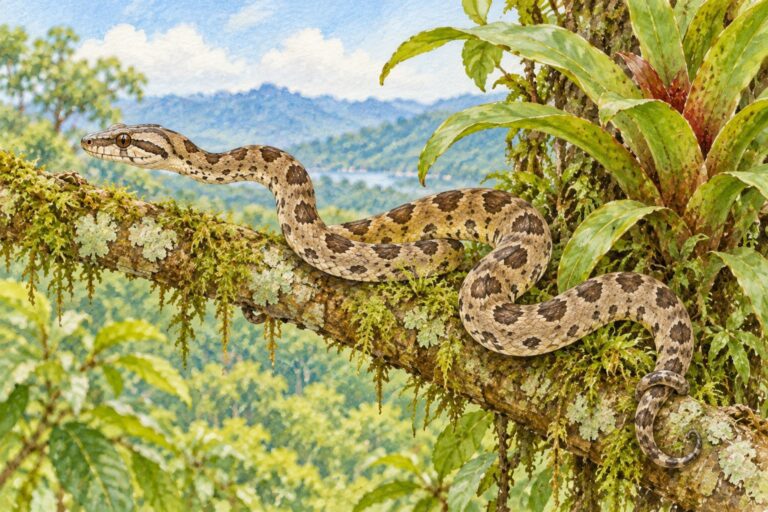
Key Features of the Annulated Tree Boa

  • Brownish body with dark ringlike markings

  • Broad head and climbing posture

  • Tail used around branches

Habitat & range

Caribbean lowland wet forest and adjoining northern humid lowlands, including studied populations in northeastern Costa Rica.

Conservation & care

Observe from a distance with an adult or qualified guide. Do not touch, catch, corner, feed or move any snake. Keep children and pets away. Colors, head shape and pupil shape must never be used to decide a snake is safe.

Threats & pressures

Protect connected habitat and natural shelters. Avoid collection, unnecessary clearing and deliberate killing. Leave wildlife in place and support responsible observation.

View full profile →

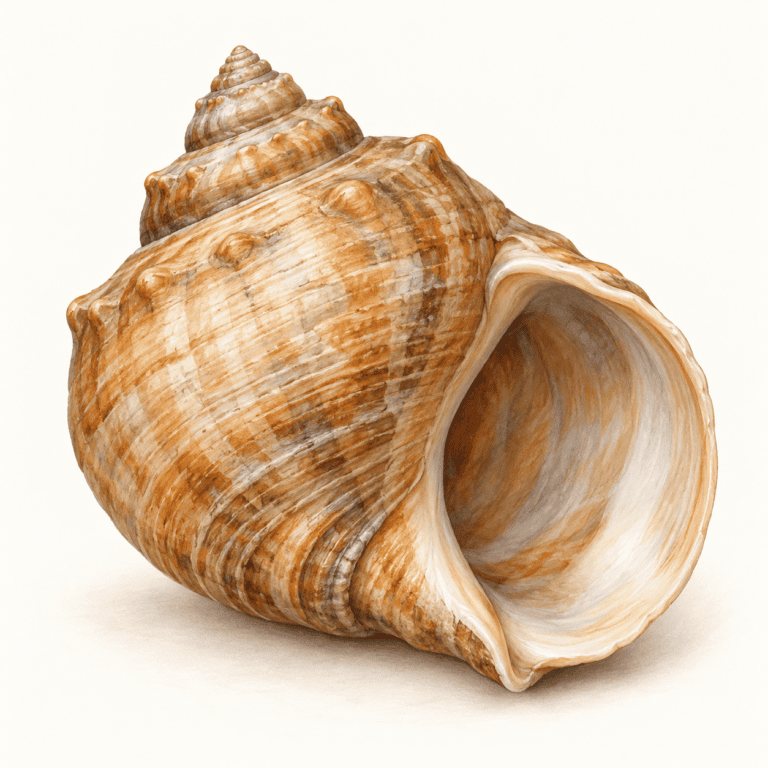
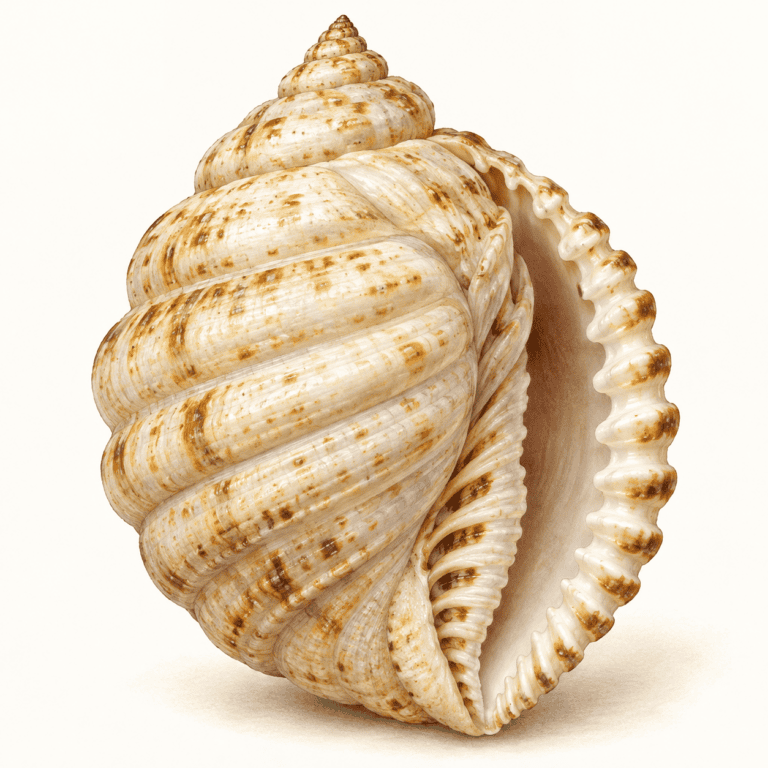
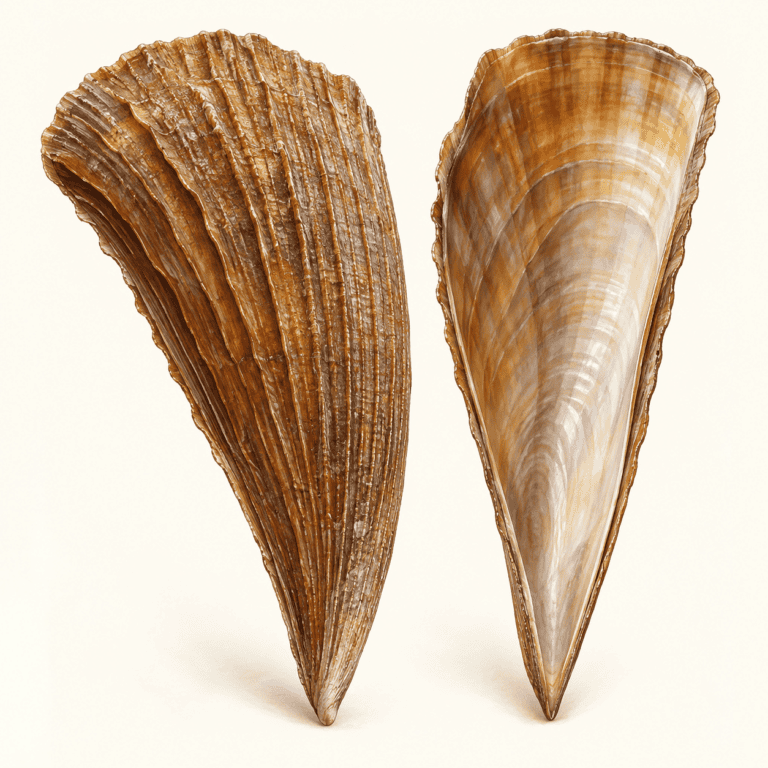
Nature Field Guide

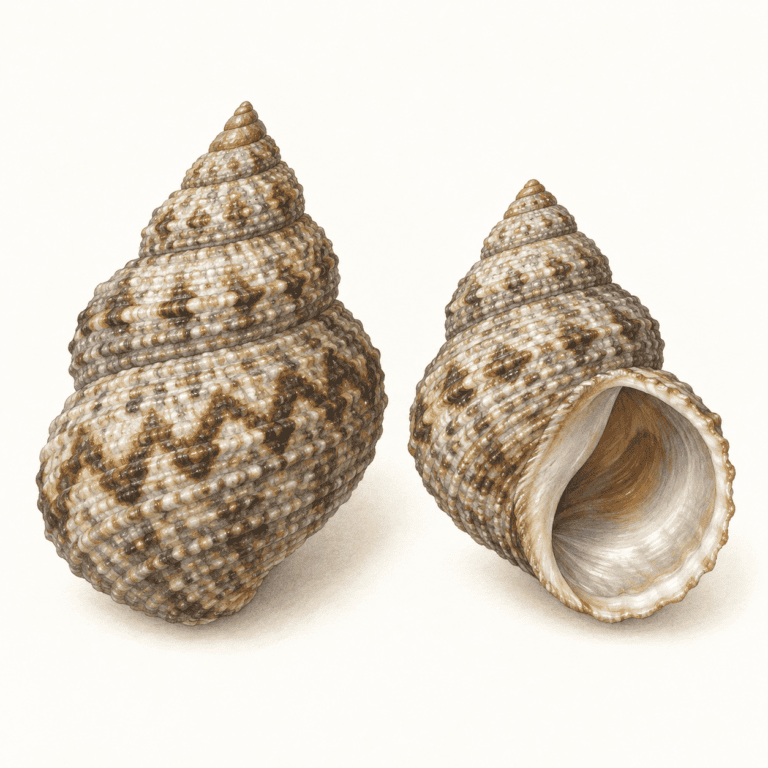
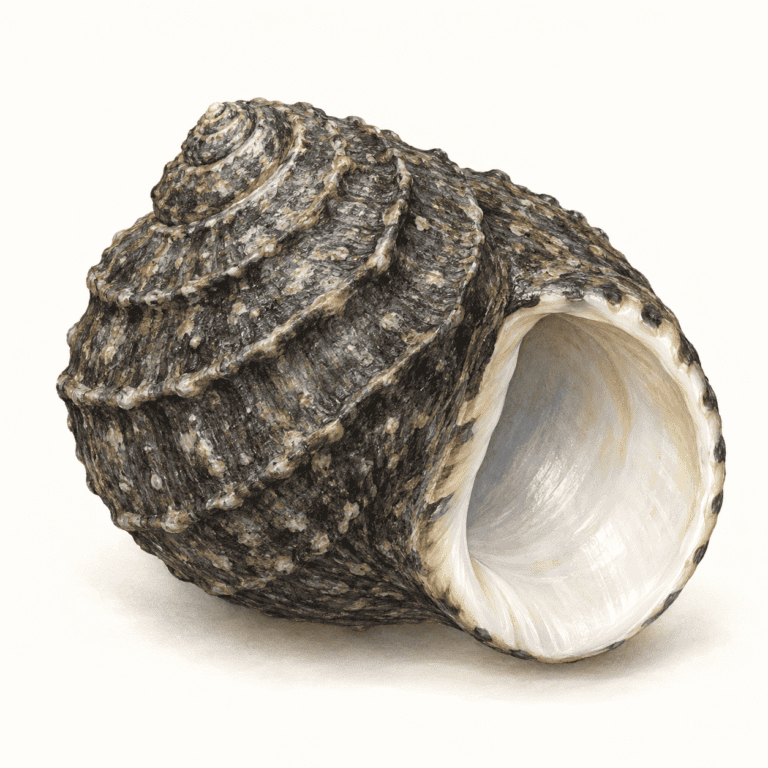
Apple Rocksnail

Spanish name
Caracol de roca
Scientific name
Vasula melones

What Do Pico & Tati Think?

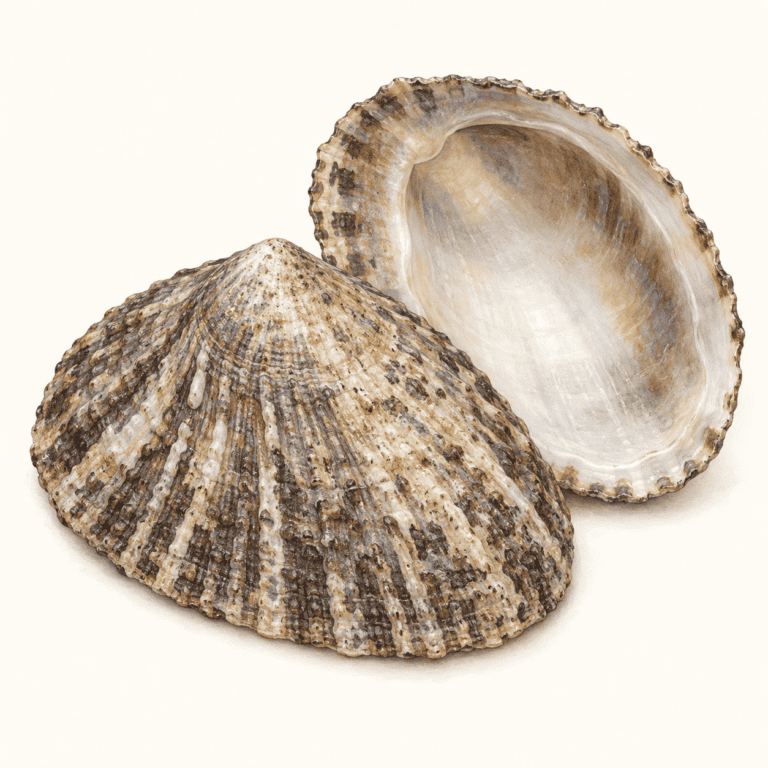
An apple rocksnail lives among the rocks of the lower shore.

Identification

Key Features of the Apple Rocksnail

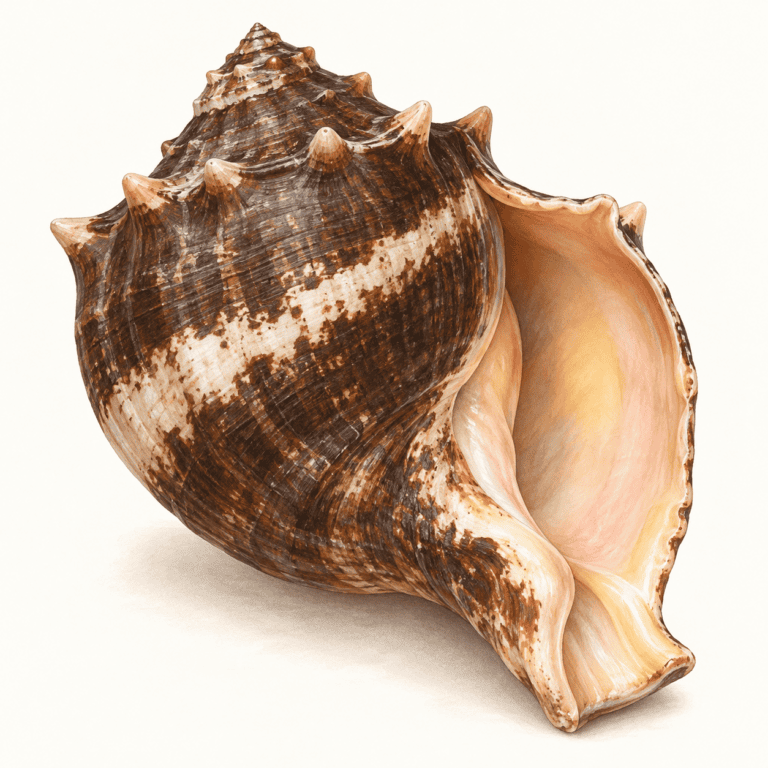
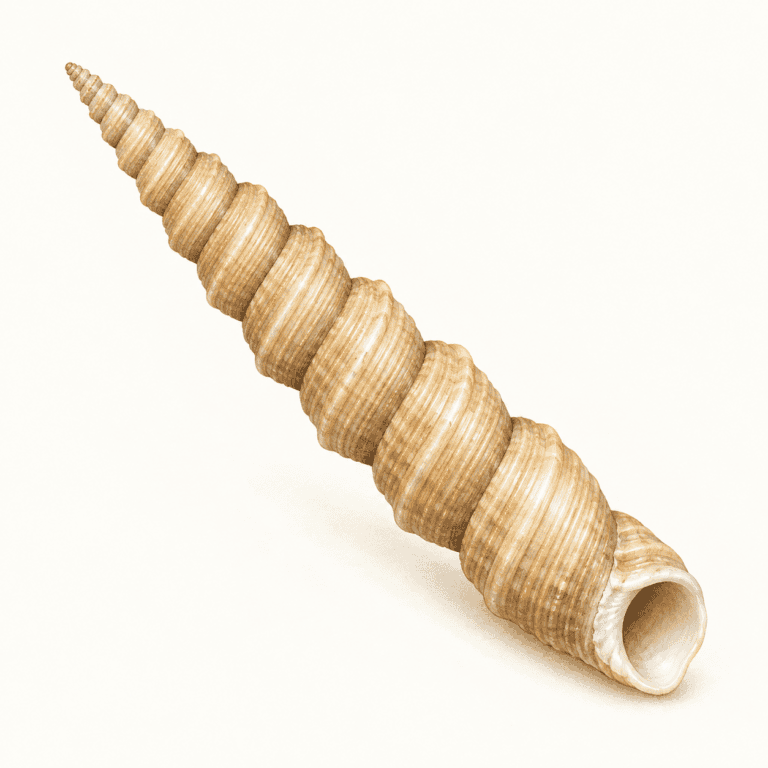
  • Coiled rocksnail shell.

  • Compare its broad outline, spire and opening with an identified reference.

  • Older labels may use the name Thais melones.

Habitat & range

Lower rocky intertidal zone.

Conservation & care

Observe and photograph shells where they are. Leave living animals, occupied shells and empty shells in place. Do not pry animals from rocks, dig in mangroves or put fingers into shell openings. Explore with an adult or guide, follow site rules and stay clear of surf and slippery rocks.

View full profile →

Nature Field Guide

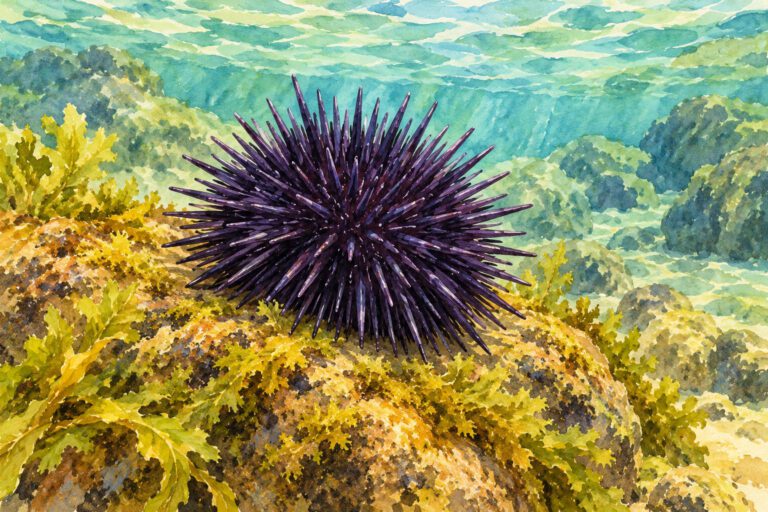
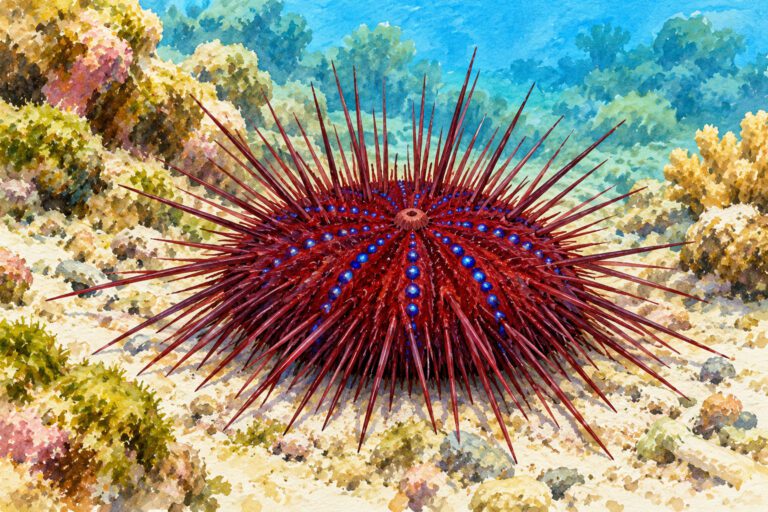
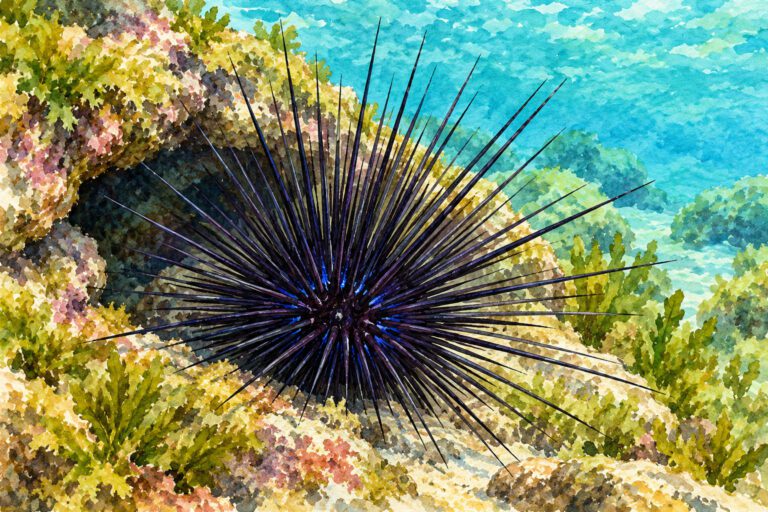
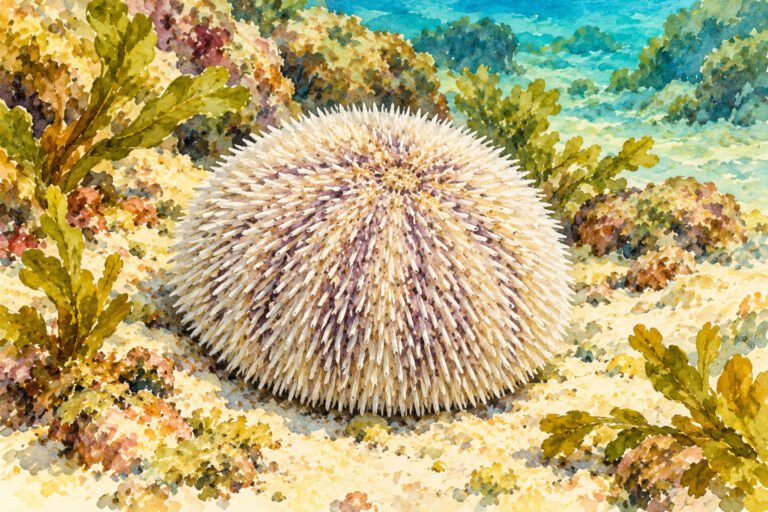
Arbacia Sea Urchin

Spanish name
Erizo Arbacia
Scientific name
Arbacia stellata

What Do Pico & Tati Think?

Pico sees a spiny shape. Tati asks how many different kinds of urchin might share a coast.

Identification

Key Features of the Arbacia Sea Urchin

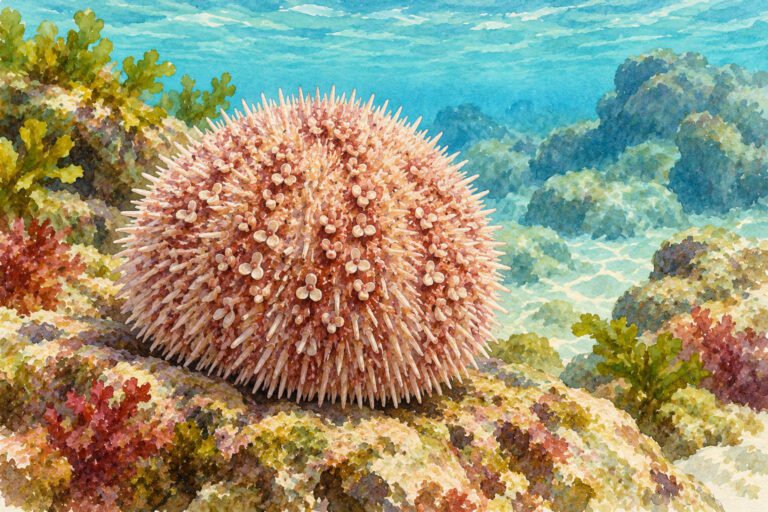
  • A rounded body covered with spines

  • Observe the proportions of the body and spines

  • Use a species reference to compare similar urchins

Habitat & range

Suitable underwater coastal habitat. Use a permitted guided snorkeling or viewing activity appropriate to your family; do not enter the sea just to find this animal.

Conservation & care

Watch without touching, lifting, feeding or collecting. Keep fingers and equipment away from spines and other surface structures. Leave the animal submerged and its habitat undisturbed.

View full profile →

Nature Field Guide

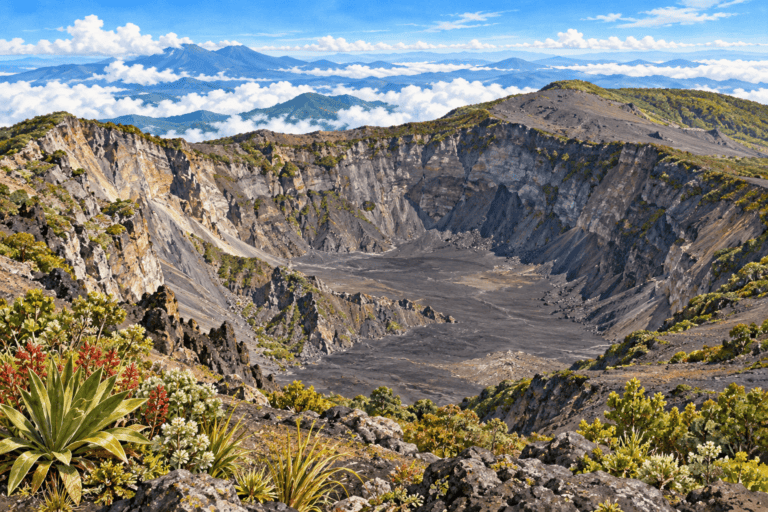
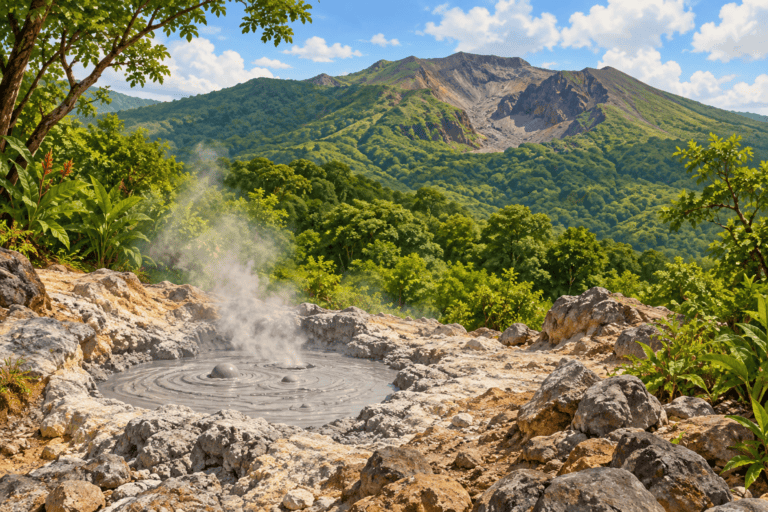
Arenal Volcano

Spanish name
Volcán Arenal
Scientific name

What Do Pico & Tati Think?

Join Pico and Tati to discover Volcán Arenal and learn how volcanoes help shape Costa Rica.

Identification

Key Features of the Arenal Volcano

  • A steep cone-shaped silhouette.

  • Gray volcanic rock above green slopes.

  • Old lava formations along designated park trails.

Habitat & range

Near La Fortuna de San Carlos, Alajuela, in the northern plains.

Conservation & care

Explore with an adult. Follow staff instructions, authorized trails, barriers and closures. Leave rocks, plants and wildlife in place and carry out litter. Do not climb the volcanic cone or enter its restricted surroundings.

Plan Your Visit

Arenal Volcano National Park — main visitor entrance

Get Directions ↗

Getting There

From La Fortuna, follow Route 142 toward Lake Arenal and the signed national-park entrance. Start your walk at the ranger entrance and use the marked visitor trails.

Before You Go

This destination is the national-park visitor entrance. It is not a summit trail. Confirm current entry arrangements and open trails with SINAC.
Visit information reviewed October 8, 2026. Confirm current access before travel.

View full profile →

Nature Field Guide

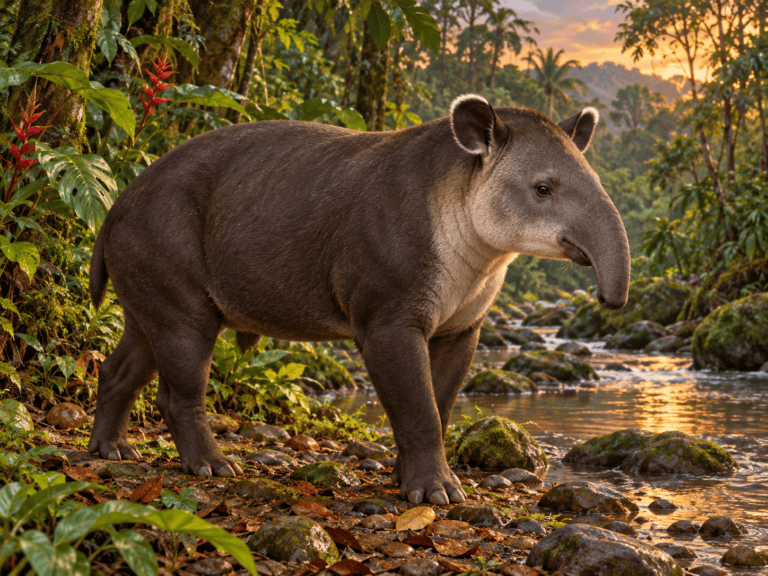
Baird’s Tapir

Spanish name
Danta
Scientific name
Tapirus bairdii

What Do Pico & Tati Think?

Pico: “Its nose can reach the leaves!”

Tati: “Let’s keep the path open and give it plenty of room.”

Identification

Key Features of the Baird’s Tapir

  • Large dark body and short flexible snout.

  • Pale edges around the ears.

  • Young calves have pale spots and stripes.

Habitat & range

Corcovado National Park’s forest and wetland landscape, including the Sirena area. Puerto Jiménez, Bahía Drake and Carate are gateways.

Conservation & care

Keep a respectful distance and leave an open route for the animal. Stay on authorized paths, secure food and rubbish, and observe without feeding, touching, baiting or chasing.

Threats & pressures

Habitat clearing and fragmentation, hunting and vehicle collisions threaten tapirs. Slow reproduction limits rapid recovery.

Conservation assessment

Global IUCN category as reported by the linked source, checked 7 October 2026. The source does not give an assessment year here. National legal protection and local abundance are separate questions.

View full profile →

Nature Field Guide

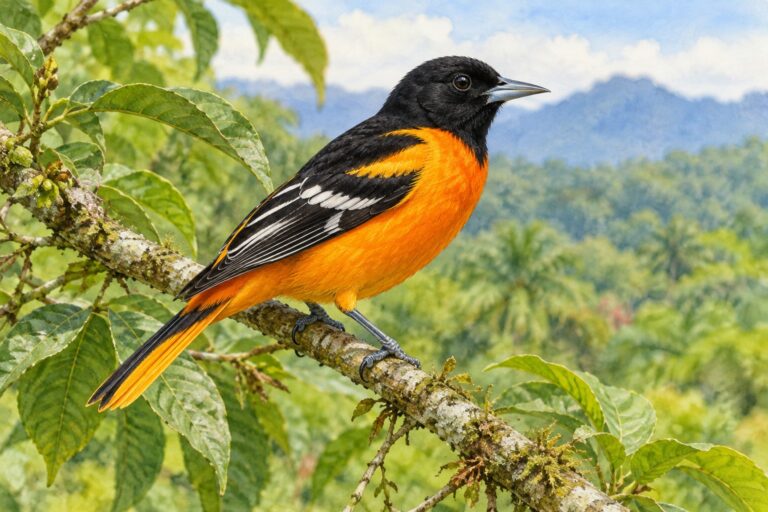
Baltimore Oriole

Spanish name
Bolsero norteño
Scientific name
Icterus galbula

What Do Pico & Tati Think?

Pico: “Did that bird travel here?”

Tati: “Baltimore orioles connect Costa Rica with places farther north.”

Identification

Key Features of the Baltimore Oriole

  • Male orange body and black head

  • White wingbar

  • Slender pointed bill

Habitat & range

A migrant and nonbreeding visitor, generally September to early May. Occurs on both slopes, especially the northern Pacific and Central Valley, in wooded gardens, edges and plantations.

Conservation & care

Observe quietly from trails or established viewing areas. Give nests, roosts and feeding birds space. Do not handle, chase or lure birds with playback. Keep pets away from wildlife.

Threats & pressures

Migrants depend on suitable habitat across their full annual journey. Protect native vegetation, reduce collision hazards around glass and keep cats away from birds. These are practical prevention priorities, not a claim of a measured decline at a specific Costa Rican site.

View full profile →

Nature Field Guide

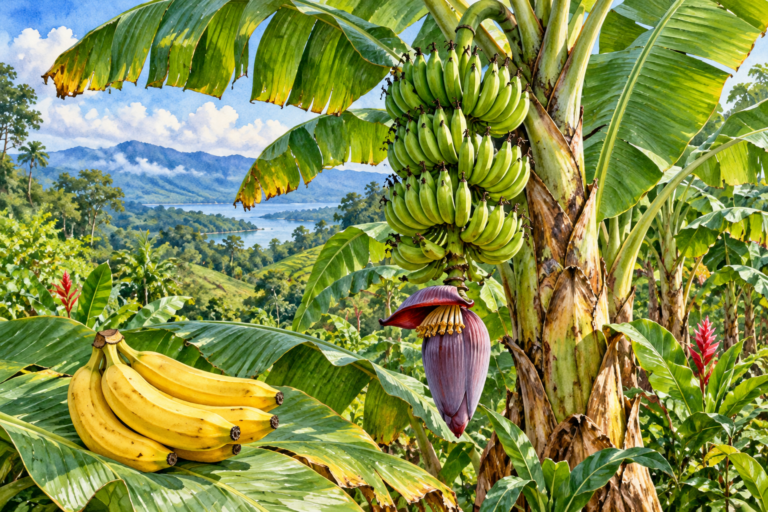
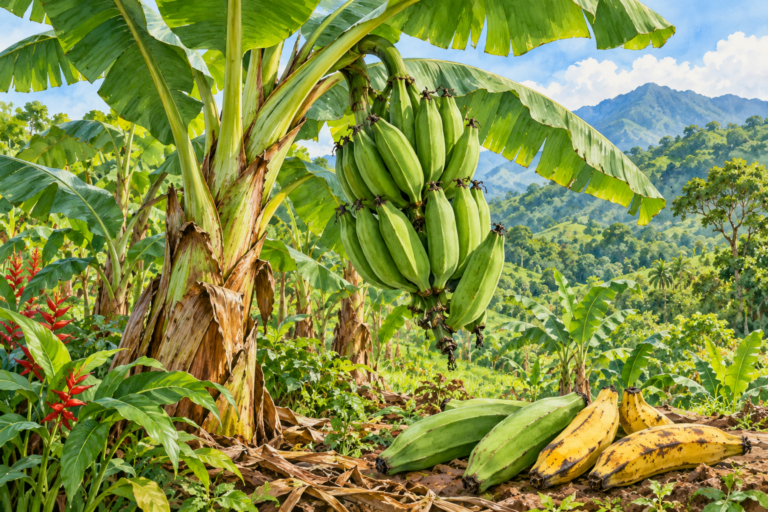
Banana

Spanish name
Banano
Scientific name
Musa spp. (dessert banana cultivars)

What Do Pico & Tati Think?

Pico: “That banana plant looks like a tree!”

Tati: “Its stem is made from layers of leaf bases.”

Identification

Key Features of the Banana

  • Very broad elongated leaves

  • A thick pseudostem made from leaf bases

  • Fruit arranged in hands within a hanging bunch

  • New shoots near the base

Habitat & range

Humid cultivated lowlands. CORBANA documents farms in the Caribbean, Sarapiquí and Parrita; these correspond to Caribbean, Northern Plains and Central Pacific tags.

Conservation & care

Visit farms only with permission and follow the host's instructions. Stay clear of machinery, chemical applications and working areas. Do not pick or taste plants without a responsible adult and the host's approval.

View full profile →

Nature Field Guide

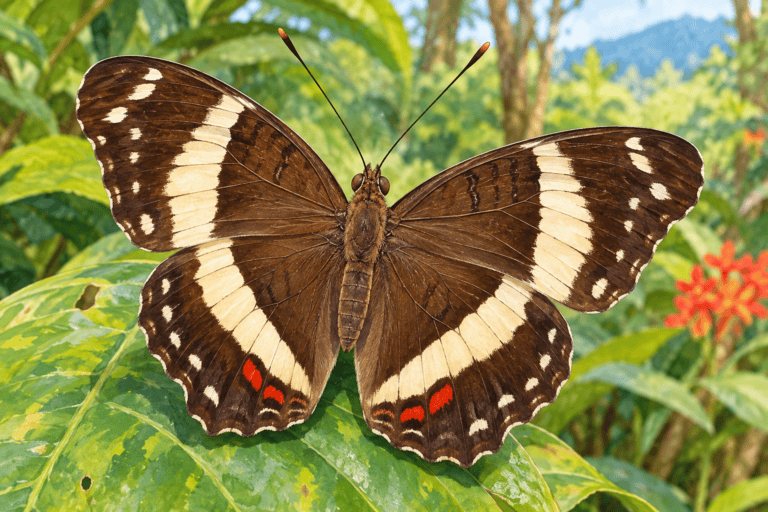
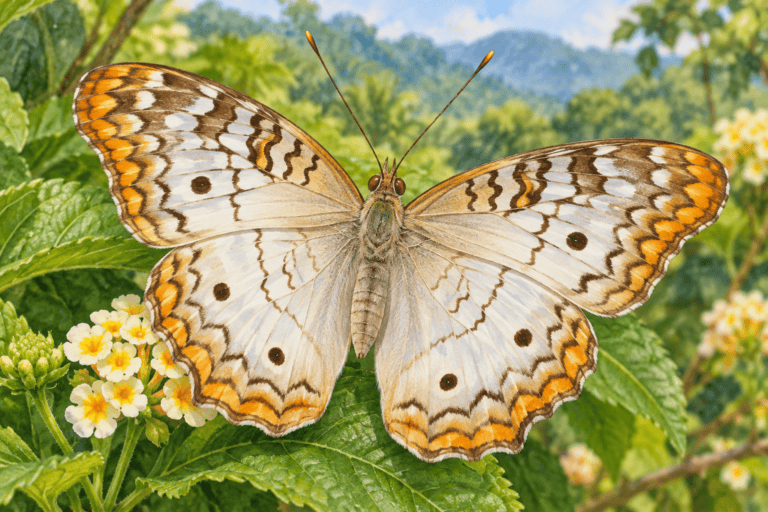
Banded Peacock Butterfly

Spanish name
Mariposa pavo real bandeada
Scientific name
Anartia fatima

What Do Pico & Tati Think?

Pico: “Let's look closely at the banded peacock butterfly!”

Tati: “We can compare its shape and markings without touching it.”

Identification

Key Features of the Banded Peacock Butterfly

  • Brown wings

  • pale band across wings

  • reddish accents toward hindwings

Habitat & range

Forest paths, edges and nearby vegetation in Guanacaste. Local habitat and abundance vary.

Conservation & care

Observe without collecting, handling or disturbing insects or nests. Stay on permitted paths. Leave caterpillars and their food plants in place.

View full profile →

Nature Field Guide

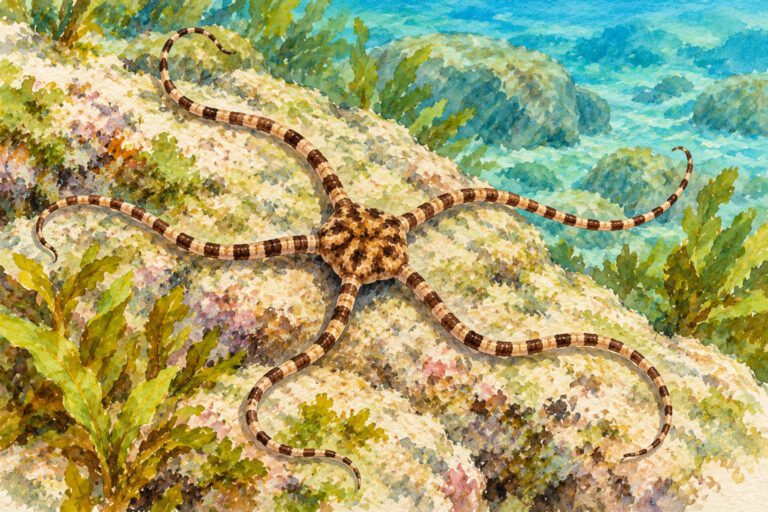
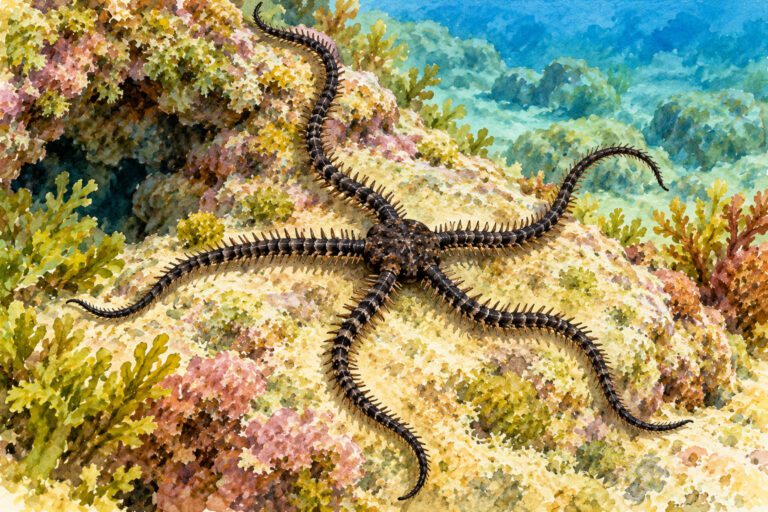
Banded Serpent Brittle Star

Spanish name
Ofiura de brazos anillados
Scientific name
Ophionereis annulata

What Do Pico & Tati Think?

Patterns help Tati remember a discovery. Pico sketches the bands he can see along a slender arm.

Identification

Key Features of the Banded Serpent Brittle Star

  • A small central disc

  • Long flexible arms

  • Darker bands along the arms

Habitat & range

Suitable underwater coastal habitat. Use a permitted guided snorkeling or viewing activity appropriate to your family; do not enter the sea just to find this animal.

Conservation & care

Watch without touching, lifting, feeding or collecting. Keep fingers and equipment away from spines and other surface structures. Leave the animal submerged and its habitat undisturbed.

View full profile →

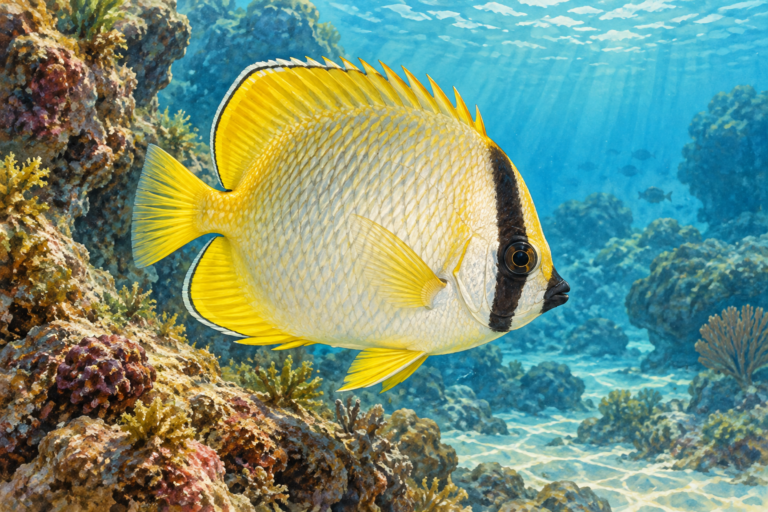
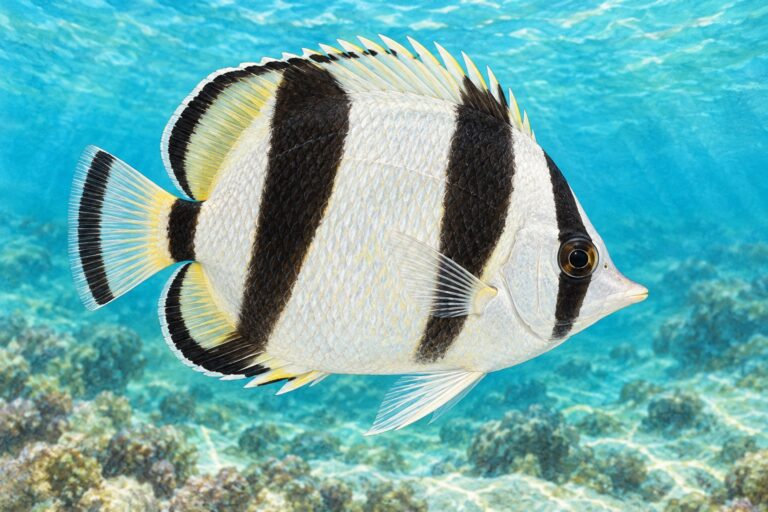
Nature Field Guide

Barberfish

Spanish name
Mariposa barbero
Scientific name
Johnrandallia nigrirostris

What Do Pico & Tati Think?

Pico: “It looks like a little yellow disc.”

Tati: “The black markings and the small pointed mouth give us more clues.”

Identification

Key Features of the Barberfish

  • A flattened, oval, disc-like body.

  • A yellow body and fins with contrasting dark head markings.

  • A small mouth at the end of a short pointed snout.

Habitat & range

Reef-associated settings in the eastern Pacific, with documented occurrence at Isla del Coco.

Conservation & care

Follow park rules and qualified guides. Do not feed, touch, chase or collect marine wildlife. Maintain distance and avoid contact with reef habitat.

View full profile →

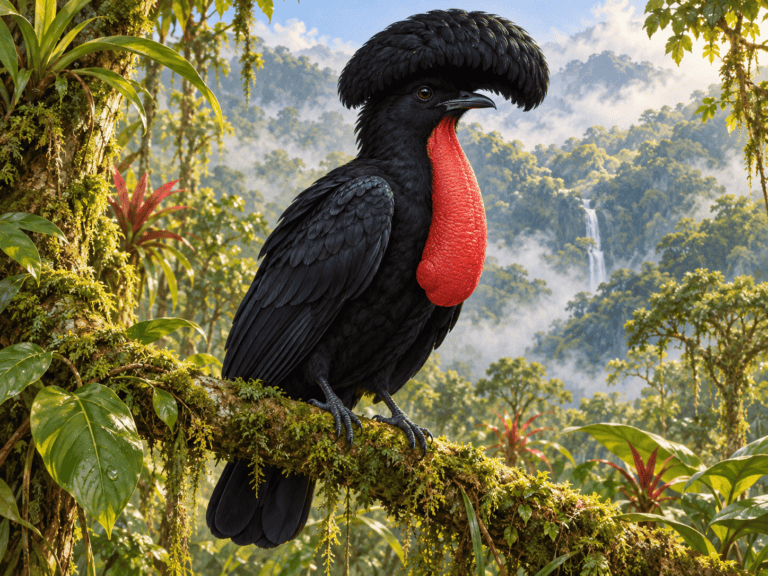
Nature Field Guide

Bare-necked Umbrellabird

Spanish name
Pájaro sombrilla
Scientific name
Cephalopterus glabricollis

What Do Pico & Tati Think?

Pico: “That crest makes such an unusual shape!”

Tati: “We can learn about a shy bird without following it.”

Identification

Key Features of the Bare-necked Umbrellabird

  • Large dark bird with a heavy crest.

  • Short, square tail.

  • Male and female throat structures differ.

Habitat & range

Humid Caribbean-facing foothills and adjacent lowlands, with seasonal movement into montane breeding forest. Guanacaste refers to humid mountain slopes, not its dry coastal plain.

Conservation & care

Stay on authorized trails or viewing routes. Give birds space, keep voices low and leave nests undisturbed. Observe without bait, feeding or recorded calls.

Threats & pressures

UCAN identifies forest fragmentation and climate pressures on seasonal fruit availability as conservation concerns.

Conservation assessment

UCAN identifies the species as Endangered. Source checked 7 October 2026. This is a global species category, not a count of birds in the tagged towns.

View full profile →

Nature Field Guide

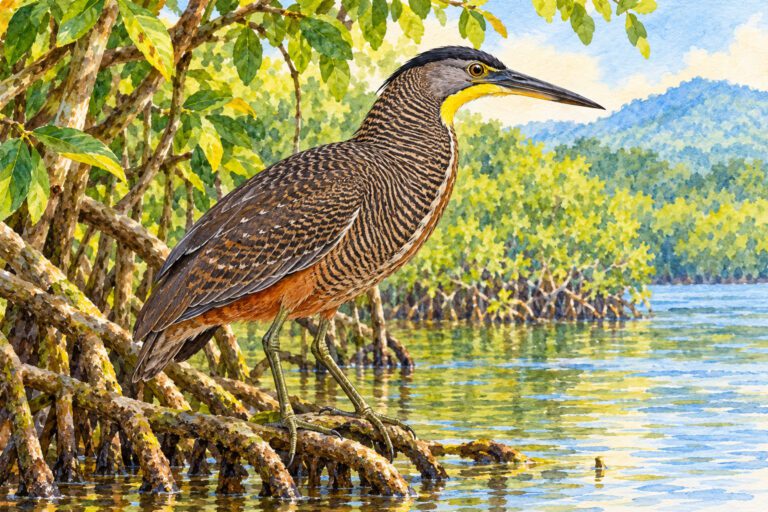
Bare-throated Tiger-Heron

Spanish name
Garza tigre cuellinuda
Scientific name
Tigrisoma mexicanum

What Do Pico & Tati Think?

Pico wonders where the tiger is hiding. Tati points to the fine patterns on a very watchful heron.

Identification

Key Features of the Bare-throated Tiger-Heron

  • Bare yellow throat patch

  • Adult finely barred neck and body

  • Gray cheeks and greenish legs

  • Young birds have bold brown bands

Habitat & range

Scan shallow water, quiet mangrove channels and vegetated wetland margins from an established viewpoint. Follow a local guide’s directions around estuaries.

Conservation & care

Give feeding and resting birds space. If a bird stops feeding, repeatedly looks at you or moves away, increase your distance. Keep dogs away from flocks, avoid playback and feeding, and leave nests and natural shoreline debris undisturbed.

View full profile →

Nature Field Guide

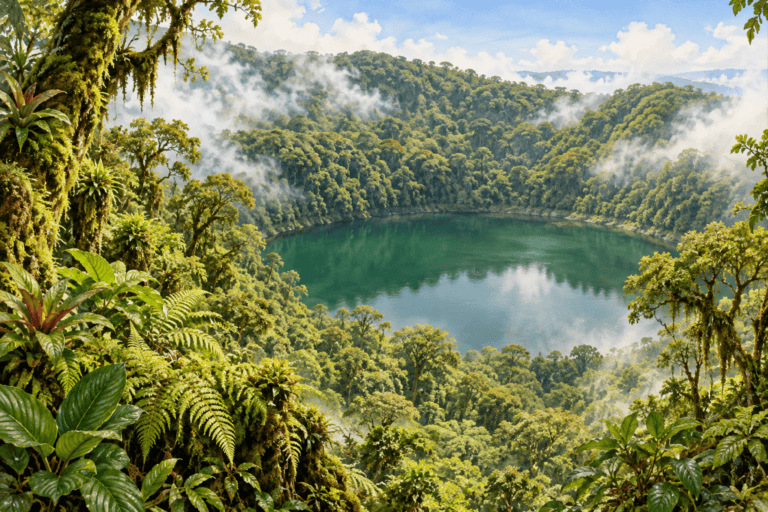
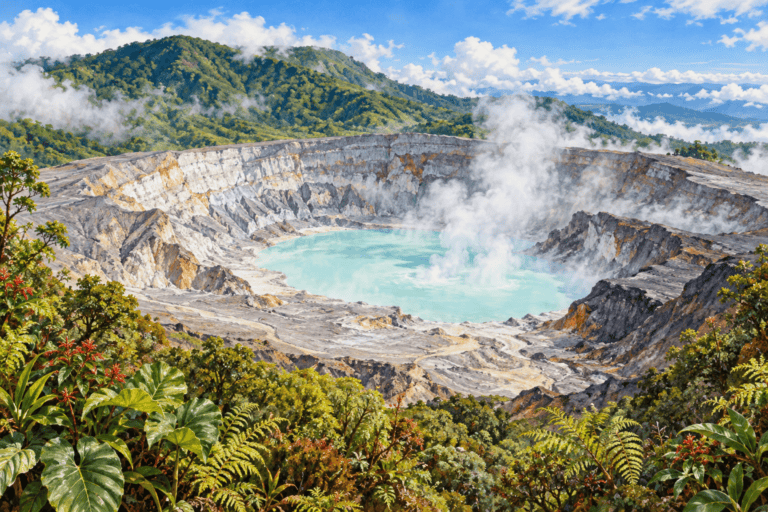
Barva Volcano

Spanish name
Volcán Barva
Scientific name

What Do Pico & Tati Think?

Join Pico and Tati to discover Volcán Barva and learn how volcanoes help shape Costa Rica.

Identification

Key Features of the Barva Volcano

  • A crater lake surrounded by forest.

  • Mossy trees and damp vegetation.

  • Mist around rounded forested slopes.

Habitat & range

Heredia province, in the Barva sector of Braulio Carrillo National Park.

Conservation & care

Explore with an adult. Follow staff instructions, authorized trails, barriers and closures. Leave rocks, plants and wildlife in place and carry out litter. Stay on marked forest trails and out of the crater lake.

Plan Your Visit

Braulio Carrillo National Park — Barva sector entrance

Get Directions ↗

Getting There

Approach via Heredia, Barva, San José de la Montaña, Paso Llano and Sacramento. SINAC recommends a four-wheel-drive vehicle. From the entrance, walk the marked trails toward Laguna Barva.

Before You Go

Check the final road conditions and reservation requirements before leaving. This is a cool, wet mountain hike; bring suitable footwear and rain protection.
Visit information reviewed October 8, 2026. Confirm current access before travel.

View full profile →

Nature Field Guide

Beach Morning Glory

Spanish name
Churristate de playa / Pudre oreja
Scientific name
Ipomoea pes-caprae

What Do Pico & Tati Think?

Pico: “These flowers grow right across the sand!”

Tati: “Let’s look at the shape of the leaves without stepping on the vine.”

Identification

Key Features of the Beach Morning Glory

  • Creeping stems extending across beach sand.

  • Simple leaves with a notch giving a goat’s-hoof appearance.

  • Pink-purple flowers with a joined, funnel-like corolla.

Habitat & range

Upper sandy beaches in tropical coastal habitats. Observe vegetation from established access routes rather than stepping across vines.

Seasonal Calendar

Main flowering window

Costa Rican coastal populations

Jul, Aug, Sep, Oct, Nov

ACG reports abundant flowers July–November and seed maturation December–April on Costa Rican coasts. Typical seasonal windows, not exact dates.

Event source ↗

Seed maturation

Costa Rican coastal populations

Jan, Feb, Mar, Apr, Dec

ACG reports abundant flowers July–November and seed maturation December–April on Costa Rican coasts. Typical seasonal windows, not exact dates.

Event source ↗

Conservation & care

Do not uproot vines, pick flowers or taste plant parts. Use existing beach paths and avoid trampling coastal vegetation.

View full profile →

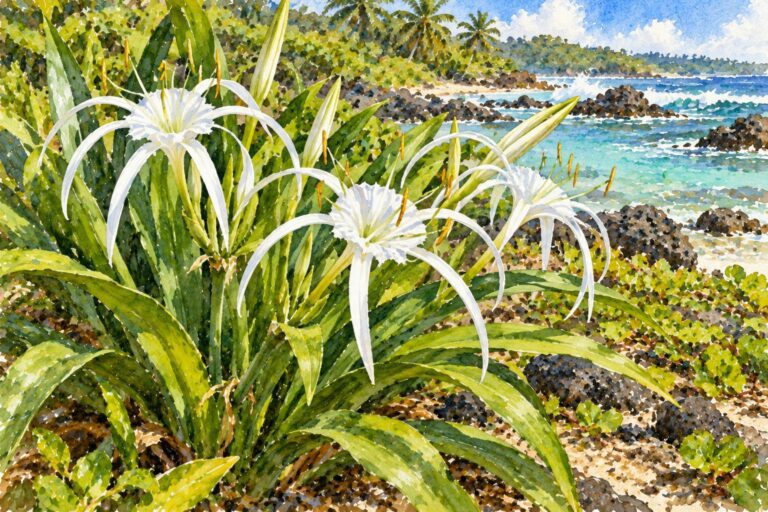
Nature Field Guide

Beach Spider Lily

Spanish name
Lirio araña
Scientific name
Hymenocallis littoralis

What Do Pico & Tati Think?

Pico wants to sketch the plant’s shapes. Tati suggests looking for three clues before guessing its name. What would you notice first?

Identification

Key Features of the Beach Spider Lily

  • Long strap-shaped leaves

  • Six narrow spreading white flower segments

  • A white central cup

Habitat & range

Coastal vegetation and planted gardens.

Conservation & care

Observe from paths and leave leaves, bark, flowers and fruits attached. Do not taste wild plants or offer them to pets. Ask a knowledgeable guide to confirm the species.

View full profile →

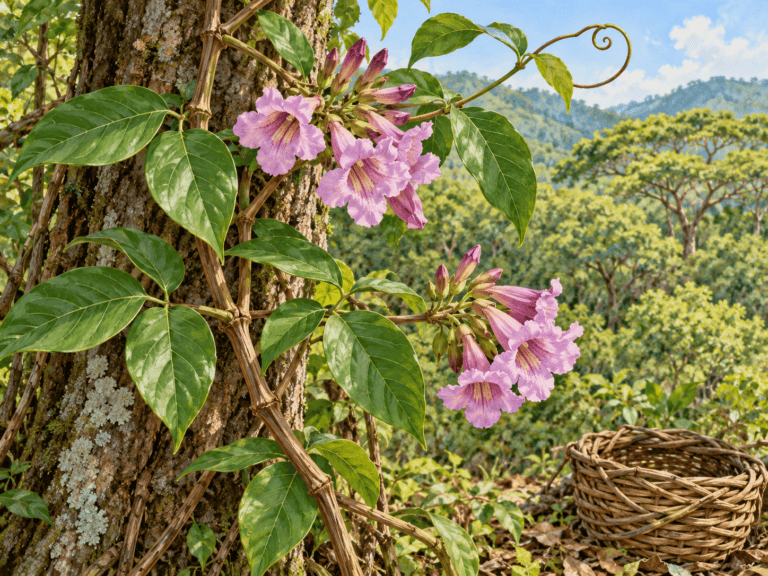
Nature Field Guide

Bejuco Cucharilla

Spanish name
Bejuco cucharilla
Scientific name
Bignonia diversifolia

What Do Pico & Tati Think?

Meet the plant behind Abu’s basket. Bejuco cucharilla is a woody climbing vine, also called a liana. It grows with the support of other plants. Its leafy shoots and lilac tubular flowers offer clues to its identity.

Costa Rican craft references document cucharilla as a material for woven baskets. Woody vine material can become more flexible when moistened, allowing a skilled maker to shape and weave it. A basket begins with a plant and takes form through patient work.

In our story, Abu learned to weave from her mother. Now she invites Pico and Tati to learn too. Her family history is fictional, while the connection between this vine and Costa Rican basket making is documented.

Scientific name note: Kew accepts Bignonia diversifolia. Many Costa Rican botanical and craft sources use the synonym Cydista diversifolia.

Identification

Key Features of the Bejuco Cucharilla

  • A woody climbing stem rather than a self-supporting tree trunk.

  • Opposite compound leaves, typically with two leaflets and sometimes a simple tendril.

  • Smooth-edged leaflets with pointed tips and a rounded or somewhat heart-shaped base.

  • Lilac to pinkish tubular flowers; young branches have a distinctly angular, four-sided form.

Habitat & range

Documented in Costa Rica’s lowland forests, including deciduous and semideciduous forest in Guanacaste. Botanical collections include Nandayure and Barra Honda on the Nicoya Peninsula.

Conservation & care

Observe and photograph vines without cutting or pulling them. Leave wild plants and flowers in place. Learn about materials from a knowledgeable artisan and use paper or responsibly sourced craft materials for your own weaving.

View full profile →

Nature Field Guide

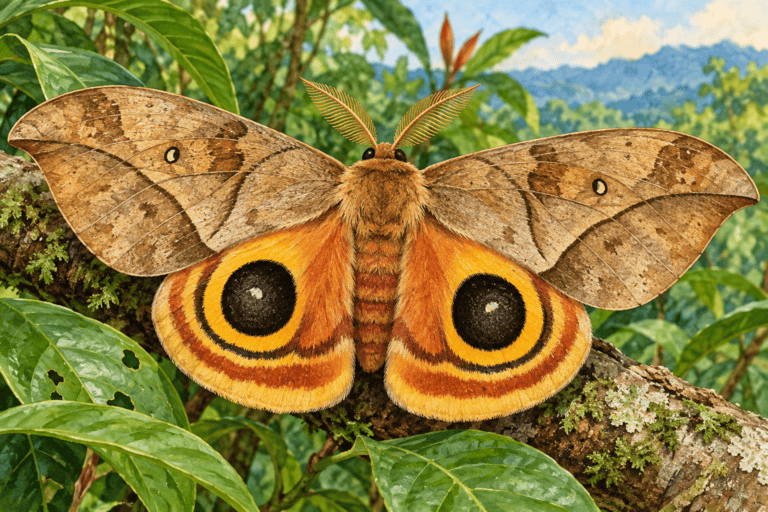
Belt’s Eyed Silk Moth

Spanish name
Polilla de ojos de Belt
Scientific name
Automeris belti

What Do Pico & Tati Think?

Pico: “Let's look closely at the belt’s eyed silk moth!”

Tati: “We can compare its shape and markings without touching it.”

Identification

Key Features of the Belt’s Eyed Silk Moth

  • Leaf-like forewings

  • large eye spots on hindwings

  • stout fuzzy body

Habitat & range

Forest paths, edges and nearby vegetation in Guanacaste. Local habitat and abundance vary.

Conservation & care

Observe without collecting, handling or disturbing insects or nests. Stay on permitted paths. Leave caterpillars and their food plants in place.

View full profile →

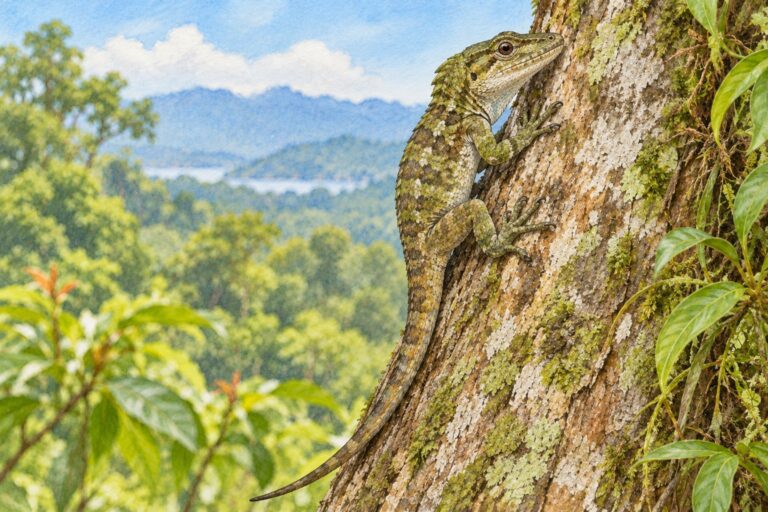
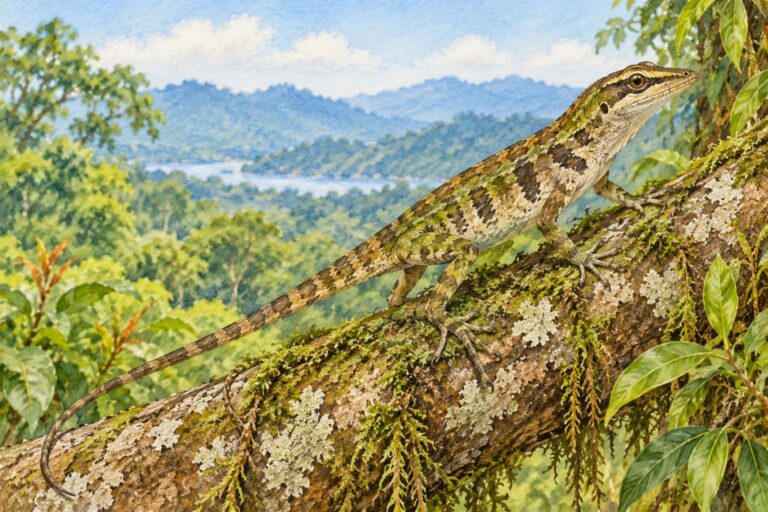
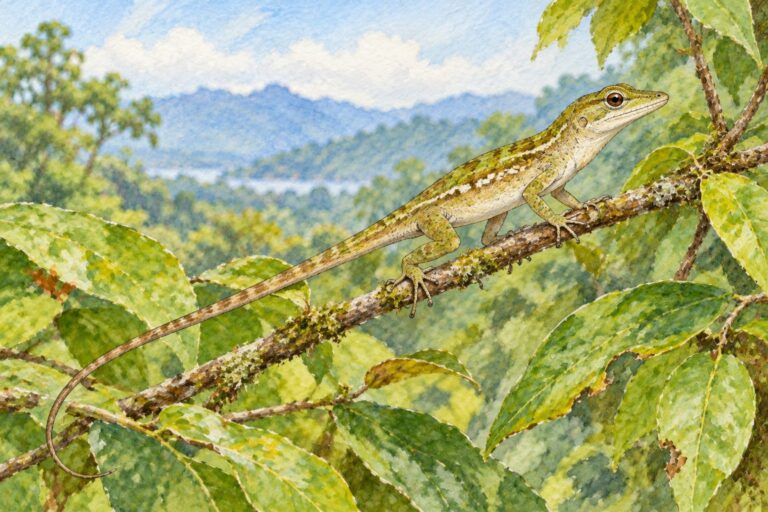
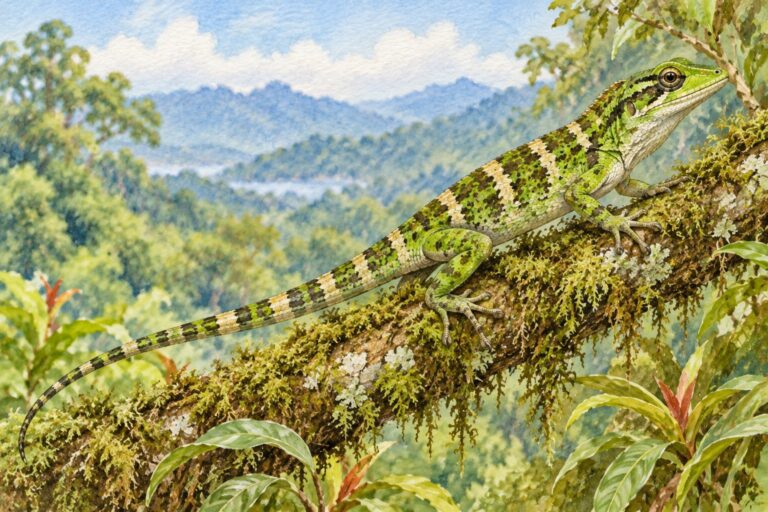
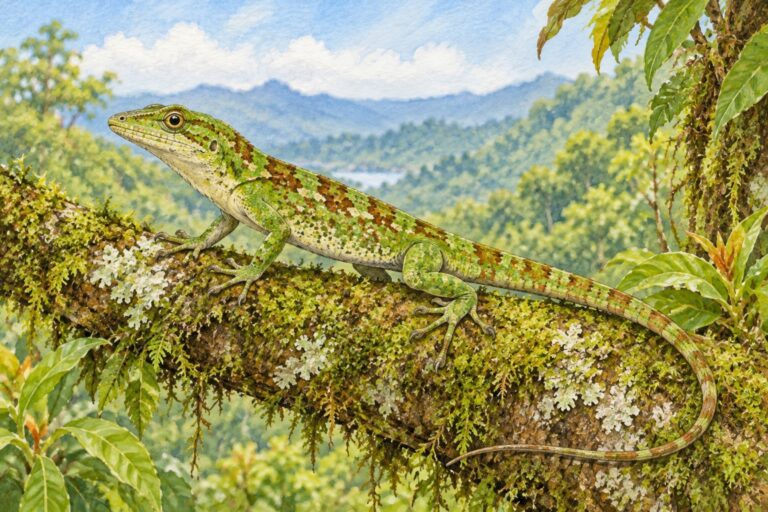
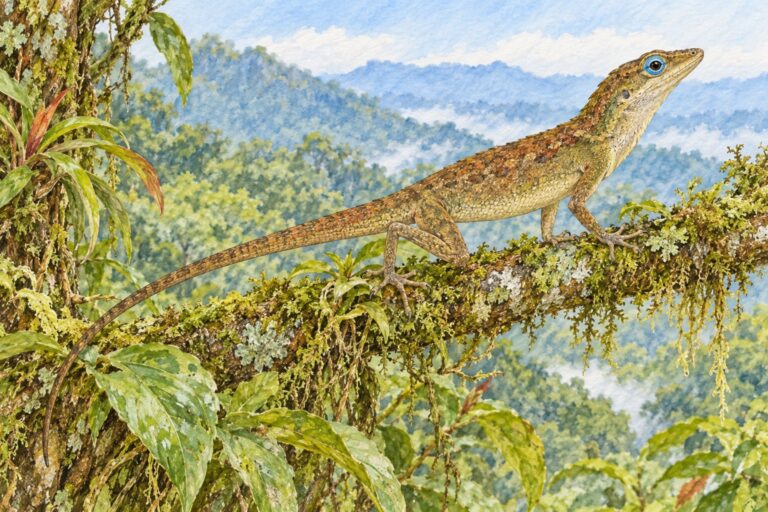
Nature Field Guide

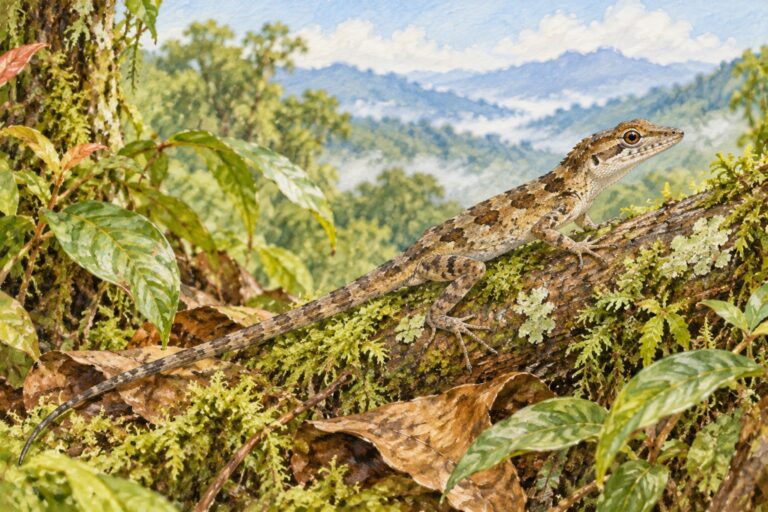
Big-headed Anole

Spanish name
Anolis de cabeza ancha / Anolis jaspeado
Scientific name
Anolis capito

What Do Pico & Tati Think?

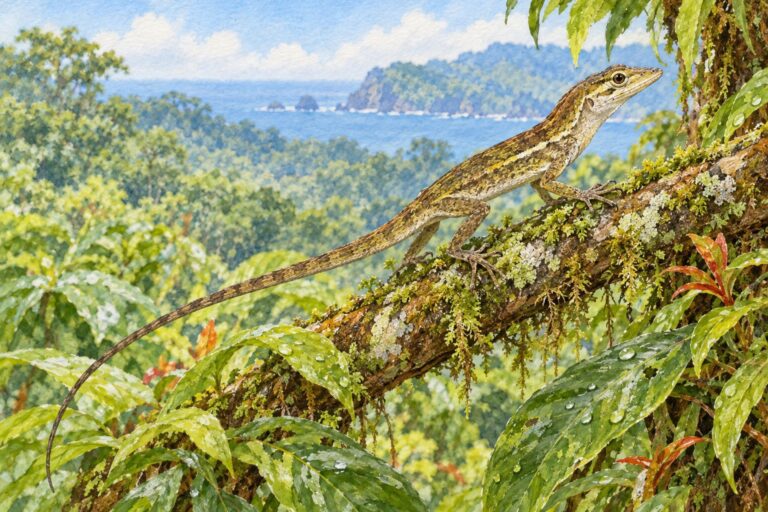
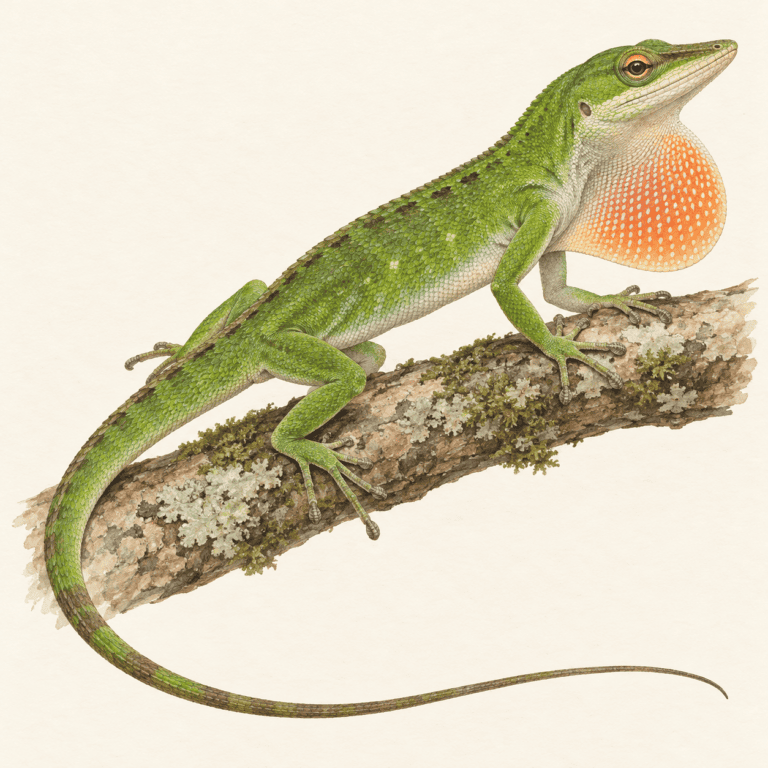
Pico: “What clues help us recognize this reptile?”

Tati: “Let’s notice its shape, markings and habitat from a respectful distance.”

Identification

Key Features of the Big-headed Anole

  • Broad relatively large head

  • Mottled brown, olive or greenish body

  • Stout build and bark-colored camouflage

Habitat & range

Shaded Caribbean-slope forest and southwestern rainforest; also documented in humid forest at Rincón de la Vieja.

Conservation & care

Observe with an adult from permitted paths. Do not catch, chase, touch or feed reptiles. Leave bark, logs, rocks and leaf litter in place. Keep pets away and allow animals an open escape route.

Threats & pressures

Protect habitat connections and natural shelters. Avoid road mortality, collection and deliberate killing. Leave reptiles in their habitat rather than keeping or relocating them.

View full profile →

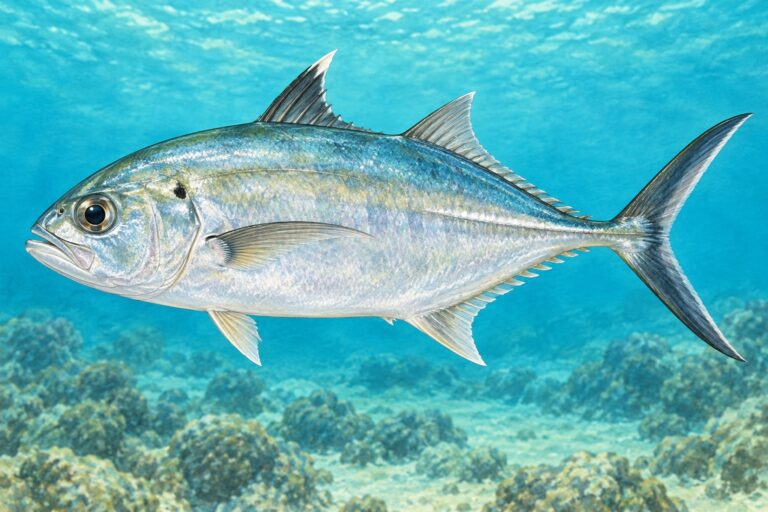
Nature Field Guide

Bigeye Trevally

Spanish name
Jurel ojón
Scientific name
Caranx sexfasciatus

What Do Pico & Tati Think?

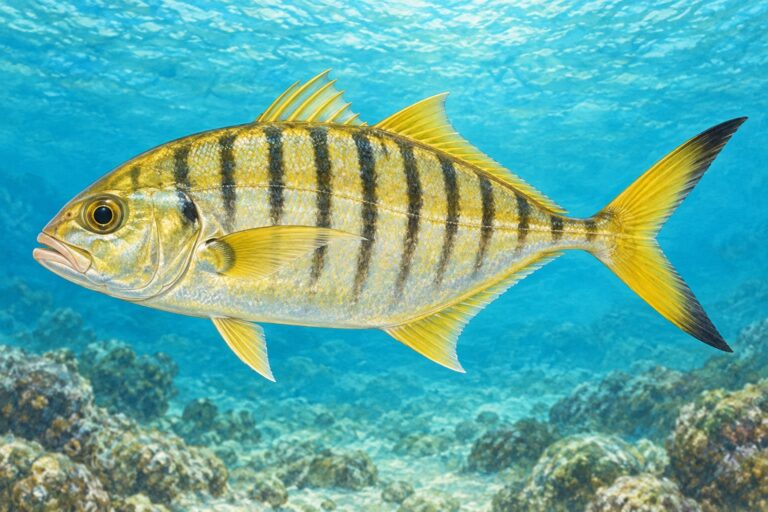
Pico: “Its eye looks extra big!”

Tati: “Check the small dark gill-cover spot too.”

Identification

Key Features of the Bigeye Trevally

  • Large dark eye

  • Small dark upper gill-cover spot

  • Forked tail

Habitat & range

Pacific rocky reefs and nearby coastal marine habitats. Check the linked species reference for its wider range.

Conservation & care

Observe with a qualified guide. Do not feed, chase or handle fish. Keep fins off the reef and take all litter home.

Threats & pressures

Habitat damage and degraded water quality are pressures to prevent in coastal fish habitats. This profile does not quantify a local decline.

View full profile →

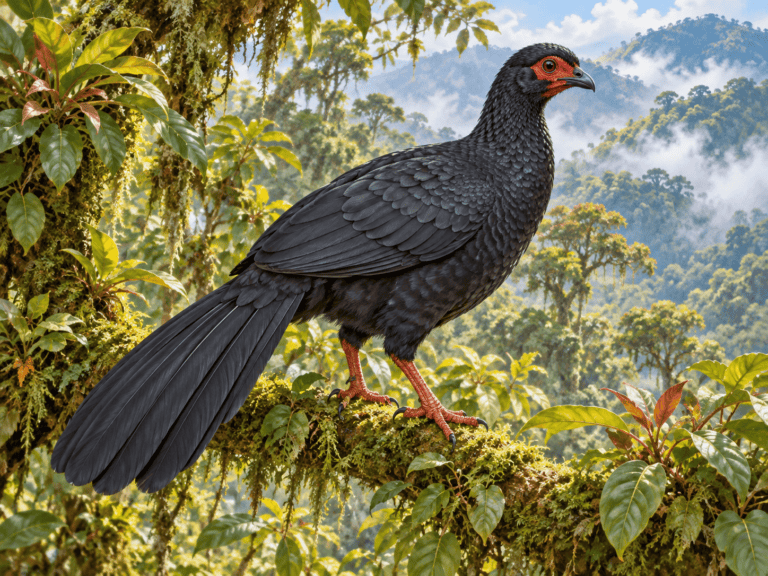
Nature Field Guide

Black Guan

Spanish name
Pava negra
Scientific name
Chamaepetes unicolor

What Do Pico & Tati Think?

Pico: “A big bird is moving through the branches!”

Tati: “Look for its face and legs as well as its feathers.”

What does Least Concern mean?

In the linked conservation assessment, this species does not qualify as threatened or near threatened with extinction. It still needs care: local populations and habitats can face problems even when the species has a lower extinction risk overall.

This label describes conservation status. It does not tell us whether a plant is safe for children or pets. Select the status button to read the assessment.

Identification

Key Features of the Black Guan

  • Black body without a curassow’s curled crest.

  • Blue bare skin around a red eye.

  • Reddish legs.

Habitat & range

Montane forest, generally from about 1000 m to the upper forest limit. South Pacific refers to high Talamanca slopes, not coastal lowlands.

Seasonal Calendar

Resident presence

Costa Rica; suitable highland forest

Year-round

Resident nationally; presence and detectability vary among local sites.

Event source ↗

Conservation & care

Stay on authorized trails or viewing routes. Give birds space, keep voices low and leave nests undisturbed. Observe without bait, feeding or recorded calls.

Threats & pressures

Dependence on forest makes clearing and fragmentation relevant pressures despite the global Least Concern category.

Conservation assessment

BirdLife gives Least Concern, last assessment 2021. Source checked 7 October 2026. This is a global species category, not a count of birds in the tagged towns.

View full profile →

Nature Field Guide

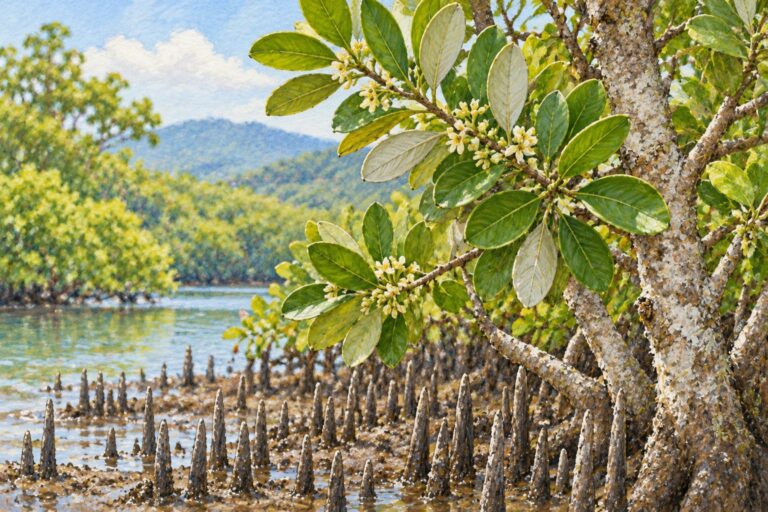
Black Mangrove

Spanish name
Mangle negro / Palo de sal
Scientific name
Avicennia germinans

What Do Pico & Tati Think?

Pico: “Pencil-shaped breathing roots rise from the mud around this mangrove.”

Tati: “Let’s notice the leaves, flowers and habitat without disturbing the plant.”

Identification

Key Features of the Black Mangrove

  • Opposite oval leaves with pale undersides

  • Upright pencil-shaped roots

  • Small pale flowers

Habitat & range

Coastal mangroves; Pacific documentation includes Guanacaste and Tivives near the Gulf of Nicoya. Gandoca provides a documented Caribbean example.

Conservation & care

Explore mangroves only with an adult on permitted paths or a guided route. Do not step on roots, collect seedlings or enter mud and tidal channels. Leave leaves and wildlife undisturbed.

Threats & pressures

Protect suitable habitat, mature trees and natural regeneration. Avoid trampling, unauthorized clearing and collection.

View full profile →

Nature Field Guide

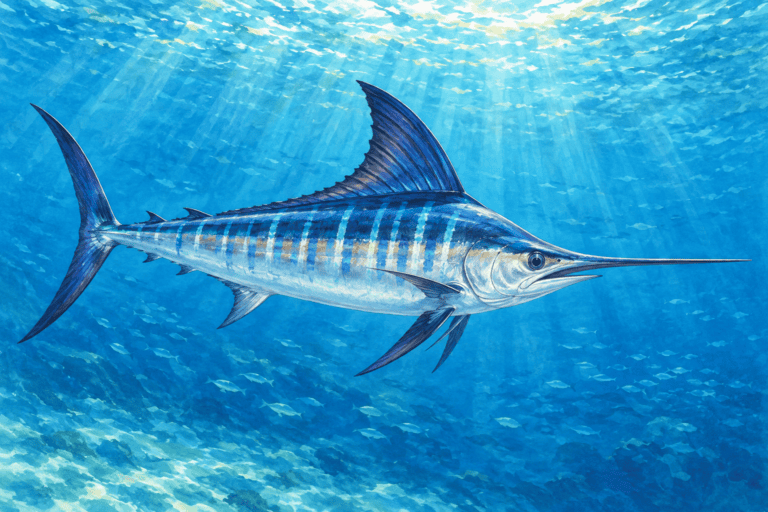
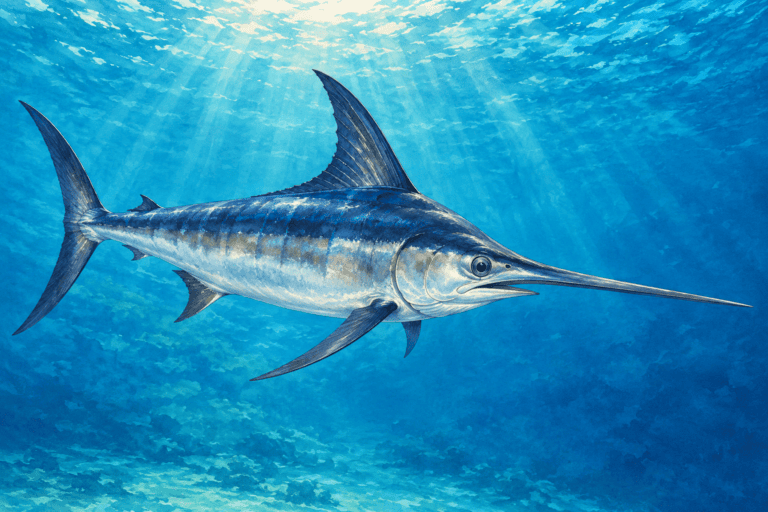
Black Marlin

Spanish name
Marlín negro
Scientific name
Istiompax indica

What Do Pico & Tati Think?

Pico: “How can we tell this marlin apart?”

Tati: “Its stiff side fins are a useful clue.”

Identification

Key Features of the Black Marlin

  • Rigid pectoral fins that do not fold flat against the body.

  • A substantial head and comparatively stout bill.

  • A powerful streamlined body.

Habitat & range

Offshore Pacific waters.

Conservation & care

Observe marine wildlife without feeding, touching or chasing it. Keep litter and discarded fishing line out of waterways. Follow qualified guides and current local rules.

Threats & pressures

Fishing capture is a conservation concern for billfish. Tracking catches and releases helps assess pressures across a migratory range.

View full profile →

Nature Field Guide

Black Spiny Brittle Star

Spanish name
Ofiura negra espinosa
Scientific name
Ophiocoma aethiops

What Do Pico & Tati Think?

A thin arm at the edge of a shelter can be an entire discovery. Pico waits quietly; Tati draws only what is visible.

Identification

Key Features of the Black Spiny Brittle Star

  • A central disc distinct from the arms

  • Long slender arms with visible spines

  • Only part of the animal may be visible naturally

Habitat & range

Suitable underwater coastal habitat. Use a permitted guided snorkeling or viewing activity appropriate to your family; do not enter the sea just to find this animal.

Conservation & care

Watch without touching, lifting, feeding or collecting. Keep fingers and equipment away from spines and other surface structures. Leave the animal submerged and its habitat undisturbed.

View full profile →

Nature Field Guide

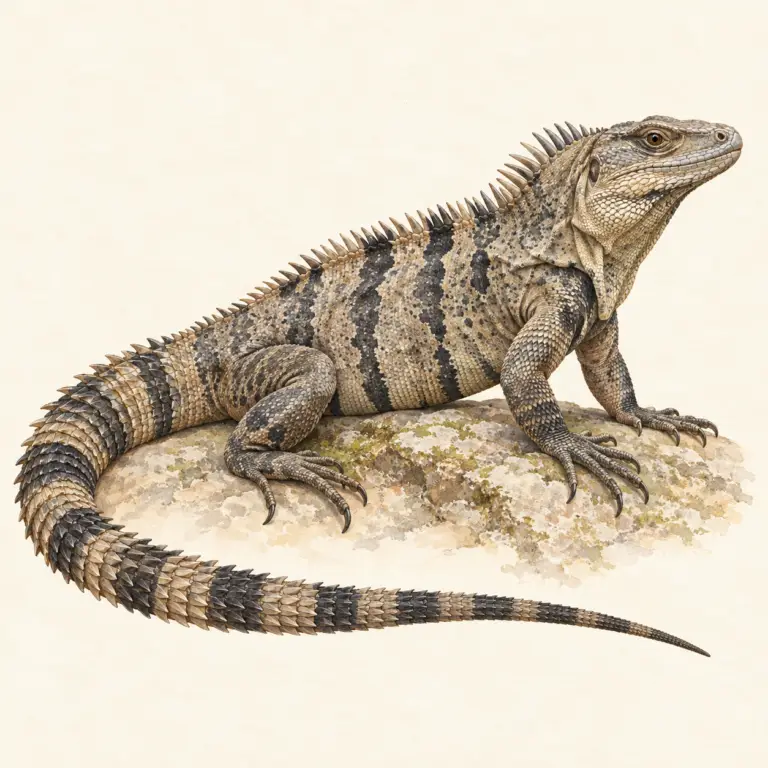
Black Spiny-tailed Iguana

Spanish name
Garrobo
Scientific name
Ctenosaura similis

What Do Pico & Tati Think?

Pico and Tati invite you to learn about the black spiny-tailed iguana. Use a photograph to compare this tail with the smooth-looking outline of a green iguana tail.

Identification

Key Features of the Black Spiny-tailed Iguana

  • Rings of pointed scales on the tail.

  • Gray or brown adults with dark body bands.

  • Raised scales along the back.

Habitat & range

Pacific-slope dry forest, rocky ground and open wooded areas.

Conservation & care

Watch wildlife with an adult from a safe path. Do not touch, feed, capture or move reptiles, and keep pets away. Leave eggs, shelters and vegetation undisturbed.

View full profile →

Nature Field Guide

Black Vulture

Spanish name
Zopilote negro
Scientific name
Coragyps atratus

What Do Pico & Tati Think?

Pico: “Which vulture is that one?”

Tati: “Look for the short tail and pale patches just at the wingtips.”

Identification

Key Features of the Black Vulture

  • Bare dark head

  • Short rounded tail

  • White patches at outer wingtips

Habitat & range

Widespread over towns and open landscapes from the coast into the mountains, becoming less frequent above about 2000 m. A regional tag does not identify a nesting site.

Conservation & care

Observe quietly from trails or established viewing areas. Give nests, roosts and feeding birds space. Do not handle, chase or lure birds with playback. Keep pets away from wildlife.

Threats & pressures

Protect native vegetation, reduce collision hazards around glass and keep cats away from birds. These are practical prevention priorities, not a claim of a measured decline at a specific Costa Rican site.

View full profile →

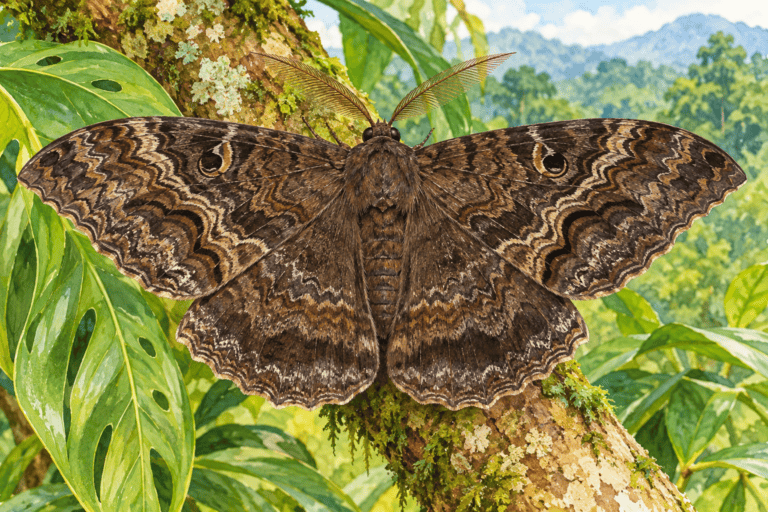
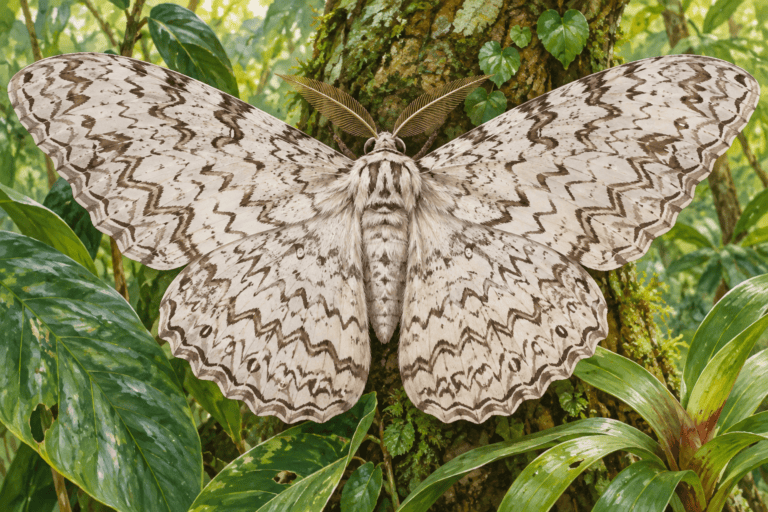
Nature Field Guide

Black Witch Moth

Spanish name
Polilla bruja
Scientific name
Ascalapha odorata

What Do Pico & Tati Think?

Pico: “Let's look closely at the black witch moth!”

Tati: “We can compare its shape and markings without touching it.”

Identification

Key Features of the Black Witch Moth

  • Broad dark brown wings

  • fine wavy lines

  • small curled forewing markings

Habitat & range

Forest paths, edges and nearby vegetation in Guanacaste. Local habitat and abundance vary.

Conservation & care

Observe without collecting, handling or disturbing insects or nests. Stay on permitted paths. Leave caterpillars and their food plants in place.

View full profile →

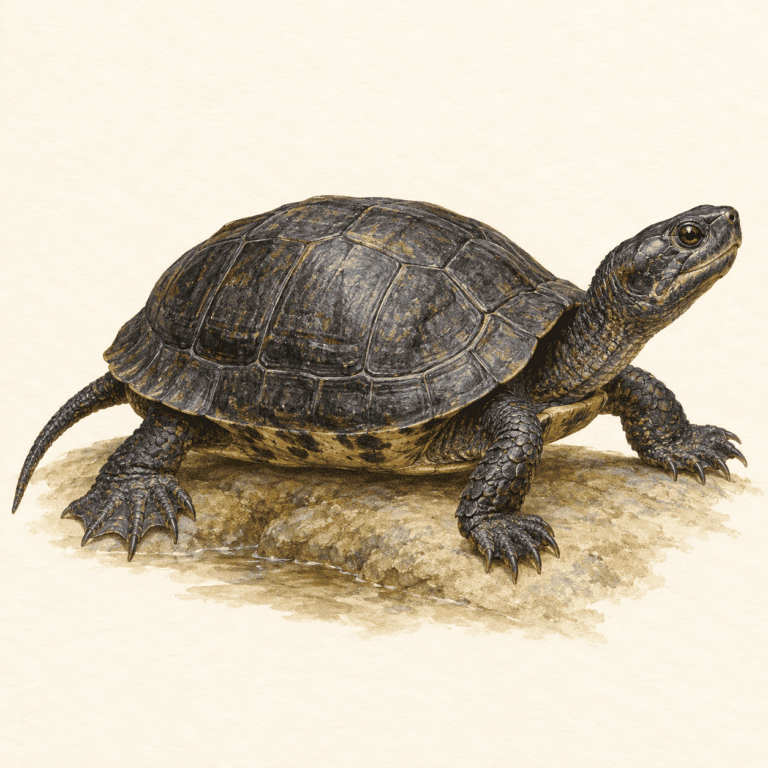
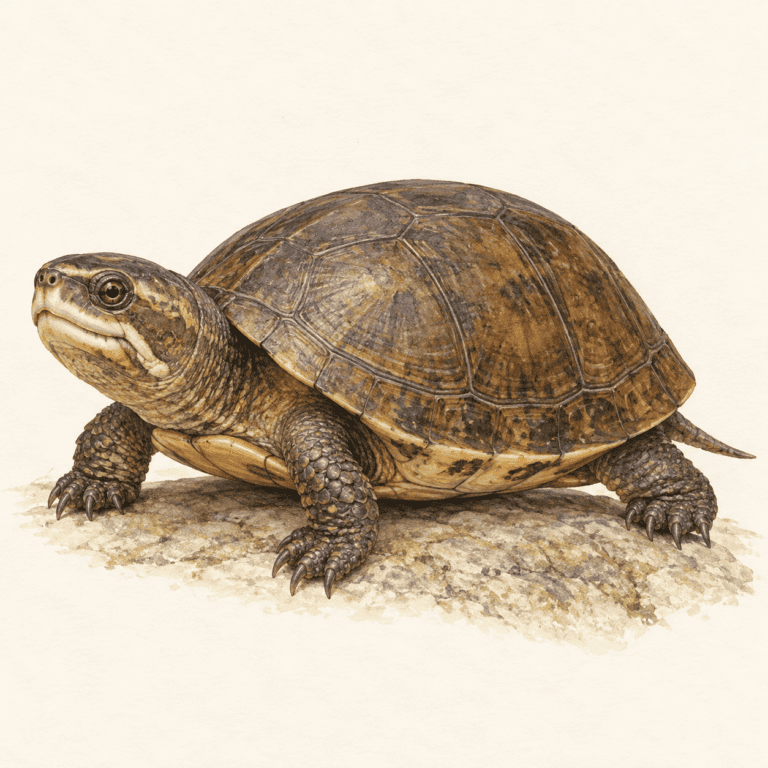
Nature Field Guide

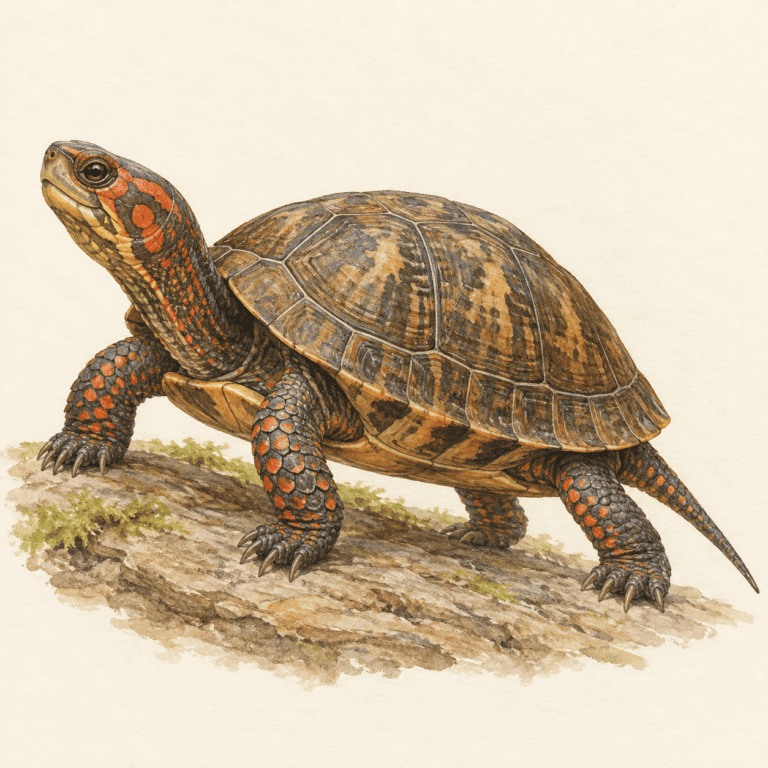
Black Wood Turtle

Spanish name
Tortuga negra
Scientific name
Rhinoclemmys funerea

What Do Pico & Tati Think?

Pico and Tati invite you to learn about the black wood turtle. Draw the major shell scutes from a photograph. Compare the outline with the painted wood turtle.

Identification

Key Features of the Black Wood Turtle

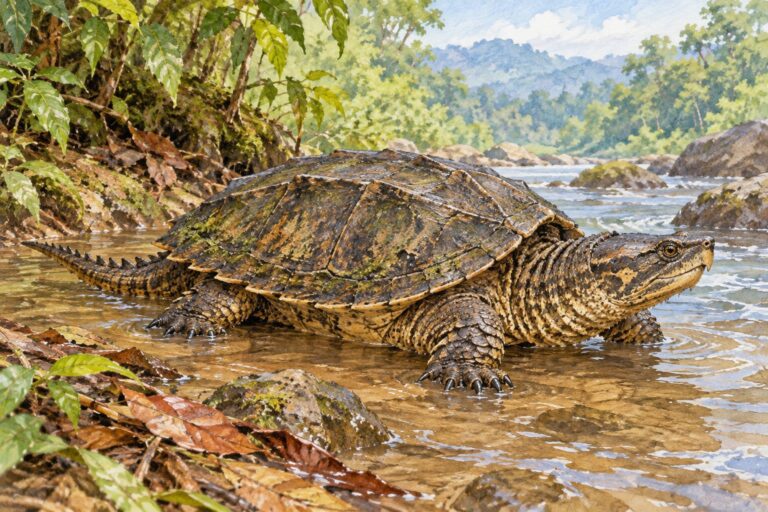
  • Dark shell and dark head.

  • Feet adapted to life around freshwater.

  • A hard shell divided into visible scutes.

Habitat & range

Humid lowland freshwater habitats such as streams, ponds and swamp forest, particularly Caribbean drainage areas.

Conservation & care

Watch wildlife with an adult from a safe path. Do not touch, feed, capture or move reptiles, and keep pets away. Leave eggs, shelters and vegetation undisturbed.

View full profile →

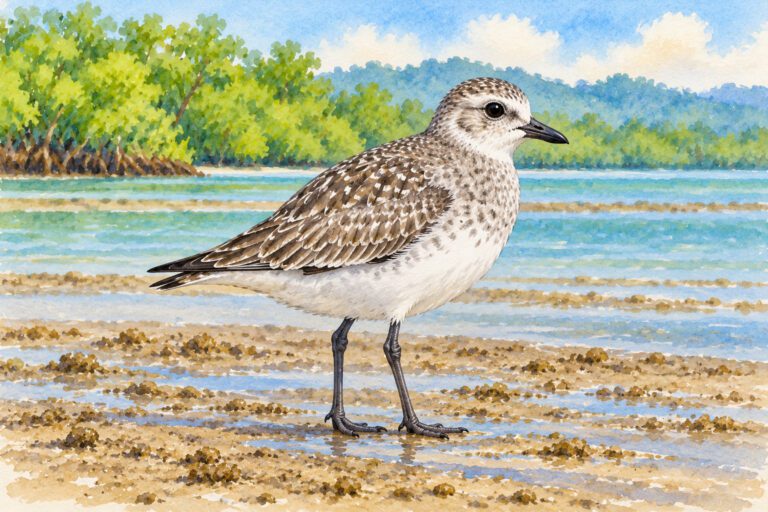
Nature Field Guide

Black-bellied Plover

Spanish name
Chorlito gris
Scientific name
Pluvialis squatarola

What Do Pico & Tati Think?

Pico expects a black belly. Tati’s winter bird has a pale belly and a very different outfit.

Identification

Key Features of the Black-bellied Plover

  • Large round-headed plover

  • Short stout dark bill

  • Gray upperparts and pale nonbreeding belly

  • Dark armpit patch visible in natural flight

Habitat & range

Scan exposed shoreline feeding areas and nearby resting places with binoculars. The tide changes which flats are available; remain on a safe established route.

Conservation & care

Give feeding and resting birds space. If a bird stops feeding, repeatedly looks at you or moves away, increase your distance. Keep dogs away from flocks, avoid playback and feeding, and leave nests and natural shoreline debris undisturbed.

View full profile →

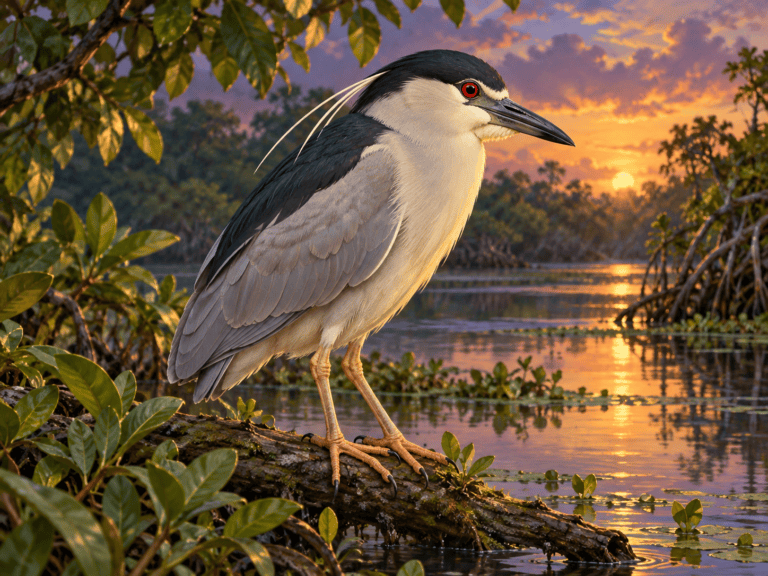
Nature Field Guide

Black-crowned Night-Heron

Spanish name
Martinete coroninegro
Scientific name
Nycticorax nycticorax

What Do Pico & Tati Think?

Pico: “This heron looks shorter and rounder than the others!”

Tati: “It may be resting now and feeding later.”

Identification

Key Features of the Black-crowned Night-Heron

  • Stocky body and short-looking neck.

  • Adult: black crown and back, gray wings.

  • Young: brown plumage with pale spots.

Habitat & range

Wetland and mangrove populations include the Tempisque and Gulf of Nicoya landscape and local Caribbean lowlands. Resident birds and seasonal visitors both occur.

Conservation & care

Stay on authorized trails or viewing routes. Give birds space, keep voices low and leave nests undisturbed. Observe without bait, feeding or recorded calls.

Threats & pressures

Wetland drainage, development and contaminated runoff can degrade habitat and water quality.

View full profile →

Nature Field Guide

Black-faced Solitaire

Spanish name
Jilguero / Solitario carinegro
Scientific name
Myadestes melanops

What Do Pico & Tati Think?

Pico: “The song seems to be coming from a different place now!”

Tati: “Listening is a discovery, even without a photograph.”

Identification

Key Features of the Black-faced Solitaire

  • Slate-gray body and dark face.

  • A distinctive, varied mountain-forest song.

  • Singer may stay low and move within vegetation.

Habitat & range

Humid mountain forest on both slopes; after breeding some birds descend into Caribbean foothills and lowlands. Broad lowland tags represent seasonal forest habitat, not general abundance.

Conservation & care

Stay on authorized trails or viewing routes. Give birds space, keep voices low and leave nests undisturbed. Observe without bait, feeding or recorded calls.

View full profile →

Nature Field Guide

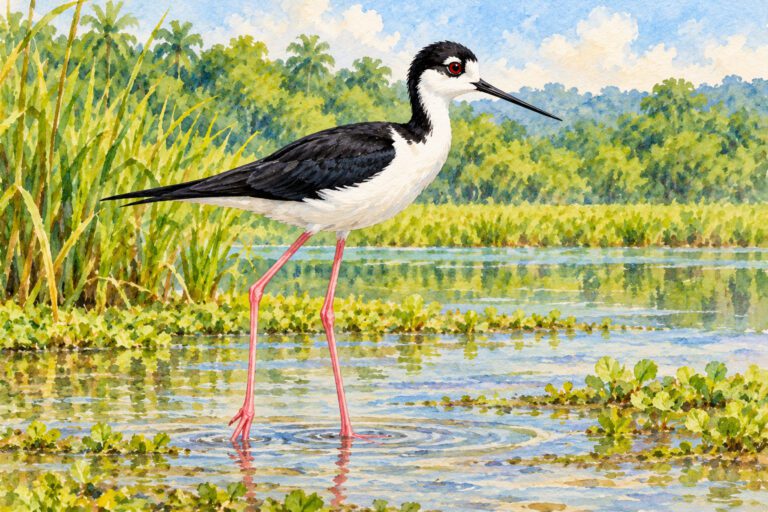
Black-necked Stilt

Spanish name
Cigüeñuela cuellinegra
Scientific name
Himantopus mexicanus

What Do Pico & Tati Think?

Those pink legs look almost too long for Pico’s page. Tati turns the journal upright to draw the whole bird.

Identification

Key Features of the Black-necked Stilt

  • Very long pink legs

  • Thin straight black bill

  • White underparts with dark back and hindneck

Habitat & range

Scan exposed shoreline feeding areas and nearby resting places with binoculars. The tide changes which flats are available; remain on a safe established route.

Conservation & care

Give feeding and resting birds space. If a bird stops feeding, repeatedly looks at you or moves away, increase your distance. Keep dogs away from flocks, avoid playback and feeding, and leave nests and natural shoreline debris undisturbed.

View full profile →

Nature Field Guide

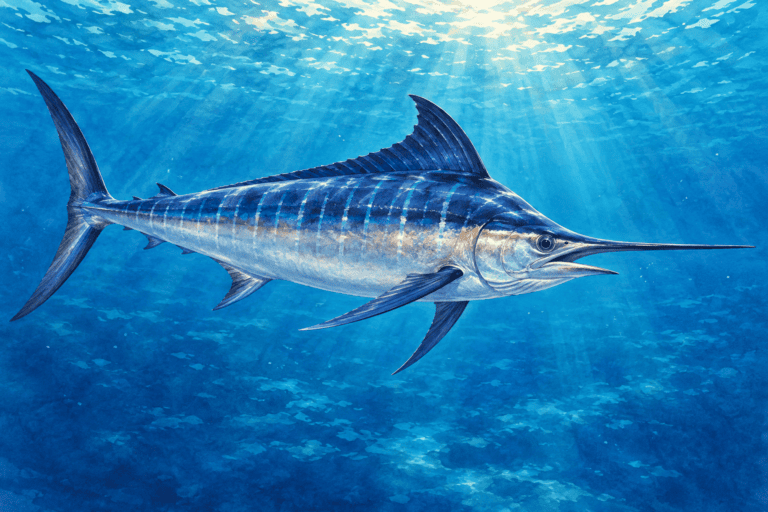
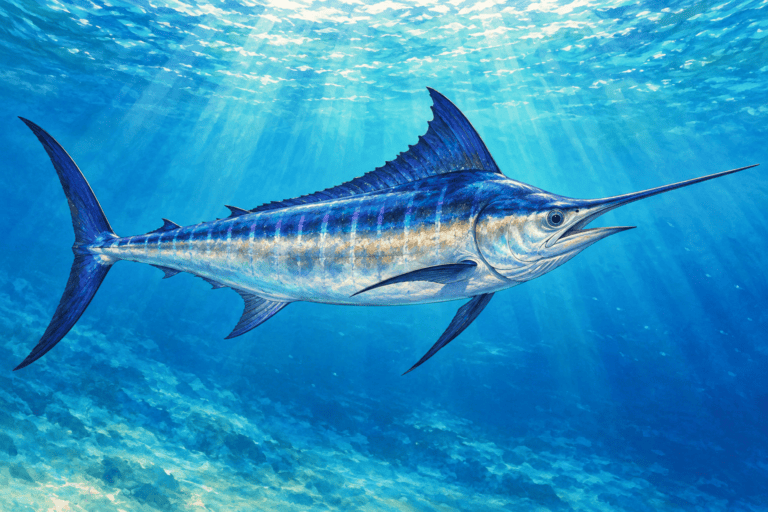
Blue Marlin

Spanish name
Marlín azul
Scientific name
Makaira nigricans

What Do Pico & Tati Think?

Pico: “Its back is such a deep blue!”

Tati: “Let’s compare its fin and bill with the other marlin.”

Identification

Key Features of the Blue Marlin

  • A long spear-shaped bill.

  • A cobalt-blue back and silvery underside.

  • A pronounced front dorsal fin and crescent-shaped tail.

Habitat & range

Warm tropical and subtropical open water.

Seasonal Calendar

Regional presence

Costa Rican Pacific waters

Year-round

FECOP reports year-round Costa Rican Pacific presence and a historical May–September Guanacaste fishing peak. Catch patterns are not exact migration or breeding dates.

Event source ↗

Reported fishing peak

Guanacaste offshore waters

May, Jun, Jul, Aug, Sep

FECOP reports year-round Costa Rican Pacific presence and a historical May–September Guanacaste fishing peak. Catch patterns are not exact migration or breeding dates.

Event source ↗

Conservation & care

Observe marine wildlife without feeding, touching or chasing it. Keep litter and discarded fishing line out of waterways. Follow qualified guides and current local rules.

Threats & pressures

Blue marlin can be caught incidentally in longline fisheries targeting tuna and swordfish. Fishing pressure needs monitoring across its migratory range.

View full profile →

Nature Field Guide

Blue Morpho

Spanish name
Mariposa morfo azul
Scientific name
Morpho helenor

What Do Pico & Tati Think?

Pico: “Let's look closely at the blue morpho!”

Tati: “We can compare its shape and markings without touching it.”

Identification

Key Features of the Blue Morpho

  • Brilliant blue upper wings with broad dark margins

  • brown underside with eye spots

Habitat & range

Forest paths, edges and nearby vegetation in Guanacaste. Local habitat and abundance vary.

Conservation & care

Observe without collecting, handling or disturbing insects or nests. Stay on permitted paths. Leave caterpillars and their food plants in place.

View full profile →

Nature Field Guide

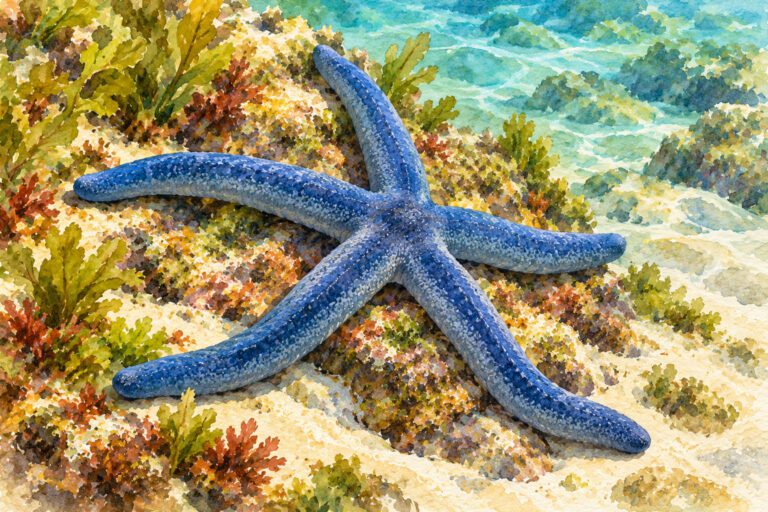
Blue Sea Star

Spanish name
Estrella azul
Scientific name
Phataria unifascialis

What Do Pico & Tati Think?

An ocean star can turn a quiet look underwater into a new question. What details would help you recognize it again?

Identification

Key Features of the Blue Sea Star

  • A central body with spreading arms

  • Record the visible color and pattern

  • Confirm the species using several features together

Habitat & range

Suitable underwater coastal habitat. Use a permitted guided snorkeling or viewing activity appropriate to your family; do not enter the sea just to find this animal.

Conservation & care

Watch without touching, lifting, feeding or collecting. Keep fingers and equipment away from spines and other surface structures. Leave the animal submerged and its habitat undisturbed.

View full profile →

Nature Field Guide

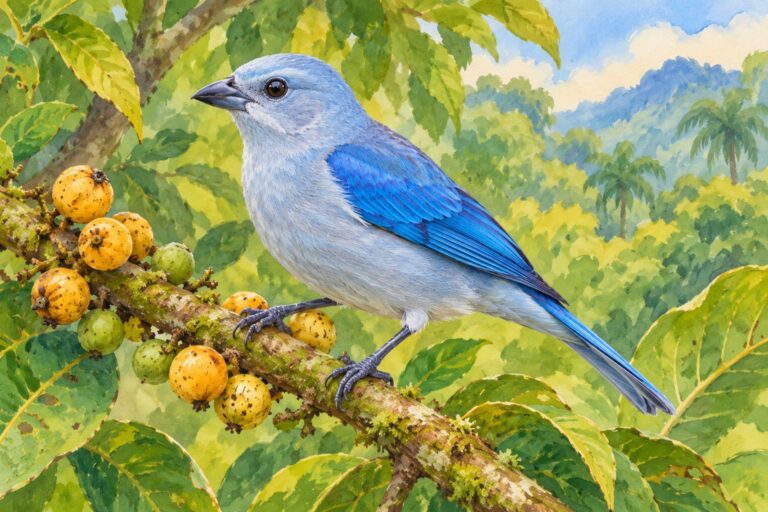
Blue-gray Tanager

Spanish name
Tangara azuleja
Scientific name
Thraupis episcopus

What Do Pico & Tati Think?

Pico: “It looks like a piece of the sky!”

Tati: “Let’s see where the blue is pale and where it is brighter.”

Identification

Key Features of the Blue-gray Tanager

  • Powder blue-gray body

  • Brighter blue wings and shoulder

  • Dark eye and stout bill

Habitat & range

Widespread in gardens, towns and semi-open wooded areas, mainly below about 2000 m. In the dry northwest it is less frequent and associated with moister sites near homes.

Conservation & care

Observe quietly from trails or established viewing areas. Give nests, roosts and feeding birds space. Do not handle, chase or lure birds with playback. Keep pets away from wildlife.

Threats & pressures

Protect native vegetation, reduce collision hazards around glass and keep cats away from birds. These are practical prevention priorities, not a claim of a measured decline at a specific Costa Rican site.

View full profile →

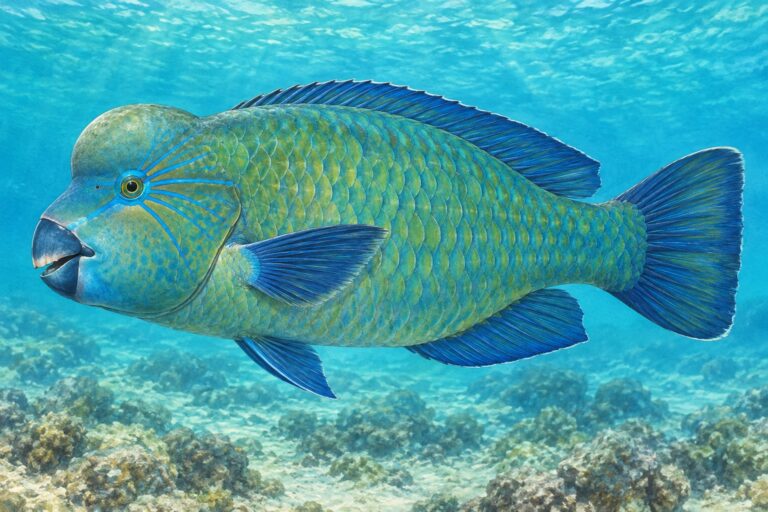
Nature Field Guide

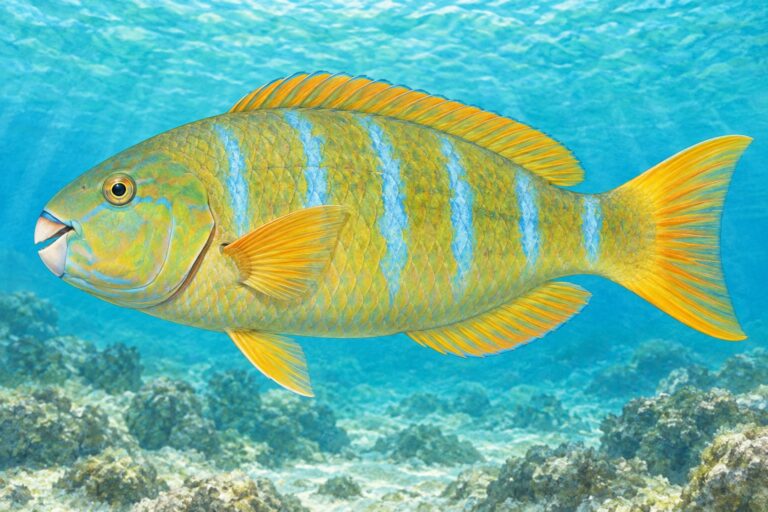
Bluebarred Parrotfish

Spanish name
Loro de bandas azules
Scientific name
Scarus ghobban

What Do Pico & Tati Think?

Pico: “Why is it called a parrotfish?”

Tati: “Its teeth join into plates that look like a beak.”

Identification

Key Features of the Bluebarred Parrotfish

  • Parrot-like dental beak

  • Blue bars in initial phase

  • Large visible scales

Habitat & range

Pacific rocky reefs and nearby coastal marine habitats. Check the linked species reference for its wider range.

Conservation & care

Observe with a qualified guide. Do not feed, chase or handle fish. Keep fins off the reef and take all litter home.

Threats & pressures

Habitat damage and degraded water quality are pressures to prevent in coastal fish habitats. This profile does not quantify a local decline.

View full profile →

Nature Field Guide

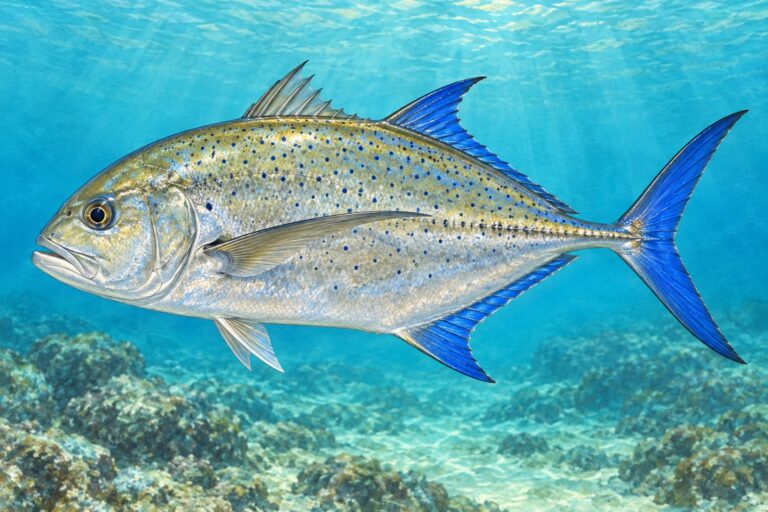
Bluefin Trevally

Spanish name
Jurel aleta azul
Scientific name
Caranx melampygus

What Do Pico & Tati Think?

Pico: “Those blue fins really stand out!”

Tati: “The tiny blue-black spots are another clue in adults.”

Identification

Key Features of the Bluefin Trevally

  • Electric blue fins

  • Blue-black body spots in adults

  • Deeply forked tail

Habitat & range

Pacific rocky reefs and nearby coastal marine habitats. Check the linked species reference for its wider range.

Conservation & care

Observe with a qualified guide. Do not feed, chase or handle fish. Keep fins off the reef and take all litter home.

Threats & pressures

Habitat damage and degraded water quality are pressures to prevent in coastal fish habitats. This profile does not quantify a local decline.

View full profile →

Nature Field Guide

Blunt-headed Tree Snake

Spanish name
Serpiente bejuquillo cabezona
Scientific name
Imantodes cenchoa

What Do Pico & Tati Think?

Pico and Tati invite you to learn about the blunt-headed tree snake. From a photograph, compare the widths of the head and neck. Do not move foliage to look for a snake.

Identification

Key Features of the Blunt-headed Tree Snake

  • Very slender body.

  • Head noticeably wider than the neck.

  • Large eyes and brown blotches on a pale background.

Habitat & range

Humid forest understory, vines and shrubs.

Conservation & care

Never approach, touch, catch or try to move any snake, even if it appears harmless or dead. Keep children and pets away, step back calmly and tell an adult or guide. Do not use colors, head shape or this card to judge safety.

View full profile →

Nature Field Guide

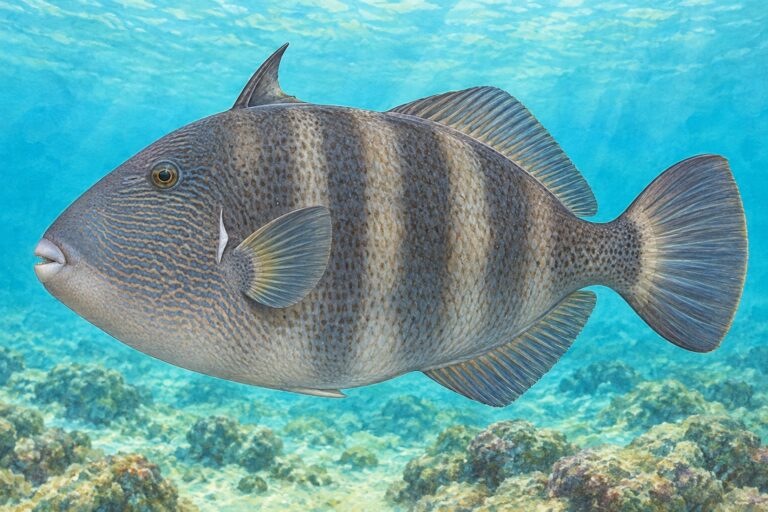
Blunthead Triggerfish

Spanish name
Chancho fisgón
Scientific name
Pseudobalistes naufragium

What Do Pico & Tati Think?

Pico: “Can you see the little white gill opening?”

Tati: “Yes. That and its blunt head are useful clues.”

Identification

Key Features of the Blunthead Triggerfish

  • Thick gray body

  • Pale white gill slit

  • Faint bars and blunt head

Habitat & range

Pacific rocky reefs and nearby coastal marine habitats. Check the linked species reference for its wider range.

Conservation & care

Keep clear of tail-base structures and strong jaws. Observe with a qualified guide. Do not feed, chase or handle fish. Keep fins off the reef and take all litter home.

Threats & pressures

Habitat damage and degraded water quality are pressures to prevent in coastal fish habitats. This profile does not quantify a local decline.

View full profile →

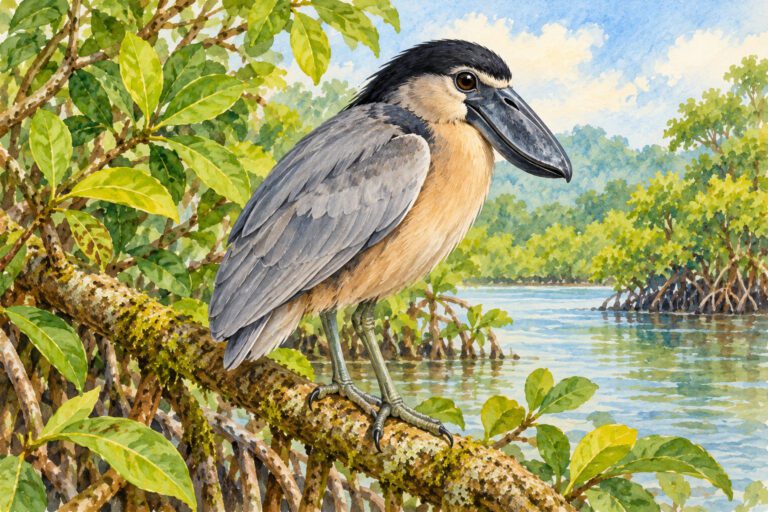
Nature Field Guide

Boat-billed Heron

Spanish name
Chocuaco o picocuchara
Scientific name
Cochlearius cochlearius

What Do Pico & Tati Think?

That broad bill looks unlike the pointed bills Pico has drawn. Tati adds a new shape to the explorer journal.

Identification

Key Features of the Boat-billed Heron

  • Very broad boat-shaped bill

  • Large dark eyes and black crown

  • Stocky body with gray back

Habitat & range

Scan shallow water, quiet mangrove channels and vegetated wetland margins from an established viewpoint. Follow a local guide’s directions around estuaries.

Conservation & care

Give feeding and resting birds space. If a bird stops feeding, repeatedly looks at you or moves away, increase your distance. Keep dogs away from flocks, avoid playback and feeding, and leave nests and natural shoreline debris undisturbed.

View full profile →

Nature Field Guide

Bradley’s Sea Star

Spanish name
Estrella de mar de Bradley
Scientific name
Mithrodia bradleyi

What Do Pico & Tati Think?

A sea star can look still while its place in the reef is full of life. Pico wants to sketch its outline; Tati wants to compare its arms.

Identification

Key Features of the Bradley’s Sea Star

  • Arms radiating from a central body

  • A textured upper surface

  • Compare the whole outline with a verified species photograph

Habitat & range

Suitable underwater coastal habitat. Use a permitted guided snorkeling or viewing activity appropriate to your family; do not enter the sea just to find this animal.

Conservation & care

Watch without touching, lifting, feeding or collecting. Keep fingers and equipment away from spines and other surface structures. Leave the animal submerged and its habitat undisturbed.

View full profile →

Nature Field Guide

Bridled Anole

Spanish name
Anolis con bridas
Scientific name
Anolis frenatus

What Do Pico & Tati Think?

Pico: “What can we learn from this reptile’s shape?”

Tati: “Let’s notice its markings and habitat while leaving it plenty of space.”

Identification

Key Features of the Bridled Anole

  • Large tree anole with long legs

  • Dark oblique markings on greenish tones

  • Pale interorbital head bar

Habitat & range

Lowland wet forest at scattered Caribbean-slope and southwestern Pacific localities.

Conservation & care

Observe from permitted paths with an adult. Do not touch, chase, catch or feed reptiles. Leave bark, stones, logs and leaf litter in place. Keep pets away and give animals an open escape route.

Threats & pressures

Protect natural shelters and connected habitat. Avoid collection, unnecessary clearing and deliberate killing. Leave wildlife in its habitat and support responsible observation.

View full profile →

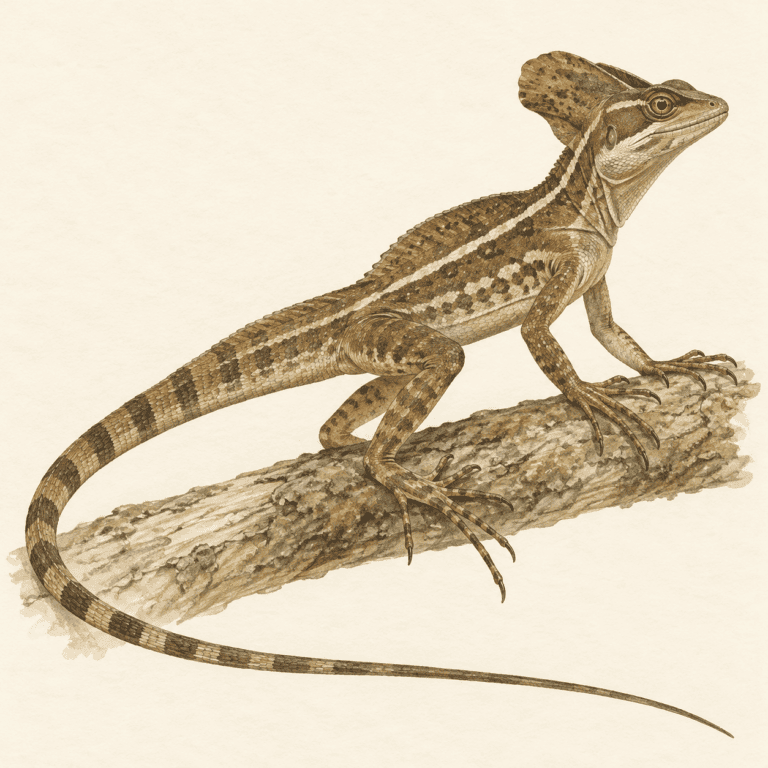
Nature Field Guide

Brown Basilisk

Spanish name
Basilisco café
Scientific name
Basiliscus vittatus

What Do Pico & Tati Think?

Pico and Tati invite you to learn about the brown basilisk. Make a three-column comparison of the common, green and brown basilisk using verified photographs.

Identification

Key Features of the Brown Basilisk

  • Brown or olive body with pale side stripes.

  • Long tail and slender limbs.

  • Adult males can have a head crest without the green basilisk’s tall body sails.

Habitat & range

Lowland forest edges, streamside vegetation and disturbed wooded habitats, including Caribbean areas.

Conservation & care

Watch wildlife with an adult from a safe path. Do not touch, feed, capture or move reptiles, and keep pets away. Leave eggs, shelters and vegetation undisturbed.

View full profile →

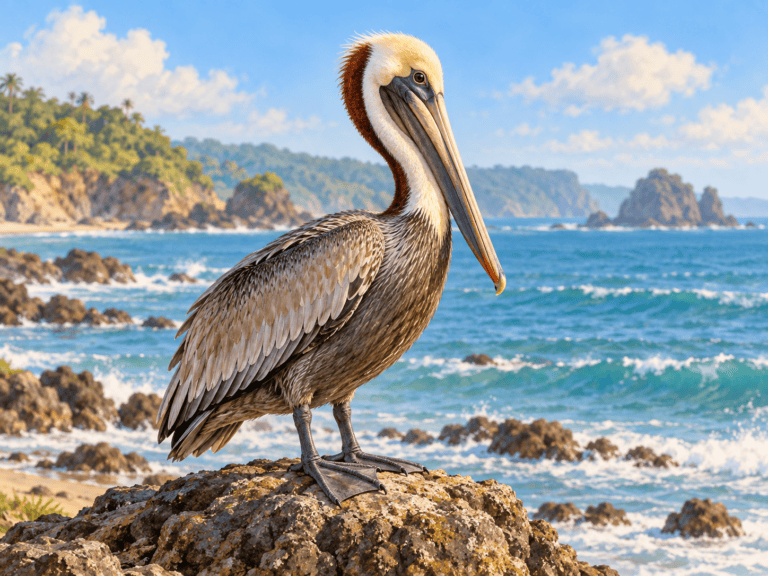
Nature Field Guide

Brown Pelican

Spanish name
Pelícano pardo
Scientific name
Pelecanus occidentalis

What Do Pico & Tati Think?

Pico: “Look at that enormous bill!”

Tati: “Let’s compare its shape with the other birds by the water.”

Identification

Key Features of the Brown Pelican

  • A long bill with a pouch beneath the lower jaw.

  • A large gray-brown body and broad wings.

  • Head and neck colors change with age and breeding condition.

Habitat & range

Coastal waters along the Pacific, with less frequent nonbreeding visitors on the Caribbean coast. Regional tags refer to coastal habitat, not inland towns.

Seasonal Calendar

Resident presence

Isla San Lucas, Costa Rica

Year-round

SINAC lists Brown Pelican as a resident at Isla San Lucas on Costa Rica’s Pacific coast. This regional pattern does not guarantee a Tamarindo sighting or establish a local breeding calendar.

Event source ↗

Conservation & care

Do not feed birds or approach resting groups. Dispose of fishing line responsibly and leave nests undisturbed.

View full profile →

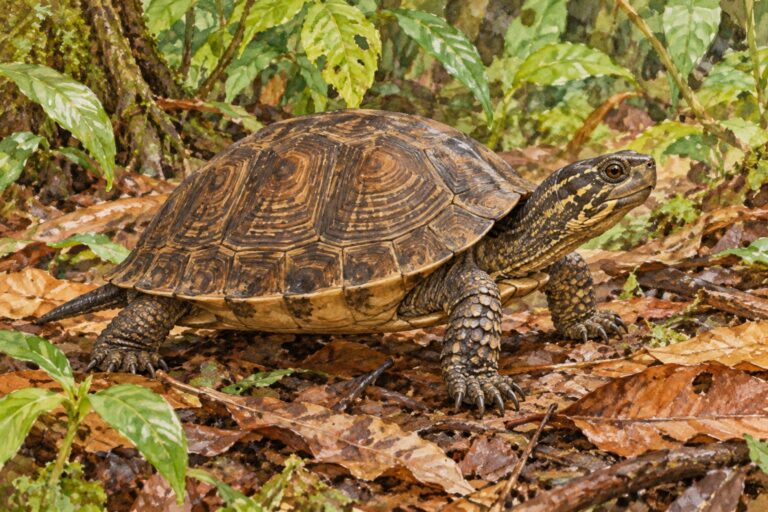
Nature Field Guide

Brown Wood Turtle

Spanish name
Tortuga de bosque / Montañera
Scientific name
Rhinoclemmys annulata

What Do Pico & Tati Think?

Pico: “What clues help us recognize this reptile?”

Tati: “Let’s notice its shape, markings and habitat from a respectful distance.”

Identification

Key Features of the Brown Wood Turtle

  • Domed brown shell

  • Strong walking legs with claws

  • Forest-floor rather than open-water setting

Habitat & range

Caribbean-drainage rainforest and northern lowland habitat; Tortuguero is a documented protected-area example.

Conservation & care

Observe with an adult from permitted paths. Do not catch, chase, touch or feed reptiles. Leave bark, logs, rocks and leaf litter in place. Keep pets away and allow animals an open escape route.

Threats & pressures

Protect habitat connections and natural shelters. Avoid road mortality, collection and deliberate killing. Leave reptiles in their habitat rather than keeping or relocating them.

View full profile →

Nature Field Guide

Brown-throated Three-toed Sloth

Spanish name
Perezoso de tres dedos
Scientific name
Bradypus variegatus

What Do Pico & Tati Think?

Pico: “That shape looks like part of the tree!”

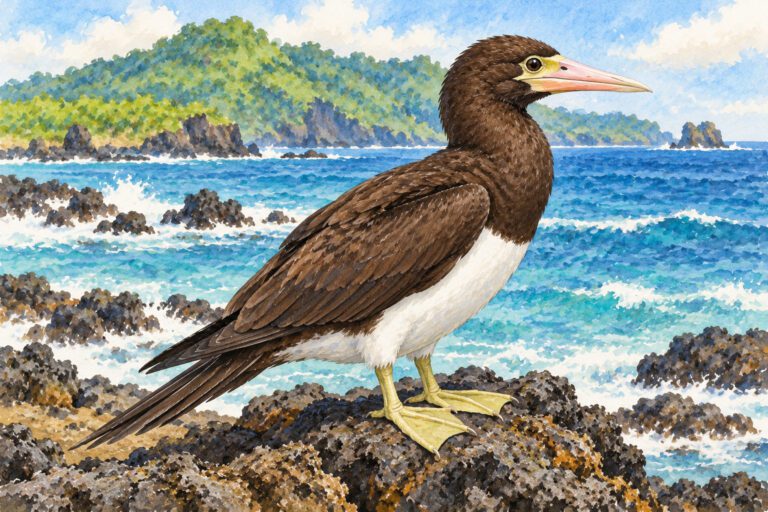
Tati: “Let’s use binoculars and give it time.”

Identification

Key Features of the Brown-throated Three-toed Sloth

  • Three claws on each forelimb, if naturally visible.

  • Rounded face with a dark eye mask.

  • Gray-brown fur may have a greenish appearance.

Habitat & range

Manuel Antonio National Park and the studied cacao landscape at FINMAC, Pueblo Nuevo / Villa Francia, Limón.

Seasonal Calendar

Observed birth concentration

FINMAC cacao landscape, Pueblo Nuevo / Villa Francia

Jan, Feb, Mar

In 2010–2012, 59% of observed births occurred in these months; births also occurred outside this window.

Event source ↗

Conservation & care

Keep a respectful distance and leave an open route for the animal. Stay on authorized paths, secure food and rubbish, and observe without feeding, touching, baiting or chasing.

Threats & pressures

Forest loss breaks canopy connections. Caribbean research identifies risks from domestic dogs and emphasizes retaining riverside forest and living fences.

View full profile →

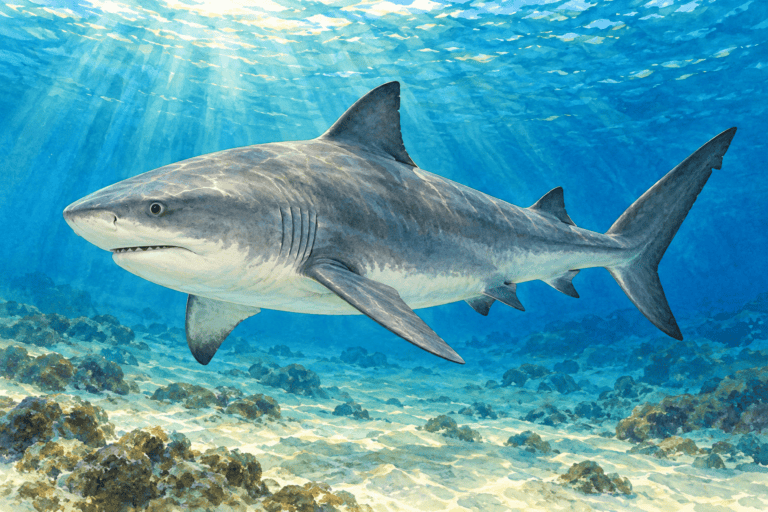
Nature Field Guide

Bull Shark

Spanish name
Tiburón toro
Scientific name
Carcharhinus leucas

What Do Pico & Tati Think?

Pico: “That shark looks strong and stocky!”

Tati: “It can move between salt water and fresh water.”

Identification

Key Features of the Bull Shark

  • A stocky gray body with a pale belly.

  • A short, broad rounded snout and small eyes.

  • A large triangular first dorsal fin.

Habitat & range

Tropical and subtropical coastal waters, estuaries and some freshwater systems.

Conservation & care

Observe marine wildlife without feeding, touching or chasing it. Keep litter and discarded fishing line out of waterways. Follow qualified guides and current local rules.

Threats & pressures

Capture in fisheries affects bull sharks. Coastal development and damage to estuarine nursery habitats can put young animals under additional pressure.

View full profile →

Nature Field Guide

Bumphead Parrotfish

Spanish name
Loro jorobado
Scientific name
Scarus perrico

What Do Pico & Tati Think?

Pico: “Does every fish have that forehead bump?”

Tati: “The hump becomes clearer in large individuals of this species.”

Identification

Key Features of the Bumphead Parrotfish

  • Blue beak

  • Green body and darker fins

  • Forehead hump in large fish

Habitat & range

Pacific rocky reefs and nearby coastal marine habitats. Check the linked species reference for its wider range.

Conservation & care

Observe with a qualified guide. Do not feed, chase or handle fish. Keep fins off the reef and take all litter home.

Threats & pressures

Habitat damage and degraded water quality are pressures to prevent in coastal fish habitats. This profile does not quantify a local decline.

View full profile →

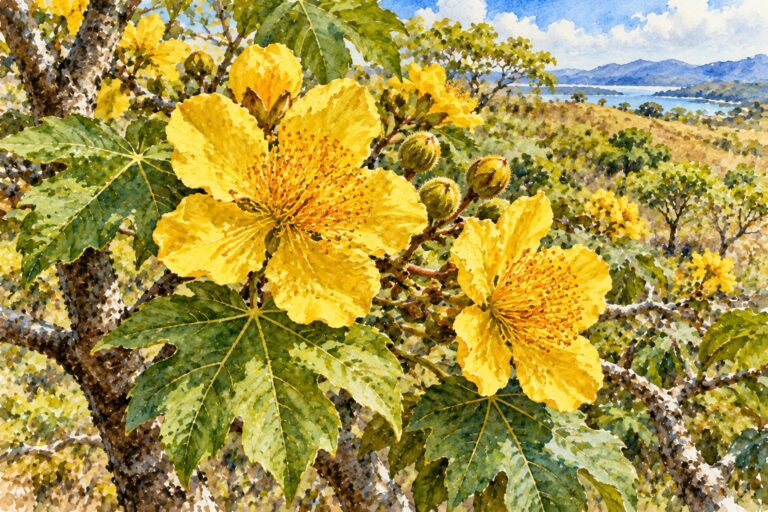
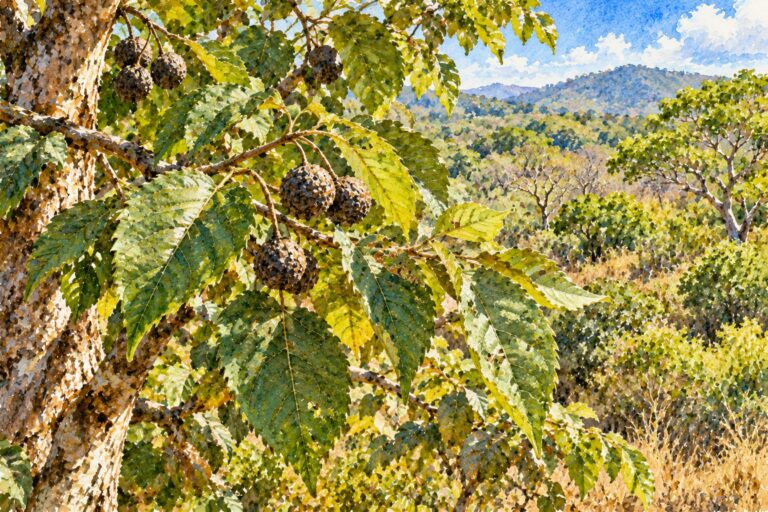
Nature Field Guide

Buttercup Tree

Spanish name
Poro poro
Scientific name
Cochlospermum vitifolium

What Do Pico & Tati Think?

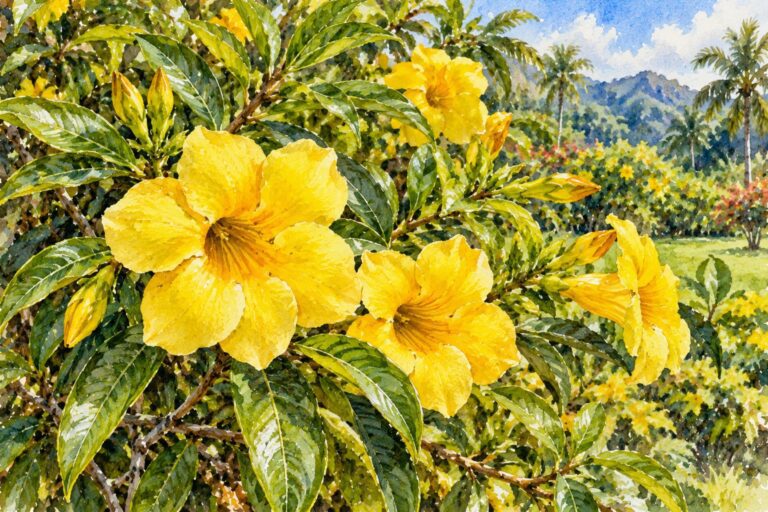
Pico wants to sketch the tree’s silhouette. Tati suggests looking for three clues before guessing its name. What would you notice first?

Identification

Key Features of the Buttercup Tree

  • Large open yellow flowers

  • Simple leaves with three to five lobes

  • Roundish capsules with fluffy seed fibers

Habitat & range

Seasonal woodland and open dry landscapes.

Conservation & care

Observe from paths and leave leaves, bark, flowers and fruits attached. Do not taste wild plants or offer them to pets. Ask a knowledgeable guide to confirm the species.

View full profile →

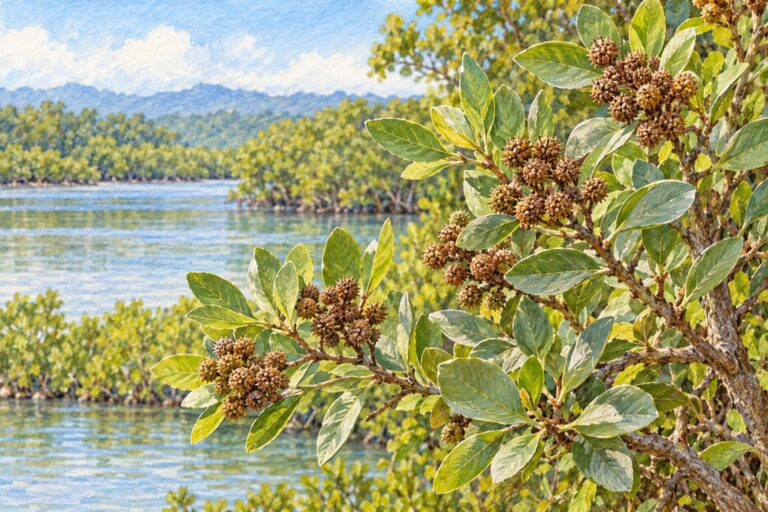
Nature Field Guide

Buttonwood

Spanish name
Mangle botoncillo / Botoncillo
Scientific name
Conocarpus erectus

What Do Pico & Tati Think?

Pico: “Small buttonlike fruit heads help identify this coastal tree or shrub.”

Tati: “Let’s notice the leaves, flowers and habitat without disturbing the plant.”

Identification

Key Features of the Buttonwood

  • Simple alternate leaves

  • Round buttonlike fruit heads

  • Often at the landward mangrove edge

Habitat & range

Coastal margins, including documented mangrove-edge habitat at Tivives and the North Pacific. Gandoca provides a documented Caribbean example.

Conservation & care

Explore with an adult on permitted paths. Observe and photograph without picking leaves, flowers or fruits. Do not taste plants or let pets chew them. Avoid climbing trees and disturbing roots, seedlings or visiting wildlife.

Threats & pressures

Protect suitable habitat, mature trees and natural regeneration. Avoid trampling, unauthorized clearing and collection.

View full profile →

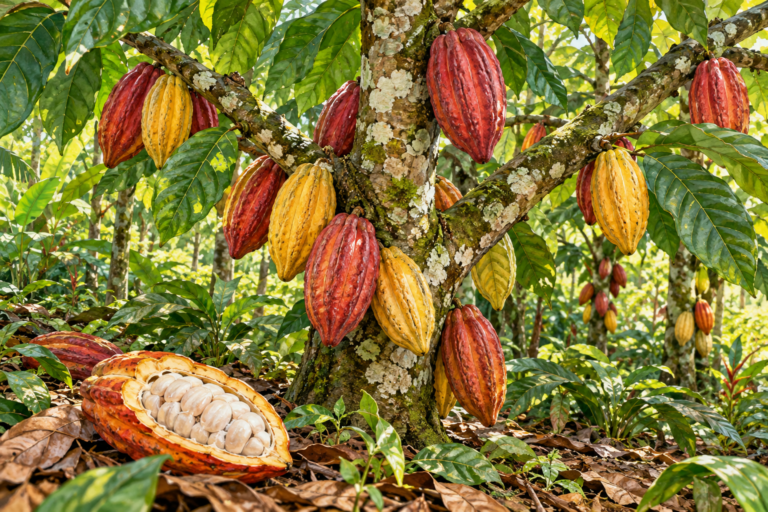
Nature Field Guide

Cacao

Spanish name
Cacao
Scientific name
Theobroma cacao

What Do Pico & Tati Think?

Pico: “Chocolate starts with a tree!”

Tati: “Let's look for pods growing on the trunk.”

Identification

Key Features of the Cacao

  • Large oval leaves

  • Ribbed pods attached to trunk or large branches

  • Tiny flowers on woody parts of the tree

  • Opened pods reveal seeds surrounded by pale pulp

Habitat & range

Humid cacao farms in the Caribbean, Northern Plains and South Pacific. The national cacao plan identifies Talamanca, Upala and Limón among important production cantons.

Conservation & care

Visit farms only with permission and follow the host's instructions. Stay clear of machinery, chemical applications and working areas. Do not pick or taste plants without a responsible adult and the host's approval.

View full profile →

Nature Field Guide

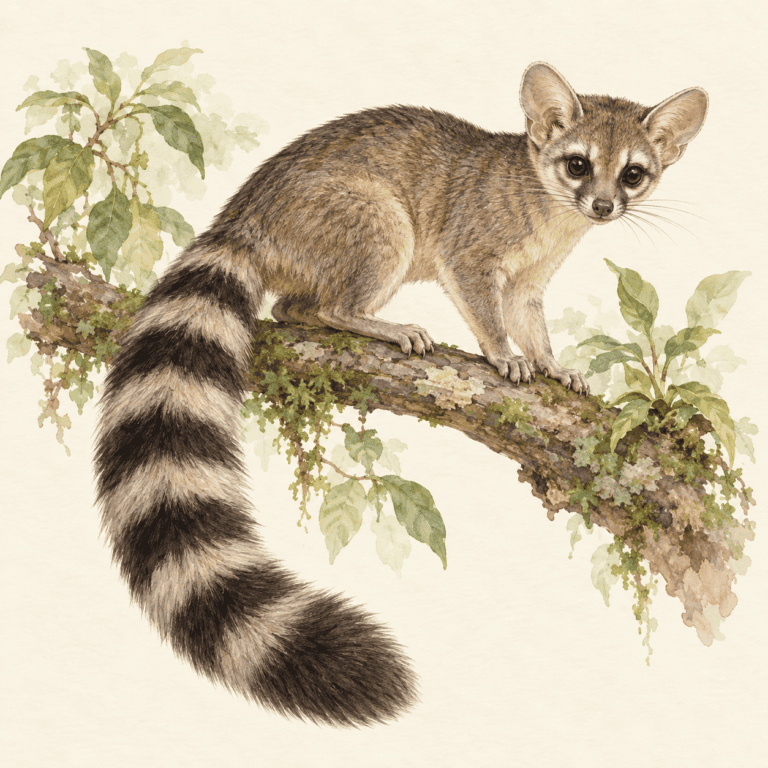
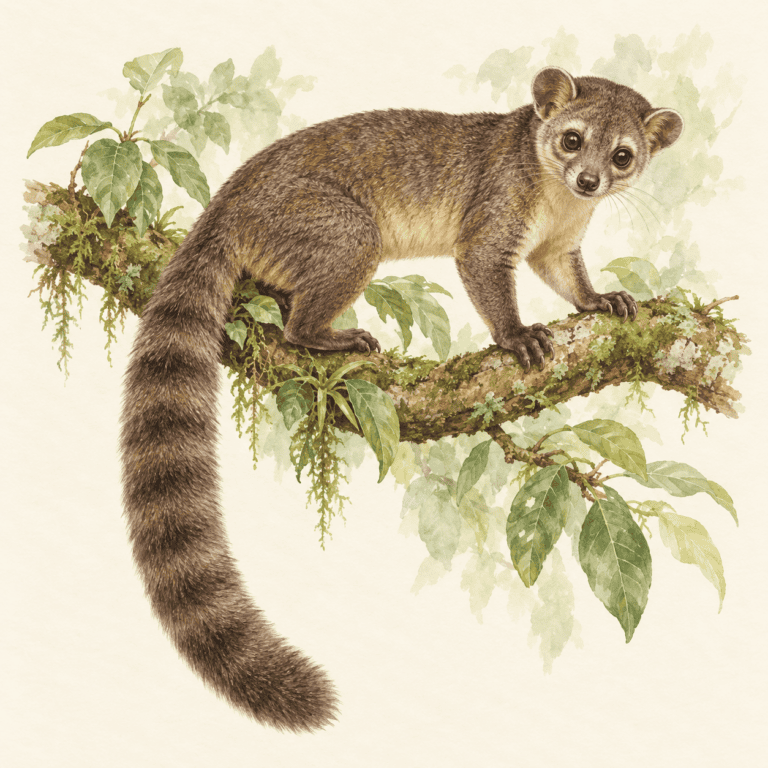
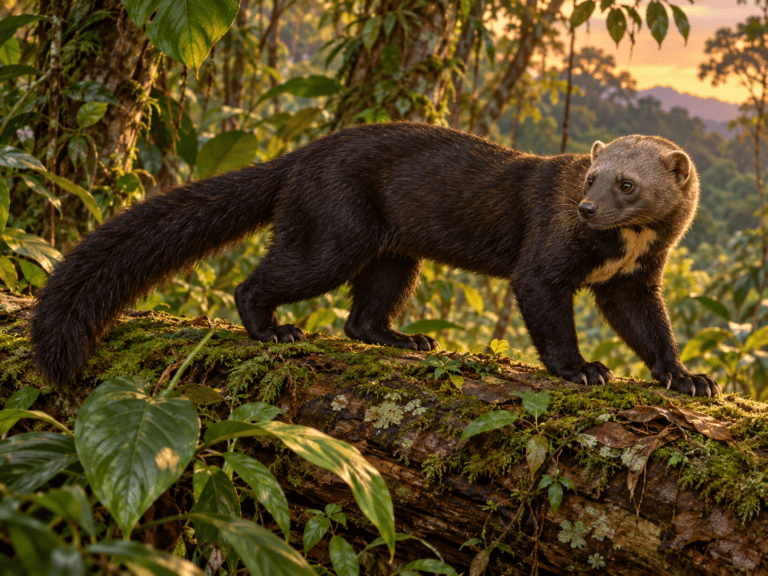
Cacomistle

Spanish name
Ostoche
Scientific name
Bassariscus sumichrasti

What Do Pico & Tati Think?

A cacomistle's long ringed tail is a memorable clue.

Identification

Key Features of the Cacomistle

  • Slender body, pointed face and relatively large ears.

  • Very long bushy tail with alternating pale and dark bands.

  • Usually associated with wooded habitat and climbing.

Habitat & range

Evergreen and mountain forests, with some use of seasonally dry forest.

Conservation & care

Explore with an adult or local guide. Observe quietly from a distance, stay on established trails and leave shelter undisturbed. Do not feed, touch, capture or corner wildlife. Keep pets away.

View full profile →

Nature Field Guide

Caída del Cielo Waterfall

Spanish name
Catarata Caída del Cielo
Scientific name

What Do Pico & Tati Think?

Join Pico and Tati to discover Caída del Cielo Waterfall and learn how water shapes Costa Rica’s landscapes.

Identification

Key Features of the Caída del Cielo Waterfall

  • Water color that varies with viewing conditions.

  • A mountain setting.

  • Vegetation and uneven terrain along the approach.

Habitat & range

Toro Amarillo / Bajos del Toro area, Alajuela. Look for the waterfall’s river, rock formations and surrounding vegetation from approved viewing areas.

Conservation & care

Visit with an adult and follow the site’s current access rules and staff guidance. Stay on authorized trails and behind barriers. Wet rocks, steep drops, strong currents and sudden rises in water can be dangerous. Do not jump from waterfalls or climb wet rock faces. Enter water only where explicitly permitted and conditions are approved by site staff. Leave plants, rocks and wildlife undisturbed and carry out all litter.

Plan Your Visit

Catarata Caída del Cielo — operator-arranged meeting point

Get Directions ↗

Getting There

Arrange the parking and meeting point with the operator before leaving. The tourism board describes access through a farm, with guides connecting visitors from parking to the trail.

Before You Go

The map is an attraction search, not a verified gate pin. Confirm the exact meeting point with the operator. Expect steep sections and ravines; confirm whether a guide is required and whether the route suits your family.
Visit information reviewed October 8, 2026. Confirm current access before travel.

View full profile →

Nature Field Guide

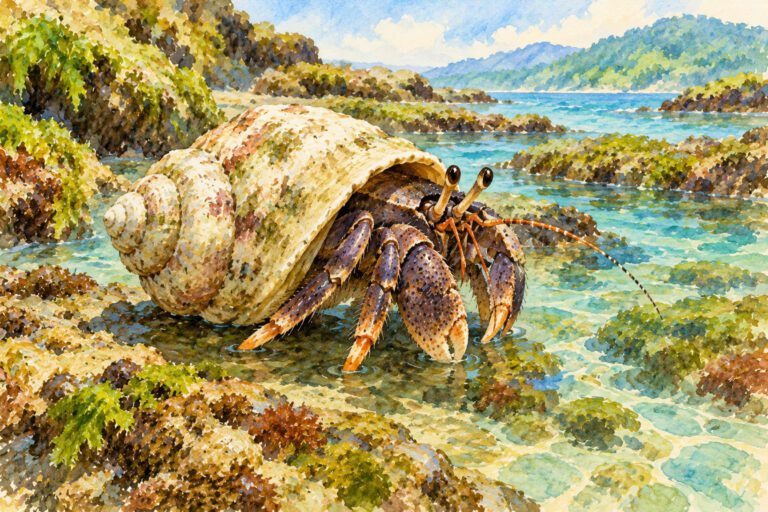
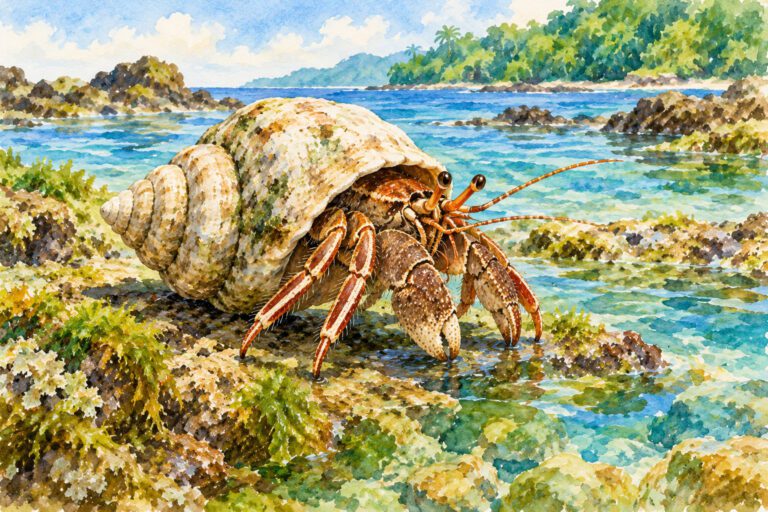
Calcinus Hermit Crab

Spanish name
Cangrejo ermitaño Calcinus
Scientific name
Calcinus obscurus

What Do Pico & Tati Think?

Pico thinks a shell has moved. Tati waits until a small leg appears before writing down what she has seen.

Identification

Key Features of the Calcinus Hermit Crab

  • A marine hermit crab in a borrowed shell

  • Visible legs and claws at the shell opening

  • The shell species and crab species are separate identifications

Habitat & range

Rocky shore and naturally visible tidal habitat. Choose a permitted observation point with an adult; do not turn rocks or reach into holes.

Conservation & care

Give claws and burrow entrances space. Do not handle, feed, chase or collect crabs. Leave rocks and shells where they are, and follow your adult’s route and local signs.

View full profile →

Nature Field Guide

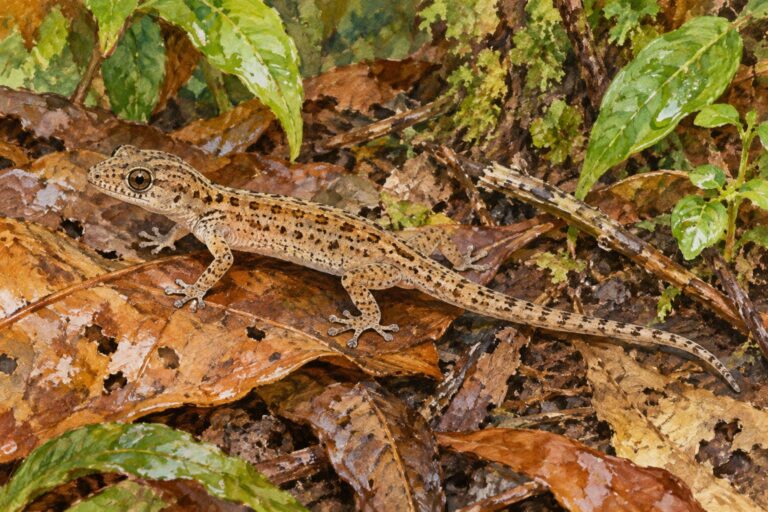
Caribbean Least Gecko

Spanish name
Gequito caribeño
Scientific name
Sphaerodactylus homolepis

What Do Pico & Tati Think?

Pico: “What helps this reptile fit into its habitat?”

Tati: “Let’s look at its shape, colors and surroundings while giving it plenty of space.”

Identification

Key Features of the Caribbean Least Gecko

  • Tiny body and rounded head

  • Narrow tapering tail

  • Small feet unlike a large wall gecko’s broad pads

Habitat & range

Caribbean-slope lowland forest and northern humid lowlands, including the Sarapiquí area.

Conservation & care

Observe with an adult from permitted paths. Do not touch, chase, catch or feed reptiles. Leave bark, logs, stones and leaf litter in place. Keep pets away and allow an open escape route.

Threats & pressures

Protect connected habitat and natural shelters. Avoid collection, unnecessary clearing and deliberate killing. Leave wildlife in place and support responsible observation.

View full profile →

Nature Field Guide

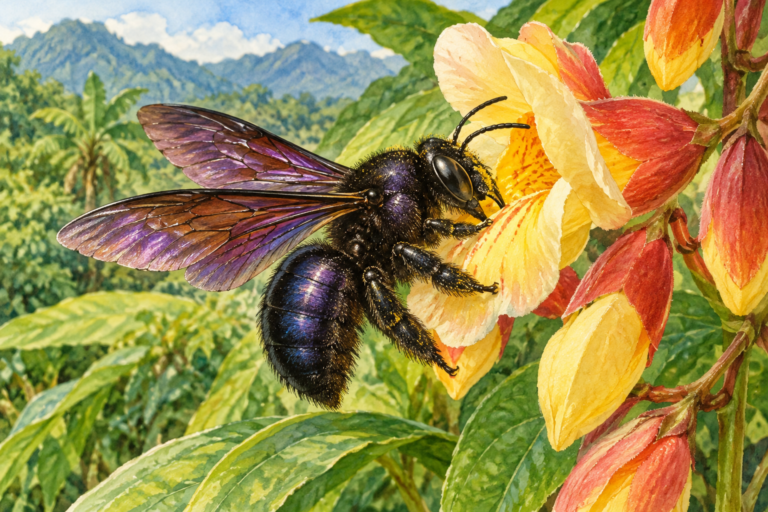
Carpenter Bees

Spanish name
Abejas carpinteras
Scientific name
Xylocopa spp. — genus card

What Do Pico & Tati Think?

Pico: “Let's look closely at the carpenter bees!”

Tati: “We can compare its shape and markings without touching it.”

Identification

Key Features of the Carpenter Bees

  • Robust body

  • often shiny abdomen

  • some nest in wood

Habitat & range

Suitable forest, garden or open habitats; distribution varies with habitat and species.

Conservation & care

Observe without collecting, handling or disturbing insects or nests. Stay on permitted paths. Leave caterpillars and their food plants in place.

View full profile →

Nature Field Guide

Carpenter’s Anole

Spanish name
Anolis de Carpenter
Scientific name
Anolis carpenteri

What Do Pico & Tati Think?

Pico: “What can we learn from this reptile’s shape?”

Tati: “Let’s notice its markings and habitat while leaving it plenty of space.”

Identification

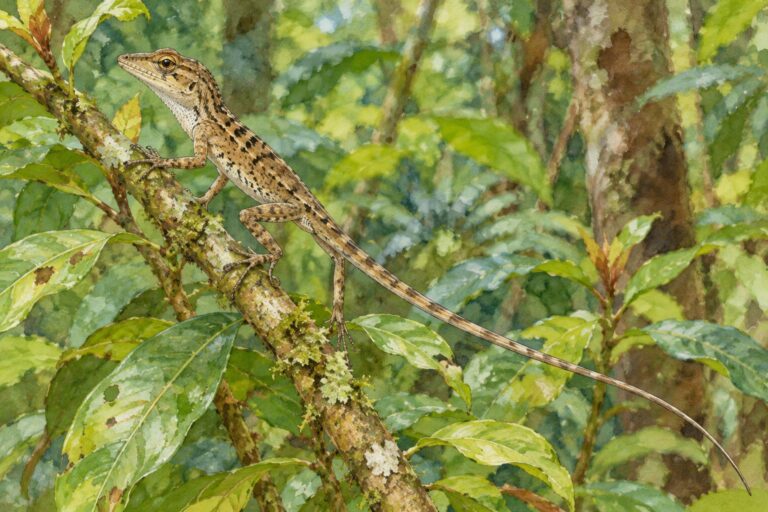
Key Features of the Carpenter’s Anole

  • Small delicate greenish body

  • Relatively short limbs

  • Slender tail and narrow perch use

Habitat & range

Caribbean-slope humid forest and foothills, including the Reventazón valley and northern Caribbean lowlands.

Conservation & care

Observe from permitted paths with an adult. Do not touch, chase, catch or feed reptiles. Leave bark, stones, logs and leaf litter in place. Keep pets away and give animals an open escape route.

Threats & pressures

Protect natural shelters and connected habitat. Avoid collection, unnecessary clearing and deliberate killing. Leave wildlife in its habitat and support responsible observation.

View full profile →

Nature Field Guide

Cassava / Yuca

Spanish name
Yuca
Scientific name
Manihot esculenta

What Do Pico & Tati Think?

Pico: “Where is the yuca hiding?”

Tati: “Its storage roots grow beneath the soil.”

Identification

Key Features of the Cassava / Yuca

  • Leaves divided into several narrow lobes

  • Shrubby stems above the soil

  • Thick elongated storage roots below ground

  • Harvested roots have brown skin and pale flesh

Habitat & range

Cultivated farms in the Northern Plains, with documented production in the Caribbean and South Pacific.

Conservation & care

Do not taste raw yuca or its leaves. Preparation must be handled by a knowledgeable adult using appropriate food-processing guidance. Do not pull up farm plants.

Visit farms only with permission and follow the host's instructions. Stay clear of machinery, chemical applications and working areas. Do not pick or taste plants without a responsible adult and the host's approval.

View full profile →

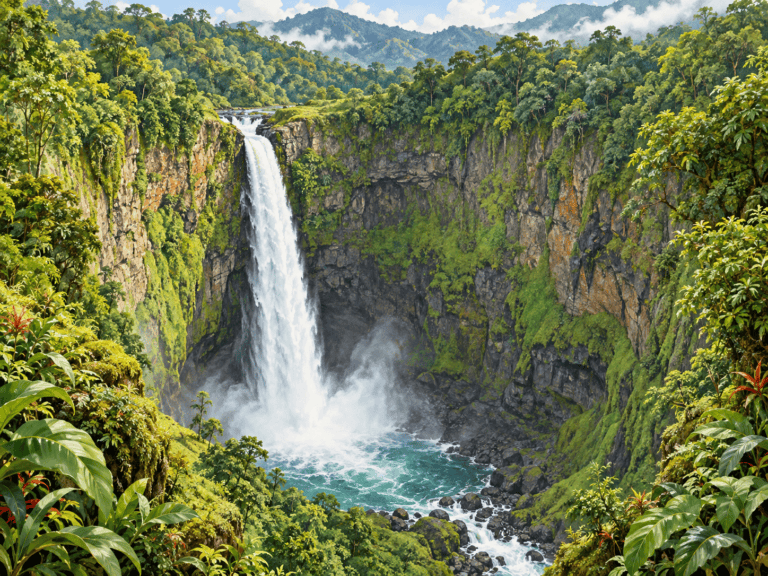
Nature Field Guide

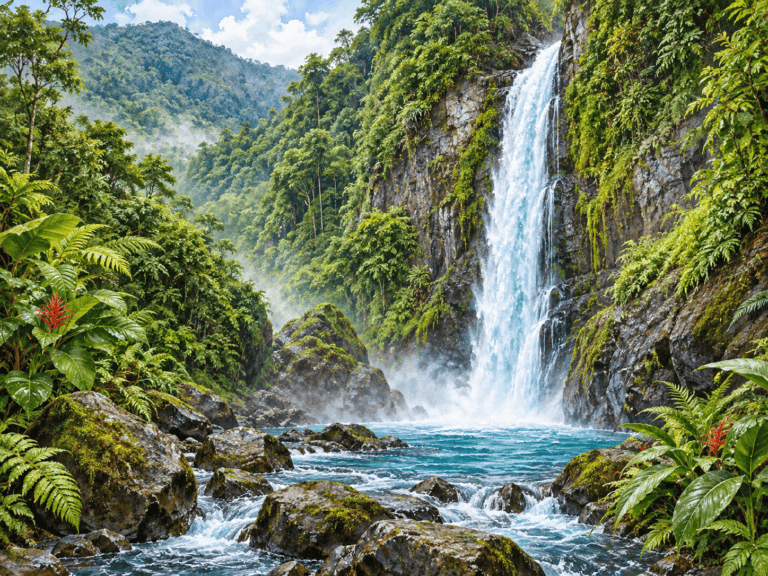
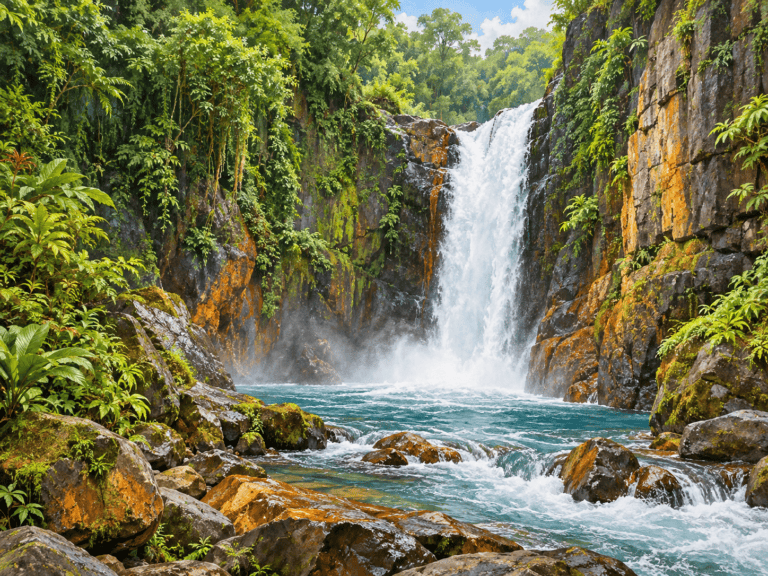
Catarata del Toro

Spanish name
Catarata del Toro
Scientific name

What Do Pico & Tati Think?

Join Pico and Tati to discover Catarata del Toro and learn how water shapes Costa Rica’s landscapes.

Identification

Key Features of the Catarata del Toro

  • A deep rocky basin.

  • A tall waterfall within steep walls.

  • Forest and vegetation around the viewpoints.

Habitat & range

Bajos del Toro, Alajuela. Look for the waterfall’s river, rock formations and surrounding vegetation from approved viewing areas.

Conservation & care

Visit with an adult and follow the site’s current access rules and staff guidance. Stay on authorized trails and behind barriers. Wet rocks, steep drops, strong currents and sudden rises in water can be dangerous. Do not jump from waterfalls or climb wet rock faces. Enter water only where explicitly permitted and conditions are approved by site staff. Leave plants, rocks and wildlife undisturbed and carry out all litter.

Plan Your Visit

Catarata del Toro — private reserve entrance

Get Directions ↗

Getting There

Drive first toward Bajos del Toro, then follow the operator’s signs to Catarata del Toro on the main paved road. The operator states that reaching its entrance does not require a dirt-road detour.

Before You Go

Confirm current opening days and admission with the reserve. Swimming is not permitted at Catarata del Toro.
Visit information reviewed October 8, 2026. Confirm current access before travel.

View full profile →

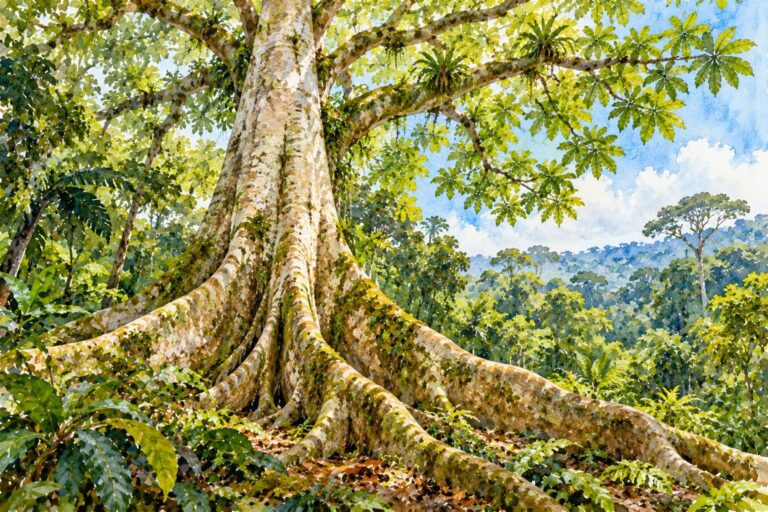
Nature Field Guide

Ceiba Kapok Tree

Spanish name
Ceiba / Puri
Scientific name
Ceiba pentandra

What Do Pico & Tati Think?

Pico: “Huge buttress roots help make a mature ceiba unforgettable.”

Tati: “Let’s notice the leaves, flowers and habitat without disturbing the plant.”

Identification

Key Features of the Ceiba Kapok Tree

  • Large buttress roots on mature trees

  • Palmate leaves with several narrow leaflets

  • Seed capsules containing silky fibers

Habitat & range

Dry, humid and very wet lowland forests on both slopes, including Pacific, Caribbean and northern lowland landscapes.

Conservation & care

Explore with an adult on permitted paths. Observe and photograph without picking leaves, flowers or fruits. Do not taste plants or let pets chew them. Avoid climbing trees and disturbing roots, seedlings or visiting wildlife.

Threats & pressures

Protect suitable habitat, mature trees and natural regeneration. Avoid trampling, unauthorized clearing and collection.

View full profile →

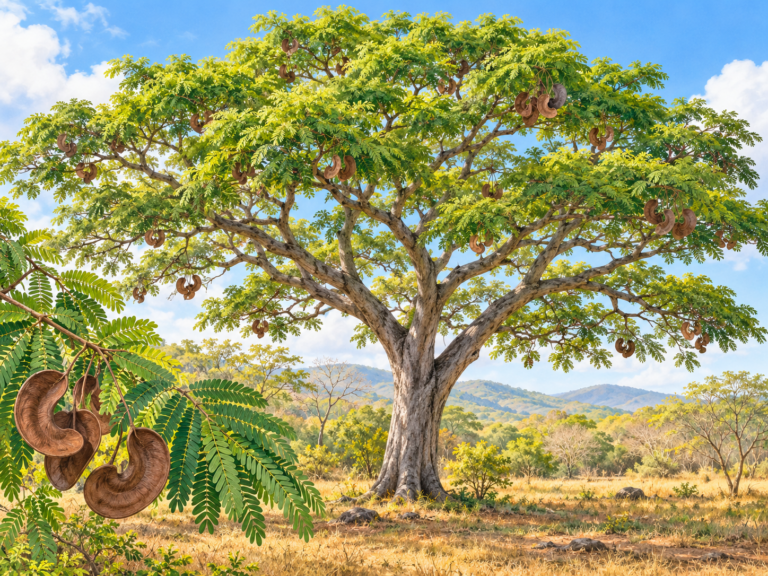
Nature Field Guide

Cenizaro Rain Tree

Spanish name
Cenízaro
Scientific name
Samanea saman

What Do Pico & Tati Think?

Pico: “An umbrella-shaped crown shelters a world beneath its branches.”

Tati: “Let’s notice the leaves, flowers and habitat without disturbing the plant.”

Identification

Key Features of the Cenizaro Rain Tree

  • Broad umbrella-shaped crown

  • Twice-divided compound leaves

  • Pink-and-white brushlike flowers and dark pods

Habitat & range

Pacific lowlands and open landscapes, also documented in the Northern Plains and around San Ramón.

Conservation & care

Explore with an adult on permitted paths. Observe and photograph without picking leaves, flowers or fruits. Do not taste plants or let pets chew them. Avoid climbing trees and disturbing roots, seedlings or visiting wildlife.

Threats & pressures

Protect suitable habitat, mature trees and natural regeneration. Avoid trampling, unauthorized clearing and collection.

View full profile →

Nature Field Guide

Central American Agouti

Spanish name
Guatusa / Guatuza
Scientific name
Dasyprocta punctata

What Do Pico & Tati Think?

Pico: “It is carrying something from the forest floor!”

Tati: “A stored seed might become a tree.”

Identification

Key Features of the Central American Agouti

  • Rounded back, long legs and almost invisible tail.

  • Warm orange-brown to dark brown fur.

  • Often handles food with the forepaws.

Habitat & range

Sierra Zapote’s forest floor in Las Juntas district, Abangares; dry and humid forests can both provide habitat.

Conservation & care

Keep a respectful distance and leave an open route for the animal. Stay on authorized paths, secure food and rubbish, and observe without feeding, touching, baiting or chasing.

View full profile →

Nature Field Guide

Central American Banded Gecko

Spanish name
Geco bandeado centroamericano
Scientific name
Coleonyx mitratus

What Do Pico & Tati Think?

Pico: “What can we learn from this reptile’s shape?”

Tati: “Let’s notice its markings and habitat while leaving it plenty of space.”

Identification

Key Features of the Central American Banded Gecko

  • Dark bands on yellow-tan tones

  • Movable eyelids

  • Clawed toes without broad wall-climbing pads

Habitat & range

Northwestern and western Pacific-slope forests, including Guanacaste and San Luis de Monteverde.

Conservation & care

Observe from permitted paths with an adult. Do not touch, chase, catch or feed reptiles. Leave bark, stones, logs and leaf litter in place. Keep pets away and give animals an open escape route.

Threats & pressures

Protect natural shelters and connected habitat. Avoid collection, unnecessary clearing and deliberate killing. Leave wildlife in its habitat and support responsible observation.

View full profile →

Nature Field Guide

Central American Boa

Spanish name
Boa o béquer
Scientific name
Boa imperator

What Do Pico & Tati Think?

Pico and Tati invite you to learn about the central american boa. Using a photograph, draw three saddle-shaped markings and explain how patterns can blend with a background.

Identification

Key Features of the Central American Boa

  • Heavy body with large brown saddle-like markings.

  • Broad head and a tapering tail.

  • Color and pattern vary between individuals.

Habitat & range

Forests, forest edges and other suitable habitats across Costa Rica.

Conservation & care

Never approach, touch, catch or try to move any snake, even if it appears harmless or dead. Keep children and pets away, step back calmly and tell an adult or guide. Do not use colors, head shape or this card to judge safety.

View full profile →

Nature Field Guide

Central American Coral Snake

Spanish name
Coral macho
Scientific name
Micrurus nigrocinctus

What Do Pico & Tati Think?

Pico and Tati invite you to learn about the central american coral snake. Create a ring-pattern drawing from a verified photograph. Write the rule: observe snakes from a distance and tell an adult.

Identification

Key Features of the Central American Coral Snake

  • Red, pale and black rings encircling the body.

  • Relatively small head with little separation from the neck.

  • A slender-to-moderately robust cylindrical body.

Habitat & range

Pacific-slope lowlands and premontane areas, including parts of the Central Valley.

Conservation & care

Never approach, touch, catch or try to move any snake, even if it appears harmless or dead. Keep children and pets away, step back calmly and tell an adult or guide. Do not use colors, head shape or this card to judge safety.

View full profile →

Nature Field Guide

Central American Eyelash Pitviper

Spanish name
Bocaracá / Oropel / Toboba de pestañas
Scientific name
Bothriechis nigroadspersus

What Do Pico & Tati Think?

Pico: “What clues help us recognize this reptile?”

Tati: “Let’s notice its shape, markings and habitat from a respectful distance.”

Identification

Key Features of the Central American Eyelash Pitviper

  • Raised eyelash-like scales above the eyes

  • Compact body resting on branches

  • Highly variable colors, including yellow

Habitat & range

Humid lowland and foothill forests on the Caribbean slope and in the Central and South Pacific.

Conservation & care

VENOMOUS. Observe only at a distance with a qualified guide. Never approach, touch, catch or provoke this snake. Keep children and pets well away and do not reach into nearby vegetation or hiding places.

Threats & pressures

Protect habitat connections and natural shelters. Avoid road mortality, collection and deliberate killing. Leave reptiles in their habitat rather than keeping or relocating them.

View full profile →

Nature Field Guide

Central American Indigo Snake

Spanish name
Sabanera / Mica
Scientific name
Drymarchon melanurus

What Do Pico & Tati Think?

Pico: “What clues help us recognize this reptile?”

Tati: “Let’s notice its shape, markings and habitat from a respectful distance.”

Identification

Key Features of the Central American Indigo Snake

  • Large robust body

  • Smooth-looking scales

  • Color can become darker toward the tail

Habitat & range

Lowland woodland and open habitats, including Guanacaste and the Pacific slope.

Conservation & care

Observe only from a distance with an adult or qualified guide. Do not touch, catch, corner or attempt to move any snake. Step back and tell your adult; keep children and pets away. Do not use colors, head shape or pupil shape to decide a snake is safe.

Threats & pressures

Protect habitat connections and natural shelters. Avoid road mortality, collection and deliberate killing. Leave reptiles in their habitat rather than keeping or relocating them.

View full profile →

Nature Field Guide

Central American Rattlesnake

Spanish name
Cascabel / Crótalo
Scientific name
Crotalus simus

What Do Pico & Tati Think?

Pico: “What clues help us recognize this reptile?”

Tati: “Let’s notice its shape, markings and habitat from a respectful distance.”

Identification

Key Features of the Central American Rattlesnake

  • Dark diamondlike back markings

  • Strongly keeled scales

  • Segmented rattle at the tail tip

Habitat & range

Dry lowlands of Guanacaste and northern Puntarenas, especially forest edges and less disturbed ground.

Conservation & care

VENOMOUS. Observe only at a distance with a qualified guide. Never approach, touch, catch or provoke this snake. Keep children and pets well away and do not reach into nearby vegetation or hiding places.

Threats & pressures

Protect habitat connections and natural shelters. Avoid road mortality, collection and deliberate killing. Leave reptiles in their habitat rather than keeping or relocating them.

View full profile →

Nature Field Guide

Central American Squirrel Monkey

Spanish name
Mono tití / Mono ardilla
Scientific name
Saimiri oerstedii

What Do Pico & Tati Think?

Pico: “The little monkeys are moving together!”

Tati: “Let’s watch the troop without following it off the trail.”

Identification

Key Features of the Central American Squirrel Monkey

  • Small slender monkey with pale facial markings.

  • Warm reddish or yellow-brown back.

  • Long tail and rapid movements through vegetation.

Habitat & range

Manuel Antonio National Park near Quepos; this species also occupies parts of the southern Pacific lowlands.

Conservation & care

Keep a respectful distance and leave an open route for the animal. Stay on authorized paths, secure food and rubbish, and observe without feeding, touching, baiting or chasing.

Threats & pressures

Forest destruction is a serious pressure for a species with a restricted geographic range.

Protection & recovery

Costa Rica’s government wildlife guide explicitly identifies this species as protected nationally. This legal designation is separate from its global IUCN category.

Conservation assessment

Global IUCN category as reported by the linked source, checked 7 October 2026. The source does not give an assessment year here. National legal protection and local abundance are separate questions.

View full profile →

Nature Field Guide

Chameleon Wrasse

Spanish name
Señorita camaleón
Scientific name
Halichoeres dispilus

What Do Pico & Tati Think?

Pico: “This wrasse has so many colors!”

Tati: “Start with the shoulder blotch, then check its other markings.”

Identification

Key Features of the Chameleon Wrasse

  • Slender wrasse body

  • Dark shoulder blotch

  • Blue markings in colorful adults

Habitat & range

Pacific rocky reefs and nearby coastal marine habitats. Check the linked species reference for its wider range.

Conservation & care

Observe with a qualified guide. Do not feed, chase or handle fish. Keep fins off the reef and take all litter home.

Threats & pressures

Habitat damage and degraded water quality are pressures to prevent in coastal fish habitats. This profile does not quantify a local decline.

View full profile →

Nature Field Guide

Charles Myers’s Anole

Spanish name
Anolis de Charles Myers
Scientific name
Anolis charlesmyersi

What Do Pico & Tati Think?

Pico: “What can we learn from this reptile’s shape?”

Tati: “Let’s notice its markings and habitat while leaving it plenty of space.”

Identification

Key Features of the Charles Myers’s Anole

  • Very short limbs

  • Lichenlike pale and dark mottling

  • Relatively short tail with a low serrated ridge

Habitat & range

Pacific lowland and adjoining foothill habitats in Costa Rica, including the Central and South Pacific.

Conservation & care

Observe from permitted paths with an adult. Do not touch, chase, catch or feed reptiles. Leave bark, stones, logs and leaf litter in place. Keep pets away and give animals an open escape route.

Threats & pressures

Protect natural shelters and connected habitat. Avoid collection, unnecessary clearing and deliberate killing. Leave wildlife in its habitat and support responsible observation.

View full profile →

Nature Field Guide

Cherrie’s Ground Skink

Spanish name
Eslaboncillo pardo / Escinco de Cherrie
Scientific name
Scincella cherriei

What Do Pico & Tati Think?

Pico: “What clues help us recognize this reptile?”

Tati: “Let’s notice its shape, markings and habitat from a respectful distance.”

Identification

Key Features of the Cherrie’s Ground Skink

  • Smooth glossy-looking scales

  • Dark lateral stripe

  • Short legs and a tapering tail

Habitat & range

Pacific-slope forest floor and wooded edges, including southwestern Costa Rica and the Monteverde foothill area.

Conservation & care

Observe with an adult from permitted paths. Do not catch, chase, touch or feed reptiles. Leave bark, logs, rocks and leaf litter in place. Keep pets away and allow animals an open escape route.

Threats & pressures

Protect habitat connections and natural shelters. Avoid road mortality, collection and deliberate killing. Leave reptiles in their habitat rather than keeping or relocating them.

View full profile →

Nature Field Guide

Cicadas

Spanish name
Chicharras
Scientific name
Cicadidae — family card

What Do Pico & Tati Think?

Pico: “Let's look closely at the cicadas!”

Tati: “We can compare its shape and markings without touching it.”

Identification

Key Features of the Cicadas

  • Large transparent wings

  • broad head

  • loud calls from some males

Habitat & range

Suitable forest, garden or open habitats; distribution varies with habitat and species.

Conservation & care

Observe without collecting, handling or disturbing insects or nests. Stay on permitted paths. Leave caterpillars and their food plants in place.

View full profile →

Nature Field Guide

Clay-colored Thrush

Spanish name
Mirlo pardo / Yigüirro
Scientific name
Turdus grayi

What Do Pico & Tati Think?

Pico: “That brown bird has a beautiful song!”

Tati: “That is the yigüirro. We can learn its voice as well as its colors.”

Identification

Key Features of the Clay-colored Thrush

  • Warm brown plumage

  • Yellowish bill

  • Fine throat streaks and orange-brown eye

Habitat & range

Widespread across Costa Rica from lowlands to about 2450 m, in gardens, farms, secondary growth and wooded urban areas. Less numerous in the dry northwest and higher mountains.

Conservation & care

Observe quietly from trails or established viewing areas. Give nests, roosts and feeding birds space. Do not handle, chase or lure birds with playback. Keep pets away from wildlife.

Threats & pressures

Protect native vegetation, reduce collision hazards around glass and keep cats away from birds. These are practical prevention priorities, not a claim of a measured decline at a specific Costa Rican site.

View full profile →

Nature Field Guide

Clouded Snail-eater

Spanish name
Caracolera nublada
Scientific name
Sibon nebulatus

What Do Pico & Tati Think?

Pico: “What helps this reptile fit into its habitat?”

Tati: “Let’s look at its shape, colors and surroundings while giving it plenty of space.”

Identification

Key Features of the Clouded Snail-eater

  • Slender climbing body

  • Large rounded head and prominent eyes

  • Irregular dark markings on a lighter body

Habitat & range

Caribbean and Pacific humid forests and edges, including northern lowland wet forest.

Conservation & care

Observe from a distance with an adult or qualified guide. Do not touch, catch, corner, feed or move any snake. Keep children and pets away. Colors, head shape and pupil shape must never be used to decide a snake is safe.

Threats & pressures

Protect connected habitat and natural shelters. Avoid collection, unnecessary clearing and deliberate killing. Leave wildlife in place and support responsible observation.

View full profile →

Nature Field Guide

Cloudless Sulphur Butterfly

Spanish name
Mariposa azufre
Scientific name
Phoebis marcellina

What Do Pico & Tati Think?

Pico: “Let's look closely at the cloudless sulphur butterfly!”

Tati: “We can compare its shape and markings without touching it.”

Identification

Key Features of the Cloudless Sulphur Butterfly

  • Bright yellow wings

  • lightly marked underside

  • fast flight

Habitat & range

Forest paths, edges and nearby vegetation in Guanacaste. Local habitat and abundance vary.

Conservation & care

Observe without collecting, handling or disturbing insects or nests. Stay on permitted paths. Leave caterpillars and their food plants in place.

View full profile →

Nature Field Guide

Coconut

Spanish name
Coco
Scientific name
Cocos nucifera

What Do Pico & Tati Think?

Pico: “Is coconut water the same as coconut milk?”

Tati: “They are different! Let's ask our host to show us.”

Identification

Key Features of the Coconut

  • Tall palm trunk with a crown of featherlike fronds

  • Fruit clusters near the crown

  • A thick fibrous outer husk

  • Hard inner shell around white flesh

Habitat & range

Cultivated palms in the Caribbean and Northern Plains. These tags focus on documented crop production, rather than every ornamental coconut palm on Costa Rica's coasts.

Conservation & care

Do not climb palms or stand beneath hanging coconuts. Let trained adults handle harvesting and opening fruit.

Visit farms only with permission and follow the host's instructions. Stay clear of machinery, chemical applications and working areas. Do not pick or taste plants without a responsible adult and the host's approval.

View full profile →

Nature Field Guide

Cocos Booby

Spanish name
Piquero de Cocos
Scientific name
Sula brewsteri

What Do Pico & Tati Think?

Pico meets a familiar-looking seabird with a newer name. Tati keeps the scientific name beside the illustration.

Identification

Key Features of the Cocos Booby

  • Brown adult upperparts and white belly

  • Strong pointed pale bill

  • Short legs and broad webbed feet

  • Identification may require close expert comparison

Habitat & range

Scan Pacific coastal waters and offshore rocks from a safe viewpoint or responsible boat trip. Do not approach seabird colonies or land on nesting islands.

Conservation & care

Give feeding and resting birds space. If a bird stops feeding, repeatedly looks at you or moves away, increase your distance. Keep dogs away from flocks, avoid playback and feeding, and leave nests and natural shoreline debris undisturbed.

View full profile →

Nature Field Guide

Cocos Island Anole

Spanish name
Anolis de la Isla del Coco
Scientific name
Anolis townsendi

What Do Pico & Tati Think?

Pico: “What can we learn from this reptile’s shape?”

Tati: “Let’s notice its markings and habitat while leaving it plenty of space.”

Identification

Key Features of the Cocos Island Anole

  • Small anole with a long tail

  • Brown-to-olive camouflage

  • Naturally restricted to Isla del Coco

Habitat & range

Isla del Coco, an offshore island administratively within Puntarenas province. It is separate from the Gulf of Nicoya islands and mainland regions.

Conservation & care

Observe from permitted paths with an adult. Do not touch, chase, catch or feed reptiles. Leave bark, stones, logs and leaf litter in place. Keep pets away and give animals an open escape route.

Threats & pressures

Protect natural shelters and connected habitat. Avoid collection, unnecessary clearing and deliberate killing. Leave wildlife in its habitat and support responsible observation.

View full profile →

Nature Field Guide

Coffee

Spanish name
Café
Scientific name
Coffea arabica

What Do Pico & Tati Think?

Pico: “The coffee bean starts inside a fruit!”

Tati: “Let's find the cherry before we think about the bean.”

Identification

Key Features of the Coffee

  • Glossy leaves arranged in pairs

  • Small fruits clustered along branches

  • Ripe cherries are often red, though some varieties ripen yellow

  • Small white flowers when flowering

Habitat & range

Cultivated farms in several Costa Rican coffee zones, including the Central and Western Valleys, Los Santos, Turrialba, Orosi, Tres Rios, Guanacaste and Brunca. ICAFE also documents production in San Carlos and Sarapiqui, mapped here to Northern Plains. Coffee requires suitable elevation and local growing conditions; a regional tag does not mean all climates within that region are suitable.

Conservation & care

Visit farms only with permission and follow the host's instructions. Stay clear of machinery, chemical applications and working areas. Do not pick or taste plants without a responsible adult and the host's approval.

View full profile →

Nature Field Guide

Collared Aracari

Spanish name
Tucancillo collarejo
Scientific name
Pteroglossus torquatus

What Do Pico & Tati Think?

Pico: “Is that a little toucan?”

Tati: “An aracari belongs to the toucan family. Its shape and bill give us clues.”

Identification

Key Features of the Collared Aracari

  • Dark head and throat

  • Yellow chest with red and black marks

  • Patterned pale upper bill

Habitat & range

Commoner in Caribbean lowlands and foothills; also occurs locally in the northern Pacific, including Nicoya woodland and lower Guanacaste slopes. Central Valley records are exceptional rather than a core range.

Conservation & care

Observe quietly from trails or established viewing areas. Give nests, roosts and feeding birds space. Do not handle, chase or lure birds with playback. Keep pets away from wildlife.

Threats & pressures

Protect native vegetation, reduce collision hazards around glass and keep cats away from birds. These are practical prevention priorities, not a claim of a measured decline at a specific Costa Rican site.

View full profile →

Nature Field Guide

Collared Peccary

Spanish name
Saíno
Scientific name
Dicotyles tajacu

What Do Pico & Tati Think?

Pico: “I can see a pale band near its shoulders!”

Tati: “Let’s step back and leave space for the group.”

Identification

Key Features of the Collared Peccary

  • Pale collar around neck and shoulders.

  • Dark bristly coat and compact hoofed body.

  • Very short tail.

Habitat & range

Reserva Sierra Zapote in Las Juntas district and other dry or humid forest landscapes.

Seasonal Calendar

Breeding possible

Costa Rica; broad natural-history account

Year-round

Reproduction is not confined to a fixed season; local peaks vary with habitat and resources.

Event source ↗

Conservation & care

Keep a respectful distance and leave an open route for the animal. Stay on authorized paths, secure food and rubbish, and observe without feeding, touching, baiting or chasing.

Threats & pressures

Forest loss and fragmentation, hunting and conflict over crops are documented pressures.

View full profile →

Nature Field Guide

Common Basilisk

Spanish name
Basilisco común
Scientific name
Basiliscus basiliscus

What Do Pico & Tati Think?

Pico and Tati invite you to learn about the common basilisk. Draw the tail and hind feet from a reference photograph. Never frighten a basilisk to make it run.

Identification

Key Features of the Common Basilisk

  • Very long tail.

  • Brown or olive body with pale stripes and dark bands.

  • Adult males have prominent crests on the head, back and tail.

Habitat & range

Pacific lowland dry and moist forests near streams and rivers.

Conservation & care

Watch wildlife with an adult from a safe path. Do not touch, feed, capture or move reptiles, and keep pets away. Leave eggs, shelters and vegetation undisturbed.

View full profile →

Nature Field Guide

Common Beans

Spanish name
Frijoles
Scientific name
Phaseolus vulgaris

What Do Pico & Tati Think?

Pico: “The beans are inside a pod!”

Tati: “Let's count the seeds in a sample the farmer shares.”

Identification

Key Features of the Common Beans

  • Leaves made of three leaflets

  • Small flowers with a butterfly-like shape

  • Elongated pods containing seeds

  • Seed color and growth habit vary by variety

Habitat & range

Cultivated farms in the Northern Plains and South Pacific, with documented producer support in Santa Cecilia, La Cruz, Guanacaste. Household gardens and farms elsewhere may also grow beans; these tags are selected cultivation examples rather than a complete crop census.

Conservation & care

Do not eat raw or undercooked dry beans. Let an adult prepare food samples properly. Keep small seeds away from young children who may put them in their mouths.

Visit farms only with permission and follow the host's instructions. Stay clear of machinery, chemical applications and working areas. Do not pick or taste plants without a responsible adult and the host's approval.

View full profile →

Nature Field Guide

Common Bottlenose Dolphin

Spanish name
Delfín nariz de botella
Scientific name
Tursiops truncatus

What Do Pico & Tati Think?

The common bottlenose dolphin has a short thick beak and a generally gray body.

Identification

Key Features of the Common Bottlenose Dolphin

  • Short thick beak and robust gray body.

  • Curved dorsal fin and paler underside.

  • Horizontal tail flukes; other dolphin species require careful comparison.

Habitat & range

Suitable Costa Rican coastal and offshore waters.

Conservation & care

Use a responsible local wildlife operator and follow site rules. Give aquatic mammals room to feed, rest and travel. Do not feed, touch, chase or enter the water to approach them. Keep waste and fishing line out of waterways.

View full profile →

Nature Field Guide

Common House Gecko

Spanish name
Geco casero común
Scientific name
Hemidactylus frenatus

What Do Pico & Tati Think?

Pico: “What helps this reptile fit into its habitat?”

Tati: “Let’s look at its shape, colors and surroundings while giving it plenty of space.”

Identification

Key Features of the Common House Gecko

  • Pale gray-to-beige coloration

  • Broad spreading toe pads

  • Often on walls near night lighting

Habitat & range

Buildings, gardens and disturbed habitats across much of Costa Rica, especially warm lowlands and settled areas. Documented at Tirimbina and San Luis de Monteverde.

Conservation & care

Observe with an adult from permitted paths. Do not touch, chase, catch or feed reptiles. Leave bark, logs, stones and leaf litter in place. Keep pets away and allow an open escape route.

Threats & pressures

Prevent accidental transport of introduced geckos and their eggs in belongings or plant materials. Protect native reptile habitats and avoid moving animals between places.

View full profile →

Nature Field Guide

Common Monkey Lizard

Spanish name
Lagartija de dosel
Scientific name
Polychrus gutturosus

What Do Pico & Tati Think?

Pico and Tati invite you to learn about the common monkey lizard. Look at a reference photograph and mark the outline of the tail. Compare its proportions with a basilisk.

Identification

Key Features of the Common Monkey Lizard

  • Laterally flattened body.

  • Long limbs, toes and whip-like tail.

  • Greenish coloration and an expandable throat region.

Habitat & range

Primarily humid forest canopy. A documented Hojancha record extends coverage into Guanacaste, where persistent streamside vegetation provides a moist refuge within the dry landscape. Also documented at Reserva Los Campesinos in San Jose province. Regional occurrence depends on suitable wooded microhabitat.

Conservation & care

Watch wildlife with an adult from a safe path. Do not touch, feed, capture or move reptiles, and keep pets away. Leave eggs, shelters and vegetation undisturbed.

View full profile →

Nature Field Guide

Common Opossum

Spanish name
Zorro pelón común
Scientific name
Didelphis marsupialis

What Do Pico & Tati Think?

The common opossum is a marsupial: its young complete an important part of their development attached to their mother's teats, protected in her pouch.

Identification

Key Features of the Common Opossum

  • Coarse gray to dark fur and a pale pointed face.

  • Dark, largely hairless ears and a pink nose.

  • Long mostly bare tail; other opossums can look similar.

Habitat & range

Forests, wooded edges and some human-modified landscapes.

Conservation & care

Explore with an adult or local guide. Observe quietly from a distance, stay on established trails and leave shelter undisturbed. Do not feed, touch, capture or corner wildlife. Keep pets away.

View full profile →

Nature Field Guide

Common Squirrel-Cuckoo

Spanish name
Cuco ardilla
Scientific name
Piaya cayana

What Do Pico & Tati Think?

Pico: “That tail is longer than I expected!”

Tati: “Follow its movement through the branches without chasing it.”

Identification

Key Features of the Common Squirrel-Cuckoo

  • Rusty upperparts

  • Very long graduated white-tipped tail

  • Greenish-yellow bill

Habitat & range

Widespread in wooded habitats on both slopes, including forest canopy, secondary growth, plantations and tree-rich gardens. It can occur well above the lowlands where trees remain.

Conservation & care

Observe quietly from trails or established viewing areas. Give nests, roosts and feeding birds space. Do not handle, chase or lure birds with playback. Keep pets away from wildlife.

Threats & pressures

Protect native vegetation, reduce collision hazards around glass and keep cats away from birds. These are practical prevention priorities, not a claim of a measured decline at a specific Costa Rican site.

View full profile →

Nature Field Guide

Cope’s False Coral Snake

Spanish name
Falsa coral de Cope
Scientific name
Pliocercus euryzonus

What Do Pico & Tati Think?

Pico: “What helps this reptile fit into its habitat?”

Tati: “Let’s look at its shape, colors and surroundings while giving it plenty of space.”

Identification

Key Features of the Cope’s False Coral Snake

  • Slender banded body

  • Long fine tail

  • Dark head and contrasting reddish markings

Habitat & range

Humid Caribbean-slope forests and southern Pacific forest habitats; documented at Tirimbina.

Conservation & care

Observe from a distance with an adult or qualified guide. Do not touch, catch, corner, feed or move any snake. Keep children and pets away. Colors, head shape and pupil shape must never be used to decide a snake is safe.

Threats & pressures

Protect connected habitat and natural shelters. Avoid collection, unnecessary clearing and deliberate killing. Leave wildlife in place and support responsible observation.

View full profile →

Nature Field Guide

Cope’s Parrot Snake

Spanish name
Lora falsa
Scientific name
Leptophis depressirostris

What Do Pico & Tati Think?

Pico: “What clues help us recognize this reptile?”

Tati: “Let’s notice its shape, markings and habitat from a respectful distance.”

Identification

Key Features of the Cope’s Parrot Snake

  • Slender green body

  • Large eyes with a dark eye stripe

  • Long fine tail

Habitat & range

Humid Caribbean and northern lowlands and southwestern Pacific rainforest.

Conservation & care

Observe only from a distance with an adult or qualified guide. Do not touch, catch, corner or attempt to move any snake. Step back and tell your adult; keep children and pets away. Do not use colors, head shape or pupil shape to decide a snake is safe.

Threats & pressures

Protect habitat connections and natural shelters. Avoid road mortality, collection and deliberate killing. Leave reptiles in their habitat rather than keeping or relocating them.

View full profile →

Nature Field Guide

Copper Anole

Spanish name
Anolis cobrizo
Scientific name
Anolis cupreus

What Do Pico & Tati Think?

Pico: “What can we learn from this reptile’s shape?”

Tati: “Let’s notice its markings and habitat while leaving it plenty of space.”

Identification

Key Features of the Copper Anole

  • Tan-to-coppery brown body

  • Variable spots, bars or darker markings

  • Long tail and low-perching posture

Habitat & range

Northwestern and western Pacific slope, including Guanacaste, Monteverde and Quepos, with populations in the Central Valley.

Conservation & care

Observe from permitted paths with an adult. Do not touch, chase, catch or feed reptiles. Leave bark, stones, logs and leaf litter in place. Keep pets away and give animals an open escape route.

Threats & pressures

Protect natural shelters and connected habitat. Avoid collection, unnecessary clearing and deliberate killing. Leave wildlife in its habitat and support responsible observation.

View full profile →

Nature Field Guide

Coppery-headed Emerald

Spanish name
Esmeralda de coronilla cobriza
Scientific name
Microchera cupreiceps

What Do Pico & Tati Think?

Pico: “Does this tiny bird live only in Costa Rica?”

Tati: “Yes. Endemic means its natural range is limited to one place.”

Identification

Key Features of the Coppery-headed Emerald

  • Male coppery crown

  • White outer tail feathers

  • Small size and slightly curved bill

Habitat & range

Costa Rican endemic of humid northern and central mountain slopes, from the Guanacaste range toward the northern Reventazon valley. Seasonal descent occurs; dry coastal Guanacaste is unsuitable.

Conservation & care

Observe quietly from trails or established viewing areas. Give nests, roosts and feeding birds space. Do not handle, chase or lure birds with playback. Keep pets away from wildlife.

Threats & pressures

Protect native vegetation, reduce collision hazards around glass and keep cats away from birds. These are practical prevention priorities, not a claim of a measured decline at a specific Costa Rican site.

View full profile →

Nature Field Guide

Coral Hawkfish

Spanish name
Halcón de coral
Scientific name
Cirrhitichthys oxycephalus

What Do Pico & Tati Think?

Pico: “It looks like it is keeping watch!”

Tati: “Let’s find the blotches and tiny tufts on its dorsal spines.”

Identification

Key Features of the Coral Hawkfish

  • Red-brown blotches on pale body

  • Pointed snout

  • Tufts on dorsal spine tips

Habitat & range

Pacific rocky reefs and nearby coastal marine habitats. Check the linked species reference for its wider range.

Conservation & care

Observe with a qualified guide. Do not feed, chase or handle fish. Keep fins off the reef and take all litter home.

Threats & pressures

Habitat damage and degraded water quality are pressures to prevent in coastal fish habitats. This profile does not quantify a local decline.

View full profile →

Nature Field Guide

Corn

Spanish name
Maíz
Scientific name
Zea mays

What Do Pico & Tati Think?

Pico: “I can see tassels above the leaves!”

Tati: “And the ears grow lower down along the stem.”

Identification

Key Features of the Corn

  • Tall grass with broad leaves along the stem

  • Tassels at the top

  • Ears wrapped in husks along the stem

  • Silks emerging from developing ears

Habitat & range

Cultivated fields and family farms, including Guanacaste, Northern Plains and South Pacific.

Conservation & care

Visit farms only with permission and follow the host's instructions. Stay clear of machinery, chemical applications and working areas. Do not pick or taste plants without a responsible adult and the host's approval.

View full profile →

Nature Field Guide

Cortez Amarillo

Spanish name
Cortés amarillo / Cortez amarillo
Scientific name
Handroanthus ochraceus

What Do Pico & Tati Think?

Pico: “Golden trumpet flowers can brighten the branches of an almost leafless tree.”

Tati: “Let’s notice the leaves, flowers and habitat without disturbing the plant.”

Identification

Key Features of the Cortez Amarillo

  • Yellow trumpet-shaped flowers

  • Palmately compound leaves

  • Flowering branches may be nearly leafless

Habitat & range

Seasonally dry Pacific forests and wooded edges, including Guanacaste, the Central Pacific and the Térraba valley.

Conservation & care

Explore with an adult on permitted paths. Observe and photograph without picking leaves, flowers or fruits. Do not taste plants or let pets chew them. Avoid climbing trees and disturbing roots, seedlings or visiting wildlife.

Threats & pressures

Protect suitable habitat, mature trees and natural regeneration. Avoid trampling, unauthorized clearing and collection.

View full profile →

Nature Field Guide

Cortez Angelfish

Spanish name
Ángel de Cortés
Scientific name
Pomacanthus zonipectus

What Do Pico & Tati Think?

Pico: “The young angelfish looks completely different!”

Tati: “The tall body and small mouth are clues in both life stages.”

Identification

Key Features of the Cortez Angelfish

  • Tall flattened body

  • Yellow bands and tail in adults

  • Curved yellow and blue juvenile bars

Habitat & range

Pacific rocky reefs and nearby coastal marine habitats. Check the linked species reference for its wider range.

Conservation & care

Observe with a qualified guide. Do not feed, chase or handle fish. Keep fins off the reef and take all litter home.

Threats & pressures

Habitat damage and degraded water quality are pressures to prevent in coastal fish habitats. This profile does not quantify a local decline.

View full profile →

Nature Field Guide

Cortez Rainbow Wrasse

Spanish name
Viejita arco iris
Scientific name
Thalassoma lucasanum

What Do Pico & Tati Think?

Pico: “How can these two wrasses look so different?”

Tati: “Their colors can change with life phase. Let’s compare more than one picture.”

Identification

Key Features of the Cortez Rainbow Wrasse

  • Slender wrasse shape

  • Striped initial phase

  • Blue head and yellow shoulder bar in terminal phase

Habitat & range

Pacific rocky reefs and nearby coastal marine habitats. Check the linked species reference for its wider range.

Conservation & care

Observe with a qualified guide. Do not feed, chase or handle fish. Keep fins off the reef and take all litter home.

Threats & pressures

Habitat damage and degraded water quality are pressures to prevent in coastal fish habitats. This profile does not quantify a local decline.

View full profile →

Nature Field Guide

Costa Rica Forest Rabbit

Spanish name
Conejo de monte de Costa Rica
Scientific name
Sylvilagus gabbi

What Do Pico & Tati Think?

The Costa Rica forest rabbit is a native forest rabbit, not a domestic bunny living outdoors.

What does Least Concern mean?

In the linked conservation assessment, this species does not qualify as threatened or near threatened with extinction. It still needs care: local populations and habitats can face problems even when the species has a lower extinction risk overall.

This label describes conservation status. It does not tell us whether a plant is safe for children or pets. Select the status button to read the assessment.

Identification

Key Features of the Costa Rica Forest Rabbit

  • Small brown forest rabbit with a compact body.

  • Relatively short ears and an inconspicuous tail.

  • Use locality and expert advice to distinguish similar rabbits.

Habitat & range

Suitable wooded lowland landscapes and forest cover; local distribution varies.

Conservation & care

Explore with an adult or local guide. Observe quietly from a distance, stay on established trails and leave shelter undisturbed. Do not feed, touch, capture or corner wildlife. Keep pets away.

Conservation assessment

Global IUCN category reported by the linked specialist or Mammal Diversity Database account, checked October 2026. Least Concern does not mean there are no threats or that every local population is secure.

View full profile →

Nature Field Guide

Costa Rica Least Gecko

Spanish name
Gequito de garganta rayada
Scientific name
Sphaerodactylus graptolaemus

What Do Pico & Tati Think?

Pico: “What helps this reptile fit into its habitat?”

Tati: “Let’s look at its shape, colors and surroundings while giving it plenty of space.”

Identification

Key Features of the Costa Rica Least Gecko

  • Very small gecko

  • Rounded head and narrow tail

  • Fine throat lines require careful expert comparison

Habitat & range

Southwestern Costa Rican coastal forest, including Isla del Caño and the southern Pacific mainland.

Conservation & care

Observe with an adult from permitted paths. Do not touch, chase, catch or feed reptiles. Leave bark, logs, stones and leaf litter in place. Keep pets away and allow an open escape route.

Threats & pressures

Protect connected habitat and natural shelters. Avoid collection, unnecessary clearing and deliberate killing. Leave wildlife in place and support responsible observation.

View full profile →

Nature Field Guide

Costa Rican Oak

Spanish name
Roble / Encino
Scientific name
Quercus costaricensis

What Do Pico & Tati Think?

Pico: “Acorns and leathery leaves belong to this mountain-forest oak.”

Tati: “Let’s notice the leaves, flowers and habitat without disturbing the plant.”

Identification

Key Features of the Costa Rican Oak

  • Acorns in scaly cups

  • Simple leathery leaves

  • Mountain-forest habitat

Habitat & range

Highland forests of the Talamanca range, including Dota, Chirripó and adjoining mountain slopes.

Conservation & care

Explore with an adult on permitted paths. Observe and photograph without picking leaves, flowers or fruits. Do not taste plants or let pets chew them. Avoid climbing trees and disturbing roots, seedlings or visiting wildlife.

Threats & pressures

Protect suitable habitat, mature trees and natural regeneration. Avoid trampling, unauthorized clearing and collection.

View full profile →

Nature Field Guide

Coyote

Spanish name
Coyote
Scientific name
Canis latrans

What Do Pico & Tati Think?

Pico: “Its ears and bushy tail look different from a fox!”

Tati: “A wild animal should keep finding its own food.”

Identification

Key Features of the Coyote

  • Pointed muzzle and large upright ears.

  • Mixed gray-brown coat with paler underside.

  • Bushy tail usually carried low.

Habitat & range

Sierra Zapote’s forest-edge landscape in Las Juntas, Abangares, and other Guanacaste lowlands.

Conservation & care

Keep a respectful distance and leave an open route for the animal. Stay on authorized paths, secure food and rubbish, and observe without feeding, touching, baiting or chasing.

View full profile →

Nature Field Guide

Crested Caracara

Spanish name
Caracara cargahuesos
Scientific name
Caracara plancus

What Do Pico & Tati Think?

Pico: “That bird of prey is walking!”

Tati: “Caracaras often search on foot. Look at those long legs.”

Identification

Key Features of the Crested Caracara

  • Dark cap and pale neck

  • Orange-red bare face

  • Long legs and hooked bill

Habitat & range

Open northwestern landscapes, pasture, farmland and beaches, with local occurrence around Rio Frio and occasional movement into San Carlos. This conservative set omits occasional Central Valley wanderers.

Conservation & care

Observe quietly from trails or established viewing areas. Give nests, roosts and feeding birds space. Do not handle, chase or lure birds with playback. Keep pets away from wildlife.

Threats & pressures

Protect native vegetation, reduce collision hazards around glass and keep cats away from birds. These are practical prevention priorities, not a claim of a measured decline at a specific Costa Rican site.

View full profile →

Nature Field Guide

Crown Sea Urchin

Spanish name
Erizo corona
Scientific name
Astropyga pulvinata

What Do Pico & Tati Think?

One spiny animal is interesting. A gathering of them raises even more questions. Pico and Tati watch without moving closer.

Identification

Key Features of the Crown Sea Urchin

  • Long slender spines

  • Small bright blue body spots may be visible

  • Observe without approaching the spines

Habitat & range

Suitable underwater coastal habitat. Use a permitted guided snorkeling or viewing activity appropriate to your family; do not enter the sea just to find this animal.

Conservation & care

Watch without touching, lifting, feeding or collecting. Keep fingers and equipment away from spines and other surface structures. Leave the animal submerged and its habitat undisturbed.

View full profile →

Nature Field Guide

Damselflies

Spanish name
Caballitos del diablo
Scientific name
Odonata: Zygoptera — group card

What Do Pico & Tati Think?

Pico: “Let's look closely at the damselflies!”

Tati: “We can compare its shape and markings without touching it.”

Identification

Key Features of the Damselflies

  • Slender body

  • widely separated eyes

  • many fold wings above abdomen

Habitat & range

Vegetation near ponds, wetlands and streams; individual species use different waters.

Conservation & care

Observe without collecting, handling or disturbing insects or nests. Stay on permitted paths. Leave caterpillars and their food plants in place.

View full profile →

Nature Field Guide

Decorated Anole

Spanish name
Anolis decorado / Lagartija gigante de bandas
Scientific name
Anolis insignis

What Do Pico & Tati Think?

Pico: “What helps this reptile fit into its habitat?”

Tati: “Let’s look at its shape, colors and surroundings while giving it plenty of space.”

Identification

Key Features of the Decorated Anole

  • Large anole with a broad head

  • Green body with pale markings

  • Long tail and tree-perching posture

Habitat & range

Humid foothill and montane forests, including the Guanacaste volcanic range and the central mountains. Documented at San Gerardo Biological Station in Área de Conservación Guanacaste.

Conservation & care

Observe with an adult from permitted paths. Do not touch, chase, catch or feed reptiles. Leave bark, logs, stones and leaf litter in place. Keep pets away and allow an open escape route.

Threats & pressures

Protect connected habitat and natural shelters. Avoid collection, unnecessary clearing and deliberate killing. Leave wildlife in place and support responsible observation.

View full profile →

Nature Field Guide

Decorated Forest Snake

Spanish name
Hojarasquera rayada
Scientific name
Rhadinaea decorata

What Do Pico & Tati Think?

Pico: “What can we learn from this reptile’s shape?”

Tati: “Let’s notice its markings and habitat while leaving it plenty of space.”

Identification

Key Features of the Decorated Forest Snake

  • Small slender brown body

  • Fine pale and dark lengthwise stripes

  • Forest-floor camouflage

Habitat & range

Humid Caribbean and Pacific forests and foothills, including northern lowlands and southwestern Costa Rica.

Conservation & care

Observe only from a distance with an adult or qualified guide. Never touch, catch, feed, corner or move any snake. Keep children and pets away. Colors, head shape and pupil shape must never be used to decide a snake is safe.

Threats & pressures

Protect natural shelters and connected habitat. Avoid collection, unnecessary clearing and deliberate killing. Leave wildlife in its habitat and support responsible observation.

View full profile →

Nature Field Guide

Derby’s Woolly Opossum

Spanish name
Zorro de balsa
Scientific name
Caluromys derbianus

What Do Pico & Tati Think?

Derby's woolly opossum is a tree-climbing marsupial with soft fur, large eyes and a dark stripe down its pale face.

Identification

Key Features of the Derby’s Woolly Opossum

  • Soft woolly coat, often reddish brown with pale patches.

  • Large eyes and a dark stripe down the center of a pale face.

  • Long gripping tail with a furred base and mostly bare outer portion.

Habitat & range

Humid forests, forest edges and other wooded habitats.

Conservation & care

Explore with an adult or local guide. Observe quietly from a distance, stay on established trails and leave shelter undisturbed. Do not feed, touch, capture or corner wildlife. Keep pets away.

View full profile →

Nature Field Guide

Dice’s Cottontail

Spanish name
Conejo de Dice
Scientific name
Sylvilagus dicei

What Do Pico & Tati Think?

Dice's cottontail is a mountain rabbit found in Costa Rica and western Panama.

Identification

Key Features of the Dice’s Cottontail

  • Small brown rabbit with fairly short ears.

  • Often a darker or reddish area around the nape.

  • Highland locality is important; appearance alone may be insufficient.

Habitat & range

Costa Rican highlands, including the Talamanca mountain region.

Conservation & care

Explore with an adult or local guide. Observe quietly from a distance, stay on established trails and leave shelter undisturbed. Do not feed, touch, capture or corner wildlife. Keep pets away.

Conservation assessment

Global IUCN category reported by Mammal Diversity Database, checked October 2026. Vulnerable means assessed as facing a high risk of extinction in the wild; it does not mean every local population has the same condition.

View full profile →

Nature Field Guide

Diomedea Leaf Sea Slug

Spanish name
Babosa marina de hoja
Scientific name
Elysia diomedea

What Do Pico & Tati Think?

Pico spots a leafy-looking shape. Tati asks how an animal can blend into the algae around it.

Identification

Key Features of the Diomedea Leaf Sea Slug

  • A small soft body with folded sides

  • Greenish coloring with contrasting lines

  • Tentacle-like rhinophores on the head

Habitat & range

Suitable underwater coastal habitat. Use a permitted guided snorkeling or viewing activity appropriate to your family; do not enter the sea just to find this animal.

Conservation & care

Watch without touching, lifting, feeding or collecting. Keep fingers and equipment away from spines and other surface structures. Leave the animal submerged and its habitat undisturbed.

View full profile →

Nature Field Guide

Dragonflies

Spanish name
Libélulas
Scientific name
Odonata: Anisoptera — group card

What Do Pico & Tati Think?

Pico: “Let's look closely at the dragonflies!”

Tati: “We can compare its shape and markings without touching it.”

Identification

Key Features of the Dragonflies

  • Large eyes

  • two pairs of wings

  • wings usually held open at rest

Habitat & range

Vegetation near ponds, wetlands and streams; individual species use different waters.

Conservation & care

Observe without collecting, handling or disturbing insects or nests. Stay on permitted paths. Leave caterpillars and their food plants in place.

View full profile →

Nature Field Guide

Dung Beetles

Spanish name
Escarabajos estercoleros
Scientific name
Scarabaeinae — subfamily card

What Do Pico & Tati Think?

Pico: “Let's look closely at the dung beetles!”

Tati: “We can compare its shape and markings without touching it.”

Identification

Key Features of the Dung Beetles

  • Compact beetle body

  • digging legs

  • some species roll dung balls

Habitat & range

Suitable forest, garden or open habitats; distribution varies with habitat and species.

Conservation & care

Observe without collecting, handling or disturbing insects or nests. Stay on permitted paths. Leave caterpillars and their food plants in place.

View full profile →

Nature Field Guide

Dunker’s Dosinia

Spanish name
Almeja Dosinia
Scientific name
Dosinia dunkeri

What Do Pico & Tati Think?

A rounded clam shell rewards a closer look at fine surface lines.

Identification

Key Features of the Dunker’s Dosinia

  • Rounded, pale valves.

  • Fine concentric lines curve around the raised area near the hinge.

  • Confirm with hinge details and an identified reference.

Habitat & range

Coastal sand-mud habitat.

Conservation & care

Observe and photograph shells where they are. Leave living animals, occupied shells and empty shells in place. Do not pry animals from rocks, dig in mangroves or put fingers into shell openings. Explore with an adult or guide, follow site rules and stay clear of surf and slippery rocks.

View full profile →

Nature Field Guide

Dusky Sea Cucumber

Spanish name
Pepino de mar
Scientific name
Holothuria fuscocinerea

What Do Pico & Tati Think?

It does not need a star-shaped outline to be related to sea stars. Pico and Tati meet a different kind of echinoderm.

Identification

Key Features of the Dusky Sea Cucumber

  • An elongated body resting on the seabed

  • No radiating arms like a sea star

  • Photograph the animal in place for expert comparison

Habitat & range

Suitable underwater coastal habitat. Use a permitted guided snorkeling or viewing activity appropriate to your family; do not enter the sea just to find this animal.

Conservation & care

Watch without touching, lifting, feeding or collecting. Keep fingers and equipment away from spines and other surface structures. Leave the animal submerged and its habitat undisturbed.

View full profile →

Nature Field Guide

Eastern Pacific Giant Conch

Spanish name
Cambute del Pacífico
Scientific name
Titanostrombus galeatus

What Do Pico & Tati Think?

A large conch connects marine nature with Costa Rica’s cultural history.

Identification

Key Features of the Eastern Pacific Giant Conch

  • Large, thick shell.

  • Adult shells have an expanded outer lip and a short spire.

  • Look for older scientific names when comparing historical references.

Habitat & range

Pacific coastal marine habitat; local encounters require confirmation.

Conservation & care

Observe and photograph shells where they are. Leave living animals, occupied shells and empty shells in place. Do not pry animals from rocks, dig in mangroves or put fingers into shell openings. Explore with an adult or guide, follow site rules and stay clear of surf and slippery rocks.

View full profile →

Nature Field Guide

Ecuadorian Milksnake

Spanish name
Falsa coral / Serpiente de leche
Scientific name
Lampropeltis micropholis

What Do Pico & Tati Think?

Pico: “What can we learn from this reptile’s shape?”

Tati: “Let’s notice its markings and habitat while leaving it plenty of space.”

Identification

Key Features of the Ecuadorian Milksnake

  • Young animals may have red, pale and dark bands

  • Smooth-looking scales

  • Appearance can darken with age

Habitat & range

Eastern and southern Costa Rican forest landscapes and mountain slopes; province assignments refer to suitable habitat rather than all parts of each province.

Conservation & care

Observe only from a distance with an adult or qualified guide. Never touch, catch, feed, corner or move any snake. Keep children and pets away. Colors, head shape and pupil shape must never be used to decide a snake is safe.

Threats & pressures

Protect natural shelters and connected habitat. Avoid collection, unnecessary clearing and deliberate killing. Leave wildlife in its habitat and support responsible observation.

View full profile →

Nature Field Guide

El Ángel Waterfall

Spanish name
Catarata del Ángel
Scientific name

What Do Pico & Tati Think?

Join Pico and Tati to discover El Ángel Waterfall and learn how water shapes Costa Rica’s landscapes.

Identification

Key Features of the El Ángel Waterfall

  • A waterfall in the Río Ángel corridor.

  • An upper section visible from certain viewpoints.

  • Vegetation and steep terrain that can hide portions of the falls.

Habitat & range

Near Cariblanco, Río Ángel corridor. Look for the waterfall’s river, rock formations and surrounding vegetation from approved viewing areas.

Conservation & care

Visit with an adult and follow the site’s current access rules and staff guidance. Stay on authorized trails and behind barriers. Wet rocks, steep drops, strong currents and sudden rises in water can be dangerous. Do not jump from waterfalls or climb wet rock faces. Enter water only where explicitly permitted and conditions are approved by site staff. Leave plants, rocks and wildlife undisturbed and carry out all litter.

Plan Your Visit

Cariblanco / La Isla — El Ángel waterfall viewing area

Get Directions ↗

Getting There

Use Cariblanco as the approach area and arrange the exact viewing or trail meeting point with a local guide. The tourism board describes views from parts of the highway around La Isla.

Before You Go

This map is an approach-area search, not a verified public entrance. Confirm land permission and current trail access before walking along the Ángel River. This is El Ángel near Cariblanco, not El Ángel Gabriel in San Ramón.
Visit information reviewed October 8, 2026. Confirm current access before travel.

View full profile →

Nature Field Guide

Elephant Beetle

Spanish name
Escarabajo elefante
Scientific name
Megasoma elephas

What Do Pico & Tati Think?

Pico: “Let's look closely at the elephant beetle!”

Tati: “We can compare its shape and markings without touching it.”

Identification

Key Features of the Elephant Beetle

  • Large rounded beetle

  • fine golden body hairs

  • males have a forward horn

Habitat & range

Most often associated with lowland wooded habitats; larvae develop in decaying wood and damp plant material. A documented Tortuguero record supports Caribbean rainforest habitat. A Costa Rican specialist account places most records below 500 m, with some to 1,500 m. Existing broad region tags require further locality checks and should not be read as presence throughout the highlands.

Conservation & care

Observe without collecting, handling or disturbing insects or nests. Stay on permitted paths. Leave caterpillars and their food plants in place.

View full profile →

Nature Field Guide

Expanded Lobster Claw

Spanish name
Platanilla / Caliguate
Scientific name
Heliconia latispatha

What Do Pico & Tati Think?

Pico: “An upright open arrangement of colorful bracts rises among broad green leaves.”

Tati: “Let’s notice the leaves, flowers and habitat without disturbing the plant.”

Identification

Key Features of the Expanded Lobster Claw

  • Broad banana-like leaves

  • Upright open inflorescence

  • Separated orange-to-red bracts holding small flowers

Habitat & range

Both slopes, including Guanacaste, the Northern Plains, Caribbean, Central Pacific and Osa; also cultivated in gardens.

Conservation & care

Explore with an adult on permitted paths. Observe and photograph without picking leaves, flowers or fruits. Do not taste plants or let pets chew them. Avoid climbing trees and disturbing roots, seedlings or visiting wildlife.

Threats & pressures

Protect suitable habitat, mature trees and natural regeneration. Avoid trampling, unauthorized clearing and collection.

View full profile →

Nature Field Guide

Firebush

Spanish name
Coralillo
Scientific name
Hamelia patens

What Do Pico & Tati Think?

Pico wants to sketch the plant’s shapes. Tati suggests looking for three clues before guessing its name. What would you notice first?

Identification

Key Features of the Firebush

  • Narrow orange-red tubular flowers

  • Simple leaves often arranged in whorls

  • Small rounded fruits that darken with age

Habitat & range

Clearings, roadsides, forest edges and gardens.

Conservation & care

Observe from paths and leave leaves, bark, flowers and fruits attached. Do not taste wild plants or offer them to pets. Ask a knowledgeable guide to confirm the species.

View full profile →

Nature Field Guide

Fireflies

Spanish name
Luciérnagas
Scientific name
Lampyridae — family card

What Do Pico & Tati Think?

Pico: “Let's look closely at the fireflies!”

Tati: “We can compare its shape and markings without touching it.”

Identification

Key Features of the Fireflies

  • Soft beetle wing covers

  • some show glowing abdominal segments

  • light patterns vary

Habitat & range

Suitable forest, garden or open habitats; distribution varies with habitat and species.

Conservation & care

Observe without collecting, handling or disturbing insects or nests. Stay on permitted paths. Leave caterpillars and their food plants in place.

View full profile →

Nature Field Guide

Forest Flame Snake

Spanish name
Falsa coral de bosque
Scientific name
Oxyrhopus petolarius

What Do Pico & Tati Think?

Pico: “What helps this reptile fit into its habitat?”

Tati: “Let’s look at its shape, colors and surroundings while giving it plenty of space.”

Identification

Key Features of the Forest Flame Snake

  • Dark head

  • Red-to-orange areas with dark crossbands

  • Slender body with variable markings

Habitat & range

Humid Caribbean-slope and southern Pacific forests and their edges in Costa Rica.

Conservation & care

Observe from a distance with an adult or qualified guide. Do not touch, catch, corner, feed or move any snake. Keep children and pets away. Colors, head shape and pupil shape must never be used to decide a snake is safe.

Threats & pressures

Protect connected habitat and natural shelters. Avoid collection, unnecessary clearing and deliberate killing. Leave wildlife in place and support responsible observation.

View full profile →

Nature Field Guide

Four-lined Ameiva

Spanish name
Ameiva de cuatro líneas
Scientific name
Holcosus quadrilineatus

What Do Pico & Tati Think?

Pico: “What clues help us recognize this reptile?”

Tati: “Let’s notice its shape, markings and habitat from a respectful distance.”

Identification

Key Features of the Four-lined Ameiva

  • Four pale longitudinal body stripes

  • Long slender tail

  • Small contrasting flank markings

Habitat & range

Humid Caribbean lowlands and suitable Pacific lowlands and edges; a field study documents Cocles, Limón.

Conservation & care

Observe with an adult from permitted paths. Do not catch, chase, touch or feed reptiles. Leave bark, logs, rocks and leaf litter in place. Keep pets away and allow animals an open escape route.

Threats & pressures

Protect habitat connections and natural shelters. Avoid road mortality, collection and deliberate killing. Leave reptiles in their habitat rather than keeping or relocating them.

View full profile →

Nature Field Guide

Frangipani

Spanish name
Flor blanca / Sacuanjoche
Scientific name
Plumeria rubra

What Do Pico & Tati Think?

Pico wants to sketch the tree’s silhouette. Tati suggests looking for three clues before guessing its name. What would you notice first?

Identification

Key Features of the Frangipani

  • Thick succulent-looking branches

  • Five-lobed flowers with yellow centers

  • Long simple leaves clustered near branch ends

Habitat & range

Sunny woodland edges, rocky coastal sites and gardens.

Conservation & care

Observe from paths and leave leaves, bark, flowers and fruits attached. Do not taste wild plants or offer them to pets. Ask a knowledgeable guide to confirm the species. Avoid contact with milky latex.

View full profile →

Nature Field Guide

Freckled Porcupinefish

Spanish name
Pez erizo
Scientific name
Diodon holocanthus

What Do Pico & Tati Think?

Pico: “Are those little spines?”

Tati: “Yes. We can study them in a photograph without disturbing the fish.”

Identification

Key Features of the Freckled Porcupinefish

  • Long movable body spines

  • Dark blotches and eye band

  • Pale unspotted fins

Habitat & range

Pacific rocky reefs and nearby coastal marine habitats. Check the linked species reference for its wider range.

Conservation & care

Never touch, collect, eat or deliberately inflate puffers or porcupinefish. Observe with a qualified guide. Do not feed, chase or handle fish. Keep fins off the reef and take all litter home.

Threats & pressures

Habitat damage and degraded water quality are pressures to prevent in coastal fish habitats. This profile does not quantify a local decline.

View full profile →

Nature Field Guide

Fulvous Whistling-Duck

Spanish name
Pijije canelo
Scientific name
Dendrocygna bicolor

What Do Pico & Tati Think?

Pico: “That duck has such a long neck!”

Tati: “Let’s compare its colors with the other ducks.”

Identification

Key Features of the Fulvous Whistling-Duck

  • Warm caramel-brown neck and underparts.

  • Dark bill, long neck and long legs.

  • Pale flank markings on a darker body.

Habitat & range

Documented in the Tempisque and Palo Verde wetland landscape. Freshwater marshes, shallow flooded areas and rice-growing wetlands are relevant habitats.

Conservation & care

Stay on authorized trails or viewing routes. Give birds space, keep voices low and leave nests undisturbed. Observe without bait, feeding or recorded calls.

View full profile →

Nature Field Guide

Funiculate Nerite

Spanish name
Nerita
Scientific name
Nerita funiculata

What Do Pico & Tati Think?

A small, rounded nerite invites a close look at its shell pattern.

Identification

Key Features of the Funiculate Nerite

  • Small rounded shell.

  • Very low spire and a broad, D-shaped opening.

  • Fine ridges and dark-and-pale patterns may be visible.

Habitat & range

Rocky intertidal shore.

Conservation & care

Observe and photograph shells where they are. Leave living animals, occupied shells and empty shells in place. Do not pry animals from rocks, dig in mangroves or put fingers into shell openings. Explore with an adult or guide, follow site rules and stay clear of surf and slippery rocks.

View full profile →

Nature Field Guide

Geoffroy’s Spider Monkey

Spanish name
Mono araña / Mono colorado
Scientific name
Ateles geoffroyi

What Do Pico & Tati Think?

Pico: “Its tail is holding a branch too!”

Tati: “The forest needs connected treetops.”

Identification

Key Features of the Geoffroy’s Spider Monkey

  • Very long limbs and slender body.

  • Strong grasping tail with a bare gripping surface near its tip.

  • Brown to reddish fur; color varies.

Habitat & range

Manuel Antonio’s forest landscape; ACG also documents this species in rainforest at Botarrama.

Conservation & care

Keep a respectful distance and leave an open route for the animal. Stay on authorized paths, secure food and rubbish, and observe without feeding, touching, baiting or chasing.

Threats & pressures

Forest loss, capture for pets and hunting combine with slow reproduction to make recovery difficult.

Conservation assessment

Global IUCN category as reported by the linked source, checked 7 October 2026. The source does not give an assessment year here. National legal protection and local abundance are separate questions.

View full profile →

Nature Field Guide

Ghost Anole

Spanish name
Anolis fantasma
Scientific name
Anolis lemurinus

What Do Pico & Tati Think?

Pico: “What clues help us recognize this reptile?”

Tati: “Let’s notice its shape, markings and habitat from a respectful distance.”

Identification

Key Features of the Ghost Anole

  • Brown-to-gray coloration

  • Long hind legs and tapering tail

  • Subtle darker body markings

Habitat & range

Humid Caribbean lowlands and foothills and southwestern Pacific forest.

Conservation & care

Observe with an adult from permitted paths. Do not catch, chase, touch or feed reptiles. Leave bark, logs, rocks and leaf litter in place. Keep pets away and allow animals an open escape route.

Threats & pressures

Protect habitat connections and natural shelters. Avoid road mortality, collection and deliberate killing. Leave reptiles in their habitat rather than keeping or relocating them.

View full profile →

Nature Field Guide

Giant Ark Clam

Spanish name
Chucheca
Scientific name
Larkinia grandis

What Do Pico & Tati Think?

A large ark shell has deep spaces between its strong ribs.

Identification

Key Features of the Giant Ark Clam

  • Broad, nearly square outline.

  • Strong ribs separated by deep grooves.

  • Prominent raised area near the hinge.

Habitat & range

Pacific estuarine and mangrove-associated coastal habitat.

Conservation & care

Observe and photograph shells where they are. Leave living animals, occupied shells and empty shells in place. Do not pry animals from rocks, dig in mangroves or put fingers into shell openings. Explore with an adult or guide, follow site rules and stay clear of surf and slippery rocks.

View full profile →

Nature Field Guide

Giant Damselfish

Spanish name
Damisela gigante
Scientific name
Microspathodon dorsalis

What Do Pico & Tati Think?

Pico: “This damselfish looks almost black!”

Tati: “Adults and young can look different. Let’s compare their fin edges.”

Identification

Key Features of the Giant Damselfish

  • Deep dark blue-gray body

  • Narrow pale fin edges

  • No pronounced forehead hump

Habitat & range

Pacific rocky reefs and nearby coastal marine habitats. Check the linked species reference for its wider range.

Conservation & care

Observe with a qualified guide. Do not feed, chase or handle fish. Keep fins off the reef and take all litter home.

Threats & pressures

Habitat damage and degraded water quality are pressures to prevent in coastal fish habitats. This profile does not quantify a local decline.

View full profile →

Nature Field Guide

Giant False Limpet

Spanish name
Lapa
Scientific name
Siphonaria gigas

What Do Pico & Tati Think?

A cap-shaped shell shelters a snail on the rocky shore.

Identification

Key Features of the Giant False Limpet

  • Single cap-shaped shell rather than two hinged halves.

  • Look at the shell outline and raised top.

  • Compare with a keyhole limpet; a top opening is an important difference.

Habitat & range

Rocky intertidal habitat.

Conservation & care

Observe and photograph shells where they are. Leave living animals, occupied shells and empty shells in place. Do not pry animals from rocks, dig in mangroves or put fingers into shell openings. Explore with an adult or guide, follow site rules and stay clear of surf and slippery rocks.

View full profile →

Nature Field Guide

Giant Green Anole

Spanish name
Anolis verde gigante
Scientific name
Anolis biporcatus

What Do Pico & Tati Think?

Pico and Tati invite you to learn about the giant green anole. Draw the shapes of a branch and the anole’s toes. How might those shapes help with climbing?

Identification

Key Features of the Giant Green Anole

  • Green body, sometimes with a darker appearance.

  • Long tail and climbing toes.

  • An extendable throat fan, especially noticeable during displays.

Habitat & range

Humid forests and wooded vegetation in Costa Rica.

Conservation & care

Watch wildlife with an adult from a safe path. Do not touch, feed, capture or move reptiles, and keep pets away. Leave eggs, shelters and vegetation undisturbed.

View full profile →

Nature Field Guide

Golden Trevally

Spanish name
Jurel dorado
Scientific name
Gnathanodon speciosus

What Do Pico & Tati Think?

Pico: “This little jack looks golden!”

Tati: “Older fish look more silver. The yellow fins are a useful clue.”

Identification

Key Features of the Golden Trevally

  • Thick fleshy lips

  • Yellow fins

  • Dark bars strongest in young fish

Habitat & range

Pacific coastal waters over sandy and other soft bottoms near reef areas.

Conservation & care

Observe with a qualified guide. Do not feed, chase or handle fish. Keep fins off the reef and take all litter home.

Threats & pressures

Habitat damage and degraded water quality are pressures to prevent in coastal fish habitats. This profile does not quantify a local decline.

View full profile →

Nature Field Guide

Golden Trumpet

Spanish name
Campana amarilla
Scientific name
Allamanda cathartica

What Do Pico & Tati Think?

Pico wants to sketch the plant’s shapes. Tati suggests looking for three clues before guessing its name. What would you notice first?

Identification

Key Features of the Golden Trumpet

  • Large yellow funnel-shaped flowers

  • Glossy leaves in whorls

  • Climbing or sprawling woody stems

Habitat & range

Gardens and disturbed moist to seasonally dry sites.

Conservation & care

Observe from paths and leave leaves, bark, flowers and fruits attached. Do not taste wild plants or offer them to pets. Ask a knowledgeable guide to confirm the species. Avoid contact with milky sap.

View full profile →

Nature Field Guide

Gray Fox

Spanish name
Zorro gris
Scientific name
Urocyon cinereoargenteus

What Do Pico & Tati Think?

Pico: “A fox can use trees too?”

Tati: “Different animals use the forest in different ways.”

Identification

Key Features of the Gray Fox

  • Gray back with reddish sides and legs.

  • Triangular upright ears and pointed muzzle.

  • Dark upper surface of the bushy tail.

Habitat & range

Dry-forest and wooded-edge habitat in the Horizontes landscape near Liberia.

Conservation & care

Keep a respectful distance and leave an open route for the animal. Stay on authorized paths, secure food and rubbish, and observe without feeding, touching, baiting or chasing.

View full profile →

Nature Field Guide

Graybar Grunt

Spanish name
Roncador almejero
Scientific name
Haemulon sexfasciatum

What Do Pico & Tati Think?

Pico: “Are those bars or stripes?”

Tati: “The adult has broad bars. Young fish can show lengthwise stripes.”

Identification

Key Features of the Graybar Grunt

  • About five or six broad bars

  • Silver-white body

  • Forked tail and low mouth

Habitat & range

Pacific rocky reefs and nearby coastal marine habitats. Check the linked species reference for its wider range.

Conservation & care

Observe with a qualified guide. Do not feed, chase or handle fish. Keep fins off the reef and take all litter home.

Threats & pressures

Habitat damage and degraded water quality are pressures to prevent in coastal fish habitats. This profile does not quantify a local decline.

View full profile →

Nature Field Guide

Great Blue Heron

Spanish name
Garzón azulado
Scientific name
Ardea herodias

What Do Pico & Tati Think?

A tall, patient hunter can make the whole shoreline feel still. Pico counts its slow steps while Tati watches its folded neck.

Identification

Key Features of the Great Blue Heron

  • Large blue-gray body

  • Long legs and a heavy yellowish bill

  • Pale head with a dark stripe above the eye

Habitat & range

Scan shallow water, quiet mangrove channels and vegetated wetland margins from an established viewpoint. Follow a local guide’s directions around estuaries.

Conservation & care

Give feeding and resting birds space. If a bird stops feeding, repeatedly looks at you or moves away, increase your distance. Keep dogs away from flocks, avoid playback and feeding, and leave nests and natural shoreline debris undisturbed.

View full profile →

Nature Field Guide

Great Curassow

Spanish name
Pavón
Scientific name
Crax rubra

What Do Pico & Tati Think?

Pico: “Those head feathers curl forward!”

Tati: “Let’s stay still while it searches the forest floor.”

Identification

Key Features of the Great Curassow

  • Curled feathers form a forward-facing crest.

  • Male: black body, white belly and yellow bill swelling.

  • Female plumage varies; no yellow bill swelling.

Habitat & range

Local surviving forest populations include Santa Rosa, Rincon de la Vieja, Braulio Carrillo and Corcovado. Present distribution is patchy; historical lowland range is not a promise of local occurrence.

Seasonal Calendar

Nesting

ACG / Costa Rican lowland forest

Mar, Apr, May

Legacy natural-history account reports egg laying; local dates and other regions can differ.

Event source ↗

Conservation & care

Stay on authorized trails or viewing routes. Give birds space, keep voices low and leave nests undisturbed. Observe without bait, feeding or recorded calls.

Threats & pressures

La Amistad’s management plan identifies hunting and forest pressures on the Pacific boundary. These are habitat-level concerns; no local curassow decline percentage is assigned.

Conservation assessment

ACG describes the species as Vulnerable; this is not a local population estimate. Source checked 7 October 2026. This is a global species category, not a count of birds in the tagged towns.

View full profile →

Nature Field Guide

Great Egret

Spanish name
Garceta grande
Scientific name
Ardea alba

What Do Pico & Tati Think?

Pico calls it a bright white shape in the green. Tati checks the bill and feet before giving it a name.

Identification

Key Features of the Great Egret

  • White plumage and long slender neck

  • Yellow bill

  • Black legs and dark feet

Habitat & range

Scan shallow water, quiet mangrove channels and vegetated wetland margins from an established viewpoint. Follow a local guide’s directions around estuaries.

Conservation & care

Give feeding and resting birds space. If a bird stops feeding, repeatedly looks at you or moves away, increase your distance. Keep dogs away from flocks, avoid playback and feeding, and leave nests and natural shoreline debris undisturbed.

View full profile →

Nature Field Guide

Great Green Macaw

Spanish name
Lapa verde
Scientific name
Ara ambiguus

What Do Pico & Tati Think?

Pico: “That green bird almost matches the treetops!”

Tati: “Its forest needs room for feeding and nesting.”

Identification

Key Features of the Great Green Macaw

  • Mainly green plumage with a reddish forehead.

  • Blue in the wings and a long tail.

  • Large, powerful bill.

Habitat & range

Humid northern and Caribbean lowland forest. Birds move with food availability. Northern Plains and Caribbean are broad browsing areas, not claims of continuous occupation.

Seasonal Calendar

Breeding

Costa Rica; broad national window

Jan, Feb, Mar, Apr, Dec

Costa Rican dry-season breeding window; individual sites vary.

Event source ↗

Conservation & care

Stay on authorized trails or viewing routes. Give birds space, keep voices low and leave nests undisturbed. Observe without bait, feeding or recorded calls.

Threats & pressures

Habitat disturbance, logging of important nesting trees and illegal capture threaten this species.

Documented impact

BirdLife’s 2021 Red List update reported a 99% decline over three generations for Nicaragua/Costa Rica. This historical regional estimate is not a 2026 local census.

Protection & recovery

World Parrot Trust reports 50 chicks fledged from artificial nests in the Ara Manzanillo project in 2022, and more than 60 in 2023. These are project breeding outcomes, not the total wild population.

Conservation assessment

World Parrot Trust reports IUCN Critically Endangered. Source checked 7 October 2026. This is a global species category, not a count of birds in the tagged towns.

View full profile →

Nature Field Guide

Great Kiskadee

Spanish name
Bienteveo grande
Scientific name
Pitangus sulphuratus

What Do Pico & Tati Think?

Pico: “It sounds like it is calling its own name!”

Tati: “Let’s also check its bold eyebrow and strong bill.”

Identification

Key Features of the Great Kiskadee

  • Black-and-white head pattern

  • Bright yellow belly

  • Heavy bill and reddish-brown wings

Habitat & range

Open wooded country and settled areas, often near water, on both slopes, mainly below about 1500 m. Less frequent in some southern Pacific areas; not a high-mountain specialist.

Conservation & care

Observe quietly from trails or established viewing areas. Give nests, roosts and feeding birds space. Do not handle, chase or lure birds with playback. Keep pets away from wildlife.

Threats & pressures

Protect native vegetation, reduce collision hazards around glass and keep cats away from birds. These are practical prevention priorities, not a claim of a measured decline at a specific Costa Rican site.

View full profile →

Nature Field Guide

Great Tinamou

Spanish name
Tinamú grande / Gallina de monte
Scientific name
Tinamus major

What Do Pico & Tati Think?

Pico: “I can hear a whistle, but the leaves hide the bird!”

Tati: “We can listen without leaving the trail.”

Identification

Key Features of the Great Tinamou

  • Rounded body with almost no visible tail.

  • Gray-brown, dark-barred plumage.

  • A clear whistle from the forest floor.

Habitat & range

Humid lowland and foothill forest on the Caribbean slope and southern Pacific, north toward Carara. Guanacaste refers to humid forest sectors, including documented ACG rainforest, not dry coastal forest.

Conservation & care

Stay on authorized trails or viewing routes. Give birds space, keep voices low and leave nests undisturbed. Observe without bait, feeding or recorded calls.

View full profile →

Nature Field Guide

Greater Bulldog Bat

Spanish name
Murciélago pescador mayor
Scientific name
Noctilio leporinus

What Do Pico & Tati Think?

The greater bulldog bat is one of the bats that regularly catches fish.

Identification

Key Features of the Greater Bulldog Bat

  • Prominent folded lips and pointed ears.

  • Large clawed hind feet adapted for fishing.

  • Short fur that can be reddish, brown or grayish.

Habitat & range

Rivers, ponds and suitable coastal waters near roosting habitat.

Conservation & care

Observe bats from a distance with an adult or guide. Do not touch, feed or handle any bat, including one found on the ground. Leave roosts undisturbed, avoid direct flash and ask local wildlife professionals for help if an animal appears injured.

View full profile →

Nature Field Guide

Greater Grison

Spanish name
Grisón
Scientific name
Galictis vittata

What Do Pico & Tati Think?

The greater grison has a long low body, short legs and a striking pale stripe separating its dark face and underside from its grizzled back.

Identification

Key Features of the Greater Grison

  • Long slim body carried on short legs.

  • Grizzled gray back with dark face, belly and legs.

  • Pale stripe across the forehead and down the sides of the shoulders.

Habitat & range

Forests, wooded edges and other suitable landscapes, often near freshwater.

Conservation & care

Explore with an adult or local guide. Observe quietly from a distance, stay on established trails and leave shelter undisturbed. Do not feed, touch, capture or corner wildlife. Keep pets away.

View full profile →

Nature Field Guide

Greater Sac-winged Bat

Spanish name
Murciélago listado de sacos mayor
Scientific name
Saccopteryx bilineata

What Do Pico & Tati Think?

Two pale wavy stripes down a dark back are a starting clue for the greater sac-winged bat.

Identification

Key Features of the Greater Sac-winged Bat

  • Dark brown coat with two narrow pale wavy back stripes.

  • Small bat with pointed ears and dark membranous wings.

  • Similar species need expert comparison; never handle a bat to inspect wing sacs.

Habitat & range

Suitable tropical wooded habitat with undisturbed roosting surfaces.

Conservation & care

Observe bats from a distance with an adult or guide. Do not touch, feed or handle any bat, including one found on the ground. Leave roosts undisturbed, avoid direct flash and ask local wildlife professionals for help if an animal appears injured.

View full profile →

Nature Field Guide

Green Basilisk

Spanish name
Basilisco verde
Scientific name
Basiliscus plumifrons

What Do Pico & Tati Think?

Pico and Tati invite you to learn about the green basilisk. Compare an adult male photograph with a juvenile. Which features change as the animal grows?

Identification

Key Features of the Green Basilisk

  • Green body with pale or bluish spots.

  • Long tail and long hind toes.

  • Large head, back and tail crests in adult males.

Habitat & range

Humid Caribbean lowland forests and suitable wooded stream corridors.

Conservation & care

Watch wildlife with an adult from a safe path. Do not touch, feed, capture or move reptiles, and keep pets away. Leave eggs, shelters and vegetation undisturbed.

View full profile →

Nature Field Guide

Green Heron

Spanish name
Garcilla verde
Scientific name
Butorides virescens

What Do Pico & Tati Think?

A small hunched shape almost disappears among the roots. Pico and Tati learn that patient looking beats noisy searching.

Identification

Key Features of the Green Heron

  • Small hunched silhouette

  • Greenish back and chestnut neck

  • Straight pointed bill and yellowish legs

Habitat & range

Scan shallow water, quiet mangrove channels and vegetated wetland margins from an established viewpoint. Follow a local guide’s directions around estuaries.

Conservation & care

Give feeding and resting birds space. If a bird stops feeding, repeatedly looks at you or moves away, increase your distance. Keep dogs away from flocks, avoid playback and feeding, and leave nests and natural shoreline debris undisturbed.

View full profile →

Nature Field Guide

Green Iguana

Spanish name
Iguana verde
Scientific name
Iguana iguana

What Do Pico & Tati Think?

Pico and Tati invite you to learn about the green iguana. Sketch the outline of a distant iguana. Compare its throat fan with the spiny-tailed iguana card.

Identification

Key Features of the Green Iguana

  • Large hanging throat fan.

  • Long tail and a row of dorsal spines.

  • Large round scale below the ear opening.

Habitat & range

Lowland forests and wooded waterways on both Costa Rican slopes.

Conservation & care

Watch wildlife with an adult from a safe path. Do not touch, feed, capture or move reptiles, and keep pets away. Leave eggs, shelters and vegetation undisturbed.

View full profile →

Nature Field Guide

Green Lacewings

Spanish name
Crisopas verdes
Scientific name
Chrysopidae — family card

What Do Pico & Tati Think?

Pico: “Let's look closely at the green lacewings!”

Tati: “We can compare its shape and markings without touching it.”

Identification

Key Features of the Green Lacewings

  • Delicate green body

  • finely veined wings

  • long antennae

Habitat & range

Suitable forest, garden or open habitats; distribution varies with habitat and species.

Conservation & care

Observe without collecting, handling or disturbing insects or nests. Stay on permitted paths. Leave caterpillars and their food plants in place.

View full profile →

Nature Field Guide

Green Ratsnake

Spanish name
Ratonera / Culebra ratonera
Scientific name
Senticolis triaspis

What Do Pico & Tati Think?

Pico: “What helps this reptile fit into its habitat?”

Tati: “Let’s look at its shape, colors and surroundings while giving it plenty of space.”

Identification

Key Features of the Green Ratsnake

  • Long body and elongated head

  • Adults may be tan, golden or olive-brown

  • Juveniles show darker blotches

Habitat & range

Northwestern and western Pacific-slope woodland and forest, including the San Luis de Monteverde area.

Conservation & care

Observe from a distance with an adult or qualified guide. Do not touch, catch, corner, feed or move any snake. Keep children and pets away. Colors, head shape and pupil shape must never be used to decide a snake is safe.

Threats & pressures

Protect connected habitat and natural shelters. Avoid collection, unnecessary clearing and deliberate killing. Leave wildlife in place and support responsible observation.

View full profile →

Nature Field Guide

Green Sea Turtle

Spanish name
Tortuga verde / Tortuga negra
Scientific name
Chelonia mydas

What Do Pico & Tati Think?

Pico: “What clues help us recognize this reptile?”

Tati: “Let’s notice its shape, markings and habitat from a respectful distance.”

Identification

Key Features of the Green Sea Turtle

  • Smooth oval carapace

  • Rounded rather than sharply hooked head

  • Four pairs of lateral shell scutes

Habitat & range

Pacific and Caribbean coastal waters; Tortuguero and Cahuita are documented Caribbean examples.

Conservation & care

Never touch, chase, ride or feed a sea turtle. Keep clear of nesting females, eggs and hatchlings. Follow local beach rules and authorized guides; avoid lights and flash photography during nesting observations. Leave shells and wildlife products out of your purchases.

Threats & pressures

Protect nesting beaches and marine habitats. Reduce plastic waste, avoid disturbing wildlife and do not buy turtle products.

View full profile →

Nature Field Guide

Green Spiny Lizard

Spanish name
Lagartija espinosa verde
Scientific name
Sceloporus malachiticus

What Do Pico & Tati Think?

Pico and Tati invite you to learn about the green spiny lizard. Compare a photo of its rough scales with a smooth-looking anole. Describe texture without touching either animal.

Identification

Key Features of the Green Spiny Lizard

  • Pointed, strongly textured body scales.

  • A dark shoulder marking.

  • Adult males often show green coloration.

Habitat & range

Costa Rican uplands, including suitable forest edges and rocky or open perches.

Conservation & care

Watch wildlife with an adult from a safe path. Do not touch, feed, capture or move reptiles, and keep pets away. Leave eggs, shelters and vegetation undisturbed.

View full profile →

Nature Field Guide

Green Vine Snake

Spanish name
Bejuquilla verde
Scientific name
Oxybelis fulgidus

What Do Pico & Tati Think?

Pico: “What clues help us recognize this reptile?”

Tati: “Let’s notice its shape, markings and habitat from a respectful distance.”

Identification

Key Features of the Green Vine Snake

  • Very slender green body

  • Elongated pointed snout

  • Exceptionally long tapering tail

Habitat & range

Wooded lowlands and foothills on both slopes, including Pacific and Caribbean forest edges.

Conservation & care

Observe only from a distance with an adult or qualified guide. Do not touch, catch, corner or attempt to move any snake. Step back and tell your adult; keep children and pets away. Do not use colors, head shape or pupil shape to decide a snake is safe.

Threats & pressures

Protect habitat connections and natural shelters. Avoid road mortality, collection and deliberate killing. Leave reptiles in their habitat rather than keeping or relocating them.

View full profile →

Nature Field Guide

Greenish Keyhole Limpet

Spanish name
Lapa de agujero
Scientific name
Fissurella virescens

What Do Pico & Tati Think?

Look for the opening near the top of this cap-shaped shell.

Identification

Key Features of the Greenish Keyhole Limpet

  • Cap-shaped shell with an opening near the top.

  • Ribs radiate toward the edge.

  • An intact underside and species reference help with confirmation.

Habitat & range

Rocky coastal habitat.

Conservation & care

Observe and photograph shells where they are. Leave living animals, occupied shells and empty shells in place. Do not pry animals from rocks, dig in mangroves or put fingers into shell openings. Explore with an adult or guide, follow site rules and stay clear of surf and slippery rocks.

View full profile →

Nature Field Guide

Grinning Tun

Spanish name
Cambute de lodo
Scientific name
Malea ringens

What Do Pico & Tati Think?

A rounded shell with a tooth-lined opening explains its memorable name.

Identification

Key Features of the Grinning Tun

  • Rounded, inflated shell.

  • Ribs run around the shell.

  • Strong ridges along the opening create a tooth-like appearance.

Habitat & range

Shallow coastal marine waters; a washed-up shell does not reveal its original depth.

Conservation & care

Observe and photograph shells where they are. Leave living animals, occupied shells and empty shells in place. Do not pry animals from rocks, dig in mangroves or put fingers into shell openings. Explore with an adult or guide, follow site rules and stay clear of surf and slippery rocks.

View full profile →

Nature Field Guide

Groove-billed Ani

Spanish name
Garrapatero piquiestriado / Tijo
Scientific name
Crotophaga sulcirostris

What Do Pico & Tati Think?

Pico: “Its beak has tiny lines!”

Tati: “Those grooves are helpful, but we need a clear view.”

Identification

Key Features of the Groove-billed Ani

  • All-black plumage

  • Long loosely held tail

  • Heavy upper bill with grooves

Habitat & range

Open and shrubby country, pasture margins and settled areas across Costa Rica, reaching middle elevations. It is less frequent in much of the southern Pacific, where Smooth-billed Ani predominates.

Conservation & care

Observe quietly from trails or established viewing areas. Give nests, roosts and feeding birds space. Do not handle, chase or lure birds with playback. Keep pets away from wildlife.

Threats & pressures

Protect native vegetation, reduce collision hazards around glass and keep cats away from birds. These are practical prevention priorities, not a claim of a measured decline at a specific Costa Rican site.

View full profile →

Nature Field Guide

Guacimo

Spanish name
Guácimo / Guácimo ternero
Scientific name
Guazuma ulmifolia

What Do Pico & Tati Think?

Pico: “Bumpy dark fruits and toothed leaves offer clues to a familiar Pacific-slope tree.”

Tati: “Let’s notice the leaves, flowers and habitat without disturbing the plant.”

Identification

Key Features of the Guacimo

  • Simple alternate leaves with toothed edges

  • Dark round-to-oval woody fruits

  • Fruit surface covered in bumps

Habitat & range

Pacific-slope woodland, pastures and living fences, with strong documentation in Guanacaste and the northern Puntarenas area.

Conservation & care

Explore with an adult on permitted paths. Observe and photograph without picking leaves, flowers or fruits. Do not taste plants or let pets chew them. Avoid climbing trees and disturbing roots, seedlings or visiting wildlife.

Threats & pressures

Protect suitable habitat, mature trees and natural regeneration. Avoid trampling, unauthorized clearing and collection.

View full profile →

Nature Field Guide

Guanacaste Tree

Spanish name
Guanacaste
Scientific name
Enterolobium cyclocarpum

What Do Pico & Tati Think?

Identify the guanacaste tree by its small leaflets, pale flower clusters and distinctive curved seed pods. Observing several features together helps distinguish it from other trees.

What does Least Concern mean?

In the linked conservation assessment, this species does not qualify as threatened or near threatened with extinction. It still needs care: local populations and habitats can face problems even when the species has a lower extinction risk overall.

This label describes conservation status. It does not tell us whether a plant is safe for children or pets. Select the status button to read the assessment.

Identification

Key Features of the Guanacaste Tree

  • Leaves divided into many small leaflets.

  • Curved, ear-shaped pods that become brown as they mature.

  • Small flowers gathered into pale, rounded clusters.

Habitat & range

Dry and seasonally dry lowland Pacific forests and open areas. Ask a local guide to help identify an individual tree.

Seasonal Calendar

Flowering

Guanacaste dry forest

Feb, Mar, Apr

Guanacaste reference: February–April flowering, with variation among trees and locations. The tree remains present outside these flowering months.

Event source ↗

Conservation & care

Child Safety: Not verified. Observe with an adult. Do not taste leaves, seeds, fruit or other tree parts.

Pet Safety: Not verified. Keep pets from chewing or swallowing tree parts. Check with a veterinarian before treating this species as pet-safe.

Leave pods and branches where they belong. Notice the living things around the tree and give them space.

Conservation assessment

Global species assessment: Least Concern (IUCN Red List). Status checked on 7 October 2026. This category is not a guarantee that every local population or habitat is secure, and it is separate from legal protection in Costa Rica.

View full profile →

Nature Field Guide

Guapinol

Spanish name
Guapinol
Scientific name
Hymenaea courbaril

What Do Pico & Tati Think?

Pico: “Paired leaflets and hard brown pods identify a forest tree with an important wildlife role.”

Tati: “Let’s notice the leaves, flowers and habitat without disturbing the plant.”

Identification

Key Features of the Guapinol

  • Two leaflets in each compound leaf

  • Thick brown woody pods

  • Large spreading forest-tree form

Habitat & range

Pacific lowlands and western Central Valley; Guanacaste dry forest is one documented setting.

Conservation & care

Explore with an adult on permitted paths. Observe and photograph without picking leaves, flowers or fruits. Do not taste plants or let pets chew them. Avoid climbing trees and disturbing roots, seedlings or visiting wildlife.

Threats & pressures

Protect suitable habitat, mature trees and natural regeneration. Avoid trampling, unauthorized clearing and collection.

View full profile →

Nature Field Guide

Guaria Morada Orchid

Spanish name
Guaria morada
Scientific name
Guarianthe skinneri

What Do Pico & Tati Think?

Pico: “Costa Rica’s national flower carries pink-purple blossoms above fleshy leaves.”

Tati: “Let’s notice the leaves, flowers and habitat without disturbing the plant.”

Identification

Key Features of the Guaria Morada Orchid

  • Pink-purple orchid flowers with a shaped lip

  • Fleshy oblong leaves

  • Thickened stem bases and roots on a support

Habitat & range

Native Central American orchid, also cultivated in Costa Rican homes and gardens. The Greater Metropolitan Area supports both native flora records and a strong garden tradition.

Conservation & care

Do not collect wild orchids, remove roots or climb supporting trees. Observe with an adult from the ground. Any garden plant should come from a documented lawful nursery source.

Threats & pressures

Wild collection and habitat loss are conservation concerns. Leave forest plants in place and support protection of their habitat.

View full profile →

Nature Field Guide

Guineafowl Puffer

Spanish name
Tamboril negro
Scientific name
Arothron meleagris

What Do Pico & Tati Think?

Pico: “Is the yellow puffer a different kind?”

Tati: “This species has different color forms. Shape matters too.”

Identification

Key Features of the Guineafowl Puffer

  • Blunt head and heavy body

  • White dots on the dark form

  • Rounded tail and small rear fins

Habitat & range

Pacific rocky reefs and nearby coastal marine habitats. Check the linked species reference for its wider range.

Conservation & care

Never touch, collect, eat or deliberately inflate puffers or porcupinefish. Observe with a qualified guide. Do not feed, chase or handle fish. Keep fins off the reef and take all litter home.

Threats & pressures

Habitat damage and degraded water quality are pressures to prevent in coastal fish habitats. This profile does not quantify a local decline.

View full profile →

Nature Field Guide

Halloween Land Crab

Spanish name
Cangrejo arlequín
Scientific name
Gecarcinus quadratus

What Do Pico & Tati Think?

Not every coastal crab lives underwater. Pico and Tati look at the ground beside the path without leaving it.

Identification

Key Features of the Halloween Land Crab

  • A crab walking on land near coastal vegetation

  • Burrows may be present in suitable ground

  • Confirm the species from the whole animal, not a burrow alone

Habitat & range

Coastal vegetation and adjacent ground. Stay on established routes and do not search inside burrows.

Conservation & care

Give claws and burrow entrances space. Do not handle, feed, chase or collect crabs. Leave rocks and shells where they are, and follow your adult’s route and local signs.

View full profile →

Nature Field Guide

Hanging Lobster Claw

Spanish name
Platanillo colgante
Scientific name
Heliconia rostrata

What Do Pico & Tati Think?

Pico wants to sketch the plant’s shapes. Tati suggests looking for three clues before guessing its name. What would you notice first?

Identification

Key Features of the Hanging Lobster Claw

  • Hanging zigzag inflorescence

  • Red bracts with yellow-green tips

  • Broad banana-like leaves

Habitat & range

Planted tropical gardens.

Conservation & care

Observe from paths and leave leaves, bark, flowers and fruits attached. Do not taste wild plants or offer them to pets. Ask a knowledgeable guide to confirm the species.

View full profile →

Nature Field Guide

Hawksbill Sea Turtle

Spanish name
Tortuga carey
Scientific name
Eretmochelys imbricata

What Do Pico & Tati Think?

Pico: “What clues help us recognize this reptile?”

Tati: “Let’s notice its shape, markings and habitat from a respectful distance.”

Identification

Key Features of the Hawksbill Sea Turtle

  • Narrow hooked beak

  • Overlapping patterned shell scutes

  • Often a serrated rear shell edge

Habitat & range

Pacific and Caribbean coastal waters and reefs; documented sites include Cahuita and Tortuguero.

Conservation & care

Never touch, chase, ride or feed a sea turtle. Keep clear of nesting females, eggs and hatchlings. Follow local beach rules and authorized guides; avoid lights and flash photography during nesting observations. Leave shells and wildlife products out of your purchases.

Threats & pressures

Protect nesting beaches and marine habitats. Reduce plastic waste, avoid disturbing wildlife and do not buy turtle products.

View full profile →

Nature Field Guide

Heavy-footed Anole

Spanish name
Anolis de patas robustas
Scientific name
Anolis pachypus

What Do Pico & Tati Think?

Pico: “What can we learn from this reptile’s shape?”

Tati: “Let’s notice its markings and habitat while leaving it plenty of space.”

Identification

Key Features of the Heavy-footed Anole

  • Compact brown mountain anole

  • Stout-looking feet

  • Camouflaged body and long tapering tail

Habitat & range

Middle and upper elevations of the Talamanca mountain system in southern Costa Rica.

Conservation & care

Observe from permitted paths with an adult. Do not touch, chase, catch or feed reptiles. Leave bark, stones, logs and leaf litter in place. Keep pets away and give animals an open escape route.

Threats & pressures

Protect natural shelters and connected habitat. Avoid collection, unnecessary clearing and deliberate killing. Leave wildlife in its habitat and support responsible observation.

View full profile →

Nature Field Guide

Helmeted Iguana

Spanish name
Iguana de casco / Lagartija de casco
Scientific name
Corytophanes cristatus

What Do Pico & Tati Think?

Pico: “What can we learn from this reptile’s shape?”

Tati: “Let’s notice its markings and habitat while leaving it plenty of space.”

Identification

Key Features of the Helmeted Iguana

  • Tall helmetlike casque

  • Long tail and grasping limbs

  • Mottled bark-colored camouflage

Habitat & range

Humid Caribbean and Pacific forests and foothills, including northern wet forests and the southwest.

Conservation & care

Observe from permitted paths with an adult. Do not touch, chase, catch or feed reptiles. Leave bark, stones, logs and leaf litter in place. Keep pets away and give animals an open escape route.

Threats & pressures

Protect natural shelters and connected habitat. Avoid collection, unnecessary clearing and deliberate killing. Leave wildlife in its habitat and support responsible observation.

View full profile →

Nature Field Guide

High Anole

Spanish name
Anolis de altura
Scientific name
Anolis altae

What Do Pico & Tati Think?

Pico: “What can we learn from this reptile’s shape?”

Tati: “Let’s notice its markings and habitat while leaving it plenty of space.”

Identification

Key Features of the High Anole

  • Small slender brown body

  • Relatively short legs

  • Long tail and subtle camouflage

Habitat & range

Central volcanic highlands, including the Barva, Irazú and northern Alajuela mountain areas.

Conservation & care

Observe from permitted paths with an adult. Do not touch, chase, catch or feed reptiles. Leave bark, stones, logs and leaf litter in place. Keep pets away and give animals an open escape route.

Threats & pressures

Protect natural shelters and connected habitat. Avoid collection, unnecessary clearing and deliberate killing. Leave wildlife in its habitat and support responsible observation.

View full profile →

Nature Field Guide

Hoffmann’s Earth Snake

Spanish name
Culebra de tierra de Hoffmann
Scientific name
Geophis hoffmanni

What Do Pico & Tati Think?

Pico: “What can we learn from this reptile’s shape?”

Tati: “Let’s notice its markings and habitat while leaving it plenty of space.”

Identification

Key Features of the Hoffmann’s Earth Snake

  • Small head and dark slender body

  • Usually plain dark upper surfaces

  • Paler underside; young may have a pale neck mark

Habitat & range

Humid lowland and foothill habitats and central mountain slopes, including the Monteverde area.

Conservation & care

Observe only from a distance with an adult or qualified guide. Never touch, catch, feed, corner or move any snake. Keep children and pets away. Colors, head shape and pupil shape must never be used to decide a snake is safe.

Threats & pressures

Protect natural shelters and connected habitat. Avoid collection, unnecessary clearing and deliberate killing. Leave wildlife in its habitat and support responsible observation.

View full profile →

Nature Field Guide

Hoffmann’s Woodpecker

Spanish name
Carpintero de Hoffmann
Scientific name
Melanerpes hoffmannii

What Do Pico & Tati Think?

Pico: “Its back looks like a striped pattern!”

Tati: “Look at the crown too. Males and females differ there.”

Identification

Key Features of the Hoffmann’s Woodpecker

  • Black-and-white barred back

  • Yellow nape

  • Male has a red crown

Habitat & range

Strongest in the northern Pacific and Central Valley, extending south toward Tarcoles and locally into Rio Frio. Occurs along parts of the Reventazon corridor; avoid treating all Caribbean rainforest as typical habitat.

Conservation & care

Observe quietly from trails or established viewing areas. Give nests, roosts and feeding birds space. Do not handle, chase or lure birds with playback. Keep pets away from wildlife.

Threats & pressures

Protect native vegetation, reduce collision hazards around glass and keep cats away from birds. These are practical prevention priorities, not a claim of a measured decline at a specific Costa Rican site.

View full profile →

Nature Field Guide

Hoffmann’s Two-toed Sloth

Spanish name
Perezoso de dos dedos
Scientific name
Choloepus hoffmanni

What Do Pico & Tati Think?

Pico: “Is this the same kind of sloth?”

Tati: “We need more than its color to tell.”

Identification

Key Features of the Hoffmann’s Two-toed Sloth

  • Two long claws on each forelimb.

  • Long shaggy fur and a prominent rounded snout.

  • Identify with a guide; color alone is unreliable.

Habitat & range

The studied FINMAC cacao and riverside-forest landscape at Pueblo Nuevo / Villa Francia, Limón.

Seasonal Calendar

Births across the year

FINMAC cacao landscape, Pueblo Nuevo / Villa Francia

Year-round

Study births were spread across months; none was recorded in August. This is asynchronous reproduction, not an August exclusion rule.

Event source ↗

Conservation & care

Keep a respectful distance and leave an open route for the animal. Stay on authorized paths, secure food and rubbish, and observe without feeding, touching, baiting or chasing.

Threats & pressures

Deforestation removes feeding trees and canopy routes. Sloth research emphasizes connected habitat and avoiding removal of wild animals.

View full profile →

Nature Field Guide

Honduran White Bat

Spanish name
Murciélago blanco
Scientific name
Ectophylla alba

What Do Pico & Tati Think?

Pico: “Those white shapes are bats under a leaf!”

Tati: “Their leaf tent is a home we leave untouched.”

Identification

Key Features of the Honduran White Bat

  • Tiny pale or white-furred bat.

  • Yellowish ears and nose.

  • May rest in groups beneath a leaf tent.

Habitat & range

Tirimbina Biological Reserve at La Virgen de Sarapiquí, Heredia.

Conservation & care

Leave leaf tents and surrounding vegetation untouched. Follow a guide’s viewing distance and light guidance; never handle bats or expose a resting group for a photograph.

View full profile →

Nature Field Guide

Hot Lips Plant

Spanish name
Labios ardientes / Botón rojo
Scientific name
Palicourea elata

What Do Pico & Tati Think?

Pico: “Two bright red bracts surround tiny pale flowers in the forest understory.”

Tati: “Let’s notice the leaves, flowers and habitat without disturbing the plant.”

Identification

Key Features of the Hot Lips Plant

  • Two conspicuous red floral bracts

  • Small white or creamy flowers

  • Opposite glossy leaves

Habitat & range

Humid understory and forest edges on both slopes, with records from Guanacaste, Sarapiquí, Talamanca, Cartago and Osa.

Conservation & care

Explore with an adult on permitted paths. Observe and photograph without picking leaves, flowers or fruits. Do not taste plants or let pets chew them. Avoid climbing trees and disturbing roots, seedlings or visiting wildlife.

Threats & pressures

Protect suitable habitat, mature trees and natural regeneration. Avoid trampling, unauthorized clearing and collection.

View full profile →

Nature Field Guide

Hudsonian Whimbrel

Spanish name
Zarapito trinador
Scientific name
Numenius hudsonicus

What Do Pico & Tati Think?

Pico curves his pencil line to match the bill. Tati checks the striped head for another clue.

Identification

Key Features of the Hudsonian Whimbrel

  • Long downward-curved bill

  • Striped brown head with a pale central crown stripe

  • Brown patterned body and long legs

Habitat & range

Scan exposed shoreline feeding areas and nearby resting places with binoculars. The tide changes which flats are available; remain on a safe established route.

Conservation & care

Give feeding and resting birds space. If a bird stops feeding, repeatedly looks at you or moves away, increase your distance. Keep dogs away from flocks, avoid playback and feeding, and leave nests and natural shoreline debris undisturbed.

View full profile →

Nature Field Guide

Humble Anole

Spanish name
Anolis humilde
Scientific name
Anolis humilis

What Do Pico & Tati Think?

Pico and Tati invite you to learn about the humble anole. Study a photograph and sketch how brown markings blend with fallen leaves.

Identification

Key Features of the Humble Anole

  • Small brown body with variable darker markings.

  • Slender tail.

  • An anole throat fan may be displayed by males.

Habitat & range

Shaded understory and leaf-litter edges in humid forest.

Conservation & care

Watch wildlife with an adult from a safe path. Do not touch, feed, capture or move reptiles, and keep pets away. Leave eggs, shelters and vegetation undisturbed.

View full profile →

Nature Field Guide

Humpback Whale

Spanish name
Ballena jorobada
Scientific name
Megaptera novaeangliae

What Do Pico & Tati Think?

A humpback whale is a mammal that breathes air through blowholes and nurses its young with milk.

Identification

Key Features of the Humpback Whale

  • Very long pectoral flippers and bumps on the head.

  • Small dorsal fin on a raised hump.

  • Broad tail flukes with variable underside patterns.

Habitat & range

Costa Rican marine waters; arrange viewing with a responsible operator using current local knowledge.

Conservation & care

Use a responsible local wildlife operator and follow site rules. Give aquatic mammals room to feed, rest and travel. Do not feed, touch, chase or enter the water to approach them. Keep waste and fishing line out of waterways.

View full profile →

Nature Field Guide

Ice Cream Bean

Spanish name
Guaba
Scientific name
Inga edulis

What Do Pico & Tati Think?

Pico wants to sketch the tree’s silhouette. Tati suggests looking for three clues before guessing its name. What would you notice first?

Identification

Key Features of the Ice Cream Bean

  • Very long ribbed pods

  • Paired leaflets

  • Winged central leaf stalk

Habitat & range

Moist forest margins, farms and planted orchards.

Conservation & care

Observe from paths and leave leaves, bark, flowers and fruits attached. Do not taste wild plants or offer them to pets. Ask a knowledgeable guide to confirm the species.

View full profile →

Nature Field Guide

Indio Desnudo

Spanish name
Indio desnudo
Scientific name
Bursera simaruba

What Do Pico & Tati Think?

Warm-colored bark is a useful starting point when identifying indio desnudo. Look at the trunk, leaves and fruits together, as its appearance changes with the seasons.

Indio Desnudo Copper Bark Tree in Costa RIca

What does Least Concern mean?

In the linked conservation assessment, this species does not qualify as threatened or near threatened with extinction. It still needs care: local populations and habitats can face problems even when the species has a lower extinction risk overall.

This label describes conservation status. It does not tell us whether a plant is safe for children or pets. Select the status button to read the assessment.

Identification

Key Features of the Indio Desnudo

  • Warm orange-toned bark is an important clue.

  • The tree may lose its leaves during the dry season.

  • Look for small fruits in clusters at the ends of branches when present.

Habitat & range

Dry forest and other wooded habitats. Use several clues together and ask a guide before naming an unfamiliar tree.

Seasonal Calendar

Flowering

Guanacaste dry forest

Apr, May

ACG dry-forest reference: flowers appear in late April and May. Leaf cover varies through the dry season.

Event source ↗

Conservation & care

Child Safety: Not verified. Observe with an adult. Do not taste leaves, seeds, fruit or other tree parts.

Pet Safety: Not verified. Keep pets from chewing or swallowing tree parts. Check with a veterinarian before treating this species as pet-safe.

Keep bark intact. Observe without peeling, scratching or removing bark.

Conservation assessment

Global species assessment: Least Concern (IUCN Red List). Status checked on 7 October 2026. This category is not a guarantee that every local population or habitat is secure, and it is separate from legal protection in Costa Rica.

View full profile →

Nature Field Guide

Irazú Volcano

Spanish name
Volcán Irazú
Scientific name

What Do Pico & Tati Think?

Join Pico and Tati to discover Volcán Irazú and learn how volcanoes help shape Costa Rica.

Identification

Key Features of the Irazú Volcano

  • Broad crater depressions.

  • Gray volcanic ground.

  • Low vegetation and mist at high elevation.

Habitat & range

Cartago province, in the Central Volcanic Mountain Range.

Conservation & care

Explore with an adult. Follow staff instructions, authorized trails, barriers and closures. Leave rocks, plants and wildlife in place and carry out litter. Bring suitable layers for the cold summit and remain behind crater barriers.

Plan Your Visit

Irazú Volcano National Park — Craters sector

Get Directions ↗

Getting There

From Cartago, follow the signed road toward Irazú and the Craters sector. Use the visitor parking and marked paths to the crater viewpoints.

Before You Go

Choose Sector Cráteres when reserving; Sector Prusia is a different forest visitor area. Check current admission arrangements with SINAC.
Visit information reviewed October 8, 2026. Confirm current access before travel.

View full profile →

Nature Field Guide

Jabiru

Spanish name
Jabirú / Galán sin ventura
Scientific name
Jabiru mycteria

What Do Pico & Tati Think?

Pico: “That bird is standing so tall in the wetland!”

Tati: “Its shape tells us more than size alone.”

Identification

Key Features of the Jabiru

  • Large white body with black bare head and neck.

  • Red band at the lower neck.

  • Massive dark bill and very long legs.

Habitat & range

The Tempisque basin is the principal nesting landscape. Cano Negro and Rio Frio receive seasonal visitors; not all wetlands in either region support Jabirus.

Conservation & care

Stay on authorized trails or viewing routes. Give birds space, keep voices low and leave nests undisturbed. Observe without bait, feeding or recorded calls.

View full profile →

Nature Field Guide

Jaguar

Spanish name
Jaguar / Tigre
Scientific name
Panthera onca

What Do Pico & Tati Think?

Pico: “A forest can hide a very large cat!”

Tati: “A camera-trap record helps us learn without approaching it.”

Identification

Key Features of the Jaguar

  • Broad head and muscular body.

  • Rosettes often contain smaller dark spots.

  • Relatively thick limbs and shorter tail than a puma.

Habitat & range

Tortuguero National Park’s protected forest landscape; ACG camera traps also document the species in Pitilla.

Conservation & care

Keep a respectful distance and leave an open route for the animal. Stay on authorized paths, secure food and rubbish, and observe without feeding, touching, baiting or chasing.

Threats & pressures

Forest loss, hunting of prey and retaliatory killing after livestock conflict are documented pressures.

Protection & recovery

Costa Rica’s government wildlife guide explicitly identifies this species as protected nationally. This legal designation is separate from its global IUCN category.

Conservation assessment

Global IUCN category as reported by the linked source, checked 7 October 2026. The source does not give an assessment year here. National legal protection and local abundance are separate questions.

View full profile →

Nature Field Guide

Jaguarundi

Spanish name
Yaguarundí / León breñero
Scientific name
Herpailurus yagouaroundi

What Do Pico & Tati Think?

Pico: “That outline is different from the spotted cats!”

Tati: “A brief view still needs careful identification.”

What does Least Concern mean?

In the linked conservation assessment, this species does not qualify as threatened or near threatened with extinction. It still needs care: local populations and habitats can face problems even when the species has a lower extinction risk overall.

This label describes conservation status. It does not tell us whether a plant is safe for children or pets. Select the status button to read the assessment.

Identification

Key Features of the Jaguarundi

  • Long low body and short legs.

  • Plain gray-brown or reddish coat, not rosettes.

  • Small rounded ears and long tail.

Habitat & range

Reserva Sierra Zapote in Las Juntas district, Abangares, Guanacaste.

Conservation & care

Keep a respectful distance and leave an open route for the animal. Stay on authorized paths, secure food and rubbish, and observe without feeding, touching, baiting or chasing.

Threats & pressures

Loss of suitable habitat and prey is a documented concern even where the global species category is Least Concern.

Protection & recovery

Costa Rica’s government wildlife guide explicitly identifies this species as protected nationally. This legal designation is separate from its global IUCN category.

Conservation assessment

Global IUCN category as reported by the linked source, checked 7 October 2026. The source does not give an assessment year here. National legal protection and local abundance are separate questions.

View full profile →

Nature Field Guide

Julia Butterfly

Spanish name
Mariposa Julia
Scientific name
Dryas iulia

What Do Pico & Tati Think?

Pico: “Let's look closely at the julia butterfly!”

Tati: “We can compare its shape and markings without touching it.”

Identification

Key Features of the Julia Butterfly

  • Long orange wings

  • narrow dark edging

  • slender body

Habitat & range

Forest paths, edges and nearby vegetation in Guanacaste. Local habitat and abundance vary.

Conservation & care

Observe without collecting, handling or disturbing insects or nests. Stay on permitted paths. Leave caterpillars and their food plants in place.

View full profile →

Nature Field Guide

Katydids

Spanish name
Esperanzas
Scientific name
Tettigoniidae — family card

What Do Pico & Tati Think?

Pico: “Let's look closely at the katydids!”

Tati: “We can compare its shape and markings without touching it.”

Identification

Key Features of the Katydids

  • Very long antennae

  • leaf-like wings in many species

  • strong jumping hindlegs

Habitat & range

Suitable forest, garden or open habitats; distribution varies with habitat and species.

Conservation & care

Observe without collecting, handling or disturbing insects or nests. Stay on permitted paths. Leave caterpillars and their food plants in place.

View full profile →

Nature Field Guide

Keel-billed Toucan

Spanish name
Tucán pico arco iris / Pico canoa
Scientific name
Ramphastos sulfuratus

What Do Pico & Tati Think?

Pico: “Its bill has so many colors!”

Tati: “Let’s look at the throat and body too.”

Identification

Key Features of the Keel-billed Toucan

  • Large bill with several bright colors.

  • Yellow throat and dark body.

  • Compare the entire silhouette with other toucans.

Habitat & range

Most frequent in wooded Caribbean lowlands. Also occurs in suitable northern Pacific woodland, Nicoya hills, foothills and parts of the Central Valley; generally less frequent there.

Conservation & care

Stay on authorized trails or viewing routes. Give birds space, keep voices low and leave nests undisturbed. Observe without bait, feeding or recorded calls.

Conservation assessment

Costa Rica’s government wildlife guide reports IUCN Near Threatened and a decreasing trend; the page does not supply the assessment year. Source checked 7 October 2026. This is a global species category, not a count of birds in the tagged towns.

View full profile →

Nature Field Guide

King Angelfish

Spanish name
Ángel real / Ángel bandera
Scientific name
Holacanthus passer

What Do Pico & Tati Think?

Pico: “That fish has a bright stripe!”

Tati: “Let’s compare the adult pattern with a young fish before deciding what we see.”

Identification

Key Features of the King Angelfish

  • A deep, flattened body and small mouth.

  • Adults have a narrow white bar against a dark blue-gray body.

  • A yellow tail; juveniles have a different barred pattern.

Habitat & range

Reef-associated eastern Pacific marine habitats. Costa Rican records used here include Isla del Coco, the Salinas/Santa Elena area of Guanacaste, and Isla del Caño in the South Pacific. These are documented examples, not a complete range map.

Conservation & care

Follow park rules and qualified guides. Do not feed, touch, chase or collect marine wildlife. Maintain distance and avoid contact with reef habitat.

View full profile →

Nature Field Guide

Kinkajou

Spanish name
Martilla / Mico de noche
Scientific name
Potos flavus

What Do Pico & Tati Think?

Pico: “It looks a little like a monkey!”

Tati: “It is actually related to coatis and raccoons.”

What does Least Concern mean?

In the linked conservation assessment, this species does not qualify as threatened or near threatened with extinction. It still needs care: local populations and habitats can face problems even when the species has a lower extinction risk overall.

This label describes conservation status. It does not tell us whether a plant is safe for children or pets. Select the status button to read the assessment.

Identification

Key Features of the Kinkajou

  • Golden-brown coat and rounded ears.

  • Long grasping tail without a raccoon’s bold rings.

  • Tree-dwelling mammal, not a monkey.

Habitat & range

Wooded South Pacific landscapes; a documented wildlife rescue occurred beside the Río Abrojo near Abrojo.

Conservation & care

Keep a respectful distance and leave an open route for the animal. Stay on authorized paths, secure food and rubbish, and observe without feeding, touching, baiting or chasing.

Threats & pressures

Forest gaps can interrupt treetop travel. A Costa Rican rescue record also documents injuries associated with dogs.

Protection & recovery

Costa Rica’s government wildlife guide explicitly identifies this species as protected nationally. This legal designation is separate from its global IUCN category.

Conservation assessment

Global IUCN category as reported by the linked source, checked 7 October 2026. The source does not give an assessment year here. National legal protection and local abundance are separate questions.

View full profile →

Nature Field Guide

Knobby Mangrove Cockle

Spanish name
Piangua
Scientific name
Anadara tuberculosa

What Do Pico & Tati Think?

A ribbed mangrove shell has small bumps that help explain its name.

Identification

Key Features of the Knobby Mangrove Cockle

  • Thick, oval valves with raised ribs.

  • Small nodules occur along the ribs.

  • A dark, sometimes bristly outer covering may remain on fresh shells.

Habitat & range

Mangrove-associated muddy habitat.

Conservation & care

Observe and photograph shells where they are. Leave living animals, occupied shells and empty shells in place. Do not pry animals from rocks, dig in mangroves or put fingers into shell openings. Explore with an adult or guide, follow site rules and stay clear of surf and slippery rocks.

View full profile →

Nature Field Guide

La Fortuna Waterfall

Spanish name
Catarata La Fortuna
Scientific name

What Do Pico & Tati Think?

Join Pico and Tati to discover La Fortuna Waterfall and learn how water shapes Costa Rica’s landscapes.

Identification

Key Features of the La Fortuna Waterfall

  • A narrow falling column of water.

  • Forested slopes around the river.

  • Mist and wet rocks near the base.

Habitat & range

La Fortuna, Alajuela. Look for the waterfall’s river, rock formations and surrounding vegetation from approved viewing areas.

Conservation & care

Visit with an adult and follow the site’s current access rules and staff guidance. Stay on authorized trails and behind barriers. Wet rocks, steep drops, strong currents and sudden rises in water can be dangerous. Do not jump from waterfalls or climb wet rock faces. Enter water only where explicitly permitted and conditions are approved by site staff. Leave plants, rocks and wildlife undisturbed and carry out all litter.

Plan Your Visit

La Fortuna Waterfall — ADIFORT visitor entrance

Get Directions ↗

Getting There

Navigate to the managed La Fortuna Waterfall entrance outside La Fortuna. After admission, a long stairway descends through the forest to the waterfall; allow energy and time for the climb back.

Before You Go

Admission supports ADIFORT community projects. Ask staff about current water conditions and permitted swimming areas. The stairway may be unsuitable for visitors with limited mobility.
Visit information reviewed October 8, 2026. Confirm current access before travel.

View full profile →

Nature Field Guide

La Paz Waterfall

Spanish name
Catarata La Paz
Scientific name

What Do Pico & Tati Think?

Join Pico and Tati to discover La Paz Waterfall and learn how water shapes Costa Rica’s landscapes.

Identification

Key Features of the La Paz Waterfall

  • A waterfall framed by forest.

  • A river continuing through a cascade landscape.

  • Roadside and managed viewing contexts.

Habitat & range

Vara Blanca–Cinchona road corridor. Look for the waterfall’s river, rock formations and surrounding vegetation from approved viewing areas.

Conservation & care

Visit with an adult and follow the site’s current access rules and staff guidance. Stay on authorized trails and behind barriers. Wet rocks, steep drops, strong currents and sudden rises in water can be dangerous. Do not jump from waterfalls or climb wet rock faces. Enter water only where explicitly permitted and conditions are approved by site staff. Leave plants, rocks and wildlife undisturbed and carry out all litter.

Plan Your Visit

La Paz Waterfall Gardens — managed visitor reception

Get Directions ↗

Getting There

Navigate to La Paz Waterfall Gardens in the Vara Blanca area and check in at the park reception for its maintained waterfall trail network.

Before You Go

This map selects the managed park entrance, not a roadside stopping point. Confirm admission and current trails; the gardens contain several waterfalls and require walking and stairs.
Visit information reviewed October 8, 2026. Confirm current access before travel.

View full profile →

Nature Field Guide

Lady Beetles

Spanish name
Mariquitas
Scientific name
Coccinellidae — family card

What Do Pico & Tati Think?

Pico: “Let's look closely at the lady beetles!”

Tati: “We can compare its shape and markings without touching it.”

Identification

Key Features of the Lady Beetles

  • Rounded beetle body

  • hard wing covers

  • spot patterns vary

Habitat & range

Suitable forest, garden or open habitats; distribution varies with habitat and species.

Conservation & care

Observe without collecting, handling or disturbing insects or nests. Stay on permitted paths. Leave caterpillars and their food plants in place.

View full profile →

Nature Field Guide

Las Chorreras Waterfalls

Spanish name
Cataratas Las Chorreras
Scientific name

What Do Pico & Tati Think?

Join Pico and Tati to discover Las Chorreras Waterfalls and learn how water shapes Costa Rica’s landscapes.

Identification

Key Features of the Las Chorreras Waterfalls

  • Two side-by-side falls.

  • A small volcanic-rock canyon.

  • Surrounding tropical dry forest.

Habitat & range

Hacienda Guachipelín, Rincón de la Vieja area, Guanacaste. Look for the waterfall’s river, rock formations and surrounding vegetation from approved viewing areas.

Conservation & care

Visit with an adult and follow the site’s current access rules and staff guidance. Stay on authorized trails and behind barriers. Wet rocks, steep drops, strong currents and sudden rises in water can be dangerous. Do not jump from waterfalls or climb wet rock faces. Enter water only where explicitly permitted and conditions are approved by site staff. Leave plants, rocks and wildlife undisturbed and carry out all litter.

Plan Your Visit

Hacienda Guachipelín — Las Chorreras visitor check-in

Get Directions ↗

Getting There

Navigate to Hacienda Guachipelín and check in for the Las Chorreras waterfall walk. Use the operator’s authorized trail and directions.

Before You Go

Confirm the entrance package, walking route and current swimming conditions with the operator.
Visit information reviewed October 8, 2026. Confirm current access before travel.

View full profile →

Nature Field Guide

Laughing Falcon

Spanish name
Guaco
Scientific name
Herpetotheres cachinnans

What Do Pico & Tati Think?

Pico: “It sounds like a laugh!”

Tati: “That call explains its name. Its wide eye mask helps us recognize it too.”

Identification

Key Features of the Laughing Falcon

  • Creamy head and underparts

  • Broad black eye mask

  • Dark upperparts

Habitat & range

Lowland forest edges, secondary woodland and partly open country on both slopes. Occasional higher-elevation records do not make high mountain forest core habitat.

Conservation & care

Observe quietly from trails or established viewing areas. Give nests, roosts and feeding birds space. Do not handle, chase or lure birds with playback. Keep pets away from wildlife.

Threats & pressures

Protect native vegetation, reduce collision hazards around glass and keep cats away from birds. These are practical prevention priorities, not a claim of a measured decline at a specific Costa Rican site.

View full profile →

Nature Field Guide

Laughing Gull

Spanish name
Gaviota reidora
Scientific name
Leucophaeus atricilla

What Do Pico & Tati Think?

Pico hears a call that sounds like laughter. Tati checks the season before expecting a black hood.

Identification

Key Features of the Laughing Gull

  • Dark gray back and pale body

  • Blackish wingtips

  • Breeding adults have a dark hood

  • Winter head is paler with gray smudges

Habitat & range

Scan coastal waters and undisturbed shoreline resting places from a safe public viewpoint. Keep boats and people away from nesting or resting colonies.

Conservation & care

Give feeding and resting birds space. If a bird stops feeding, repeatedly looks at you or moves away, increase your distance. Keep dogs away from flocks, avoid playback and feeding, and leave nests and natural shoreline debris undisturbed.

View full profile →

Nature Field Guide

Leafcutter Ant

Spanish name
Hormiga zompopa
Scientific name
Atta cephalotes

What Do Pico & Tati Think?

Pico: “Let's look closely at the leafcutter ant!”

Tati: “We can compare its shape and markings without touching it.”

Identification

Key Features of the Leafcutter Ant

  • Leaf fragments carried above body

  • elbowed antennae

  • workers of different sizes

Habitat & range

Suitable forest, garden or open habitats; distribution varies with habitat and species.

Conservation & care

Observe without collecting, handling or disturbing insects or nests. Stay on permitted paths. Leave caterpillars and their food plants in place.

View full profile →

Nature Field Guide

Leatherback Sea Turtle

Spanish name
Tortuga baula
Scientific name
Dermochelys coriacea

What Do Pico & Tati Think?

Pico: “Those ridges make its back look so different.”

Tati: “Let’s find out how this turtle’s life connects the ocean with the beach.”

Identification

Key Features of the Leatherback Sea Turtle

  • A dark, leathery back rather than large hard shell plates.

  • Seven lengthwise ridges along the back.

  • Long front flippers on a very large sea turtle.

Habitat & range

Open ocean feeding habitats and nesting beaches. SINAC identifies Playa Grande, Ventanas and Langosta as nesting areas within Las Baulas.

Seasonal Calendar

Nesting

Las Baulas: Playa Grande, Ventanas and Langosta

Jan, Feb, Oct, Nov, Dec

SINAC lists October–February as the park’s nesting season. Eggs incubate approximately two months; hatching follows individual laying dates. Nesting is distinct from migration. Follow current park access rules; this is not a tour schedule.

Event source ↗

Conservation & care

Never touch a turtle, eggs or hatchlings. Respect beach closures and avoid lights near nesting habitat. Keep plastics and other litter out of the sea.

View full profile →

Nature Field Guide

Lebeau Silk Moth

Spanish name
Polilla de seda Lebeau
Scientific name
Rothschildia lebeau

What Do Pico & Tati Think?

Pico: “Let's look closely at the lebeau silk moth!”

Tati: “We can compare its shape and markings without touching it.”

Identification

Key Features of the Lebeau Silk Moth

  • Large patterned wings

  • translucent wing windows

  • feathery antennae

Habitat & range

Forest paths, edges and nearby vegetation in Guanacaste. Local habitat and abundance vary.

Conservation & care

Observe without collecting, handling or disturbing insects or nests. Stay on permitted paths. Leave caterpillars and their food plants in place.

View full profile →

Nature Field Guide

Lemonwood

Spanish name
Madroño
Scientific name
Calycophyllum candidissimum

What Do Pico & Tati Think?

Pico wants to sketch the tree’s silhouette. Tati suggests looking for three clues before guessing its name. What would you notice first?

Identification

Key Features of the Lemonwood

  • Reddish peeling bark

  • Opposite simple leaves

  • Dense pale flower clusters

Habitat & range

Lowland seasonal forest and wooded stream margins.

Conservation & care

Observe from paths and leave leaves, bark, flowers and fruits attached. Do not taste wild plants or offer them to pets. Ask a knowledgeable guide to confirm the species.

View full profile →

Nature Field Guide

Leopard Roundray

Spanish name
Raya redonda leopardo
Scientific name
Urobatis pardalis

What Do Pico & Tati Think?

A quiet shape on the seabed might be easy to miss. Pico and Tati give rays space and let a marine guide help them observe.

Identification

Key Features of the Leopard Roundray

  • A rounded disc

  • Small dark spots and short wavy markings on a pale brown upper surface

  • A relatively short tail with a rounded fin

Habitat & range

Suitable underwater coastal habitat. Use a permitted guided snorkeling or viewing activity appropriate to your family; do not enter the sea just to find this animal.

Conservation & care

Observe rays without approaching, touching, feeding, cornering or following them. Stay with a qualified local guide and follow their instructions about entering and moving in the water.

View full profile →

Nature Field Guide

Lesson’s Motmot

Spanish name
Momoto coroniazul
Scientific name
Momotus lessonii

What Do Pico & Tati Think?

Pico: “Its tail has tiny paddles!”

Tati: “They are feather tips. Let’s compare the crown with our other motmot.”

Identification

Key Features of the Lesson’s Motmot

  • Blue crown with dark center

  • Dark eye mask

  • Long central tail feathers with racket tips

Habitat & range

Pacific lowlands and middle elevations, the Central Valley and locally northern areas. In the dry northwest it is associated especially with gallery forest. Most Caribbean lowlands are outside its usual range.

Conservation & care

Observe quietly from trails or established viewing areas. Give nests, roosts and feeding birds space. Do not handle, chase or lure birds with playback. Keep pets away from wildlife.

Threats & pressures

Protect native vegetation, reduce collision hazards around glass and keep cats away from birds. These are practical prevention priorities, not a claim of a measured decline at a specific Costa Rican site.

View full profile →

Nature Field Guide

Lichen Anole

Spanish name
Anolis liquenoso
Scientific name
Anolis pentaprion

What Do Pico & Tati Think?

Pico: “What can we learn from this reptile’s shape?”

Tati: “Let’s notice its markings and habitat while leaving it plenty of space.”

Identification

Key Features of the Lichen Anole

  • Gray-and-cream bark camouflage

  • Short limbs

  • Relatively short tail with a serrated ridge

Habitat & range

Caribbean lowlands and northern humid lowlands, including the Los Chiles/Guatuso and Sarapiquí areas.

Conservation & care

Observe from permitted paths with an adult. Do not touch, chase, catch or feed reptiles. Leave bark, stones, logs and leaf litter in place. Keep pets away and give animals an open escape route.

Threats & pressures

Protect natural shelters and connected habitat. Avoid collection, unnecessary clearing and deliberate killing. Leave wildlife in its habitat and support responsible observation.

View full profile →

Nature Field Guide

Linnaeus’s Sipo

Spanish name
Bejuquilla verde de bosque
Scientific name
Chironius exoletus

What Do Pico & Tati Think?

Pico: “What can we learn from this reptile’s shape?”

Tati: “Let’s notice its markings and habitat while leaving it plenty of space.”

Identification

Key Features of the Linnaeus’s Sipo

  • Long green-to-olive body

  • Large eyes and elongated head

  • Very long tapering tail

Habitat & range

Humid Caribbean and Pacific forests and adjoining foothills in Costa Rica.

Conservation & care

Observe only from a distance with an adult or qualified guide. Never touch, catch, feed, corner or move any snake. Keep children and pets away. Colors, head shape and pupil shape must never be used to decide a snake is safe.

Threats & pressures

Protect natural shelters and connected habitat. Avoid collection, unnecessary clearing and deliberate killing. Leave wildlife in its habitat and support responsible observation.

View full profile →

Nature Field Guide

Little Blue Heron

Spanish name
Garceta azul
Scientific name
Egretta caerulea

What Do Pico & Tati Think?

Pico expects every Little Blue Heron to be blue. Tati discovers that young birds tell a different color story.

Identification

Key Features of the Little Blue Heron

  • Adult slate-blue body and purplish neck

  • Two-toned bill with a dark tip

  • Juveniles are white, unlike the illustrated adult

Habitat & range

Scan shallow water, quiet mangrove channels and vegetated wetland margins from an established viewpoint. Follow a local guide’s directions around estuaries.

Conservation & care

Give feeding and resting birds space. If a bird stops feeding, repeatedly looks at you or moves away, increase your distance. Keep dogs away from flocks, avoid playback and feeding, and leave nests and natural shoreline debris undisturbed.

View full profile →

Nature Field Guide

Llanos de Cortés Waterfall

Spanish name
Catarata Llanos de Cortés
Scientific name

What Do Pico & Tati Think?

Join Pico and Tati to discover Llanos de Cortés Waterfall and learn how water shapes Costa Rica’s landscapes.

Identification

Key Features of the Llanos de Cortés Waterfall

  • A broad waterfall curtain.

  • Rock and moss around the ledge.

  • A pool and sandy area below.

Habitat & range

Bagaces, Guanacaste. Look for the waterfall’s river, rock formations and surrounding vegetation from approved viewing areas.

Conservation & care

Visit with an adult and follow the site’s current access rules and staff guidance. Stay on authorized trails and behind barriers. Wet rocks, steep drops, strong currents and sudden rises in water can be dangerous. Do not jump from waterfalls or climb wet rock faces. Enter water only where explicitly permitted and conditions are approved by site staff. Leave plants, rocks and wildlife undisturbed and carry out all litter.

Plan Your Visit

Llanos de Cortés — visitor entrance near Bagaces

Get Directions ↗

Getting There

Navigate to the visitor entrance near Bagaces, rather than to a pin in the waterfall pool. Confirm the parking area and authorized walking route on arrival.

Before You Go

Confirm current admission and opening arrangements locally. Ask staff about water conditions before entering any designated swimming area.
Visit information reviewed October 8, 2026. Confirm current access before travel.

View full profile →

Nature Field Guide

Long-tailed Manakin

Spanish name
Saltarín toledo
Scientific name
Chiroxiphia linearis

What Do Pico & Tati Think?

Pico: “Two birds are moving together on the branches!”

Tati: “We can watch the rhythm without interrupting.”

Identification

Key Features of the Long-tailed Manakin

  • Adult male: black body, blue back and red crown.

  • Long central tail feathers in males.

  • Female: less conspicuous greenish plumage.

Habitat & range

Gallery forest, mature secondary woodland and mangrove edges in the northern Pacific, extending toward Carara, the Central Valley and suitable Dota slopes. Shaded woodland is essential.

Conservation & care

Stay on authorized trails or viewing routes. Give birds space, keep voices low and leave nests undisturbed. Observe without bait, feeding or recorded calls.

View full profile →

Nature Field Guide

Long-tailed Weasel

Spanish name
Comadreja de cola larga
Scientific name
Neogale frenata

What Do Pico & Tati Think?

A long-tailed weasel has a narrow flexible body that helps it move through cover and investigate small spaces.

Identification

Key Features of the Long-tailed Weasel

  • Very slender body with short legs and a small head.

  • Brown upper coat and pale underside.

  • Long tail with a black tip.

Habitat & range

Wooded edges, scrub and other suitable partly open landscapes.

Conservation & care

Explore with an adult or local guide. Observe quietly from a distance, stay on established trails and leave shelter undisturbed. Do not feed, touch, capture or corner wildlife. Keep pets away.

View full profile →

Nature Field Guide

Lowland Paca

Spanish name
Tepezcuintle
Scientific name
Cuniculus paca

What Do Pico & Tati Think?

Pico: “Its white spots make neat rows!”

Tati: “A burrow is someone’s home; we leave it alone.”

Identification

Key Features of the Lowland Paca

  • Stocky brown body with rows of pale side spots.

  • Short legs and almost no visible tail.

  • Large rounded head and cheeks.

Habitat & range

La Amistad’s forest landscape, accessed from Biolley; ACG also has Quica, Pitilla camera-trap records.

Seasonal Calendar

Breeding possible

Costa Rica; broad natural-history account

Year-round

ACG describes reproduction through the year, not a fixed local birth season.

Event source ↗

Conservation & care

Keep a respectful distance and leave an open route for the animal. Stay on authorized paths, secure food and rubbish, and observe without feeding, touching, baiting or chasing.

Threats & pressures

Hunting, habitat destruction and conflict over crops are documented pressures.

View full profile →

Nature Field Guide

Magnificent Frigatebird

Spanish name
Rabihorcado magnífico
Scientific name
Fregata magnificens

What Do Pico & Tati Think?

Pico draws a bird that barely seems to flap. Tati adds a deeply forked tail to finish its sky silhouette.

Identification

Key Features of the Magnificent Frigatebird

  • Very long angular wings

  • Deeply forked tail

  • Adult male dark with red throat skin

  • Adult female has a white chest

Habitat & range

Scan coastal waters and undisturbed shoreline resting places from a safe public viewpoint. Keep boats and people away from nesting or resting colonies.

Conservation & care

Give feeding and resting birds space. If a bird stops feeding, repeatedly looks at you or moves away, increase your distance. Keep dogs away from flocks, avoid playback and feeding, and leave nests and natural shoreline debris undisturbed.

View full profile →

Nature Field Guide

Mahi-mahi (Dorado)

Spanish name
Dorado
Scientific name
Coryphaena hippurus

What Do Pico & Tati Think?

Pico: “It looks green, blue and gold!”

Tati: “Dorado is another name for mahi-mahi—it is a fish, not a dolphin.”

Identification

Key Features of the Mahi-mahi (Dorado)

  • An electric green-blue back with golden sides.

  • A long continuous dorsal fin.

  • A deeply forked tail and spotted body.

Habitat & range

Tropical and subtropical surface waters offshore.

Seasonal Calendar

Regional presence

Costa Rican Pacific waters

Year-round

FECOP reports mahi-mahi throughout the year on Costa Rica’s Pacific coast. Regional presence does not imply constant abundance or guaranteed viewing.

Event source ↗

Conservation & care

Observe marine wildlife without feeding, touching or chasing it. Keep litter and discarded fishing line out of waterways. Follow qualified guides and current local rules.

Threats & pressures

Mahi-mahi are harvested directly and can also be caught incidentally in tuna and swordfish fisheries. Fast growth does not remove the need to monitor fishing pressure.

View full profile →

Nature Field Guide

Malachite Butterfly

Spanish name
Mariposa malaquita
Scientific name
Siproeta stelenes

What Do Pico & Tati Think?

Pico: “Let's look closely at the malachite butterfly!”

Tati: “We can compare its shape and markings without touching it.”

Identification

Key Features of the Malachite Butterfly

  • Green panels

  • dark brown borders

  • scalloped wing edges

Habitat & range

Forest paths, edges and nearby vegetation in Guanacaste. Local habitat and abundance vary.

Conservation & care

Observe without collecting, handling or disturbing insects or nests. Stay on permitted paths. Leave caterpillars and their food plants in place.

View full profile →

Nature Field Guide

Managua Skink

Spanish name
Escinco de Managua
Scientific name
Mesoscincus managuae

What Do Pico & Tati Think?

Pico: “What helps this reptile fit into its habitat?”

Tati: “Let’s look at its shape, colors and surroundings while giving it plenty of space.”

Identification

Key Features of the Managua Skink

  • Smooth elongated brown body

  • Dark lengthwise lines

  • Short legs and a long tapering tail

Habitat & range

Seasonally dry northwestern Costa Rica, with documented records from Guanacaste including the Ocotal and Diriá areas.

Conservation & care

Observe with an adult from permitted paths. Do not touch, chase, catch or feed reptiles. Leave bark, logs, stones and leaf litter in place. Keep pets away and allow an open escape route.

Threats & pressures

Protect connected habitat and natural shelters. Avoid collection, unnecessary clearing and deliberate killing. Leave wildlife in place and support responsible observation.

View full profile →

Nature Field Guide

Mangrove Tree Boa

Spanish name
Boa arborícola del Pacífico
Scientific name
Corallus ruschenbergerii

What Do Pico & Tati Think?

Pico: “What helps this reptile fit into its habitat?”

Tati: “Let’s look at its shape, colors and surroundings while giving it plenty of space.”

Identification

Key Features of the Mangrove Tree Boa

  • Long branch-climbing body

  • Brown-to-tan camouflage

  • Gripping tail and a distinct head

Habitat & range

Southwestern Costa Rican forests and wooded coastal habitats, including the South Pacific.

Conservation & care

Observe from a distance with an adult or qualified guide. Do not touch, catch, corner, feed or move any snake. Keep children and pets away. Colors, head shape and pupil shape must never be used to decide a snake is safe.

Threats & pressures

Protect connected habitat and natural shelters. Avoid collection, unnecessary clearing and deliberate killing. Leave wildlife in place and support responsible observation.

View full profile →

Nature Field Guide

Mantled Howler Monkey

Spanish name
Mono congo / Mono aullador
Scientific name
Alouatta palliata

What Do Pico & Tati Think?

Pico: “We heard the monkeys before we could see them!”

Tati: “Let’s stay quiet and see what they’re doing in the branches.”

Identification

Key Features of the Mantled Howler Monkey

  • A mostly dark coat with a lighter mantle along the sides.

  • A long, grasping tail used while moving through trees.

  • Deep calls that may carry beyond the visible group.

Habitat & range

Tropical forest canopy and wooded corridors. Around the estuary, observe canopy habitat from a guided route rather than following animals into the forest.

Seasonal Calendar

Breeding

General species biology; local schedule unverified

Year-round

Mantled howlers breed throughout the year. Species-level biology, not a schedule of births in a particular troop.

Event source ↗

Conservation & care

Never offer food or try to touch a monkey. Avoid playback and shouting, and give groups space to move through the canopy.

View full profile →

Nature Field Guide

Many-scaled Anole

Spanish name
Anolis de muchas escamas
Scientific name
Anolis polylepis

What Do Pico & Tati Think?

Pico: “What helps this reptile fit into its habitat?”

Tati: “Let’s look at its shape, colors and surroundings while giving it plenty of space.”

Identification

Key Features of the Many-scaled Anole

  • Slender brown body

  • Long hind legs and a fine tail

  • Orange male throat fan when naturally displayed

Habitat & range

Humid Central and South Pacific forests and foothills, including San Vito. Osa populations have also been treated as Anolis osa in some references.

Conservation & care

Observe with an adult from permitted paths. Do not touch, chase, catch or feed reptiles. Leave bark, logs, stones and leaf litter in place. Keep pets away and allow an open escape route.

Threats & pressures

Protect connected habitat and natural shelters. Avoid collection, unnecessary clearing and deliberate killing. Leave wildlife in place and support responsible observation.

View full profile →

Nature Field Guide

Margay

Spanish name
Caucel / Tigrillo
Scientific name
Leopardus wiedii

What Do Pico & Tati Think?

Pico: “Could a cat move down a tree like that?”

Tati: “Its climbing adaptations belong in a connected forest.”

Identification

Key Features of the Margay

  • Small spotted cat with a relatively long tail.

  • Large eyes and rounded ears.

  • Agile climbing; verify identity with a guide.

Habitat & range

Forested habitat in Corcovado National Park and other suitable connected landscapes.

Conservation & care

Keep a respectful distance and leave an open route for the animal. Stay on authorized paths, secure food and rubbish, and observe without feeding, touching, baiting or chasing.

Threats & pressures

Forest destruction and fragmentation threaten habitat. Illegal hunting has also affected the species.

Protection & recovery

Costa Rica’s government wildlife guide explicitly identifies this species as protected nationally. This legal designation is separate from its global IUCN category.

Conservation assessment

Global IUCN category as reported by the linked source, checked 7 October 2026. The source does not give an assessment year here. National legal protection and local abundance are separate questions.

View full profile →

Nature Field Guide

Mexican Burrowing Python

Spanish name
Boa excavadora / Pitón excavadora
Scientific name
Loxocemus bicolor

What Do Pico & Tati Think?

Pico: “What helps this reptile fit into its habitat?”

Tati: “Let’s look at its shape, colors and surroundings while giving it plenty of space.”

Identification

Key Features of the Mexican Burrowing Python

  • Stout dark body and pale belly

  • Small wedge-shaped digging head

  • Short tapering tail without a rattle

Habitat & range

Dry and seasonally dry forests of northwestern Costa Rica, particularly Guanacaste.

Conservation & care

Observe from a distance with an adult or qualified guide. Do not touch, catch, corner, feed or move any snake. Keep children and pets away. Colors, head shape and pupil shape must never be used to decide a snake is safe.

Threats & pressures

Protect connected habitat and natural shelters. Avoid collection, unnecessary clearing and deliberate killing. Leave wildlife in place and support responsible observation.

View full profile →

Nature Field Guide

Mexican Hairy Porcupine

Spanish name
Puercoespín
Scientific name
Coendou mexicanus

What Do Pico & Tati Think?

This tree-dwelling porcupine has dark coarse hair that can hide many of its protective quills.

What does Least Concern mean?

In the linked conservation assessment, this species does not qualify as threatened or near threatened with extinction. It still needs care: local populations and habitats can face problems even when the species has a lower extinction risk overall.

This label describes conservation status. It does not tell us whether a plant is safe for children or pets. Select the status button to read the assessment.

Identification

Key Features of the Mexican Hairy Porcupine

  • Dark coarse fur with protective quills beneath or among the hairs.

  • Rounded body and a long gripping tail.

  • Usually encountered in trees rather than on the ground.

Habitat & range

Lowland forest, including Guanacaste's tropical dry forest.

Conservation & care

Explore with an adult or local guide. Observe quietly from a distance, stay on established trails and leave shelter undisturbed. Do not feed, touch, capture or corner wildlife. Keep pets away.

Conservation assessment

Global IUCN category reported by the linked specialist or Mammal Diversity Database account, checked October 2026. Least Concern does not mean there are no threats or that every local population is secure.

View full profile →

Nature Field Guide

Mexican Hogfish

Spanish name
Vieja mexicana
Scientific name
Bodianus diplotaenia

What Do Pico & Tati Think?

Pico: “Its tail looks dipped in yellow!”

Tati: “The stripes and sturdy body help us recognize this color phase.”

Identification

Key Features of the Mexican Hogfish

  • Robust wrasse body

  • Two dark stripes in initial phase

  • Yellow tail in initial phase

Habitat & range

Pacific rocky reefs and nearby coastal marine habitats. Check the linked species reference for its wider range.

Conservation & care

Observe with a qualified guide. Do not feed, chase or handle fish. Keep fins off the reef and take all litter home.

Threats & pressures

Habitat damage and degraded water quality are pressures to prevent in coastal fish habitats. This profile does not quantify a local decline.

View full profile →

Nature Field Guide

Mexican Long-nosed Armadillo

Spanish name
Armadillo de nueve bandas mexicano
Scientific name
Dasypus mexicanus

What Do Pico & Tati Think?

This armadillo wears a covering of bony plates, with flexible bands across its middle so it can bend while walking.

Identification

Key Features of the Mexican Long-nosed Armadillo

  • Long tapered snout and upright ears.

  • Flexible bands across the middle of the armored back.

  • Long tail covered with armor; this alone does not confirm the species.

Habitat & range

Forests, forest edges and other suitable wooded landscapes in Costa Rica.

Conservation & care

Explore with an adult or local guide. Observe quietly from a distance, stay on established trails and leave shelter undisturbed. Do not feed, touch, capture or corner wildlife. Keep pets away.

Conservation assessment

The Mammal Diversity Database lists this recently separated species as Not Evaluated, checked October 2026. An older assessment for Dasypus novemcinctus should not be applied automatically.

View full profile →

Nature Field Guide

Mexican Long-spined Sea Urchin

Spanish name
Erizo de espinas largas
Scientific name
Diadema mexicanum

What Do Pico & Tati Think?

Long spines make a striking silhouette. Pico draws the shape from a distance while Tati notices the shelter around it.

Identification

Key Features of the Mexican Long-spined Sea Urchin

  • Long thin spines extending beyond the body

  • A shelter or opening among rocks may be nearby

  • A silhouette is a clue, not a complete species identification

Habitat & range

Suitable underwater coastal habitat. Use a permitted guided snorkeling or viewing activity appropriate to your family; do not enter the sea just to find this animal.

Conservation & care

Watch without touching, lifting, feeding or collecting. Keep fingers and equipment away from spines and other surface structures. Leave the animal submerged and its habitat undisturbed.

View full profile →

Nature Field Guide

Middle American Ameiva

Spanish name
Ameiva centroamericana
Scientific name
Holcosus festivus

What Do Pico & Tati Think?

Pico: “What clues help us recognize this reptile?”

Tati: “Let’s notice its shape, markings and habitat from a respectful distance.”

Identification

Key Features of the Middle American Ameiva

  • Long tail and pointed snout

  • Strong limbs suited to ground movement

  • Contrasting stripes and patterned flanks

Habitat & range

Humid lowlands and forest-edge openings on both slopes, including the southwestern Pacific.

Conservation & care

Observe with an adult from permitted paths. Do not catch, chase, touch or feed reptiles. Leave bark, logs, rocks and leaf litter in place. Keep pets away and allow animals an open escape route.

Threats & pressures

Protect habitat connections and natural shelters. Avoid road mortality, collection and deliberate killing. Leave reptiles in their habitat rather than keeping or relocating them.

View full profile →

Nature Field Guide

Mimic False Coral Snake

Spanish name
Falsa coral imitadora
Scientific name
Erythrolamprus mimus

What Do Pico & Tati Think?

Pico: “What helps this reptile fit into its habitat?”

Tati: “Let’s look at its shape, colors and surroundings while giving it plenty of space.”

Identification

Key Features of the Mimic False Coral Snake

  • Contrasting red, dark and pale bands

  • Slender forest-snake body

  • Coral-snake resemblance

Habitat & range

Humid Caribbean and southwestern Pacific forests and foothills, including San Vito.

Conservation & care

Observe from a distance with an adult or qualified guide. Do not touch, catch, corner, feed or move any snake. Keep children and pets away. Colors, head shape and pupil shape must never be used to decide a snake is safe.

Threats & pressures

Protect connected habitat and natural shelters. Avoid collection, unnecessary clearing and deliberate killing. Leave wildlife in place and support responsible observation.

View full profile →

Nature Field Guide

Miravalles Volcano

Spanish name
Volcán Miravalles
Scientific name

What Do Pico & Tati Think?

Join Pico and Tati to discover Volcán Miravalles and learn how volcanoes help shape Costa Rica.

Identification

Key Features of the Miravalles Volcano

  • A high green volcanic mountain.

  • Forested foothills.

  • Geothermal features in parts of the surrounding area.

Habitat & range

Bagaces area, Guanacaste, near Guayabo.

Conservation & care

Explore with an adult. Follow staff instructions, authorized trails, barriers and closures. Leave rocks, plants and wildlife in place and carry out litter. Confirm authorized access with the site operator. Keep away from vents and hot mud; geothermal facilities are not play areas.

Plan Your Visit

Las Hornillas — Miravalles foothill geothermal visitor attraction

Get Directions ↗

Getting There

Navigate to Las Hornillas near La Fortuna de Bagaces in Guanacaste. Check in with the operator for its geothermal visitor route and available activities.

Before You Go

This is a privately operated foothill attraction, not the Miravalles summit or a national-park entrance. Confirm admission, tours and child suitability with the operator.
Visit information reviewed October 8, 2026. Confirm current access before travel.

View full profile →

Nature Field Guide

Monstera

Spanish name
Costilla de Adán
Scientific name
Monstera deliciosa

What Do Pico & Tati Think?

Pico: “Large split leaves with natural holes make this cultivated climber easy to notice.”

Tati: “Let’s notice the leaves, flowers and habitat without disturbing the plant.”

Identification

Key Features of the Monstera

  • Large heart-shaped mature leaves

  • Natural holes and deep splits

  • Climbing stem with aerial roots

Habitat & range

Cultivated gardens and collections, including plants documented at the University of Costa Rica campus in San José.

Conservation & care

Observe without handling. Do not chew or taste leaves, stems or unripe fruit. Keep children and pets from mouthing plant parts. Ask the garden owner before approaching a planted specimen.

Threats & pressures

Protect suitable habitat, mature trees and natural regeneration. Avoid trampling, unauthorized clearing and collection.

View full profile →

Nature Field Guide

Montezuma Oropendola

Spanish name
Oropéndola de Moctezuma
Scientific name
Psarocolius montezuma

What Do Pico & Tati Think?

Pico: “Those nests hang like long baskets!”

Tati: “We can admire their shape from a distance and leave the colony quiet.”

Identification

Key Features of the Montezuma Oropendola

  • Black head and chestnut body

  • Yellow outer tail feathers

  • Large patterned bill and bare cheek area

Habitat & range

Most frequent in Caribbean lowlands, with distribution through the Reventazon basin and parts of the Central Valley. Local in the northwest, especially near mountain bases; not uniformly common across Guanacaste.

Conservation & care

Observe quietly from trails or established viewing areas. Give nests, roosts and feeding birds space. Do not handle, chase or lure birds with playback. Keep pets away from wildlife.

Threats & pressures

Protect native vegetation, reduce collision hazards around glass and keep cats away from birds. These are practical prevention priorities, not a claim of a measured decline at a specific Costa Rican site.

View full profile →

Nature Field Guide

Montezuma Waterfalls

Spanish name
Cataratas de Montezuma
Scientific name

What Do Pico & Tati Think?

Join Pico and Tati to discover Montezuma Waterfalls and learn how water shapes Costa Rica’s landscapes.

Identification

Key Features of the Montezuma Waterfalls

  • A waterfall and natural pool.

  • Rocky river terrain.

  • Forest close to the coastal community.

Habitat & range

Montezuma, Nicoya Peninsula, Puntarenas. Look for the waterfall’s river, rock formations and surrounding vegetation from approved viewing areas.

Conservation & care

Visit with an adult and follow the site’s current access rules and staff guidance. Stay on authorized trails and behind barriers. Wet rocks, steep drops, strong currents and sudden rises in water can be dangerous. Do not jump from waterfalls or climb wet rock faces. Enter water only where explicitly permitted and conditions are approved by site staff. Leave plants, rocks and wildlife undisturbed and carry out all litter.

Plan Your Visit

Montezuma Waterfalls — lower-trail approach near La Cascada

Get Directions ↗

Getting There

The lower-waterfall trail approach is near La Cascada Restaurant and the bridge on the Cabuya side of Montezuma. Confirm the current public trail access locally before setting out.

Before You Go

The map indicates an approach landmark, not a managed entrance or an upper-waterfall route. Confirm access permission and trail conditions. Use a local guide if unsure; do not jump from the falls.
Visit information reviewed October 8, 2026. Confirm current access before travel.

View full profile →

Nature Field Guide

Mottled Shore Crab

Spanish name
Cangrejo costero moteado
Scientific name
Pachygrapsus transversus

What Do Pico & Tati Think?

Pico waits for a small movement between rocks. Tati records the difference between a hiding place and a feeding place.

Identification

Key Features of the Mottled Shore Crab

  • A small crab on rocky shore

  • Look for movement near existing crevices

  • Use a verified photograph to compare markings and body proportions

Habitat & range

Rocky shore and naturally visible tidal habitat. Choose a permitted observation point with an adult; do not turn rocks or reach into holes.

Conservation & care

Give claws and burrow entrances space. Do not handle, feed, chase or collect crabs. Leave rocks and shells where they are, and follow your adult’s route and local signs.

View full profile →

Nature Field Guide

Mountain Alligator Lizard

Spanish name
Dragón de altura
Scientific name
Abronia monticola

What Do Pico & Tati Think?

Pico: “What clues help us recognize this reptile?”

Tati: “Let’s notice its shape, markings and habitat from a respectful distance.”

Identification

Key Features of the Mountain Alligator Lizard

  • Elongated body with short legs

  • Distinct rows of armored-looking scales

  • Brown-gray highland camouflage

Habitat & range

Cool highlands, including the Irazú region and the Talamanca mountain range.

Conservation & care

Observe with an adult from permitted paths. Do not catch, chase, touch or feed reptiles. Leave bark, logs, rocks and leaf litter in place. Keep pets away and allow animals an open escape route.

Threats & pressures

Protect habitat connections and natural shelters. Avoid road mortality, collection and deliberate killing. Leave reptiles in their habitat rather than keeping or relocating them.

View full profile →

Nature Field Guide

Mountain Immortelle

Spanish name
Poró gigante
Scientific name
Erythrina poeppigiana

What Do Pico & Tati Think?

Pico wants to sketch the tree’s silhouette. Tati suggests looking for three clues before guessing its name. What would you notice first?

Identification

Key Features of the Mountain Immortelle

  • Orange flower clusters

  • Three leaflets per leaf

  • Large shade tree in farm landscapes

Habitat & range

Planted shade areas, farms and disturbed moist landscapes.

Conservation & care

Observe from paths and leave leaves, bark, flowers and fruits attached. Do not taste wild plants or offer them to pets. Ask a knowledgeable guide to confirm the species.

View full profile →

Nature Field Guide

Mourning Gecko

Spanish name
Geco enlutado
Scientific name
Lepidodactylus lugubris

What Do Pico & Tati Think?

Pico: “What clues help us recognize this reptile?”

Tati: “Let’s notice its shape, markings and habitat from a respectful distance.”

Identification

Key Features of the Mourning Gecko

  • Small pale-brown body

  • Paired dark back markings

  • Adhesive toe pads

Habitat & range

Buildings and vegetation in established introduced populations, including documented Pacific coastal areas and Cabo Blanco.

Conservation & care

Observe without catching or moving the gecko. Do not transport reptiles, eggs or occupied plant material between sites. Keep pets away and wash hands after ordinary outdoor exploration.

Threats & pressures

Protect habitat connections and natural shelters. Avoid road mortality, collection and deliberate killing. Leave reptiles in their habitat rather than keeping or relocating them.

View full profile →

Nature Field Guide

Mussurana

Spanish name
Zopilota / Musurana
Scientific name
Clelia clelia

What Do Pico & Tati Think?

Pico: “What clues help us recognize this reptile?”

Tati: “Let’s notice its shape, markings and habitat from a respectful distance.”

Identification

Key Features of the Mussurana

  • Adult dark gray-to-black body

  • Paler underside

  • Juveniles may be red with a dark head and pale collar

Habitat & range

Lowland and lower foothill woodland on both slopes, including humid and secondary forest.

Conservation & care

Observe only from a distance with an adult or qualified guide. Do not touch, catch, corner or attempt to move any snake. Step back and tell your adult; keep children and pets away. Do not use colors, head shape or pupil shape to decide a snake is safe.

Threats & pressures

Protect habitat connections and natural shelters. Avoid road mortality, collection and deliberate killing. Leave reptiles in their habitat rather than keeping or relocating them.

View full profile →

Nature Field Guide

Nauyaca Waterfalls

Spanish name
Cataratas Nauyaca
Scientific name

What Do Pico & Tati Think?

Join Pico and Tati to discover Nauyaca Waterfalls and learn how water shapes Costa Rica’s landscapes.

Identification

Key Features of the Nauyaca Waterfalls

  • A tall upper waterfall.

  • A lower fall spreading over steps of rock.

  • Forest around a broad canyon and pools.

Habitat & range

Barú area near Platanillo and Dominical. Look for the waterfall’s river, rock formations and surrounding vegetation from approved viewing areas.

Conservation & care

Visit with an adult and follow the site’s current access rules and staff guidance. Stay on authorized trails and behind barriers. Wet rocks, steep drops, strong currents and sudden rises in water can be dangerous. Do not jump from waterfalls or climb wet rock faces. Enter water only where explicitly permitted and conditions are approved by site staff. Leave plants, rocks and wildlife undisturbed and carry out all litter.

Plan Your Visit

Nauyaca Waterfall Nature Park — San Salvador office

Get Directions ↗

Getting There

For this entrance, approach via Route 243 to Tinamastes and follow the operator’s signs toward San Salvador and its office. Check in for the hiking or transport option.

Before You Go

Nauyaca has two separately operated entrances. This map selects Nauyaca Waterfall Nature Park, not the other operator. Match your ticket to this office and confirm the recommended vehicle route.
Visit information reviewed October 8, 2026. Confirm current access before travel.

View full profile →

Nature Field Guide

Neotropic Cormorant

Spanish name
Cormorán neotropical
Scientific name
Nannopterum brasilianum

What Do Pico & Tati Think?

Pico watches a dark swimmer vanish below the surface. Tati looks for its hooked bill when it returns.

Identification

Key Features of the Neotropic Cormorant

  • Dark body and long tail

  • Slender neck

  • Bill with a hooked tip

  • Often dives from the water surface

Habitat & range

Look across sheltered wetlands, lagoons and river margins from permitted trails or a responsible guided boat trip.

Conservation & care

Give feeding and resting birds space. If a bird stops feeding, repeatedly looks at you or moves away, increase your distance. Keep dogs away from flocks, avoid playback and feeding, and leave nests and natural shoreline debris undisturbed.

View full profile →

Nature Field Guide

Neotropical Whipsnake

Spanish name
Sabanera / Corredora de sabana
Scientific name
Masticophis mentovarius

What Do Pico & Tati Think?

Pico: “What can we learn from this reptile’s shape?”

Tati: “Let’s notice its markings and habitat while leaving it plenty of space.”

Identification

Key Features of the Neotropical Whipsnake

  • Long slender body

  • Very long whiplike tail

  • Pale chin below a brown-to-olive head

Habitat & range

Northwestern and western Pacific-slope dry and open wooded habitats, including Guanacaste, western lowlands and suitable Central Valley areas.

Conservation & care

Observe only from a distance with an adult or qualified guide. Never touch, catch, feed, corner or move any snake. Keep children and pets away. Colors, head shape and pupil shape must never be used to decide a snake is safe.

Threats & pressures

Protect natural shelters and connected habitat. Avoid collection, unnecessary clearing and deliberate killing. Leave wildlife in its habitat and support responsible observation.

View full profile →

Nature Field Guide

Northern Forest Racer

Spanish name
Corredora de bosque
Scientific name
Dendrophidion percarinatum

What Do Pico & Tati Think?

Pico: “What can we learn from this reptile’s shape?”

Tati: “Let’s notice its markings and habitat while leaving it plenty of space.”

Identification

Key Features of the Northern Forest Racer

  • Slender body and long fine tail

  • Relatively large eyes

  • Narrow crossmarks along the body

Habitat & range

Humid lowland and foothill forests, including southwestern Costa Rica, Monteverde and Caribbean-slope localities.

Conservation & care

Observe only from a distance with an adult or qualified guide. Never touch, catch, feed, corner or move any snake. Keep children and pets away. Colors, head shape and pupil shape must never be used to decide a snake is safe.

Threats & pressures

Protect natural shelters and connected habitat. Avoid collection, unnecessary clearing and deliberate killing. Leave wildlife in its habitat and support responsible observation.

View full profile →

Nature Field Guide

Northern Naked-tailed Armadillo

Spanish name
Armadillo de cola desnuda
Scientific name
Cabassous centralis

What Do Pico & Tati Think?

The northern naked-tailed armadillo is a digging specialist.

What does Least Concern mean?

In the linked conservation assessment, this species does not qualify as threatened or near threatened with extinction. It still needs care: local populations and habitats can face problems even when the species has a lower extinction risk overall.

This label describes conservation status. It does not tell us whether a plant is safe for children or pets. Select the status button to read the assessment.

Identification

Key Features of the Northern Naked-tailed Armadillo

  • Dark armored body with flexible bands.

  • Mostly unarmored tail with thin, widely spaced plates.

  • Large digging claws and a relatively broad head.

Habitat & range

Forests and wooded edges, including documented Costa Rican secondary-forest sites.

Conservation & care

Explore with an adult or local guide. Observe quietly from a distance, stay on established trails and leave shelter undisturbed. Do not feed, touch, capture or corner wildlife. Keep pets away.

Conservation assessment

IUCN specialist-group account reports Least Concern; checked October 2026. The account stresses limited population knowledge. Least Concern does not mean the animal faces no threats.

View full profile →

Nature Field Guide

Northern Neotropical River Otter

Spanish name
Nutria mesoamericana
Scientific name
Lontra annectens

What Do Pico & Tati Think?

This river otter is a water-adapted member of the weasel family.

Identification

Key Features of the Northern Neotropical River Otter

  • Brown streamlined body with a paler throat.

  • Small rounded ears, whiskered muzzle and webbed feet.

  • Long thick tail tapering toward its tip.

Habitat & range

Rivers, streams and wetlands; documented study areas include Tortuguero and the Sarapiquí basin.

Conservation & care

Explore with an adult or local guide. Observe quietly from a distance, stay on established trails and leave shelter undisturbed. Do not feed, touch, capture or corner wildlife. Keep pets away. Stay clear of slippery or unstable banks; do not enter water to follow an animal.

Conservation assessment

Mammal Diversity Database lists this recently separated species as Not Evaluated, checked October 2026. Do not transfer the older Lontra longicaudis assessment automatically.

View full profile →

Nature Field Guide

Northern Olingo

Spanish name
Olingo norteño
Scientific name
Bassaricyon gabbii

What Do Pico & Tati Think?

The northern olingo is a forest mammal that moves among branches and eats fruit, with nectar also reported in its diet.

Identification

Key Features of the Northern Olingo

  • Gray-brown fur, rounded ears and a fairly pointed muzzle.

  • Long bushy tail that is not prehensile.

  • Compare several features with a kinkajou; a quick glimpse may be inconclusive.

Habitat & range

Forested canopies, including documented Monteverde sites.

Conservation & care

Explore with an adult or local guide. Observe quietly from a distance, stay on established trails and leave shelter undisturbed. Do not feed, touch, capture or corner wildlife. Keep pets away.

View full profile →

Nature Field Guide

Northern Raccoon

Spanish name
Mapache
Scientific name
Procyon lotor

What Do Pico & Tati Think?

Pico: “The rings on its tail are easy to notice!”

Tati: “We keep the rubbish closed so it finds natural food.”

Identification

Key Features of the Northern Raccoon

  • Dark mask across the face.

  • Bold rings along the tail.

  • Rounded ears with pale edges.

Habitat & range

Reserva Sierra Zapote, Las Juntas / Abangares, and other suitable wooded water-edge habitats.

Conservation & care

Keep a respectful distance and leave an open route for the animal. Stay on authorized paths, secure food and rubbish, and observe without feeding, touching, baiting or chasing.

View full profile →

Nature Field Guide

Northern Silky Anteater

Spanish name
Hormiguero sedoso norteño
Scientific name
Cyclopes dorsalis

What Do Pico & Tati Think?

The northern silky anteater is tiny compared with the northern tamandua already in your guide.

Identification

Key Features of the Northern Silky Anteater

  • Tiny body with soft golden or yellowish fur.

  • Short tapered snout and strong curved foreclaws.

  • Long gripping tail; much smaller than a tamandua.

Habitat & range

Suitable forest canopy, including documented Sarapiquí habitat.

Conservation & care

Explore with an adult or local guide. Observe quietly from a distance, stay on established trails and leave shelter undisturbed. Do not feed, touch, capture or corner wildlife. Keep pets away.

View full profile →

Nature Field Guide

Northern Tamandua

Spanish name
Oso hormiguero / Oso colmenero
Scientific name
Tamandua mexicana

What Do Pico & Tati Think?

Pico: “Its fur looks like a little vest!”

Tati: “Those claws are tools, so we give it space.”

Identification

Key Features of the Northern Tamandua

  • Pale coat with a dark vest-like pattern.

  • Long narrow snout and strong curved foreclaws.

  • Long grasping tail.

Habitat & range

Corcovado’s forest landscape and other suitable dry or humid woodland.

Seasonal Calendar

Breeding possible

Costa Rica; broad natural-history account

Year-round

ACG describes reproduction possible in any season; no local birth peak is assigned.

Event source ↗

Conservation & care

Keep a respectful distance and leave an open route for the animal. Stay on authorized paths, secure food and rubbish, and observe without feeding, touching, baiting or chasing.

Threats & pressures

Road collisions, dog attacks and habitat loss are documented pressures.

View full profile →

Nature Field Guide

O’Shaughnessy’s Galliwasp

Spanish name
Lagartija de hojarasca
Scientific name
Mesoamericus bilobatus

What Do Pico & Tati Think?

Pico: “What helps this reptile fit into its habitat?”

Tati: “Let’s look at its shape, colors and surroundings while giving it plenty of space.”

Identification

Key Features of the O’Shaughnessy’s Galliwasp

  • Elongated smooth-looking body

  • Four short legs

  • Brown coloration and a long tail

Habitat & range

Humid forests of the Caribbean slope and southwestern Pacific, including a documented population at Tirimbina.

Conservation & care

Observe with an adult from permitted paths. Do not touch, chase, catch or feed reptiles. Leave bark, logs, stones and leaf litter in place. Keep pets away and allow an open escape route.

Threats & pressures

Protect connected habitat and natural shelters. Avoid collection, unnecessary clearing and deliberate killing. Leave wildlife in place and support responsible observation.

View full profile →

Nature Field Guide

Ocellated Anadia

Spanish name
Anadia ocelada
Scientific name
Anadia ocellata

What Do Pico & Tati Think?

Pico: “What can we learn from this reptile’s shape?”

Tati: “Let’s notice its markings and habitat while leaving it plenty of space.”

Identification

Key Features of the Ocellated Anadia

  • Elongated body and short limbs

  • Long tapering tail

  • Small eyelike flank markings

Habitat & range

Forested foothill and upland habitats in Costa Rica, including Monteverde, the Aguacate mountains and humid mountain slopes.

Conservation & care

Observe from permitted paths with an adult. Do not touch, chase, catch or feed reptiles. Leave bark, stones, logs and leaf litter in place. Keep pets away and give animals an open escape route.

Threats & pressures

Protect natural shelters and connected habitat. Avoid collection, unnecessary clearing and deliberate killing. Leave wildlife in its habitat and support responsible observation.

View full profile →

Nature Field Guide

Ocelot

Spanish name
Manigordo / Ocelote
Scientific name
Leopardus pardalis

What Do Pico & Tati Think?

Pico: “Those spots form long patterns!”

Tati: “We can learn from photographs without disturbing a hidden cat.”

What does Least Concern mean?

In the linked conservation assessment, this species does not qualify as threatened or near threatened with extinction. It still needs care: local populations and habitats can face problems even when the species has a lower extinction risk overall.

This label describes conservation status. It does not tell us whether a plant is safe for children or pets. Select the status button to read the assessment.

Identification

Key Features of the Ocelot

  • Dark spots and elongated patterned markings.

  • Rounded ears and large eyes.

  • More robust body than a margay.

Habitat & range

Corcovado forest habitat; ACG also documents Ocelot at Quica, Pitilla.

Conservation & care

Keep a respectful distance and leave an open route for the animal. Stay on authorized paths, secure food and rubbish, and observe without feeding, touching, baiting or chasing.

Threats & pressures

Forest loss, depleted prey, road collisions and illegal hunting are documented pressures.

Protection & recovery

Costa Rica’s government wildlife guide explicitly identifies this species as protected nationally. This legal designation is separate from its global IUCN category.

Conservation assessment

Global IUCN category as reported by the linked source, checked 7 October 2026. The source does not give an assessment year here. National legal protection and local abundance are separate questions.

View full profile →

Nature Field Guide

Olive Ridley Sea Turtle

Spanish name
Tortuga lora
Scientific name
Lepidochelys olivacea

What Do Pico & Tati Think?

Pico: “This turtle has plates on its shell.”

Tati: “Comparing different turtles helps us notice the features that tell them apart.”

Identification

Key Features of the Olive Ridley Sea Turtle

  • An olive or gray-green hard shell.

  • A heart-shaped upper shell with visible plates.

  • A relatively small sea turtle compared with a leatherback.

Habitat & range

Tropical ocean waters, coastal habitats and nesting beaches. The species is recorded by SINAC for Las Baulas.

Seasonal Calendar

Nesting events

Ostional National Wildlife Refuge

Year-round

Ostional reference, not a Tamarindo calendar: arribadas occur across the year, not continuously or on fixed dates. SINAC notes dry-season months may have none and rainy-season months may have multiple events. Confirm timing with the refuge.

Event source ↗

Conservation & care

Leave turtles, nests and hatchlings undisturbed. Respect closures and do not use lights in nesting habitat. Reduce plastic waste and report distressed wildlife to local authorities.

View full profile →

Nature Field Guide

Orange-barred Sulphur Butterfly

Spanish name
Mariposa azufre anaranjada
Scientific name
Phoebis philea

What Do Pico & Tati Think?

Pico: “Let's look closely at the orange-barred sulphur butterfly!”

Tati: “We can compare its shape and markings without touching it.”

Identification

Key Features of the Orange-barred Sulphur Butterfly

  • Yellow wings

  • orange areas

  • broad rounded hindwings

Habitat & range

Forest paths, edges and nearby vegetation in Guanacaste. Local habitat and abundance vary.

Conservation & care

Observe without collecting, handling or disturbing insects or nests. Stay on permitted paths. Leave caterpillars and their food plants in place.

View full profile →

Nature Field Guide

Orange-fronted Parakeet

Spanish name
Perico frentinaranja / Catano
Scientific name
Eupsittula canicularis

What Do Pico & Tati Think?

Pico: “That little flock turns so quickly!”

Tati: “Let’s look for orange above the bill when one lands.”

Identification

Key Features of the Orange-fronted Parakeet

  • Orange forehead above the bill.

  • Pale yellow eye ring and green body.

  • Long pointed tail; agile flock flight.

Habitat & range

Northern Pacific lowlands, Tilaran and Nicoya hills. Occurs locally in the western Central Valley. Regional tags do not imply abundance in every town.

Seasonal Calendar

Year-round presence

Santa Rosa, ACG

Year-round

Source describes presence in nearly any season; La Cruz is the gateway, not the observation site.

Event source ↗

Fledgling family activity

Santa Rosa / lowland ACG

May, Jun

Source describes begging fledglings in May and June; not a fixed date for every nest.

Event source ↗

Conservation & care

Stay on authorized trails or viewing routes. Give birds space, keep voices low and leave nests undisturbed. Observe without bait, feeding or recorded calls.

Threats & pressures

ACG documents capture of nestlings for the pet trade outside the protected area. Habitat and safe nesting sites also matter.

View full profile →

Nature Field Guide

Orangeside Triggerfish

Spanish name
Chancho de costado naranja
Scientific name
Sufflamen verres

What Do Pico & Tati Think?

Pico: “Its lower side is orange!”

Tati: “The yellow mark below the mouth helps us compare triggerfish.”

Identification

Key Features of the Orangeside Triggerfish

  • Brown back and orange lower side

  • Yellow diagonal lower-head mark

  • Deep triggerfish body

Habitat & range

Pacific rocky reefs and nearby coastal marine habitats. Check the linked species reference for its wider range.

Conservation & care

Keep clear of tail-base structures and strong jaws. Observe with a qualified guide. Do not feed, chase or handle fish. Keep fins off the reef and take all litter home.

Threats & pressures

Habitat damage and degraded water quality are pressures to prevent in coastal fish habitats. This profile does not quantify a local decline.

View full profile →

Nature Field Guide

Orchid Bees

Spanish name
Abejas de las orquídeas
Scientific name
Euglossini — group card

What Do Pico & Tati Think?

Pico: “Let's look closely at the orchid bees!”

Tati: “We can compare its shape and markings without touching it.”

Identification

Key Features of the Orchid Bees

  • Often metallic colors

  • two pairs of wings

  • males may visit scented flowers

Habitat & range

Suitable forest, garden or open habitats; distribution varies with habitat and species.

Conservation & care

Observe without collecting, handling or disturbing insects or nests. Stay on permitted paths. Leave caterpillars and their food plants in place.

View full profile →

Nature Field Guide

Oropéndola Waterfall

Spanish name
Catarata Oropéndola
Scientific name

What Do Pico & Tati Think?

Join Pico and Tati to discover Oropéndola Waterfall and learn how water shapes Costa Rica’s landscapes.

Identification

Key Features of the Oropéndola Waterfall

  • A waterfall descending between canyon walls.

  • A pool that can appear turquoise.

  • Vegetation along the Río Blanco.

Habitat & range

Rincón de la Vieja area, Guanacaste. Look for the waterfall’s river, rock formations and surrounding vegetation from approved viewing areas.

Conservation & care

Visit with an adult and follow the site’s current access rules and staff guidance. Stay on authorized trails and behind barriers. Wet rocks, steep drops, strong currents and sudden rises in water can be dangerous. Do not jump from waterfalls or climb wet rock faces. Enter water only where explicitly permitted and conditions are approved by site staff. Leave plants, rocks and wildlife undisturbed and carry out all litter.

Plan Your Visit

Hacienda Guachipelín — Oropéndola visitor check-in

Get Directions ↗

Getting There

Navigate to Hacienda Guachipelín near Curubandé and check in for Oropéndola access. Follow the operator’s directions to the correct trailhead.

Before You Go

This map targets the operator check-in, not the waterfall pool. Confirm the current check-in point, ticket, trail access and swimming conditions before visiting.
Visit information reviewed October 8, 2026. Confirm current access before travel.

View full profile →

Nature Field Guide

Osprey

Spanish name
Águila pescadora
Scientific name
Pandion haliaetus

What Do Pico & Tati Think?

Pico sees a fish hunter high above the water. Tati follows its shape with binoculars while keeping both feet on the trail.

Identification

Key Features of the Osprey

  • White head with broad dark eye stripe

  • Brown back and pale underparts

  • Hooked bill and powerful feet

  • Long angled wings in flight

Habitat & range

Scan exposed branches and the sky above fish-bearing rivers, estuaries and coastal water. Watch from a safe shore viewpoint.

Conservation & care

Give feeding and resting birds space. If a bird stops feeding, repeatedly looks at you or moves away, increase your distance. Keep dogs away from flocks, avoid playback and feeding, and leave nests and natural shoreline debris undisturbed.

View full profile →

Nature Field Guide

Owl Butterfly

Spanish name
Mariposa búho
Scientific name
Caligo telamonius

What Do Pico & Tati Think?

Pico: “Let's look closely at the owl butterfly!”

Tati: “We can compare its shape and markings without touching it.”

Identification

Key Features of the Owl Butterfly

  • Large brown wings

  • rounded eye spot on underside

  • broad wing shape

Habitat & range

Forest paths, edges and nearby vegetation in Guanacaste. Local habitat and abundance vary.

Conservation & care

Observe without collecting, handling or disturbing insects or nests. Stay on permitted paths. Leave caterpillars and their food plants in place.

View full profile →

Nature Field Guide

Pacific Chocolate Chip Sea Star

Spanish name
Estrella chocolate del Pacífico
Scientific name
Nidorellia armata

What Do Pico & Tati Think?

Those bumps might remind Pico of chocolate chips, but this star is a living animal. Tati’s rule is simple: look closely and leave it in the water.

Identification

Key Features of the Pacific Chocolate Chip Sea Star

  • A broad star-shaped outline

  • Conspicuous raised knobs on the upper surface

  • Check Nidorellia armata rather than relying on the common name alone

Habitat & range

Suitable underwater coastal habitat. Use a permitted guided snorkeling or viewing activity appropriate to your family; do not enter the sea just to find this animal.

Conservation & care

Watch without touching, lifting, feeding or collecting. Keep fingers and equipment away from spines and other surface structures. Leave the animal submerged and its habitat undisturbed.

View full profile →

Nature Field Guide

Pacific Crown Conch

Spanish name
Cambute negro
Scientific name
Melongena patula

What Do Pico & Tati Think?

A heavy shell may carry a row of short shoulder spines.

Identification

Key Features of the Pacific Crown Conch

  • Large pear-like shell with a low spire.

  • Short shoulder spines may be present or absent.

  • Broad opening and a short channel at its lower end.

Habitat & range

Coastal marine bottom habitat; confirm the exact local site with a guide.

Conservation & care

Observe and photograph shells where they are. Leave living animals, occupied shells and empty shells in place. Do not pry animals from rocks, dig in mangroves or put fingers into shell openings. Explore with an adult or guide, follow site rules and stay clear of surf and slippery rocks.

View full profile →

Nature Field Guide

Pacific Cubera Snapper

Spanish name
Pargo dientón
Scientific name
Lutjanus novemfasciatus

What Do Pico & Tati Think?

Pico: “That snapper has such a strong head!”

Tati: “Let’s compare the body bars and tail with other snappers.”

Identification

Key Features of the Pacific Cubera Snapper

  • Large head and mouth

  • Olive or copper body

  • Dusky bars that may fade

Habitat & range

Pacific rocky reefs and nearby coastal marine habitats. Check the linked species reference for its wider range.

Conservation & care

Observe with a qualified guide. Do not feed, chase or handle fish. Keep fins off the reef and take all litter home.

Threats & pressures

Habitat damage and degraded water quality are pressures to prevent in coastal fish habitats. This profile does not quantify a local decline.

View full profile →

Nature Field Guide

Pacific Flower Sea Urchin

Spanish name
Erizo de flor del Pacífico
Scientific name
Toxopneustes roseus

What Do Pico & Tati Think?

A name can sound delicate even when an animal needs plenty of space. Pico and Tati admire this urchin without touching it.

Identification

Key Features of the Pacific Flower Sea Urchin

  • A rounded urchin body

  • Flower-like surface structures may be visible in a verified photograph

  • Observe the complete animal without contact

Habitat & range

Suitable underwater coastal habitat. Use a permitted guided snorkeling or viewing activity appropriate to your family; do not enter the sea just to find this animal.

Conservation & care

Watch without touching, lifting, feeding or collecting. Keep fingers and equipment away from spines and other surface structures. Leave the animal submerged and its habitat undisturbed.

View full profile →

Nature Field Guide

Pacific Ghost Crab

Spanish name
Cangrejo fantasma del Pacífico
Scientific name
Ocypode gaudichaudii

What Do Pico & Tati Think?

A tiny trail across the sand gives Pico a clue. Tati wonders whether the animal is nearby or hidden below.

Identification

Key Features of the Pacific Ghost Crab

  • A crab moving over beach sand

  • Eyes carried above the body on stalks

  • Tracks and burrows are clues but not proof of species

Habitat & range

Sandy beach above the wash of the waves. Observe tracks and any naturally visible crabs from a distance.

Conservation & care

Give claws and burrow entrances space. Do not handle, feed, chase or collect crabs. Leave rocks and shells where they are, and follow your adult’s route and local signs.

View full profile →

Nature Field Guide

Pacific Graysby

Spanish name
Cabrilla panameña
Scientific name
Cephalopholis panamensis

What Do Pico & Tati Think?

Pico: “I spotted a dark patch beside its eye!”

Tati: “Now let’s check the narrow bars and rounded tail.”

Identification

Key Features of the Pacific Graysby

  • Narrow dark vertical bars

  • Dark patch behind the eye

  • Rounded tail

Habitat & range

Pacific rocky reefs and nearby coastal marine habitats. Check the linked species reference for its wider range.

Conservation & care

Observe with a qualified guide. Do not feed, chase or handle fish. Keep fins off the reef and take all litter home.

Threats & pressures

Habitat damage and degraded water quality are pressures to prevent in coastal fish habitats. This profile does not quantify a local decline.

View full profile →

Nature Field Guide

Pacific Land Hermit Crab

Spanish name
Cangrejo ermitaño terrestre del Pacífico
Scientific name
Coenobita compressus

What Do Pico & Tati Think?

Pico calls it a traveling home. Tati remembers that an apparently empty shell may already belong to a crab.

Identification

Key Features of the Pacific Land Hermit Crab

  • A hermit crab walking on land

  • A shell carried over the abdomen

  • Visible legs and claws can retreat inside the opening

Habitat & range

Coastal vegetation and adjacent ground. Stay on established routes and do not search inside burrows.

Conservation & care

Adults are adapted to life on land. Do not place the crab in water, remove its shell, collect it or keep it as a pet. Leave coastal shelters undisturbed.

View full profile →

Nature Field Guide

Pacific Sailfish

Spanish name
Pez vela
Scientific name
Istiophorus platypterus

What Do Pico & Tati Think?

Pico: “Its fin looks like a sail!”

Tati: “That tall fin is our best first clue.”

Identification

Key Features of the Pacific Sailfish

  • A very tall sail-like first dorsal fin.

  • A long slender bill.

  • A slender blue-and-silver body.

Habitat & range

Warm Pacific marine waters, including offshore areas.

Seasonal Calendar

Regional presence

Costa Rican Pacific waters

Year-round

FECOP reports sailfish can be encountered throughout the year in Costa Rica. Concentrations vary between northern and central/southern waters. This is regional presence, not a fixed migration season.

Event source ↗

Conservation & care

Observe marine wildlife without feeding, touching or chasing it. Keep litter and discarded fishing line out of waterways. Follow qualified guides and current local rules.

Threats & pressures

Incidental capture in tuna fisheries and other fishing pressure can affect sailfish.

View full profile →

Nature Field Guide

Pacific Spiny Oyster

Spanish name
Ostión vaca
Scientific name
Spondylus limbatus

What Do Pico & Tati Think?

Ribs, spines and an irregular outline help this shell stand out.

Identification

Key Features of the Pacific Spiny Oyster

  • Irregular rounded shell with strong radial ribs.

  • Spines may be short, worn or missing.

  • Compare the hinge, inner margin and attachment area in reference photographs.

Habitat & range

Shallow marine hard substrates, especially rocks.

Conservation & care

Observe and photograph shells where they are. Leave living animals, occupied shells and empty shells in place. Do not pry animals from rocks, dig in mangroves or put fingers into shell openings. Explore with an adult or guide, follow site rules and stay clear of surf and slippery rocks.

View full profile →

Nature Field Guide

Pacific White Sea Urchin

Spanish name
Erizo blanco del Pacífico
Scientific name
Tripneustes depressus

What Do Pico & Tati Think?

Pico notices a rounded shape on the seabed. Tati wants to compare its small details with other urchins.

Identification

Key Features of the Pacific White Sea Urchin

  • A rounded body

  • Relatively short spines

  • Confirm the species with a correctly labeled reference image

Habitat & range

Suitable underwater coastal habitat. Use a permitted guided snorkeling or viewing activity appropriate to your family; do not enter the sea just to find this animal.

Conservation & care

Watch without touching, lifting, feeding or collecting. Keep fingers and equipment away from spines and other surface structures. Leave the animal submerged and its habitat undisturbed.

View full profile →

Nature Field Guide

Painted Wood Turtle

Spanish name
Tortuga de bosque pintada
Scientific name
Rhinoclemmys pulcherrima

What Do Pico & Tati Think?

Pico and Tati invite you to learn about the painted wood turtle. Compare its walking feet with a sea turtle’s flippers using photographs. How does each shape suit its habitat?

Identification

Key Features of the Painted Wood Turtle

  • Domed brown shell with variable markings.

  • Red or orange markings around the head and limbs.

  • Walking feet rather than sea-turtle flippers.

Habitat & range

Northwestern Pacific Costa Rica, south toward the Tarcoles and Carara area. Uses seasonally dry woodland, scrub and moist gallery forest near streams. The reviewed natural-range sources do not support a general South Pacific assignment.

Conservation & care

Watch wildlife with an adult from a safe path. Do not touch, feed, capture or move reptiles, and keep pets away. Leave eggs, shelters and vegetation undisturbed.

View full profile →

Nature Field Guide

Panama Hermit Crab

Spanish name
Cangrejo ermitaño panameño
Scientific name
Clibanarius panamensis

What Do Pico & Tati Think?

A shell can be both a clue and a hiding place. Pico and Tati practice patience while its resident decides whether to appear.

Identification

Key Features of the Panama Hermit Crab

  • Legs or claws extending from a shell

  • An animal carrying the shell as it moves

  • Check the crab’s features with a specialist reference

Habitat & range

Rocky shore and naturally visible tidal habitat. Choose a permitted observation point with an adult; do not turn rocks or reach into holes.

Conservation & care

Give claws and burrow entrances space. Do not handle, feed, chase or collect crabs. Leave rocks and shells where they are, and follow your adult’s route and local signs.

View full profile →

Nature Field Guide

Panamanian Pearl Oyster

Spanish name
Concha perla
Scientific name
Pinctada mazatlanica

What Do Pico & Tati Think?

A pearl oyster is a two-part shell animal from Pacific coastal waters.

Identification

Key Features of the Panamanian Pearl Oyster

  • Two hinged valves in a living animal.

  • Compare the hinge and outline with a pearl-oyster reference.

  • An empty valve may show a pearly interior; do not open a live oyster.

Habitat & range

Shallow coastal waters, including rocky marine habitat.

Conservation & care

Observe and photograph shells where they are. Leave living animals, occupied shells and empty shells in place. Do not pry animals from rocks, dig in mangroves or put fingers into shell openings. Explore with an adult or guide, follow site rules and stay clear of surf and slippery rocks.

View full profile →

Nature Field Guide

Panamic Fanged Blenny

Spanish name
Blenio de colmillos
Scientific name
Ophioblennius steindachneri

What Do Pico & Tati Think?

Pico: “This fish has a long, low body!”

Tati: “Its blunt head and tiny head appendages give us more clues.”

Identification

Key Features of the Panamic Fanged Blenny

  • Long dark body

  • Short blunt head

  • Small fleshy head appendages

Habitat & range

Shallow Pacific rocky reefs with surge; observe from a safe guided route.

Conservation & care

Observe with a qualified guide. Do not feed, chase or handle fish. Keep fins off the reef and take all litter home.

Threats & pressures

Habitat damage and degraded water quality are pressures to prevent in coastal fish habitats. This profile does not quantify a local decline.

View full profile →

Nature Field Guide

Panamic Sergeant Major

Spanish name
Sargento mayor
Scientific name
Abudefduf troschelii

What Do Pico & Tati Think?

Pico: “That fish is wearing stripes!”

Tati: “Those are vertical bars. Let’s count them and check its yellow back.”

Identification

Key Features of the Panamic Sergeant Major

  • Five vertical black bars

  • Yellow upper back

  • Deep silver body and forked tail

Habitat & range

Pacific rocky reefs and nearby coastal marine habitats. Check the linked species reference for its wider range.

Conservation & care

Observe with a qualified guide. Do not feed, chase or handle fish. Keep fins off the reef and take all litter home.

Threats & pressures

Habitat damage and degraded water quality are pressures to prevent in coastal fish habitats. This profile does not quantify a local decline.

View full profile →

Nature Field Guide

Parrot’s Beak Heliconia

Spanish name
Platanillo
Scientific name
Heliconia psittacorum

What Do Pico & Tati Think?

Pico wants to sketch the plant’s shapes. Tati suggests looking for three clues before guessing its name. What would you notice first?

Identification

Key Features of the Parrot’s Beak Heliconia

  • Upright slender flower clusters

  • Pointed orange to red bracts

  • Narrow lance-shaped leaves

Habitat & range

Planted tropical gardens and garden borders.

Conservation & care

Observe from paths and leave leaves, bark, flowers and fruits attached. Do not taste wild plants or offer them to pets. Ask a knowledgeable guide to confirm the species.

View full profile →

Nature Field Guide

Peach Palm / Pejibaye

Spanish name
Pejibaye
Scientific name
Bactris gasipaes

What Do Pico & Tati Think?

Pico: “These palm fruits are orange!”

Tati: “Let's learn why pejibaye is served cooked.”

Identification

Key Features of the Peach Palm / Pejibaye

  • Palm with featherlike fronds

  • Dense clusters of small colored fruits

  • Many forms have spines on the trunk

  • Cooked fruit has a firm, starchy interior

Habitat & range

Warm Caribbean-side settings and cultivated farms around Tucurrique, Cartago. The site's Central Valley tag represents the Cartago cultivation example, not a claim that all valley climates suit this palm.

Conservation & care

Avoid trunk spines, climbing and hanging fruit clusters. Taste only properly prepared fruit offered by a responsible adult or host.

Visit farms only with permission and follow the host's instructions. Stay clear of machinery, chemical applications and working areas. Do not pick or taste plants without a responsible adult and the host's approval.

View full profile →

Nature Field Guide

Pencil Sea Urchin

Spanish name
Erizo lapicero
Scientific name
Eucidaris thouarsii

What Do Pico & Tati Think?

Why do some spines look more like pencils than needles? Pico and Tati compare photographs before trying to name an urchin.

Identification

Key Features of the Pencil Sea Urchin

  • Thick pencil-like primary spines

  • A compact body among the spines

  • Compare with Eucidaris thouarsii, not an unlabeled aquarium photograph

Habitat & range

Suitable underwater coastal habitat. Use a permitted guided snorkeling or viewing activity appropriate to your family; do not enter the sea just to find this animal.

Conservation & care

Watch without touching, lifting, feeding or collecting. Keep fingers and equipment away from spines and other surface structures. Leave the animal submerged and its habitat undisturbed.

View full profile →

Nature Field Guide

Picado’s Pitviper

Spanish name
Mano de piedra costarricense
Scientific name
Atropoides picadoi

What Do Pico & Tati Think?

Pico: “What helps this reptile fit into its habitat?”

Tati: “Let’s look at its shape, colors and surroundings while giving it plenty of space.”

Identification

Key Features of the Picado’s Pitviper

  • Very robust body

  • Broad head and rough-looking keeled scales

  • Dark angular blotches on a lighter background

Habitat & range

Wet Caribbean-slope forests, including northern foothills and the Central Volcanic and Talamanca mountain systems.

Conservation & care

VENOMOUS. Observe only from a distance with a qualified guide. Keep children and pets well away. Never approach, touch, catch or provoke this snake, and do not reach into nearby vegetation.

Threats & pressures

Protect connected habitat and natural shelters. Avoid collection, unnecessary clearing and deliberate killing. Leave wildlife in place and support responsible observation.

View full profile →

Nature Field Guide

Pineapple

Spanish name
Piña
Scientific name
Ananas comosus

What Do Pico & Tati Think?

Pico: “The pineapple is growing near the ground!”

Tati: “Look at the leaves around it and its little crown.”

Identification

Key Features of the Pineapple

  • Low rosette of long pointed leaves

  • Fruit supported near the plant's center

  • A crown of small leaves on top of the fruit

  • Repeating scale-like pattern on the fruit surface

Habitat & range

Cultivated fields in the Northern Plains, Caribbean and South Pacific. View fields from permitted areas or an arranged farm visit.

Conservation & care

Avoid leaf edges and do not enter working fields without permission. Let an adult or host handle cutting and tasting.

Visit farms only with permission and follow the host's instructions. Stay clear of machinery, chemical applications and working areas. Do not pick or taste plants without a responsible adult and the host's approval.

View full profile →

Nature Field Guide

Pink Shower Tree

Spanish name
Carao
Scientific name
Cassia grandis

What Do Pico & Tati Think?

Pico wants to sketch the tree’s silhouette. Tati suggests looking for three clues before guessing its name. What would you notice first?

Identification

Key Features of the Pink Shower Tree

  • Pink flower clusters

  • Long thick dark pods

  • Many paired oval leaflets

Habitat & range

Seasonal woodland and open planted landscapes.

Conservation & care

Observe from paths and leave leaves, bark, flowers and fruits attached. Do not taste wild plants or offer them to pets. Ask a knowledgeable guide to confirm the species.

View full profile →

Nature Field Guide

Pink Tellin

Spanish name
Almeja rosada
Scientific name
Eurytellina rubescens

What Do Pico & Tati Think?

A pink bivalve adds color to the story of Costa Rica’s tidal flats.

Identification

Key Features of the Pink Tellin

  • Two-valved clam shell with pink coloration when preserved.

  • Compare outline, hinge and both ends with an identified reference.

  • Older references use Tellina rubescens.

Habitat & range

Estuarine sand-mud flats.

Conservation & care

Observe and photograph shells where they are. Leave living animals, occupied shells and empty shells in place. Do not pry animals from rocks, dig in mangroves or put fingers into shell openings. Explore with an adult or guide, follow site rules and stay clear of surf and slippery rocks.

View full profile →

Nature Field Guide

Plantain

Spanish name
Plátano
Scientific name
Musa spp. (plantain cultivars)

What Do Pico & Tati Think?

Pico: “These fruits look like big bananas!”

Tati: “Let's ask how plantains are used in the kitchen.”

Identification

Key Features of the Plantain

  • Broad elongated leaves

  • Layered pseudostem rather than a woody trunk

  • Large fruits grouped in hands

  • Green and ripe fruits look different

Habitat & range

Warm cultivated areas in the Caribbean, Northern Plains, South Pacific and Central Pacific.

Conservation & care

Visit farms only with permission and follow the host's instructions. Stay clear of machinery, chemical applications and working areas. Do not pick or taste plants without a responsible adult and the host's approval.

View full profile →

Nature Field Guide

Poás Volcano

Spanish name
Volcán Poás
Scientific name

What Do Pico & Tati Think?

Join Pico and Tati to discover Volcán Poás and learn how volcanoes help shape Costa Rica.

Identification

Key Features of the Poás Volcano

  • A very wide main crater.

  • Exposed volcanic rock and crater walls.

  • Cloud forest around the volcanic landscape.

Habitat & range

Alajuela province, in the Central Volcanic Mountain Range.

Conservation & care

Explore with an adult. Follow staff instructions, authorized trails, barriers and closures. Leave rocks, plants and wildlife in place and carry out litter. Follow park instructions about volcanic gases, protective equipment and time at viewing areas.

Plan Your Visit

Poás Volcano National Park — visitor entrance

Get Directions ↗

Getting There

Travel through Poasito and follow signs to the national-park visitor entrance. Continue to the viewpoint only along the authorized visitor route.

Before You Go

Book through the SINAC reservation system. Volcanic activity can change access; confirm current opening and follow ranger instructions.
Visit information reviewed October 8, 2026. Confirm current access before travel.

View full profile →

Nature Field Guide

Polished Tagelus Clam

Spanish name
Almeja Tagelus
Scientific name
Tagelus politus

What Do Pico & Tati Think?

This tidal-flat clam demonstrates how a scientific name can be updated.

Identification

Key Features of the Polished Tagelus Clam

  • A bivalve rather than a coiled snail shell.

  • Record length, height and hinge position in a reference photograph.

  • Compare with Tagelus politus, including references labeled T. bourgeoisae.

Habitat & range

Estuarine sand-mud flats.

Conservation & care

Observe and photograph shells where they are. Leave living animals, occupied shells and empty shells in place. Do not pry animals from rocks, dig in mangroves or put fingers into shell openings. Explore with an adult or guide, follow site rules and stay clear of surf and slippery rocks.

View full profile →

Nature Field Guide

Praying Mantises

Spanish name
Mantis
Scientific name
Mantodea — order card

What Do Pico & Tati Think?

Pico: “Let's look closely at the praying mantises!”

Tati: “We can compare its shape and markings without touching it.”

Identification

Key Features of the Praying Mantises

  • Triangular head

  • grasping front legs

  • alert upright posture

Habitat & range

Suitable forest, garden or open habitats; distribution varies with habitat and species.

Conservation & care

Observe without collecting, handling or disturbing insects or nests. Stay on permitted paths. Leave caterpillars and their food plants in place.

View full profile →

Nature Field Guide

Proboscis Bat

Spanish name
Murciélago narigón
Scientific name
Rhynchonycteris naso

What Do Pico & Tati Think?

The proboscis bat is a tiny insect-eating bat with an elongated muzzle.

Identification

Key Features of the Proboscis Bat

  • Small grizzled gray-brown bat with a long muzzle.

  • Two faint pale back stripes.

  • Pale tufts spaced along the forearms; similar bats require expert comparison.

Habitat & range

Freshwater-associated habitats with suitable exposed roosting surfaces.

Conservation & care

Observe bats from a distance with an adult or guide. Do not touch, feed or handle any bat, including one found on the ground. Leave roosts undisturbed, avoid direct flash and ask local wildlife professionals for help if an animal appears injured.

View full profile →

Nature Field Guide

Puffing Snake

Spanish name
Pajarera / Culebra pajarera
Scientific name
Phrynonax poecilonotus

What Do Pico & Tati Think?

Pico: “What can we learn from this reptile’s shape?”

Tati: “Let’s notice its markings and habitat while leaving it plenty of space.”

Identification

Key Features of the Puffing Snake

  • Large elongated forest snake

  • Variable colors and darker markings

  • Distinct head and long climbing body

Habitat & range

Forests and wooded edges on both Costa Rican slopes, including lowlands and foothills; documented in the Monteverde area.

Conservation & care

Observe only from a distance with an adult or qualified guide. Never touch, catch, feed, corner or move any snake. Keep children and pets away. Colors, head shape and pupil shape must never be used to decide a snake is safe.

Threats & pressures

Protect natural shelters and connected habitat. Avoid collection, unnecessary clearing and deliberate killing. Leave wildlife in its habitat and support responsible observation.

View full profile →

Nature Field Guide

Puma

Spanish name
Puma / León de montaña
Scientific name
Puma concolor

What Do Pico & Tati Think?

Pico: “This cat has no rosettes!”

Tati: “Its shape helps us tell it apart from a jaguar.”

Identification

Key Features of the Puma

  • Uniform tawny adult coat, without jaguar rosettes.

  • Long tail with a darker tip.

  • Relatively small head and long legs.

Habitat & range

Reserva Sierra Zapote, Las Juntas district, Abangares, and suitable forests elsewhere in Costa Rica.

Conservation & care

Keep a respectful distance and leave an open route for the animal. Stay on authorized paths, secure food and rubbish, and observe without feeding, touching, baiting or chasing.

Threats & pressures

Forest fragmentation and loss of prey are habitat-level pressures relevant to wide-ranging predators.

View full profile →

Nature Field Guide

Pyramid Sea Star

Spanish name
Estrella pirámide
Scientific name
Pharia pyramidata

What Do Pico & Tati Think?

How would you draw a star that belongs to the ocean? Pico starts with the outline. Tati adds the small details she notices.

Identification

Key Features of the Pyramid Sea Star

  • A star-shaped body

  • Arms extending from the center

  • Surface details best recorded with a close photograph taken without disturbance

Habitat & range

Suitable underwater coastal habitat. Use a permitted guided snorkeling or viewing activity appropriate to your family; do not enter the sea just to find this animal.

Conservation & care

Watch without touching, lifting, feeding or collecting. Keep fingers and equipment away from spines and other surface structures. Leave the animal submerged and its habitat undisturbed.

View full profile →

Nature Field Guide

Rainforest Hognosed Pitviper

Spanish name
Tamagá
Scientific name
Porthidium nasutum

What Do Pico & Tati Think?

Pico: “What helps this reptile fit into its habitat?”

Tati: “Let’s look at its shape, colors and surroundings while giving it plenty of space.”

Identification

Key Features of the Rainforest Hognosed Pitviper

  • Pointed upturned snout

  • Stout body and short tail

  • Dark blotches and a narrow back line

Habitat & range

Caribbean lowlands and foothills and southwestern Pacific wet forests, mainly below the higher mountain zones.

Conservation & care

VENOMOUS. Observe only from a distance with a qualified guide. Keep children and pets well away. Never approach, touch, catch or provoke this snake, and do not reach into nearby vegetation.

Threats & pressures

Protect connected habitat and natural shelters. Avoid collection, unnecessary clearing and deliberate killing. Leave wildlife in place and support responsible observation.

View full profile →

Nature Field Guide

Razor Surgeonfish

Spanish name
Navajón barbero
Scientific name
Prionurus laticlavius

What Do Pico & Tati Think?

Pico: “A yellow tail behind a gray body!”

Tati: “Look at the shape too. We keep our hands away from the tail base.”

Identification

Key Features of the Razor Surgeonfish

  • Gray oval body

  • Bright yellow tail

  • Bony structures at tail base

Habitat & range

Pacific rocky reefs and nearby coastal marine habitats. Check the linked species reference for its wider range.

Conservation & care

Keep clear of tail-base structures and strong jaws. Observe with a qualified guide. Do not feed, chase or handle fish. Keep fins off the reef and take all litter home.

Threats & pressures

Habitat damage and degraded water quality are pressures to prevent in coastal fish habitats. This profile does not quantify a local decline.

View full profile →

Nature Field Guide

Red Button Ginger

Spanish name
Caña agria roja
Scientific name
Costus woodsonii

What Do Pico & Tati Think?

Pico wants to sketch the plant’s shapes. Tati suggests looking for three clues before guessing its name. What would you notice first?

Identification

Key Features of the Red Button Ginger

  • Shiny red terminal cone

  • Small flowers emerging between bracts

  • Leaves spiraling along the stem

Habitat & range

Coastal scrub, beach margins and gardens.

Conservation & care

Observe from paths and leave leaves, bark, flowers and fruits attached. Do not taste wild plants or offer them to pets. Ask a knowledgeable guide to confirm the species.

View full profile →

Nature Field Guide

Red Ginger

Spanish name
Jengibre rojo
Scientific name
Alpinia purpurata

What Do Pico & Tati Think?

Pico wants to sketch the plant’s shapes. Tati suggests looking for three clues before guessing its name. What would you notice first?

Identification

Key Features of the Red Ginger

  • Upright red or pink bract spike

  • Small pale true flowers

  • Long simple leaves on leafy stems

Habitat & range

Moist planted gardens.

Conservation & care

Observe from paths and leave leaves, bark, flowers and fruits attached. Do not taste wild plants or offer them to pets. Ask a knowledgeable guide to confirm the species.

View full profile →

Nature Field Guide

Red Mangrove

Spanish name
Mangle rojo
Scientific name
Rhizophora mangle

What Do Pico & Tati Think?

Red mangrove grows beside tidal water. Its arching prop roots and long propagules offer useful identification clues during a guided estuary visit.

What does Least Concern mean?

In the linked conservation assessment, this species does not qualify as threatened or near threatened with extinction. It still needs care: local populations and habitats can face problems even when the species has a lower extinction risk overall.

This label describes conservation status. It does not tell us whether a plant is safe for children or pets. Select the status button to read the assessment.

Identification

Key Features of the Red Mangrove

  • Arching prop roots extend from the trunk and branches.

  • Long, slender propagules may hang from the tree.

  • Look for the tree beside tidal or brackish water.

Habitat & range

Mangrove habitat beside tidal channels. Explore the Tamarindo estuary with a local guide who can confirm the species from several features.

Seasonal Calendar

Flowering

Panama reference population

Year-round

Panama reference: some flowers may occur at any time of year. This is general species biology, not a measured Tamarindo flowering calendar.

Event source ↗

Conservation & care

Child Safety: Not verified. Observe with an adult. Do not taste leaves, seeds, fruit or other tree parts.

Pet Safety: Not verified. Keep pets from chewing or swallowing tree parts. Check with a veterinarian before treating this species as pet-safe.

Stay in the boat or on authorized paths and follow your guide. Do not enter the water, climb on roots or collect propagules. Mangrove habitat is a shared home.

Conservation assessment

Global species assessment: Least Concern (IUCN Red List). Status checked on 7 October 2026. This category is not a guarantee that every local population or habitat is secure, and it is separate from legal protection in Costa Rica.

View full profile →

Nature Field Guide

Red Postman Butterfly

Spanish name
Mariposa cartero roja
Scientific name
Heliconius erato

What Do Pico & Tati Think?

Pico: “Let's look closely at the red postman butterfly!”

Tati: “We can compare its shape and markings without touching it.”

Identification

Key Features of the Red Postman Butterfly

  • Long black wings

  • red forewing band

  • pale yellow hindwing stripe in common local forms

Habitat & range

Forest paths, edges and nearby vegetation in Guanacaste. Local habitat and abundance vary.

Conservation & care

Observe without collecting, handling or disturbing insects or nests. Stay on permitted paths. Leave caterpillars and their food plants in place.

View full profile →

Nature Field Guide

Red-legged Honeycreeper

Spanish name
Mielero patirrojo
Scientific name
Cyanerpes cyaneus

What Do Pico & Tati Think?

Pico: “Why are its feet so red?”

Tati: “Those red legs help us identify it, even when the body colors differ.”

Identification

Key Features of the Red-legged Honeycreeper

  • Bright red legs

  • Slender decurved bill

  • Breeding male blue with turquoise crown

Habitat & range

Wooded lowlands, forest edges, gardens and plantations. Common in northern Pacific areas and parts of Rio Frio; elsewhere on the Caribbean slope it is more local. Also occurs in the southern Pacific.

Conservation & care

Observe quietly from trails or established viewing areas. Give nests, roosts and feeding birds space. Do not handle, chase or lure birds with playback. Keep pets away from wildlife.

Threats & pressures

Protect native vegetation, reduce collision hazards around glass and keep cats away from birds. These are practical prevention priorities, not a claim of a measured decline at a specific Costa Rican site.

View full profile →

Nature Field Guide

Red-tailed Squirrel

Spanish name
Ardilla de cola roja
Scientific name
Sciurus granatensis

What Do Pico & Tati Think?

Red-tailed squirrels are active during the day and move readily through trees.

What does Least Concern mean?

In the linked conservation assessment, this species does not qualify as threatened or near threatened with extinction. It still needs care: local populations and habitats can face problems even when the species has a lower extinction risk overall.

This label describes conservation status. It does not tell us whether a plant is safe for children or pets. Select the status button to read the assessment.

Identification

Key Features of the Red-tailed Squirrel

  • Bushy tail and a typical tree-squirrel body shape.

  • Coat and tail may have reddish, brown or darker tones.

  • Color varies; compare locality and multiple features with other squirrels.

Habitat & range

Forests and other suitably wooded habitats.

Conservation & care

Explore with an adult or local guide. Observe quietly from a distance, stay on established trails and leave shelter undisturbed. Do not feed, touch, capture or corner wildlife. Keep pets away.

Conservation assessment

Global IUCN category reported by the linked specialist or Mammal Diversity Database account, checked October 2026. Least Concern does not mean there are no threats or that every local population is secure.

View full profile →

Nature Field Guide

Redback Coffee Snake

Spanish name
Dormilona común / Culebra de cafetal
Scientific name
Ninia sebae

What Do Pico & Tati Think?

Pico: “What clues help us recognize this reptile?”

Tati: “Let’s notice its shape, markings and habitat from a respectful distance.”

Identification

Key Features of the Redback Coffee Snake

  • Red or brick-colored upper body

  • Dark head

  • Pale neck collar and small eyes

Habitat & range

Lowland and foothill ground cover in suitable wooded and disturbed habitats on both slopes.

Conservation & care

Observe only from a distance with an adult or qualified guide. Do not touch, catch, corner or attempt to move any snake. Step back and tell your adult; keep children and pets away. Do not use colors, head shape or pupil shape to decide a snake is safe.

Threats & pressures

Protect habitat connections and natural shelters. Avoid road mortality, collection and deliberate killing. Leave reptiles in their habitat rather than keeping or relocating them.

View full profile →

Nature Field Guide

Resplendent Quetzal

Spanish name
Quetzal
Scientific name
Pharomachrus mocinno

What Do Pico & Tati Think?

Pico: “Can you find green feathers among the green leaves?”

Tati: “Let’s watch the fruiting trees quietly.”

Identification

Key Features of the Resplendent Quetzal

  • Shimmering green upperparts and a red belly.

  • Adult males have very long upper-tail feathers.

  • Look in forest trees, especially where fruit is available.

Habitat & range

Forested mountains from the Tilaran range south through the Central and Talamanca ranges, principally cloud forest at suitable elevations. Lower-elevation seasonal movements need site-specific treatment.

Conservation & care

Stay on authorized trails or viewing routes. Give birds space, keep voices low and leave nests undisturbed. Observe without bait, feeding or recorded calls.

Threats & pressures

Forest loss and fragmentation can remove nesting cavities and interrupt access to seasonal feeding habitat.

Conservation assessment

American Bird Conservancy reports Near Threatened and a decreasing population trend. Source checked 7 October 2026. This is a global species category, not a count of birds in the tagged towns.

View full profile →

Nature Field Guide

Rhombic Cat-eyed Snake

Spanish name
Culebra ojo de gato / Escombrera
Scientific name
Leptodeira rhombifera

What Do Pico & Tati Think?

Pico: “What clues help us recognize this reptile?”

Tati: “Let’s notice its shape, markings and habitat from a respectful distance.”

Identification

Key Features of the Rhombic Cat-eyed Snake

  • Large eyes

  • Dark rhombic or saddle-shaped back blotches

  • Slender body and long tail

Habitat & range

Lowland and foothill habitats, with published Costa Rican observations in Guanacaste and the Pacific landscape.

Conservation & care

Observe only from a distance with an adult or qualified guide. Do not touch, catch, corner or attempt to move any snake. Step back and tell your adult; keep children and pets away. Do not use colors, head shape or pupil shape to decide a snake is safe.

Threats & pressures

Protect habitat connections and natural shelters. Avoid road mortality, collection and deliberate killing. Leave reptiles in their habitat rather than keeping or relocating them.

View full profile →

Nature Field Guide

Rice

Spanish name
Arroz
Scientific name
Oryza sativa

What Do Pico & Tati Think?

Pico: “Those tiny grains become rice!”

Tati: “Let's compare the plant with the rice we see at home.”

Identification

Key Features of the Rice

  • Narrow grass leaves

  • Upright stems with joints

  • Branched clusters carrying many small grains

  • Grain heads can droop as they mature

Habitat & range

Cultivated lowland fields in Guanacaste, Central Pacific, South Pacific and the Northern Plains.

Conservation & care

Visit farms only with permission and follow the host's instructions. Stay clear of machinery, chemical applications and working areas. Do not pick or taste plants without a responsible adult and the host's approval.

View full profile →

Nature Field Guide

Rincón de la Vieja Volcano

Spanish name
Volcán Rincón de la Vieja
Scientific name

What Do Pico & Tati Think?

Join Pico and Tati to discover Volcán Rincón de la Vieja and learn how volcanoes help shape Costa Rica.

Identification

Key Features of the Rincón de la Vieja Volcano

  • A broad volcanic mountain profile.

  • Steam rising from geothermal openings.

  • Bubbling mud and mineral-stained ground in designated viewing areas.

Habitat & range

Guanacaste Volcanic Mountain Range, near Liberia and Upala.

Conservation & care

Explore with an adult. Follow staff instructions, authorized trails, barriers and closures. Leave rocks, plants and wildlife in place and carry out litter. Never touch mud pots, vents or thermal water. Stay behind geothermal barriers.

Plan Your Visit

Rincón de la Vieja National Park — Las Pailas sector

Get Directions ↗

Getting There

Approach from the Liberia area and follow signs through Curubandé toward Las Pailas. Begin at the ranger entrance and follow the marked geothermal visitor trails.

Before You Go

Reserve the correct sector with SINAC and check current opening days. The map is for Las Pailas visitor access, not the active summit crater.
Visit information reviewed October 8, 2026. Confirm current access before travel.

View full profile →

Nature Field Guide

Ringed Snail-eating Snake

Spanish name
Caracolera anillada
Scientific name
Sibon annulatus

What Do Pico & Tati Think?

Pico: “What clues help us recognize this reptile?”

Tati: “Let’s notice its shape, markings and habitat from a respectful distance.”

Identification

Key Features of the Ringed Snail-eating Snake

  • Slender body with contrasting rings

  • Large eyes

  • Branch-climbing posture

Habitat & range

Humid Caribbean-slope forest and foothills, with records around Cartago and northern mountain forests.

Conservation & care

Observe only from a distance with an adult or qualified guide. Do not touch, catch, corner or attempt to move any snake. Step back and tell your adult; keep children and pets away. Do not use colors, head shape or pupil shape to decide a snake is safe.

Threats & pressures

Protect habitat connections and natural shelters. Avoid road mortality, collection and deliberate killing. Leave reptiles in their habitat rather than keeping or relocating them.

View full profile →

Nature Field Guide

Río Agrio Waterfall

Spanish name
Catarata Río Agrio
Scientific name

What Do Pico & Tati Think?

Join Pico and Tati to discover Río Agrio Waterfall and learn how water shapes Costa Rica’s landscapes.

Identification

Key Features of the Río Agrio Waterfall

  • A waterfall within a wooded river corridor.

  • Rock walls and wet vegetation.

  • A river influenced by volcanic minerals.

Habitat & range

Toro Amarillo / Bajos del Toro area, Alajuela. Look for the waterfall’s river, rock formations and surrounding vegetation from approved viewing areas.

Conservation & care

Visit with an adult and follow the site’s current access rules and staff guidance. Stay on authorized trails and behind barriers. Wet rocks, steep drops, strong currents and sudden rises in water can be dangerous. Do not jump from waterfalls or climb wet rock faces. Enter water only where explicitly permitted and conditions are approved by site staff. Leave plants, rocks and wildlife undisturbed and carry out all litter.

Plan Your Visit

Catarata Río Agrio–Dino Land — visitor entrance

Get Directions ↗

Getting There

The municipal directory locates the entrance approximately 4 km north of the Bajos del Toro sports field. Navigate to Catarata Río Agrio–Dino Land and use its visitor parking and managed trails.

Before You Go

Confirm current entry options with the operator. Different attractions and pools may have different access rules; ask staff where visitors may enter the water.
Visit information reviewed October 8, 2026. Confirm current access before travel.

View full profile →

Nature Field Guide

Río Celeste Waterfall

Spanish name
Catarata Río Celeste
Scientific name

What Do Pico & Tati Think?

Join Pico and Tati to discover Río Celeste Waterfall and learn how water shapes Costa Rica’s landscapes.

Identification

Key Features of the Río Celeste Waterfall

  • Blue-toned water when conditions allow.

  • A waterfall framed by forest.

  • A viewing area reached by steps.

Habitat & range

Tenorio Volcano National Park, northern Costa Rica. Look for the waterfall’s river, rock formations and surrounding vegetation from approved viewing areas.

Conservation & care

Visit with an adult and follow the site’s current access rules and staff guidance. Stay on authorized trails and behind barriers. Wet rocks, steep drops, strong currents and sudden rises in water can be dangerous. Do not jump from waterfalls or climb wet rock faces. Enter water only where explicitly permitted and conditions are approved by site staff. Leave plants, rocks and wildlife undisturbed and carry out all litter.

Plan Your Visit

Tenorio Volcano National Park — El Pilón entrance

Get Directions ↗

Getting There

Enter through El Pilón and follow the marked Río Celeste trail. The waterfall lookout requires a descent on stairs and the return climb.

Before You Go

Reserve through SINAC. Swimming and entering the river are prohibited inside the national park. Rain may affect trail conditions and visibility.
Visit information reviewed October 8, 2026. Confirm current access before travel.

View full profile →

Nature Field Guide

Roadside Hawk

Spanish name
Gavilán chapulinero
Scientific name
Rupornis magnirostris

What Do Pico & Tati Think?

Pico: “I can see stripes across its belly!”

Tati: “Those bars and its yellow eye help us check the identification.”

Identification

Key Features of the Roadside Hawk

  • Yellow eye

  • Rufous-and-white barred belly

  • Broad dark tail bands

Habitat & range

Lowland woodland edges, second growth and open country with trees on both slopes. More frequent in northern Pacific lowlands; local in the Central Valley and other areas.

Conservation & care

Observe quietly from trails or established viewing areas. Give nests, roosts and feeding birds space. Do not handle, chase or lure birds with playback. Keep pets away from wildlife.

Threats & pressures

Protect native vegetation, reduce collision hazards around glass and keep cats away from birds. These are practical prevention priorities, not a claim of a measured decline at a specific Costa Rican site.

View full profile →

Nature Field Guide

Roble de Sabana

Spanish name
Roble de sabana
Scientific name
Tabebuia rosea

What Do Pico & Tati Think?

Pico: “A native tree whose pink trumpet flowers brighten forest edges and open landscapes.”

Tati: “Let’s notice the leaves, flowers and habitat without disturbing the plant.”

Identification

Key Features of the Roble de Sabana

  • Pink or pale pink trumpet flowers

  • Five leaflets spreading from one point

  • Long narrow seed capsules

Habitat & range

Lowland forest and edges on both slopes; records include Guanacaste, the Central Pacific, Osa and the Caribbean lowlands.

Conservation & care

Explore with an adult on permitted paths. Observe and photograph without picking leaves, flowers or fruits. Do not taste plants or let pets chew them. Avoid climbing trees and disturbing roots, seedlings or visiting wildlife.

Threats & pressures

Protect suitable habitat, mature trees and natural regeneration. Avoid trampling, unauthorized clearing and collection.

View full profile →

Nature Field Guide

Roseate Spoonbill

Spanish name
Espátula rosada
Scientific name
Platalea ajaja

What Do Pico & Tati Think?

Pico: “Why does its bill widen at the end?”

Tati: “Let’s watch how it moves through the water.”

Identification

Key Features of the Roseate Spoonbill

  • Pink plumage, often paler in young birds.

  • Long bill with a broad, flattened spoon tip.

  • Side-to-side bill sweeping in shallow water.

Habitat & range

Shallow wetlands around Tempisque, Rio Frio and the Gulf of Nicoya, with smaller numbers elsewhere along the Pacific coast. Rare inland or Caribbean records are not used as core regional tags.

Conservation & care

Stay on authorized trails or viewing routes. Give birds space, keep voices low and leave nests undisturbed. Observe without bait, feeding or recorded calls.

Threats & pressures

Altered wetland water conditions can affect feeding habitat. Disturbance at nesting colonies can cause abandonment; keep boats and observers at a respectful distance.

View full profile →

Nature Field Guide

Rough Periwinkle

Spanish name
Caracol litoral
Scientific name
Echinolittorina aspera

What Do Pico & Tati Think?

A tiny pointed shell can be an excellent observation challenge.

Identification

Key Features of the Rough Periwinkle

  • Small coiled shell with a pointed spire.

  • A large final whorl gives a compact outline.

  • Color and surface texture vary; use several features together.

Habitat & range

Rocky intertidal shore.

Conservation & care

Observe and photograph shells where they are. Leave living animals, occupied shells and empty shells in place. Do not pry animals from rocks, dig in mangroves or put fingers into shell openings. Explore with an adult or guide, follow site rules and stay clear of surf and slippery rocks.

View full profile →

Nature Field Guide

Rough Venus Clam

Spanish name
Almeja blanca
Scientific name
Leukoma asperrima

What Do Pico & Tati Think?

Fine crossing sculpture gives this small clam a textured surface.

Identification

Key Features of the Rough Venus Clam

  • Rounded to oval valves.

  • Radial ribs crossed by finer lines.

  • Compare intact shell sculpture and hinge with an identified reference.

Habitat & range

Documented on estuarine sand-mud flats at Punta Morales in the Gulf of Nicoya. The study supports the Puntarenas & the Gulf Islands browsing region; it does not establish a complete national range.

Conservation & care

Observe and photograph shells where they are. Leave living animals, occupied shells and empty shells in place. Do not pry animals from rocks, dig in mangroves or put fingers into shell openings. Explore with an adult or guide, follow site rules and stay clear of surf and slippery rocks.

View full profile →

Nature Field Guide

Rough-clawed Rock Crab

Spanish name
Cangrejo de roca de pinzas rugosas
Scientific name
Eriphia squamata

What Do Pico & Tati Think?

Pico notices the claws first. Tati checks the rest of the body before deciding what to write in the journal.

Identification

Key Features of the Rough-clawed Rock Crab

  • A broad carapace

  • Bumpy or rough-looking claw surfaces

  • Several features must agree for a confident identification

Habitat & range

Rocky shore and naturally visible tidal habitat. Choose a permitted observation point with an adult; do not turn rocks or reach into holes.

Conservation & care

Give claws and burrow entrances space. Do not handle, feed, chase or collect crabs. Leave rocks and shells where they are, and follow your adult’s route and local signs.

View full profile →

Nature Field Guide

Rough-ribbed Nerite

Spanish name
Burgado
Scientific name
Nerita scabricosta

What Do Pico & Tati Think?

A sturdy, dark shell with rough ridges belongs to this rocky-shore snail.

Identification

Key Features of the Rough-ribbed Nerite

  • Rounded shell with a low spire.

  • Dark gray exterior and rough spiral ribs.

  • Check the opening and overall shape against an identified reference.

Habitat & range

Upper rocky intertidal shore.

Conservation & care

Observe and photograph shells where they are. Leave living animals, occupied shells and empty shells in place. Do not pry animals from rocks, dig in mangroves or put fingers into shell openings. Explore with an adult or guide, follow site rules and stay clear of surf and slippery rocks.

View full profile →

Nature Field Guide

Royal Tern

Spanish name
Pagaza real
Scientific name
Thalasseus maximus

What Do Pico & Tati Think?

Pico notices an orange bill above the tideline. Tati sketches the crest before the tern returns to fishing.

Identification

Key Features of the Royal Tern

  • Large orange pointed bill

  • Pale gray back and white body

  • Black legs

  • Dark rear crest, with a white forehead outside breeding

Habitat & range

Scan coastal waters and undisturbed shoreline resting places from a safe public viewpoint. Keep boats and people away from nesting or resting colonies.

Conservation & care

Give feeding and resting birds space. If a bird stops feeding, repeatedly looks at you or moves away, increase your distance. Keep dogs away from flocks, avoid playback and feeding, and leave nests and natural shoreline debris undisturbed.

View full profile →

Nature Field Guide

Ruddy Turnstone

Spanish name
Vuelvepiedras rojizo
Scientific name
Arenaria interpres

What Do Pico & Tati Think?

Pico watches a little bird investigate beach debris. Tati leaves the shells exactly where they belong.

Identification

Key Features of the Ruddy Turnstone

  • Short stout slightly upturned bill

  • Orange legs

  • Stocky body and dark breast patches

  • Nonbreeding back is brown rather than bright rusty

Habitat & range

Scan exposed shoreline feeding areas and nearby resting places with binoculars. The tide changes which flats are available; remain on a safe established route.

Conservation & care

Give feeding and resting birds space. If a bird stops feeding, repeatedly looks at you or moves away, increase your distance. Keep dogs away from flocks, avoid playback and feeding, and leave nests and natural shoreline debris undisturbed.

View full profile →

Nature Field Guide

Rufous-tailed Hummingbird

Spanish name
Colibrí rabirrufo
Scientific name
Amazilia tzacatl

What Do Pico & Tati Think?

Pico: “That hummingbird has a rusty tail!”

Tati: “Let’s check its bill and belly too.”

Identification

Key Features of the Rufous-tailed Hummingbird

  • Rusty rufous tail

  • Green head and chest

  • Reddish bill with dark tip

Habitat & range

Widespread on both slopes from sea level locally to about 1850 m. Flowering gardens, secondary growth and river corridors are useful habitat; occurrence is more local in the dry northwest.

Conservation & care

Observe quietly from trails or established viewing areas. Give nests, roosts and feeding birds space. Do not handle, chase or lure birds with playback. Keep pets away from wildlife.

Threats & pressures

Protect native vegetation, reduce collision hazards around glass and keep cats away from birds. These are practical prevention priorities, not a claim of a measured decline at a specific Costa Rican site.

View full profile →

Nature Field Guide

Sally Lightfoot Crab

Spanish name
Cangrejo zayapa
Scientific name
Grapsus grapsus

What Do Pico & Tati Think?

A shore crab’s careful steps can make a rocky coast feel like a busy neighborhood. Pico and Tati watch from stable ground.

Identification

Key Features of the Sally Lightfoot Crab

  • A crab on coastal rocks

  • A broad low body with legs extending sideways

  • Compare color, outline and other details together

Habitat & range

Rocky shore and naturally visible tidal habitat. Choose a permitted observation point with an adult; do not turn rocks or reach into holes.

Conservation & care

Give claws and burrow entrances space. Do not handle, feed, chase or collect crabs. Leave rocks and shells where they are, and follow your adult’s route and local signs.

View full profile →

Nature Field Guide

Salmon-bellied Racer

Spanish name
Corredora de vientre salmón
Scientific name
Mastigodryas melanolomus

What Do Pico & Tati Think?

Pico: “What helps this reptile fit into its habitat?”

Tati: “Let’s look at its shape, colors and surroundings while giving it plenty of space.”

Identification

Key Features of the Salmon-bellied Racer

  • Slender long-tailed body

  • Brown-to-olive upper surfaces

  • Pale or salmon-colored underside

Habitat & range

Pacific-slope forest, edges and foothill landscapes, including northwestern Costa Rica, San Luis de Monteverde and the South Pacific.

Conservation & care

Observe from a distance with an adult or qualified guide. Do not touch, catch, corner, feed or move any snake. Keep children and pets away. Colors, head shape and pupil shape must never be used to decide a snake is safe.

Threats & pressures

Protect connected habitat and natural shelters. Avoid collection, unnecessary clearing and deliberate killing. Leave wildlife in place and support responsible observation.

View full profile →

Nature Field Guide

Salvin’s Anole

Spanish name
Anolis de Salvin
Scientific name
Anolis salvini

What Do Pico & Tati Think?

Pico: “What can we learn from this reptile’s shape?”

Tati: “Let’s notice its markings and habitat while leaving it plenty of space.”

Identification

Key Features of the Salvin’s Anole

  • Short legs and compact outline

  • Mottled barklike pattern

  • Mountain-forest setting

Habitat & range

Pacific premontane and lower montane forests of Talamanca, from the central-southern highlands toward the Panama border.

Conservation & care

Observe from permitted paths with an adult. Do not touch, chase, catch or feed reptiles. Leave bark, stones, logs and leaf litter in place. Keep pets away and give animals an open escape route.

Threats & pressures

Protect natural shelters and connected habitat. Avoid collection, unnecessary clearing and deliberate killing. Leave wildlife in its habitat and support responsible observation.

View full profile →

Nature Field Guide

San Fernando Waterfall

Spanish name
Catarata San Fernando
Scientific name

What Do Pico & Tati Think?

Join Pico and Tati to discover San Fernando Waterfall and learn how water shapes Costa Rica’s landscapes.

Identification

Key Features of the San Fernando Waterfall

  • A tall falling stream.

  • Dense vegetation around the falls.

  • Steep forested terrain.

Habitat & range

Cinchona, Vara Blanca–San Miguel de Sarapiquí corridor. Look for the waterfall’s river, rock formations and surrounding vegetation from approved viewing areas.

Conservation & care

Visit with an adult and follow the site’s current access rules and staff guidance. Stay on authorized trails and behind barriers. Wet rocks, steep drops, strong currents and sudden rises in water can be dangerous. Do not jump from waterfalls or climb wet rock faces. Enter water only where explicitly permitted and conditions are approved by site staff. Leave plants, rocks and wildlife undisturbed and carry out all litter.

Plan Your Visit

Cinchona — San Fernando waterfall viewing area

Get Directions ↗

Getting There

Travel along the Vara Blanca–San Miguel de Sarapiquí corridor to Cinchona. Arrange a permitted viewing stop with a local business or guide and ask where parking is available.

Before You Go

This map shows Cinchona as a viewing area, not a verified waterfall trailhead. The tourism board identifies highway views. Public base access is not verified; obtain permission before entering private land.
Visit information reviewed October 8, 2026. Confirm current access before travel.

View full profile →

Nature Field Guide

Scalloped Hammerhead Shark

Spanish name
Tiburón martillo común
Scientific name
Sphyrna lewini

What Do Pico & Tati Think?

Pico: “Its head is shaped like a hammer!”

Tati: “The curves and notches help us distinguish this species from other hammerheads.”

Identification

Key Features of the Scalloped Hammerhead Shark

  • A broad hammer-shaped head with a central front notch.

  • A curved, scalloped front edge to the head.

  • A streamlined body and tall first dorsal fin.

Habitat & range

Warm coastal and offshore waters, including island-associated marine habitats at Isla del Coco.

Conservation & care

Follow park rules and qualified guides. Do not feed, touch, chase or collect marine wildlife. Maintain distance and avoid contact with reef habitat.

Threats & pressures

Fishing for fins and meat, incidental capture and pressure on coastal nursery areas affect the species. Sources describe risks across its range; these are not measurements of loss at Isla del Coco.

Conservation assessment

Global IUCN category reported by the Convention on Migratory Species and Florida Museum: Critically Endangered. The linked CMS page does not provide the underlying assessment date. Checked 7 October 2026. This is not a local population count.

View full profile →

Nature Field Guide

Scarlet Macaw

Spanish name
Lapa roja
Scientific name
Ara macao

What Do Pico & Tati Think?

Pico: “Those wings have three colors to discover!”

Tati: “Let’s listen, look up and give the pair room to fly.”

What does Least Concern mean?

In the linked conservation assessment, this species does not qualify as threatened or near threatened with extinction. It still needs care: local populations and habitats can face problems even when the species has a lower extinction risk overall.

This label describes conservation status. It does not tell us whether a plant is safe for children or pets. Select the status button to read the assessment.

Identification

Key Features of the Scarlet Macaw

  • Red body with yellow and blue wing feathers.

  • Long pointed tail and large pale upper bill.

  • Loud calls; birds may fly in pairs.

Habitat & range

Important populations occur around Carara and the Osa Peninsula. Guanacaste includes restored populations around Punta Islita; this does not imply occurrence throughout the region.

Seasonal Calendar

Breeding

Costa Rica; broad national window

Jan, Feb, Mar, Apr, Oct, Nov, Dec

Broad reported window, not a dated Carara nesting forecast.

Event source ↗

Conservation & care

Stay on authorized trails or viewing routes. Give birds space, keep voices low and leave nests undisturbed. Observe without bait, feeding or recorded calls.

Threats & pressures

Forest loss removes feeding and nesting trees. Capture for the pet trade also affects populations; global status does not describe every local population.

Conservation assessment

World Parrot Trust reports IUCN Least Concern; local declines are still documented. Source checked 7 October 2026. This is a global species category, not a count of birds in the tagged towns.

View full profile →

Nature Field Guide

Scarlet Passionflower

Spanish name
Pasiflora roja
Scientific name
Passiflora vitifolia

What Do Pico & Tati Think?

Pico wants to sketch the plant’s shapes. Tati suggests looking for three clues before guessing its name. What would you notice first?

Identification

Key Features of the Scarlet Passionflower

  • Vivid red flowers

  • Three-lobed leaves

  • Curling tendrils on climbing stems

Habitat & range

Moist forest edges and secondary vegetation.

Conservation & care

Observe from paths and leave leaves, bark, flowers and fruits attached. Do not taste wild plants or offer them to pets. Ask a knowledgeable guide to confirm the species.

View full profile →

Nature Field Guide

Scarlet-rumped Tanager

Spanish name
Tangara de Passerini
Scientific name
Ramphocelus passerinii

What Do Pico & Tati Think?

Pico: “I saw a bright red flash near its tail!”

Tati: “That rump patch is the clue. The male’s head stays black.”

Identification

Key Features of the Scarlet-rumped Tanager

  • Male black with scarlet rump

  • Pale silvery bill

  • Female plumage differs strongly

Habitat & range

Humid lowlands and foothills, secondary growth and wooded gardens on the Caribbean and Pacific slopes. This profile follows the current Costa Rican checklist's combined Scarlet-rumped Tanager treatment, including the southern Pacific form formerly called Cherrie's Tanager.

Conservation & care

Observe quietly from trails or established viewing areas. Give nests, roosts and feeding birds space. Do not handle, chase or lure birds with playback. Keep pets away from wildlife.

Threats & pressures

Protect native vegetation, reduce collision hazards around glass and keep cats away from birds. These are practical prevention priorities, not a claim of a measured decline at a specific Costa Rican site.

View full profile →

Nature Field Guide

Sea Grape

Spanish name
Uva de playa
Scientific name
Coccoloba uvifera

What Do Pico & Tati Think?

Pico wants to sketch the tree’s silhouette. Tati suggests looking for three clues before guessing its name. What would you notice first?

Identification

Key Features of the Sea Grape

  • Large rounded leathery leaves

  • Often reddish leaf veins

  • Hanging clusters of rounded fruits

Habitat & range

Coastal vegetation behind sandy beaches.

Conservation & care

Observe from paths and leave leaves, bark, flowers and fruits attached. Do not taste wild plants or offer them to pets. Ask a knowledgeable guide to confirm the species.

View full profile →

Nature Field Guide

Semipalmated Plover

Spanish name
Chorlitejo semipalmado
Scientific name
Charadrius semipalmatus

What Do Pico & Tati Think?

Pico follows a run, then a stop. Tati notices one breast band on a small round shorebird.

Identification

Key Features of the Semipalmated Plover

  • Small compact brown-and-white body

  • One dark breast band

  • Short bill and orange legs

  • Run-and-pause feeding

Habitat & range

Scan exposed shoreline feeding areas and nearby resting places with binoculars. The tide changes which flats are available; remain on a safe established route.

Conservation & care

Give feeding and resting birds space. If a bird stops feeding, repeatedly looks at you or moves away, increase your distance. Keep dogs away from flocks, avoid playback and feeding, and leave nests and natural shoreline debris undisturbed.

View full profile →

Nature Field Guide

Short-toothed Rocksnail

Spanish name
Caracol de roca
Scientific name
Acanthais brevidentata

What Do Pico & Tati Think?

This rocky-shore snail offers a chance to study the shell opening.

Identification

Key Features of the Short-toothed Rocksnail

  • A coiled shell belonging to the rocksnail family.

  • Record the shape of the spire and shell opening.

  • Use an identified Acanthais reference for species-level comparison.

Habitat & range

Rocky intertidal habitat.

Conservation & care

Observe and photograph shells where they are. Leave living animals, occupied shells and empty shells in place. Do not pry animals from rocks, dig in mangroves or put fingers into shell openings. Explore with an adult or guide, follow site rules and stay clear of surf and slippery rocks.

View full profile →

Nature Field Guide

Side-striped Palm Pitviper

Spanish name
Lora venenosa
Scientific name
Bothriechis lateralis

What Do Pico & Tati Think?

Pico: “What helps this reptile fit into its habitat?”

Tati: “Let’s look at its shape, colors and surroundings while giving it plenty of space.”

Identification

Key Features of the Side-striped Palm Pitviper

  • Thin pale line along each side

  • Adults often green; juveniles may be brown

  • Climbing body with a gripping tail

Habitat & range

Mountain forests and wooded agricultural landscapes of Costa Rica, including Monteverde and the central and Talamanca ranges.

Conservation & care

VENOMOUS. Observe only from a distance with a qualified guide. Keep children and pets well away. Never approach, touch, catch or provoke this snake, and do not reach into nearby vegetation.

Threats & pressures

Protect connected habitat and natural shelters. Avoid collection, unnecessary clearing and deliberate killing. Leave wildlife in place and support responsible observation.

View full profile →

Nature Field Guide

Slender Anole

Spanish name
Anolis delgado
Scientific name
Anolis limifrons

What Do Pico & Tati Think?

Pico: “What clues help us recognize this reptile?”

Tati: “Let’s notice its shape, markings and habitat from a respectful distance.”

Identification

Key Features of the Slender Anole

  • Slender brown-to-gray body

  • Long limbs and tail

  • Often perched on low narrow twigs

Habitat & range

Humid forest edges and regenerating vegetation on the Caribbean slope and in the Central and South Pacific.

Conservation & care

Observe with an adult from permitted paths. Do not catch, chase, touch or feed reptiles. Leave bark, logs, rocks and leaf litter in place. Keep pets away and allow animals an open escape route.

Threats & pressures

Protect habitat connections and natural shelters. Avoid road mortality, collection and deliberate killing. Leave reptiles in their habitat rather than keeping or relocating them.

View full profile →

Nature Field Guide

Smooth-ribbed Mangrove Cockle

Spanish name
Piangua o conchudo
Scientific name
Anadara similis

What Do Pico & Tati Think?

This mangrove cockle resembles its knobby relative, but details differ.

Identification

Key Features of the Smooth-ribbed Mangrove Cockle

  • Oval shell with many radial ribs.

  • Generally thinner shell and rounder upper outline than A. tuberculosa.

  • Compare rib structure and outer covering in identified photographs.

Habitat & range

Pacific mangrove-associated habitat.

Conservation & care

Observe and photograph shells where they are. Leave living animals, occupied shells and empty shells in place. Do not pry animals from rocks, dig in mangroves or put fingers into shell openings. Explore with an adult or guide, follow site rules and stay clear of surf and slippery rocks.

View full profile →

Nature Field Guide

Snowy Egret

Spanish name
Garceta patiamarilla
Scientific name
Egretta thula

What Do Pico & Tati Think?

Those yellow feet catch Pico’s attention. Tati waits to see whether the bird uses them while feeding.

Identification

Key Features of the Snowy Egret

  • White body and slim black bill

  • Black legs with yellow feet

  • Often active in shallow water

Habitat & range

Scan shallow water, quiet mangrove channels and vegetated wetland margins from an established viewpoint. Follow a local guide’s directions around estuaries.

Conservation & care

Give feeding and resting birds space. If a bird stops feeding, repeatedly looks at you or moves away, increase your distance. Keep dogs away from flocks, avoid playback and feeding, and leave nests and natural shoreline debris undisturbed.

View full profile →

Nature Field Guide

South American Snapping Turtle

Spanish name
Tortuga lagarto / Tortuga mordedora
Scientific name
Chelydra acutirostris

What Do Pico & Tati Think?

Pico: “What clues help us recognize this reptile?”

Tati: “Let’s notice its shape, markings and habitat from a respectful distance.”

Identification

Key Features of the South American Snapping Turtle

  • Large powerful head

  • Long tail with raised scales

  • Rough shell and strong clawed limbs

Habitat & range

Freshwater wetlands and rivers in Costa Rican lowlands, on both slopes where suitable habitat remains.

Conservation & care

Observe from a safe distance with an adult. Keep hands and pets away from the head and water’s edge. Do not lift, move, feed or handle a snapping turtle, and never lift any turtle by its tail.

Threats & pressures

Protect habitat connections and natural shelters. Avoid road mortality, collection and deliberate killing. Leave reptiles in their habitat rather than keeping or relocating them.

View full profile →

Nature Field Guide

Southern Bromeliad Boa

Spanish name
Boa de bromelias
Scientific name
Ungaliophis panamensis

What Do Pico & Tati Think?

Pico: “What helps this reptile fit into its habitat?”

Tati: “Let’s look at its shape, colors and surroundings while giving it plenty of space.”

Identification

Key Features of the Southern Bromeliad Boa

  • Small boa with darker blotches

  • Slender climbing body

  • Often concealed among dense plant growth

Habitat & range

Caribbean-slope humid forest, including Barra del Colorado, and Pacific forests south of the Río Grande de Tárcoles.

Conservation & care

Observe from a distance with an adult or qualified guide. Do not touch, catch, corner, feed or move any snake. Keep children and pets away. Colors, head shape and pupil shape must never be used to decide a snake is safe.

Threats & pressures

Protect connected habitat and natural shelters. Avoid collection, unnecessary clearing and deliberate killing. Leave wildlife in place and support responsible observation.

View full profile →

Nature Field Guide

Southern Spotted Skunk

Spanish name
Zorro hediondo manchado
Scientific name
Spilogale angustifrons

What Do Pico & Tati Think?

This small skunk has a dark coat patterned with broken pale stripes and patches.

What does Least Concern mean?

In the linked conservation assessment, this species does not qualify as threatened or near threatened with extinction. It still needs care: local populations and habitats can face problems even when the species has a lower extinction risk overall.

This label describes conservation status. It does not tell us whether a plant is safe for children or pets. Select the status button to read the assessment.

Identification

Key Features of the Southern Spotted Skunk

  • Small slender skunk with contrasting black-and-white markings.

  • Broken pale stripes and patches rather than just two broad back stripes.

  • Bushy tail; markings can vary among individuals.

Habitat & range

Suitable dry-forest and edge habitats, with research records in Guanacaste.

Conservation & care

Explore with an adult or local guide. Observe quietly from a distance, stay on established trails and leave shelter undisturbed. Do not feed, touch, capture or corner wildlife. Keep pets away. If a skunk notices you, give it room and calmly move away.

Conservation assessment

Global IUCN category reported by Mammal Diversity Database, checked October 2026. A global Least Concern category does not replace Costa Rican national threat classifications.

View full profile →

Nature Field Guide

Spanish Elm

Spanish name
Laurel
Scientific name
Cordia alliodora

What Do Pico & Tati Think?

Pico wants to sketch the tree’s silhouette. Tati suggests looking for three clues before guessing its name. What would you notice first?

Identification

Key Features of the Spanish Elm

  • Clusters of small white flowers

  • Simple alternate pointed leaves

  • Swollen nodes along smaller branches

Habitat & range

Forest edges and secondary forest in dry to very wet climates.

Conservation & care

Observe from paths and leave leaves, bark, flowers and fruits attached. Do not taste wild plants or offer them to pets. Ask a knowledgeable guide to confirm the species.

View full profile →

Nature Field Guide

Speckled Racer

Spanish name
Corredora moteada
Scientific name
Drymobius margaritiferus

What Do Pico & Tati Think?

Pico: “What can we learn from this reptile’s shape?”

Tati: “Let’s notice its markings and habitat while leaving it plenty of space.”

Identification

Key Features of the Speckled Racer

  • Dark body with many pale scale centers

  • Long tail and slender build

  • Speckled rather than broadly banded pattern

Habitat & range

Lowland and foothill habitats on both slopes, including northwestern and western Pacific areas and humid Caribbean landscapes.

Conservation & care

Observe only from a distance with an adult or qualified guide. Never touch, catch, feed, corner or move any snake. Keep children and pets away. Colors, head shape and pupil shape must never be used to decide a snake is safe.

Threats & pressures

Protect natural shelters and connected habitat. Avoid collection, unnecessary clearing and deliberate killing. Leave wildlife in its habitat and support responsible observation.

View full profile →

Nature Field Guide

Spectacled Caiman

Spanish name
Caimán de anteojos
Scientific name
Caiman crocodilus

What Do Pico & Tati Think?

Pico and Tati invite you to learn about the spectacled caiman. Compare verified caiman and American crocodile photographs. Draw the eye ridge without treating it as a field safety test.

Identification

Key Features of the Spectacled Caiman

  • Bony ridge between the eyes.

  • Armored back and muscular tail.

  • Broad crocodilian head and body.

Habitat & range

Suitable lowland freshwater wetlands, rivers and ponds in Costa Rica.

Conservation & care

Observe only from a guide-approved viewing location. Stay away from water edges, never swim or wade where crocodilians may occur, and never feed or approach one. Keep children and pets well away from banks.

View full profile →

Nature Field Guide

Spinner Dolphin

Spanish name
Delfín tornillo
Scientific name
Stenella longirostris

What Do Pico & Tati Think?

Spinner dolphins are slender dolphins with long narrow beaks.

Identification

Key Features of the Spinner Dolphin

  • Slender body and a noticeably long narrow beak.

  • Dorsal fin often triangular; shape varies with regional form.

  • Spinning leaps can occur, but behavior alone does not confirm species.

Habitat & range

Costa Rican Pacific marine waters, with locally variable distribution.

Conservation & care

Use a responsible local wildlife operator and follow site rules. Give aquatic mammals room to feed, rest and travel. Do not feed, touch, chase or enter the water to approach them. Keep waste and fishing line out of waterways.

View full profile →

Nature Field Guide

Spiral Ginger

Spanish name
Caña agria / Costus
Scientific name
Costus pulverulentus

What Do Pico & Tati Think?

Pico: “Spiraling leaves lead the eye to a red-orange cone of bracts.”

Tati: “Let’s notice the leaves, flowers and habitat without disturbing the plant.”

Identification

Key Features of the Spiral Ginger

  • Leaves spiraling around a cane-like stem

  • Elongated red-orange bract cone

  • Narrow tubular flowers

Habitat & range

Humid Caribbean and northern forests, Guanacaste foothills, the Central Pacific and Osa.

Conservation & care

Explore with an adult on permitted paths. Observe and photograph without picking leaves, flowers or fruits. Do not taste plants or let pets chew them. Avoid climbing trees and disturbing roots, seedlings or visiting wildlife.

Threats & pressures

Protect suitable habitat, mature trees and natural regeneration. Avoid trampling, unauthorized clearing and collection.

View full profile →

Nature Field Guide

Spotted Coffee Snake

Spanish name
Culebra cafetalera manchada
Scientific name
Ninia maculata

What Do Pico & Tati Think?

Pico: “What can we learn from this reptile’s shape?”

Tati: “Let’s notice its markings and habitat while leaving it plenty of space.”

Identification

Key Features of the Spotted Coffee Snake

  • Small dark-headed snake

  • Keeled scales and dark crossmarks

  • Spotted underside studied from references only

Habitat & range

Humid forest and foothill habitats on both slopes, including Monteverde, central highland margins and southwestern Costa Rica.

Conservation & care

Observe only from a distance with an adult or qualified guide. Never touch, catch, feed, corner or move any snake. Keep children and pets away. Colors, head shape and pupil shape must never be used to decide a snake is safe.

Threats & pressures

Protect natural shelters and connected habitat. Avoid collection, unnecessary clearing and deliberate killing. Leave wildlife in its habitat and support responsible observation.

View full profile →

Nature Field Guide

Spotted Rose Snapper

Spanish name
Pargo de la mancha
Scientific name
Lutjanus guttatus

What Do Pico & Tati Think?

Meet the fish Yeyo shares with Pico and Tati. Spotted rose snapper lives in the eastern Pacific, including Costa Rica’s coastal waters. Look for a silvery-pink body, fine slanting golden-brown stripes and a dark blotch below the dorsal fin.

This fish eats crustaceans and small fish. Researchers in Costa Rica’s Gulf of Nicoya have studied its diet and its role in local fishing. It connects an underwater food web with the meals coastal families prepare and share.

In our story, Yeyo names his catch before lunch. Tati notices the spot, and Pico learns that there is more to discover about a fish than how delicious it smells.

Identification

Key Features of the Spotted Rose Snapper

  • A moderately deep, oval body with a silvery-pink sheen.

  • Fine oblique golden-brown stripes along the sides.

  • A prominent dark blotch high on the side beneath the dorsal fin; the mark can change in intensity.

  • A continuous dorsal fin and a nearly straight or slightly indented tail.

Habitat & range

Pacific coastal waters, including sandy bays and reef-associated habitats. Young fish often use shallow sandy bays.

Conservation & care

Keep fishing line and plastic out of the sea. Observe fish without feeding or chasing them. If your family fishes, follow current local rules and learn from a responsible local fisher.

View full profile →

Nature Field Guide

Spotted Sandpiper

Spanish name
Andarríos maculado
Scientific name
Actitis macularius

What Do Pico & Tati Think?

Pico looks for spots but finds a plain white belly. Tati learns that the name does not describe every season.

Identification

Key Features of the Spotted Sandpiper

  • Brown back and white underparts

  • Frequent tail bobbing

  • Short straight bill

  • Belly spots may be absent outside breeding

Habitat & range

Scan exposed shoreline feeding areas and nearby resting places with binoculars. The tide changes which flats are available; remain on a safe established route.

Conservation & care

Give feeding and resting birds space. If a bird stops feeding, repeatedly looks at you or moves away, increase your distance. Keep dogs away from flocks, avoid playback and feeding, and leave nests and natural shoreline debris undisturbed.

View full profile →

Nature Field Guide

Spotted Sharpnose Puffer

Spanish name
Tamboril bonito
Scientific name
Canthigaster punctatissima

What Do Pico & Tati Think?

Pico: “That puffer has a tiny pointed nose!”

Tati: “Let’s compare its pale dots and snout with other puffers.”

Identification

Key Features of the Spotted Sharpnose Puffer

  • Pointed snout

  • Dense pale blue-white dots

  • Small fins near the rear

Habitat & range

Pacific rocky reefs and nearby coastal marine habitats. Check the linked species reference for its wider range.

Conservation & care

Never touch, collect, eat or deliberately inflate puffers or porcupinefish. Observe with a qualified guide. Do not feed, chase or handle fish. Keep fins off the reef and take all litter home.

Threats & pressures

Habitat damage and degraded water quality are pressures to prevent in coastal fish habitats. This profile does not quantify a local decline.

View full profile →

Nature Field Guide

Starry Grouper

Spanish name
Cabrilla pinta
Scientific name
Epinephelus labriformis

What Do Pico & Tati Think?

Pico: “It looks covered in stars!”

Tati: “The white patches and dark tail-base saddle help identify it.”

Identification

Key Features of the Starry Grouper

  • Olive body with white marks

  • Black saddle on upper tail base

  • Rounded tail and broad mouth

Habitat & range

Pacific rocky reefs and nearby coastal marine habitats. Check the linked species reference for its wider range.

Conservation & care

Observe with a qualified guide. Do not feed, chase or handle fish. Keep fins off the reef and take all litter home.

Threats & pressures

Habitat damage and degraded water quality are pressures to prevent in coastal fish habitats. This profile does not quantify a local decline.

View full profile →

Nature Field Guide

Stingless Bees

Spanish name
Abejas sin aguijón
Scientific name
Meliponini — group card

What Do Pico & Tati Think?

Pico: “Let's look closely at the stingless bees!”

Tati: “We can compare its shape and markings without touching it.”

Identification

Key Features of the Stingless Bees

  • Usually small bees

  • busy nest entrances

  • shape varies among species

Habitat & range

Suitable forest, garden or open habitats; distribution varies with habitat and species.

Conservation & care

Observe without collecting, handling or disturbing insects or nests. Stay on permitted paths. Leave caterpillars and their food plants in place.

View full profile →

Nature Field Guide

Stream Anole

Spanish name
Anolis de quebrada
Scientific name
Anolis oxylophus

What Do Pico & Tati Think?

Pico: “What clues help us recognize this reptile?”

Tati: “Let’s notice its shape, markings and habitat from a respectful distance.”

Identification

Key Features of the Stream Anole

  • Slender body and long tail

  • Brownish camouflage

  • Perches close to forest streams

Habitat & range

Caribbean-slope streams and humid northern foothills; the type locality is Sipurio in Limón.

Conservation & care

Observe with an adult from permitted paths. Do not catch, chase, touch or feed reptiles. Leave bark, logs, rocks and leaf litter in place. Keep pets away and allow animals an open escape route.

Threats & pressures

Protect habitat connections and natural shelters. Avoid road mortality, collection and deliberate killing. Leave reptiles in their habitat rather than keeping or relocating them.

View full profile →

Nature Field Guide

Striped Glasstail

Spanish name
Hojarasquera de cola frágil
Scientific name
Urotheca guentheri

What Do Pico & Tati Think?

Pico: “What can we learn from this reptile’s shape?”

Tati: “Let’s notice its markings and habitat while leaving it plenty of space.”

Identification

Key Features of the Striped Glasstail

  • Slender body with lengthwise stripes

  • Long delicate tail

  • Ground-dwelling forest posture

Habitat & range

Northern and Caribbean-facing wet forests, the Tilarán range on both slopes and southern Pacific-facing Talamanca. Documented near La Fortuna.

Conservation & care

Observe only from a distance with an adult or qualified guide. Never touch, catch, feed, corner or move any snake. Keep children and pets away. Colors, head shape and pupil shape must never be used to decide a snake is safe.

Threats & pressures

Protect natural shelters and connected habitat. Avoid collection, unnecessary clearing and deliberate killing. Leave wildlife in its habitat and support responsible observation.

View full profile →

Nature Field Guide

Striped Hog-nosed Skunk

Spanish name
Zorro hediondo de nariz de cerdo
Scientific name
Conepatus semistriatus

What Do Pico & Tati Think?

The striped hog-nosed skunk has a broad bare nose that helps distinguish it from other skunks.

Identification

Key Features of the Striped Hog-nosed Skunk

  • Broad bare hog-like nose on an extended muzzle.

  • Dark body with two broad pale back stripes.

  • Bushy tail, often mostly white.

Habitat & range

Seasonally dry forests, shrublands and suitable open woodland landscapes.

Conservation & care

Explore with an adult or local guide. Observe quietly from a distance, stay on established trails and leave shelter undisturbed. Do not feed, touch, capture or corner wildlife. Keep pets away. If a skunk notices you, give it room and calmly move away.

View full profile →

Nature Field Guide

Striped Marlin

Spanish name
Marlín rayado
Scientific name
Kajikia audax

What Do Pico & Tati Think?

Pico: “I can see blue stripes along its sides!”

Tati: “We should check the shape too—other marlin can show stripes.”

Identification

Key Features of the Striped Marlin

  • A long bill and streamlined body.

  • Vertical blue bars that may vary in intensity.

  • A tall front portion of the first dorsal fin.

Habitat & range

Tropical and subtropical Pacific and Indian Ocean waters.

Seasonal Calendar

Regional presence

Costa Rican offshore waters

Year-round

FECOP reports striped marlin throughout the year in Costa Rican offshore waters. No fixed Tamarindo migration or spawning calendar is established here.

Event source ↗

Conservation & care

Observe marine wildlife without feeding, touching or chasing it. Keep litter and discarded fishing line out of waterways. Follow qualified guides and current local rules.

Threats & pressures

Striped marlin are caught incidentally in pelagic longline fisheries. Fishing pressure differs between assessed Pacific stocks.

View full profile →

Nature Field Guide

Sugar Cane

Spanish name
Caña de azúcar
Scientific name
Saccharum spp. (cultivated hybrids)

What Do Pico & Tati Think?

Pico: “This tall grass gives us something sweet!”

Tati: “The juice comes from the stalk, and a host can show us how it is processed.”

Identification

Key Features of the Sugar Cane

  • Tall stalks with distinct joints

  • Long narrow grass leaves

  • Many stems growing in a clump

  • Cut stalks show a fibrous interior

Habitat & range

Cultivated cane fields, including Guanacaste, the Northern Zone, Puntarenas, the Central Valley and southern Costa Rica. Traditional trapiches require permission or a hosted visit.

Conservation & care

Stay away from cutting tools, rollers, moving machinery and hot syrup. Let the host handle any cane samples.

Visit farms only with permission and follow the host's instructions. Stay clear of machinery, chemical applications and working areas. Do not pick or taste plants without a responsible adult and the host's approval.

View full profile →

Nature Field Guide

Summer Tanager

Spanish name
Tangara veranera
Scientific name
Piranga rubra

What Do Pico & Tati Think?

Pico: “Even its wings are red!”

Tati: “That helps us compare it with the scarlet tanager.”

Identification

Key Features of the Summer Tanager

  • Adult male entirely red

  • Hefty pale bill

  • Female yellowish and young males patchy

Habitat & range

A migrant and nonbreeding visitor, generally mid-September through April. Uses forest, edges and wooded gardens on both slopes, with fewer birds at higher elevations.

Conservation & care

Observe quietly from trails or established viewing areas. Give nests, roosts and feeding birds space. Do not handle, chase or lure birds with playback. Keep pets away from wildlife.

Threats & pressures

Migrants depend on suitable habitat across their full annual journey. Protect native vegetation, reduce collision hazards around glass and keep cats away from birds. These are practical prevention priorities, not a claim of a measured decline at a specific Costa Rican site.

View full profile →

Nature Field Guide

Sunbittern

Spanish name
Garza del sol
Scientific name
Eurypyga helias

What Do Pico & Tati Think?

Pico: “Its folded wings look so different from its open wings!”

Tati: “We will wait for natural movement instead of startling it.”

Identification

Key Features of the Sunbittern

  • Dark head with white stripes.

  • Long bill and slender neck.

  • Orange-chestnut wing pattern visible in a natural display.

Habitat & range

Wooded streams in Caribbean foothills and adjoining lowlands and the southern Pacific. Usually around 100–1200 m, locally higher in Coto Brus.

Conservation & care

Stay on authorized trails or viewing routes. Give birds space, keep voices low and leave nests undisturbed. Observe without bait, feeding or recorded calls.

Threats & pressures

Smithsonian identifies habitat loss as a pressure on Sunbittern populations.

View full profile →

Nature Field Guide

Swift Anole

Spanish name
Anolis de montaña
Scientific name
Anolis tropidolepis

What Do Pico & Tati Think?

Pico: “What helps this reptile fit into its habitat?”

Tati: “Let’s look at its shape, colors and surroundings while giving it plenty of space.”

Identification

Key Features of the Swift Anole

  • Small brown mountain anole

  • Long tail and slender limbs

  • Subtle darker markings on a camouflaged back

Habitat & range

High-elevation forest in the Costa Rican mountains, including Irazú, Monteverde and the Dota highlands.

Conservation & care

Observe with an adult from permitted paths. Do not touch, chase, catch or feed reptiles. Leave bark, logs, stones and leaf litter in place. Keep pets away and allow an open escape route.

Threats & pressures

Protect connected habitat and natural shelters. Avoid collection, unnecessary clearing and deliberate killing. Leave wildlife in place and support responsible observation.

View full profile →

Nature Field Guide

Swordfish

Spanish name
Pez espada
Scientific name
Xiphias gladius

What Do Pico & Tati Think?

Pico: “Its bill looks like a sword!”

Tati: “It is flatter and broader than a marlin’s bill.”

Identification

Key Features of the Swordfish

  • A long broad, flattened sword-like bill.

  • A dark upper body and lighter underside.

  • A streamlined body with a crescent-shaped tail.

Habitat & range

Open-ocean surface and deeper waters.

Conservation & care

Observe marine wildlife without feeding, touching or chasing it. Keep litter and discarded fishing line out of waterways. Follow qualified guides and current local rules.

Threats & pressures

Commercial and recreational fishing affect swordfish. Managing this migratory species requires international cooperation; assessments vary by stock.

View full profile →

Nature Field Guide

Taylor’s Leaf-litter Lizard

Spanish name
Lagartija de hojarasca de Taylor
Scientific name
Alopoglossus plicatus

What Do Pico & Tati Think?

Pico: “What can we learn from this reptile’s shape?”

Tati: “Let’s notice its markings and habitat while leaving it plenty of space.”

Identification

Key Features of the Taylor’s Leaf-litter Lizard

  • Elongated body with four short legs

  • Lengthwise flank markings

  • Long tail and overlapping scales

Habitat & range

Caribbean-slope wet forest and southwestern Pacific forest, including Turrialba, Limón and the San Vito region.

Conservation & care

Observe from permitted paths with an adult. Do not touch, chase, catch or feed reptiles. Leave bark, stones, logs and leaf litter in place. Keep pets away and give animals an open escape route.

Threats & pressures

Protect natural shelters and connected habitat. Avoid collection, unnecessary clearing and deliberate killing. Leave wildlife in its habitat and support responsible observation.

View full profile →

Nature Field Guide

Tayra

Spanish name
Tolomuco
Scientific name
Eira barbara

What Do Pico & Tati Think?

Pico: “That animal moves quickly on the ground and in trees!”

Tati: “Let’s watch without trying to keep up.”

Identification

Key Features of the Tayra

  • Long dark body with short legs.

  • Often a paler gray head.

  • Long bushy tail and agile climbing.

Habitat & range

Tortuguero’s Caño Chiquero–Mora aquatic route and surrounding rainforest.

Seasonal Calendar

Breeding possible

Costa Rica; broad natural-history account

Year-round

ACG describes reproduction throughout the year; no fixed Tortuguero birth months are established.

Event source ↗

Conservation & care

Keep a respectful distance and leave an open route for the animal. Stay on authorized paths, secure food and rubbish, and observe without feeding, touching, baiting or chasing.

Threats & pressures

Deforestation, forest fires and persecution around poultry or small farm animals are documented pressures.

View full profile →

Nature Field Guide

Tenorio Volcano

Spanish name
Volcán Tenorio
Scientific name

What Do Pico & Tati Think?

Join Pico and Tati to discover Volcán Tenorio and learn how volcanoes help shape Costa Rica.

Identification

Key Features of the Tenorio Volcano

  • Multiple forest-covered volcanic peaks.

  • Dense tropical vegetation.

  • The blue-toned Río Celeste landscape below the massif.

Habitat & range

Northern Costa Rica, between Alajuela and Guanacaste; the park spans parts of Upala, Guatuso, Cañas and Tilarán.

Conservation & care

Explore with an adult. Follow staff instructions, authorized trails, barriers and closures. Leave rocks, plants and wildlife in place and carry out litter. Do not enter Río Celeste inside the national park or approach geothermal openings.

Plan Your Visit

Tenorio Volcano National Park — El Pilón visitor entrance

Get Directions ↗

Getting There

Navigate to the El Pilón entrance for the Río Celeste visitor trails. Start at the ranger station and remain on marked trails.

Before You Go

This destination provides forest and Río Celeste access, not a summit climb. Reserve through SINAC. Entering the river is prohibited inside the park.
Visit information reviewed October 8, 2026. Confirm current access before travel.

View full profile →

Nature Field Guide

Terciopelo

Spanish name
Terciopelo o barba amarilla
Scientific name
Bothrops asper

What Do Pico & Tati Think?

Pico and Tati invite you to learn about the terciopelo. Use a reference photograph to draw one body marking. Practice telling an adult that a snake is present while keeping away.

Identification

Key Features of the Terciopelo

  • Robust body.

  • Dark triangular side markings with lighter edges.

  • A dark stripe behind the eye.

Habitat & range

Especially humid Caribbean and Pacific lowlands; it can also occur in disturbed habitats.

Conservation & care

Never approach, touch, catch or try to move any snake, even if it appears harmless or dead. Keep children and pets away, step back calmly and tell an adult or guide. Do not use colors, head shape or this card to judge safety.

View full profile →

Nature Field Guide

Tesoro Escondido Waterfall

Spanish name
Catarata Tesoro Escondido
Scientific name

What Do Pico & Tati Think?

Join Pico and Tati to discover Tesoro Escondido Waterfall and learn how water shapes Costa Rica’s landscapes.

Identification

Key Features of the Tesoro Escondido Waterfall

  • A waterfall surrounded by vegetation.

  • Rocky river terrain and neighboring pools.

  • Mountain scenery and viewpoints.

Habitat & range

Toro Amarillo / Bajos del Toro area, Alajuela. Look for the waterfall’s river, rock formations and surrounding vegetation from approved viewing areas.

Conservation & care

Visit with an adult and follow the site’s current access rules and staff guidance. Stay on authorized trails and behind barriers. Wet rocks, steep drops, strong currents and sudden rises in water can be dangerous. Do not jump from waterfalls or climb wet rock faces. Enter water only where explicitly permitted and conditions are approved by site staff. Leave plants, rocks and wildlife undisturbed and carry out all litter.

Plan Your Visit

Catarata Tesoro Escondido — visitor reception

Get Directions ↗

Getting There

Navigate to the Tesoro Escondido visitor reception in the Bajos del Toro area. Check in before taking the managed trails to the waterfall and any included viewpoints.

Before You Go

Reserve the package you want with the operator; the waterfall, pools and Mirador La Gota may be included differently. Confirm trail conditions and suitability for children.
Visit information reviewed October 8, 2026. Confirm current access before travel.

View full profile →

Nature Field Guide

Three-wattled Bellbird

Spanish name
Pájaro campana
Scientific name
Procnias tricarunculatus

What Do Pico & Tati Think?

Pico: “That call sounds like a forest bell!”

Tati: “Let’s look high in the trees without calling it closer.”

Identification

Key Features of the Three-wattled Bellbird

  • Adult male: white head, chestnut body and three hanging wattles.

  • Females lack the male’s conspicuous wattles.

  • A loud, distinctive call from high forest perches.

Habitat & range

Breeds in mountain forest and moves downslope seasonally. Guanacaste includes mountain habitats; South Pacific includes Talamanca slopes and the General Valley. Not a year-round lowland bird throughout these regions.

Seasonal Calendar

Seasonal presence

Monteverde / Tilarán mountains

Mar, Apr, May, Jun, Jul, Aug

Reported upland presence; not a guarantee of calling, nesting or sightings throughout each month.

Event source ↗

Breeding

Caribbean slope of the Tilarán mountains, east of Monteverde

Feb, Mar, Apr, May

Reported for the Monteverde population; a different area from its later Pacific-slope feeding habitat.

Event source ↗

Post-breeding feeding movement

Pacific slope around Monteverde

Jun, Jul, Aug

Reported movement into fruiting forest; some birds remain into September.

Event source ↗

Conservation & care

Stay on authorized trails or viewing routes. Give birds space, keep voices low and leave nests undisturbed. Observe without bait, feeding or recorded calls.

Threats & pressures

Loss of mature forest and breaks in habitat along seasonal movement routes can reduce feeding and breeding opportunities.

Conservation assessment

American Bird Conservancy reports Vulnerable. Source checked 7 October 2026. This is a global species category, not a count of birds in the tagged towns.

View full profile →

Nature Field Guide

Threebanded Butterflyfish

Spanish name
Mariposa de tres bandas
Scientific name
Chaetodon humeralis

What Do Pico & Tati Think?

Pico: “It looks as thin as a leaf!”

Tati: “Its flattened body and three dark bands give us clues.”

Identification

Key Features of the Threebanded Butterflyfish

  • Flattened oval body

  • Three dark body and head bands

  • Small pointed mouth

Habitat & range

Pacific rocky reefs and nearby coastal marine habitats. Check the linked species reference for its wider range.

Conservation & care

Observe with a qualified guide. Do not feed, chase or handle fish. Keep fins off the reef and take all litter home.

Threats & pressures

Habitat damage and degraded water quality are pressures to prevent in coastal fish habitats. This profile does not quantify a local decline.

View full profile →

Nature Field Guide

Tiger Rat Snake

Spanish name
Tigre o serpiente tigre
Scientific name
Spilotes pullatus

What Do Pico & Tati Think?

Pico and Tati invite you to learn about the tiger rat snake. Trace the black-and-yellow pattern on a printed reference image. Discuss why identification belongs to trained adults.

Identification

Key Features of the Tiger Rat Snake

  • Long body and tail.

  • Black-and-yellow pattern that varies between individuals.

  • Often seen in vegetation or moving between ground and branches.

Habitat & range

Forests and wooded edges in suitable Costa Rican habitats.

Conservation & care

Never approach, touch, catch or try to move any snake, even if it appears harmless or dead. Keep children and pets away, step back calmly and tell an adult or guide. Do not use colors, head shape or this card to judge safety.

View full profile →

Nature Field Guide

Tiger Shark

Spanish name
Tiburón tigre
Scientific name
Galeocerdo cuvier

What Do Pico & Tati Think?

Pico: “Those stripes explain its name!”

Tati: “They can fade as the shark grows, so shape matters too.”

Identification

Key Features of the Tiger Shark

  • Dark bars or spots, clearest in younger sharks.

  • A broad, blunt snout.

  • A large gray body with a pale underside.

Habitat & range

Warm coastal and offshore seas.

Conservation & care

Observe marine wildlife without feeding, touching or chasing it. Keep litter and discarded fishing line out of waterways. Follow qualified guides and current local rules.

Threats & pressures

Fishing and incidental capture can affect tiger sharks. Marine litter also matters because this predator may swallow floating rubbish.

View full profile →

Nature Field Guide

Tiny Anole

Spanish name
Anolis microtus
Scientific name
Anolis microtus

What Do Pico & Tati Think?

Pico: “What helps this reptile fit into its habitat?”

Tati: “Let’s look at its shape, colors and surroundings while giving it plenty of space.”

Identification

Key Features of the Tiny Anole

  • Large rather than tiny anole

  • Broad head and relatively short legs

  • Green-and-brown camouflage on a long-tailed body

Habitat & range

Premontane and lower montane forest in the Costa Rican highlands, particularly the Talamanca mountain system on both slopes.

Conservation & care

Observe with an adult from permitted paths. Do not touch, chase, catch or feed reptiles. Leave bark, logs, stones and leaf litter in place. Keep pets away and allow an open escape route.

Threats & pressures

Protect connected habitat and natural shelters. Avoid collection, unnecessary clearing and deliberate killing. Leave wildlife in place and support responsible observation.

View full profile →

Nature Field Guide

Torch Ginger

Spanish name
Bastón de emperador
Scientific name
Etlingera elatior

What Do Pico & Tati Think?

Pico: “A pink torch-shaped display rises on a stalk separate from the leafy canes.”

Tati: “Let’s notice the leaves, flowers and habitat without disturbing the plant.”

Identification

Key Features of the Torch Ginger

  • Tall ginger-like leafy canes

  • Separate leafless flowering stalk

  • Pink torch-shaped bracts

Habitat & range

Cultivated tropical gardens, including a documented example near Las Horquetas in Sarapiquí, Heredia.

Conservation & care

Explore with an adult on permitted paths. Observe and photograph without picking leaves, flowers or fruits. Do not taste plants or let pets chew them. Avoid climbing trees and disturbing roots, seedlings or visiting wildlife.

Threats & pressures

Protect suitable habitat, mature trees and natural regeneration. Avoid trampling, unauthorized clearing and collection.

View full profile →

Nature Field Guide

Tricolored Heron

Spanish name
Garceta tricolor
Scientific name
Egretta tricolor

What Do Pico & Tati Think?

Pico follows a quick turn in the shallows. Tati notices the white belly beneath the darker neck.

Identification

Key Features of the Tricolored Heron

  • Dark blue-gray upperparts

  • White belly and pale front-neck stripe

  • Long slim bill and lively feeding movements

Habitat & range

Scan shallow water, quiet mangrove channels and vegetated wetland margins from an established viewpoint. Follow a local guide’s directions around estuaries.

Conservation & care

Give feeding and resting birds space. If a bird stops feeding, repeatedly looks at you or moves away, increase your distance. Keep dogs away from flocks, avoid playback and feeding, and leave nests and natural shoreline debris undisturbed.

View full profile →

Nature Field Guide

Tropical Almond

Spanish name
Almendro de playa
Scientific name
Terminalia catappa

What Do Pico & Tati Think?

Pico wants to sketch the tree’s silhouette. Tati suggests looking for three clues before guessing its name. What would you notice first?

Identification

Key Features of the Tropical Almond

  • Tiered horizontal branches

  • Large broad leaves narrowing toward the base

  • Flattened oval fruits

Habitat & range

Coastal strands and planted shade areas.

Conservation & care

Observe from paths and leave leaves, bark, flowers and fruits attached. Do not taste wild plants or offer them to pets. Ask a knowledgeable guide to confirm the species.

View full profile →

Nature Field Guide

Tropical Kingbird

Spanish name
Tirano tropical
Scientific name
Tyrannus melancholicus

What Do Pico & Tati Think?

Pico: “That bird keeps returning to the same branch!”

Tati: “A perch gives a flycatcher a place to watch for food.”

Identification

Key Features of the Tropical Kingbird

  • Gray head without bold white eyebrow

  • Yellow underparts

  • Long dark bill and brown tail

Habitat & range

Widespread in open country, farms, towns and forest clearings, mainly below about 1850 m and less commonly higher. Regional tags apply only where suitable open habitat exists.

Conservation & care

Observe quietly from trails or established viewing areas. Give nests, roosts and feeding birds space. Do not handle, chase or lure birds with playback. Keep pets away from wildlife.

Threats & pressures

Protect native vegetation, reduce collision hazards around glass and keep cats away from birds. These are practical prevention priorities, not a claim of a measured decline at a specific Costa Rican site.

View full profile →

Nature Field Guide

Turkey Vulture

Spanish name
Zopilote cabecirrojo
Scientific name
Cathartes aura

What Do Pico & Tati Think?

Pico: “Its wings look like a gentle V!”

Tati: “That posture and the pale flight feathers give us clues.”

Identification

Key Features of the Turkey Vulture

  • Red head in adults

  • Pale flight feathers beneath dark wings

  • Longer tail and shallow V in flight

Habitat & range

Widespread over open and wooded landscapes, less numerous at high elevations. Resident birds are joined by migrants, with especially conspicuous passage along Caribbean lowlands.

Conservation & care

Observe quietly from trails or established viewing areas. Give nests, roosts and feeding birds space. Do not handle, chase or lure birds with playback. Keep pets away from wildlife.

Threats & pressures

Protect native vegetation, reduce collision hazards around glass and keep cats away from birds. These are practical prevention priorities, not a claim of a measured decline at a specific Costa Rican site.

View full profile →

Nature Field Guide

Turnip-tailed Gecko

Spanish name
Geco de cola abultada
Scientific name
Thecadactylus rapicauda

What Do Pico & Tati Think?

Pico and Tati invite you to learn about the turnip-tailed gecko. Compare two verified photographs with different tail shapes. Record a difference without trying to catch a gecko.

Identification

Key Features of the Turnip-tailed Gecko

  • Broad toe pads.

  • Mottled brown or gray body.

  • A thick or swollen tail may be present, especially after regrowth.

Habitat & range

Humid forests, tree trunks and sheltered surfaces in suitable lowland areas.

Conservation & care

Watch wildlife with an adult from a safe path. Do not touch, feed, capture or move reptiles, and keep pets away. Leave eggs, shelters and vegetation undisturbed.

View full profile →

Nature Field Guide

Turquoise-browed Motmot

Spanish name
Momoto cejiceleste / Bobo
Scientific name
Eumomota superciliosa

What Do Pico & Tati Think?

Pico: “The end of its tail looks like two tiny paddles!”

Tati: “The blue eyebrow gives us another clue.”

Identification

Key Features of the Turquoise-browed Motmot

  • Bright turquoise eyebrow above a dark mask.

  • Long central tail shafts with broad racket tips.

  • Compare head pattern and tail together.

Habitat & range

Dry and gallery woodland in the northern Pacific, south regularly toward Tarcoles. Rare Central Valley occurrences are not used as a core regional tag.

Conservation & care

Stay on authorized trails or viewing routes. Give birds space, keep voices low and leave nests undisturbed. Observe without bait, feeding or recorded calls.

View full profile →

Nature Field Guide

Turret Shell

Spanish name
Caracol torre
Scientific name
Turritellidae — provisional

What Do Pico & Tati Think?

Nature Field Guide

Turrialba Volcano

Spanish name
Volcán Turrialba
Scientific name

What Do Pico & Tati Think?

Join Pico and Tati to discover Volcán Turrialba and learn how volcanoes help shape Costa Rica.

Identification

Key Features of the Turrialba Volcano

  • An elongated summit profile.

  • Several summit craters.

  • Exposed volcanic surfaces above vegetated slopes.

Habitat & range

Turrialba canton, Cartago province.

Conservation & care

Explore with an adult. Follow staff instructions, authorized trails, barriers and closures. Leave rocks, plants and wildlife in place and carry out litter. Use only authorized visitor routes and follow all guide, gas-monitoring and protective-equipment instructions.

Plan Your Visit

Turrialba Volcano — Finca Monte Calas / El Tapojo access

Get Directions ↗

Getting There

The official approach uses the El Tapojo sector on cantonal route 020 through Finca Monte Calas. Confirm the meeting point and road conditions with the authorized guide before driving.

Before You Go

Reservations are arranged through the park. An accredited, trained guide and protective equipment are required. This is a demanding hike; confirm suitability for children and current volcanic restrictions.
Visit information reviewed October 8, 2026. Confirm current access before travel.

View full profile →

Nature Field Guide

Two-banded False Coral Snake

Spanish name
Falsa coral de dos bandas
Scientific name
Erythrolamprus bizona

What Do Pico & Tati Think?

Pico: “What helps this reptile fit into its habitat?”

Tati: “Let’s look at its shape, colors and surroundings while giving it plenty of space.”

Identification

Key Features of the Two-banded False Coral Snake

  • Dark bands often arranged in pairs

  • Reddish body with narrow pale markings

  • Small head and slender build

Habitat & range

Forest and forest-edge habitats on both slopes; documented in San Luis de Monteverde.

Conservation & care

Observe from a distance with an adult or qualified guide. Do not touch, catch, corner, feed or move any snake. Keep children and pets away. Colors, head shape and pupil shape must never be used to decide a snake is safe.

Threats & pressures

Protect connected habitat and natural shelters. Avoid collection, unnecessary clearing and deliberate killing. Leave wildlife in place and support responsible observation.

View full profile →

Nature Field Guide

Variegated Squirrel

Spanish name
Ardilla variada
Scientific name
Sciurus variegatoides

What Do Pico & Tati Think?

Pico: “This squirrel’s colors are different from the last one!”

Tati: “We should compare shape and tail markings too.”

What does Least Concern mean?

In the linked conservation assessment, this species does not qualify as threatened or near threatened with extinction. It still needs care: local populations and habitats can face problems even when the species has a lower extinction risk overall.

This label describes conservation status. It does not tell us whether a plant is safe for children or pets. Select the status button to read the assessment.

Identification

Key Features of the Variegated Squirrel

  • Long bushy tail, often with pale edging.

  • Contrasting ear patches and variable coat color.

  • Tree-dwelling daytime activity.

Habitat & range

The Arenal / La Fortuna landscape, including a documented photograph at Arenal Volcano Lodge.

Conservation & care

Keep a respectful distance and leave an open route for the animal. Stay on authorized paths, secure food and rubbish, and observe without feeding, touching, baiting or chasing.

Conservation assessment

Global IUCN category as reported by the linked source, checked 7 October 2026. The source does not give an assessment year here. National legal protection and local abundance are separate questions.

View full profile →

Nature Field Guide

Victoria Waterfall

Spanish name
Catarata Victoria
Scientific name

What Do Pico & Tati Think?

Join Pico and Tati to discover Victoria Waterfall and learn how water shapes Costa Rica’s landscapes.

Identification

Key Features of the Victoria Waterfall

  • Water falling into the Río Negro.

  • Canyon rock formations.

  • Plants growing around the river corridor.

Habitat & range

Hacienda Guachipelín, Rincón de la Vieja area, Guanacaste. Look for the waterfall’s river, rock formations and surrounding vegetation from approved viewing areas.

Conservation & care

Visit with an adult and follow the site’s current access rules and staff guidance. Stay on authorized trails and behind barriers. Wet rocks, steep drops, strong currents and sudden rises in water can be dangerous. Do not jump from waterfalls or climb wet rock faces. Enter water only where explicitly permitted and conditions are approved by site staff. Leave plants, rocks and wildlife undisturbed and carry out all litter.

Plan Your Visit

Hacienda Guachipelín — Victoria Waterfall visitor check-in

Get Directions ↗

Getting There

Navigate to Hacienda Guachipelín and arrange Victoria Waterfall access at check-in. Staff will direct you to the authorized access route into the Río Negro canyon.

Before You Go

Confirm tour arrangements and suitability for children. Use the operator’s access instructions rather than navigating directly to a canyon pin.
Visit information reviewed October 8, 2026. Confirm current access before travel.

View full profile →

Nature Field Guide

Violet Sabrewing

Spanish name
Ala de sable violáceo
Scientific name
Campylopterus hemileucurus

What Do Pico & Tati Think?

Pico: “It looked dark until it turned!”

Tati: “Iridescent feathers can change appearance as the light changes.”

Identification

Key Features of the Violet Sabrewing

  • Large hummingbird shape

  • Thick curved bill

  • White outer tail corners

Habitat & range

Humid mountain forest and forest edges on both slopes. Breeding is mainly at middle elevations, with seasonal descent into foothills. Guanacaste means humid mountain habitat, not dry beaches.

Conservation & care

Observe quietly from trails or established viewing areas. Give nests, roosts and feeding birds space. Do not handle, chase or lure birds with playback. Keep pets away from wildlife.

Threats & pressures

Protect native vegetation, reduce collision hazards around glass and keep cats away from birds. These are practical prevention priorities, not a claim of a measured decline at a specific Costa Rican site.

View full profile →

Nature Field Guide

Virginia Opossum

Spanish name
Zorro pelón de Virginia
Scientific name
Didelphis virginiana

What Do Pico & Tati Think?

Despite its name, the Virginia opossum's native range reaches Costa Rica.

Identification

Key Features of the Virginia Opossum

  • Gray coat, pale face and pink nose.

  • Largely hairless ears, sometimes with pale tips.

  • Long bare tail; ear color alone is not a reliable species test.

Habitat & range

Suitable wooded and edge habitats within Costa Rica; local occurrence varies.

Conservation & care

Explore with an adult or local guide. Observe quietly from a distance, stay on established trails and leave shelter undisturbed. Do not feed, touch, capture or corner wildlife. Keep pets away.

View full profile →

Nature Field Guide

Wagner Heliconia

Spanish name
Platanilla
Scientific name
Heliconia wagneriana

What Do Pico & Tati Think?

Pico: “Broad pink-and-cream bracts form a colorful upright flower display.”

Tati: “Let’s notice the leaves, flowers and habitat without disturbing the plant.”

Identification

Key Features of the Wagner Heliconia

  • Large paddle-shaped leaves

  • Upright inflorescence

  • Broad pink-red bracts with pale margins and green tips

Habitat & range

Humid Caribbean lowlands and Northern Plains, the Central Pacific and Osa, as well as cultivated gardens.

Conservation & care

Explore with an adult on permitted paths. Observe and photograph without picking leaves, flowers or fruits. Do not taste plants or let pets chew them. Avoid climbing trees and disturbing roots, seedlings or visiting wildlife.

Threats & pressures

Protect suitable habitat, mature trees and natural regeneration. Avoid trampling, unauthorized clearing and collection.

View full profile →

Nature Field Guide

Walking Sticks

Spanish name
Insectos palo
Scientific name
Phasmatodea — order card

What Do Pico & Tati Think?

Pico: “Let's look closely at the walking sticks!”

Tati: “We can compare its shape and markings without touching it.”

Identification

Key Features of the Walking Sticks

  • Twig-like body

  • six long legs

  • camouflage among branches

Habitat & range

Suitable forest, garden or open habitats; distribution varies with habitat and species.

Conservation & care

Observe without collecting, handling or disturbing insects or nests. Stay on permitted paths. Leave caterpillars and their food plants in place.

View full profile →

Nature Field Guide

Water Anole

Spanish name
Anolis acuático
Scientific name
Anolis aquaticus

What Do Pico & Tati Think?

Pico: “What clues help us recognize this reptile?”

Tati: “Let’s notice its shape, markings and habitat from a respectful distance.”

Identification

Key Features of the Water Anole

  • Brown body with pale flank markings

  • Long tail

  • Close association with forest streams

Habitat & range

Southwestern Costa Rican stream habitats, with documented records from Osa and research around Las Cruces.

Conservation & care

Observe with an adult from permitted paths. Do not catch, chase, touch or feed reptiles. Leave bark, logs, rocks and leaf litter in place. Keep pets away and allow animals an open escape route.

Threats & pressures

Protect habitat connections and natural shelters. Avoid road mortality, collection and deliberate killing. Leave reptiles in their habitat rather than keeping or relocating them.

View full profile →

Nature Field Guide

Water Opossum

Spanish name
Zorro de agua
Scientific name
Chironectes minimus

What Do Pico & Tati Think?

The water opossum, also called the yapok, is a marsupial adapted to life beside freshwater.

Identification

Key Features of the Water Opossum

  • Silvery gray coat crossed by broad dark markings.

  • Dark facial mask and a long mostly bare tail.

  • Webbed hind feet, best studied in reference photographs.

Habitat & range

Forested freshwater streams and associated riverbanks.

Conservation & care

Explore with an adult or local guide. Observe quietly from a distance, stay on established trails and leave shelter undisturbed. Do not feed, touch, capture or corner wildlife. Keep pets away. Stay clear of slippery or unstable banks; do not enter water to follow an animal.

View full profile →

Nature Field Guide

West Indian Manatee

Spanish name
Manatí del Caribe
Scientific name
Trichechus manatus

What Do Pico & Tati Think?

The West Indian manatee is a large aquatic mammal with a rounded paddle-shaped tail and a whiskered muzzle.

Identification

Key Features of the West Indian Manatee

  • Large rounded body with gray skin.

  • Blunt whiskered muzzle and two front flippers.

  • Broad rounded paddle tail, without a dolphin's split flukes or dorsal fin.

Habitat & range

Caribbean waterways and wetlands, including Tortuguero.

Conservation & care

Use a responsible local wildlife operator and follow site rules. Give aquatic mammals room to feed, rest and travel. Do not feed, touch, chase or enter the water to approach them. Keep waste and fishing line out of waterways.

Conservation assessment

Global species-level IUCN category reported by Mammal Diversity Database, checked October 2026. Subspecies and national categories can differ.

View full profile →

Nature Field Guide

Western Sandpiper

Spanish name
Correlimos occidental
Scientific name
Calidris mauri

What Do Pico & Tati Think?

A tiny gray bird makes Pico slow down. Tati learns that some identifications deserve a question mark.

Identification

Key Features of the Western Sandpiper

  • Very small gray-and-white nonbreeding bird

  • Fine dark bill often slightly downcurved

  • Dark legs

  • Compare carefully with other small sandpipers

Habitat & range

Scan exposed shoreline feeding areas and nearby resting places with binoculars. The tide changes which flats are available; remain on a safe established route.

Conservation & care

Give feeding and resting birds space. If a bird stops feeding, repeatedly looks at you or moves away, increase your distance. Keep dogs away from flocks, avoid playback and feeding, and leave nests and natural shoreline debris undisturbed.

View full profile →

Nature Field Guide

Whale Shark

Spanish name
Tiburón ballena
Scientific name
Rhincodon typus

What Do Pico & Tati Think?

Pico: “A shark with spots—and such a wide mouth!”

Tati: “It is a fish, even though its name includes whale.”

Identification

Key Features of the Whale Shark

  • Pale spots and bars across a darker body.

  • A broad, flattened head with a wide front-facing mouth.

  • A very large body with ridges along the sides.

Habitat & range

Tropical and warm marine waters, including offshore feeding areas. Scientific records connect the species to Isla del Coco.

Conservation & care

Follow park rules and qualified guides. Do not feed, touch, chase or collect marine wildlife. Maintain distance and avoid contact with reef habitat.

Threats & pressures

Fisheries and incidental capture, vessel strikes and poorly managed wildlife tourism can affect whale sharks. Threats vary by location.

Conservation assessment

IUCN global assessment dated 31 March 2025, published 2025: Endangered (A2bd). This global assessment is separate from any local count or legal protection in Costa Rica.

View full profile →

Nature Field Guide

White Anole

Spanish name
Anolis de vientre liso
Scientific name
Anolis laeviventris

What Do Pico & Tati Think?

Pico: “What can we learn from this reptile’s shape?”

Tati: “Let’s notice its markings and habitat while leaving it plenty of space.”

Identification

Key Features of the White Anole

  • Small gray-to-brown anole

  • Mottled twig-colored camouflage

  • Fine tapering tail

Habitat & range

Upland forest and edges in Costa Rica, including San Luis de Monteverde and central mountain areas.

Conservation & care

Observe from permitted paths with an adult. Do not touch, chase, catch or feed reptiles. Leave bark, stones, logs and leaf litter in place. Keep pets away and give animals an open escape route.

Threats & pressures

Protect natural shelters and connected habitat. Avoid collection, unnecessary clearing and deliberate killing. Leave wildlife in its habitat and support responsible observation.

View full profile →

Nature Field Guide

White Hawk

Spanish name
Gavilán blanco
Scientific name
Pseudastur albicollis

What Do Pico & Tati Think?

Pico: “A white shape is circling above the forest!”

Tati: “Let’s compare its wings and tail before naming it.”

Identification

Key Features of the White Hawk

  • Mostly white plumage, with black wing and tail markings.

  • Broad wings while soaring.

  • Patient perching near forest gaps.

Habitat & range

Forested foothills and uneven terrain on the Caribbean side and southern Pacific, locally to about 1400 m. Dry northwestern lowlands are unsuitable.

Conservation & care

Stay on authorized trails or viewing routes. Give birds space, keep voices low and leave nests undisturbed. Observe without bait, feeding or recorded calls.

Threats & pressures

The Peregrine Fund reports declines where forest is cleared for agriculture and livestock.

View full profile →

Nature Field Guide

White Ibis

Spanish name
Ibis blanco
Scientific name
Eudocimus albus

What Do Pico & Tati Think?

Pico: “Its bill curves down like a little hook.”

Tati: “I wonder what we can learn by watching how it searches for food.”

Identification

Key Features of the White Ibis

  • A long, downward-curving bill.

  • Adults have white plumage with black wing tips.

  • Reddish legs and bill on adults; younger birds are brown and white.

Habitat & range

Strongest around the Tempisque basin and Gulf of Nicoya, with seasonal occurrence in Rio Frio and local Pacific wetlands. Rare scattered records elsewhere are not used to populate every region.

Conservation & care

Keep enough distance that birds continue their natural activity. Stay out of nesting and roosting areas.

View full profile →

Nature Field Guide

White Mangrove

Spanish name
Mangle blanco
Scientific name
Laguncularia racemosa

What Do Pico & Tati Think?

Pico: “Rounded leaves and two tiny stalk glands are useful mangrove clues.”

Tati: “Let’s notice the leaves, flowers and habitat without disturbing the plant.”

Identification

Key Features of the White Mangrove

  • Opposite rounded leaves

  • Two small glands on the leaf stalk

  • Clusters of small ribbed fruits

Habitat & range

Coastal estuaries and mangrove margins; documented Pacific sites include Guanacaste and Tivives. Gandoca provides a documented Caribbean example.

Conservation & care

Stay on permitted paths or boardwalks with an adult. Do not break twigs, remove propagules or walk through mangrove roots and tidal mud.

Threats & pressures

Protect suitable habitat, mature trees and natural regeneration. Avoid trampling, unauthorized clearing and collection.

View full profile →

Nature Field Guide

White Peacock Butterfly

Spanish name
Mariposa pavo real blanca
Scientific name
Anartia jatrophae

What Do Pico & Tati Think?

Pico: “Let's look closely at the white peacock butterfly!”

Tati: “We can compare its shape and markings without touching it.”

Identification

Key Features of the White Peacock Butterfly

  • Pale wings

  • wavy brown lines

  • small dark spots and warm orange edging

Habitat & range

Forest paths, edges and nearby vegetation in Guanacaste. Local habitat and abundance vary.

Conservation & care

Observe without collecting, handling or disturbing insects or nests. Stay on permitted paths. Leave caterpillars and their food plants in place.

View full profile →

Nature Field Guide

White Witch Moth

Spanish name
Polilla bruja blanca
Scientific name
Thysania agrippina

What Do Pico & Tati Think?

Pico: “Let's look closely at the white witch moth!”

Tati: “We can compare its shape and markings without touching it.”

Identification

Key Features of the White Witch Moth

  • Very broad pale wings

  • intricate dark wavy markings

  • flattened resting shape

Habitat & range

Forest paths, edges and nearby vegetation in Guanacaste. Local habitat and abundance vary.

Conservation & care

Observe without collecting, handling or disturbing insects or nests. Stay on permitted paths. Leave caterpillars and their food plants in place.

View full profile →

Nature Field Guide

White-faced Capuchin

Spanish name
Mono carablanca
Scientific name
Cebus imitator

What Do Pico & Tati Think?

Pico: “That troop is searching so many branches!”

Tati: “Our snacks are for us, not for the monkeys.”

Identification

Key Features of the White-faced Capuchin

  • Pale face, chest and shoulders on a dark body.

  • Pinkish bare facial skin.

  • Long grasping tail, often curled at the tip.

Habitat & range

Manuel Antonio National Park near Quepos, in forest habitat rather than food stalls or rubbish areas.

Conservation & care

Keep a respectful distance and leave an open route for the animal. Stay on authorized paths, secure food and rubbish, and observe without feeding, touching, baiting or chasing.

Threats & pressures

Loss of forest affects habitat. Feeding wild troops can encourage dependence on visitor food and conflict around belongings.

Protection & recovery

Costa Rica’s government wildlife guide explicitly identifies this species as protected nationally. This legal designation is separate from its global IUCN category.

Conservation assessment

Global IUCN category as reported by the linked source, checked 7 October 2026. The source does not give an assessment year here. National legal protection and local abundance are separate questions.

View full profile →

Nature Field Guide

White-lipped Mud Turtle

Spanish name
Tortuga de barro de labios blancos
Scientific name
Kinosternon leucostomum

What Do Pico & Tati Think?

Pico and Tati invite you to learn about the white-lipped mud turtle. Study a verified photo and draw the pale mouth edge. Describe how a turtle can remain hidden without disturbing its shelter.

Identification

Key Features of the White-lipped Mud Turtle

  • Pale markings around the mouth.

  • Small, domed brownish shell.

  • Short legs and a relatively large head.

Habitat & range

Suitable ponds, slow freshwater and damp lowland habitats.

Conservation & care

Watch wildlife with an adult from a safe path. Do not touch, feed, capture or move reptiles, and keep pets away. Leave eggs, shelters and vegetation undisturbed.

View full profile →

Nature Field Guide

White-lipped Peccary

Spanish name
Chancho de monte / Saíno labiblanco
Scientific name
Tayassu pecari

What Do Pico & Tati Think?

Pico: “There may be more animals behind the ones we see!”

Tati: “We keep far away and let the herd pass.”

Identification

Key Features of the White-lipped Peccary

  • Pale lips and chin on a dark body.

  • No clear neck collar like a Collared Peccary.

  • Can travel in large, closely associated herds.

Habitat & range

Documented ACG rainforest sectors and Caño Negro Wildlife Refuge’s surrounding habitat.

Seasonal Calendar

Breeding possible

Costa Rica; broad natural-history account

Year-round

ACG describes year-round reproduction; local timing and herd movements vary.

Event source ↗

Conservation & care

Keep a respectful distance and leave an open route for the animal. Stay on authorized paths, secure food and rubbish, and observe without feeding, touching, baiting or chasing.

Threats & pressures

Clearing and fragmentation for farming and livestock, plus illegal hunting, threaten herds and their habitat.

Documented impact

A 2016 UNED paper reported that the species’ distribution in Costa Rica had contracted by 89%. This is a historical change in occupied range, not an 89% population count or a 2026 census.

Protection & recovery

Costa Rica’s government wildlife guide explicitly identifies this species as protected nationally. This legal designation is separate from its global IUCN category.

Conservation assessment

Global IUCN category as reported by the linked source, checked 7 October 2026. The source does not give an assessment year here. National legal protection and local abundance are separate questions.

View full profile →

Nature Field Guide

White-necked Jacobin

Spanish name
Jacobino nuquiblanco
Scientific name
Florisuga mellivora

What Do Pico & Tati Think?

Pico: “Its tail opened like a little white fan!”

Tati: “The white tail and blue hood are useful clues in a male.”

Identification

Key Features of the White-necked Jacobin

  • Male has blue hood

  • White belly and tail in males

  • Green back and white nape collar

Habitat & range

Humid lowlands and lower slopes of the Caribbean and southern Pacific, especially forest canopy, clearings and flowering edges. It is not a general dry-northwest garden hummingbird.

Conservation & care

Observe quietly from trails or established viewing areas. Give nests, roosts and feeding birds space. Do not handle, chase or lure birds with playback. Keep pets away from wildlife.

Threats & pressures

Protect native vegetation, reduce collision hazards around glass and keep cats away from birds. These are practical prevention priorities, not a claim of a measured decline at a specific Costa Rican site.

View full profile →

Nature Field Guide

White-nosed Coati

Spanish name
Pizote
Scientific name
Nasua narica

What Do Pico & Tati Think?

Pico: “Those tails are pointing above the leaves!”

Tati: “Let’s let the group pass without offering food.”

Identification

Key Features of the White-nosed Coati

  • Long pointed, flexible snout.

  • Long tail often held upright.

  • Strong claws and brown-to-gray fur.

Habitat & range

Reserva Sierra Zapote, Las Juntas / Abangares; ACG also records coatis at Quica, Pitilla.

Conservation & care

Keep a respectful distance and leave an open route for the animal. Stay on authorized paths, secure food and rubbish, and observe without feeding, touching, baiting or chasing.

View full profile →

Nature Field Guide

White-tailed Deer

Spanish name
Venado cola blanca
Scientific name
Odocoileus virginianus

What Do Pico & Tati Think?

Pico: “I noticed the white tail before the whole deer!”

Tati: “Let’s stay quiet so it can keep browsing.”

Identification

Key Features of the White-tailed Deer

  • White underside of the tail, visible when naturally raised.

  • Large ears and slender legs.

  • Adult males may have antlers; fawns have pale spots.

Habitat & range

ACG dry-forest habitat, including Horizontes near Liberia.

Seasonal Calendar

Reproduction

Costa Rican seasonally dry forest

Year-round

Camera-trap data from 2011–2017 support reproduction throughout the year, with seasonal peaks rather than one exclusive window.

Event source ↗

Conservation & care

Keep a respectful distance and leave an open route for the animal. Stay on authorized paths, secure food and rubbish, and observe without feeding, touching, baiting or chasing.

Threats & pressures

Hunting and human-caused forest fires are locally documented concerns.

View full profile →

Nature Field Guide

White-throated Magpie-Jay

Spanish name
Urraca copetona
Scientific name
Cyanocorax formosa

What Do Pico & Tati Think?

Pico: “Its crest curls like a little ribbon!”

Tati: “The blue tail and white throat are other good clues.”

Identification

Key Features of the White-throated Magpie-Jay

  • Long blue tail with pale tips

  • Tall curled crest

  • White throat with dark neck markings

Habitat & range

Northern Pacific dry and gallery woodland, extending toward Orotina and San Mateo. A documented Tamarindo photograph supports that local connection. The public scientific name is corrected to Cyanocorax formosa; the permanent import ID stays unchanged.

Conservation & care

Observe quietly from trails or established viewing areas. Give nests, roosts and feeding birds space. Do not handle, chase or lure birds with playback. Keep pets away from wildlife.

Threats & pressures

Protect native vegetation, reduce collision hazards around glass and keep cats away from birds. These are practical prevention priorities, not a claim of a measured decline at a specific Costa Rican site.

View full profile →

Nature Field Guide

Whitetip Reef Shark

Spanish name
Tiburón punta blanca de arrecife
Scientific name
Triaenodon obesus

What Do Pico & Tati Think?

Pico: “Its fins have little white tips!”

Tati: “We need to compare its whole shape, because other sharks can have white markings too.”

Identification

Key Features of the Whitetip Reef Shark

  • White tips on the first dorsal fin and upper tail fin.

  • A slender gray-brown body.

  • May rest on the bottom in reef shelter.

Habitat & range

Reefs and sheltered bottom habitats. The Isla del Coco connection is supported by park and research records.

Conservation & care

Follow park rules and qualified guides. Do not feed, touch, chase or collect marine wildlife. Maintain distance and avoid contact with reef habitat.

View full profile →

Nature Field Guide

Willet

Spanish name
Pigüilo o playero aliblanco
Scientific name
Tringa semipalmata

What Do Pico & Tati Think?

Pico sees a plain gray shorebird. Tati learns that a bird can reveal a surprising pattern when it takes flight on its own.

Identification

Key Features of the Willet

  • Sturdy long straight bill

  • Long grayish legs

  • Plain gray nonbreeding body

  • Bold black-and-white wings in natural flight

Habitat & range

Scan exposed shoreline feeding areas and nearby resting places with binoculars. The tide changes which flats are available; remain on a safe established route.

Conservation & care

Give feeding and resting birds space. If a bird stops feeding, repeatedly looks at you or moves away, increase your distance. Keep dogs away from flocks, avoid playback and feeding, and leave nests and natural shoreline debris undisturbed.

View full profile →

Nature Field Guide

Wood Stork

Spanish name
Cigüeñón
Scientific name
Mycteria americana

What Do Pico & Tati Think?

Pico spots a tall white bird with a very different head. Tati checks its heavy bill before comparing it with the egrets.

Identification

Key Features of the Wood Stork

  • White body with black flight feathers

  • Bare dark adult head

  • Heavy slightly curved bill

  • Long legs

Habitat & range

Look across sheltered wetlands, lagoons and river margins from permitted trails or a responsible guided boat trip.

Conservation & care

Give feeding and resting birds space. If a bird stops feeding, repeatedly looks at you or moves away, increase your distance. Keep dogs away from flocks, avoid playback and feeding, and leave nests and natural shoreline debris undisturbed.

View full profile →

Nature Field Guide

Wood’s Anole

Spanish name
Anolis de Wood
Scientific name
Anolis woodi

What Do Pico & Tati Think?

Pico: “What helps this reptile fit into its habitat?”

Tati: “Let’s look at its shape, colors and surroundings while giving it plenty of space.”

Identification

Key Features of the Wood’s Anole

  • Long legs and a narrow tail

  • Olive-to-brown body

  • Bluish eyes can be a useful supporting clue

Habitat & range

Humid mountain forests of the central volcanic range and Talamanca, including the Poás area and the San Vito/Las Cruces region in southern Puntarenas.

Conservation & care

Observe with an adult from permitted paths. Do not touch, chase, catch or feed reptiles. Leave bark, logs, stones and leaf litter in place. Keep pets away and allow an open escape route.

Threats & pressures

Protect connected habitat and natural shelters. Avoid collection, unnecessary clearing and deliberate killing. Leave wildlife in place and support responsible observation.

View full profile →

Nature Field Guide

Wrinkled Penshell

Spanish name
Concha abanico
Scientific name
Pinna rugosa

What Do Pico & Tati Think?

A long, fan-like penshell lives partly buried in the bottom.

Identification

Key Features of the Wrinkled Penshell

  • Long shell that widens away from a pointed end.

  • Two valves make up the whole shell.

  • Wrinkled or ribbed surfaces should be compared with a reference.

Habitat & range

Muddy bay bottoms, including areas influenced by mangrove tidal flow.

Conservation & care

Observe and photograph shells where they are. Leave living animals, occupied shells and empty shells in place. Do not pry animals from rocks, dig in mangroves or put fingers into shell openings. Explore with an adult or guide, follow site rules and stay clear of surf and slippery rocks.

View full profile →

Nature Field Guide

Yellow Snapper

Spanish name
Pargo amarillo
Scientific name
Lutjanus argentiventris

What Do Pico & Tati Think?

Pico: “This snapper looks red and yellow!”

Tati: “Look below its eye for another small color clue.”

Identification

Key Features of the Yellow Snapper

  • Red front and yellow rear

  • Blue mark below the eye

  • Strong snapper body

Habitat & range

Pacific rocky reefs and nearby coastal marine habitats. Check the linked species reference for its wider range.

Conservation & care

Observe with a qualified guide. Do not feed, chase or handle fish. Keep fins off the reef and take all litter home.

Threats & pressures

Habitat damage and degraded water quality are pressures to prevent in coastal fish habitats. This profile does not quantify a local decline.

View full profile →

Nature Field Guide

Yellow-bellied Leaf-toed Gecko

Spanish name
Geco de dedos de hoja
Scientific name
Phyllodactylus tuberculosus

What Do Pico & Tati Think?

Pico and Tati invite you to learn about the yellow-bellied leaf-toed gecko. Use a close-up reference image to draw a leaf-like toe tip. Never handle a gecko to inspect its feet.

Identification

Key Features of the Yellow-bellied Leaf-toed Gecko

  • Paired leaf-like expansions at the toe tips.

  • Small raised bumps among the dorsal scales.

  • Brownish or grayish patterned upper surface.

Habitat & range

Pacific dry-forest habitats, rocks, trunks and sheltered surfaces.

Conservation & care

Watch wildlife with an adult from a safe path. Do not touch, feed, capture or move reptiles, and keep pets away. Leave eggs, shelters and vegetation undisturbed.

View full profile →

Nature Field Guide

Yellow-bellied Sea Snake

Spanish name
Serpiente marina de vientre amarillo
Scientific name
Hydrophis platurus

What Do Pico & Tati Think?

Pico and Tati invite you to discover a reptile adapted to ocean life. Use a reference illustration to compare its swimming tail with the tail of a land snake.

Identification

Key Features of the Yellow-bellied Sea Snake

  • Dark back and yellow underside, usually separated along the length of the body.

  • Flattened, paddle-shaped tail, often with contrasting dark markings.

  • Small head and slender neck; patterns vary between individuals.

Habitat & range

Pacific marine waters off Costa Rica, including coastal and offshore waters. A mostly yellow population occurs in the inner Golfo Dulce.

Conservation & care

Venomous. Never touch, catch or move a sea snake, including one washed onto a beach or appearing dead. Keep children and pets away, step back and tell an adult or trained guide. Do not attempt to return it to the water. Do not use color patterns to decide whether any snake is safe.

View full profile →

Nature Field Guide

Yellow-crowned Night-Heron

Spanish name
Martinete cabecipinto
Scientific name
Nyctanassa violacea

What Do Pico & Tati Think?

Pico reads the word night and expects an invisible bird. Tati learns that feeding can also happen in daylight.

Identification

Key Features of the Yellow-crowned Night-Heron

  • Adult gray body

  • Dark face with pale cheek and crown

  • Heavy dark bill

  • Juveniles are brown and spotted

Habitat & range

Scan shallow water, quiet mangrove channels and vegetated wetland margins from an established viewpoint. Follow a local guide’s directions around estuaries.

Conservation & care

Give feeding and resting birds space. If a bird stops feeding, repeatedly looks at you or moves away, increase your distance. Keep dogs away from flocks, avoid playback and feeding, and leave nests and natural shoreline debris undisturbed.

View full profile →

Nature Field Guide

Yellow-headed Gecko

Spanish name
Geco cabeza amarilla
Scientific name
Gonatodes albogularis

What Do Pico & Tati Think?

Pico: “What clues help us recognize this reptile?”

Tati: “Let’s notice its shape, markings and habitat from a respectful distance.”

Identification

Key Features of the Yellow-headed Gecko

  • Adult male with yellow-orange head

  • Darker male body

  • Small slender toes and round pupils

Habitat & range

Warm lowland woodland, forest edges and sheltered garden settings on both slopes.

Conservation & care

Observe with an adult from permitted paths. Do not catch, chase, touch or feed reptiles. Leave bark, logs, rocks and leaf litter in place. Keep pets away and allow animals an open escape route.

Threats & pressures

Protect habitat connections and natural shelters. Avoid road mortality, collection and deliberate killing. Leave reptiles in their habitat rather than keeping or relocating them.

View full profile →

Nature Field Guide

Yellow-marked Dwarf Gecko

Spanish name
Gequito de marca amarilla
Scientific name
Lepidoblepharis xanthostigma

What Do Pico & Tati Think?

Pico: “What can we learn from this reptile’s shape?”

Tati: “Let’s notice its markings and habitat while leaving it plenty of space.”

Identification

Key Features of the Yellow-marked Dwarf Gecko

  • Very small forest gecko

  • Granular-looking scales

  • Brown camouflage with small lighter markings

Habitat & range

Humid Caribbean-slope and southwestern Pacific forest, including the Limón and Sarapiquí areas.

Conservation & care

Observe from permitted paths with an adult. Do not touch, chase, catch or feed reptiles. Leave bark, stones, logs and leaf litter in place. Keep pets away and give animals an open escape route.

Threats & pressures

Protect natural shelters and connected habitat. Avoid collection, unnecessary clearing and deliberate killing. Leave wildlife in its habitat and support responsible observation.

View full profile →

Nature Field Guide

Yellow-spotted Night Lizard

Spanish name
Lagartija nocturna de manchas amarillas
Scientific name
Lepidophyma flavimaculatum

What Do Pico & Tati Think?

Pico: “What clues help us recognize this reptile?”

Tati: “Let’s notice its shape, markings and habitat from a respectful distance.”

Identification

Key Features of the Yellow-spotted Night Lizard

  • Dark body with yellowish spots

  • Broad head

  • Rough-looking scales and long tail

Habitat & range

Humid Caribbean-slope lowlands, including northern Costa Rica and the Upala area.

Conservation & care

Observe with an adult from permitted paths. Do not catch, chase, touch or feed reptiles. Leave bark, logs, rocks and leaf litter in place. Keep pets away and allow animals an open escape route.

Threats & pressures

Protect habitat connections and natural shelters. Avoid road mortality, collection and deliberate killing. Leave reptiles in their habitat rather than keeping or relocating them.

View full profile →

Nature Field Guide

Yellow-throated Toucan

Spanish name
Tucán pico castaño
Scientific name
Ramphastos ambiguus

What Do Pico & Tati Think?

Pico: “That bill is enormous!”

Tati: “Its yellow and chestnut areas help us compare it with the keel-billed toucan.”

Identification

Key Features of the Yellow-throated Toucan

  • Large yellow-and-chestnut bill

  • Yellow throat and upper chest

  • Mostly dark body

Habitat & range

Humid Caribbean lowlands and foothills and the southern Pacific, north toward Carara. Suitable Talamanca forest extends to middle elevations; dry Guanacaste is not core habitat.

Conservation & care

Observe quietly from trails or established viewing areas. Give nests, roosts and feeding birds space. Do not handle, chase or lure birds with playback. Keep pets away from wildlife.

Threats & pressures

Protect native vegetation, reduce collision hazards around glass and keep cats away from birds. These are practical prevention priorities, not a claim of a measured decline at a specific Costa Rican site.

View full profile →

Nature Field Guide

Yellowfin Tuna

Spanish name
Atún aleta amarilla
Scientific name
Thunnus albacares

What Do Pico & Tati Think?

Pico: “Its fins are bright yellow!”

Tati: “Its streamlined shape gives us a clue about life in open water.”

Identification

Key Features of the Yellowfin Tuna

  • A streamlined, torpedo-shaped body.

  • Metallic dark blue upper body with a lighter underside.

  • Bright yellow fins and finlets; larger adults may have elongated dorsal and anal fins.

Habitat & range

Tropical and subtropical open-ocean waters. The offshore Costa Rican connection is supported by SINAC’s Isla del Coco information.

Seasonal Calendar

Regional presence

Costa Rican pelagic waters

Year-round

FECOP’s good-practice guide reports year-round presence in Costa Rican pelagic waters. Migratory schools move between areas; regional presence does not imply residence of one school.

Event source ↗

Conservation & care

Follow park rules and qualified guides. Do not feed, touch, chase or collect marine wildlife. Maintain distance and avoid contact with reef habitat.

Protection & recovery

NOAA summarizes the Eastern Pacific stock as not overfished and not subject to overfishing based on a 2023 stock assessment. This describes a regional fishery stock, not a Costa Rican endangered-species designation or proof of local recovery.

View full profile →

Nature Field Guide

Zebra Longwing Butterfly

Spanish name
Mariposa cebra
Scientific name
Heliconius charithonia complex (ACG: H. vazquezae)

What Do Pico & Tati Think?

Pico: “Let's look closely at the zebra longwing butterfly!”

Tati: “We can compare its shape and markings without touching it.”

Identification

Key Features of the Zebra Longwing Butterfly

  • Long narrow black wings

  • pale yellow stripes

  • slow deliberate flight

Habitat & range

Forest paths, edges and nearby vegetation in Guanacaste. Local habitat and abundance vary.

Conservation & care

Observe without collecting, handling or disturbing insects or nests. Stay on permitted paths. Leave caterpillars and their food plants in place.

View full profile →

Nature Field Guide

Zuleika Longwing Butterfly

Spanish name
Mariposa Zuleika
Scientific name
Heliconius zuleika

What Do Pico & Tati Think?

Pico: “Let's look closely at the zuleika longwing butterfly!”

Tati: “We can compare its shape and markings without touching it.”

Identification

Key Features of the Zuleika Longwing Butterfly

  • Long dark wings

  • yellow forewing patches

  • orange basal hindwing accents

Habitat & range

Forest paths, edges and nearby vegetation in Guanacaste. Local habitat and abundance vary.

Conservation & care

Observe without collecting, handling or disturbing insects or nests. Stay on permitted paths. Leave caterpillars and their food plants in place.

View full profile →

learning adventuresKeep Exploring,
Keep Learning

There’s always something new to discover with Pico and Tati. Explore more Learning Adventures filled with curious questions, family activities and simple ways to care for God’s creation.

My Tico Explorer Experience

Save nature, towns, discoveries and learning adventures for your next experience.

Your list stays in this browser on this device.