

Nature Field Guide
Irazú Volcano
- Spanish name
- Volcán Irazú
- Scientific name
What Do Pico & Tati Think?
Join Pico and Tati to discover Volcán Irazú and learn how volcanoes help shape Costa Rica.
Species overview
About the Irazú Volcano
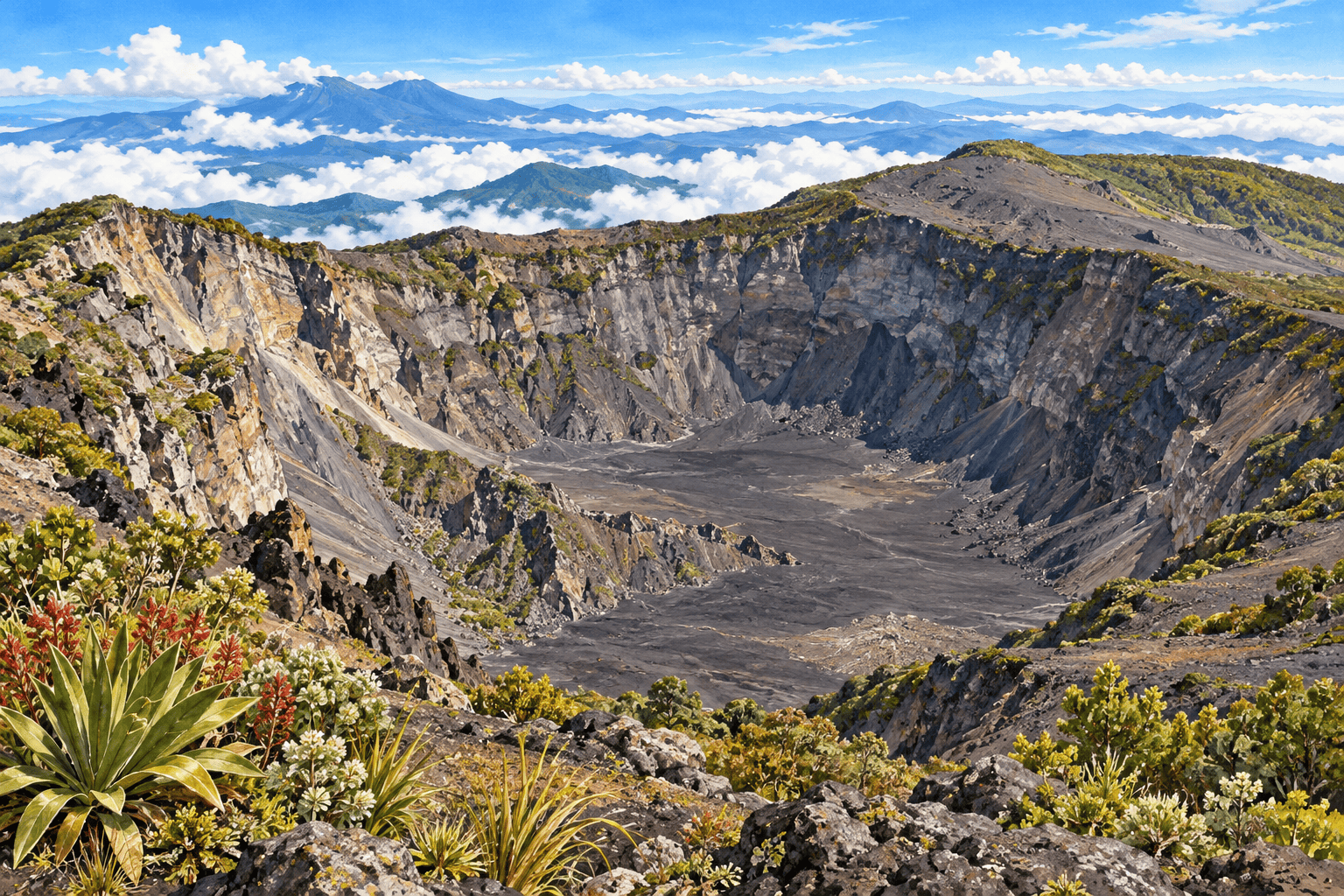
Irazú reaches 3,432 meters above sea level and is Costa Rica’s highest volcano. Its summit includes several craters, exposed volcanic ground and low-growing vegetation. Fog often surrounds this cold mountain landscape. A crater may look different as water levels and weather change.
Identification
Key Features of the Irazú Volcano
Broad crater depressions.
Gray volcanic ground.
Low vegetation and mist at high elevation.
Habitat & range
Cartago province, in the Central Volcanic Mountain Range.
Local observations
A Costa Rican volcanic landmark. This educational profile does not describe live eruption status or guarantee visitor access.
When to observe
Explore in daylight only when the site is open and conditions permit. Ask an adult to check official access information, weather and volcanic advisories before a visit. Clouds can hide the landscape.
Conservation & care
Explore with an adult. Follow staff instructions, authorized trails, barriers and closures. Leave rocks, plants and wildlife in place and carry out litter. Bring suitable layers for the cold summit and remain behind crater barriers.
Observation activity
Draw the crater rim and floor from a photograph. Explain why a crater looks different from a cone seen at a distance.
Plan Your Visit
Irazú Volcano National Park — Craters sector
Getting There
From Cartago, follow the signed road toward Irazú and the Craters sector. Use the visitor parking and marked paths to the crater viewpoints.
Before You Go
Choose Sector Cráteres when reserving; Sector Prusia is a different forest visitor area. Check current admission arrangements with SINAC.
Visit information reviewed October 8, 2026. Confirm current access before travel.