Tico Explorers

step into adventureDiscover More with Every Adventure.

Join Pico and Tati to explore Costa Rica on foot, on the water and along the shore. Try something new with family and local guides. Each adventure offers a chance to build confidence, notice nature and care for the world around you.

Follow Forest Trails

Walk beneath leafy treetops and discover what lies around the next bend. Look for butterflies, listen for birds and notice how the forest changes. Stay on marked trails and explore at your family’s pace.

Paddle and Explore

See the landscape from a kayak as you explore sheltered waters with a guide. Notice reflections, shoreline plants and wildlife from a distance. Wear a properly fitted life jacket and follow your guide’s instructions.

Learn to Ride the Waves

Discover the joy of surfing with a qualified instructor. Practice your balance and learn how to understand the waves. Start with conditions suited to your ability and celebrate every small success.

Explore on Horseback

Follow countryside trails with a local riding guide. Notice open fields, shady trees and the sounds around you. Wear a riding helmet and learn how to treat your horse with patience and kindness.

Watch for Birds

Bring your curiosity and a pair of binoculars. Look for different colors, beak shapes and ways of flying. How many birds can you notice without disturbing them? A local guide can help you learn their names.

Discover with Local Guides

Explore with people who know the trails, waters and wildlife. Ask questions and listen to their stories. Learn how thoughtful choices help protect the places that make each adventure special.

Outdoor Adventures & Discoveries

Add an Adventure Above the Trees — Santa Ana

For a more energetic outing, ask Hacienda La Chimba about its canopy and high-ropes experiences. Choose the activity for the people in your group and confirm age, size and fitness requirements with the operator. Book the specific experience you want rather than assuming it is included with hiking.


Arrange a Farm Experience — Copey de Dota

Contact a local host to learn about crops and daily life in the highlands. Ask which activities are suitable for children and whether anything can be seen growing during your visit.

Ask About the Copey Vineyard — Copey de Dota

Check directly with Copey Estate Winery about visits and family participation. The vineyard is a separate private experience; confirm whether children can join before making plans.

Barva Volcano Forest Trails

Plan a separate mountain outing to the Barva Volcano sector of Braulio Carrillo National Park. Explore cool forest on an open route suited to your group. Confirm road access, admission and trail conditions before traveling.
Bring Home Coffee With a Local Story — San Marcos de Tarrazú

Contact Café Don Mayo about buying coffee and learn more about the producer behind the label. Choose beans to enjoy at home or give as a gift, and ask about the available roast and preparation advice. Confirm visitor arrangements; do not assume an unscheduled farm tour is offered.

Continue to Neighboring Santa María de Dota — San Marcos de Tarrazú

Add a separately planned visit to Santa María for another perspective on Los Santos. Explore its town center and coffee-country setting, with time for a meal before the return drive. Santa María is in Dota canton; check the route and leave room in your day for mountain travel.

View All Discoveries ↗

find your next adventureExplore Towns Where Adventure Begins

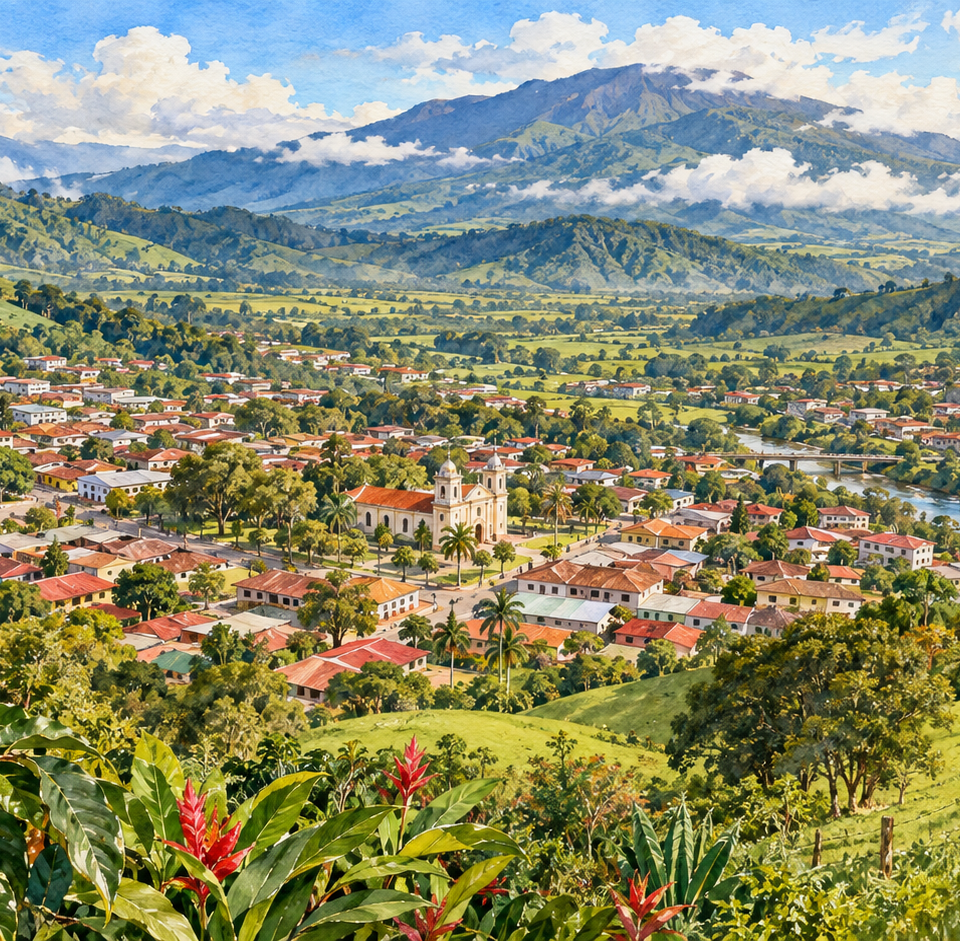
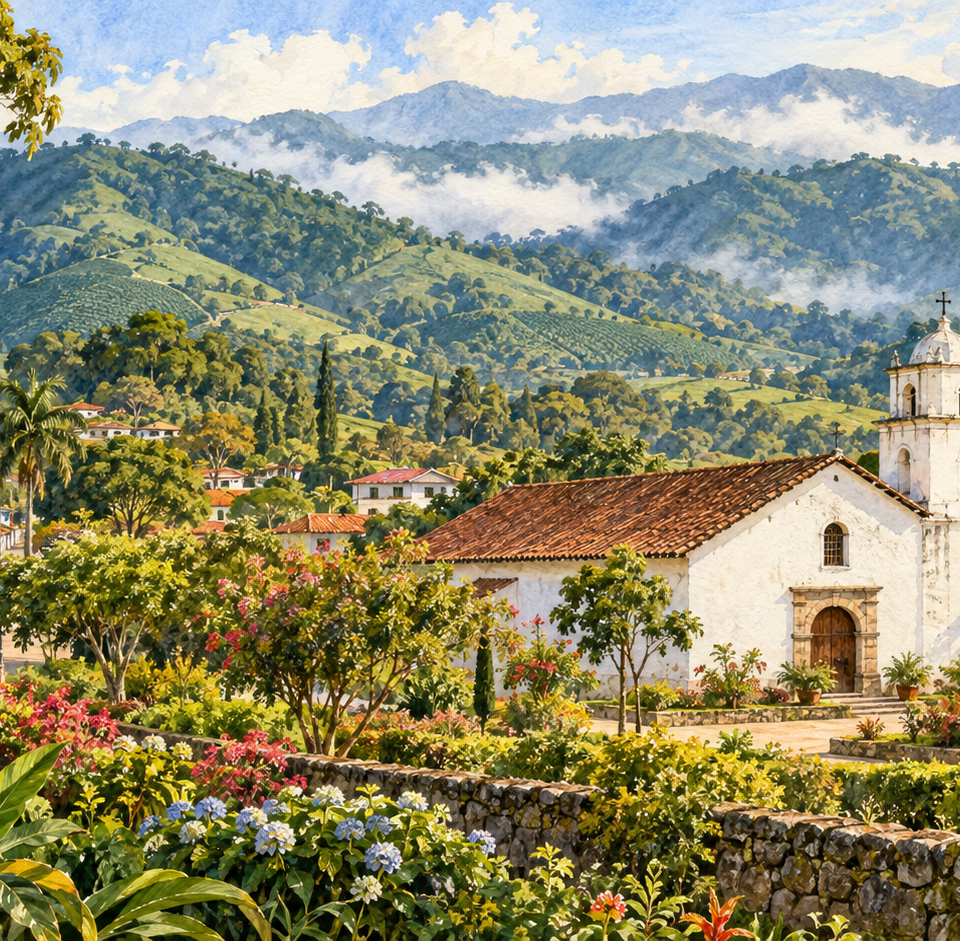
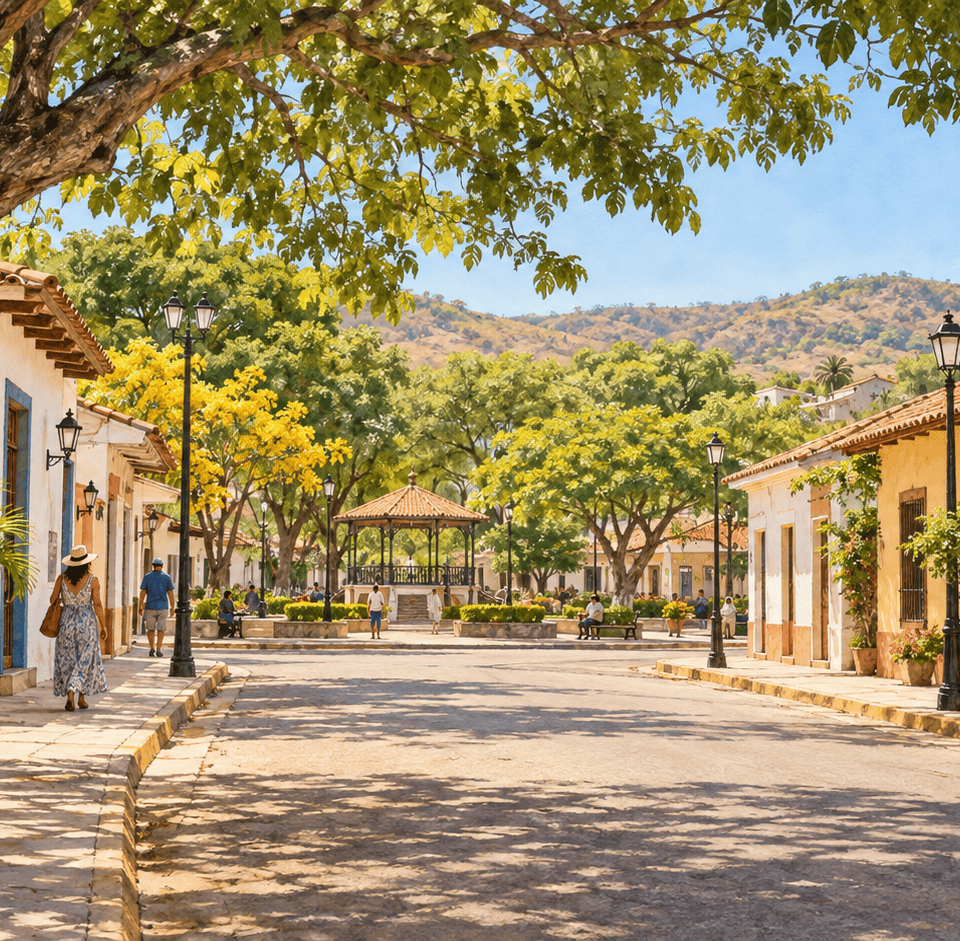
From mountain communities to seaside towns, discover places that invite you outdoors. Find forest trails, nearby waterfalls and opportunities to explore on horseback or on the water. Each town offers a new starting point for curious families.

Follow Pico and Tati to discover what you can do and learn along the way. Explore local highlights, meet knowledgeable guides and choose an adventure that suits your family’s pace.

Nature Field Guide

Discover Nature Along Your Adventure

Explore wildlife, plants and trees. Learn what to look for and where to find them.

25 profiles

Nature Field Guide

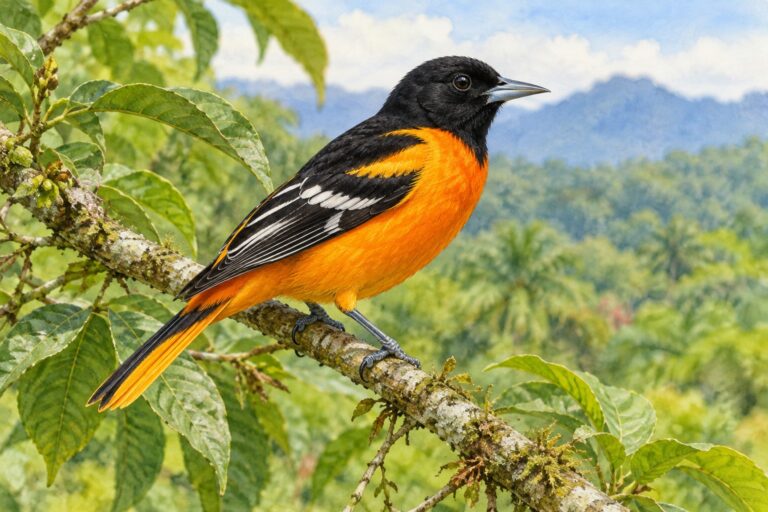
Baltimore Oriole

Spanish name
Bolsero norteño
Scientific name
Icterus galbula

What Do Pico & Tati Think?

Pico: “Did that bird travel here?”

Tati: “Baltimore orioles connect Costa Rica with places farther north.”

Identification

Key Features of the Baltimore Oriole

  • Male orange body and black head

  • White wingbar

  • Slender pointed bill

Habitat & range

A migrant and nonbreeding visitor, generally September to early May. Occurs on both slopes, especially the northern Pacific and Central Valley, in wooded gardens, edges and plantations.

Conservation & care

Observe quietly from trails or established viewing areas. Give nests, roosts and feeding birds space. Do not handle, chase or lure birds with playback. Keep pets away from wildlife.

Threats & pressures

Migrants depend on suitable habitat across their full annual journey. Protect native vegetation, reduce collision hazards around glass and keep cats away from birds. These are practical prevention priorities, not a claim of a measured decline at a specific Costa Rican site.

View full profile →

Nature Field Guide

Black Vulture

Spanish name
Zopilote negro
Scientific name
Coragyps atratus

What Do Pico & Tati Think?

Pico: “Which vulture is that one?”

Tati: “Look for the short tail and pale patches just at the wingtips.”

Identification

Key Features of the Black Vulture

  • Bare dark head

  • Short rounded tail

  • White patches at outer wingtips

Habitat & range

Widespread over towns and open landscapes from the coast into the mountains, becoming less frequent above about 2000 m. A regional tag does not identify a nesting site.

Conservation & care

Observe quietly from trails or established viewing areas. Give nests, roosts and feeding birds space. Do not handle, chase or lure birds with playback. Keep pets away from wildlife.

Threats & pressures

Protect native vegetation, reduce collision hazards around glass and keep cats away from birds. These are practical prevention priorities, not a claim of a measured decline at a specific Costa Rican site.

View full profile →

Nature Field Guide

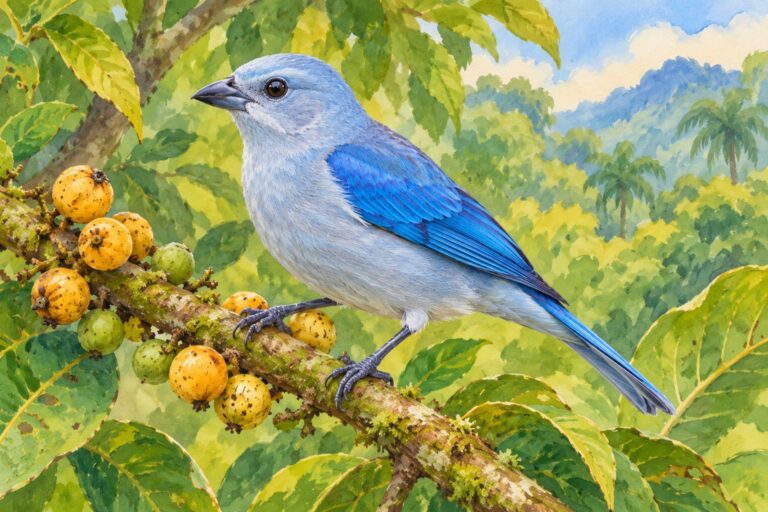
Blue-gray Tanager

Spanish name
Tangara azuleja
Scientific name
Thraupis episcopus

What Do Pico & Tati Think?

Pico: “It looks like a piece of the sky!”

Tati: “Let’s see where the blue is pale and where it is brighter.”

Identification

Key Features of the Blue-gray Tanager

  • Powder blue-gray body

  • Brighter blue wings and shoulder

  • Dark eye and stout bill

Habitat & range

Widespread in gardens, towns and semi-open wooded areas, mainly below about 2000 m. In the dry northwest it is less frequent and associated with moister sites near homes.

Conservation & care

Observe quietly from trails or established viewing areas. Give nests, roosts and feeding birds space. Do not handle, chase or lure birds with playback. Keep pets away from wildlife.

Threats & pressures

Protect native vegetation, reduce collision hazards around glass and keep cats away from birds. These are practical prevention priorities, not a claim of a measured decline at a specific Costa Rican site.

View full profile →

Nature Field Guide

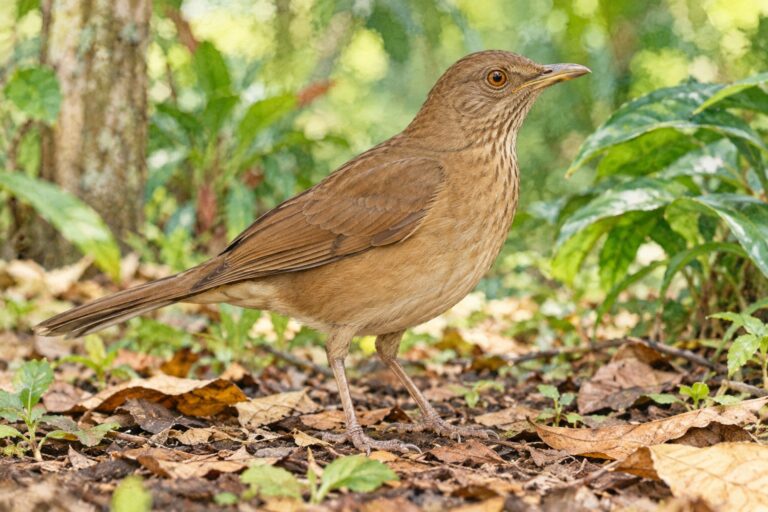
Clay-colored Thrush

Spanish name
Mirlo pardo / Yigüirro
Scientific name
Turdus grayi

What Do Pico & Tati Think?

Pico: “That brown bird has a beautiful song!”

Tati: “That is the yigüirro. We can learn its voice as well as its colors.”

Identification

Key Features of the Clay-colored Thrush

  • Warm brown plumage

  • Yellowish bill

  • Fine throat streaks and orange-brown eye

Habitat & range

Widespread across Costa Rica from lowlands to about 2450 m, in gardens, farms, secondary growth and wooded urban areas. Less numerous in the dry northwest and higher mountains.

Conservation & care

Observe quietly from trails or established viewing areas. Give nests, roosts and feeding birds space. Do not handle, chase or lure birds with playback. Keep pets away from wildlife.

Threats & pressures

Protect native vegetation, reduce collision hazards around glass and keep cats away from birds. These are practical prevention priorities, not a claim of a measured decline at a specific Costa Rican site.

View full profile →

Nature Field Guide

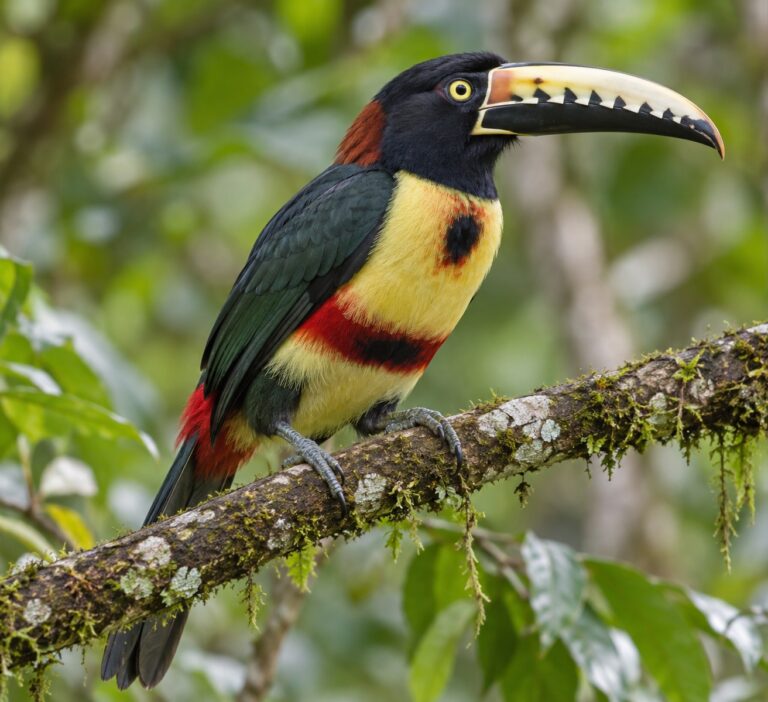
Collared Aracari

Spanish name
Tucancillo collarejo
Scientific name
Pteroglossus torquatus

What Do Pico & Tati Think?

Pico: “Is that a little toucan?”

Tati: “An aracari belongs to the toucan family. Its shape and bill give us clues.”

Identification

Key Features of the Collared Aracari

  • Dark head and throat

  • Yellow chest with red and black marks

  • Patterned pale upper bill

Habitat & range

Commoner in Caribbean lowlands and foothills; also occurs locally in the northern Pacific, including Nicoya woodland and lower Guanacaste slopes. Central Valley records are exceptional rather than a core range.

Conservation & care

Observe quietly from trails or established viewing areas. Give nests, roosts and feeding birds space. Do not handle, chase or lure birds with playback. Keep pets away from wildlife.

Threats & pressures

Protect native vegetation, reduce collision hazards around glass and keep cats away from birds. These are practical prevention priorities, not a claim of a measured decline at a specific Costa Rican site.

View full profile →

Nature Field Guide

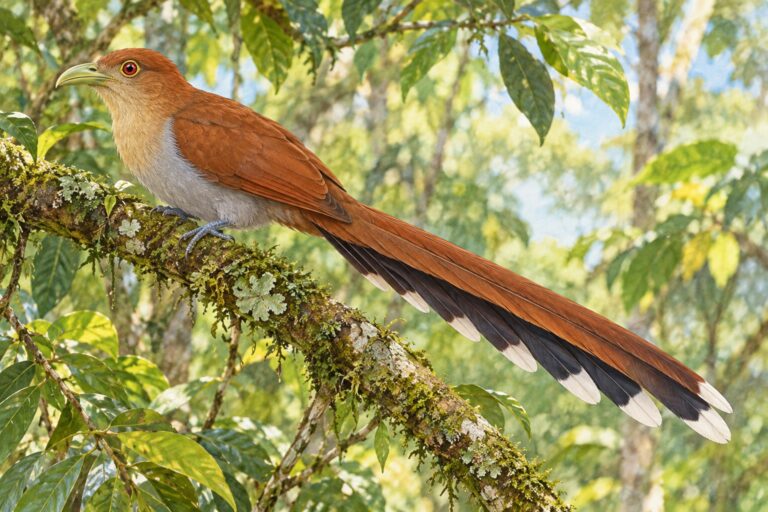
Common Squirrel-Cuckoo

Spanish name
Cuco ardilla
Scientific name
Piaya cayana

What Do Pico & Tati Think?

Pico: “That tail is longer than I expected!”

Tati: “Follow its movement through the branches without chasing it.”

Identification

Key Features of the Common Squirrel-Cuckoo

  • Rusty upperparts

  • Very long graduated white-tipped tail

  • Greenish-yellow bill

Habitat & range

Widespread in wooded habitats on both slopes, including forest canopy, secondary growth, plantations and tree-rich gardens. It can occur well above the lowlands where trees remain.

Conservation & care

Observe quietly from trails or established viewing areas. Give nests, roosts and feeding birds space. Do not handle, chase or lure birds with playback. Keep pets away from wildlife.

Threats & pressures

Protect native vegetation, reduce collision hazards around glass and keep cats away from birds. These are practical prevention priorities, not a claim of a measured decline at a specific Costa Rican site.

View full profile →

Nature Field Guide

Coppery-headed Emerald

Spanish name
Esmeralda de coronilla cobriza
Scientific name
Microchera cupreiceps

What Do Pico & Tati Think?

Pico: “Does this tiny bird live only in Costa Rica?”

Tati: “Yes. Endemic means its natural range is limited to one place.”

Identification

Key Features of the Coppery-headed Emerald

  • Male coppery crown

  • White outer tail feathers

  • Small size and slightly curved bill

Habitat & range

Costa Rican endemic of humid northern and central mountain slopes, from the Guanacaste range toward the northern Reventazon valley. Seasonal descent occurs; dry coastal Guanacaste is unsuitable.

Conservation & care

Observe quietly from trails or established viewing areas. Give nests, roosts and feeding birds space. Do not handle, chase or lure birds with playback. Keep pets away from wildlife.

Threats & pressures

Protect native vegetation, reduce collision hazards around glass and keep cats away from birds. These are practical prevention priorities, not a claim of a measured decline at a specific Costa Rican site.

View full profile →

Nature Field Guide

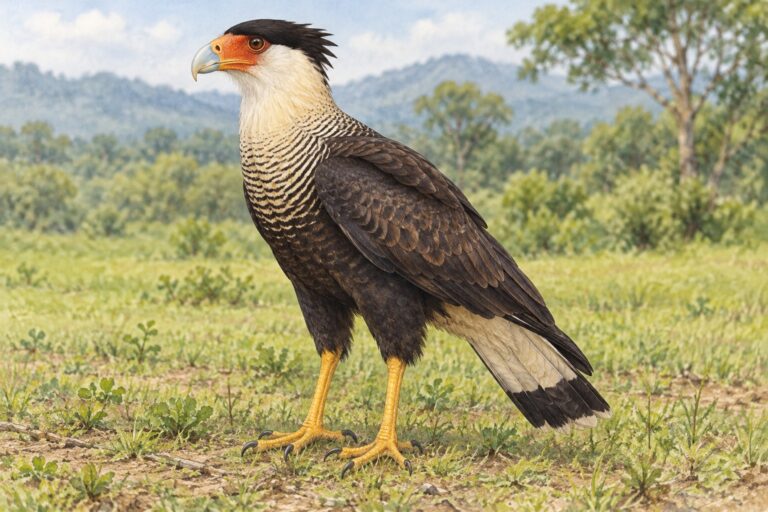
Crested Caracara

Spanish name
Caracara cargahuesos
Scientific name
Caracara plancus

What Do Pico & Tati Think?

Pico: “That bird of prey is walking!”

Tati: “Caracaras often search on foot. Look at those long legs.”

Identification

Key Features of the Crested Caracara

  • Dark cap and pale neck

  • Orange-red bare face

  • Long legs and hooked bill

Habitat & range

Open northwestern landscapes, pasture, farmland and beaches, with local occurrence around Rio Frio and occasional movement into San Carlos. This conservative set omits occasional Central Valley wanderers.

Conservation & care

Observe quietly from trails or established viewing areas. Give nests, roosts and feeding birds space. Do not handle, chase or lure birds with playback. Keep pets away from wildlife.

Threats & pressures

Protect native vegetation, reduce collision hazards around glass and keep cats away from birds. These are practical prevention priorities, not a claim of a measured decline at a specific Costa Rican site.

View full profile →

Nature Field Guide

Great Kiskadee

Spanish name
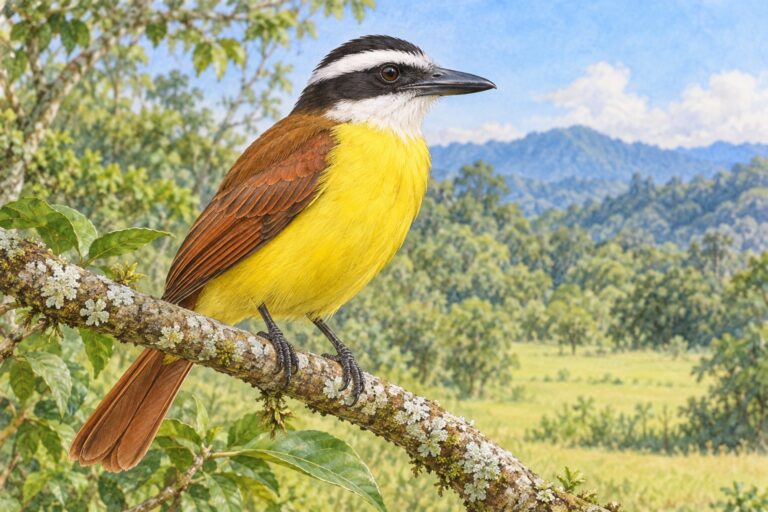
Bienteveo grande
Scientific name
Pitangus sulphuratus

What Do Pico & Tati Think?

Pico: “It sounds like it is calling its own name!”

Tati: “Let’s also check its bold eyebrow and strong bill.”

Identification

Key Features of the Great Kiskadee

  • Black-and-white head pattern

  • Bright yellow belly

  • Heavy bill and reddish-brown wings

Habitat & range

Open wooded country and settled areas, often near water, on both slopes, mainly below about 1500 m. Less frequent in some southern Pacific areas; not a high-mountain specialist.

Conservation & care

Observe quietly from trails or established viewing areas. Give nests, roosts and feeding birds space. Do not handle, chase or lure birds with playback. Keep pets away from wildlife.

Threats & pressures

Protect native vegetation, reduce collision hazards around glass and keep cats away from birds. These are practical prevention priorities, not a claim of a measured decline at a specific Costa Rican site.

View full profile →

Nature Field Guide

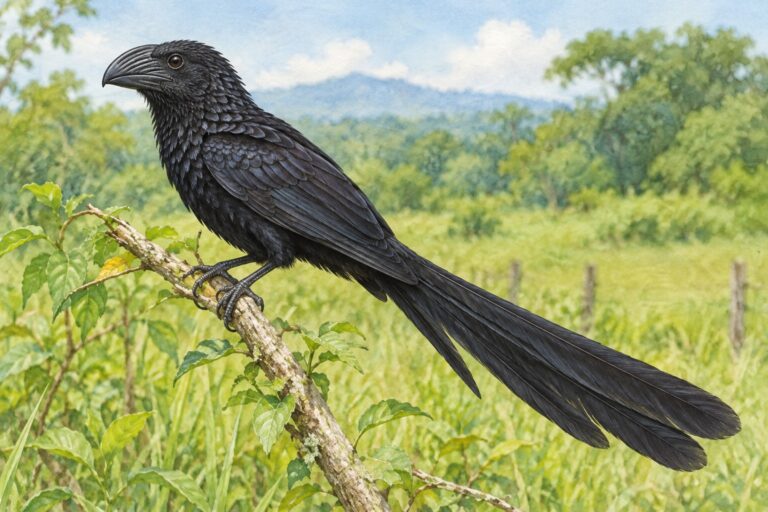
Groove-billed Ani

Spanish name
Garrapatero piquiestriado / Tijo
Scientific name
Crotophaga sulcirostris

What Do Pico & Tati Think?

Pico: “Its beak has tiny lines!”

Tati: “Those grooves are helpful, but we need a clear view.”

Identification

Key Features of the Groove-billed Ani

  • All-black plumage

  • Long loosely held tail

  • Heavy upper bill with grooves

Habitat & range

Open and shrubby country, pasture margins and settled areas across Costa Rica, reaching middle elevations. It is less frequent in much of the southern Pacific, where Smooth-billed Ani predominates.

Conservation & care

Observe quietly from trails or established viewing areas. Give nests, roosts and feeding birds space. Do not handle, chase or lure birds with playback. Keep pets away from wildlife.

Threats & pressures

Protect native vegetation, reduce collision hazards around glass and keep cats away from birds. These are practical prevention priorities, not a claim of a measured decline at a specific Costa Rican site.

View full profile →

Nature Field Guide

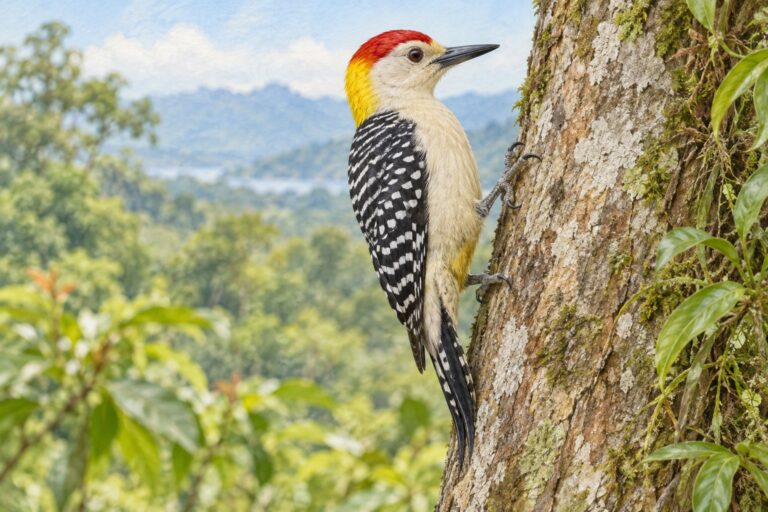
Hoffmann’s Woodpecker

Spanish name
Carpintero de Hoffmann
Scientific name
Melanerpes hoffmannii

What Do Pico & Tati Think?

Pico: “Its back looks like a striped pattern!”

Tati: “Look at the crown too. Males and females differ there.”

Identification

Key Features of the Hoffmann’s Woodpecker

  • Black-and-white barred back

  • Yellow nape

  • Male has a red crown

Habitat & range

Strongest in the northern Pacific and Central Valley, extending south toward Tarcoles and locally into Rio Frio. Occurs along parts of the Reventazon corridor; avoid treating all Caribbean rainforest as typical habitat.

Conservation & care

Observe quietly from trails or established viewing areas. Give nests, roosts and feeding birds space. Do not handle, chase or lure birds with playback. Keep pets away from wildlife.

Threats & pressures

Protect native vegetation, reduce collision hazards around glass and keep cats away from birds. These are practical prevention priorities, not a claim of a measured decline at a specific Costa Rican site.

View full profile →

Nature Field Guide

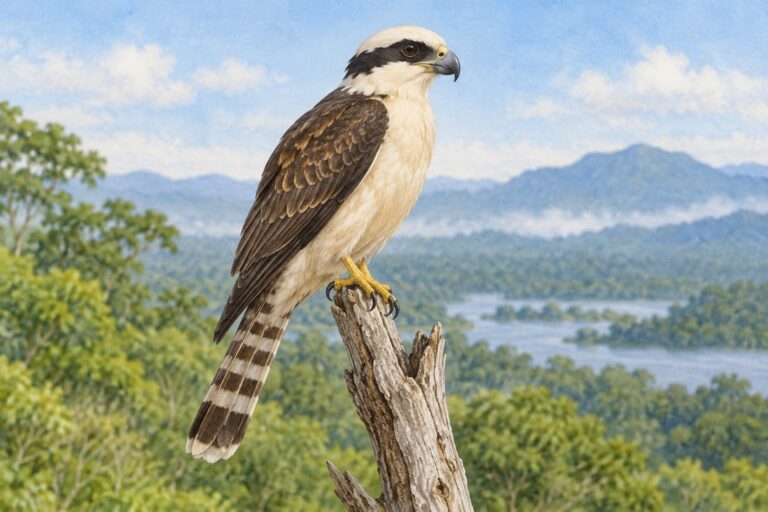
Laughing Falcon

Spanish name
Guaco
Scientific name
Herpetotheres cachinnans

What Do Pico & Tati Think?

Pico: “It sounds like a laugh!”

Tati: “That call explains its name. Its wide eye mask helps us recognize it too.”

Identification

Key Features of the Laughing Falcon

  • Creamy head and underparts

  • Broad black eye mask

  • Dark upperparts

Habitat & range

Lowland forest edges, secondary woodland and partly open country on both slopes. Occasional higher-elevation records do not make high mountain forest core habitat.

Conservation & care

Observe quietly from trails or established viewing areas. Give nests, roosts and feeding birds space. Do not handle, chase or lure birds with playback. Keep pets away from wildlife.

Threats & pressures

Protect native vegetation, reduce collision hazards around glass and keep cats away from birds. These are practical prevention priorities, not a claim of a measured decline at a specific Costa Rican site.

View full profile →

Nature Field Guide

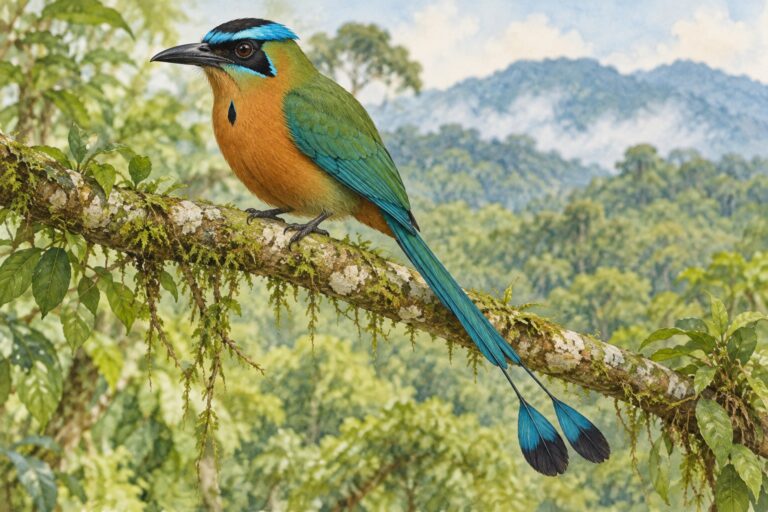
Lesson’s Motmot

Spanish name
Momoto coroniazul
Scientific name
Momotus lessonii

What Do Pico & Tati Think?

Pico: “Its tail has tiny paddles!”

Tati: “They are feather tips. Let’s compare the crown with our other motmot.”

Identification

Key Features of the Lesson’s Motmot

  • Blue crown with dark center

  • Dark eye mask

  • Long central tail feathers with racket tips

Habitat & range

Pacific lowlands and middle elevations, the Central Valley and locally northern areas. In the dry northwest it is associated especially with gallery forest. Most Caribbean lowlands are outside its usual range.

Conservation & care

Observe quietly from trails or established viewing areas. Give nests, roosts and feeding birds space. Do not handle, chase or lure birds with playback. Keep pets away from wildlife.

Threats & pressures

Protect native vegetation, reduce collision hazards around glass and keep cats away from birds. These are practical prevention priorities, not a claim of a measured decline at a specific Costa Rican site.

View full profile →

Nature Field Guide

Montezuma Oropendola

Spanish name
Oropéndola de Moctezuma
Scientific name
Psarocolius montezuma

What Do Pico & Tati Think?

Pico: “Those nests hang like long baskets!”

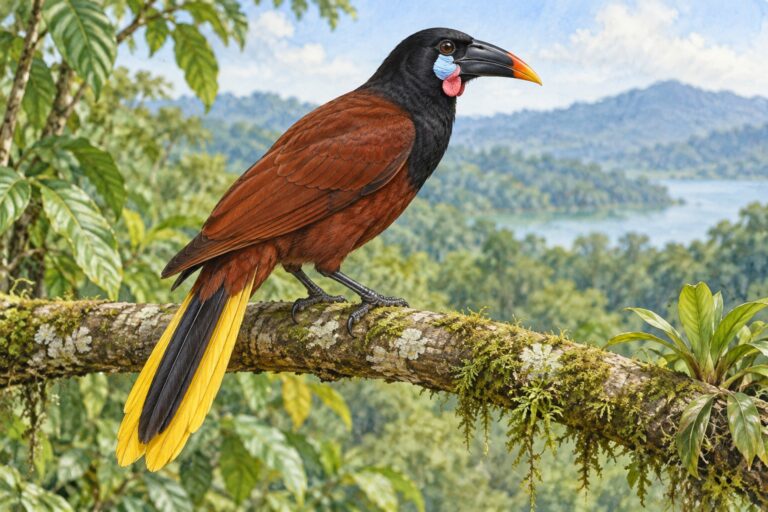
Tati: “We can admire their shape from a distance and leave the colony quiet.”

Identification

Key Features of the Montezuma Oropendola

  • Black head and chestnut body

  • Yellow outer tail feathers

  • Large patterned bill and bare cheek area

Habitat & range

Most frequent in Caribbean lowlands, with distribution through the Reventazon basin and parts of the Central Valley. Local in the northwest, especially near mountain bases; not uniformly common across Guanacaste.

Conservation & care

Observe quietly from trails or established viewing areas. Give nests, roosts and feeding birds space. Do not handle, chase or lure birds with playback. Keep pets away from wildlife.

Threats & pressures

Protect native vegetation, reduce collision hazards around glass and keep cats away from birds. These are practical prevention priorities, not a claim of a measured decline at a specific Costa Rican site.

View full profile →

Nature Field Guide

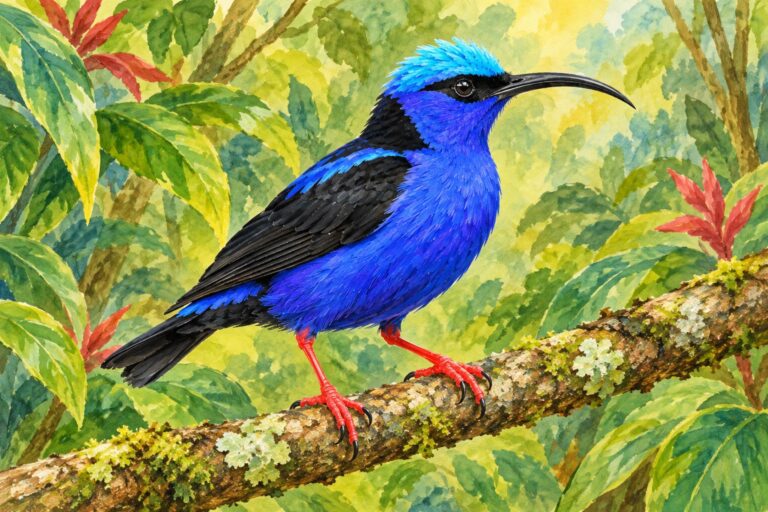
Red-legged Honeycreeper

Spanish name
Mielero patirrojo
Scientific name
Cyanerpes cyaneus

What Do Pico & Tati Think?

Pico: “Why are its feet so red?”

Tati: “Those red legs help us identify it, even when the body colors differ.”

Identification

Key Features of the Red-legged Honeycreeper

  • Bright red legs

  • Slender decurved bill

  • Breeding male blue with turquoise crown

Habitat & range

Wooded lowlands, forest edges, gardens and plantations. Common in northern Pacific areas and parts of Rio Frio; elsewhere on the Caribbean slope it is more local. Also occurs in the southern Pacific.

Conservation & care

Observe quietly from trails or established viewing areas. Give nests, roosts and feeding birds space. Do not handle, chase or lure birds with playback. Keep pets away from wildlife.

Threats & pressures

Protect native vegetation, reduce collision hazards around glass and keep cats away from birds. These are practical prevention priorities, not a claim of a measured decline at a specific Costa Rican site.

View full profile →

Nature Field Guide

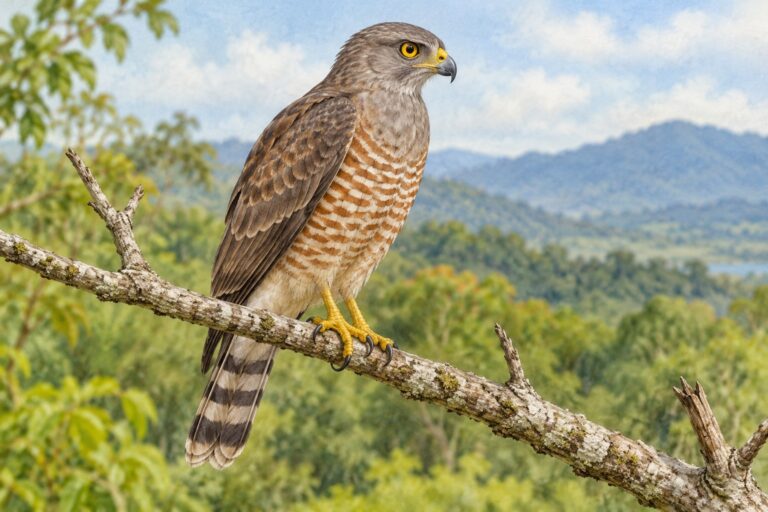
Roadside Hawk

Spanish name
Gavilán chapulinero
Scientific name
Rupornis magnirostris

What Do Pico & Tati Think?

Pico: “I can see stripes across its belly!”

Tati: “Those bars and its yellow eye help us check the identification.”

Identification

Key Features of the Roadside Hawk

  • Yellow eye

  • Rufous-and-white barred belly

  • Broad dark tail bands

Habitat & range

Lowland woodland edges, second growth and open country with trees on both slopes. More frequent in northern Pacific lowlands; local in the Central Valley and other areas.

Conservation & care

Observe quietly from trails or established viewing areas. Give nests, roosts and feeding birds space. Do not handle, chase or lure birds with playback. Keep pets away from wildlife.

Threats & pressures

Protect native vegetation, reduce collision hazards around glass and keep cats away from birds. These are practical prevention priorities, not a claim of a measured decline at a specific Costa Rican site.

View full profile →

Nature Field Guide

Rufous-tailed Hummingbird

Spanish name
Colibrí rabirrufo
Scientific name
Amazilia tzacatl

What Do Pico & Tati Think?

Pico: “That hummingbird has a rusty tail!”

Tati: “Let’s check its bill and belly too.”

Identification

Key Features of the Rufous-tailed Hummingbird

  • Rusty rufous tail

  • Green head and chest

  • Reddish bill with dark tip

Habitat & range

Widespread on both slopes from sea level locally to about 1850 m. Flowering gardens, secondary growth and river corridors are useful habitat; occurrence is more local in the dry northwest.

Conservation & care

Observe quietly from trails or established viewing areas. Give nests, roosts and feeding birds space. Do not handle, chase or lure birds with playback. Keep pets away from wildlife.

Threats & pressures

Protect native vegetation, reduce collision hazards around glass and keep cats away from birds. These are practical prevention priorities, not a claim of a measured decline at a specific Costa Rican site.

View full profile →

Nature Field Guide

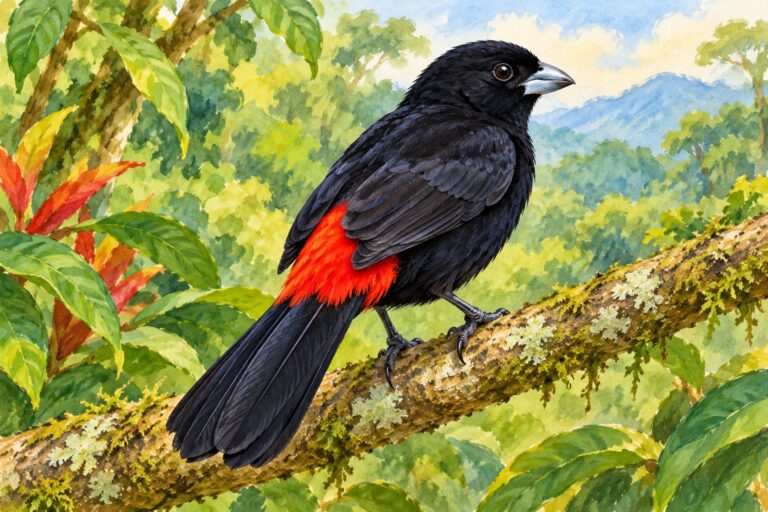
Scarlet-rumped Tanager

Spanish name
Tangara de Passerini
Scientific name
Ramphocelus passerinii

What Do Pico & Tati Think?

Pico: “I saw a bright red flash near its tail!”

Tati: “That rump patch is the clue. The male’s head stays black.”

Identification

Key Features of the Scarlet-rumped Tanager

  • Male black with scarlet rump

  • Pale silvery bill

  • Female plumage differs strongly

Habitat & range

Humid lowlands and foothills, secondary growth and wooded gardens on the Caribbean and Pacific slopes. This profile follows the current Costa Rican checklist's combined Scarlet-rumped Tanager treatment, including the southern Pacific form formerly called Cherrie's Tanager.

Conservation & care

Observe quietly from trails or established viewing areas. Give nests, roosts and feeding birds space. Do not handle, chase or lure birds with playback. Keep pets away from wildlife.

Threats & pressures

Protect native vegetation, reduce collision hazards around glass and keep cats away from birds. These are practical prevention priorities, not a claim of a measured decline at a specific Costa Rican site.

View full profile →

Nature Field Guide

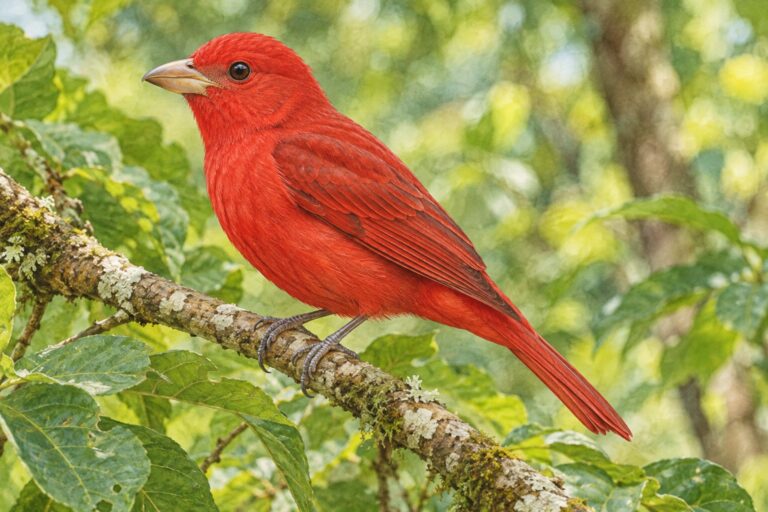
Summer Tanager

Spanish name
Tangara veranera
Scientific name
Piranga rubra

What Do Pico & Tati Think?

Pico: “Even its wings are red!”

Tati: “That helps us compare it with the scarlet tanager.”

Identification

Key Features of the Summer Tanager

  • Adult male entirely red

  • Hefty pale bill

  • Female yellowish and young males patchy

Habitat & range

A migrant and nonbreeding visitor, generally mid-September through April. Uses forest, edges and wooded gardens on both slopes, with fewer birds at higher elevations.

Conservation & care

Observe quietly from trails or established viewing areas. Give nests, roosts and feeding birds space. Do not handle, chase or lure birds with playback. Keep pets away from wildlife.

Threats & pressures

Migrants depend on suitable habitat across their full annual journey. Protect native vegetation, reduce collision hazards around glass and keep cats away from birds. These are practical prevention priorities, not a claim of a measured decline at a specific Costa Rican site.

View full profile →

Nature Field Guide

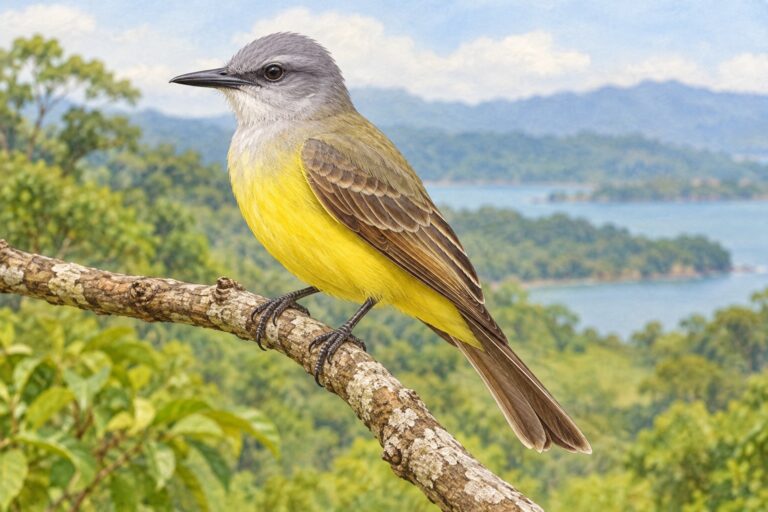
Tropical Kingbird

Spanish name
Tirano tropical
Scientific name
Tyrannus melancholicus

What Do Pico & Tati Think?

Pico: “That bird keeps returning to the same branch!”

Tati: “A perch gives a flycatcher a place to watch for food.”

Identification

Key Features of the Tropical Kingbird

  • Gray head without bold white eyebrow

  • Yellow underparts

  • Long dark bill and brown tail

Habitat & range

Widespread in open country, farms, towns and forest clearings, mainly below about 1850 m and less commonly higher. Regional tags apply only where suitable open habitat exists.

Conservation & care

Observe quietly from trails or established viewing areas. Give nests, roosts and feeding birds space. Do not handle, chase or lure birds with playback. Keep pets away from wildlife.

Threats & pressures

Protect native vegetation, reduce collision hazards around glass and keep cats away from birds. These are practical prevention priorities, not a claim of a measured decline at a specific Costa Rican site.

View full profile →

Nature Field Guide

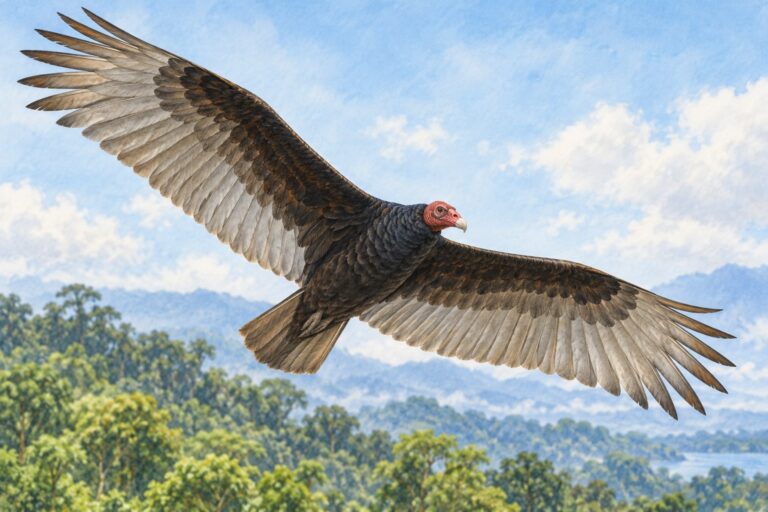
Turkey Vulture

Spanish name
Zopilote cabecirrojo
Scientific name
Cathartes aura

What Do Pico & Tati Think?

Pico: “Its wings look like a gentle V!”

Tati: “That posture and the pale flight feathers give us clues.”

Identification

Key Features of the Turkey Vulture

  • Red head in adults

  • Pale flight feathers beneath dark wings

  • Longer tail and shallow V in flight

Habitat & range

Widespread over open and wooded landscapes, less numerous at high elevations. Resident birds are joined by migrants, with especially conspicuous passage along Caribbean lowlands.

Conservation & care

Observe quietly from trails or established viewing areas. Give nests, roosts and feeding birds space. Do not handle, chase or lure birds with playback. Keep pets away from wildlife.

Threats & pressures

Protect native vegetation, reduce collision hazards around glass and keep cats away from birds. These are practical prevention priorities, not a claim of a measured decline at a specific Costa Rican site.

View full profile →

Nature Field Guide

Violet Sabrewing

Spanish name
Ala de sable violáceo
Scientific name
Campylopterus hemileucurus

What Do Pico & Tati Think?

Pico: “It looked dark until it turned!”

Tati: “Iridescent feathers can change appearance as the light changes.”

Identification

Key Features of the Violet Sabrewing

  • Large hummingbird shape

  • Thick curved bill

  • White outer tail corners

Habitat & range

Humid mountain forest and forest edges on both slopes. Breeding is mainly at middle elevations, with seasonal descent into foothills. Guanacaste means humid mountain habitat, not dry beaches.

Conservation & care

Observe quietly from trails or established viewing areas. Give nests, roosts and feeding birds space. Do not handle, chase or lure birds with playback. Keep pets away from wildlife.

Threats & pressures

Protect native vegetation, reduce collision hazards around glass and keep cats away from birds. These are practical prevention priorities, not a claim of a measured decline at a specific Costa Rican site.

View full profile →

Nature Field Guide

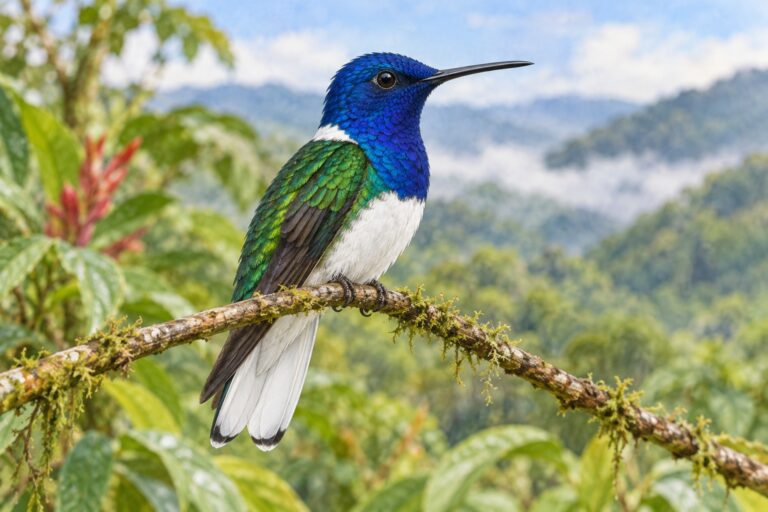
White-necked Jacobin

Spanish name
Jacobino nuquiblanco
Scientific name
Florisuga mellivora

What Do Pico & Tati Think?

Pico: “Its tail opened like a little white fan!”

Tati: “The white tail and blue hood are useful clues in a male.”

Identification

Key Features of the White-necked Jacobin

  • Male has blue hood

  • White belly and tail in males

  • Green back and white nape collar

Habitat & range

Humid lowlands and lower slopes of the Caribbean and southern Pacific, especially forest canopy, clearings and flowering edges. It is not a general dry-northwest garden hummingbird.

Conservation & care

Observe quietly from trails or established viewing areas. Give nests, roosts and feeding birds space. Do not handle, chase or lure birds with playback. Keep pets away from wildlife.

Threats & pressures

Protect native vegetation, reduce collision hazards around glass and keep cats away from birds. These are practical prevention priorities, not a claim of a measured decline at a specific Costa Rican site.

View full profile →

Nature Field Guide

White-throated Magpie-Jay

Spanish name
Urraca copetona
Scientific name
Cyanocorax formosa

What Do Pico & Tati Think?

Pico: “Its crest curls like a little ribbon!”

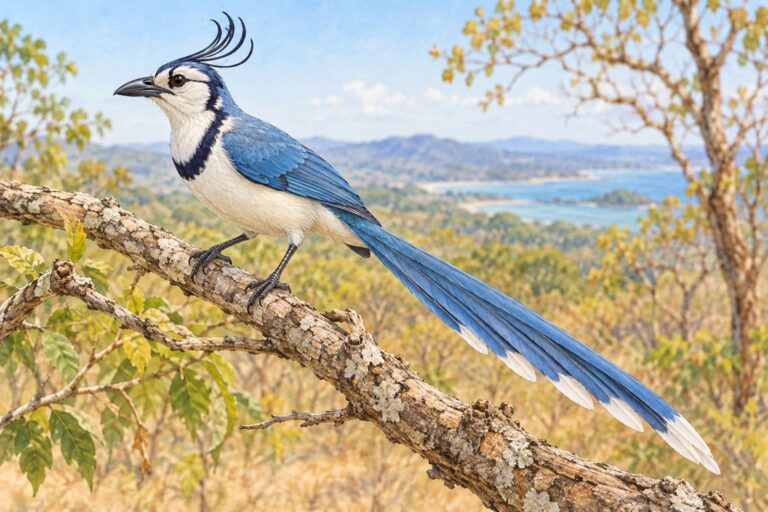
Tati: “The blue tail and white throat are other good clues.”

Identification

Key Features of the White-throated Magpie-Jay

  • Long blue tail with pale tips

  • Tall curled crest

  • White throat with dark neck markings

Habitat & range

Northern Pacific dry and gallery woodland, extending toward Orotina and San Mateo. A documented Tamarindo photograph supports that local connection. The public scientific name is corrected to Cyanocorax formosa; the permanent import ID stays unchanged.

Conservation & care

Observe quietly from trails or established viewing areas. Give nests, roosts and feeding birds space. Do not handle, chase or lure birds with playback. Keep pets away from wildlife.

Threats & pressures

Protect native vegetation, reduce collision hazards around glass and keep cats away from birds. These are practical prevention priorities, not a claim of a measured decline at a specific Costa Rican site.

View full profile →

Nature Field Guide

Yellow-throated Toucan

Spanish name
Tucán pico castaño
Scientific name
Ramphastos ambiguus

What Do Pico & Tati Think?

Pico: “That bill is enormous!”

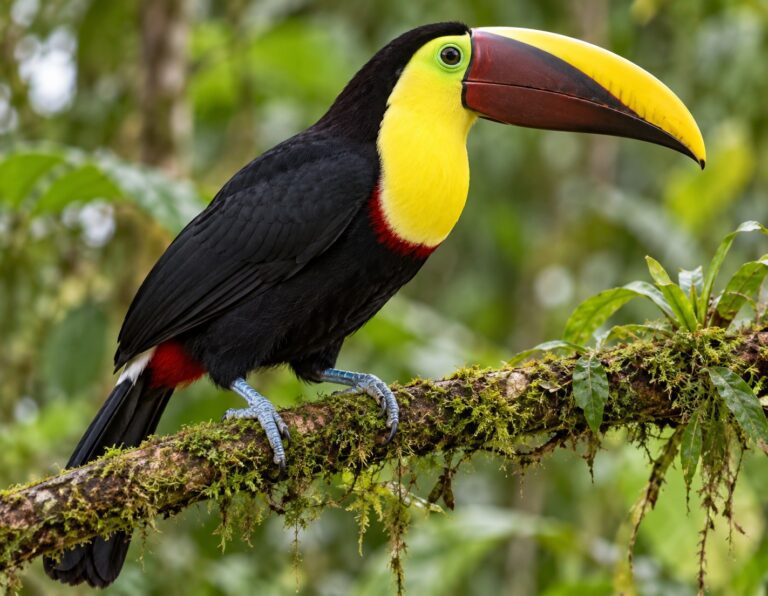
Tati: “Its yellow and chestnut areas help us compare it with the keel-billed toucan.”

Identification

Key Features of the Yellow-throated Toucan

  • Large yellow-and-chestnut bill

  • Yellow throat and upper chest

  • Mostly dark body

Habitat & range

Humid Caribbean lowlands and foothills and the southern Pacific, north toward Carara. Suitable Talamanca forest extends to middle elevations; dry Guanacaste is not core habitat.

Conservation & care

Observe quietly from trails or established viewing areas. Give nests, roosts and feeding birds space. Do not handle, chase or lure birds with playback. Keep pets away from wildlife.

Threats & pressures

Protect native vegetation, reduce collision hazards around glass and keep cats away from birds. These are practical prevention priorities, not a claim of a measured decline at a specific Costa Rican site.

View full profile →

learning adventuresLet the Story Spark a New Adventure.

Keep exploring with Pico and Tati through activities and discoveries inspired by this story. Ask questions. Try something new. Find little ways to care for God’s creation.

No Learning Adventures match this listing yet.

bring the adventure homeDiscover the Stories of Pico & Tati

From ocean shores to rainforest trails, join Pico and Tati as they discover the beauty of Costa Rica and the lessons found in everyday life. Each adventure begins with something that sparks their curiosity. A turtle making its way toward the sea. A distant volcano rising above the clouds.

An afternoon helping Abuela prepare a family meal. Pico brings an eagerness to explore while Tati notices the details that invite them to look a little closer. Together they ask questions, learn from their grandparents and discover how their choices affect the world around them. Through moments of joy, challenge and discovery, their stories invite children to practice kindness, appreciate family and recognize God’s love in His creation. Every story is an invitation to explore with an open heart and care for the people, places and creatures we encounter along the way.

My Tico Explorer Experience

Save nature, towns, discoveries and learning adventures for your next experience.

Your list stays in this browser on this device.