

Nature Field Guide
Laughing Falcon
- Spanish name
- Guaco
- Scientific name
- Herpetotheres cachinnans
What Do Pico & Tati Think?
Pico: “It sounds like a laugh!”
Tati: “That call explains its name. Its wide eye mask helps us recognize it too.”
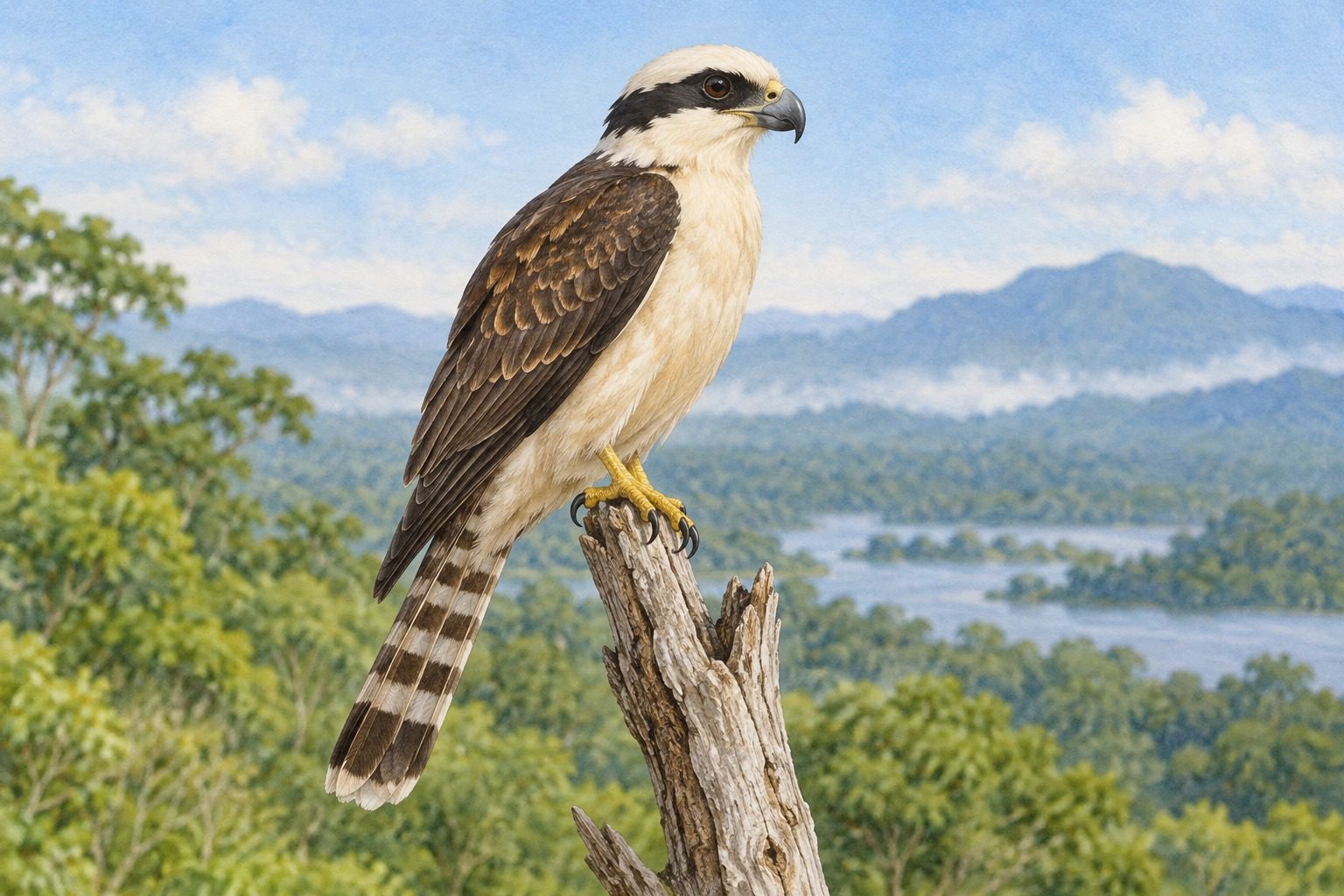
Species overview
About the Laughing Falcon
The laughing falcon has a creamy head and underparts crossed by a broad dark eye mask. Dark upperparts and a long patterned tail complete a striking outline.
It often watches from a bare snag and specializes in hunting snakes. Its loud call can reveal a bird before it is visible. Listen naturally without playing recordings to draw it closer, especially around a nest.
Identification
Key Features of the Laughing Falcon
Creamy head and underparts
Broad black eye mask
Dark upperparts
Habitat & range
Lowland forest edges, secondary woodland and partly open country on both slopes. Occasional higher-elevation records do not make high mountain forest core habitat.
Local observations
Costa Rica: resident.
When to observe
A resident bird; suitable habitat matters throughout the year. Quiet morning observation is a useful starting point, with activity varying by weather and location.
Conservation & care
Observe quietly from trails or established viewing areas. Give nests, roosts and feeding birds space. Do not handle, chase or lure birds with playback. Keep pets away from wildlife.
Threats & pressures
Protect native vegetation, reduce collision hazards around glass and keep cats away from birds. These are practical prevention priorities, not a claim of a measured decline at a specific Costa Rican site.
Observation activity
Listen to a verified recording, then describe the rhythm using your own words.
Explore by location
Caribbean · Central Pacific · Guanacaste · Northern Plains · Puntarenas & the Gulf Islands · South Pacific · Outdoor Adventures · Wildlife & Animals