Tico Explorers

Nature Field Guide

Tropical Dry Forest

Explore wildlife, plants and trees. Learn what to look for and where to find them.

All Nature

66 profiles

Nature Field Guide

Almendro de Rio

Spanish name
Almendro de río / Almendro de montaña
Scientific name
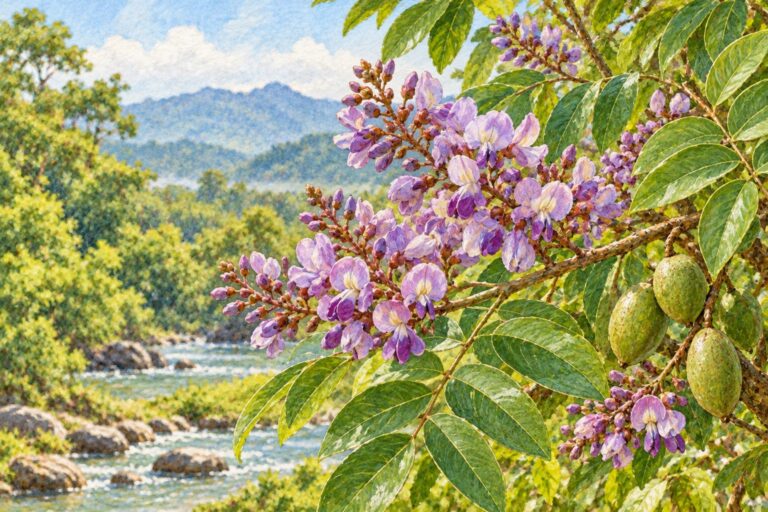
Andira inermis

What Do Pico & Tati Think?

Pico: “Purple flower clusters stand out against a dense green crown.”

Tati: “Let’s notice the leaves, flowers and habitat without disturbing the plant.”

Identification

Key Features of the Almendro de Rio

  • Pinnate compound leaves

  • Clusters of lavender-purple flowers

  • Oval fruits and a dense leafy crown

Habitat & range

Dry and humid forests across both slopes, including Guanacaste, Nicoya, the Central Valley, Caribbean lowlands and Osa.

Conservation & care

Explore with an adult on permitted paths. Observe and photograph without picking leaves, flowers or fruits. Do not taste plants or let pets chew them. Avoid climbing trees and disturbing roots, seedlings or visiting wildlife.

Threats & pressures

Protect suitable habitat, mature trees and natural regeneration. Avoid trampling, unauthorized clearing and collection.

View full profile →

Nature Field Guide

Bejuco Cucharilla

Spanish name
Bejuco cucharilla
Scientific name
Bignonia diversifolia

What Do Pico & Tati Think?

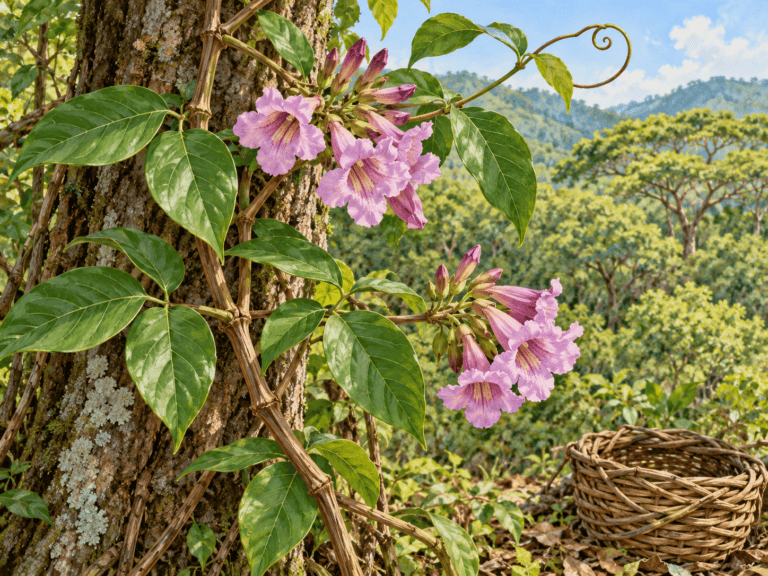
Meet the plant behind Abu’s basket. Bejuco cucharilla is a woody climbing vine, also called a liana. It grows with the support of other plants. Its leafy shoots and lilac tubular flowers offer clues to its identity.

Costa Rican craft references document cucharilla as a material for woven baskets. Woody vine material can become more flexible when moistened, allowing a skilled maker to shape and weave it. A basket begins with a plant and takes form through patient work.

In our story, Abu learned to weave from her mother. Now she invites Pico and Tati to learn too. Her family history is fictional, while the connection between this vine and Costa Rican basket making is documented.

Scientific name note: Kew accepts Bignonia diversifolia. Many Costa Rican botanical and craft sources use the synonym Cydista diversifolia.

Identification

Key Features of the Bejuco Cucharilla

  • A woody climbing stem rather than a self-supporting tree trunk.

  • Opposite compound leaves, typically with two leaflets and sometimes a simple tendril.

  • Smooth-edged leaflets with pointed tips and a rounded or somewhat heart-shaped base.

  • Lilac to pinkish tubular flowers; young branches have a distinctly angular, four-sided form.

Habitat & range

Documented in Costa Rica’s lowland forests, including deciduous and semideciduous forest in Guanacaste. Botanical collections include Nandayure and Barra Honda on the Nicoya Peninsula.

Conservation & care

Observe and photograph vines without cutting or pulling them. Leave wild plants and flowers in place. Learn about materials from a knowledgeable artisan and use paper or responsibly sourced craft materials for your own weaving.

View full profile →

Nature Field Guide

Black Spiny-tailed Iguana

Spanish name
Garrobo
Scientific name
Ctenosaura similis

What Do Pico & Tati Think?

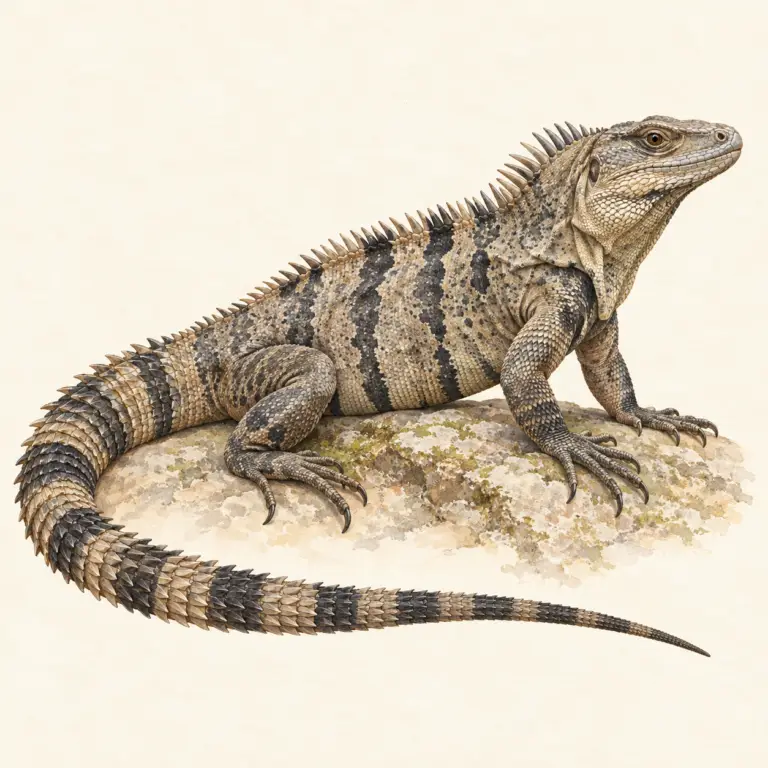
Pico and Tati invite you to learn about the black spiny-tailed iguana. Use a photograph to compare this tail with the smooth-looking outline of a green iguana tail.

Identification

Key Features of the Black Spiny-tailed Iguana

  • Rings of pointed scales on the tail.

  • Gray or brown adults with dark body bands.

  • Raised scales along the back.

Habitat & range

Pacific-slope dry forest, rocky ground and open wooded areas.

Conservation & care

Watch wildlife with an adult from a safe path. Do not touch, feed, capture or move reptiles, and keep pets away. Leave eggs, shelters and vegetation undisturbed.

View full profile →

Nature Field Guide

Blue Morpho

Spanish name
Mariposa morfo azul
Scientific name
Morpho helenor

What Do Pico & Tati Think?

Pico: “Let's look closely at the blue morpho!”

Tati: “We can compare its shape and markings without touching it.”

Identification

Key Features of the Blue Morpho

  • Brilliant blue upper wings with broad dark margins

  • brown underside with eye spots

Habitat & range

Forest paths, edges and nearby vegetation in Guanacaste. Local habitat and abundance vary.

Conservation & care

Observe without collecting, handling or disturbing insects or nests. Stay on permitted paths. Leave caterpillars and their food plants in place.

View full profile →

Nature Field Guide

Buttercup Tree

Spanish name
Poro poro
Scientific name
Cochlospermum vitifolium

What Do Pico & Tati Think?

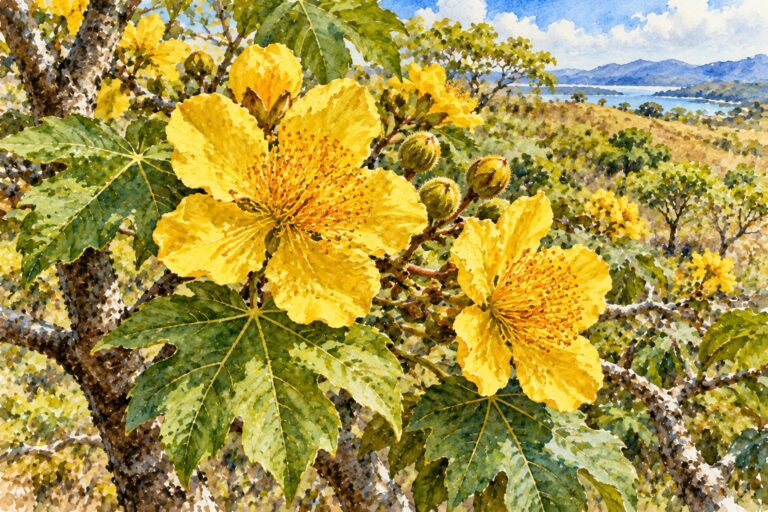
Pico wants to sketch the tree’s silhouette. Tati suggests looking for three clues before guessing its name. What would you notice first?

Identification

Key Features of the Buttercup Tree

  • Large open yellow flowers

  • Simple leaves with three to five lobes

  • Roundish capsules with fluffy seed fibers

Habitat & range

Seasonal woodland and open dry landscapes.

Conservation & care

Observe from paths and leave leaves, bark, flowers and fruits attached. Do not taste wild plants or offer them to pets. Ask a knowledgeable guide to confirm the species.

View full profile →

Nature Field Guide

Ceiba Kapok Tree

Spanish name
Ceiba / Puri
Scientific name
Ceiba pentandra

What Do Pico & Tati Think?

Pico: “Huge buttress roots help make a mature ceiba unforgettable.”

Tati: “Let’s notice the leaves, flowers and habitat without disturbing the plant.”

Identification

Key Features of the Ceiba Kapok Tree

  • Large buttress roots on mature trees

  • Palmate leaves with several narrow leaflets

  • Seed capsules containing silky fibers

Habitat & range

Dry, humid and very wet lowland forests on both slopes, including Pacific, Caribbean and northern lowland landscapes.

Conservation & care

Explore with an adult on permitted paths. Observe and photograph without picking leaves, flowers or fruits. Do not taste plants or let pets chew them. Avoid climbing trees and disturbing roots, seedlings or visiting wildlife.

Threats & pressures

Protect suitable habitat, mature trees and natural regeneration. Avoid trampling, unauthorized clearing and collection.

View full profile →

Nature Field Guide

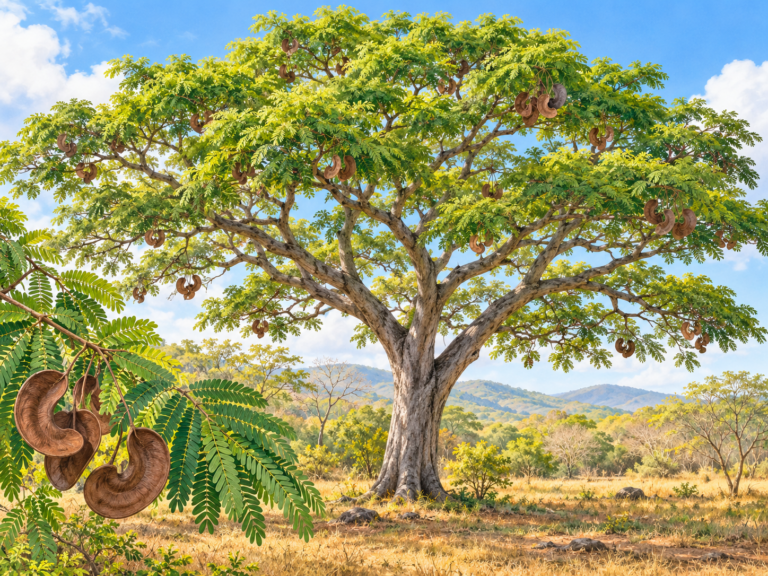
Cenizaro Rain Tree

Spanish name
Cenízaro
Scientific name
Samanea saman

What Do Pico & Tati Think?

Pico: “An umbrella-shaped crown shelters a world beneath its branches.”

Tati: “Let’s notice the leaves, flowers and habitat without disturbing the plant.”

Identification

Key Features of the Cenizaro Rain Tree

  • Broad umbrella-shaped crown

  • Twice-divided compound leaves

  • Pink-and-white brushlike flowers and dark pods

Habitat & range

Pacific lowlands and open landscapes, also documented in the Northern Plains and around San Ramón.

Conservation & care

Explore with an adult on permitted paths. Observe and photograph without picking leaves, flowers or fruits. Do not taste plants or let pets chew them. Avoid climbing trees and disturbing roots, seedlings or visiting wildlife.

Threats & pressures

Protect suitable habitat, mature trees and natural regeneration. Avoid trampling, unauthorized clearing and collection.

View full profile →

Nature Field Guide

Central American Agouti

Spanish name
Guatusa / Guatuza
Scientific name
Dasyprocta punctata

What Do Pico & Tati Think?

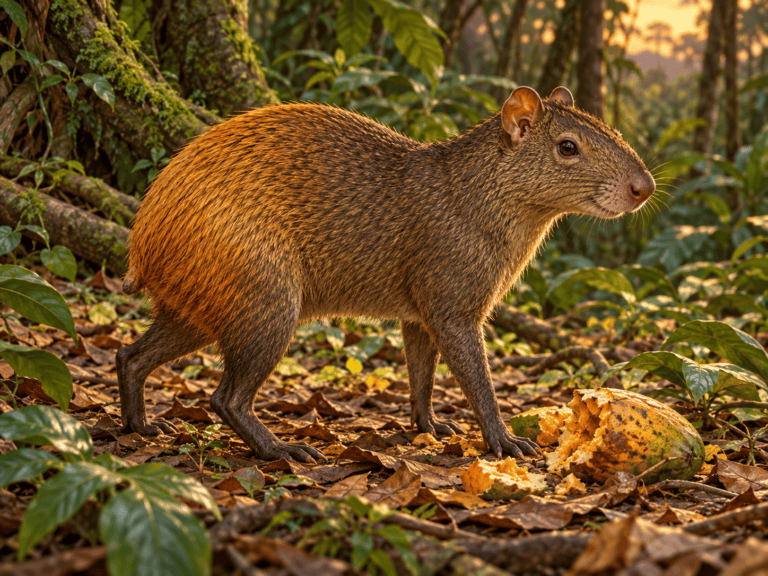
Pico: “It is carrying something from the forest floor!”

Tati: “A stored seed might become a tree.”

Identification

Key Features of the Central American Agouti

  • Rounded back, long legs and almost invisible tail.

  • Warm orange-brown to dark brown fur.

  • Often handles food with the forepaws.

Habitat & range

Sierra Zapote’s forest floor in Las Juntas district, Abangares; dry and humid forests can both provide habitat.

Conservation & care

Keep a respectful distance and leave an open route for the animal. Stay on authorized paths, secure food and rubbish, and observe without feeding, touching, baiting or chasing.

View full profile →

Nature Field Guide

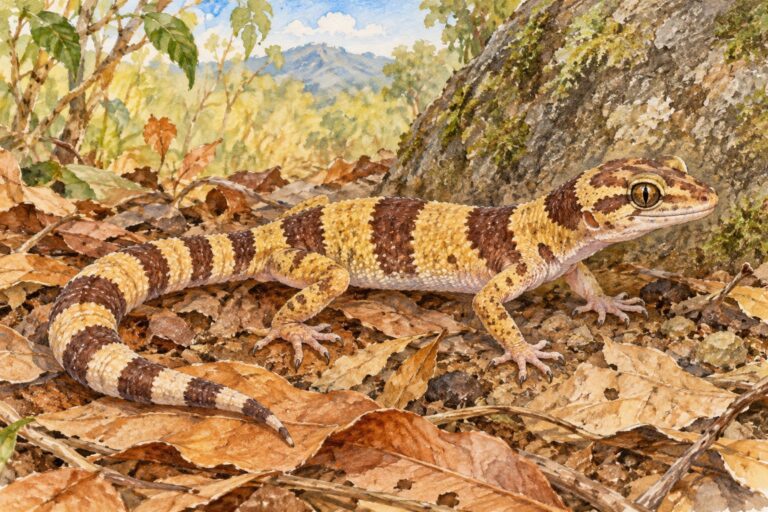
Central American Banded Gecko

Spanish name
Geco bandeado centroamericano
Scientific name
Coleonyx mitratus

What Do Pico & Tati Think?

Pico: “What can we learn from this reptile’s shape?”

Tati: “Let’s notice its markings and habitat while leaving it plenty of space.”

Identification

Key Features of the Central American Banded Gecko

  • Dark bands on yellow-tan tones

  • Movable eyelids

  • Clawed toes without broad wall-climbing pads

Habitat & range

Northwestern and western Pacific-slope forests, including Guanacaste and San Luis de Monteverde.

Conservation & care

Observe from permitted paths with an adult. Do not touch, chase, catch or feed reptiles. Leave bark, stones, logs and leaf litter in place. Keep pets away and give animals an open escape route.

Threats & pressures

Protect natural shelters and connected habitat. Avoid collection, unnecessary clearing and deliberate killing. Leave wildlife in its habitat and support responsible observation.

View full profile →

Nature Field Guide

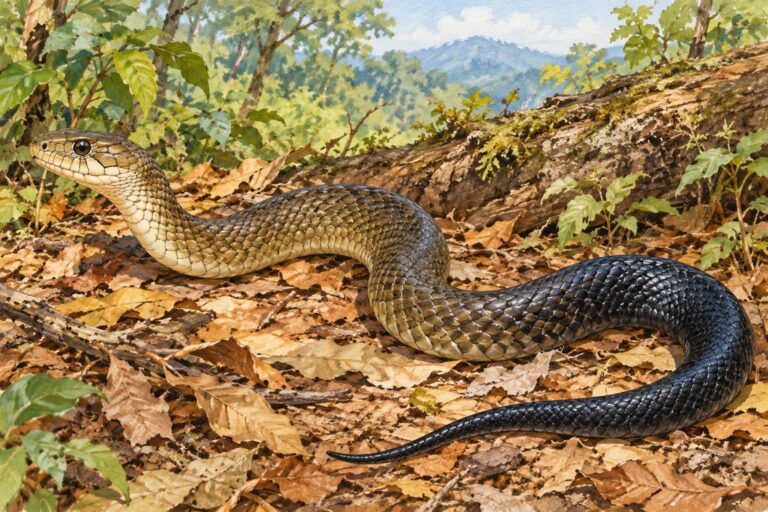
Central American Indigo Snake

Spanish name
Sabanera / Mica
Scientific name
Drymarchon melanurus

What Do Pico & Tati Think?

Pico: “What clues help us recognize this reptile?”

Tati: “Let’s notice its shape, markings and habitat from a respectful distance.”

Identification

Key Features of the Central American Indigo Snake

  • Large robust body

  • Smooth-looking scales

  • Color can become darker toward the tail

Habitat & range

Lowland woodland and open habitats, including Guanacaste and the Pacific slope.

Conservation & care

Observe only from a distance with an adult or qualified guide. Do not touch, catch, corner or attempt to move any snake. Step back and tell your adult; keep children and pets away. Do not use colors, head shape or pupil shape to decide a snake is safe.

Threats & pressures

Protect habitat connections and natural shelters. Avoid road mortality, collection and deliberate killing. Leave reptiles in their habitat rather than keeping or relocating them.

View full profile →

Nature Field Guide

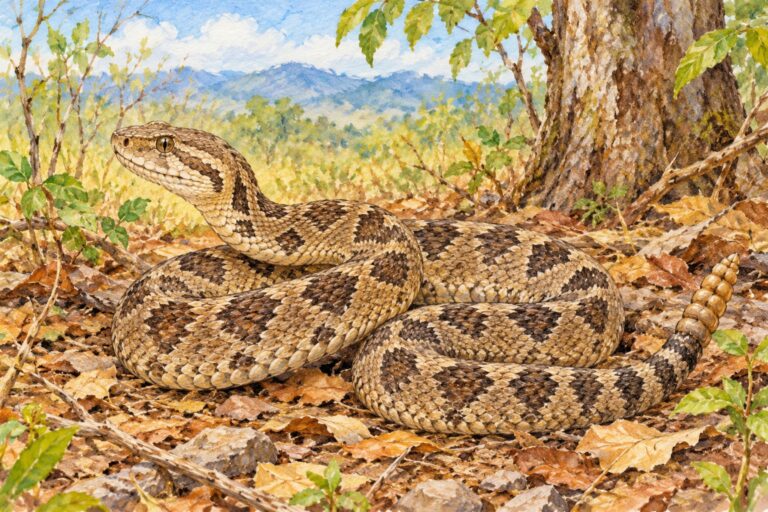
Central American Rattlesnake

Spanish name
Cascabel / Crótalo
Scientific name
Crotalus simus

What Do Pico & Tati Think?

Pico: “What clues help us recognize this reptile?”

Tati: “Let’s notice its shape, markings and habitat from a respectful distance.”

Identification

Key Features of the Central American Rattlesnake

  • Dark diamondlike back markings

  • Strongly keeled scales

  • Segmented rattle at the tail tip

Habitat & range

Dry lowlands of Guanacaste and northern Puntarenas, especially forest edges and less disturbed ground.

Conservation & care

VENOMOUS. Observe only at a distance with a qualified guide. Never approach, touch, catch or provoke this snake. Keep children and pets well away and do not reach into nearby vegetation or hiding places.

Threats & pressures

Protect habitat connections and natural shelters. Avoid road mortality, collection and deliberate killing. Leave reptiles in their habitat rather than keeping or relocating them.

View full profile →

Nature Field Guide

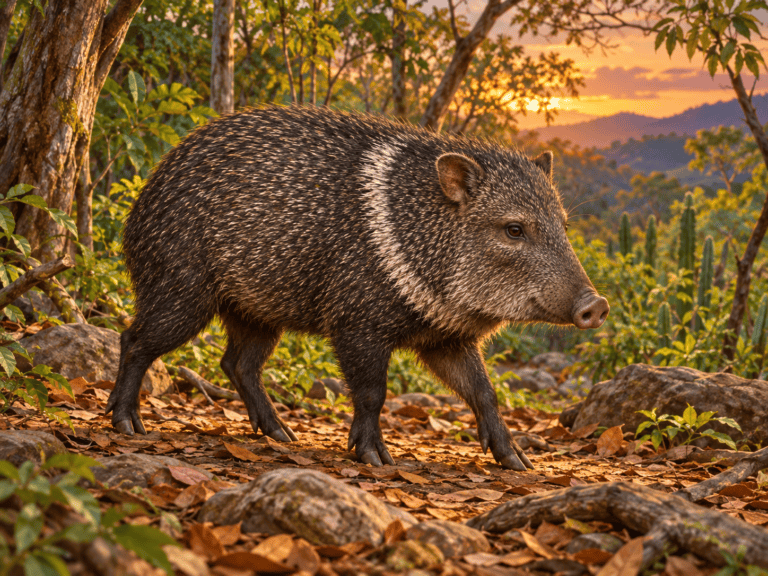
Collared Peccary

Spanish name
Saíno
Scientific name
Dicotyles tajacu

What Do Pico & Tati Think?

Pico: “I can see a pale band near its shoulders!”

Tati: “Let’s step back and leave space for the group.”

Identification

Key Features of the Collared Peccary

  • Pale collar around neck and shoulders.

  • Dark bristly coat and compact hoofed body.

  • Very short tail.

Habitat & range

Reserva Sierra Zapote in Las Juntas district and other dry or humid forest landscapes.

Seasonal Calendar

Breeding possible

Costa Rica; broad natural-history account

Year-round

Reproduction is not confined to a fixed season; local peaks vary with habitat and resources.

Event source ↗

Conservation & care

Keep a respectful distance and leave an open route for the animal. Stay on authorized paths, secure food and rubbish, and observe without feeding, touching, baiting or chasing.

Threats & pressures

Forest loss and fragmentation, hunting and conflict over crops are documented pressures.

View full profile →

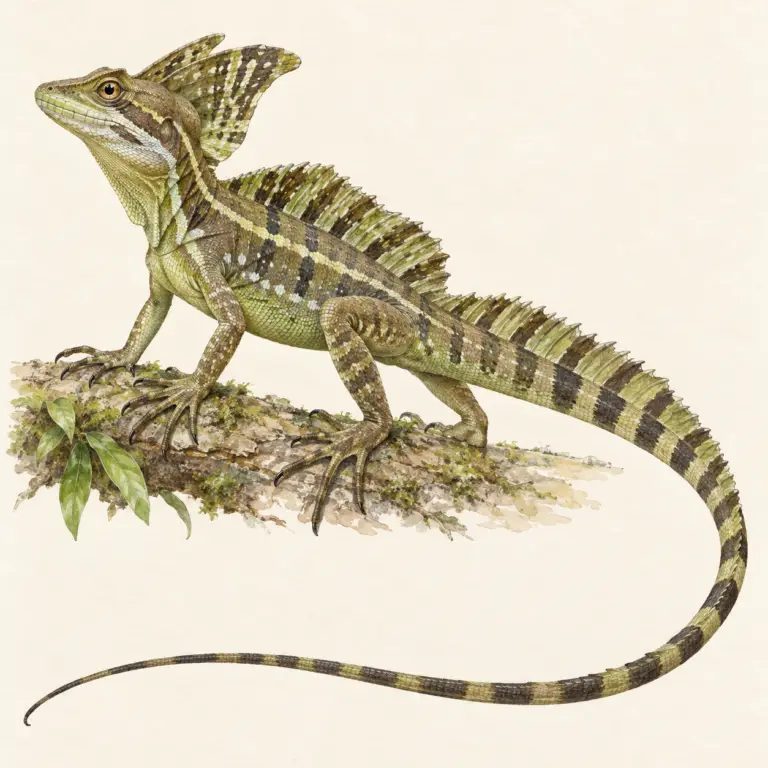
Nature Field Guide

Common Basilisk

Spanish name
Basilisco común
Scientific name
Basiliscus basiliscus

What Do Pico & Tati Think?

Pico and Tati invite you to learn about the common basilisk. Draw the tail and hind feet from a reference photograph. Never frighten a basilisk to make it run.

Identification

Key Features of the Common Basilisk

  • Very long tail.

  • Brown or olive body with pale stripes and dark bands.

  • Adult males have prominent crests on the head, back and tail.

Habitat & range

Pacific lowland dry and moist forests near streams and rivers.

Conservation & care

Watch wildlife with an adult from a safe path. Do not touch, feed, capture or move reptiles, and keep pets away. Leave eggs, shelters and vegetation undisturbed.

View full profile →

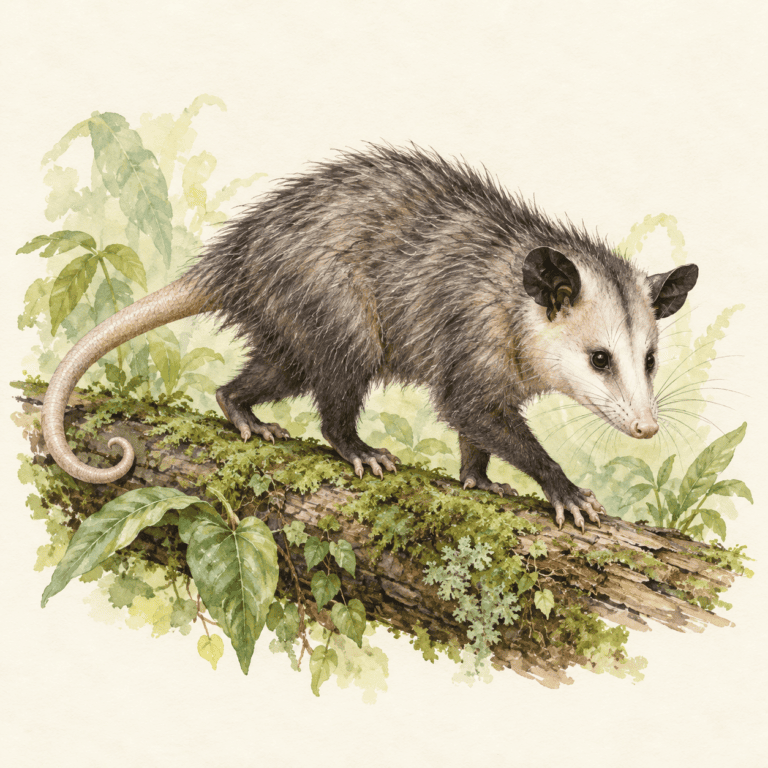
Nature Field Guide

Common Opossum

Spanish name
Zorro pelón común
Scientific name
Didelphis marsupialis

What Do Pico & Tati Think?

The common opossum is a marsupial: its young complete an important part of their development attached to their mother's teats, protected in her pouch.

Identification

Key Features of the Common Opossum

  • Coarse gray to dark fur and a pale pointed face.

  • Dark, largely hairless ears and a pink nose.

  • Long mostly bare tail; other opossums can look similar.

Habitat & range

Forests, wooded edges and some human-modified landscapes.

Conservation & care

Explore with an adult or local guide. Observe quietly from a distance, stay on established trails and leave shelter undisturbed. Do not feed, touch, capture or corner wildlife. Keep pets away.

View full profile →

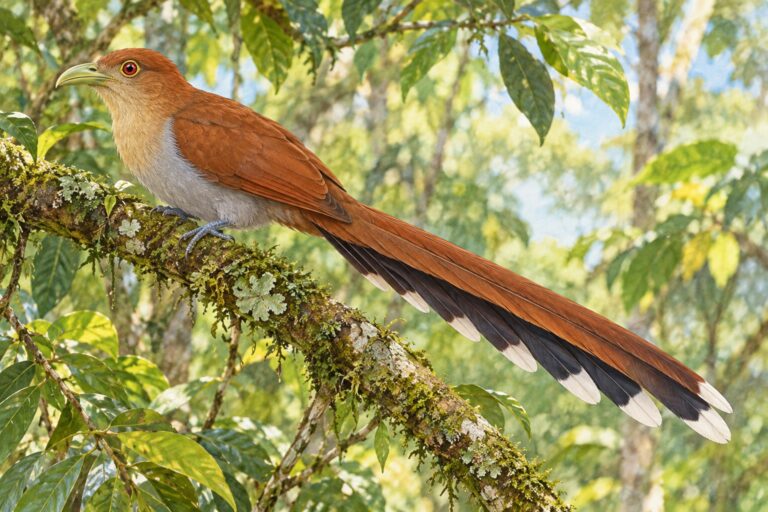
Nature Field Guide

Common Squirrel-Cuckoo

Spanish name
Cuco ardilla
Scientific name
Piaya cayana

What Do Pico & Tati Think?

Pico: “That tail is longer than I expected!”

Tati: “Follow its movement through the branches without chasing it.”

Identification

Key Features of the Common Squirrel-Cuckoo

  • Rusty upperparts

  • Very long graduated white-tipped tail

  • Greenish-yellow bill

Habitat & range

Widespread in wooded habitats on both slopes, including forest canopy, secondary growth, plantations and tree-rich gardens. It can occur well above the lowlands where trees remain.

Conservation & care

Observe quietly from trails or established viewing areas. Give nests, roosts and feeding birds space. Do not handle, chase or lure birds with playback. Keep pets away from wildlife.

Threats & pressures

Protect native vegetation, reduce collision hazards around glass and keep cats away from birds. These are practical prevention priorities, not a claim of a measured decline at a specific Costa Rican site.

View full profile →

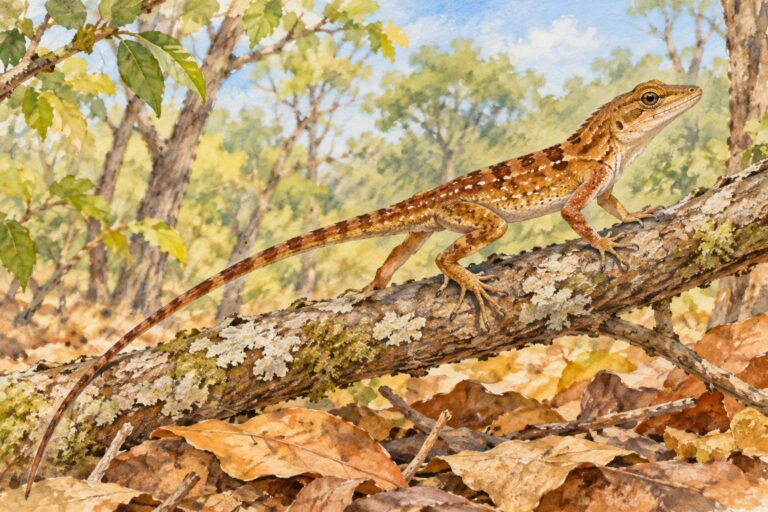
Nature Field Guide

Copper Anole

Spanish name
Anolis cobrizo
Scientific name
Anolis cupreus

What Do Pico & Tati Think?

Pico: “What can we learn from this reptile’s shape?”

Tati: “Let’s notice its markings and habitat while leaving it plenty of space.”

Identification

Key Features of the Copper Anole

  • Tan-to-coppery brown body

  • Variable spots, bars or darker markings

  • Long tail and low-perching posture

Habitat & range

Northwestern and western Pacific slope, including Guanacaste, Monteverde and Quepos, with populations in the Central Valley.

Conservation & care

Observe from permitted paths with an adult. Do not touch, chase, catch or feed reptiles. Leave bark, stones, logs and leaf litter in place. Keep pets away and give animals an open escape route.

Threats & pressures

Protect natural shelters and connected habitat. Avoid collection, unnecessary clearing and deliberate killing. Leave wildlife in its habitat and support responsible observation.

View full profile →

Nature Field Guide

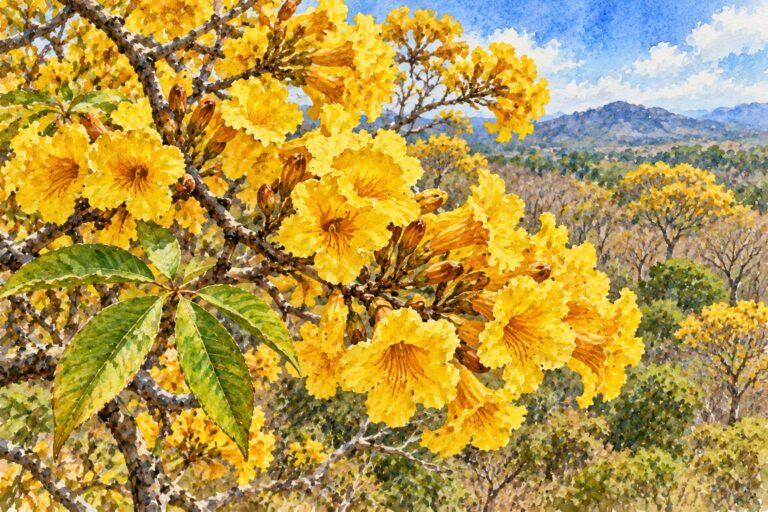
Cortez Amarillo

Spanish name
Cortés amarillo / Cortez amarillo
Scientific name
Handroanthus ochraceus

What Do Pico & Tati Think?

Pico: “Golden trumpet flowers can brighten the branches of an almost leafless tree.”

Tati: “Let’s notice the leaves, flowers and habitat without disturbing the plant.”

Identification

Key Features of the Cortez Amarillo

  • Yellow trumpet-shaped flowers

  • Palmately compound leaves

  • Flowering branches may be nearly leafless

Habitat & range

Seasonally dry Pacific forests and wooded edges, including Guanacaste, the Central Pacific and the Térraba valley.

Conservation & care

Explore with an adult on permitted paths. Observe and photograph without picking leaves, flowers or fruits. Do not taste plants or let pets chew them. Avoid climbing trees and disturbing roots, seedlings or visiting wildlife.

Threats & pressures

Protect suitable habitat, mature trees and natural regeneration. Avoid trampling, unauthorized clearing and collection.

View full profile →

Nature Field Guide

Frangipani

Spanish name
Flor blanca / Sacuanjoche
Scientific name
Plumeria rubra

What Do Pico & Tati Think?

Pico wants to sketch the tree’s silhouette. Tati suggests looking for three clues before guessing its name. What would you notice first?

Identification

Key Features of the Frangipani

  • Thick succulent-looking branches

  • Five-lobed flowers with yellow centers

  • Long simple leaves clustered near branch ends

Habitat & range

Sunny woodland edges, rocky coastal sites and gardens.

Conservation & care

Observe from paths and leave leaves, bark, flowers and fruits attached. Do not taste wild plants or offer them to pets. Ask a knowledgeable guide to confirm the species. Avoid contact with milky latex.

View full profile →

Nature Field Guide

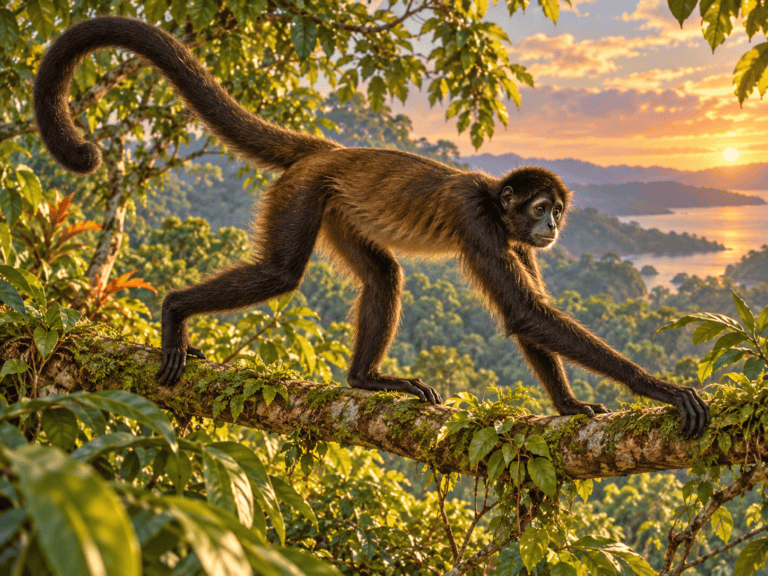
Geoffroy’s Spider Monkey

Spanish name
Mono araña / Mono colorado
Scientific name
Ateles geoffroyi

What Do Pico & Tati Think?

Pico: “Its tail is holding a branch too!”

Tati: “The forest needs connected treetops.”

Identification

Key Features of the Geoffroy’s Spider Monkey

  • Very long limbs and slender body.

  • Strong grasping tail with a bare gripping surface near its tip.

  • Brown to reddish fur; color varies.

Habitat & range

Manuel Antonio’s forest landscape; ACG also documents this species in rainforest at Botarrama.

Conservation & care

Keep a respectful distance and leave an open route for the animal. Stay on authorized paths, secure food and rubbish, and observe without feeding, touching, baiting or chasing.

Threats & pressures

Forest loss, capture for pets and hunting combine with slow reproduction to make recovery difficult.

Conservation assessment

Global IUCN category as reported by the linked source, checked 7 October 2026. The source does not give an assessment year here. National legal protection and local abundance are separate questions.

View full profile →

Nature Field Guide

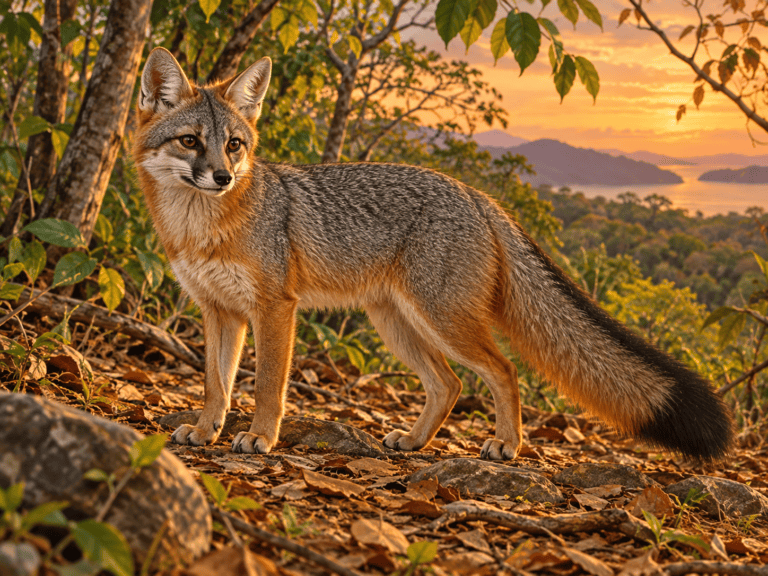
Gray Fox

Spanish name
Zorro gris
Scientific name
Urocyon cinereoargenteus

What Do Pico & Tati Think?

Pico: “A fox can use trees too?”

Tati: “Different animals use the forest in different ways.”

Identification

Key Features of the Gray Fox

  • Gray back with reddish sides and legs.

  • Triangular upright ears and pointed muzzle.

  • Dark upper surface of the bushy tail.

Habitat & range

Dry-forest and wooded-edge habitat in the Horizontes landscape near Liberia.

Conservation & care

Keep a respectful distance and leave an open route for the animal. Stay on authorized paths, secure food and rubbish, and observe without feeding, touching, baiting or chasing.

View full profile →

Nature Field Guide

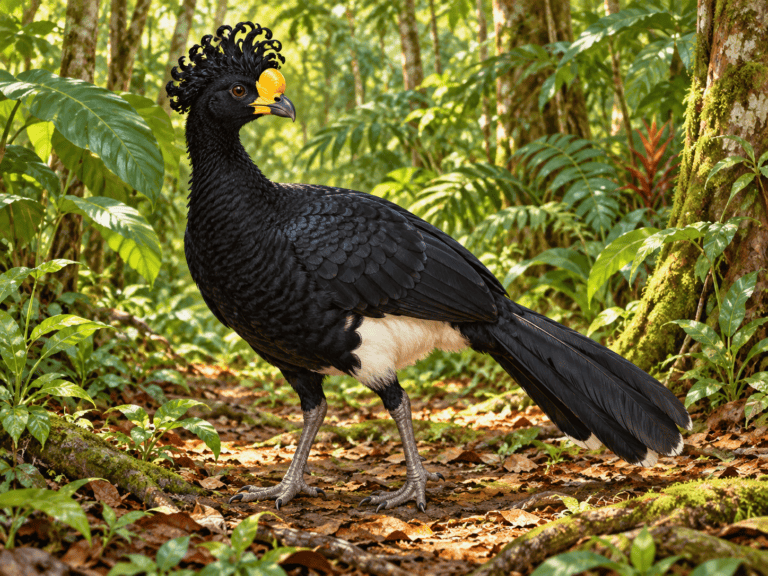
Great Curassow

Spanish name
Pavón
Scientific name
Crax rubra

What Do Pico & Tati Think?

Pico: “Those head feathers curl forward!”

Tati: “Let’s stay still while it searches the forest floor.”

Identification

Key Features of the Great Curassow

  • Curled feathers form a forward-facing crest.

  • Male: black body, white belly and yellow bill swelling.

  • Female plumage varies; no yellow bill swelling.

Habitat & range

Local surviving forest populations include Santa Rosa, Rincon de la Vieja, Braulio Carrillo and Corcovado. Present distribution is patchy; historical lowland range is not a promise of local occurrence.

Seasonal Calendar

Nesting

ACG / Costa Rican lowland forest

Mar, Apr, May

Legacy natural-history account reports egg laying; local dates and other regions can differ.

Event source ↗

Conservation & care

Stay on authorized trails or viewing routes. Give birds space, keep voices low and leave nests undisturbed. Observe without bait, feeding or recorded calls.

Threats & pressures

La Amistad’s management plan identifies hunting and forest pressures on the Pacific boundary. These are habitat-level concerns; no local curassow decline percentage is assigned.

Conservation assessment

ACG describes the species as Vulnerable; this is not a local population estimate. Source checked 7 October 2026. This is a global species category, not a count of birds in the tagged towns.

View full profile →

Nature Field Guide

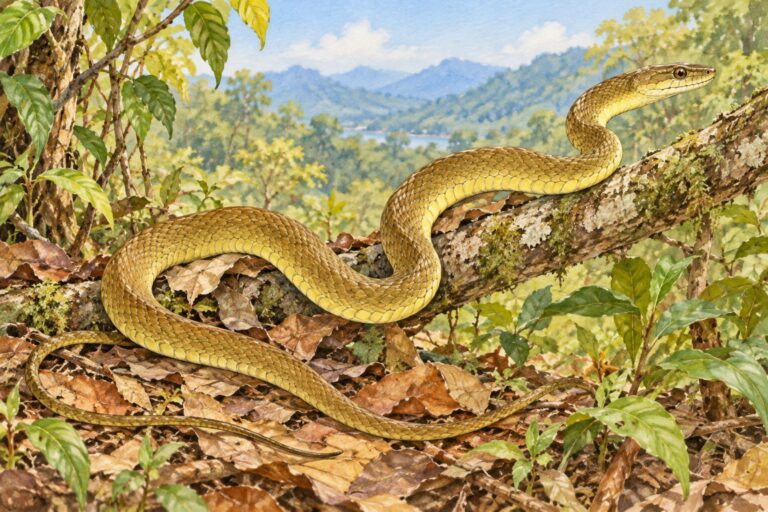
Green Ratsnake

Spanish name
Ratonera / Culebra ratonera
Scientific name
Senticolis triaspis

What Do Pico & Tati Think?

Pico: “What helps this reptile fit into its habitat?”

Tati: “Let’s look at its shape, colors and surroundings while giving it plenty of space.”

Identification

Key Features of the Green Ratsnake

  • Long body and elongated head

  • Adults may be tan, golden or olive-brown

  • Juveniles show darker blotches

Habitat & range

Northwestern and western Pacific-slope woodland and forest, including the San Luis de Monteverde area.

Conservation & care

Observe from a distance with an adult or qualified guide. Do not touch, catch, corner, feed or move any snake. Keep children and pets away. Colors, head shape and pupil shape must never be used to decide a snake is safe.

Threats & pressures

Protect connected habitat and natural shelters. Avoid collection, unnecessary clearing and deliberate killing. Leave wildlife in place and support responsible observation.

View full profile →

Nature Field Guide

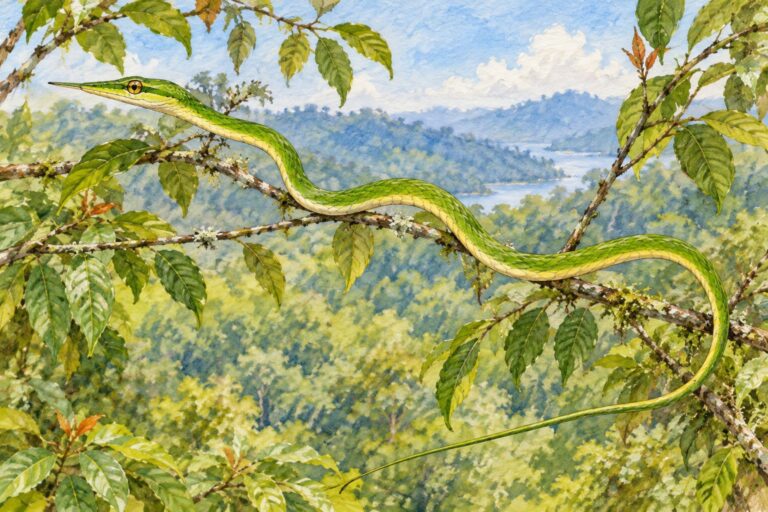
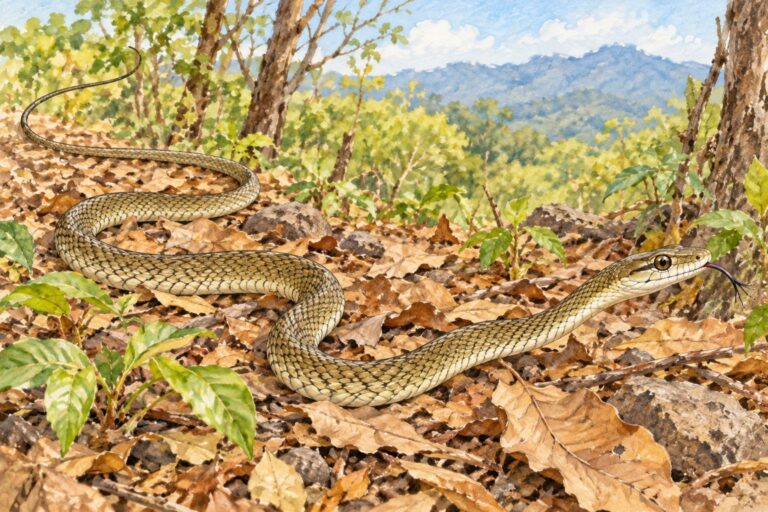
Green Vine Snake

Spanish name
Bejuquilla verde
Scientific name
Oxybelis fulgidus

What Do Pico & Tati Think?

Pico: “What clues help us recognize this reptile?”

Tati: “Let’s notice its shape, markings and habitat from a respectful distance.”

Identification

Key Features of the Green Vine Snake

  • Very slender green body

  • Elongated pointed snout

  • Exceptionally long tapering tail

Habitat & range

Wooded lowlands and foothills on both slopes, including Pacific and Caribbean forest edges.

Conservation & care

Observe only from a distance with an adult or qualified guide. Do not touch, catch, corner or attempt to move any snake. Step back and tell your adult; keep children and pets away. Do not use colors, head shape or pupil shape to decide a snake is safe.

Threats & pressures

Protect habitat connections and natural shelters. Avoid road mortality, collection and deliberate killing. Leave reptiles in their habitat rather than keeping or relocating them.

View full profile →

Nature Field Guide

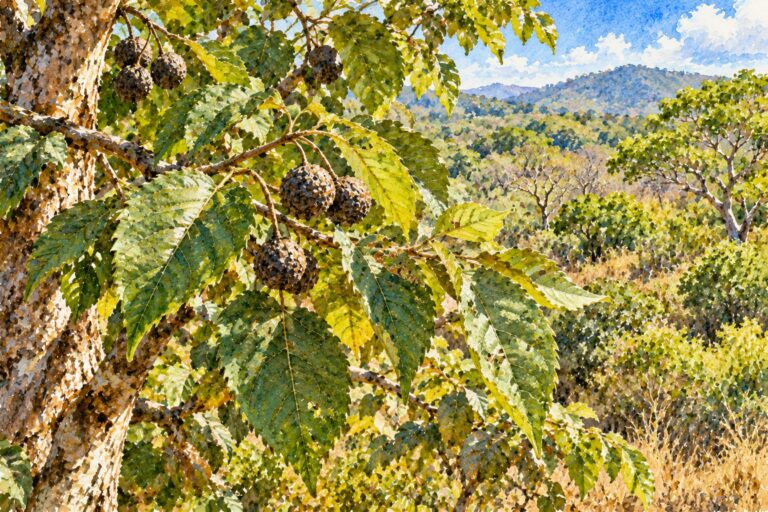
Guacimo

Spanish name
Guácimo / Guácimo ternero
Scientific name
Guazuma ulmifolia

What Do Pico & Tati Think?

Pico: “Bumpy dark fruits and toothed leaves offer clues to a familiar Pacific-slope tree.”

Tati: “Let’s notice the leaves, flowers and habitat without disturbing the plant.”

Identification

Key Features of the Guacimo

  • Simple alternate leaves with toothed edges

  • Dark round-to-oval woody fruits

  • Fruit surface covered in bumps

Habitat & range

Pacific-slope woodland, pastures and living fences, with strong documentation in Guanacaste and the northern Puntarenas area.

Conservation & care

Explore with an adult on permitted paths. Observe and photograph without picking leaves, flowers or fruits. Do not taste plants or let pets chew them. Avoid climbing trees and disturbing roots, seedlings or visiting wildlife.

Threats & pressures

Protect suitable habitat, mature trees and natural regeneration. Avoid trampling, unauthorized clearing and collection.

View full profile →

Nature Field Guide

Guanacaste Tree

Spanish name
Guanacaste
Scientific name
Enterolobium cyclocarpum

What Do Pico & Tati Think?

Identify the guanacaste tree by its small leaflets, pale flower clusters and distinctive curved seed pods. Observing several features together helps distinguish it from other trees.

What does Least Concern mean?

In the linked conservation assessment, this species does not qualify as threatened or near threatened with extinction. It still needs care: local populations and habitats can face problems even when the species has a lower extinction risk overall.

This label describes conservation status. It does not tell us whether a plant is safe for children or pets. Select the status button to read the assessment.

Identification

Key Features of the Guanacaste Tree

  • Leaves divided into many small leaflets.

  • Curved, ear-shaped pods that become brown as they mature.

  • Small flowers gathered into pale, rounded clusters.

Habitat & range

Dry and seasonally dry lowland Pacific forests and open areas. Ask a local guide to help identify an individual tree.

Seasonal Calendar

Flowering

Guanacaste dry forest

Feb, Mar, Apr

Guanacaste reference: February–April flowering, with variation among trees and locations. The tree remains present outside these flowering months.

Event source ↗

Conservation & care

Child Safety: Not verified. Observe with an adult. Do not taste leaves, seeds, fruit or other tree parts.

Pet Safety: Not verified. Keep pets from chewing or swallowing tree parts. Check with a veterinarian before treating this species as pet-safe.

Leave pods and branches where they belong. Notice the living things around the tree and give them space.

Conservation assessment

Global species assessment: Least Concern (IUCN Red List). Status checked on 7 October 2026. This category is not a guarantee that every local population or habitat is secure, and it is separate from legal protection in Costa Rica.

View full profile →

Nature Field Guide

Guapinol

Spanish name
Guapinol
Scientific name
Hymenaea courbaril

What Do Pico & Tati Think?

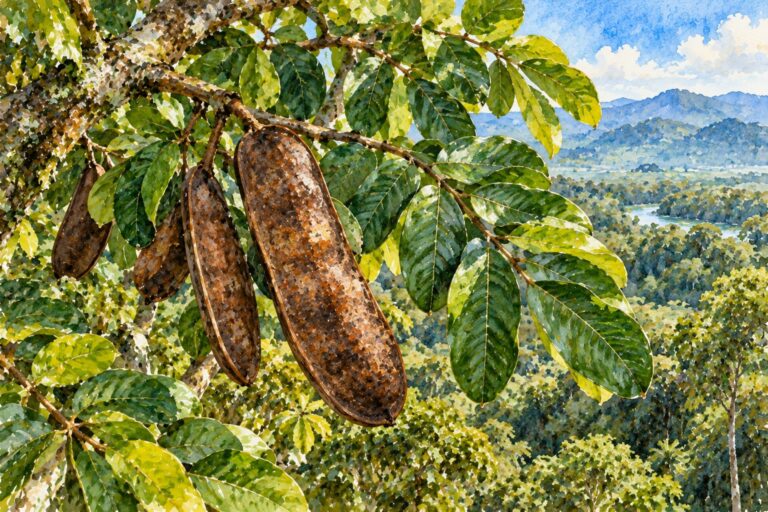
Pico: “Paired leaflets and hard brown pods identify a forest tree with an important wildlife role.”

Tati: “Let’s notice the leaves, flowers and habitat without disturbing the plant.”

Identification

Key Features of the Guapinol

  • Two leaflets in each compound leaf

  • Thick brown woody pods

  • Large spreading forest-tree form

Habitat & range

Pacific lowlands and western Central Valley; Guanacaste dry forest is one documented setting.

Conservation & care

Explore with an adult on permitted paths. Observe and photograph without picking leaves, flowers or fruits. Do not taste plants or let pets chew them. Avoid climbing trees and disturbing roots, seedlings or visiting wildlife.

Threats & pressures

Protect suitable habitat, mature trees and natural regeneration. Avoid trampling, unauthorized clearing and collection.

View full profile →

Nature Field Guide

Hoffmann’s Woodpecker

Spanish name
Carpintero de Hoffmann
Scientific name
Melanerpes hoffmannii

What Do Pico & Tati Think?

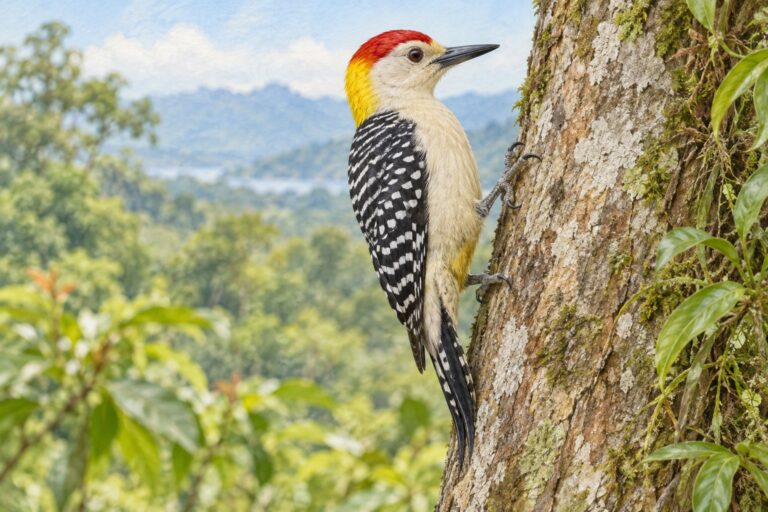
Pico: “Its back looks like a striped pattern!”

Tati: “Look at the crown too. Males and females differ there.”

Identification

Key Features of the Hoffmann’s Woodpecker

  • Black-and-white barred back

  • Yellow nape

  • Male has a red crown

Habitat & range

Strongest in the northern Pacific and Central Valley, extending south toward Tarcoles and locally into Rio Frio. Occurs along parts of the Reventazon corridor; avoid treating all Caribbean rainforest as typical habitat.

Conservation & care

Observe quietly from trails or established viewing areas. Give nests, roosts and feeding birds space. Do not handle, chase or lure birds with playback. Keep pets away from wildlife.

Threats & pressures

Protect native vegetation, reduce collision hazards around glass and keep cats away from birds. These are practical prevention priorities, not a claim of a measured decline at a specific Costa Rican site.

View full profile →

Nature Field Guide

Indio Desnudo

Spanish name
Indio desnudo
Scientific name
Bursera simaruba

What Do Pico & Tati Think?

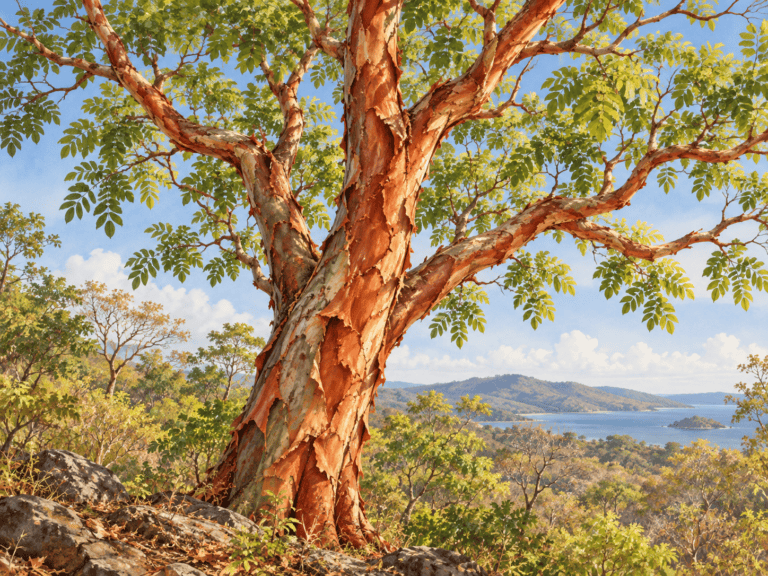
Warm-colored bark is a useful starting point when identifying indio desnudo. Look at the trunk, leaves and fruits together, as its appearance changes with the seasons.

Indio Desnudo Copper Bark Tree in Costa RIca

What does Least Concern mean?

In the linked conservation assessment, this species does not qualify as threatened or near threatened with extinction. It still needs care: local populations and habitats can face problems even when the species has a lower extinction risk overall.

This label describes conservation status. It does not tell us whether a plant is safe for children or pets. Select the status button to read the assessment.

Identification

Key Features of the Indio Desnudo

  • Warm orange-toned bark is an important clue.

  • The tree may lose its leaves during the dry season.

  • Look for small fruits in clusters at the ends of branches when present.

Habitat & range

Dry forest and other wooded habitats. Use several clues together and ask a guide before naming an unfamiliar tree.

Seasonal Calendar

Flowering

Guanacaste dry forest

Apr, May

ACG dry-forest reference: flowers appear in late April and May. Leaf cover varies through the dry season.

Event source ↗

Conservation & care

Child Safety: Not verified. Observe with an adult. Do not taste leaves, seeds, fruit or other tree parts.

Pet Safety: Not verified. Keep pets from chewing or swallowing tree parts. Check with a veterinarian before treating this species as pet-safe.

Keep bark intact. Observe without peeling, scratching or removing bark.

Conservation assessment

Global species assessment: Least Concern (IUCN Red List). Status checked on 7 October 2026. This category is not a guarantee that every local population or habitat is secure, and it is separate from legal protection in Costa Rica.

View full profile →

Nature Field Guide

Laughing Falcon

Spanish name
Guaco
Scientific name
Herpetotheres cachinnans

What Do Pico & Tati Think?

Pico: “It sounds like a laugh!”

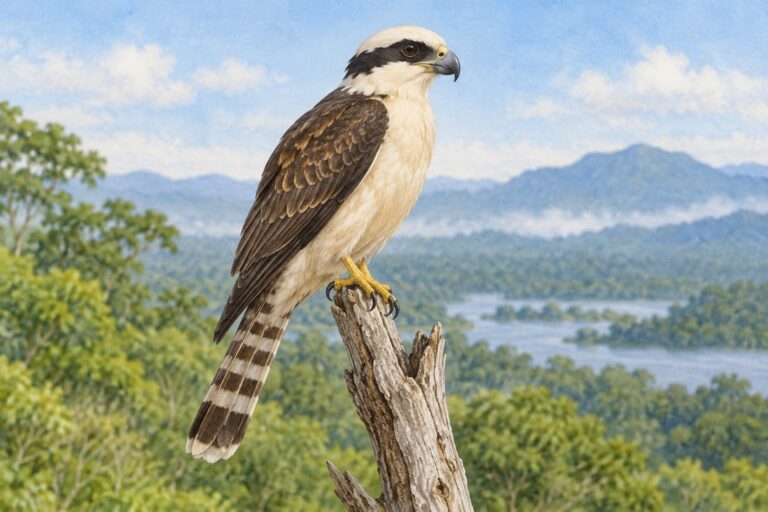
Tati: “That call explains its name. Its wide eye mask helps us recognize it too.”

Identification

Key Features of the Laughing Falcon

  • Creamy head and underparts

  • Broad black eye mask

  • Dark upperparts

Habitat & range

Lowland forest edges, secondary woodland and partly open country on both slopes. Occasional higher-elevation records do not make high mountain forest core habitat.

Conservation & care

Observe quietly from trails or established viewing areas. Give nests, roosts and feeding birds space. Do not handle, chase or lure birds with playback. Keep pets away from wildlife.

Threats & pressures

Protect native vegetation, reduce collision hazards around glass and keep cats away from birds. These are practical prevention priorities, not a claim of a measured decline at a specific Costa Rican site.

View full profile →

Nature Field Guide

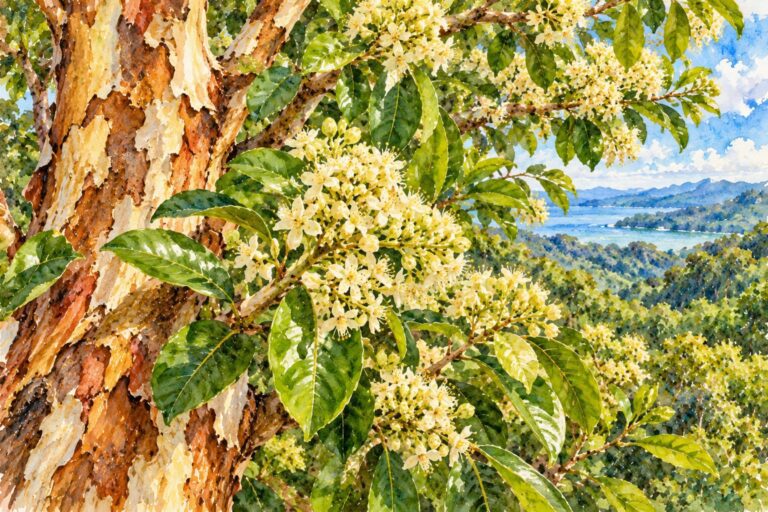
Lemonwood

Spanish name
Madroño
Scientific name
Calycophyllum candidissimum

What Do Pico & Tati Think?

Pico wants to sketch the tree’s silhouette. Tati suggests looking for three clues before guessing its name. What would you notice first?

Identification

Key Features of the Lemonwood

  • Reddish peeling bark

  • Opposite simple leaves

  • Dense pale flower clusters

Habitat & range

Lowland seasonal forest and wooded stream margins.

Conservation & care

Observe from paths and leave leaves, bark, flowers and fruits attached. Do not taste wild plants or offer them to pets. Ask a knowledgeable guide to confirm the species.

View full profile →

Nature Field Guide

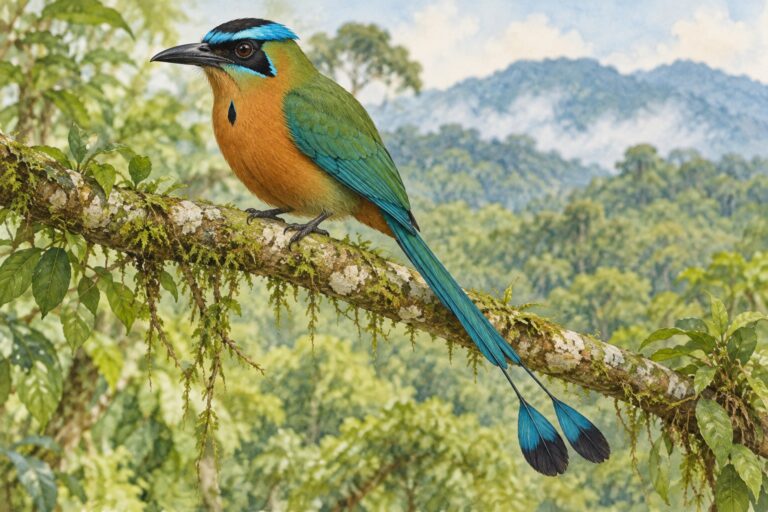
Lesson’s Motmot

Spanish name
Momoto coroniazul
Scientific name
Momotus lessonii

What Do Pico & Tati Think?

Pico: “Its tail has tiny paddles!”

Tati: “They are feather tips. Let’s compare the crown with our other motmot.”

Identification

Key Features of the Lesson’s Motmot

  • Blue crown with dark center

  • Dark eye mask

  • Long central tail feathers with racket tips

Habitat & range

Pacific lowlands and middle elevations, the Central Valley and locally northern areas. In the dry northwest it is associated especially with gallery forest. Most Caribbean lowlands are outside its usual range.

Conservation & care

Observe quietly from trails or established viewing areas. Give nests, roosts and feeding birds space. Do not handle, chase or lure birds with playback. Keep pets away from wildlife.

Threats & pressures

Protect native vegetation, reduce collision hazards around glass and keep cats away from birds. These are practical prevention priorities, not a claim of a measured decline at a specific Costa Rican site.

View full profile →

Nature Field Guide

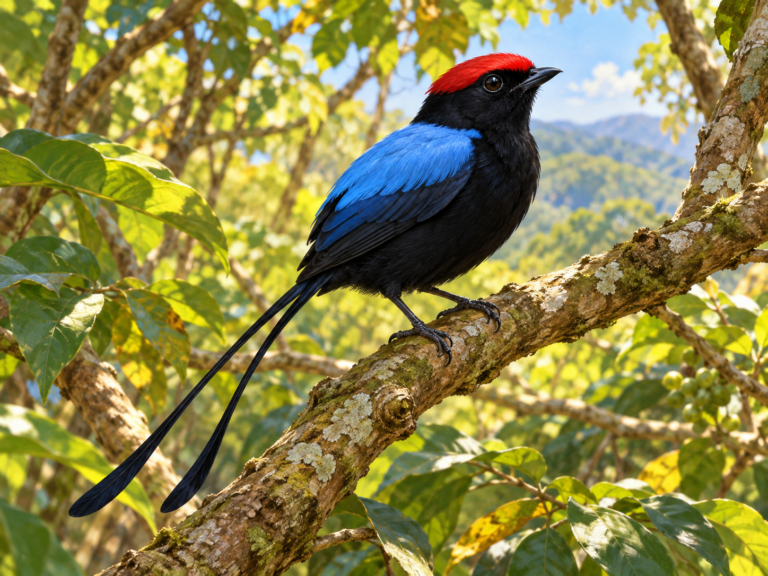
Long-tailed Manakin

Spanish name
Saltarín toledo
Scientific name
Chiroxiphia linearis

What Do Pico & Tati Think?

Pico: “Two birds are moving together on the branches!”

Tati: “We can watch the rhythm without interrupting.”

Identification

Key Features of the Long-tailed Manakin

  • Adult male: black body, blue back and red crown.

  • Long central tail feathers in males.

  • Female: less conspicuous greenish plumage.

Habitat & range

Gallery forest, mature secondary woodland and mangrove edges in the northern Pacific, extending toward Carara, the Central Valley and suitable Dota slopes. Shaded woodland is essential.

Conservation & care

Stay on authorized trails or viewing routes. Give birds space, keep voices low and leave nests undisturbed. Observe without bait, feeding or recorded calls.

View full profile →

Nature Field Guide

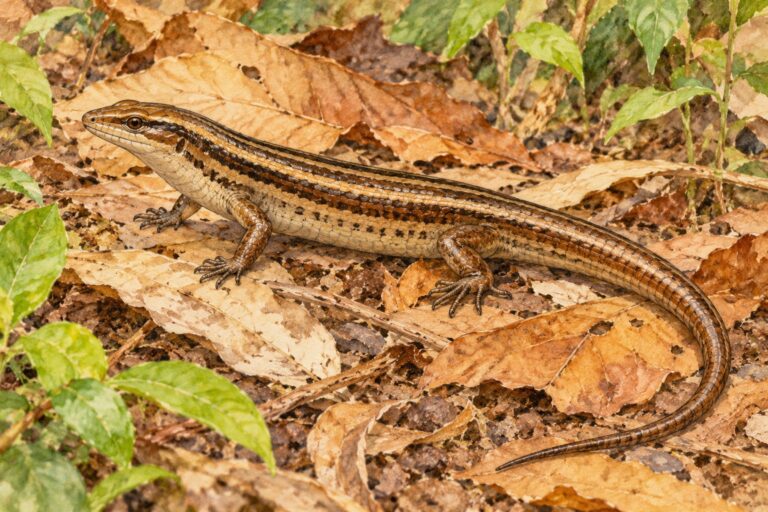
Managua Skink

Spanish name
Escinco de Managua
Scientific name
Mesoscincus managuae

What Do Pico & Tati Think?

Pico: “What helps this reptile fit into its habitat?”

Tati: “Let’s look at its shape, colors and surroundings while giving it plenty of space.”

Identification

Key Features of the Managua Skink

  • Smooth elongated brown body

  • Dark lengthwise lines

  • Short legs and a long tapering tail

Habitat & range

Seasonally dry northwestern Costa Rica, with documented records from Guanacaste including the Ocotal and Diriá areas.

Conservation & care

Observe with an adult from permitted paths. Do not touch, chase, catch or feed reptiles. Leave bark, logs, stones and leaf litter in place. Keep pets away and allow an open escape route.

Threats & pressures

Protect connected habitat and natural shelters. Avoid collection, unnecessary clearing and deliberate killing. Leave wildlife in place and support responsible observation.

View full profile →

Nature Field Guide

Mantled Howler Monkey

Spanish name
Mono congo / Mono aullador
Scientific name
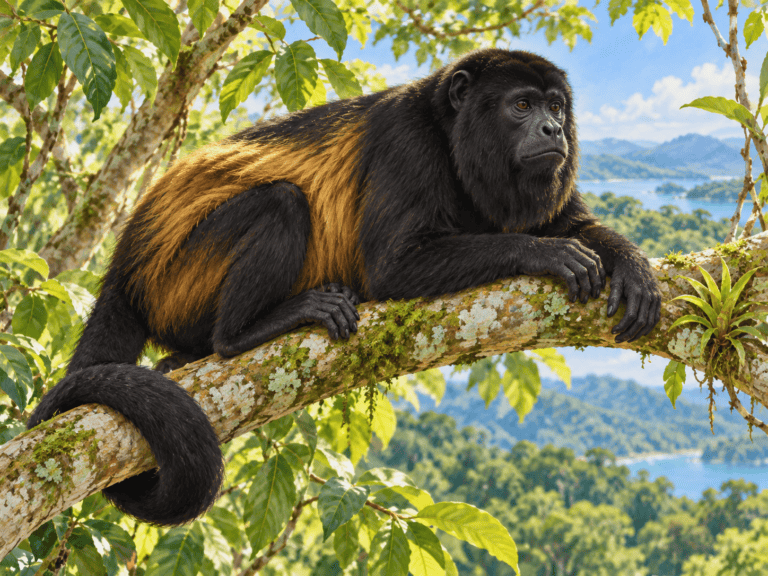
Alouatta palliata

What Do Pico & Tati Think?

Pico: “We heard the monkeys before we could see them!”

Tati: “Let’s stay quiet and see what they’re doing in the branches.”

Identification

Key Features of the Mantled Howler Monkey

  • A mostly dark coat with a lighter mantle along the sides.

  • A long, grasping tail used while moving through trees.

  • Deep calls that may carry beyond the visible group.

Habitat & range

Tropical forest canopy and wooded corridors. Around the estuary, observe canopy habitat from a guided route rather than following animals into the forest.

Seasonal Calendar

Breeding

General species biology; local schedule unverified

Year-round

Mantled howlers breed throughout the year. Species-level biology, not a schedule of births in a particular troop.

Event source ↗

Conservation & care

Never offer food or try to touch a monkey. Avoid playback and shouting, and give groups space to move through the canopy.

View full profile →

Nature Field Guide

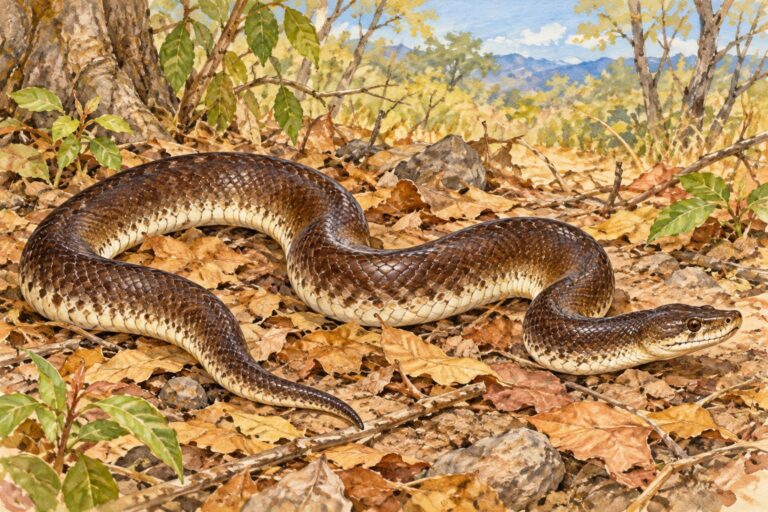
Mexican Burrowing Python

Spanish name
Boa excavadora / Pitón excavadora
Scientific name
Loxocemus bicolor

What Do Pico & Tati Think?

Pico: “What helps this reptile fit into its habitat?”

Tati: “Let’s look at its shape, colors and surroundings while giving it plenty of space.”

Identification

Key Features of the Mexican Burrowing Python

  • Stout dark body and pale belly

  • Small wedge-shaped digging head

  • Short tapering tail without a rattle

Habitat & range

Dry and seasonally dry forests of northwestern Costa Rica, particularly Guanacaste.

Conservation & care

Observe from a distance with an adult or qualified guide. Do not touch, catch, corner, feed or move any snake. Keep children and pets away. Colors, head shape and pupil shape must never be used to decide a snake is safe.

Threats & pressures

Protect connected habitat and natural shelters. Avoid collection, unnecessary clearing and deliberate killing. Leave wildlife in place and support responsible observation.

View full profile →

Nature Field Guide

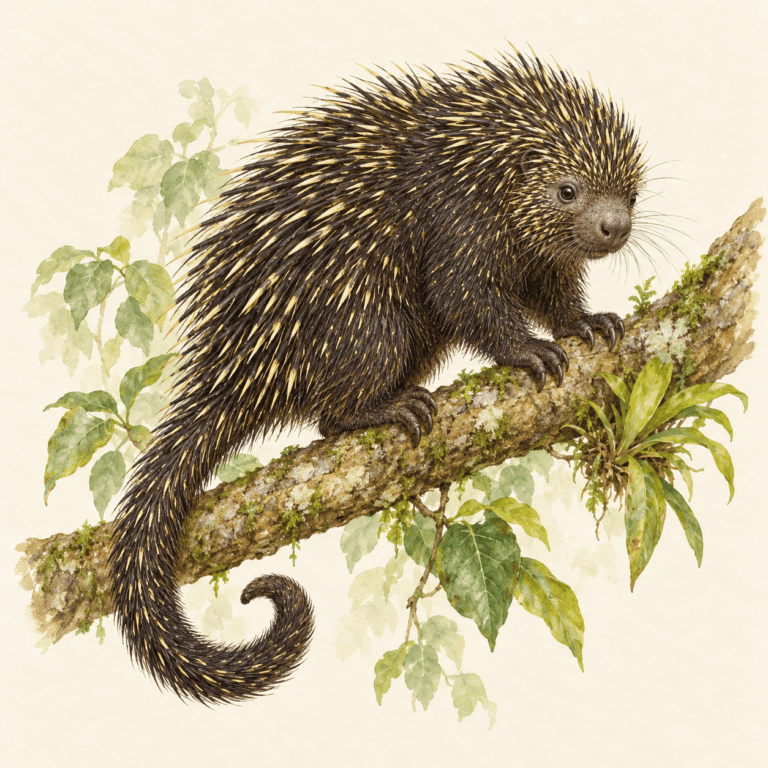
Mexican Hairy Porcupine

Spanish name
Puercoespín
Scientific name
Coendou mexicanus

What Do Pico & Tati Think?

This tree-dwelling porcupine has dark coarse hair that can hide many of its protective quills.

What does Least Concern mean?

In the linked conservation assessment, this species does not qualify as threatened or near threatened with extinction. It still needs care: local populations and habitats can face problems even when the species has a lower extinction risk overall.

This label describes conservation status. It does not tell us whether a plant is safe for children or pets. Select the status button to read the assessment.

Identification

Key Features of the Mexican Hairy Porcupine

  • Dark coarse fur with protective quills beneath or among the hairs.

  • Rounded body and a long gripping tail.

  • Usually encountered in trees rather than on the ground.

Habitat & range

Lowland forest, including Guanacaste's tropical dry forest.

Conservation & care

Explore with an adult or local guide. Observe quietly from a distance, stay on established trails and leave shelter undisturbed. Do not feed, touch, capture or corner wildlife. Keep pets away.

Conservation assessment

Global IUCN category reported by the linked specialist or Mammal Diversity Database account, checked October 2026. Least Concern does not mean there are no threats or that every local population is secure.

View full profile →

Nature Field Guide

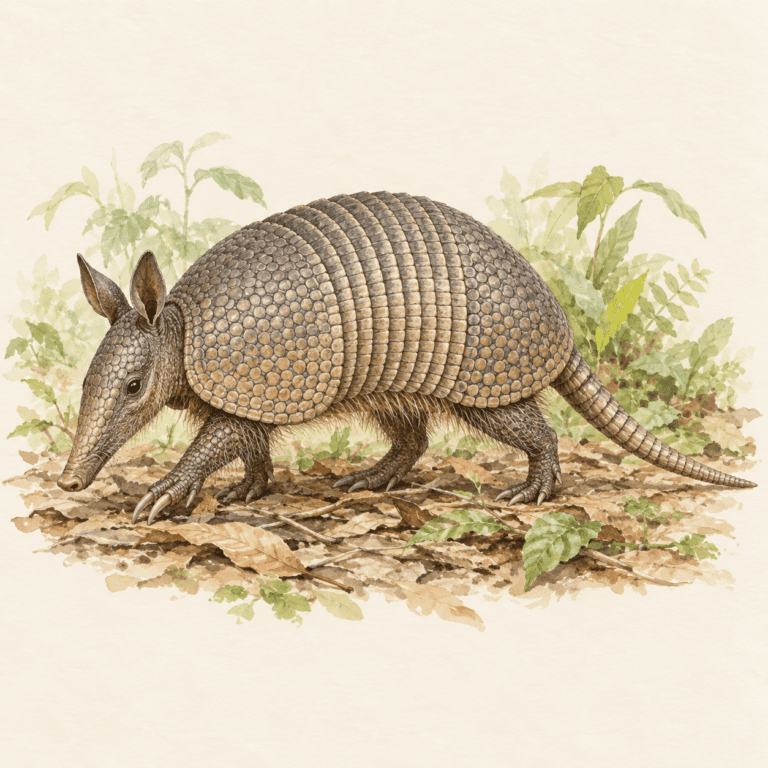
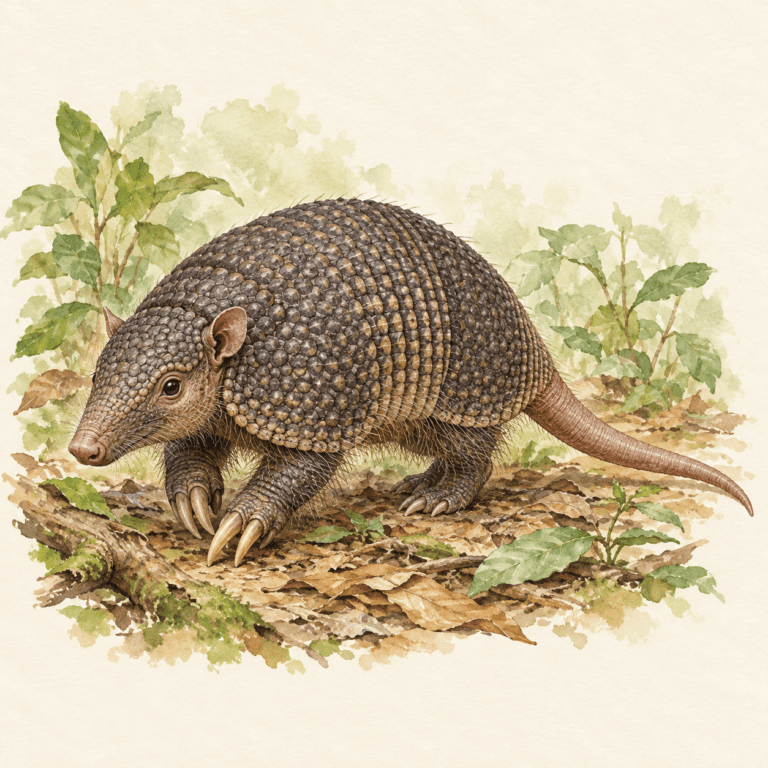
Mexican Long-nosed Armadillo

Spanish name
Armadillo de nueve bandas mexicano
Scientific name
Dasypus mexicanus

What Do Pico & Tati Think?

This armadillo wears a covering of bony plates, with flexible bands across its middle so it can bend while walking.

Identification

Key Features of the Mexican Long-nosed Armadillo

  • Long tapered snout and upright ears.

  • Flexible bands across the middle of the armored back.

  • Long tail covered with armor; this alone does not confirm the species.

Habitat & range

Forests, forest edges and other suitable wooded landscapes in Costa Rica.

Conservation & care

Explore with an adult or local guide. Observe quietly from a distance, stay on established trails and leave shelter undisturbed. Do not feed, touch, capture or corner wildlife. Keep pets away.

Conservation assessment

The Mammal Diversity Database lists this recently separated species as Not Evaluated, checked October 2026. An older assessment for Dasypus novemcinctus should not be applied automatically.

View full profile →

Nature Field Guide

Neotropical Whipsnake

Spanish name
Sabanera / Corredora de sabana
Scientific name
Masticophis mentovarius

What Do Pico & Tati Think?

Pico: “What can we learn from this reptile’s shape?”

Tati: “Let’s notice its markings and habitat while leaving it plenty of space.”

Identification

Key Features of the Neotropical Whipsnake

  • Long slender body

  • Very long whiplike tail

  • Pale chin below a brown-to-olive head

Habitat & range

Northwestern and western Pacific-slope dry and open wooded habitats, including Guanacaste, western lowlands and suitable Central Valley areas.

Conservation & care

Observe only from a distance with an adult or qualified guide. Never touch, catch, feed, corner or move any snake. Keep children and pets away. Colors, head shape and pupil shape must never be used to decide a snake is safe.

Threats & pressures

Protect natural shelters and connected habitat. Avoid collection, unnecessary clearing and deliberate killing. Leave wildlife in its habitat and support responsible observation.

View full profile →

Nature Field Guide

Northern Naked-tailed Armadillo

Spanish name
Armadillo de cola desnuda
Scientific name
Cabassous centralis

What Do Pico & Tati Think?

The northern naked-tailed armadillo is a digging specialist.

What does Least Concern mean?

In the linked conservation assessment, this species does not qualify as threatened or near threatened with extinction. It still needs care: local populations and habitats can face problems even when the species has a lower extinction risk overall.

This label describes conservation status. It does not tell us whether a plant is safe for children or pets. Select the status button to read the assessment.

Identification

Key Features of the Northern Naked-tailed Armadillo

  • Dark armored body with flexible bands.

  • Mostly unarmored tail with thin, widely spaced plates.

  • Large digging claws and a relatively broad head.

Habitat & range

Forests and wooded edges, including documented Costa Rican secondary-forest sites.

Conservation & care

Explore with an adult or local guide. Observe quietly from a distance, stay on established trails and leave shelter undisturbed. Do not feed, touch, capture or corner wildlife. Keep pets away.

Conservation assessment

IUCN specialist-group account reports Least Concern; checked October 2026. The account stresses limited population knowledge. Least Concern does not mean the animal faces no threats.

View full profile →

Nature Field Guide

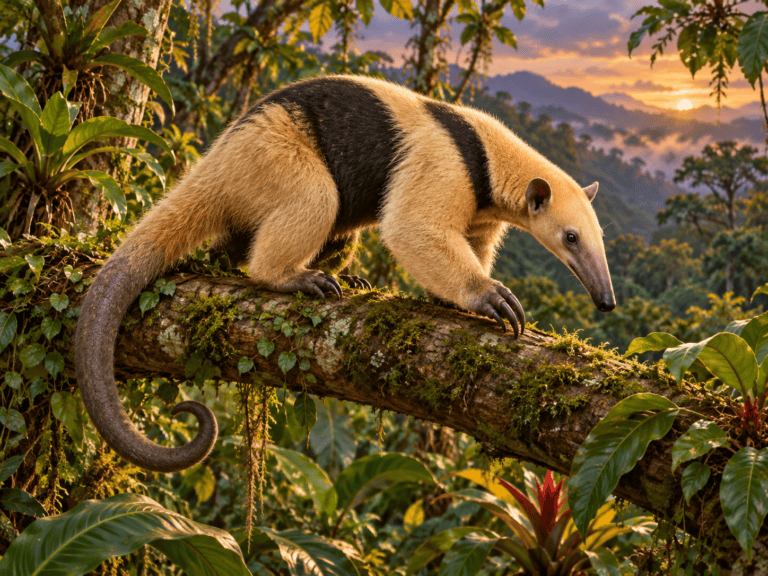
Northern Tamandua

Spanish name
Oso hormiguero / Oso colmenero
Scientific name
Tamandua mexicana

What Do Pico & Tati Think?

Pico: “Its fur looks like a little vest!”

Tati: “Those claws are tools, so we give it space.”

Identification

Key Features of the Northern Tamandua

  • Pale coat with a dark vest-like pattern.

  • Long narrow snout and strong curved foreclaws.

  • Long grasping tail.

Habitat & range

Corcovado’s forest landscape and other suitable dry or humid woodland.

Seasonal Calendar

Breeding possible

Costa Rica; broad natural-history account

Year-round

ACG describes reproduction possible in any season; no local birth peak is assigned.

Event source ↗

Conservation & care

Keep a respectful distance and leave an open route for the animal. Stay on authorized paths, secure food and rubbish, and observe without feeding, touching, baiting or chasing.

Threats & pressures

Road collisions, dog attacks and habitat loss are documented pressures.

View full profile →

Nature Field Guide

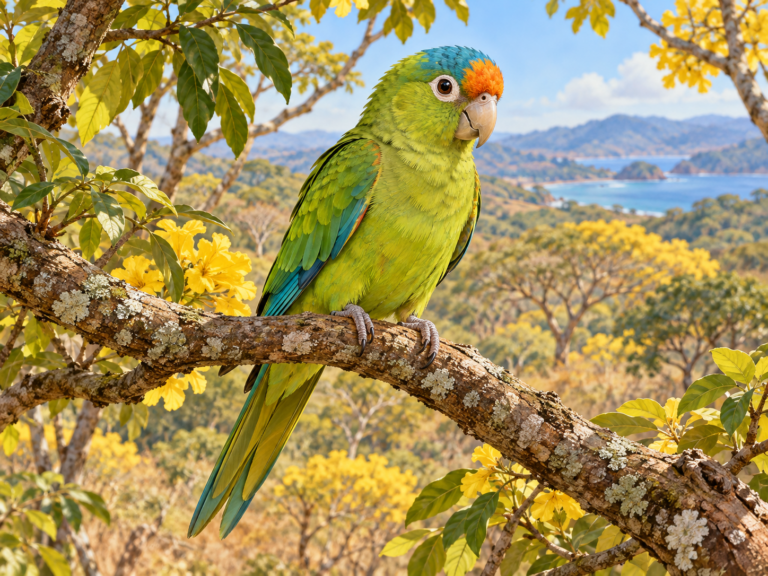
Orange-fronted Parakeet

Spanish name
Perico frentinaranja / Catano
Scientific name
Eupsittula canicularis

What Do Pico & Tati Think?

Pico: “That little flock turns so quickly!”

Tati: “Let’s look for orange above the bill when one lands.”

Identification

Key Features of the Orange-fronted Parakeet

  • Orange forehead above the bill.

  • Pale yellow eye ring and green body.

  • Long pointed tail; agile flock flight.

Habitat & range

Northern Pacific lowlands, Tilaran and Nicoya hills. Occurs locally in the western Central Valley. Regional tags do not imply abundance in every town.

Seasonal Calendar

Year-round presence

Santa Rosa, ACG

Year-round

Source describes presence in nearly any season; La Cruz is the gateway, not the observation site.

Event source ↗

Fledgling family activity

Santa Rosa / lowland ACG

May, Jun

Source describes begging fledglings in May and June; not a fixed date for every nest.

Event source ↗

Conservation & care

Stay on authorized trails or viewing routes. Give birds space, keep voices low and leave nests undisturbed. Observe without bait, feeding or recorded calls.

Threats & pressures

ACG documents capture of nestlings for the pet trade outside the protected area. Habitat and safe nesting sites also matter.

View full profile →

Nature Field Guide

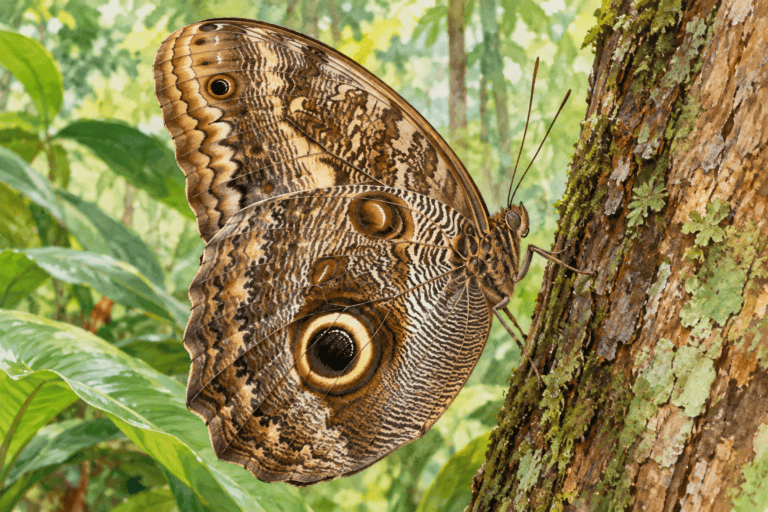
Owl Butterfly

Spanish name
Mariposa búho
Scientific name
Caligo telamonius

What Do Pico & Tati Think?

Pico: “Let's look closely at the owl butterfly!”

Tati: “We can compare its shape and markings without touching it.”

Identification

Key Features of the Owl Butterfly

  • Large brown wings

  • rounded eye spot on underside

  • broad wing shape

Habitat & range

Forest paths, edges and nearby vegetation in Guanacaste. Local habitat and abundance vary.

Conservation & care

Observe without collecting, handling or disturbing insects or nests. Stay on permitted paths. Leave caterpillars and their food plants in place.

View full profile →

Nature Field Guide

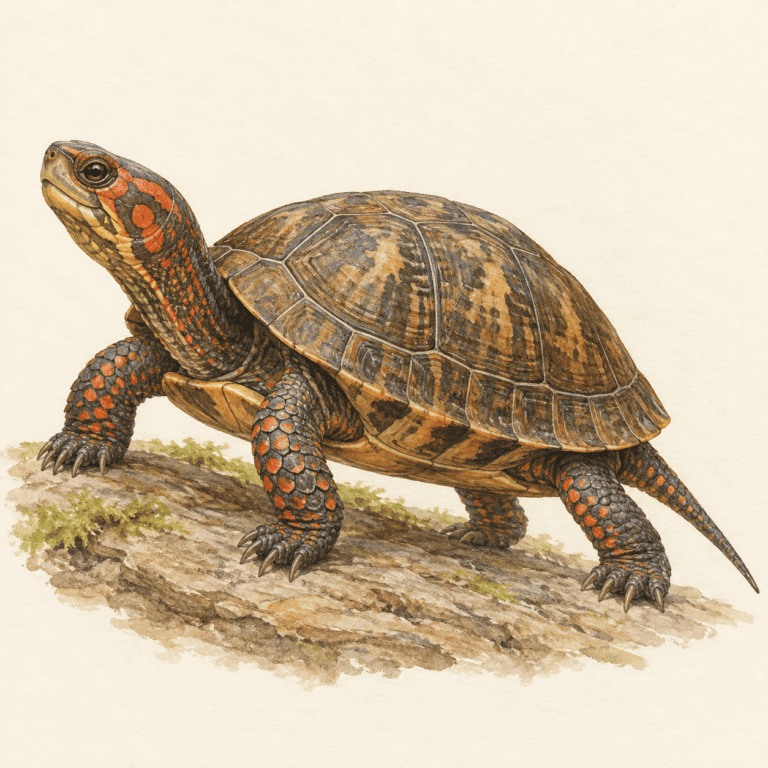
Painted Wood Turtle

Spanish name
Tortuga de bosque pintada
Scientific name
Rhinoclemmys pulcherrima

What Do Pico & Tati Think?

Pico and Tati invite you to learn about the painted wood turtle. Compare its walking feet with a sea turtle’s flippers using photographs. How does each shape suit its habitat?

Identification

Key Features of the Painted Wood Turtle

  • Domed brown shell with variable markings.

  • Red or orange markings around the head and limbs.

  • Walking feet rather than sea-turtle flippers.

Habitat & range

Northwestern Pacific Costa Rica, south toward the Tarcoles and Carara area. Uses seasonally dry woodland, scrub and moist gallery forest near streams. The reviewed natural-range sources do not support a general South Pacific assignment.

Conservation & care

Watch wildlife with an adult from a safe path. Do not touch, feed, capture or move reptiles, and keep pets away. Leave eggs, shelters and vegetation undisturbed.

View full profile →

Nature Field Guide

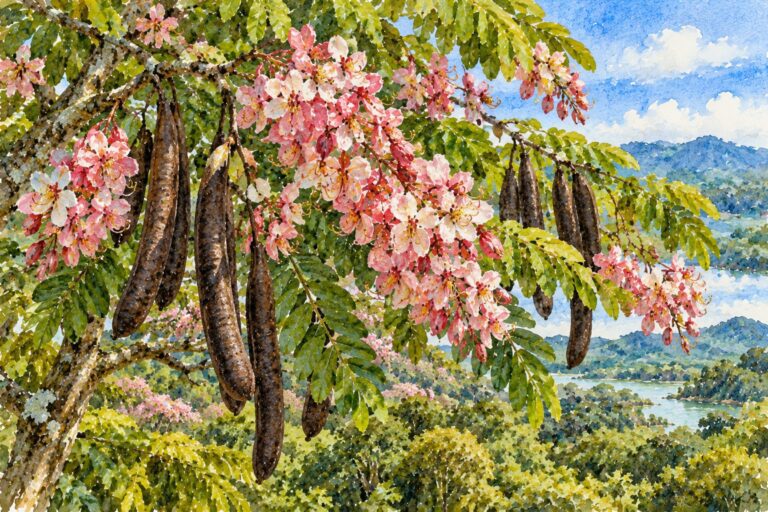
Pink Shower Tree

Spanish name
Carao
Scientific name
Cassia grandis

What Do Pico & Tati Think?

Pico wants to sketch the tree’s silhouette. Tati suggests looking for three clues before guessing its name. What would you notice first?

Identification

Key Features of the Pink Shower Tree

  • Pink flower clusters

  • Long thick dark pods

  • Many paired oval leaflets

Habitat & range

Seasonal woodland and open planted landscapes.

Conservation & care

Observe from paths and leave leaves, bark, flowers and fruits attached. Do not taste wild plants or offer them to pets. Ask a knowledgeable guide to confirm the species.

View full profile →

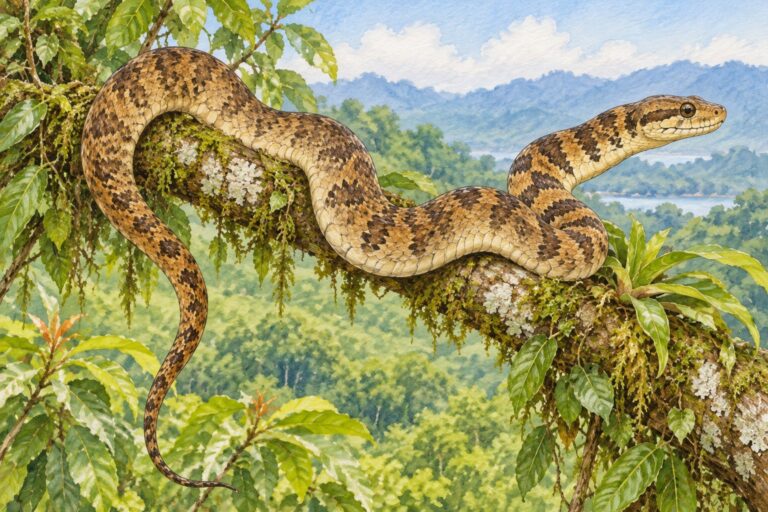
Nature Field Guide

Puffing Snake

Spanish name
Pajarera / Culebra pajarera
Scientific name
Phrynonax poecilonotus

What Do Pico & Tati Think?

Pico: “What can we learn from this reptile’s shape?”

Tati: “Let’s notice its markings and habitat while leaving it plenty of space.”

Identification

Key Features of the Puffing Snake

  • Large elongated forest snake

  • Variable colors and darker markings

  • Distinct head and long climbing body

Habitat & range

Forests and wooded edges on both Costa Rican slopes, including lowlands and foothills; documented in the Monteverde area.

Conservation & care

Observe only from a distance with an adult or qualified guide. Never touch, catch, feed, corner or move any snake. Keep children and pets away. Colors, head shape and pupil shape must never be used to decide a snake is safe.

Threats & pressures

Protect natural shelters and connected habitat. Avoid collection, unnecessary clearing and deliberate killing. Leave wildlife in its habitat and support responsible observation.

View full profile →

Nature Field Guide

Puma

Spanish name
Puma / León de montaña
Scientific name
Puma concolor

What Do Pico & Tati Think?

Pico: “This cat has no rosettes!”

Tati: “Its shape helps us tell it apart from a jaguar.”

Identification

Key Features of the Puma

  • Uniform tawny adult coat, without jaguar rosettes.

  • Long tail with a darker tip.

  • Relatively small head and long legs.

Habitat & range

Reserva Sierra Zapote, Las Juntas district, Abangares, and suitable forests elsewhere in Costa Rica.

Conservation & care

Keep a respectful distance and leave an open route for the animal. Stay on authorized paths, secure food and rubbish, and observe without feeding, touching, baiting or chasing.

Threats & pressures

Forest fragmentation and loss of prey are habitat-level pressures relevant to wide-ranging predators.

View full profile →

Nature Field Guide

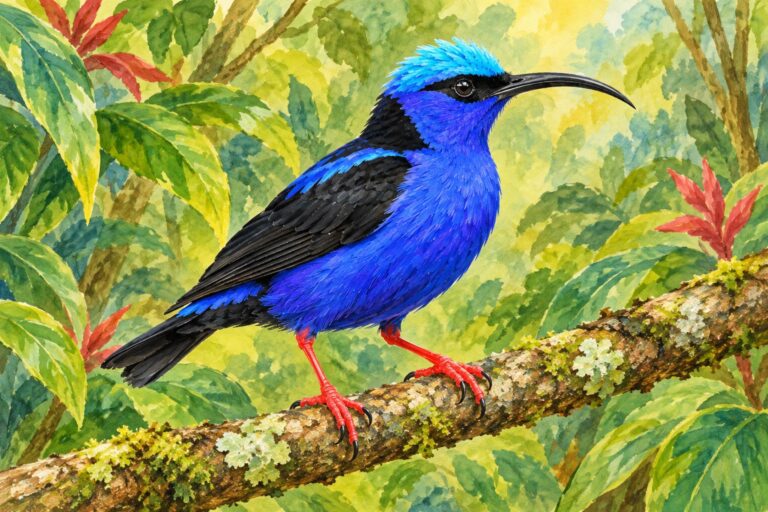
Red-legged Honeycreeper

Spanish name
Mielero patirrojo
Scientific name
Cyanerpes cyaneus

What Do Pico & Tati Think?

Pico: “Why are its feet so red?”

Tati: “Those red legs help us identify it, even when the body colors differ.”

Identification

Key Features of the Red-legged Honeycreeper

  • Bright red legs

  • Slender decurved bill

  • Breeding male blue with turquoise crown

Habitat & range

Wooded lowlands, forest edges, gardens and plantations. Common in northern Pacific areas and parts of Rio Frio; elsewhere on the Caribbean slope it is more local. Also occurs in the southern Pacific.

Conservation & care

Observe quietly from trails or established viewing areas. Give nests, roosts and feeding birds space. Do not handle, chase or lure birds with playback. Keep pets away from wildlife.

Threats & pressures

Protect native vegetation, reduce collision hazards around glass and keep cats away from birds. These are practical prevention priorities, not a claim of a measured decline at a specific Costa Rican site.

View full profile →

Nature Field Guide

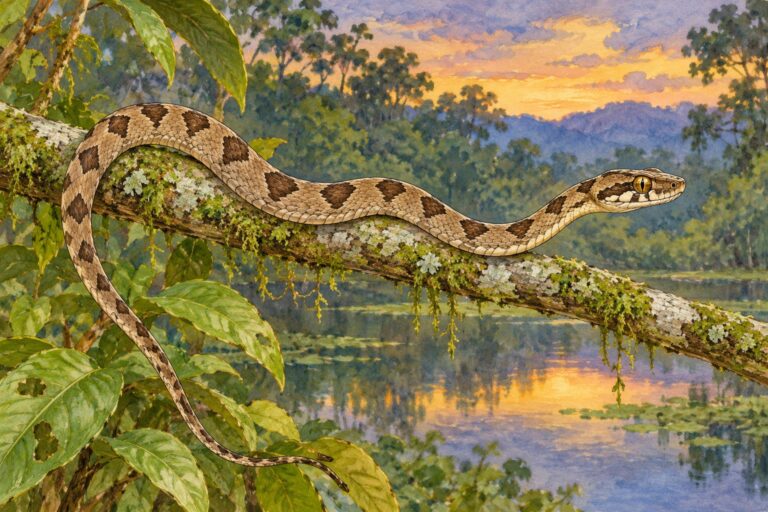
Rhombic Cat-eyed Snake

Spanish name
Culebra ojo de gato / Escombrera
Scientific name
Leptodeira rhombifera

What Do Pico & Tati Think?

Pico: “What clues help us recognize this reptile?”

Tati: “Let’s notice its shape, markings and habitat from a respectful distance.”

Identification

Key Features of the Rhombic Cat-eyed Snake

  • Large eyes

  • Dark rhombic or saddle-shaped back blotches

  • Slender body and long tail

Habitat & range

Lowland and foothill habitats, with published Costa Rican observations in Guanacaste and the Pacific landscape.

Conservation & care

Observe only from a distance with an adult or qualified guide. Do not touch, catch, corner or attempt to move any snake. Step back and tell your adult; keep children and pets away. Do not use colors, head shape or pupil shape to decide a snake is safe.

Threats & pressures

Protect habitat connections and natural shelters. Avoid road mortality, collection and deliberate killing. Leave reptiles in their habitat rather than keeping or relocating them.

View full profile →

Nature Field Guide

Roble de Sabana

Spanish name
Roble de sabana
Scientific name
Tabebuia rosea

What Do Pico & Tati Think?

Pico: “A native tree whose pink trumpet flowers brighten forest edges and open landscapes.”

Tati: “Let’s notice the leaves, flowers and habitat without disturbing the plant.”

Identification

Key Features of the Roble de Sabana

  • Pink or pale pink trumpet flowers

  • Five leaflets spreading from one point

  • Long narrow seed capsules

Habitat & range

Lowland forest and edges on both slopes; records include Guanacaste, the Central Pacific, Osa and the Caribbean lowlands.

Conservation & care

Explore with an adult on permitted paths. Observe and photograph without picking leaves, flowers or fruits. Do not taste plants or let pets chew them. Avoid climbing trees and disturbing roots, seedlings or visiting wildlife.

Threats & pressures

Protect suitable habitat, mature trees and natural regeneration. Avoid trampling, unauthorized clearing and collection.

View full profile →

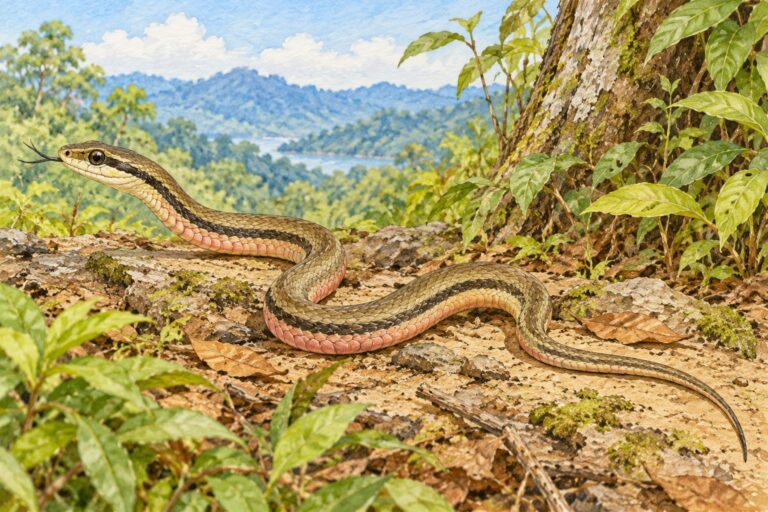
Nature Field Guide

Salmon-bellied Racer

Spanish name
Corredora de vientre salmón
Scientific name
Mastigodryas melanolomus

What Do Pico & Tati Think?

Pico: “What helps this reptile fit into its habitat?”

Tati: “Let’s look at its shape, colors and surroundings while giving it plenty of space.”

Identification

Key Features of the Salmon-bellied Racer

  • Slender long-tailed body

  • Brown-to-olive upper surfaces

  • Pale or salmon-colored underside

Habitat & range

Pacific-slope forest, edges and foothill landscapes, including northwestern Costa Rica, San Luis de Monteverde and the South Pacific.

Conservation & care

Observe from a distance with an adult or qualified guide. Do not touch, catch, corner, feed or move any snake. Keep children and pets away. Colors, head shape and pupil shape must never be used to decide a snake is safe.

Threats & pressures

Protect connected habitat and natural shelters. Avoid collection, unnecessary clearing and deliberate killing. Leave wildlife in place and support responsible observation.

View full profile →

Nature Field Guide

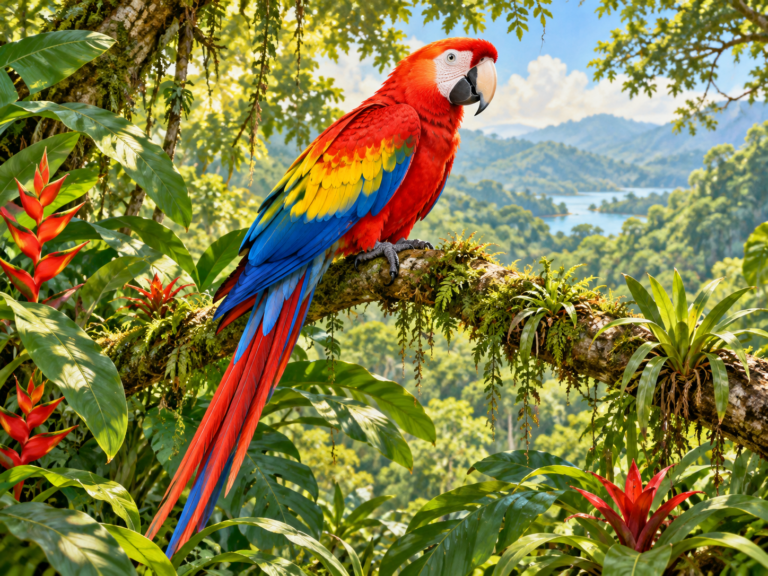
Scarlet Macaw

Spanish name
Lapa roja
Scientific name
Ara macao

What Do Pico & Tati Think?

Pico: “Those wings have three colors to discover!”

Tati: “Let’s listen, look up and give the pair room to fly.”

What does Least Concern mean?

In the linked conservation assessment, this species does not qualify as threatened or near threatened with extinction. It still needs care: local populations and habitats can face problems even when the species has a lower extinction risk overall.

This label describes conservation status. It does not tell us whether a plant is safe for children or pets. Select the status button to read the assessment.

Identification

Key Features of the Scarlet Macaw

  • Red body with yellow and blue wing feathers.

  • Long pointed tail and large pale upper bill.

  • Loud calls; birds may fly in pairs.

Habitat & range

Important populations occur around Carara and the Osa Peninsula. Guanacaste includes restored populations around Punta Islita; this does not imply occurrence throughout the region.

Seasonal Calendar

Breeding

Costa Rica; broad national window

Jan, Feb, Mar, Apr, Oct, Nov, Dec

Broad reported window, not a dated Carara nesting forecast.

Event source ↗

Conservation & care

Stay on authorized trails or viewing routes. Give birds space, keep voices low and leave nests undisturbed. Observe without bait, feeding or recorded calls.

Threats & pressures

Forest loss removes feeding and nesting trees. Capture for the pet trade also affects populations; global status does not describe every local population.

Conservation assessment

World Parrot Trust reports IUCN Least Concern; local declines are still documented. Source checked 7 October 2026. This is a global species category, not a count of birds in the tagged towns.

View full profile →

Nature Field Guide

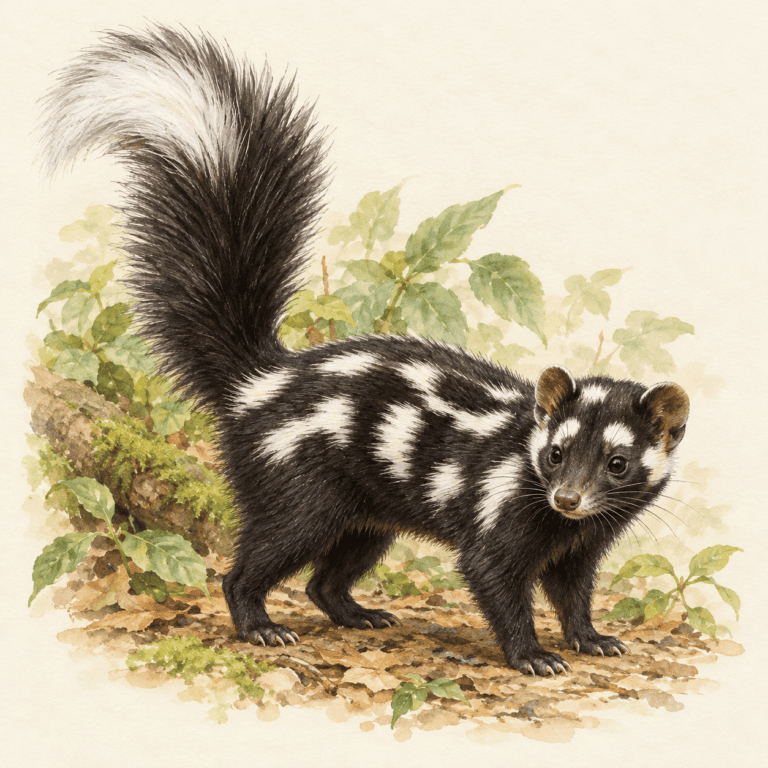
Southern Spotted Skunk

Spanish name
Zorro hediondo manchado
Scientific name
Spilogale angustifrons

What Do Pico & Tati Think?

This small skunk has a dark coat patterned with broken pale stripes and patches.

What does Least Concern mean?

In the linked conservation assessment, this species does not qualify as threatened or near threatened with extinction. It still needs care: local populations and habitats can face problems even when the species has a lower extinction risk overall.

This label describes conservation status. It does not tell us whether a plant is safe for children or pets. Select the status button to read the assessment.

Identification

Key Features of the Southern Spotted Skunk

  • Small slender skunk with contrasting black-and-white markings.

  • Broken pale stripes and patches rather than just two broad back stripes.

  • Bushy tail; markings can vary among individuals.

Habitat & range

Suitable dry-forest and edge habitats, with research records in Guanacaste.

Conservation & care

Explore with an adult or local guide. Observe quietly from a distance, stay on established trails and leave shelter undisturbed. Do not feed, touch, capture or corner wildlife. Keep pets away. If a skunk notices you, give it room and calmly move away.

Conservation assessment

Global IUCN category reported by Mammal Diversity Database, checked October 2026. A global Least Concern category does not replace Costa Rican national threat classifications.

View full profile →

Nature Field Guide

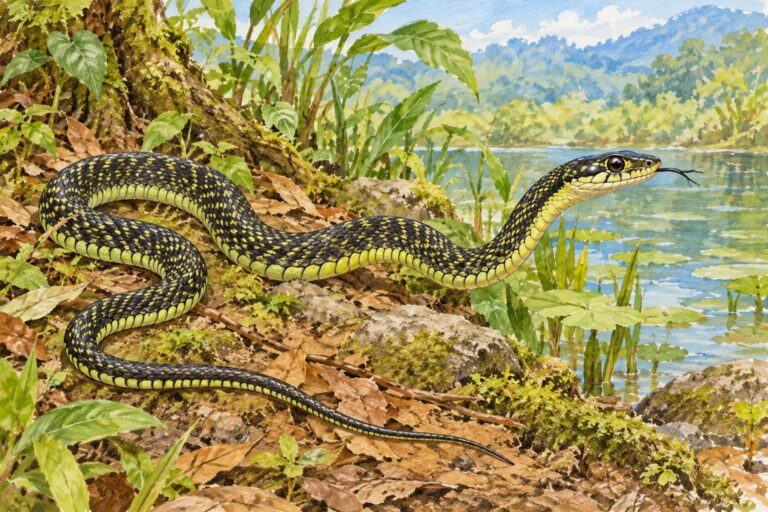
Speckled Racer

Spanish name
Corredora moteada
Scientific name
Drymobius margaritiferus

What Do Pico & Tati Think?

Pico: “What can we learn from this reptile’s shape?”

Tati: “Let’s notice its markings and habitat while leaving it plenty of space.”

Identification

Key Features of the Speckled Racer

  • Dark body with many pale scale centers

  • Long tail and slender build

  • Speckled rather than broadly banded pattern

Habitat & range

Lowland and foothill habitats on both slopes, including northwestern and western Pacific areas and humid Caribbean landscapes.

Conservation & care

Observe only from a distance with an adult or qualified guide. Never touch, catch, feed, corner or move any snake. Keep children and pets away. Colors, head shape and pupil shape must never be used to decide a snake is safe.

Threats & pressures

Protect natural shelters and connected habitat. Avoid collection, unnecessary clearing and deliberate killing. Leave wildlife in its habitat and support responsible observation.

View full profile →

Nature Field Guide

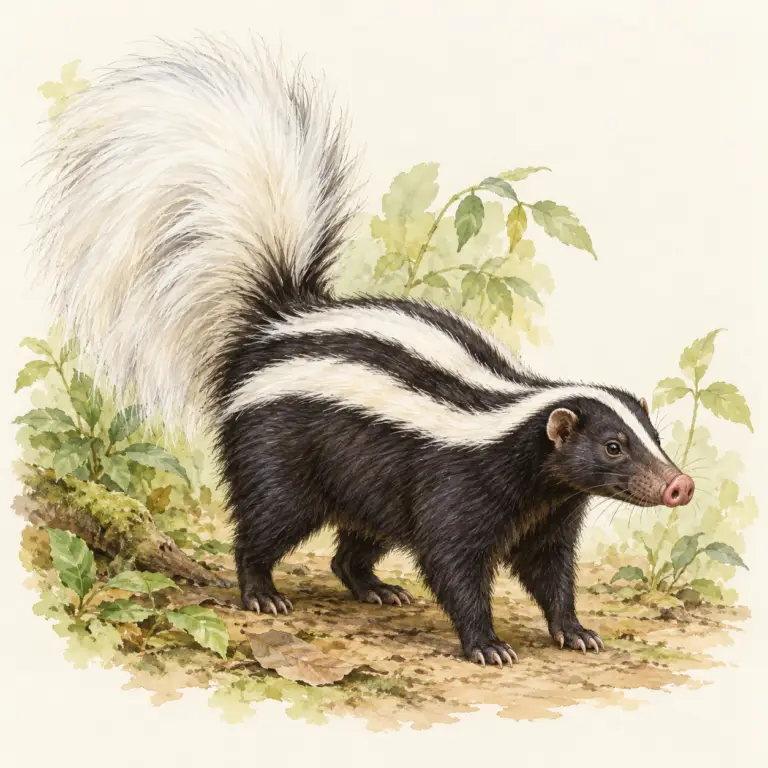
Striped Hog-nosed Skunk

Spanish name
Zorro hediondo de nariz de cerdo
Scientific name
Conepatus semistriatus

What Do Pico & Tati Think?

The striped hog-nosed skunk has a broad bare nose that helps distinguish it from other skunks.

Identification

Key Features of the Striped Hog-nosed Skunk

  • Broad bare hog-like nose on an extended muzzle.

  • Dark body with two broad pale back stripes.

  • Bushy tail, often mostly white.

Habitat & range

Seasonally dry forests, shrublands and suitable open woodland landscapes.

Conservation & care

Explore with an adult or local guide. Observe quietly from a distance, stay on established trails and leave shelter undisturbed. Do not feed, touch, capture or corner wildlife. Keep pets away. If a skunk notices you, give it room and calmly move away.

View full profile →

Nature Field Guide

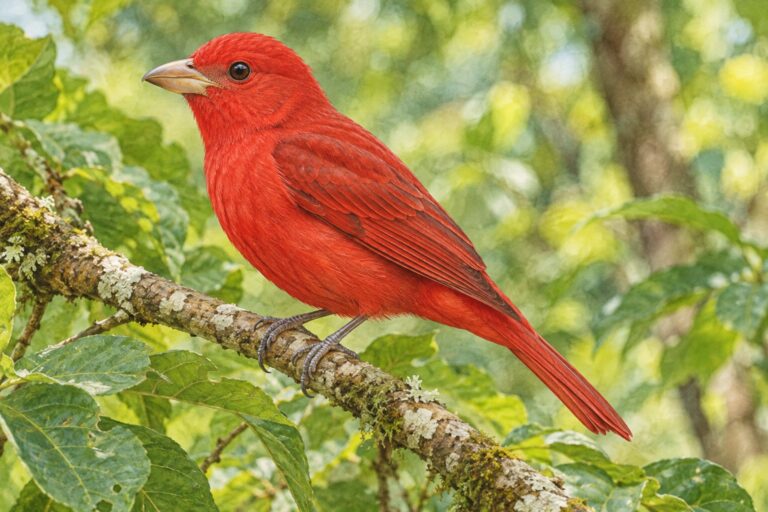
Summer Tanager

Spanish name
Tangara veranera
Scientific name
Piranga rubra

What Do Pico & Tati Think?

Pico: “Even its wings are red!”

Tati: “That helps us compare it with the scarlet tanager.”

Identification

Key Features of the Summer Tanager

  • Adult male entirely red

  • Hefty pale bill

  • Female yellowish and young males patchy

Habitat & range

A migrant and nonbreeding visitor, generally mid-September through April. Uses forest, edges and wooded gardens on both slopes, with fewer birds at higher elevations.

Conservation & care

Observe quietly from trails or established viewing areas. Give nests, roosts and feeding birds space. Do not handle, chase or lure birds with playback. Keep pets away from wildlife.

Threats & pressures

Migrants depend on suitable habitat across their full annual journey. Protect native vegetation, reduce collision hazards around glass and keep cats away from birds. These are practical prevention priorities, not a claim of a measured decline at a specific Costa Rican site.

View full profile →

Nature Field Guide

Turkey Vulture

Spanish name
Zopilote cabecirrojo
Scientific name
Cathartes aura

What Do Pico & Tati Think?

Pico: “Its wings look like a gentle V!”

Tati: “That posture and the pale flight feathers give us clues.”

Identification

Key Features of the Turkey Vulture

  • Red head in adults

  • Pale flight feathers beneath dark wings

  • Longer tail and shallow V in flight

Habitat & range

Widespread over open and wooded landscapes, less numerous at high elevations. Resident birds are joined by migrants, with especially conspicuous passage along Caribbean lowlands.

Conservation & care

Observe quietly from trails or established viewing areas. Give nests, roosts and feeding birds space. Do not handle, chase or lure birds with playback. Keep pets away from wildlife.

Threats & pressures

Protect native vegetation, reduce collision hazards around glass and keep cats away from birds. These are practical prevention priorities, not a claim of a measured decline at a specific Costa Rican site.

View full profile →

Nature Field Guide

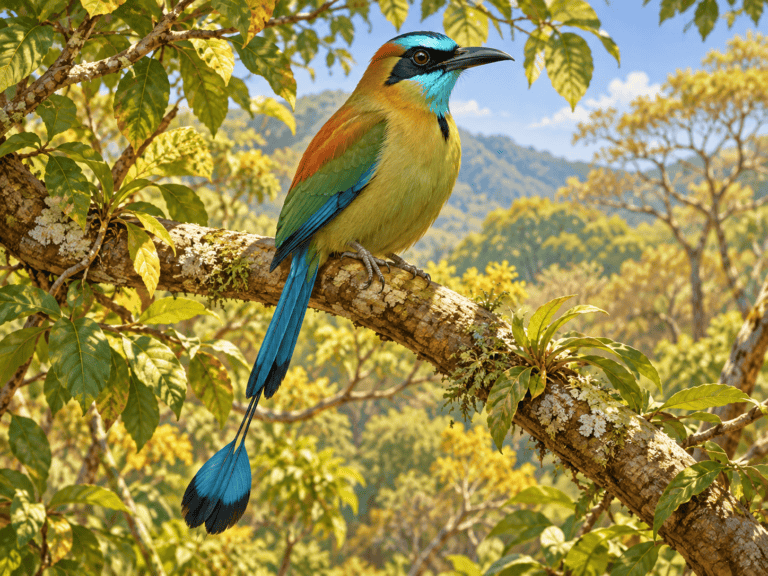
Turquoise-browed Motmot

Spanish name
Momoto cejiceleste / Bobo
Scientific name
Eumomota superciliosa

What Do Pico & Tati Think?

Pico: “The end of its tail looks like two tiny paddles!”

Tati: “The blue eyebrow gives us another clue.”

Identification

Key Features of the Turquoise-browed Motmot

  • Bright turquoise eyebrow above a dark mask.

  • Long central tail shafts with broad racket tips.

  • Compare head pattern and tail together.

Habitat & range

Dry and gallery woodland in the northern Pacific, south regularly toward Tarcoles. Rare Central Valley occurrences are not used as a core regional tag.

Conservation & care

Stay on authorized trails or viewing routes. Give birds space, keep voices low and leave nests undisturbed. Observe without bait, feeding or recorded calls.

View full profile →

Nature Field Guide

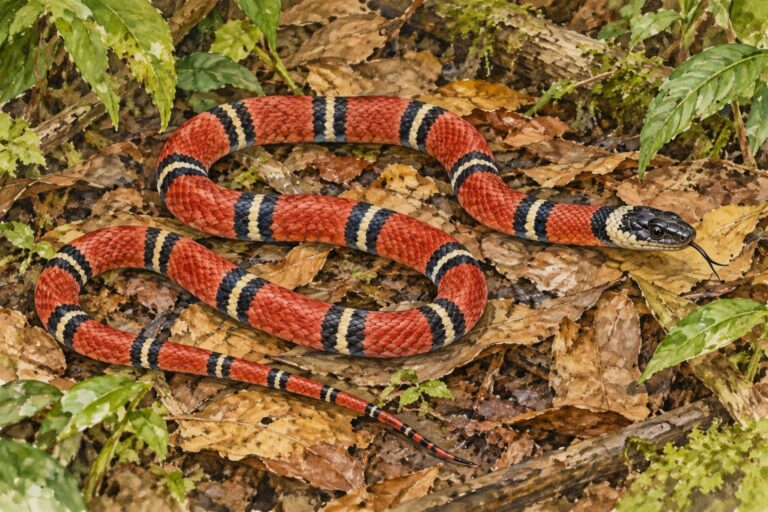
Two-banded False Coral Snake

Spanish name
Falsa coral de dos bandas
Scientific name
Erythrolamprus bizona

What Do Pico & Tati Think?

Pico: “What helps this reptile fit into its habitat?”

Tati: “Let’s look at its shape, colors and surroundings while giving it plenty of space.”

Identification

Key Features of the Two-banded False Coral Snake

  • Dark bands often arranged in pairs

  • Reddish body with narrow pale markings

  • Small head and slender build

Habitat & range

Forest and forest-edge habitats on both slopes; documented in San Luis de Monteverde.

Conservation & care

Observe from a distance with an adult or qualified guide. Do not touch, catch, corner, feed or move any snake. Keep children and pets away. Colors, head shape and pupil shape must never be used to decide a snake is safe.

Threats & pressures

Protect connected habitat and natural shelters. Avoid collection, unnecessary clearing and deliberate killing. Leave wildlife in place and support responsible observation.

View full profile →

Nature Field Guide

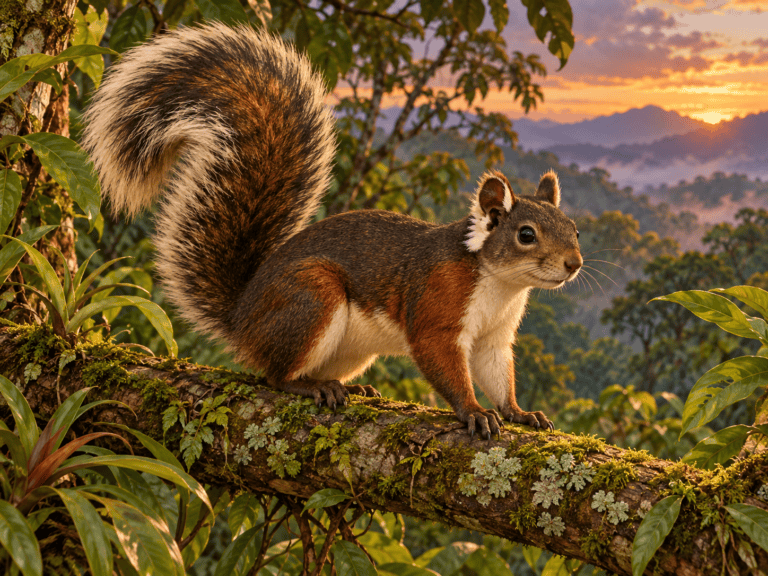
Variegated Squirrel

Spanish name
Ardilla variada
Scientific name
Sciurus variegatoides

What Do Pico & Tati Think?

Pico: “This squirrel’s colors are different from the last one!”

Tati: “We should compare shape and tail markings too.”

What does Least Concern mean?

In the linked conservation assessment, this species does not qualify as threatened or near threatened with extinction. It still needs care: local populations and habitats can face problems even when the species has a lower extinction risk overall.

This label describes conservation status. It does not tell us whether a plant is safe for children or pets. Select the status button to read the assessment.

Identification

Key Features of the Variegated Squirrel

  • Long bushy tail, often with pale edging.

  • Contrasting ear patches and variable coat color.

  • Tree-dwelling daytime activity.

Habitat & range

The Arenal / La Fortuna landscape, including a documented photograph at Arenal Volcano Lodge.

Conservation & care

Keep a respectful distance and leave an open route for the animal. Stay on authorized paths, secure food and rubbish, and observe without feeding, touching, baiting or chasing.

Conservation assessment

Global IUCN category as reported by the linked source, checked 7 October 2026. The source does not give an assessment year here. National legal protection and local abundance are separate questions.

View full profile →

Nature Field Guide

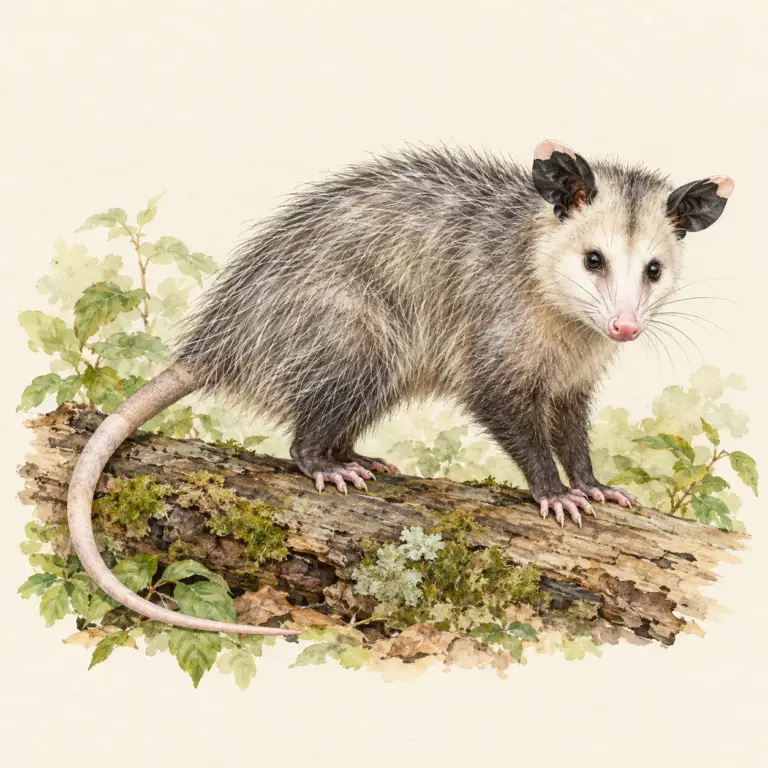
Virginia Opossum

Spanish name
Zorro pelón de Virginia
Scientific name
Didelphis virginiana

What Do Pico & Tati Think?

Despite its name, the Virginia opossum's native range reaches Costa Rica.

Identification

Key Features of the Virginia Opossum

  • Gray coat, pale face and pink nose.

  • Largely hairless ears, sometimes with pale tips.

  • Long bare tail; ear color alone is not a reliable species test.

Habitat & range

Suitable wooded and edge habitats within Costa Rica; local occurrence varies.

Conservation & care

Explore with an adult or local guide. Observe quietly from a distance, stay on established trails and leave shelter undisturbed. Do not feed, touch, capture or corner wildlife. Keep pets away.

View full profile →

Nature Field Guide

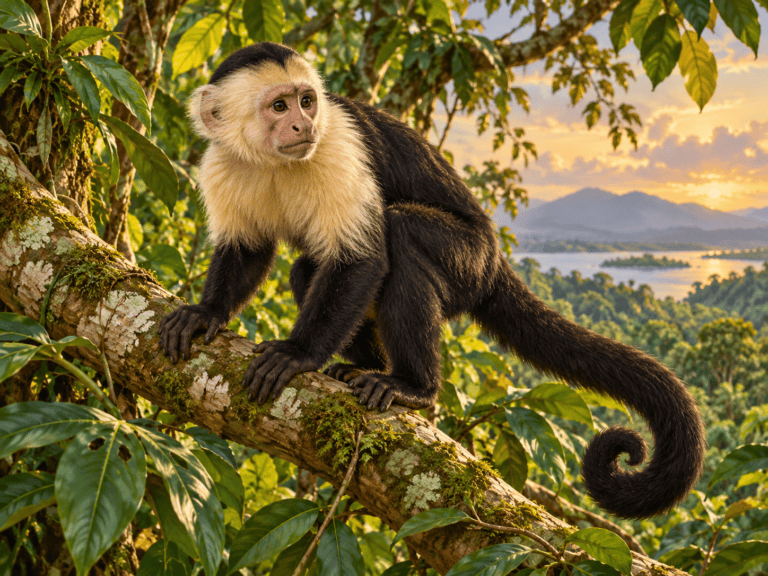
White-faced Capuchin

Spanish name
Mono carablanca
Scientific name
Cebus imitator

What Do Pico & Tati Think?

Pico: “That troop is searching so many branches!”

Tati: “Our snacks are for us, not for the monkeys.”

Identification

Key Features of the White-faced Capuchin

  • Pale face, chest and shoulders on a dark body.

  • Pinkish bare facial skin.

  • Long grasping tail, often curled at the tip.

Habitat & range

Manuel Antonio National Park near Quepos, in forest habitat rather than food stalls or rubbish areas.

Conservation & care

Keep a respectful distance and leave an open route for the animal. Stay on authorized paths, secure food and rubbish, and observe without feeding, touching, baiting or chasing.

Threats & pressures

Loss of forest affects habitat. Feeding wild troops can encourage dependence on visitor food and conflict around belongings.

Protection & recovery

Costa Rica’s government wildlife guide explicitly identifies this species as protected nationally. This legal designation is separate from its global IUCN category.

Conservation assessment

Global IUCN category as reported by the linked source, checked 7 October 2026. The source does not give an assessment year here. National legal protection and local abundance are separate questions.

View full profile →

Nature Field Guide

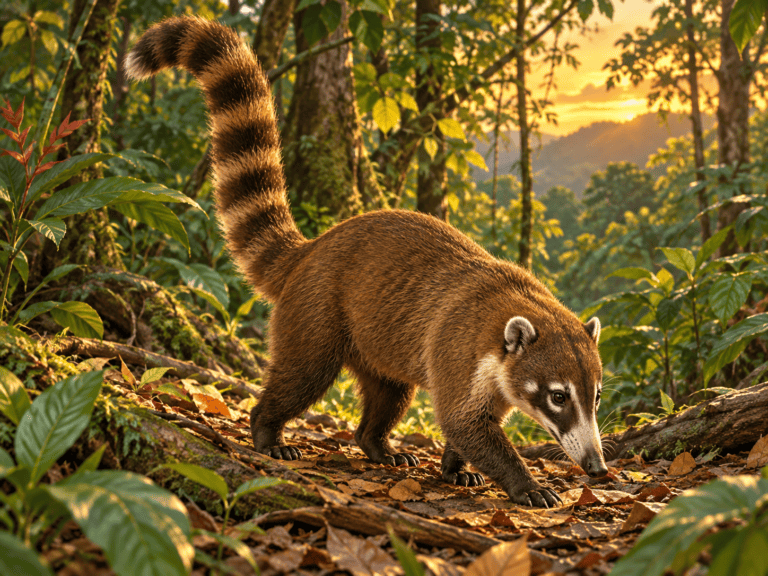
White-nosed Coati

Spanish name
Pizote
Scientific name
Nasua narica

What Do Pico & Tati Think?

Pico: “Those tails are pointing above the leaves!”

Tati: “Let’s let the group pass without offering food.”

Identification

Key Features of the White-nosed Coati

  • Long pointed, flexible snout.

  • Long tail often held upright.

  • Strong claws and brown-to-gray fur.

Habitat & range

Reserva Sierra Zapote, Las Juntas / Abangares; ACG also records coatis at Quica, Pitilla.

Conservation & care

Keep a respectful distance and leave an open route for the animal. Stay on authorized paths, secure food and rubbish, and observe without feeding, touching, baiting or chasing.

View full profile →

Nature Field Guide

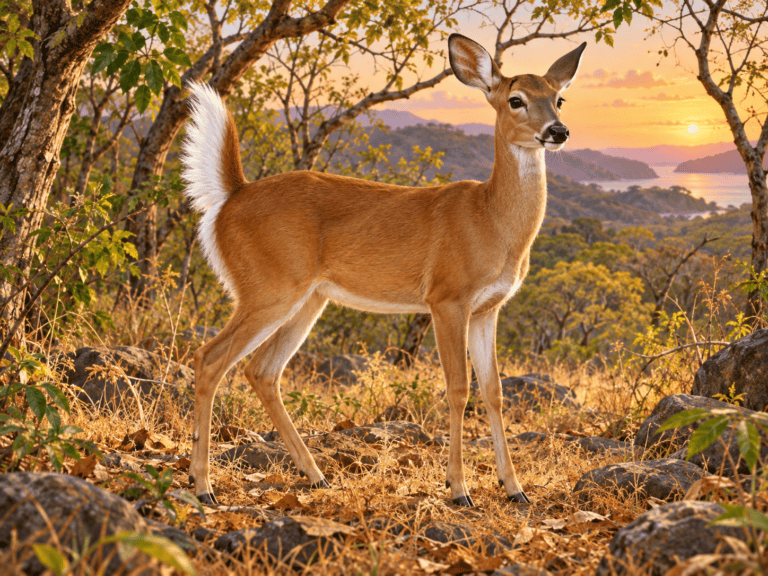
White-tailed Deer

Spanish name
Venado cola blanca
Scientific name
Odocoileus virginianus

What Do Pico & Tati Think?

Pico: “I noticed the white tail before the whole deer!”

Tati: “Let’s stay quiet so it can keep browsing.”

Identification

Key Features of the White-tailed Deer

  • White underside of the tail, visible when naturally raised.

  • Large ears and slender legs.

  • Adult males may have antlers; fawns have pale spots.

Habitat & range

ACG dry-forest habitat, including Horizontes near Liberia.

Seasonal Calendar

Reproduction

Costa Rican seasonally dry forest

Year-round

Camera-trap data from 2011–2017 support reproduction throughout the year, with seasonal peaks rather than one exclusive window.

Event source ↗

Conservation & care

Keep a respectful distance and leave an open route for the animal. Stay on authorized paths, secure food and rubbish, and observe without feeding, touching, baiting or chasing.

Threats & pressures

Hunting and human-caused forest fires are locally documented concerns.

View full profile →

Nature Field Guide

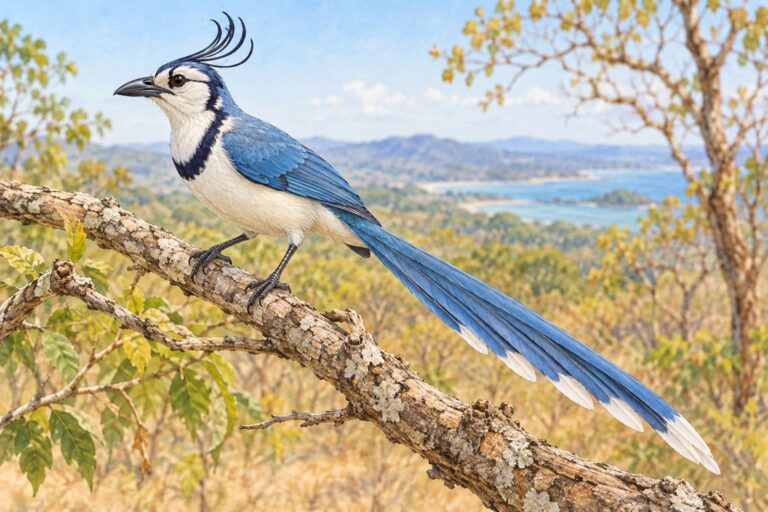
White-throated Magpie-Jay

Spanish name
Urraca copetona
Scientific name
Cyanocorax formosa

What Do Pico & Tati Think?

Pico: “Its crest curls like a little ribbon!”

Tati: “The blue tail and white throat are other good clues.”

Identification

Key Features of the White-throated Magpie-Jay

  • Long blue tail with pale tips

  • Tall curled crest

  • White throat with dark neck markings

Habitat & range

Northern Pacific dry and gallery woodland, extending toward Orotina and San Mateo. A documented Tamarindo photograph supports that local connection. The public scientific name is corrected to Cyanocorax formosa; the permanent import ID stays unchanged.

Conservation & care

Observe quietly from trails or established viewing areas. Give nests, roosts and feeding birds space. Do not handle, chase or lure birds with playback. Keep pets away from wildlife.

Threats & pressures

Protect native vegetation, reduce collision hazards around glass and keep cats away from birds. These are practical prevention priorities, not a claim of a measured decline at a specific Costa Rican site.

View full profile →

Nature Field Guide

Yellow-bellied Leaf-toed Gecko

Spanish name
Geco de dedos de hoja
Scientific name
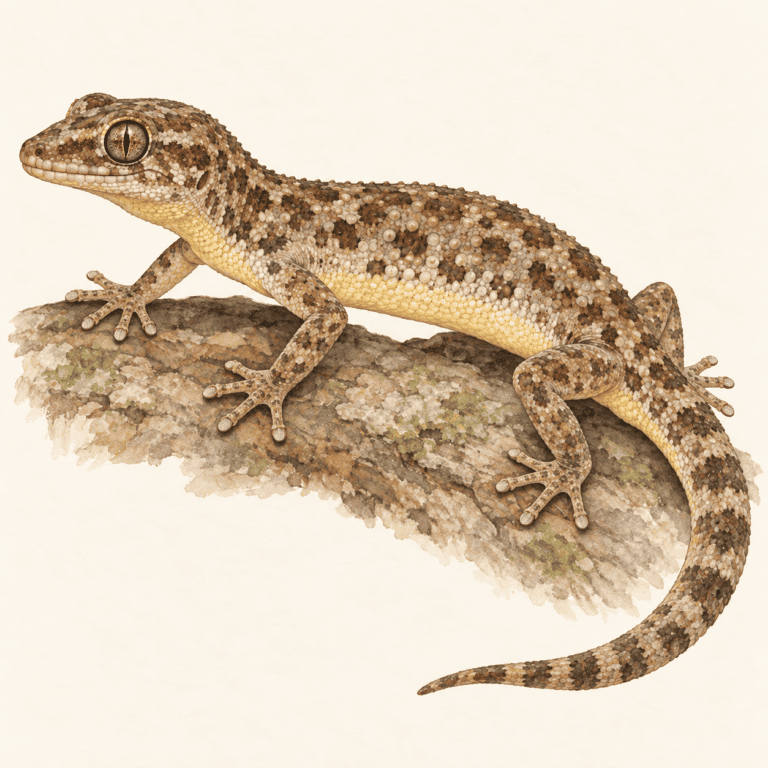
Phyllodactylus tuberculosus

What Do Pico & Tati Think?

Pico and Tati invite you to learn about the yellow-bellied leaf-toed gecko. Use a close-up reference image to draw a leaf-like toe tip. Never handle a gecko to inspect its feet.

Identification

Key Features of the Yellow-bellied Leaf-toed Gecko

  • Paired leaf-like expansions at the toe tips.

  • Small raised bumps among the dorsal scales.

  • Brownish or grayish patterned upper surface.

Habitat & range

Pacific dry-forest habitats, rocks, trunks and sheltered surfaces.

Conservation & care

Watch wildlife with an adult from a safe path. Do not touch, feed, capture or move reptiles, and keep pets away. Leave eggs, shelters and vegetation undisturbed.

View full profile →

Nature Field Guide

Yellow-headed Gecko

Spanish name
Geco cabeza amarilla
Scientific name
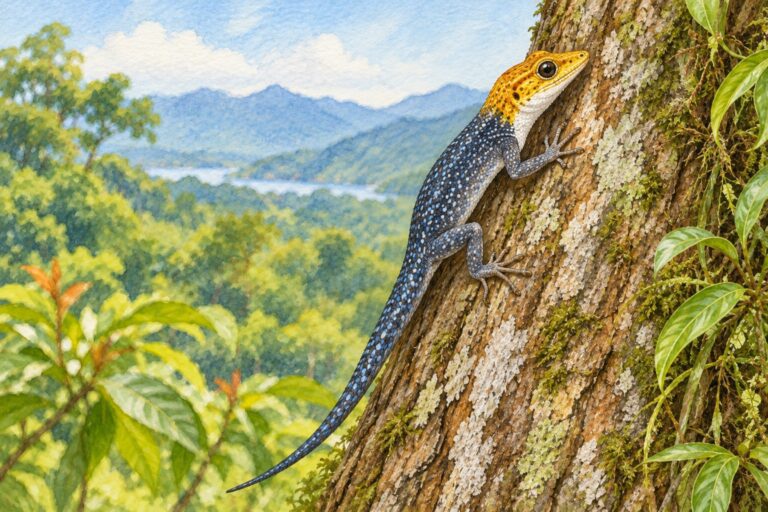
Gonatodes albogularis

What Do Pico & Tati Think?

Pico: “What clues help us recognize this reptile?”

Tati: “Let’s notice its shape, markings and habitat from a respectful distance.”

Identification

Key Features of the Yellow-headed Gecko

  • Adult male with yellow-orange head

  • Darker male body

  • Small slender toes and round pupils

Habitat & range

Warm lowland woodland, forest edges and sheltered garden settings on both slopes.

Conservation & care

Observe with an adult from permitted paths. Do not catch, chase, touch or feed reptiles. Leave bark, logs, rocks and leaf litter in place. Keep pets away and allow animals an open escape route.

Threats & pressures

Protect habitat connections and natural shelters. Avoid road mortality, collection and deliberate killing. Leave reptiles in their habitat rather than keeping or relocating them.

View full profile →

My Tico Explorer Experience

Save nature, towns, discoveries and learning adventures for your next experience.

Your list stays in this browser on this device.