

Nature Field Guide
Great Curassow
- Spanish name
- Pavón
- Scientific name
- Crax rubra
What Do Pico & Tati Think?
Pico: “Those head feathers curl forward!”
Tati: “Let’s stay still while it searches the forest floor.”
Species overview
About the Great Curassow
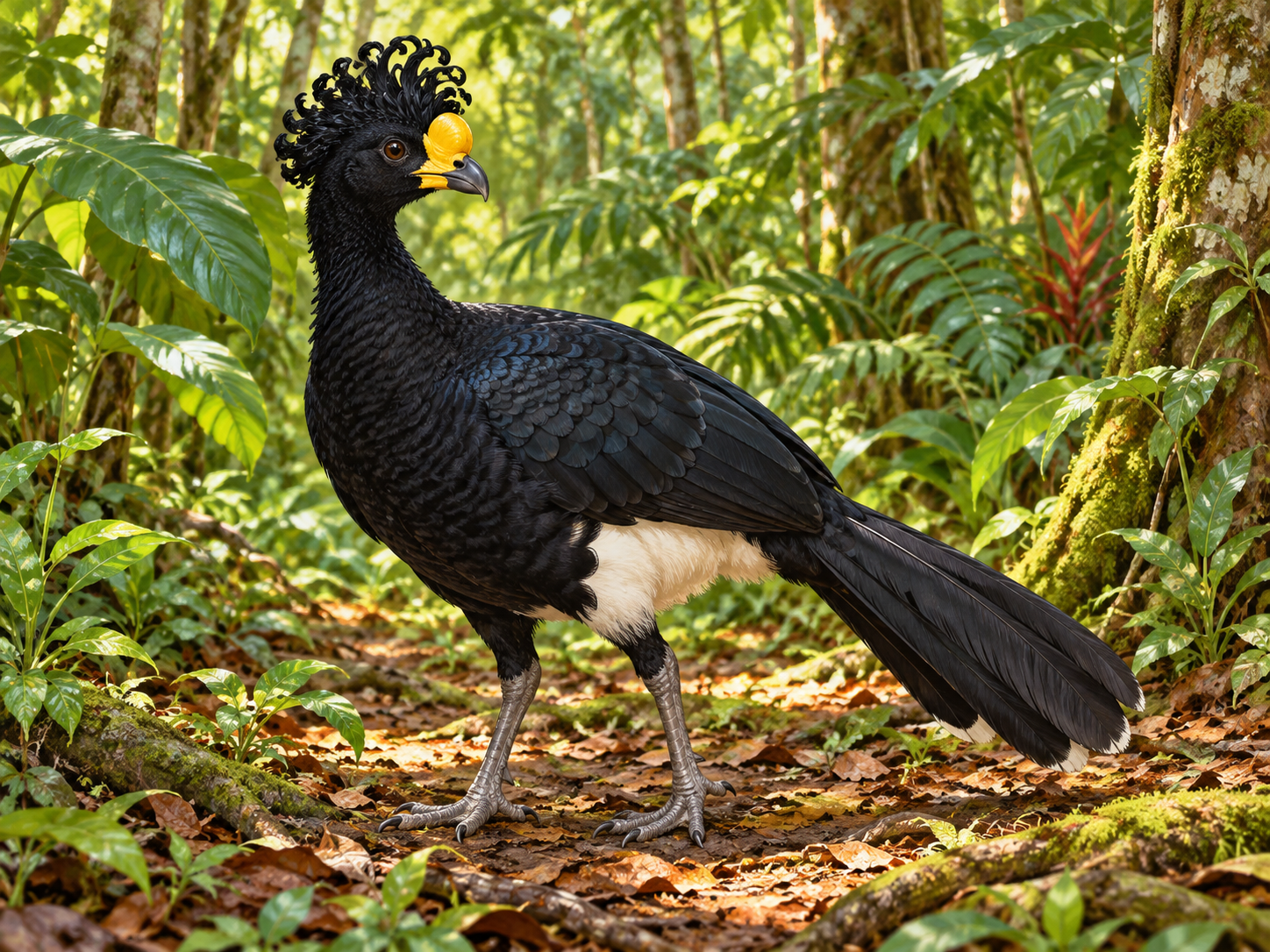
The Great Curassow is a large forest bird that finds fallen fruits, seeds and small animals on the ground. Males are mainly black with a white belly and a conspicuous yellow swelling on the bill. Females have several plumage forms and lack that yellow swelling, so a pair may look surprisingly different.
Curassows rest in trees and can escape by running or flying into branches. Small groups may be family parties. The mix of ground feeding and tree use shows why the whole forest matters, from leaf litter to roosting branches. Observe quietly and keep paths clear so the bird can choose its own route.
Identification
Key Features of the Great Curassow
Curled feathers form a forward-facing crest.
Male: black body, white belly and yellow bill swelling.
Female plumage varies; no yellow bill swelling.
Habitat & range
Local surviving forest populations include Santa Rosa, Rincon de la Vieja, Braulio Carrillo and Corcovado. Present distribution is patchy; historical lowland range is not a promise of local occurrence.
Local observations
ACG documents curassows at Santa Rosa and Pitilla. SINAC lists them at La Amistad. Town tags identify access communities rather than town-center sightings.
When to observe
Plan a quiet observation with a local guide. Weather, food availability and the chosen habitat affect what you may see; a location record does not guarantee a sighting.
Seasonal Calendar
Nesting
ACG / Costa Rican lowland forest
Mar, Apr, May
Legacy natural-history account reports egg laying; local dates and other regions can differ.
Event source ↗Conservation & care
Stay on authorized trails or viewing routes. Give birds space, keep voices low and leave nests undisturbed. Observe without bait, feeding or recorded calls.
Threats & pressures
La Amistad’s management plan identifies hunting and forest pressures on the Pacific boundary. These are habitat-level concerns; no local curassow decline percentage is assigned.
Conservation assessment
ACG describes the species as Vulnerable; this is not a local population estimate. Source checked 7 October 2026. This is a global species category, not a count of birds in the tagged towns.
Observation activity
Record three features you actually observe: shape, movement and habitat. Draw the bird from a respectful distance and compare your notes with a field guide.
Explore by location
Caribbean · Guanacaste · Northern Plains · South Pacific · Guanacaste · Puntarenas · Biolley · La Cruz