

Nature Field Guide
Frangipani
- Spanish name
- Flor blanca / Sacuanjoche
- Scientific name
- Plumeria rubra
What Do Pico & Tati Think?
Pico wants to sketch the tree’s silhouette. Tati suggests looking for three clues before guessing its name. What would you notice first?
Species overview
About the Frangipani
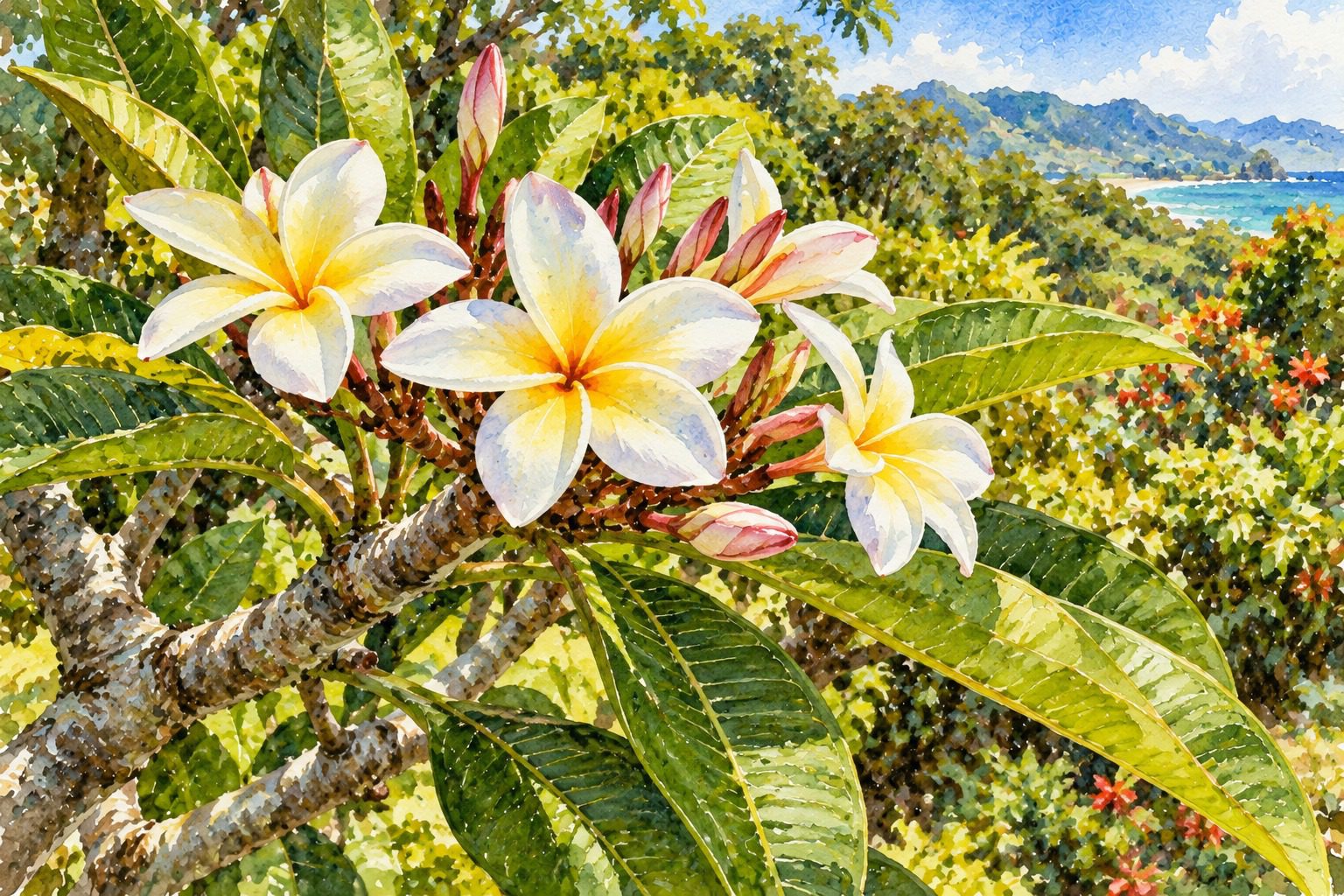
Frangipani is a flowering tree with thick branches and clusters of five-lobed blossoms. Wild Costa Rican plants often have white flowers with yellow centers; cultivated varieties can be pink or red. White latex appears when plant parts are damaged, so observe without breaking stems.
Identification
Key Features of the Frangipani
Thick succulent-looking branches
Five-lobed flowers with yellow centers
Long simple leaves clustered near branch ends
Habitat & range
Sunny woodland edges, rocky coastal sites and gardens.
Local observations
Museum specimens document Guanacaste, Cabo Blanco, Garabito and Osa/Terraba sites; flower color varies among wild and cultivated plants. Regional tags are evidence-based connections, not a guarantee at every location or an exhaustive range.
When to observe
Visit in daylight and compare leaves, flowers and fruits. Flowering and fruiting vary by place, weather and individual plant; a plant may not be in bloom during your visit.
Conservation & care
Observe from paths and leave leaves, bark, flowers and fruits attached. Do not taste wild plants or offer them to pets. Ask a knowledgeable guide to confirm the species. Avoid contact with milky latex.
Observation activity
Draw one leaf and one other feature without picking anything. Compare your sketch with the illustration and record whether you saw flowers, fruits or neither.
Explore by location
Central Pacific · Guanacaste · Puntarenas & the Gulf Islands · South Pacific