

Nature Field Guide
Guanacaste Tree
- Spanish name
- Guanacaste
- Scientific name
- Enterolobium cyclocarpum
What Do Pico & Tati Think?
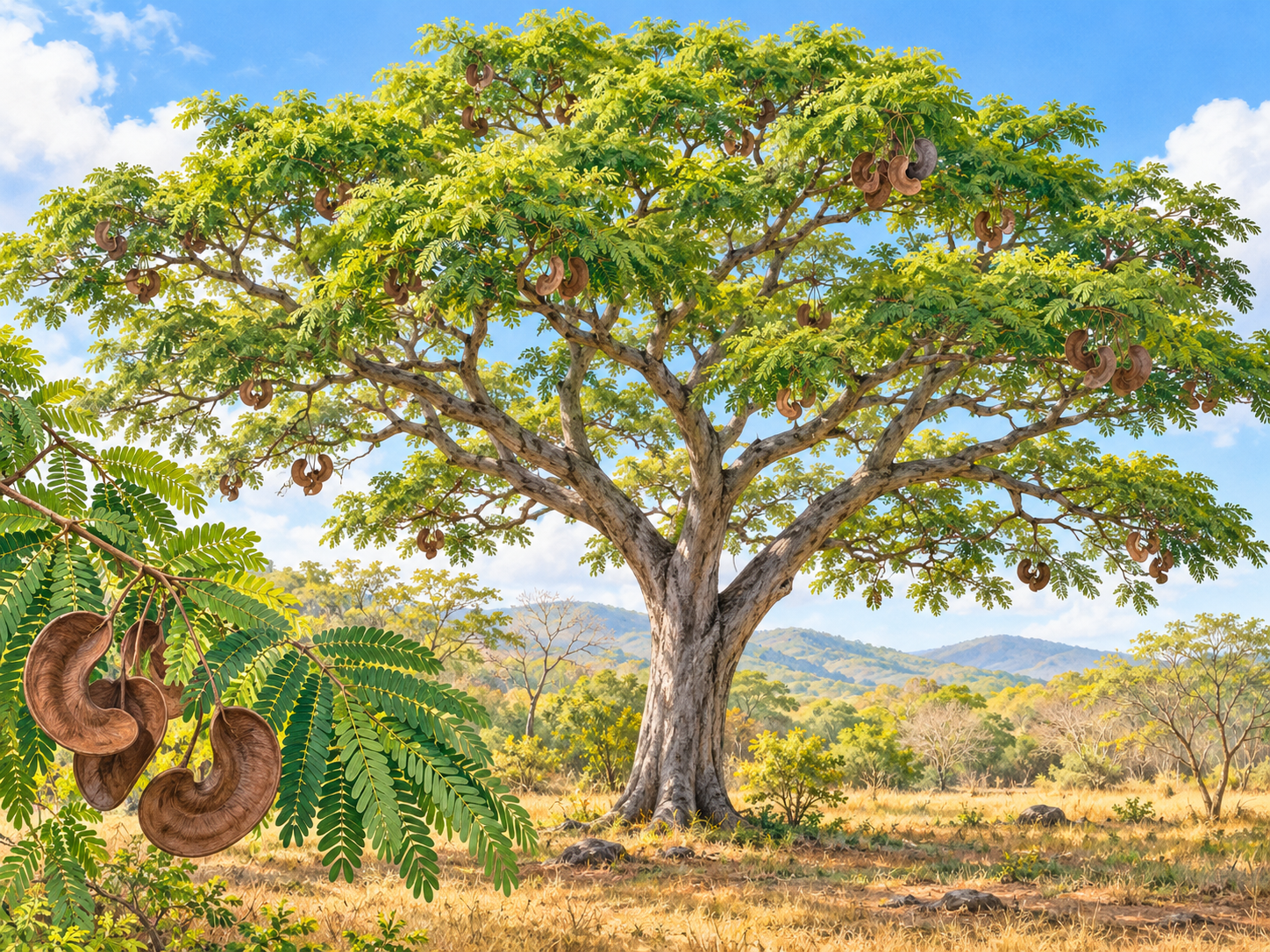
Identify the guanacaste tree by its small leaflets, pale flower clusters and distinctive curved seed pods. Observing several features together helps distinguish it from other trees.
What does Least Concern mean?
In the linked conservation assessment, this species does not qualify as threatened or near threatened with extinction. It still needs care: local populations and habitats can face problems even when the species has a lower extinction risk overall.
This label describes conservation status. It does not tell us whether a plant is safe for children or pets. Select the status button to read the assessment.
Species overview
About the Guanacaste Tree
Height: Large mature trees can reach approximately 25–40 meters (82–131 feet), according to Costa Rica Tree Atlas. This is a mature-size range, not the height of every tree you see.
Look up at the spreading crown, then look closely at the many tiny leaflets. The curved, ear-shaped pods are another helpful clue. Try using several clues together before naming a tree.
A whole tree and one small leaf tell different parts of its story. Compare the outline of the crown with the shape of a pod, and notice what changes between sunny and shaded ground.
Identification
Key Features of the Guanacaste Tree
Leaves divided into many small leaflets.
Curved, ear-shaped pods that become brown as they mature.
Small flowers gathered into pale, rounded clusters.
Habitat & range
Dry and seasonally dry lowland Pacific forests and open areas. Ask a local guide to help identify an individual tree.
Local observations
SINAC lists guanacaste in the dry-forest vegetation of Las Baulas. This is a habitat association, not a confirmed tree location or a guarantee of a sighting.
When to observe
Leaves, flowers and pods change through the year. ACG describes flowering during the late dry season, with variation between places.
Seasonal Calendar
Flowering
Guanacaste dry forest
Feb, Mar, Apr
Guanacaste reference: February–April flowering, with variation among trees and locations. The tree remains present outside these flowering months.
Event source ↗Conservation & care
Child Safety: Not verified. Observe with an adult. Do not taste leaves, seeds, fruit or other tree parts.
Pet Safety: Not verified. Keep pets from chewing or swallowing tree parts. Check with a veterinarian before treating this species as pet-safe.
Leave pods and branches where they belong. Notice the living things around the tree and give them space.
Conservation assessment
Global species assessment: Least Concern (IUCN Red List). Status checked on 7 October 2026. This category is not a guarantee that every local population or habitat is secure, and it is separate from legal protection in Costa Rica.
Observation activity
Tree detective: From a safe path, sketch the whole crown, one visible leaf and a pod if present. Label three clues that helped you identify the tree.
Height explorer: Compare the tree with a nearby object of known height from a safe viewing spot. Write down your estimate and explain that it is an estimate.
Experience notes: What surprised you? What would you like to look for on your next visit?
Explore by location
Central Pacific · Guanacaste · Puntarenas & the Gulf Islands · South Pacific · Tamarindo · Conservation