

Tico Explorers

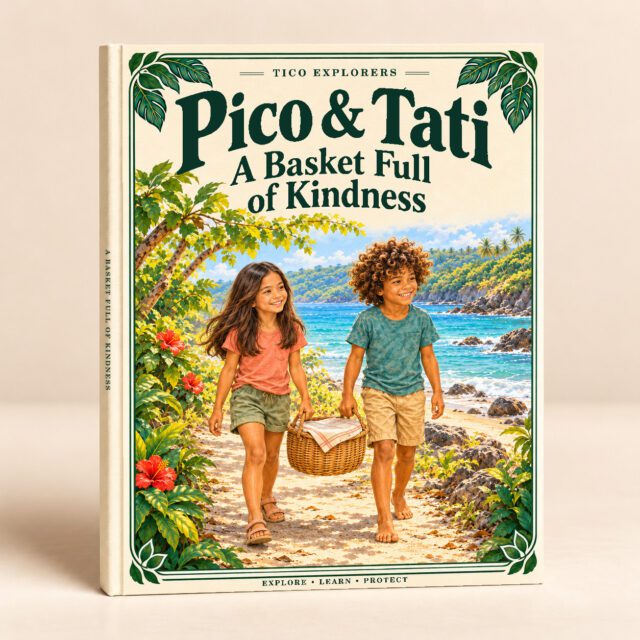
Pico & Tati: A Basket Full of Kindness

Video - Coming Soon! Video - Coming Soon!

Bring the Adventure Home

Read A Basket Full of Kindness together at bedtime or print a copy to share. This 32-page, full-color digital storybook gives your family time to linger over the illustrations and talk about where you see God’s love in everyday acts of kindness.

View filters

A hungry tummy. A woven basket. A simple delivery that becomes an adventure. Join Pico and Tati as they carry Abu Milagros’s lunch basket along a coastal path to their grandfather, Abue Yeyo. Before they leave, Tati discovers that Abu made the basket from a woody vine called bejuco cucharilla. Each woven strip holds a little family history. Abu learned the craft from her mother, and now Pico and Tati want to learn too.

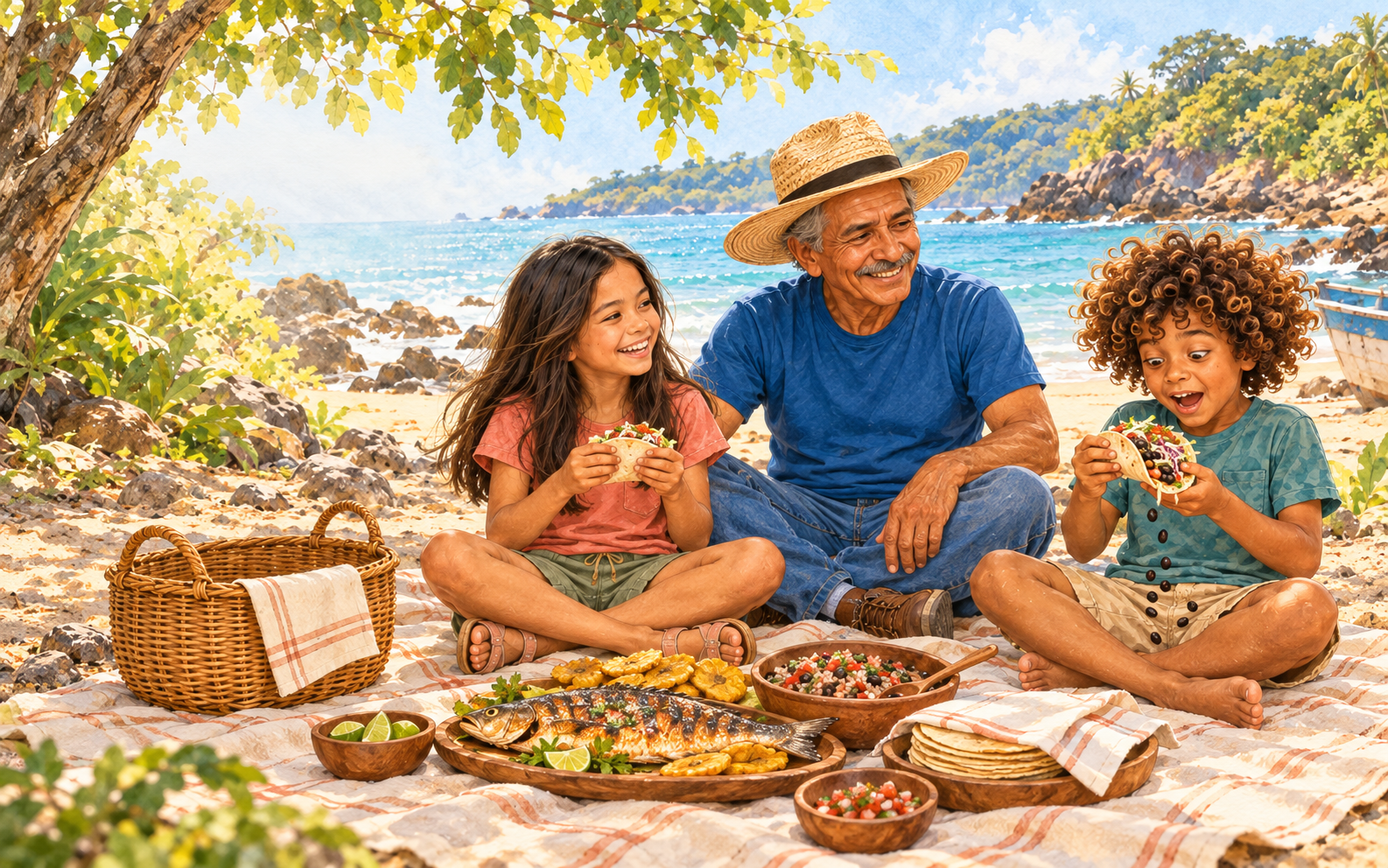
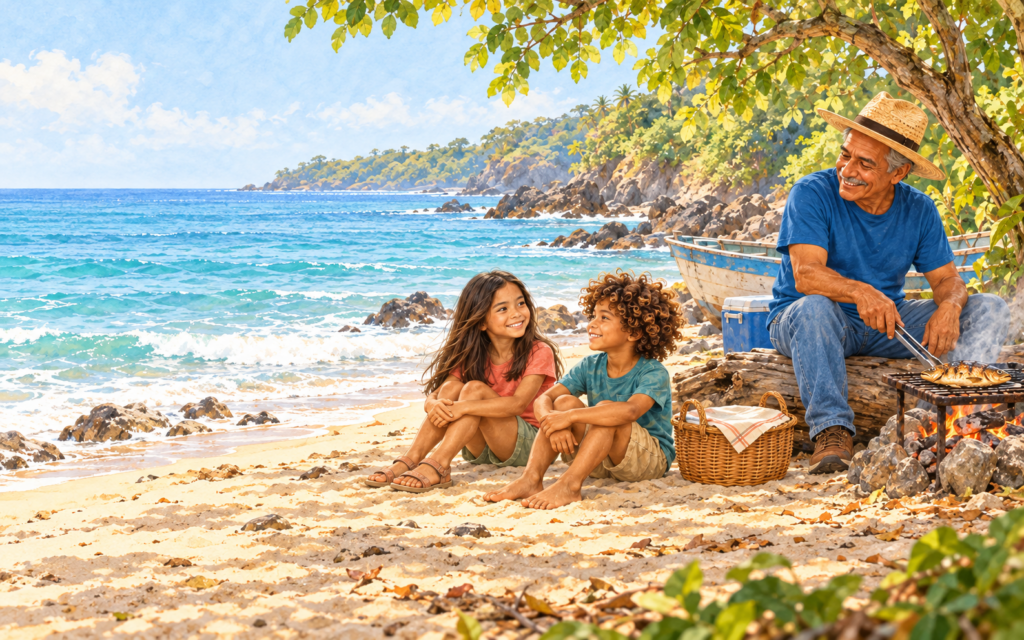
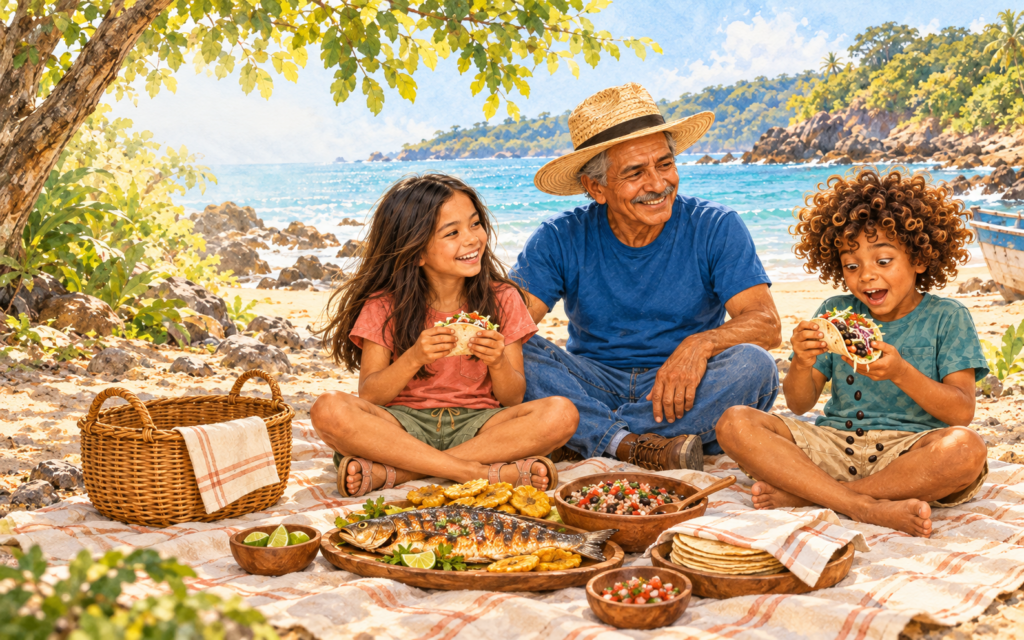
At a little cove, they find Yeyo cooking a fish beside his boat. Tati learns to recognize pargo de la mancha, the spotted rose snapper. Pico is more interested in how soon they can eat. As they wait, their grandfather reminds them that the sea doesn’t hurry—and neither should they. Lunch brings fish, gallo pinto, tortillas and sweet plantain together with a prayer of thanks for God’s gifts.

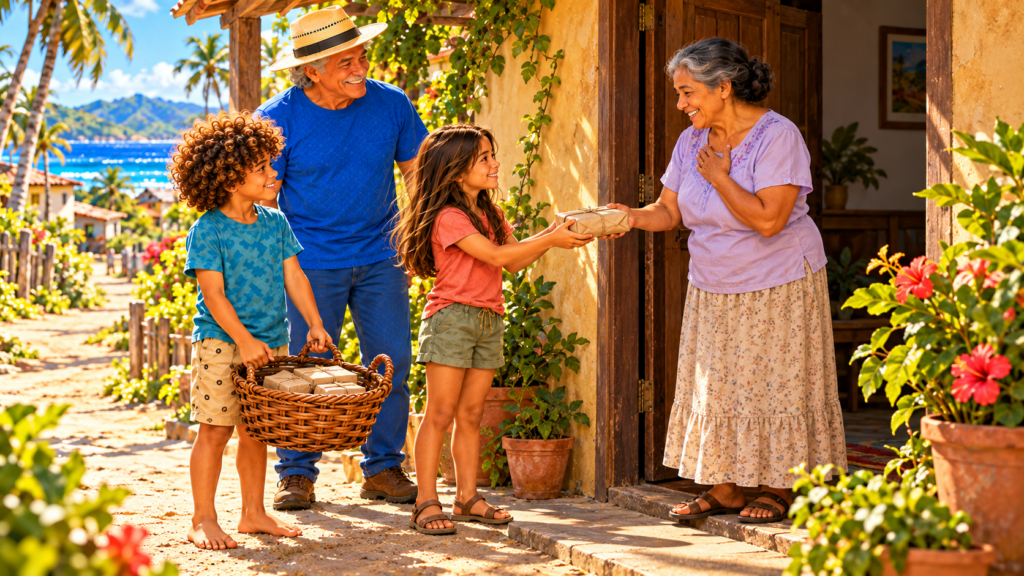
But Abu’s basket has another job to do. With fish to share, Pico and Tati join Yeyo on a visit to their neighbors. Along the way, they discover how a meal can bring people together and how something made with loving hands can carry kindness far beyond home. As the day turns golden, a surprise in the waves leaves them with a new question and another adventure to imagine.

Along the way, we’ll explore:

  • Spotted rose snapper and the fish of Costa Rica’s Pacific coast.

  • Bejuco cucharilla and the craft of weaving baskets.

  • Family knowledge passed from one generation to the next.

  • Patience, gratitude and taking only what we need.

  • The joy of sharing food and caring for our neighbors.

reflect togetherLet's Talk about the Story

Abu Milagros wove the basket herself from a woody vine called bejuco cucharilla. Her mother taught her how to make it. The basket carries food and kindness throughout the story. What is something in your home that someone in your family made?

Yeyo teaches them to recognize spotted rose snapper and to wait patiently while lunch cooks. He also explains why he stopped fishing once he had enough to share. Why do you think it matters to leave fish in the sea?

Pico begins the adventure thinking about his hungry tummy. Later, he helps carry fish to the neighbors and discovers the joy of giving. Each visit brings a chance to listen, laugh and spend time together. What could you share with someone today?

Nature Field Guide

Nature in This Story

Explore wildlife, plants and trees. Learn what to look for and where to find them.

7 profiles

Nature Field Guide

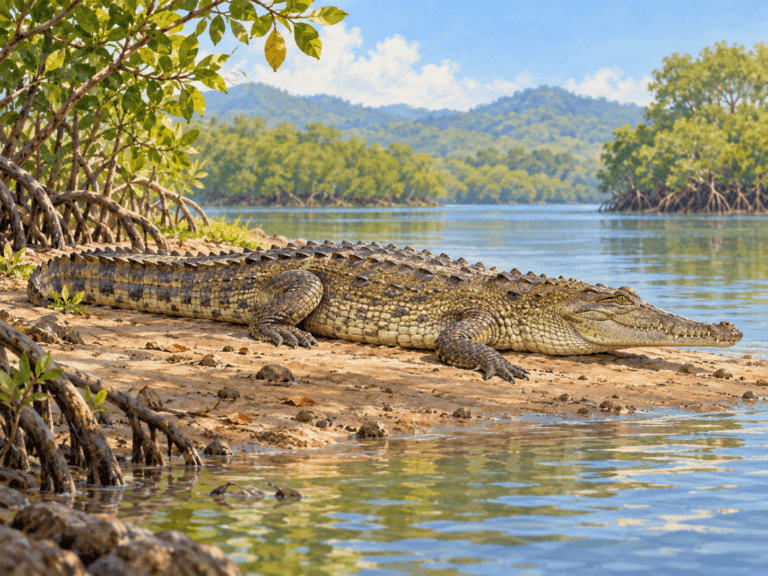
American Crocodile

Spanish name
Cocodrilo americano
Scientific name
Crocodylus acutus

What Do Pico & Tati Think?

Pico: “It blends into the riverbank so well.”

Tati: “We can observe from here with our guide. We don’t need to move closer.”

Identification

Key Features of the American Crocodile

  • A long snout and narrow head.

  • An olive-brown adult body with a long, strong tail.

  • Much of the body may be concealed in water or beside a bank.

Habitat & range

Rivers, estuaries, mangrove channels and other aquatic habitats. Observe only from a guide-approved boat or designated viewing place.

Conservation & care

Never feed, approach or provoke crocodiles. Stay in the boat, keep hands inside, and follow local signs and guide instructions. Keep children and pets away from water edges.

View full profile →

Nature Field Guide

Bejuco Cucharilla

Spanish name
Bejuco cucharilla
Scientific name
Bignonia diversifolia

What Do Pico & Tati Think?

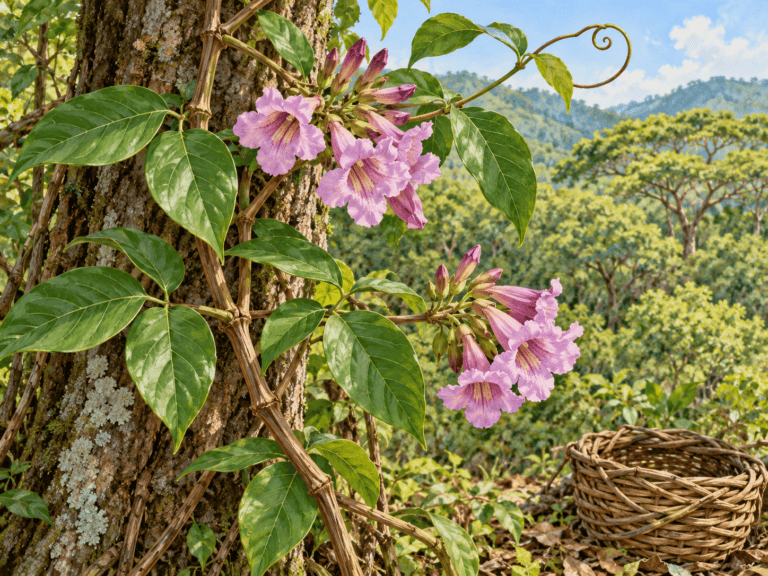
Meet the plant behind Abu’s basket. Bejuco cucharilla is a woody climbing vine, also called a liana. It grows with the support of other plants. Its leafy shoots and lilac tubular flowers offer clues to its identity.

Costa Rican craft references document cucharilla as a material for woven baskets. Woody vine material can become more flexible when moistened, allowing a skilled maker to shape and weave it. A basket begins with a plant and takes form through patient work.

In our story, Abu learned to weave from her mother. Now she invites Pico and Tati to learn too. Her family history is fictional, while the connection between this vine and Costa Rican basket making is documented.

Scientific name note: Kew accepts Bignonia diversifolia. Many Costa Rican botanical and craft sources use the synonym Cydista diversifolia.

Identification

Key Features of the Bejuco Cucharilla

  • A woody climbing stem rather than a self-supporting tree trunk.

  • Opposite compound leaves, typically with two leaflets and sometimes a simple tendril.

  • Smooth-edged leaflets with pointed tips and a rounded or somewhat heart-shaped base.

  • Lilac to pinkish tubular flowers; young branches have a distinctly angular, four-sided form.

Habitat & range

Documented in Costa Rica’s lowland forests, including deciduous and semideciduous forest in Guanacaste. Botanical collections include Nandayure and Barra Honda on the Nicoya Peninsula.

Conservation & care

Observe and photograph vines without cutting or pulling them. Leave wild plants and flowers in place. Learn about materials from a knowledgeable artisan and use paper or responsibly sourced craft materials for your own weaving.

View full profile →

Nature Field Guide

Guanacaste Tree

Spanish name
Guanacaste
Scientific name
Enterolobium cyclocarpum

What Do Pico & Tati Think?

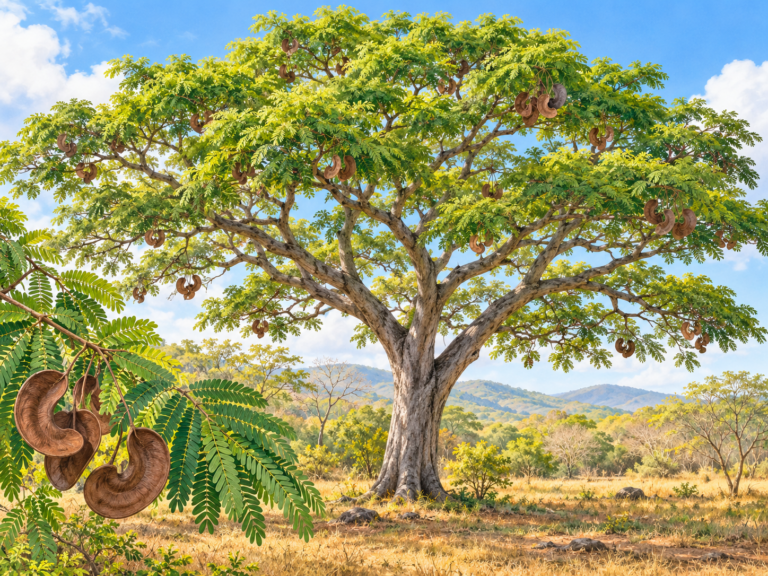
Identify the guanacaste tree by its small leaflets, pale flower clusters and distinctive curved seed pods. Observing several features together helps distinguish it from other trees.

What does Least Concern mean?

In the linked conservation assessment, this species does not qualify as threatened or near threatened with extinction. It still needs care: local populations and habitats can face problems even when the species has a lower extinction risk overall.

This label describes conservation status. It does not tell us whether a plant is safe for children or pets. Select the status button to read the assessment.

Identification

Key Features of the Guanacaste Tree

  • Leaves divided into many small leaflets.

  • Curved, ear-shaped pods that become brown as they mature.

  • Small flowers gathered into pale, rounded clusters.

Habitat & range

Dry and seasonally dry lowland Pacific forests and open areas. Ask a local guide to help identify an individual tree.

Conservation & care

Child Safety: Not verified. Observe with an adult. Do not taste leaves, seeds, fruit or other tree parts.

Pet Safety: Not verified. Keep pets from chewing or swallowing tree parts. Check with a veterinarian before treating this species as pet-safe.

Leave pods and branches where they belong. Notice the living things around the tree and give them space.

Conservation assessment

Global species assessment: Least Concern (IUCN Red List). Status checked on 7 October 2026. This category is not a guarantee that every local population or habitat is secure, and it is separate from legal protection in Costa Rica.

View full profile →

Nature Field Guide

Leatherback Sea Turtle

Spanish name
Tortuga baula
Scientific name
Dermochelys coriacea

What Do Pico & Tati Think?

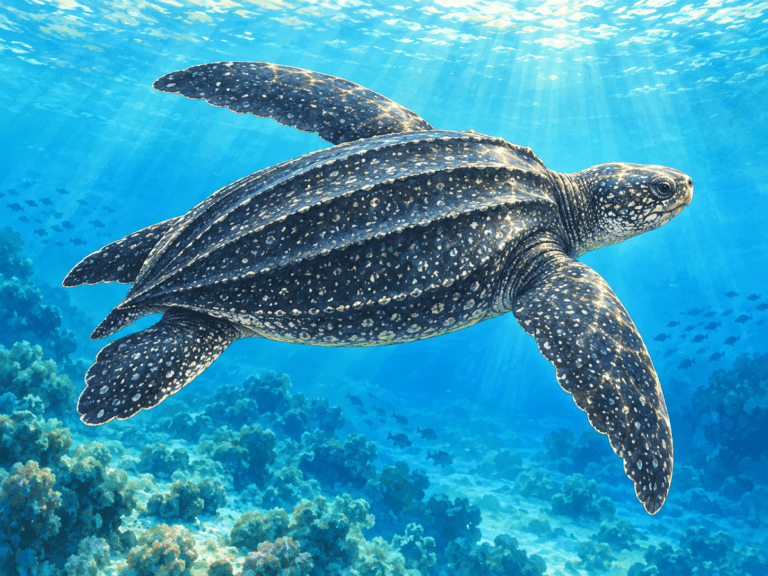
Pico: “Those ridges make its back look so different.”

Tati: “Let’s find out how this turtle’s life connects the ocean with the beach.”

Identification

Key Features of the Leatherback Sea Turtle

  • A dark, leathery back rather than large hard shell plates.

  • Seven lengthwise ridges along the back.

  • Long front flippers on a very large sea turtle.

Habitat & range

Open ocean feeding habitats and nesting beaches. SINAC identifies Playa Grande, Ventanas and Langosta as nesting areas within Las Baulas.

Seasonal Calendar

Nesting

Las Baulas: Playa Grande, Ventanas and Langosta

Jan, Feb, Oct, Nov, Dec

SINAC lists October–February as the park’s nesting season. Eggs incubate approximately two months; hatching follows individual laying dates. Nesting is distinct from migration. Follow current park access rules; this is not a tour schedule.

Event source ↗

Conservation & care

Never touch a turtle, eggs or hatchlings. Respect beach closures and avoid lights near nesting habitat. Keep plastics and other litter out of the sea.

View full profile →

Nature Field Guide

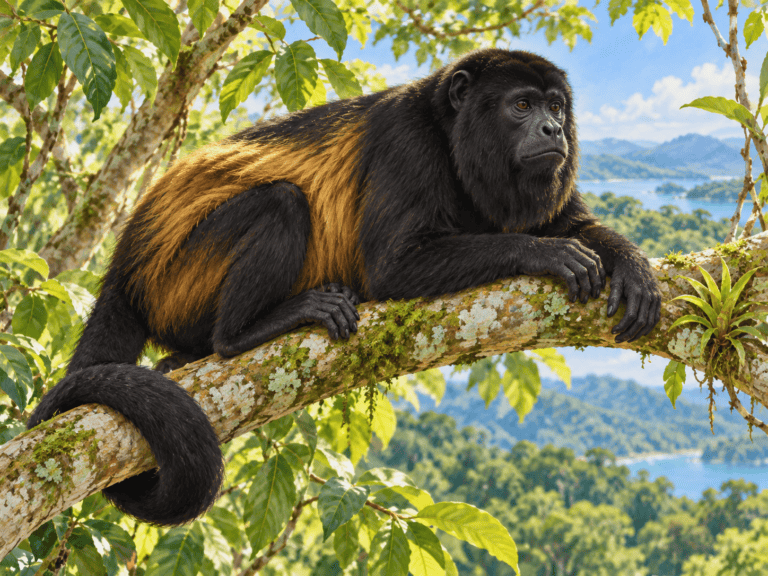
Mantled Howler Monkey

Spanish name
Mono congo / Mono aullador
Scientific name
Alouatta palliata

What Do Pico & Tati Think?

Pico: “We heard the monkeys before we could see them!”

Tati: “Let’s stay quiet and see what they’re doing in the branches.”

Identification

Key Features of the Mantled Howler Monkey

  • A mostly dark coat with a lighter mantle along the sides.

  • A long, grasping tail used while moving through trees.

  • Deep calls that may carry beyond the visible group.

Habitat & range

Tropical forest canopy and wooded corridors. Around the estuary, observe canopy habitat from a guided route rather than following animals into the forest.

Conservation & care

Never offer food or try to touch a monkey. Avoid playback and shouting, and give groups space to move through the canopy.

View full profile →

Nature Field Guide

Scarlet Macaw

Spanish name
Lapa roja
Scientific name
Ara macao

What Do Pico & Tati Think?

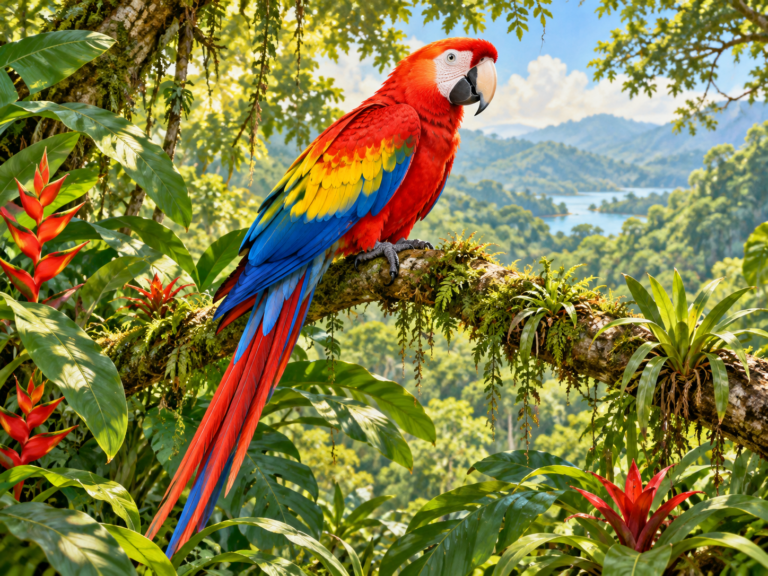
Pico: “Those wings have three colors to discover!”

Tati: “Let’s listen, look up and give the pair room to fly.”

What does Least Concern mean?

In the linked conservation assessment, this species does not qualify as threatened or near threatened with extinction. It still needs care: local populations and habitats can face problems even when the species has a lower extinction risk overall.

This label describes conservation status. It does not tell us whether a plant is safe for children or pets. Select the status button to read the assessment.

Identification

Key Features of the Scarlet Macaw

  • Red body with yellow and blue wing feathers.

  • Long pointed tail and large pale upper bill.

  • Loud calls; birds may fly in pairs.

Habitat & range

Important populations occur around Carara and the Osa Peninsula. Guanacaste includes restored populations around Punta Islita; this does not imply occurrence throughout the region.

Conservation & care

Stay on authorized trails or viewing routes. Give birds space, keep voices low and leave nests undisturbed. Observe without bait, feeding or recorded calls.

Threats & pressures

Forest loss removes feeding and nesting trees. Capture for the pet trade also affects populations; global status does not describe every local population.

Conservation assessment

World Parrot Trust reports IUCN Least Concern; local declines are still documented. Source checked 7 October 2026. This is a global species category, not a count of birds in the tagged towns.

View full profile →

Nature Field Guide

Spotted Rose Snapper

Spanish name
Pargo de la mancha
Scientific name
Lutjanus guttatus

What Do Pico & Tati Think?

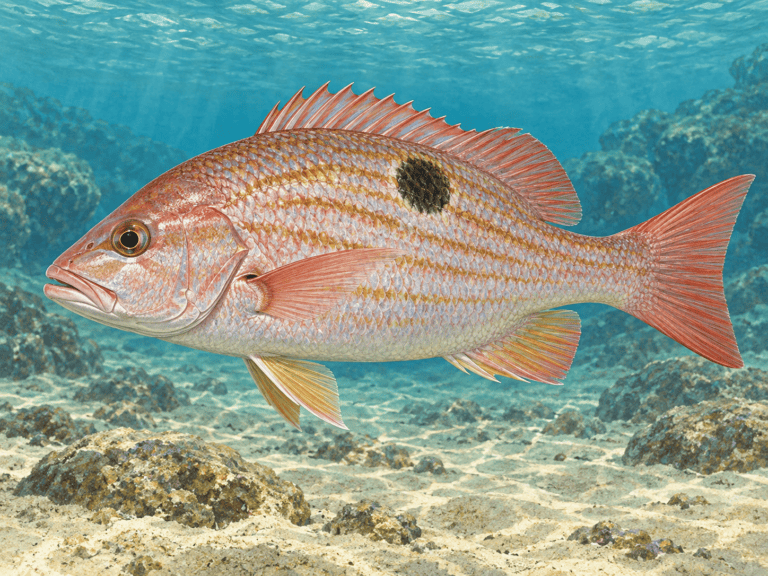
Meet the fish Yeyo shares with Pico and Tati. Spotted rose snapper lives in the eastern Pacific, including Costa Rica’s coastal waters. Look for a silvery-pink body, fine slanting golden-brown stripes and a dark blotch below the dorsal fin.

This fish eats crustaceans and small fish. Researchers in Costa Rica’s Gulf of Nicoya have studied its diet and its role in local fishing. It connects an underwater food web with the meals coastal families prepare and share.

In our story, Yeyo names his catch before lunch. Tati notices the spot, and Pico learns that there is more to discover about a fish than how delicious it smells.

Identification

Key Features of the Spotted Rose Snapper

  • A moderately deep, oval body with a silvery-pink sheen.

  • Fine oblique golden-brown stripes along the sides.

  • A prominent dark blotch high on the side beneath the dorsal fin; the mark can change in intensity.

  • A continuous dorsal fin and a nearly straight or slightly indented tail.

Habitat & range

Pacific coastal waters, including sandy bays and reef-associated habitats. Young fish often use shallow sandy bays.

Conservation & care

Keep fishing line and plastic out of the sea. Observe fish without feeding or chasing them. If your family fishes, follow current local rules and learn from a responsible local fisher.

View full profile →

Bring the Adventure Home

Follow Pico and Tati down a Costa Rican beach path with a basket for Abue Yeyo and a question worth sharing. This 32-page, full-color storybook invites families to read together and discover how a simple act of kindness can show God’s love.
View filters

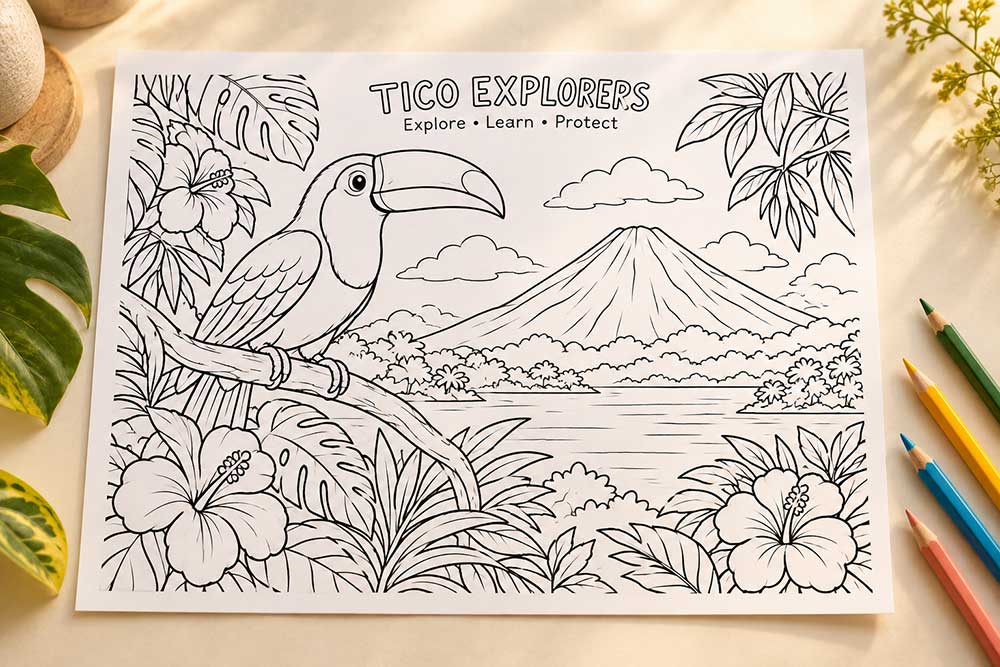
Color Your Own Adventure

Bring a little piece of Costa Rica to life with a free printable coloring page. Grab your favorite colors and make it your own.

Sign up for Tico Explorers emails to receive your free coloring page, plus occasional stories, printables, and learning adventures. Unsubscribe anytime.

My Tico Explorer Experience

Save nature, towns, discoveries and learning adventures for your next experience.

Your list stays in this browser on this device.

Nature Field Guide

Spotted Rose Snapper

Spanish name
Pargo de la mancha
Scientific name
Lutjanus guttatus

What Do Pico & Tati Think?

Meet the fish Yeyo shares with Pico and Tati. Spotted rose snapper lives in the eastern Pacific, including Costa Rica’s coastal waters. Look for a silvery-pink body, fine slanting golden-brown stripes and a dark blotch below the dorsal fin.

This fish eats crustaceans and small fish. Researchers in Costa Rica’s Gulf of Nicoya have studied its diet and its role in local fishing. It connects an underwater food web with the meals coastal families prepare and share.

In our story, Yeyo names his catch before lunch. Tati notices the spot, and Pico learns that there is more to discover about a fish than how delicious it smells.

Identification

Key Features of the Spotted Rose Snapper

  • A moderately deep, oval body with a silvery-pink sheen.

  • Fine oblique golden-brown stripes along the sides.

  • A prominent dark blotch high on the side beneath the dorsal fin; the mark can change in intensity.

  • A continuous dorsal fin and a nearly straight or slightly indented tail.

Habitat & range

Pacific coastal waters, including sandy bays and reef-associated habitats. Young fish often use shallow sandy bays.

Conservation & care

Keep fishing line and plastic out of the sea. Observe fish without feeding or chasing them. If your family fishes, follow current local rules and learn from a responsible local fisher.

View full profile →

Nature Field Guide

Bejuco Cucharilla

Spanish name
Bejuco cucharilla
Scientific name
Bignonia diversifolia

What Do Pico & Tati Think?

Meet the plant behind Abu’s basket. Bejuco cucharilla is a woody climbing vine, also called a liana. It grows with the support of other plants. Its leafy shoots and lilac tubular flowers offer clues to its identity.

Costa Rican craft references document cucharilla as a material for woven baskets. Woody vine material can become more flexible when moistened, allowing a skilled maker to shape and weave it. A basket begins with a plant and takes form through patient work.

In our story, Abu learned to weave from her mother. Now she invites Pico and Tati to learn too. Her family history is fictional, while the connection between this vine and Costa Rican basket making is documented.

Scientific name note: Kew accepts Bignonia diversifolia. Many Costa Rican botanical and craft sources use the synonym Cydista diversifolia.

Identification

Key Features of the Bejuco Cucharilla

  • A woody climbing stem rather than a self-supporting tree trunk.

  • Opposite compound leaves, typically with two leaflets and sometimes a simple tendril.

  • Smooth-edged leaflets with pointed tips and a rounded or somewhat heart-shaped base.

  • Lilac to pinkish tubular flowers; young branches have a distinctly angular, four-sided form.

Habitat & range

Documented in Costa Rica’s lowland forests, including deciduous and semideciduous forest in Guanacaste. Botanical collections include Nandayure and Barra Honda on the Nicoya Peninsula.

Conservation & care

Observe and photograph vines without cutting or pulling them. Leave wild plants and flowers in place. Learn about materials from a knowledgeable artisan and use paper or responsibly sourced craft materials for your own weaving.

View full profile →