

Nature Field Guide
American Crocodile
- Spanish name
- Cocodrilo americano
- Scientific name
- Crocodylus acutus
What Do Pico & Tati Think?
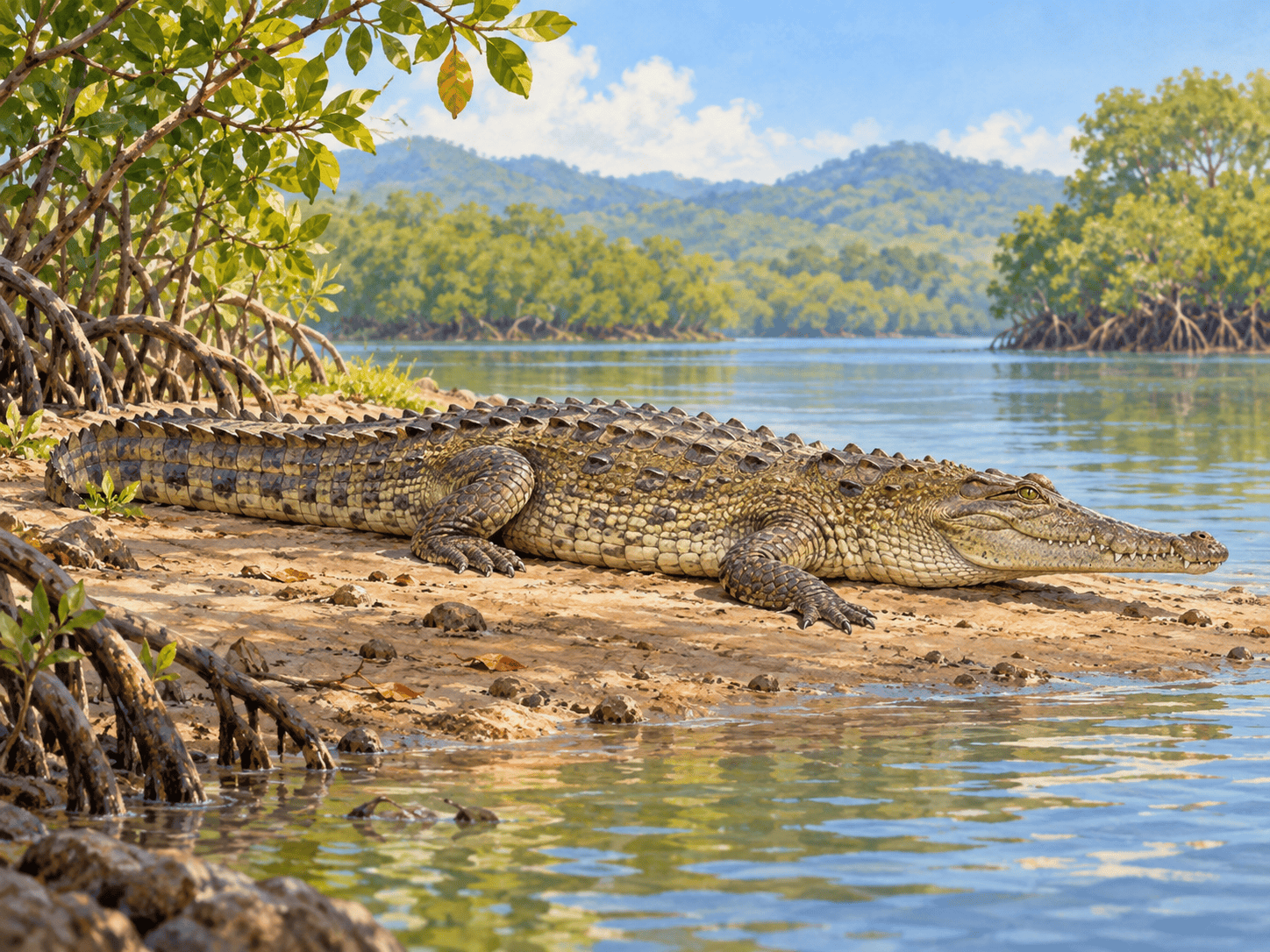
Pico: “It blends into the riverbank so well.”
Tati: “We can observe from here with our guide. We don’t need to move closer.”
Species overview
About the American Crocodile
The American crocodile is a large aquatic reptile found in coastal and inland waters. Adults have a long snout, a powerful tail and an olive-brown body. Their shape and coloration can make them difficult to notice beside water.
The species uses fresh and brackish environments, including rivers, estuaries and mangroves. Its presence is a reason to observe with a guide and respect water-edge restrictions. A crocodile that appears still must never be treated as safe to approach.
A crocodile’s tail is a major part of its swimming system. Its head and snout may be the most visible parts when it is in water, while much of the body remains concealed. Adults tend to be olive-brown; younger animals may appear lighter.
The species can use both freshwater and brackish habitats. Estuaries connect these aquatic settings with coastal land. Habitat descriptions explain where the species can live, but they do not establish that a particular bank or channel is safe. Observation should always follow qualified local guidance.
Identification
Key Features of the American Crocodile
A long snout and narrow head.
An olive-brown adult body with a long, strong tail.
Much of the body may be concealed in water or beside a bank.
Habitat & range
Rivers, estuaries, mangrove channels and other aquatic habitats. Observe only from a guide-approved boat or designated viewing place.
Local observations
Sostenibilidad en Grande documents American crocodiles in the Tamarindo wetland. This profile does not identify safe swimming areas or predict where an individual will be.
When to observe
Let a qualified guide assess conditions. Do not approach banks, enter water or search for crocodiles independently.
Seasonal Calendar
Egg-laying
General species biology; local schedule unverified
Apr, May
General species reference: April–May egg-laying and about 9–10 weeks of incubation. Tamarindo-specific nesting dates have not been verified. Never approach nests.
Event source ↗Conservation & care
Never feed, approach or provoke crocodiles. Stay in the boat, keep hands inside, and follow local signs and guide instructions. Keep children and pets away from water edges.
Observation activity
From a safe guided viewing position, note the animal’s outline and the surrounding habitat. Use binoculars or a zoom lens rather than moving closer.
Explore by location
Caribbean · Central Pacific · Guanacaste · Puntarenas & the Gulf Islands · South Pacific · Guanacaste · Limón · Tamarindo · Conservation