

Nature Field Guide
Leatherback Sea Turtle
- Spanish name
- Tortuga baula
- Scientific name
- Dermochelys coriacea
What Do Pico & Tati Think?
Pico: “Those ridges make its back look so different.”
Tati: “Let’s find out how this turtle’s life connects the ocean with the beach.”
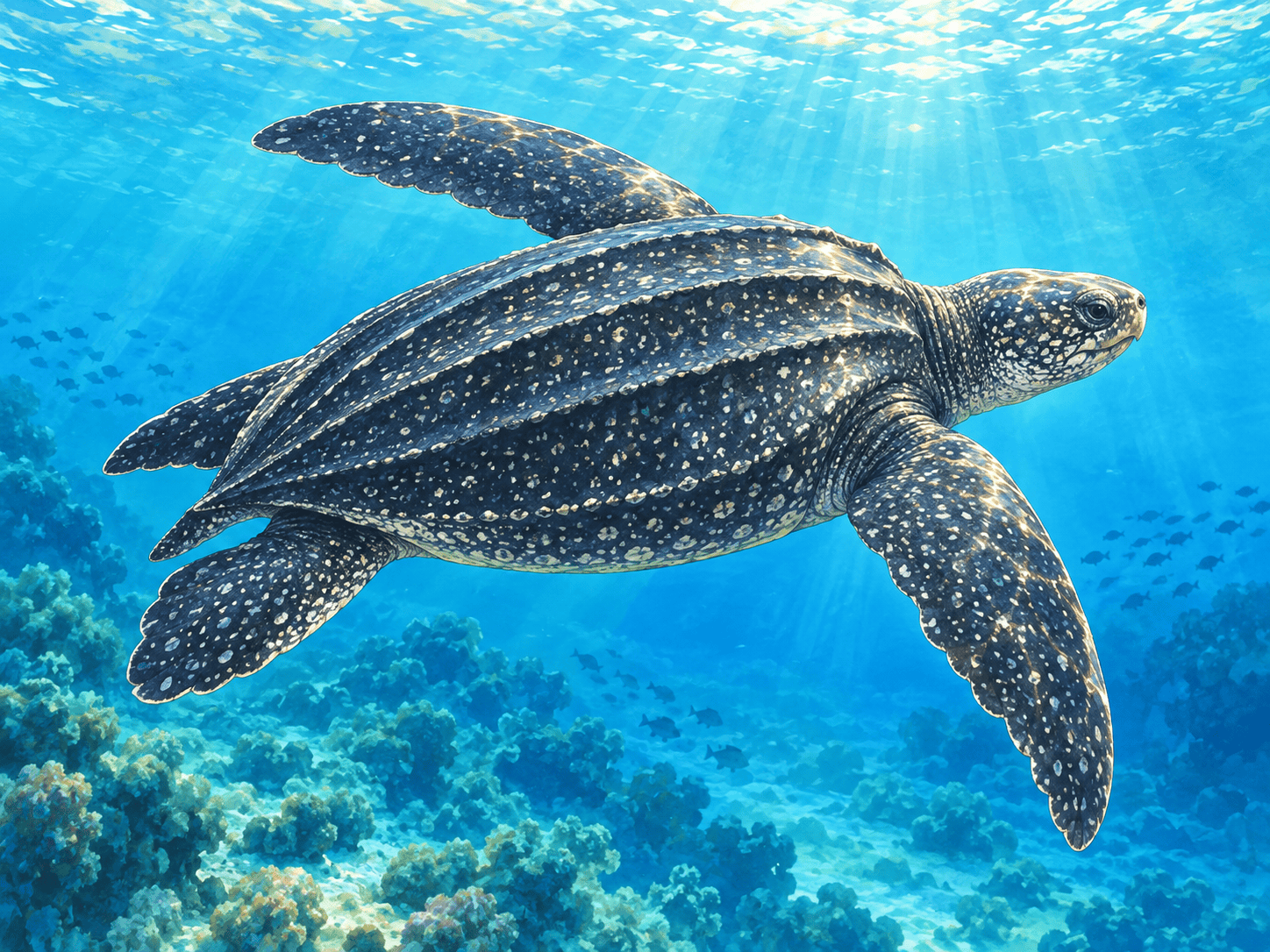
Species overview
About the Leatherback Sea Turtle
The leatherback is the largest living turtle. Unlike other sea turtles, it has a leathery outer covering rather than a shell formed from large hard plates. Seven ridges run along its back, and its long front flippers help it travel through the ocean.
Leatherbacks feed on soft-bodied animals such as jellyfish. Females return to beaches to nest, linking ocean habitats with protected coastal sand. The species’ connection to Las Baulas is a conservation story, not a promise of an accessible turtle-watching experience.
Leatherbacks travel between feeding waters and nesting areas over long distances. Their diet includes jellyfish and other soft-bodied animals. The ridged back and elongated front flippers are useful features for separating them from hard-shelled turtles.
Females leave the ocean to lay eggs on beaches. Protecting a nesting beach therefore addresses only one part of the species’ life: survival also depends on conditions at sea. Keep species biology separate from visitor access information, because the presence of nesting habitat does not mean that turtle watching is available.
Identification
Key Features of the Leatherback Sea Turtle
A dark, leathery back rather than large hard shell plates.
Seven lengthwise ridges along the back.
Long front flippers on a very large sea turtle.
Habitat & range
Open ocean feeding habitats and nesting beaches. SINAC identifies Playa Grande, Ventanas and Langosta as nesting areas within Las Baulas.
Local observations
SINAC identifies leatherback nesting as a reason for Las Baulas National Park’s creation. Nesting presence does not establish everyday sightings or authorize nighttime beach access.
When to observe
Availability of visitor observation depends on current park rules. SINAC’s park page currently states that turtle observation is not available; confirm directly before planning a visit.
Seasonal Calendar
Nesting
Las Baulas: Playa Grande, Ventanas and Langosta
Jan, Feb, Oct, Nov, Dec
SINAC lists October–February as the park’s nesting season. Eggs incubate approximately two months; hatching follows individual laying dates. Nesting is distinct from migration. Follow current park access rules; this is not a tour schedule.
Event source ↗Conservation & care
Never touch a turtle, eggs or hatchlings. Respect beach closures and avoid lights near nesting habitat. Keep plastics and other litter out of the sea.
Observation activity
Use an identification photograph to compare the ridged back with the plated shell of an olive ridley. Explain why nesting beaches and ocean feeding areas both matter.
Explore by location
Caribbean · Guanacaste · South Pacific · Guanacaste · Limón · Puntarenas · Tamarindo · Conservation