Tico Explorers

Nature Field Guide

Ocean

Explore wildlife, plants and trees. Learn what to look for and where to find them.

All Nature

28 profiles

Nature Field Guide

Black Marlin

Spanish name
Marlín negro
Scientific name
Istiompax indica

What Do Pico & Tati Think?

Pico: “How can we tell this marlin apart?”

Tati: “Its stiff side fins are a useful clue.”

Identification

Key Features of the Black Marlin

  • Rigid pectoral fins that do not fold flat against the body.

  • A substantial head and comparatively stout bill.

  • A powerful streamlined body.

Habitat & range

Offshore Pacific waters.

Conservation & care

Observe marine wildlife without feeding, touching or chasing it. Keep litter and discarded fishing line out of waterways. Follow qualified guides and current local rules.

Threats & pressures

Fishing capture is a conservation concern for billfish. Tracking catches and releases helps assess pressures across a migratory range.

View full profile →

Nature Field Guide

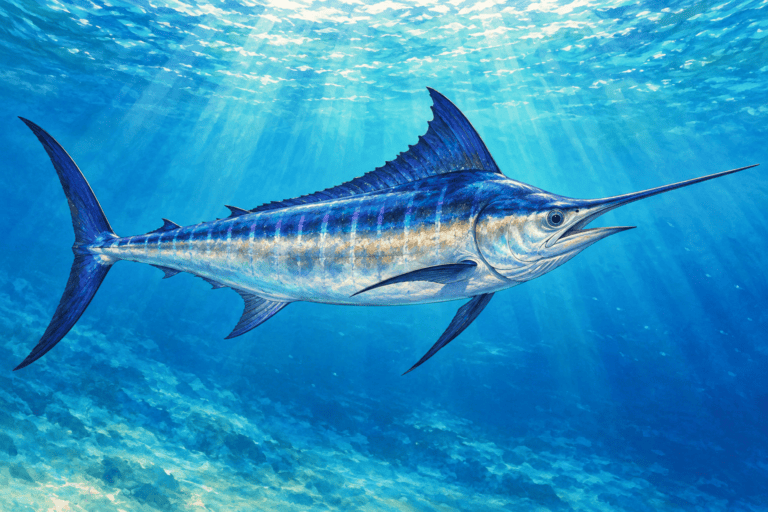
Blue Marlin

Spanish name
Marlín azul
Scientific name
Makaira nigricans

What Do Pico & Tati Think?

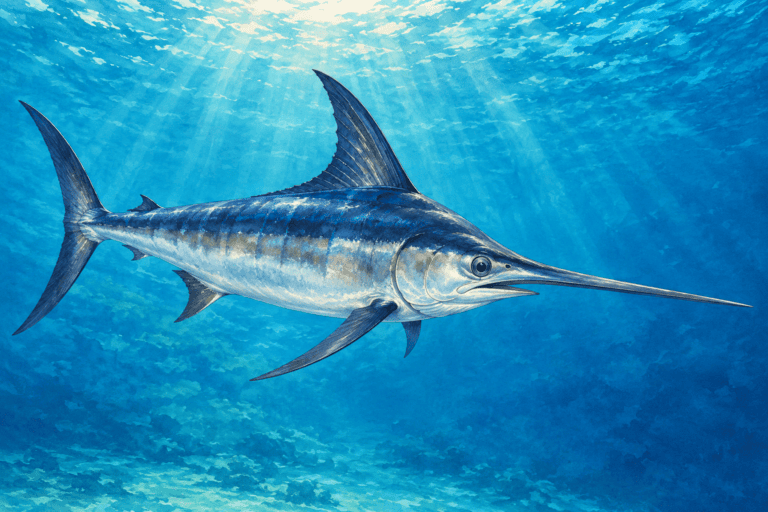
Pico: “Its back is such a deep blue!”

Tati: “Let’s compare its fin and bill with the other marlin.”

Identification

Key Features of the Blue Marlin

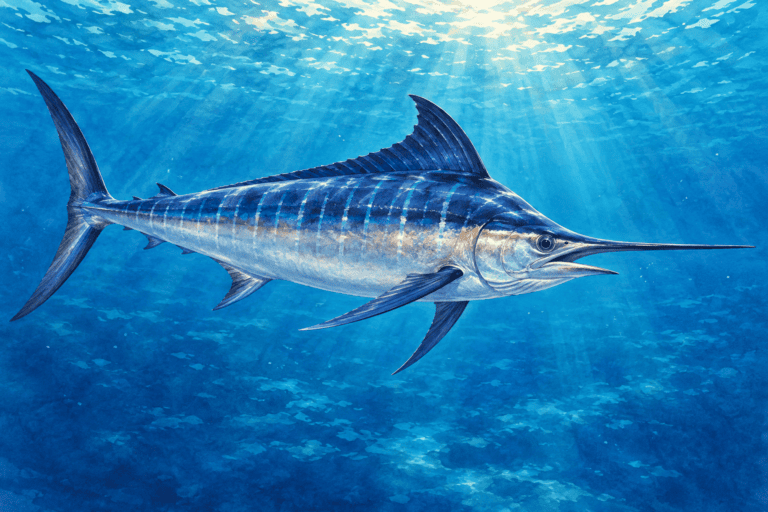
  • A long spear-shaped bill.

  • A cobalt-blue back and silvery underside.

  • A pronounced front dorsal fin and crescent-shaped tail.

Habitat & range

Warm tropical and subtropical open water.

Seasonal Calendar

Regional presence

Costa Rican Pacific waters

Year-round

FECOP reports year-round Costa Rican Pacific presence and a historical May–September Guanacaste fishing peak. Catch patterns are not exact migration or breeding dates.

Event source ↗

Reported fishing peak

Guanacaste offshore waters

May, Jun, Jul, Aug, Sep

FECOP reports year-round Costa Rican Pacific presence and a historical May–September Guanacaste fishing peak. Catch patterns are not exact migration or breeding dates.

Event source ↗

Conservation & care

Observe marine wildlife without feeding, touching or chasing it. Keep litter and discarded fishing line out of waterways. Follow qualified guides and current local rules.

Threats & pressures

Blue marlin can be caught incidentally in longline fisheries targeting tuna and swordfish. Fishing pressure needs monitoring across its migratory range.

View full profile →

Nature Field Guide

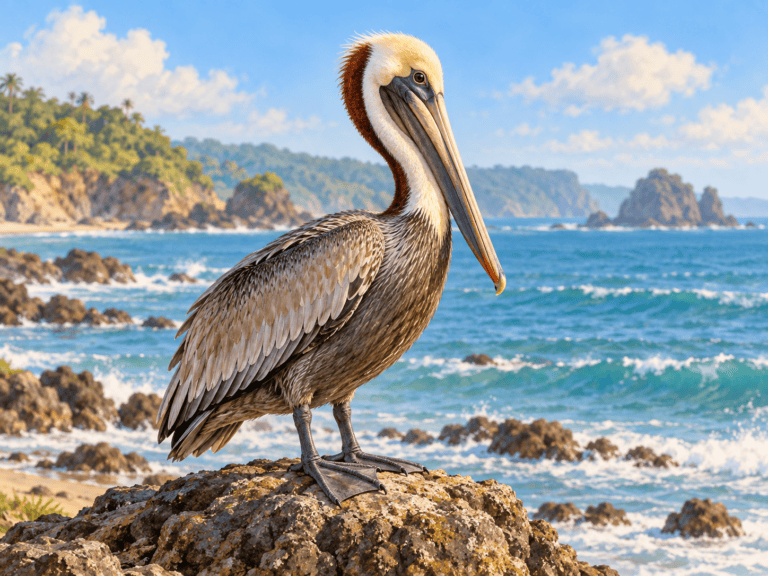
Brown Pelican

Spanish name
Pelícano pardo
Scientific name
Pelecanus occidentalis

What Do Pico & Tati Think?

Pico: “Look at that enormous bill!”

Tati: “Let’s compare its shape with the other birds by the water.”

Identification

Key Features of the Brown Pelican

  • A long bill with a pouch beneath the lower jaw.

  • A large gray-brown body and broad wings.

  • Head and neck colors change with age and breeding condition.

Habitat & range

Coastal waters along the Pacific, with less frequent nonbreeding visitors on the Caribbean coast. Regional tags refer to coastal habitat, not inland towns.

Seasonal Calendar

Resident presence

Isla San Lucas, Costa Rica

Year-round

SINAC lists Brown Pelican as a resident at Isla San Lucas on Costa Rica’s Pacific coast. This regional pattern does not guarantee a Tamarindo sighting or establish a local breeding calendar.

Event source ↗

Conservation & care

Do not feed birds or approach resting groups. Dispose of fishing line responsibly and leave nests undisturbed.

View full profile →

Nature Field Guide

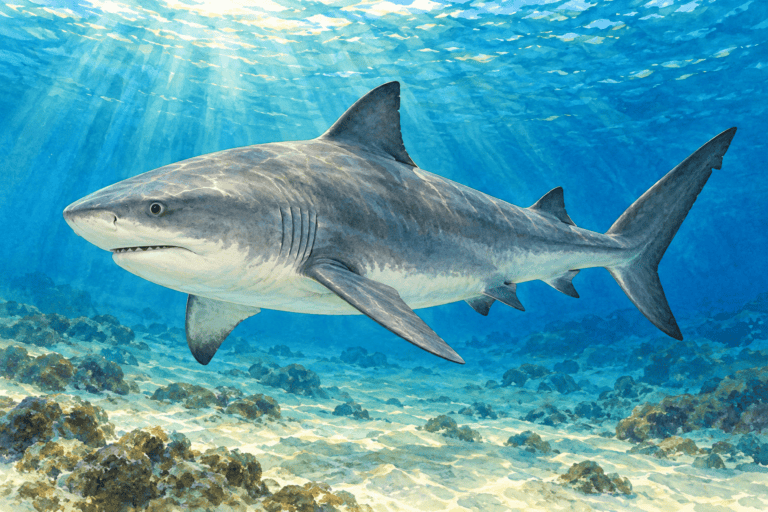
Bull Shark

Spanish name
Tiburón toro
Scientific name
Carcharhinus leucas

What Do Pico & Tati Think?

Pico: “That shark looks strong and stocky!”

Tati: “It can move between salt water and fresh water.”

Identification

Key Features of the Bull Shark

  • A stocky gray body with a pale belly.

  • A short, broad rounded snout and small eyes.

  • A large triangular first dorsal fin.

Habitat & range

Tropical and subtropical coastal waters, estuaries and some freshwater systems.

Conservation & care

Observe marine wildlife without feeding, touching or chasing it. Keep litter and discarded fishing line out of waterways. Follow qualified guides and current local rules.

Threats & pressures

Capture in fisheries affects bull sharks. Coastal development and damage to estuarine nursery habitats can put young animals under additional pressure.

View full profile →

Nature Field Guide

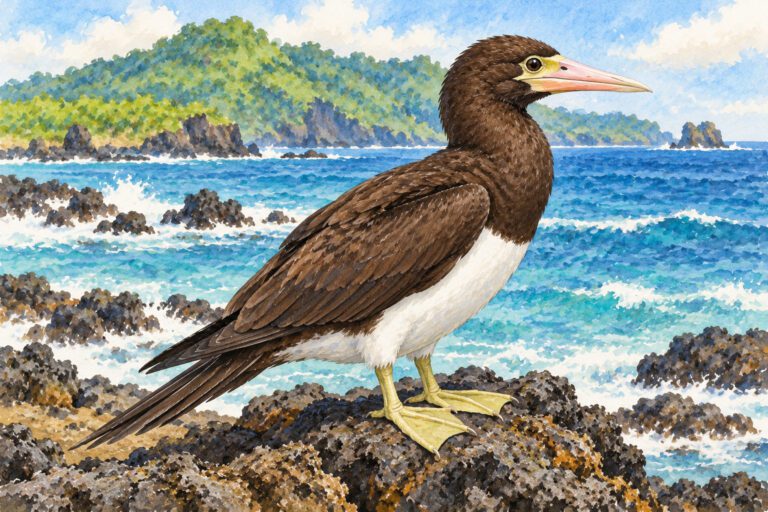
Cocos Booby

Spanish name
Piquero de Cocos
Scientific name
Sula brewsteri

What Do Pico & Tati Think?

Pico meets a familiar-looking seabird with a newer name. Tati keeps the scientific name beside the illustration.

Identification

Key Features of the Cocos Booby

  • Brown adult upperparts and white belly

  • Strong pointed pale bill

  • Short legs and broad webbed feet

  • Identification may require close expert comparison

Habitat & range

Scan Pacific coastal waters and offshore rocks from a safe viewpoint or responsible boat trip. Do not approach seabird colonies or land on nesting islands.

Conservation & care

Give feeding and resting birds space. If a bird stops feeding, repeatedly looks at you or moves away, increase your distance. Keep dogs away from flocks, avoid playback and feeding, and leave nests and natural shoreline debris undisturbed.

View full profile →

Nature Field Guide

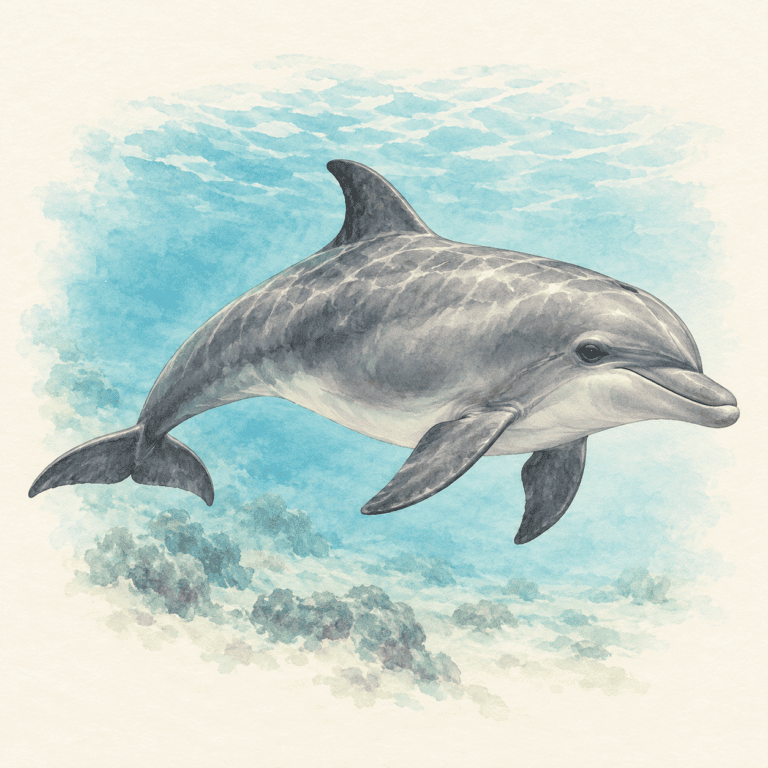
Common Bottlenose Dolphin

Spanish name
Delfín nariz de botella
Scientific name
Tursiops truncatus

What Do Pico & Tati Think?

The common bottlenose dolphin has a short thick beak and a generally gray body.

Identification

Key Features of the Common Bottlenose Dolphin

  • Short thick beak and robust gray body.

  • Curved dorsal fin and paler underside.

  • Horizontal tail flukes; other dolphin species require careful comparison.

Habitat & range

Suitable Costa Rican coastal and offshore waters.

Conservation & care

Use a responsible local wildlife operator and follow site rules. Give aquatic mammals room to feed, rest and travel. Do not feed, touch, chase or enter the water to approach them. Keep waste and fishing line out of waterways.

View full profile →

Nature Field Guide

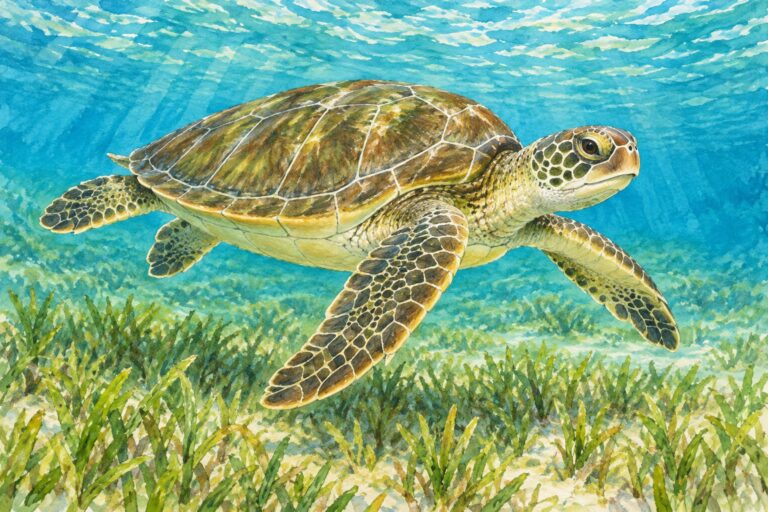
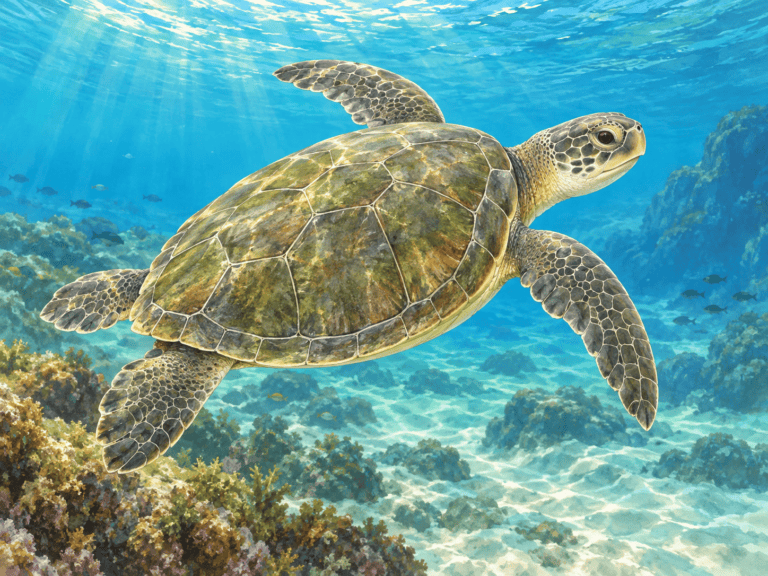
Green Sea Turtle

Spanish name
Tortuga verde / Tortuga negra
Scientific name
Chelonia mydas

What Do Pico & Tati Think?

Pico: “What clues help us recognize this reptile?”

Tati: “Let’s notice its shape, markings and habitat from a respectful distance.”

Identification

Key Features of the Green Sea Turtle

  • Smooth oval carapace

  • Rounded rather than sharply hooked head

  • Four pairs of lateral shell scutes

Habitat & range

Pacific and Caribbean coastal waters; Tortuguero and Cahuita are documented Caribbean examples.

Conservation & care

Never touch, chase, ride or feed a sea turtle. Keep clear of nesting females, eggs and hatchlings. Follow local beach rules and authorized guides; avoid lights and flash photography during nesting observations. Leave shells and wildlife products out of your purchases.

Threats & pressures

Protect nesting beaches and marine habitats. Reduce plastic waste, avoid disturbing wildlife and do not buy turtle products.

View full profile →

Nature Field Guide

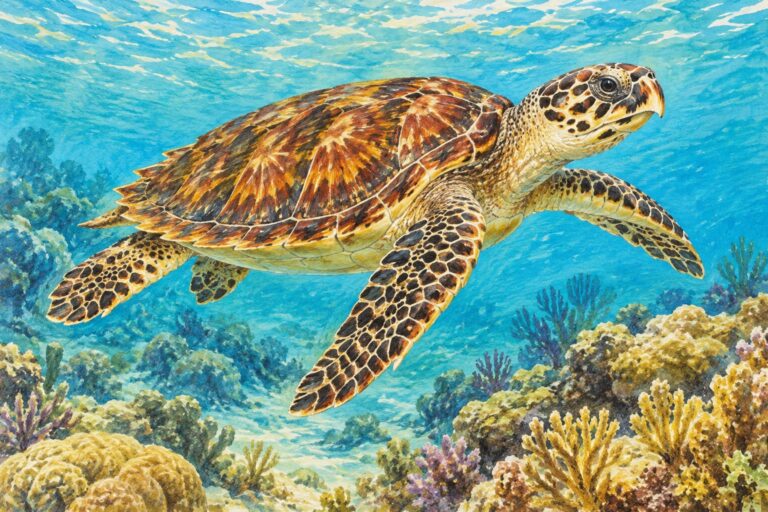
Hawksbill Sea Turtle

Spanish name
Tortuga carey
Scientific name
Eretmochelys imbricata

What Do Pico & Tati Think?

Pico: “What clues help us recognize this reptile?”

Tati: “Let’s notice its shape, markings and habitat from a respectful distance.”

Identification

Key Features of the Hawksbill Sea Turtle

  • Narrow hooked beak

  • Overlapping patterned shell scutes

  • Often a serrated rear shell edge

Habitat & range

Pacific and Caribbean coastal waters and reefs; documented sites include Cahuita and Tortuguero.

Conservation & care

Never touch, chase, ride or feed a sea turtle. Keep clear of nesting females, eggs and hatchlings. Follow local beach rules and authorized guides; avoid lights and flash photography during nesting observations. Leave shells and wildlife products out of your purchases.

Threats & pressures

Protect nesting beaches and marine habitats. Reduce plastic waste, avoid disturbing wildlife and do not buy turtle products.

View full profile →

Nature Field Guide

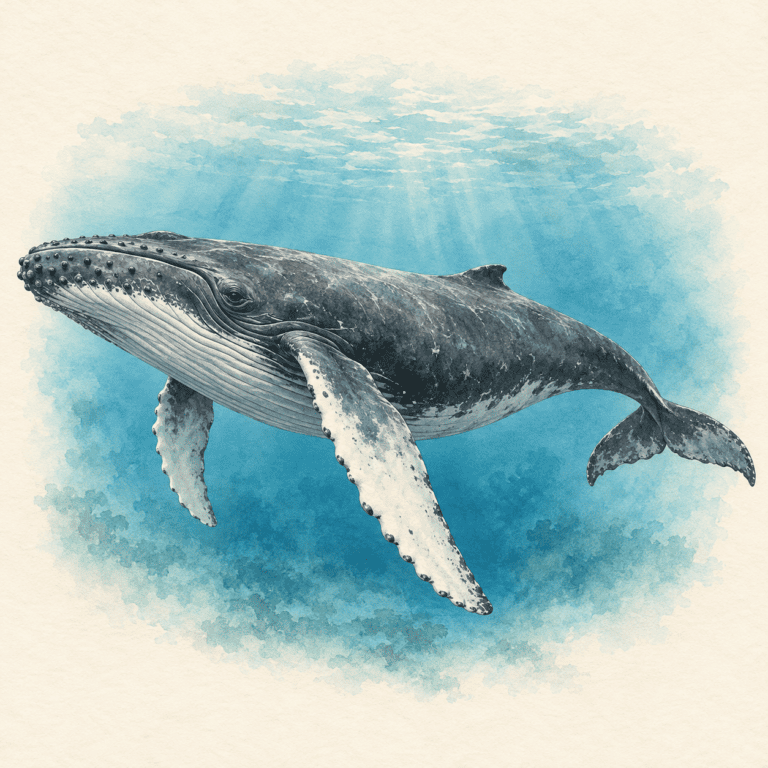
Humpback Whale

Spanish name
Ballena jorobada
Scientific name
Megaptera novaeangliae

What Do Pico & Tati Think?

A humpback whale is a mammal that breathes air through blowholes and nurses its young with milk.

Identification

Key Features of the Humpback Whale

  • Very long pectoral flippers and bumps on the head.

  • Small dorsal fin on a raised hump.

  • Broad tail flukes with variable underside patterns.

Habitat & range

Costa Rican marine waters; arrange viewing with a responsible operator using current local knowledge.

Conservation & care

Use a responsible local wildlife operator and follow site rules. Give aquatic mammals room to feed, rest and travel. Do not feed, touch, chase or enter the water to approach them. Keep waste and fishing line out of waterways.

View full profile →

Nature Field Guide

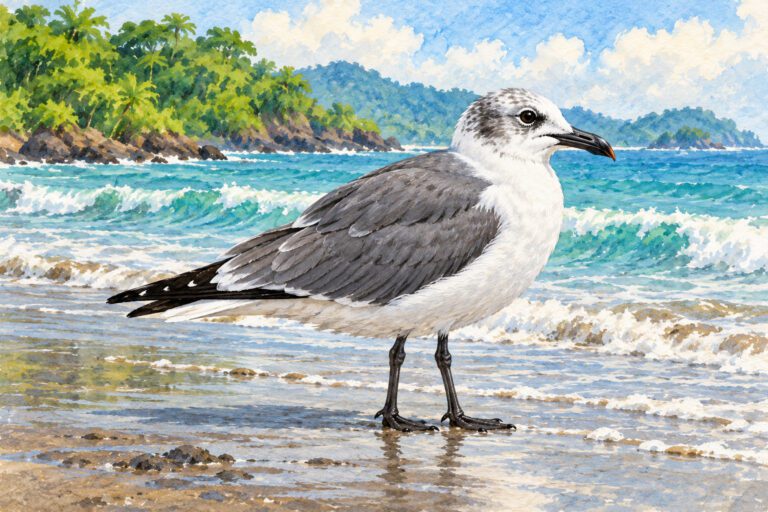
Laughing Gull

Spanish name
Gaviota reidora
Scientific name
Leucophaeus atricilla

What Do Pico & Tati Think?

Pico hears a call that sounds like laughter. Tati checks the season before expecting a black hood.

Identification

Key Features of the Laughing Gull

  • Dark gray back and pale body

  • Blackish wingtips

  • Breeding adults have a dark hood

  • Winter head is paler with gray smudges

Habitat & range

Scan coastal waters and undisturbed shoreline resting places from a safe public viewpoint. Keep boats and people away from nesting or resting colonies.

Conservation & care

Give feeding and resting birds space. If a bird stops feeding, repeatedly looks at you or moves away, increase your distance. Keep dogs away from flocks, avoid playback and feeding, and leave nests and natural shoreline debris undisturbed.

View full profile →

Nature Field Guide

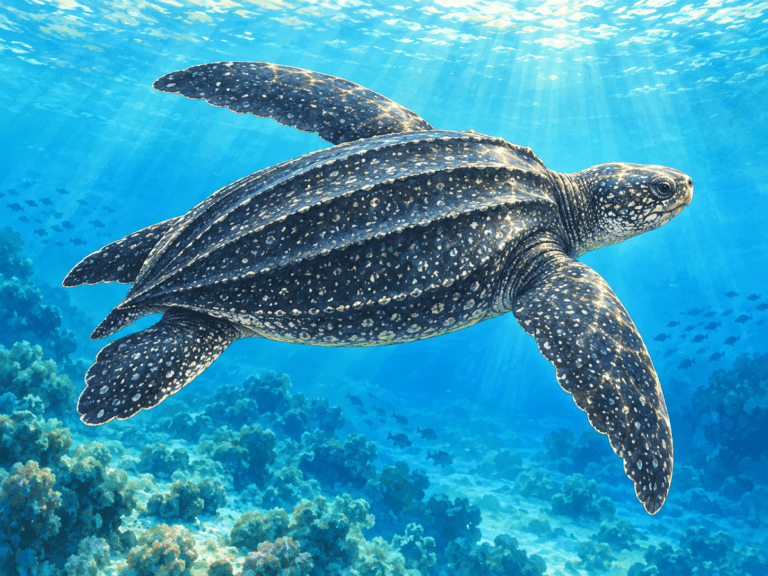
Leatherback Sea Turtle

Spanish name
Tortuga baula
Scientific name
Dermochelys coriacea

What Do Pico & Tati Think?

Pico: “Those ridges make its back look so different.”

Tati: “Let’s find out how this turtle’s life connects the ocean with the beach.”

Identification

Key Features of the Leatherback Sea Turtle

  • A dark, leathery back rather than large hard shell plates.

  • Seven lengthwise ridges along the back.

  • Long front flippers on a very large sea turtle.

Habitat & range

Open ocean feeding habitats and nesting beaches. SINAC identifies Playa Grande, Ventanas and Langosta as nesting areas within Las Baulas.

Seasonal Calendar

Nesting

Las Baulas: Playa Grande, Ventanas and Langosta

Jan, Feb, Oct, Nov, Dec

SINAC lists October–February as the park’s nesting season. Eggs incubate approximately two months; hatching follows individual laying dates. Nesting is distinct from migration. Follow current park access rules; this is not a tour schedule.

Event source ↗

Conservation & care

Never touch a turtle, eggs or hatchlings. Respect beach closures and avoid lights near nesting habitat. Keep plastics and other litter out of the sea.

View full profile →

Nature Field Guide

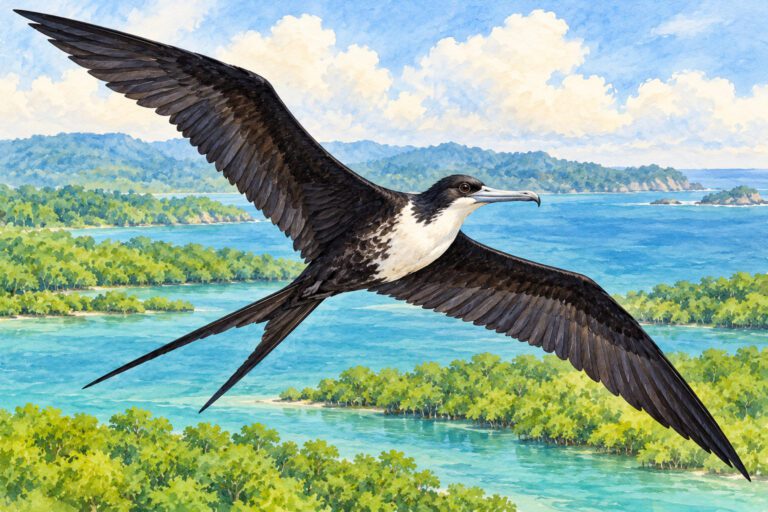
Magnificent Frigatebird

Spanish name
Rabihorcado magnífico
Scientific name
Fregata magnificens

What Do Pico & Tati Think?

Pico draws a bird that barely seems to flap. Tati adds a deeply forked tail to finish its sky silhouette.

Identification

Key Features of the Magnificent Frigatebird

  • Very long angular wings

  • Deeply forked tail

  • Adult male dark with red throat skin

  • Adult female has a white chest

Habitat & range

Scan coastal waters and undisturbed shoreline resting places from a safe public viewpoint. Keep boats and people away from nesting or resting colonies.

Conservation & care

Give feeding and resting birds space. If a bird stops feeding, repeatedly looks at you or moves away, increase your distance. Keep dogs away from flocks, avoid playback and feeding, and leave nests and natural shoreline debris undisturbed.

View full profile →

Nature Field Guide

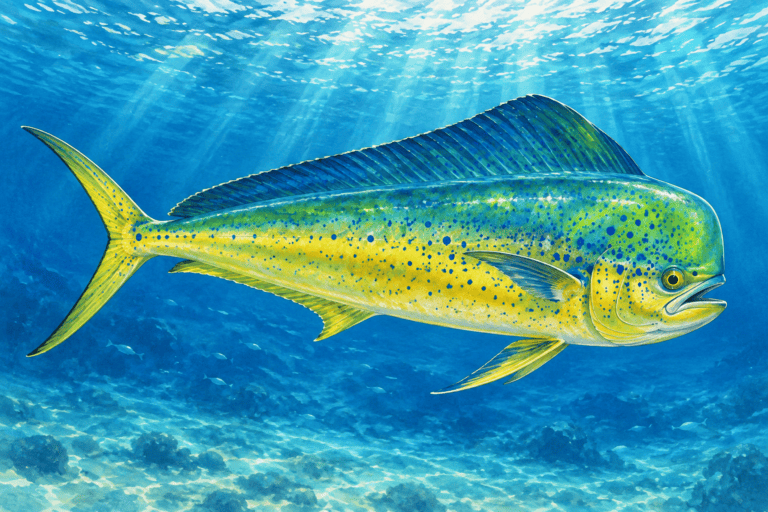
Mahi-mahi (Dorado)

Spanish name
Dorado
Scientific name
Coryphaena hippurus

What Do Pico & Tati Think?

Pico: “It looks green, blue and gold!”

Tati: “Dorado is another name for mahi-mahi—it is a fish, not a dolphin.”

Identification

Key Features of the Mahi-mahi (Dorado)

  • An electric green-blue back with golden sides.

  • A long continuous dorsal fin.

  • A deeply forked tail and spotted body.

Habitat & range

Tropical and subtropical surface waters offshore.

Seasonal Calendar

Regional presence

Costa Rican Pacific waters

Year-round

FECOP reports mahi-mahi throughout the year on Costa Rica’s Pacific coast. Regional presence does not imply constant abundance or guaranteed viewing.

Event source ↗

Conservation & care

Observe marine wildlife without feeding, touching or chasing it. Keep litter and discarded fishing line out of waterways. Follow qualified guides and current local rules.

Threats & pressures

Mahi-mahi are harvested directly and can also be caught incidentally in tuna and swordfish fisheries. Fast growth does not remove the need to monitor fishing pressure.

View full profile →

Nature Field Guide

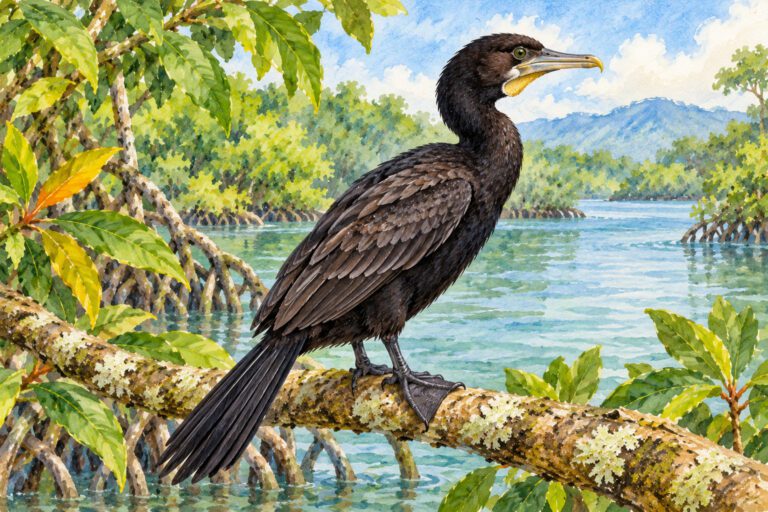
Neotropic Cormorant

Spanish name
Cormorán neotropical
Scientific name
Nannopterum brasilianum

What Do Pico & Tati Think?

Pico watches a dark swimmer vanish below the surface. Tati looks for its hooked bill when it returns.

Identification

Key Features of the Neotropic Cormorant

  • Dark body and long tail

  • Slender neck

  • Bill with a hooked tip

  • Often dives from the water surface

Habitat & range

Look across sheltered wetlands, lagoons and river margins from permitted trails or a responsible guided boat trip.

Conservation & care

Give feeding and resting birds space. If a bird stops feeding, repeatedly looks at you or moves away, increase your distance. Keep dogs away from flocks, avoid playback and feeding, and leave nests and natural shoreline debris undisturbed.

View full profile →

Nature Field Guide

Olive Ridley Sea Turtle

Spanish name
Tortuga lora
Scientific name
Lepidochelys olivacea

What Do Pico & Tati Think?

Pico: “This turtle has plates on its shell.”

Tati: “Comparing different turtles helps us notice the features that tell them apart.”

Identification

Key Features of the Olive Ridley Sea Turtle

  • An olive or gray-green hard shell.

  • A heart-shaped upper shell with visible plates.

  • A relatively small sea turtle compared with a leatherback.

Habitat & range

Tropical ocean waters, coastal habitats and nesting beaches. The species is recorded by SINAC for Las Baulas.

Seasonal Calendar

Nesting events

Ostional National Wildlife Refuge

Year-round

Ostional reference, not a Tamarindo calendar: arribadas occur across the year, not continuously or on fixed dates. SINAC notes dry-season months may have none and rainy-season months may have multiple events. Confirm timing with the refuge.

Event source ↗

Conservation & care

Leave turtles, nests and hatchlings undisturbed. Respect closures and do not use lights in nesting habitat. Reduce plastic waste and report distressed wildlife to local authorities.

View full profile →

Nature Field Guide

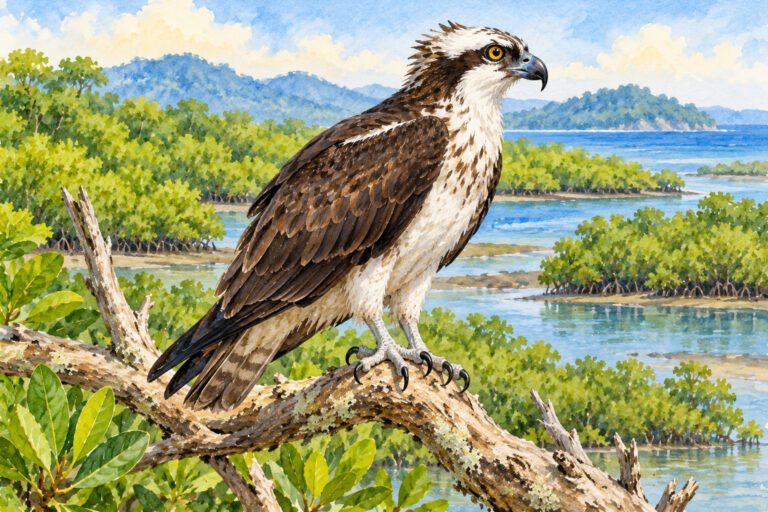
Osprey

Spanish name
Águila pescadora
Scientific name
Pandion haliaetus

What Do Pico & Tati Think?

Pico sees a fish hunter high above the water. Tati follows its shape with binoculars while keeping both feet on the trail.

Identification

Key Features of the Osprey

  • White head with broad dark eye stripe

  • Brown back and pale underparts

  • Hooked bill and powerful feet

  • Long angled wings in flight

Habitat & range

Scan exposed branches and the sky above fish-bearing rivers, estuaries and coastal water. Watch from a safe shore viewpoint.

Conservation & care

Give feeding and resting birds space. If a bird stops feeding, repeatedly looks at you or moves away, increase your distance. Keep dogs away from flocks, avoid playback and feeding, and leave nests and natural shoreline debris undisturbed.

View full profile →

Nature Field Guide

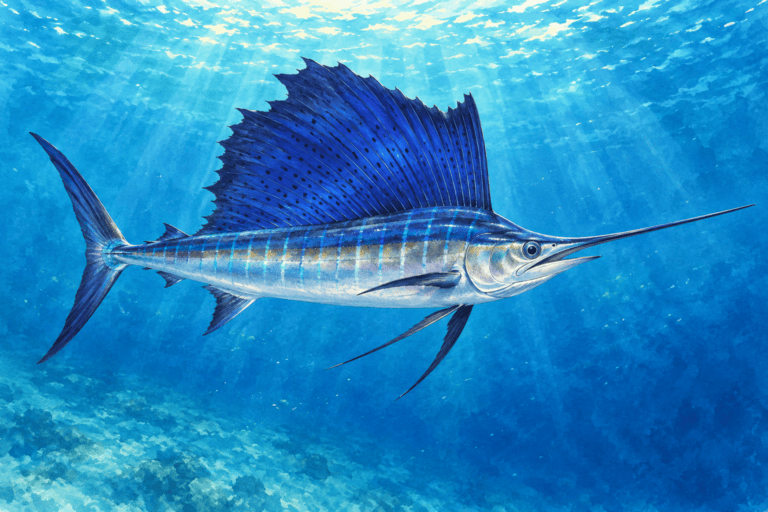
Pacific Sailfish

Spanish name
Pez vela
Scientific name
Istiophorus platypterus

What Do Pico & Tati Think?

Pico: “Its fin looks like a sail!”

Tati: “That tall fin is our best first clue.”

Identification

Key Features of the Pacific Sailfish

  • A very tall sail-like first dorsal fin.

  • A long slender bill.

  • A slender blue-and-silver body.

Habitat & range

Warm Pacific marine waters, including offshore areas.

Seasonal Calendar

Regional presence

Costa Rican Pacific waters

Year-round

FECOP reports sailfish can be encountered throughout the year in Costa Rica. Concentrations vary between northern and central/southern waters. This is regional presence, not a fixed migration season.

Event source ↗

Conservation & care

Observe marine wildlife without feeding, touching or chasing it. Keep litter and discarded fishing line out of waterways. Follow qualified guides and current local rules.

Threats & pressures

Incidental capture in tuna fisheries and other fishing pressure can affect sailfish.

View full profile →

Nature Field Guide

Royal Tern

Spanish name
Pagaza real
Scientific name
Thalasseus maximus

What Do Pico & Tati Think?

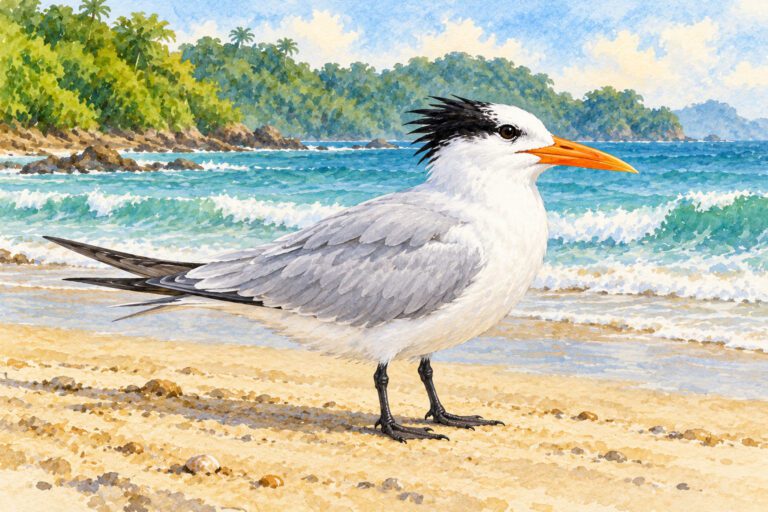
Pico notices an orange bill above the tideline. Tati sketches the crest before the tern returns to fishing.

Identification

Key Features of the Royal Tern

  • Large orange pointed bill

  • Pale gray back and white body

  • Black legs

  • Dark rear crest, with a white forehead outside breeding

Habitat & range

Scan coastal waters and undisturbed shoreline resting places from a safe public viewpoint. Keep boats and people away from nesting or resting colonies.

Conservation & care

Give feeding and resting birds space. If a bird stops feeding, repeatedly looks at you or moves away, increase your distance. Keep dogs away from flocks, avoid playback and feeding, and leave nests and natural shoreline debris undisturbed.

View full profile →

Nature Field Guide

Scalloped Hammerhead Shark

Spanish name
Tiburón martillo común
Scientific name
Sphyrna lewini

What Do Pico & Tati Think?

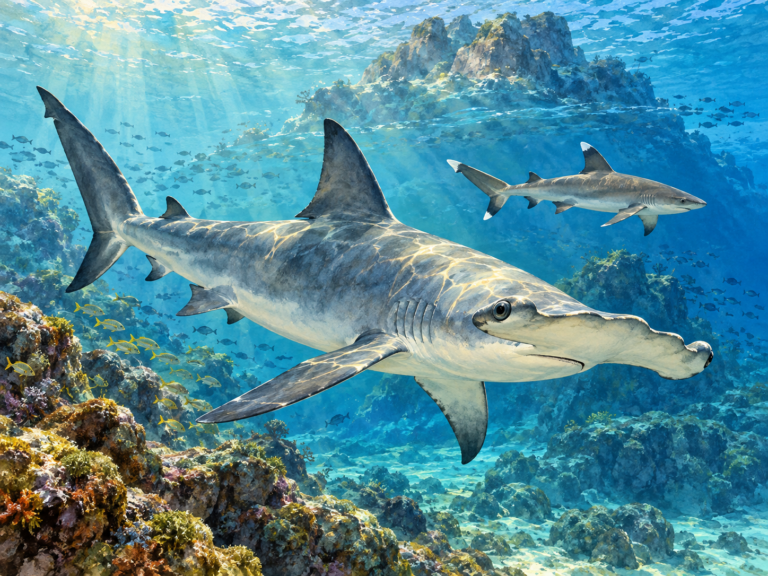
Pico: “Its head is shaped like a hammer!”

Tati: “The curves and notches help us distinguish this species from other hammerheads.”

Identification

Key Features of the Scalloped Hammerhead Shark

  • A broad hammer-shaped head with a central front notch.

  • A curved, scalloped front edge to the head.

  • A streamlined body and tall first dorsal fin.

Habitat & range

Warm coastal and offshore waters, including island-associated marine habitats at Isla del Coco.

Conservation & care

Follow park rules and qualified guides. Do not feed, touch, chase or collect marine wildlife. Maintain distance and avoid contact with reef habitat.

Threats & pressures

Fishing for fins and meat, incidental capture and pressure on coastal nursery areas affect the species. Sources describe risks across its range; these are not measurements of loss at Isla del Coco.

Conservation assessment

Global IUCN category reported by the Convention on Migratory Species and Florida Museum: Critically Endangered. The linked CMS page does not provide the underlying assessment date. Checked 7 October 2026. This is not a local population count.

View full profile →

Nature Field Guide

Spinner Dolphin

Spanish name
Delfín tornillo
Scientific name
Stenella longirostris

What Do Pico & Tati Think?

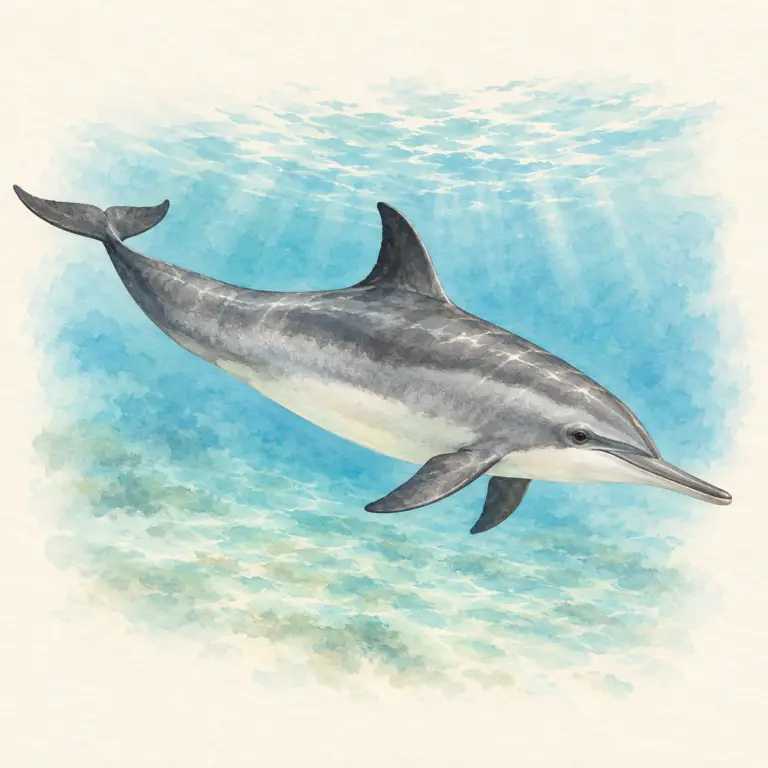
Spinner dolphins are slender dolphins with long narrow beaks.

Identification

Key Features of the Spinner Dolphin

  • Slender body and a noticeably long narrow beak.

  • Dorsal fin often triangular; shape varies with regional form.

  • Spinning leaps can occur, but behavior alone does not confirm species.

Habitat & range

Costa Rican Pacific marine waters, with locally variable distribution.

Conservation & care

Use a responsible local wildlife operator and follow site rules. Give aquatic mammals room to feed, rest and travel. Do not feed, touch, chase or enter the water to approach them. Keep waste and fishing line out of waterways.

View full profile →

Nature Field Guide

Spotted Rose Snapper

Spanish name
Pargo de la mancha
Scientific name
Lutjanus guttatus

What Do Pico & Tati Think?

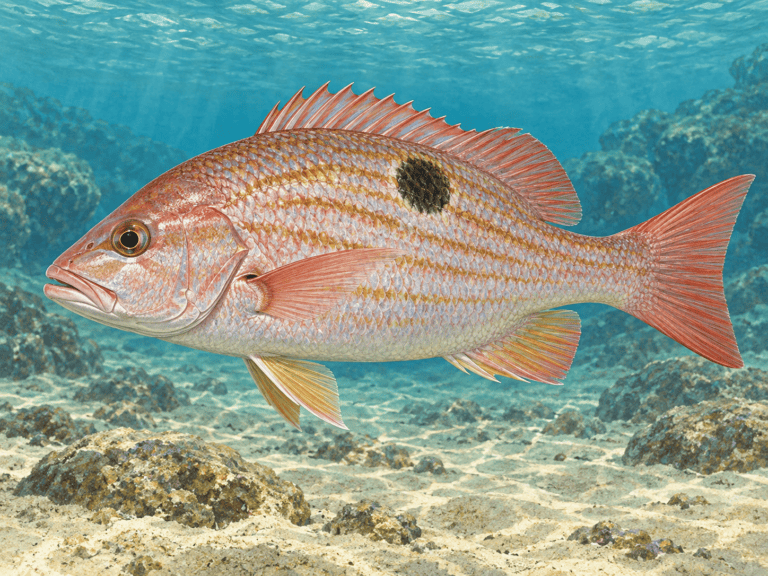
Meet the fish Yeyo shares with Pico and Tati. Spotted rose snapper lives in the eastern Pacific, including Costa Rica’s coastal waters. Look for a silvery-pink body, fine slanting golden-brown stripes and a dark blotch below the dorsal fin.

This fish eats crustaceans and small fish. Researchers in Costa Rica’s Gulf of Nicoya have studied its diet and its role in local fishing. It connects an underwater food web with the meals coastal families prepare and share.

In our story, Yeyo names his catch before lunch. Tati notices the spot, and Pico learns that there is more to discover about a fish than how delicious it smells.

Identification

Key Features of the Spotted Rose Snapper

  • A moderately deep, oval body with a silvery-pink sheen.

  • Fine oblique golden-brown stripes along the sides.

  • A prominent dark blotch high on the side beneath the dorsal fin; the mark can change in intensity.

  • A continuous dorsal fin and a nearly straight or slightly indented tail.

Habitat & range

Pacific coastal waters, including sandy bays and reef-associated habitats. Young fish often use shallow sandy bays.

Conservation & care

Keep fishing line and plastic out of the sea. Observe fish without feeding or chasing them. If your family fishes, follow current local rules and learn from a responsible local fisher.

View full profile →

Nature Field Guide

Striped Marlin

Spanish name
Marlín rayado
Scientific name
Kajikia audax

What Do Pico & Tati Think?

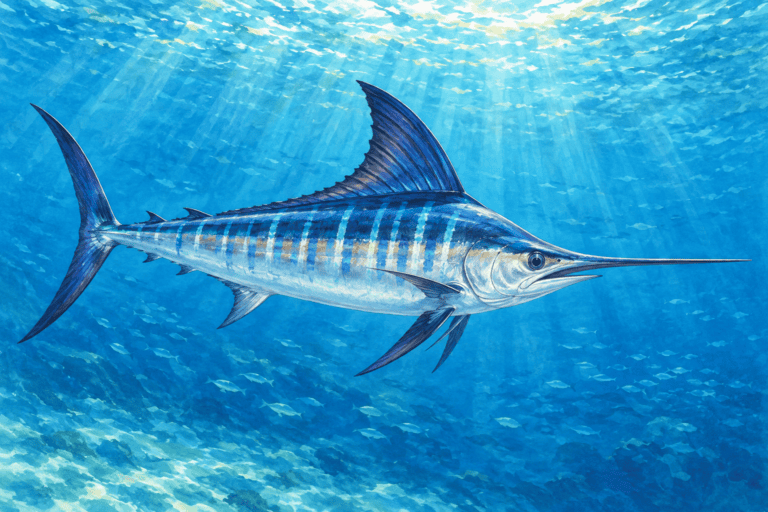
Pico: “I can see blue stripes along its sides!”

Tati: “We should check the shape too—other marlin can show stripes.”

Identification

Key Features of the Striped Marlin

  • A long bill and streamlined body.

  • Vertical blue bars that may vary in intensity.

  • A tall front portion of the first dorsal fin.

Habitat & range

Tropical and subtropical Pacific and Indian Ocean waters.

Seasonal Calendar

Regional presence

Costa Rican offshore waters

Year-round

FECOP reports striped marlin throughout the year in Costa Rican offshore waters. No fixed Tamarindo migration or spawning calendar is established here.

Event source ↗

Conservation & care

Observe marine wildlife without feeding, touching or chasing it. Keep litter and discarded fishing line out of waterways. Follow qualified guides and current local rules.

Threats & pressures

Striped marlin are caught incidentally in pelagic longline fisheries. Fishing pressure differs between assessed Pacific stocks.

View full profile →

Nature Field Guide

Swordfish

Spanish name
Pez espada
Scientific name
Xiphias gladius

What Do Pico & Tati Think?

Pico: “Its bill looks like a sword!”

Tati: “It is flatter and broader than a marlin’s bill.”

Identification

Key Features of the Swordfish

  • A long broad, flattened sword-like bill.

  • A dark upper body and lighter underside.

  • A streamlined body with a crescent-shaped tail.

Habitat & range

Open-ocean surface and deeper waters.

Conservation & care

Observe marine wildlife without feeding, touching or chasing it. Keep litter and discarded fishing line out of waterways. Follow qualified guides and current local rules.

Threats & pressures

Commercial and recreational fishing affect swordfish. Managing this migratory species requires international cooperation; assessments vary by stock.

View full profile →

Nature Field Guide

Tiger Shark

Spanish name
Tiburón tigre
Scientific name
Galeocerdo cuvier

What Do Pico & Tati Think?

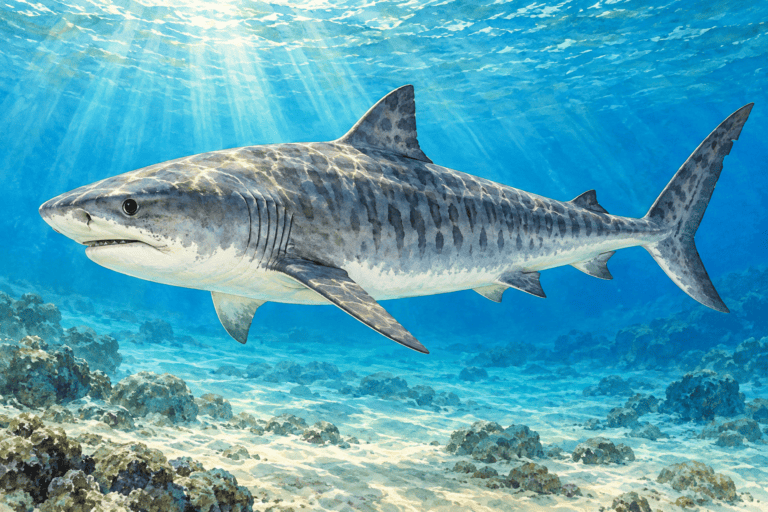
Pico: “Those stripes explain its name!”

Tati: “They can fade as the shark grows, so shape matters too.”

Identification

Key Features of the Tiger Shark

  • Dark bars or spots, clearest in younger sharks.

  • A broad, blunt snout.

  • A large gray body with a pale underside.

Habitat & range

Warm coastal and offshore seas.

Conservation & care

Observe marine wildlife without feeding, touching or chasing it. Keep litter and discarded fishing line out of waterways. Follow qualified guides and current local rules.

Threats & pressures

Fishing and incidental capture can affect tiger sharks. Marine litter also matters because this predator may swallow floating rubbish.

View full profile →

Nature Field Guide

Whale Shark

Spanish name
Tiburón ballena
Scientific name
Rhincodon typus

What Do Pico & Tati Think?

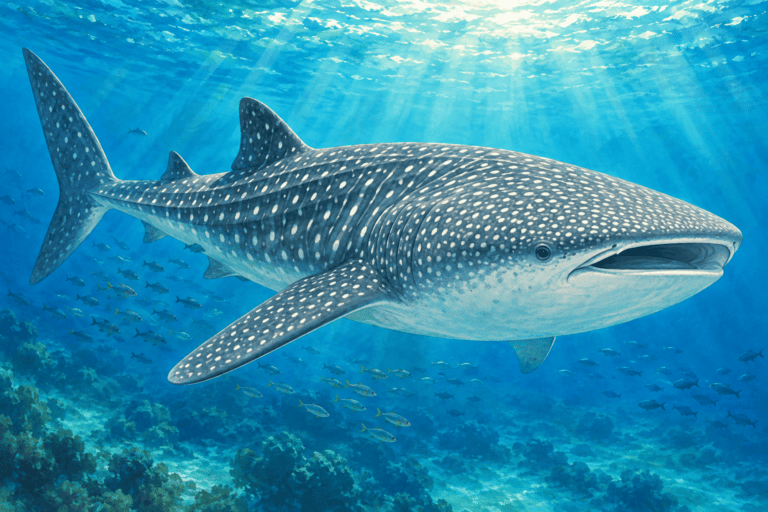
Pico: “A shark with spots—and such a wide mouth!”

Tati: “It is a fish, even though its name includes whale.”

Identification

Key Features of the Whale Shark

  • Pale spots and bars across a darker body.

  • A broad, flattened head with a wide front-facing mouth.

  • A very large body with ridges along the sides.

Habitat & range

Tropical and warm marine waters, including offshore feeding areas. Scientific records connect the species to Isla del Coco.

Conservation & care

Follow park rules and qualified guides. Do not feed, touch, chase or collect marine wildlife. Maintain distance and avoid contact with reef habitat.

Threats & pressures

Fisheries and incidental capture, vessel strikes and poorly managed wildlife tourism can affect whale sharks. Threats vary by location.

Conservation assessment

IUCN global assessment dated 31 March 2025, published 2025: Endangered (A2bd). This global assessment is separate from any local count or legal protection in Costa Rica.

View full profile →

Nature Field Guide

Whitetip Reef Shark

Spanish name
Tiburón punta blanca de arrecife
Scientific name
Triaenodon obesus

What Do Pico & Tati Think?

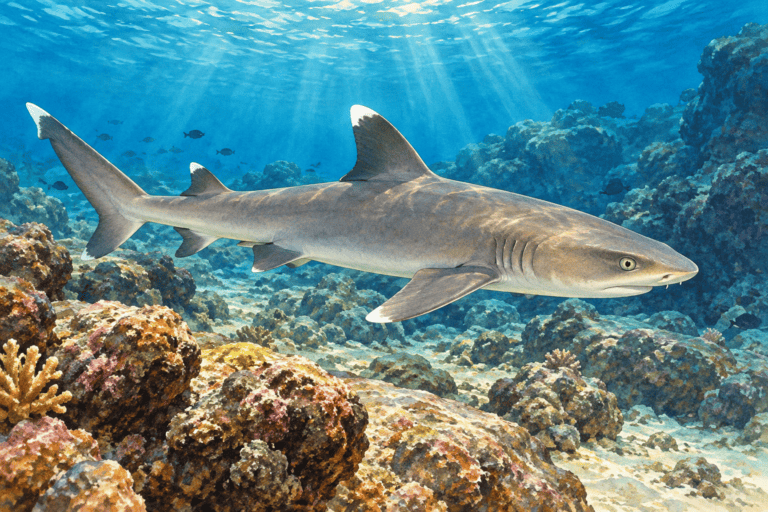
Pico: “Its fins have little white tips!”

Tati: “We need to compare its whole shape, because other sharks can have white markings too.”

Identification

Key Features of the Whitetip Reef Shark

  • White tips on the first dorsal fin and upper tail fin.

  • A slender gray-brown body.

  • May rest on the bottom in reef shelter.

Habitat & range

Reefs and sheltered bottom habitats. The Isla del Coco connection is supported by park and research records.

Conservation & care

Follow park rules and qualified guides. Do not feed, touch, chase or collect marine wildlife. Maintain distance and avoid contact with reef habitat.

View full profile →

Nature Field Guide

Yellow-bellied Sea Snake

Spanish name
Serpiente marina de vientre amarillo
Scientific name
Hydrophis platurus

What Do Pico & Tati Think?

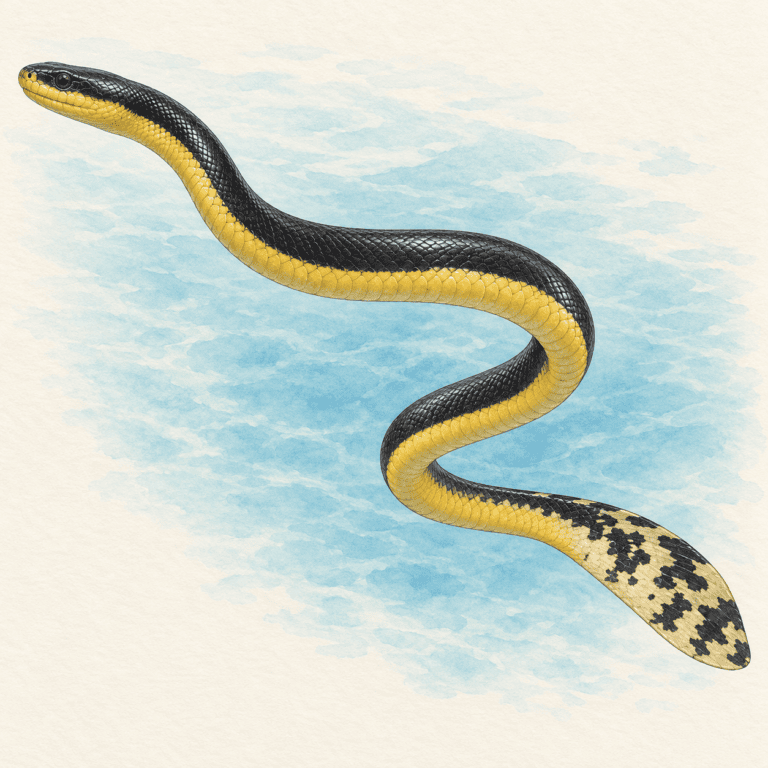
Pico and Tati invite you to discover a reptile adapted to ocean life. Use a reference illustration to compare its swimming tail with the tail of a land snake.

Identification

Key Features of the Yellow-bellied Sea Snake

  • Dark back and yellow underside, usually separated along the length of the body.

  • Flattened, paddle-shaped tail, often with contrasting dark markings.

  • Small head and slender neck; patterns vary between individuals.

Habitat & range

Pacific marine waters off Costa Rica, including coastal and offshore waters. A mostly yellow population occurs in the inner Golfo Dulce.

Conservation & care

Venomous. Never touch, catch or move a sea snake, including one washed onto a beach or appearing dead. Keep children and pets away, step back and tell an adult or trained guide. Do not attempt to return it to the water. Do not use color patterns to decide whether any snake is safe.

View full profile →

Nature Field Guide

Yellowfin Tuna

Spanish name
Atún aleta amarilla
Scientific name
Thunnus albacares

What Do Pico & Tati Think?

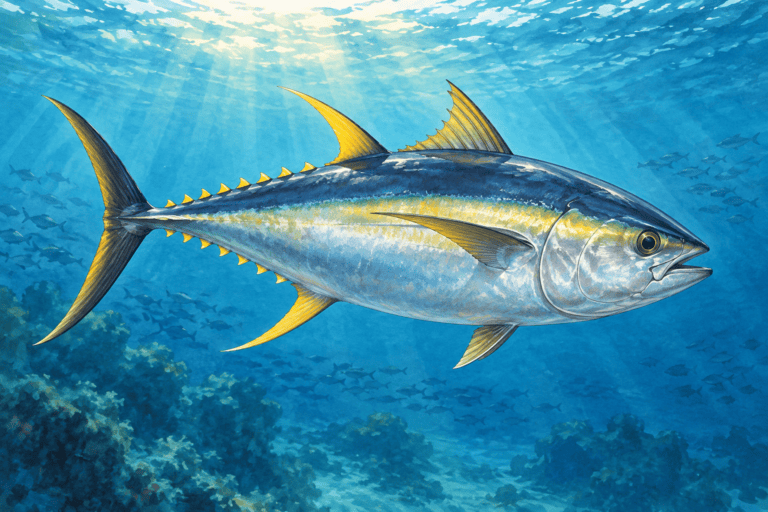
Pico: “Its fins are bright yellow!”

Tati: “Its streamlined shape gives us a clue about life in open water.”

Identification

Key Features of the Yellowfin Tuna

  • A streamlined, torpedo-shaped body.

  • Metallic dark blue upper body with a lighter underside.

  • Bright yellow fins and finlets; larger adults may have elongated dorsal and anal fins.

Habitat & range

Tropical and subtropical open-ocean waters. The offshore Costa Rican connection is supported by SINAC’s Isla del Coco information.

Seasonal Calendar

Regional presence

Costa Rican pelagic waters

Year-round

FECOP’s good-practice guide reports year-round presence in Costa Rican pelagic waters. Migratory schools move between areas; regional presence does not imply residence of one school.

Event source ↗

Conservation & care

Follow park rules and qualified guides. Do not feed, touch, chase or collect marine wildlife. Maintain distance and avoid contact with reef habitat.

Protection & recovery

NOAA summarizes the Eastern Pacific stock as not overfished and not subject to overfishing based on a 2023 stock assessment. This describes a regional fishery stock, not a Costa Rican endangered-species designation or proof of local recovery.

View full profile →

My Tico Explorer Experience

Save nature, towns, discoveries and learning adventures for your next experience.

Your list stays in this browser on this device.