

Nature Field Guide
Mahi-mahi (Dorado)
- Spanish name
- Dorado
- Scientific name
- Coryphaena hippurus
What Do Pico & Tati Think?
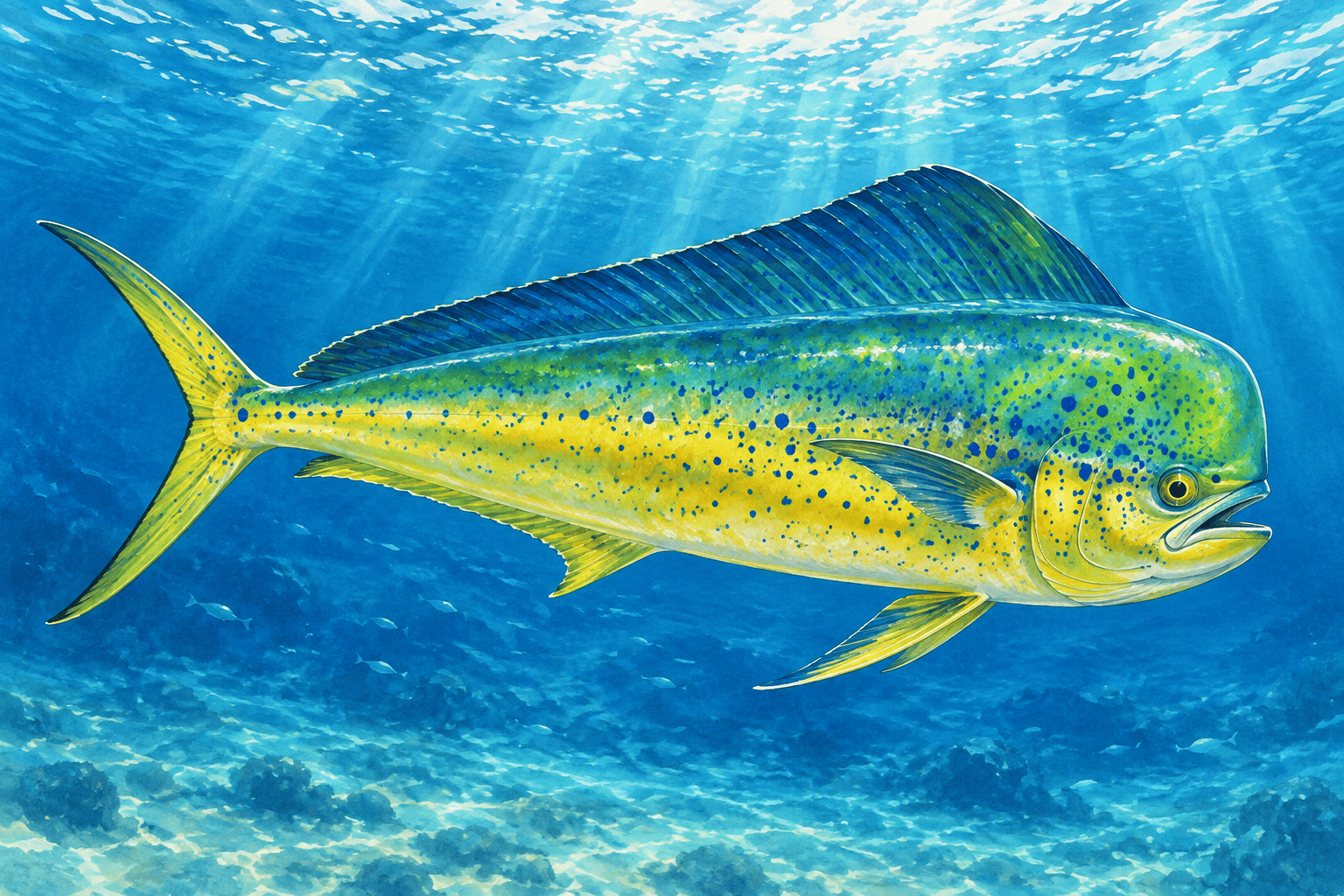
Pico: “It looks green, blue and gold!”
Tati: “Dorado is another name for mahi-mahi—it is a fish, not a dolphin.”
Species overview
About the Mahi-mahi (Dorado)
Mahi-mahi is a brightly colored open-water fish also known as dorado or dolphinfish. Its electric green-blue back, golden sides and spotted pattern make it memorable. A long dorsal fin follows much of its back.
It grows quickly and feeds near the surface on small fish and other marine prey. Young fish often gather in schools, while older fish may be found alone. Adults move with seasonal changes in water temperature.
Its common name can cause confusion: dolphinfish is a fish, while a dolphin is a mammal. Mahi-mahi also lacks the long bill of a marlin or swordfish. Placing it in Marine Fish helps young explorers compare different kinds of open-water animals.
Identification
Key Features of the Mahi-mahi (Dorado)
An electric green-blue back with golden sides.
A long continuous dorsal fin.
A deeply forked tail and spotted body.
Habitat & range
Tropical and subtropical surface waters offshore.
Local observations
FECOP includes this species among Costa Rica’s offshore fish. No Tamarindo beach sighting or local population count is implied.
When to observe
Ocean conditions, prey and animal movements affect occurrence. No guaranteed sighting or fixed local viewing season is established here.
Seasonal Calendar
Regional presence
Costa Rican Pacific waters
Year-round
FECOP reports mahi-mahi throughout the year on Costa Rica’s Pacific coast. Regional presence does not imply constant abundance or guaranteed viewing.
Event source ↗Conservation & care
Observe marine wildlife without feeding, touching or chasing it. Keep litter and discarded fishing line out of waterways. Follow qualified guides and current local rules.
Threats & pressures
Mahi-mahi are harvested directly and can also be caught incidentally in tuna and swordfish fisheries. Fast growth does not remove the need to monitor fishing pressure.
Observation activity
Compare a reference photograph of the Mahi-mahi (Dorado) with another marine species. Sketch three differences in body shape, fins or markings.
Explore by location
Central Pacific · Guanacaste · Oceanic Pacific · South Pacific