Tico Explorers

Nature Field Guide

Marine Life

Explore wildlife, plants and trees. Learn what to look for and where to find them.

All Nature

69 profiles

Nature Field Guide

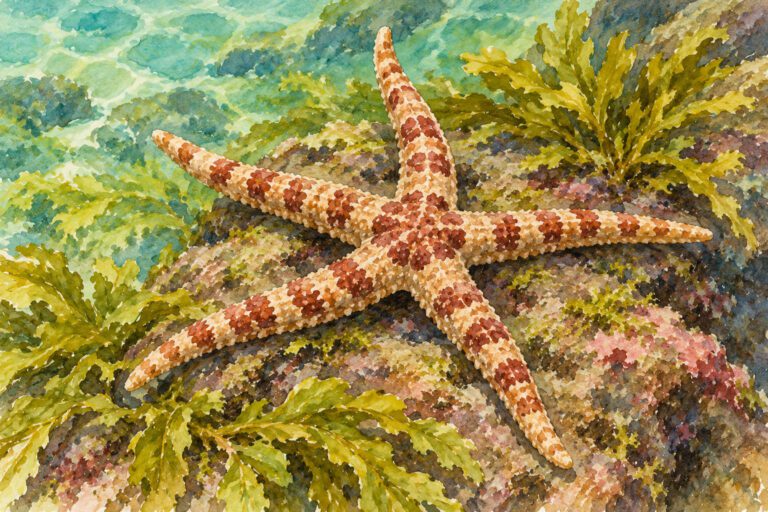
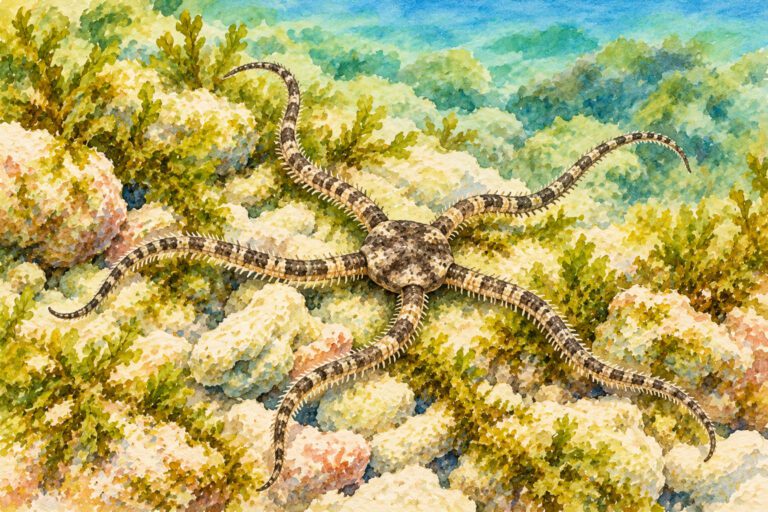
Alexander’s Spiny Brittle Star

Spanish name
Ofiura espinosa de Alexander
Scientific name
Ophiocomella alexandri

What Do Pico & Tati Think?

Pico and Tati discover that a brittle star’s scientific name can change as scientists learn more about its relatives.

Identification

Key Features of the Alexander’s Spiny Brittle Star

  • A clearly defined central disc

  • Long flexible arms

  • Check both current and older scientific names when reading a reference

Habitat & range

Suitable underwater coastal habitat. Use a permitted guided snorkeling or viewing activity appropriate to your family; do not enter the sea just to find this animal.

Conservation & care

Watch without touching, lifting, feeding or collecting. Keep fingers and equipment away from spines and other surface structures. Leave the animal submerged and its habitat undisturbed.

View full profile →

Nature Field Guide

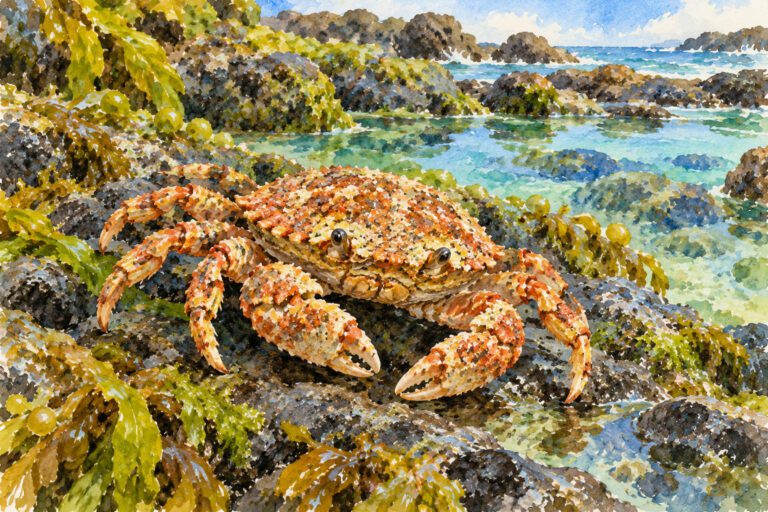
American Pebble Crab

Spanish name
Cangrejo piedra americano
Scientific name
Daira americana

What Do Pico & Tati Think?

A crab can blend into a rocky neighborhood. Pico watches patiently while Tati compares the outline with the stones around it.

Identification

Key Features of the American Pebble Crab

  • A compact crab body

  • A textured carapace

  • Confirm the identification from a detailed photograph

Habitat & range

Rocky shore and naturally visible tidal habitat. Choose a permitted observation point with an adult; do not turn rocks or reach into holes.

Conservation & care

Give claws and burrow entrances space. Do not handle, feed, chase or collect crabs. Leave rocks and shells where they are, and follow your adult’s route and local signs.

View full profile →

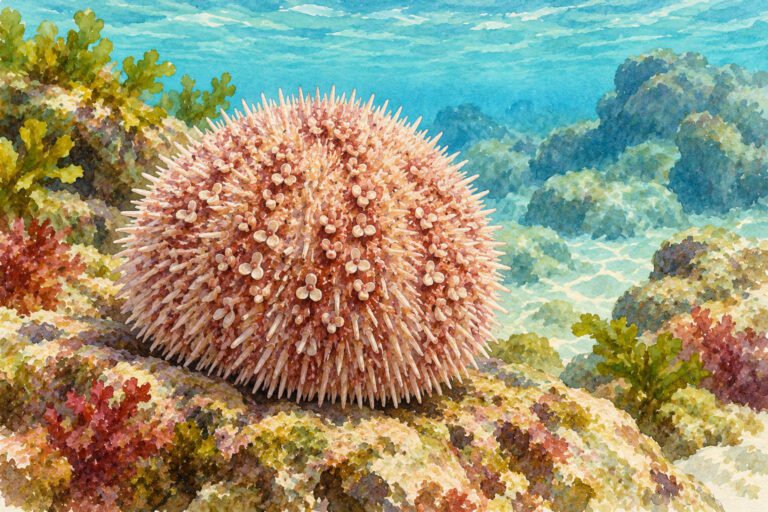
Nature Field Guide

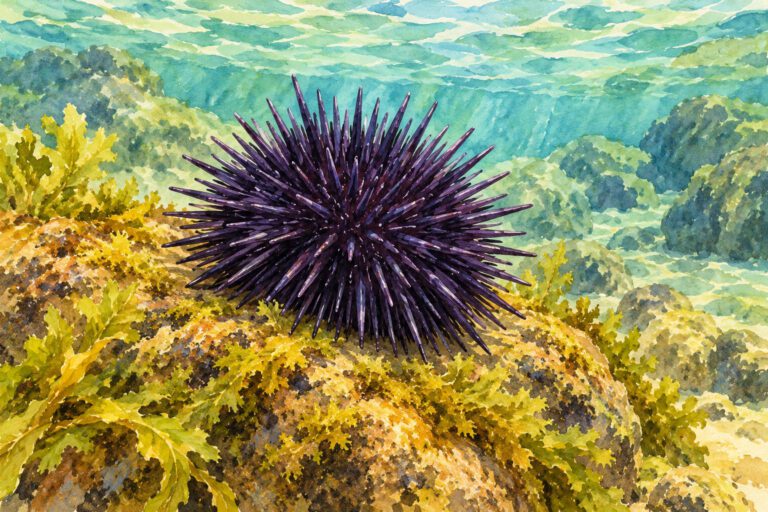
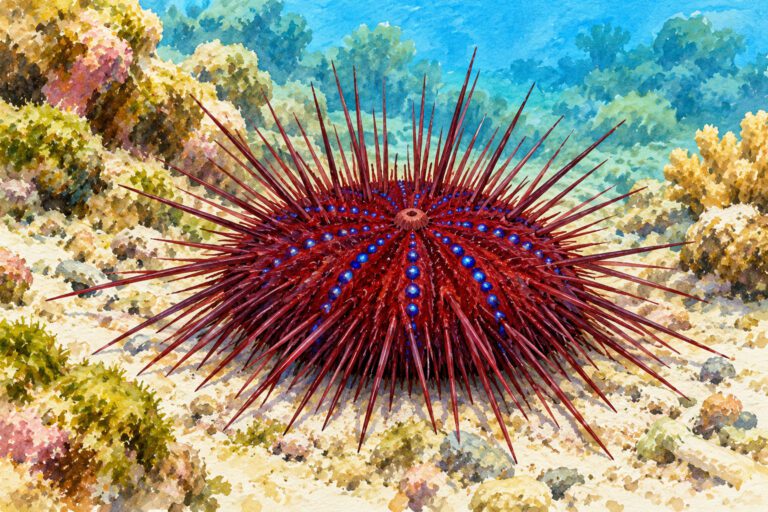
Arbacia Sea Urchin

Spanish name
Erizo Arbacia
Scientific name
Arbacia stellata

What Do Pico & Tati Think?

Pico sees a spiny shape. Tati asks how many different kinds of urchin might share a coast.

Identification

Key Features of the Arbacia Sea Urchin

  • A rounded body covered with spines

  • Observe the proportions of the body and spines

  • Use a species reference to compare similar urchins

Habitat & range

Suitable underwater coastal habitat. Use a permitted guided snorkeling or viewing activity appropriate to your family; do not enter the sea just to find this animal.

Conservation & care

Watch without touching, lifting, feeding or collecting. Keep fingers and equipment away from spines and other surface structures. Leave the animal submerged and its habitat undisturbed.

View full profile →

Nature Field Guide

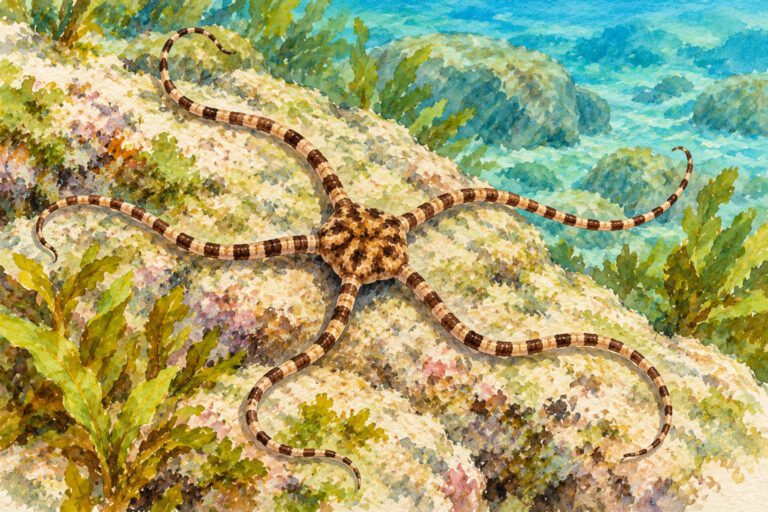
Banded Serpent Brittle Star

Spanish name
Ofiura de brazos anillados
Scientific name
Ophionereis annulata

What Do Pico & Tati Think?

Patterns help Tati remember a discovery. Pico sketches the bands he can see along a slender arm.

Identification

Key Features of the Banded Serpent Brittle Star

  • A small central disc

  • Long flexible arms

  • Darker bands along the arms

Habitat & range

Suitable underwater coastal habitat. Use a permitted guided snorkeling or viewing activity appropriate to your family; do not enter the sea just to find this animal.

Conservation & care

Watch without touching, lifting, feeding or collecting. Keep fingers and equipment away from spines and other surface structures. Leave the animal submerged and its habitat undisturbed.

View full profile →

Nature Field Guide

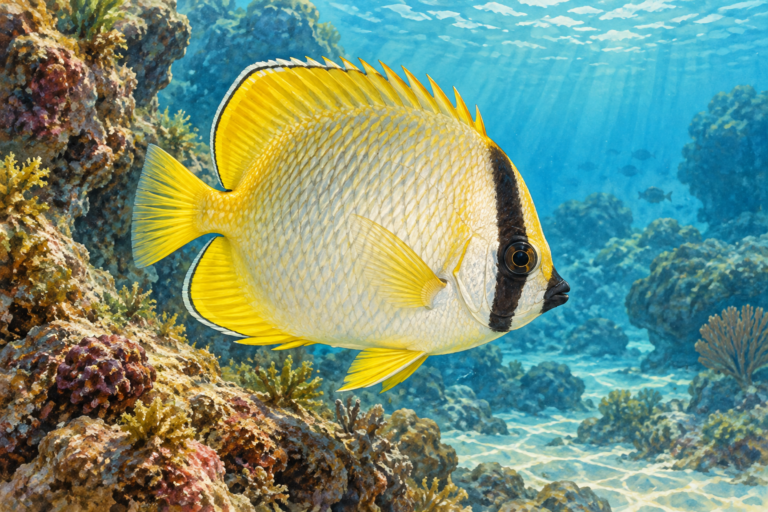
Barberfish

Spanish name
Mariposa barbero
Scientific name
Johnrandallia nigrirostris

What Do Pico & Tati Think?

Pico: “It looks like a little yellow disc.”

Tati: “The black markings and the small pointed mouth give us more clues.”

Identification

Key Features of the Barberfish

  • A flattened, oval, disc-like body.

  • A yellow body and fins with contrasting dark head markings.

  • A small mouth at the end of a short pointed snout.

Habitat & range

Reef-associated settings in the eastern Pacific, with documented occurrence at Isla del Coco.

Conservation & care

Follow park rules and qualified guides. Do not feed, touch, chase or collect marine wildlife. Maintain distance and avoid contact with reef habitat.

View full profile →

Nature Field Guide

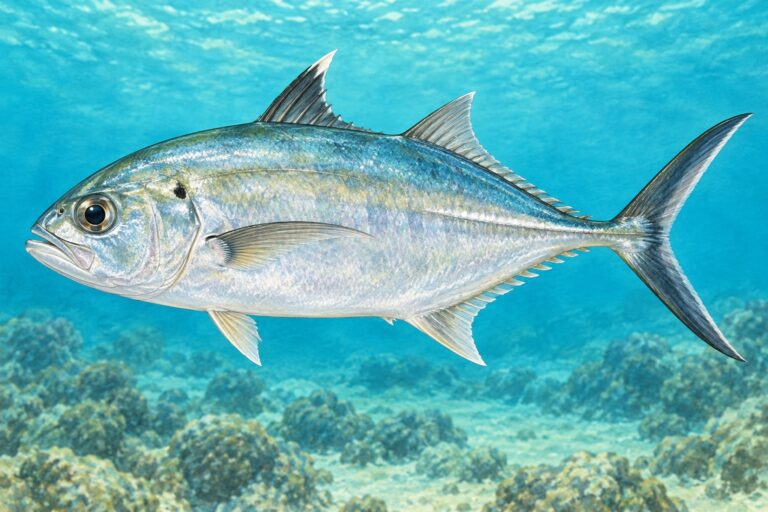
Bigeye Trevally

Spanish name
Jurel ojón
Scientific name
Caranx sexfasciatus

What Do Pico & Tati Think?

Pico: “Its eye looks extra big!”

Tati: “Check the small dark gill-cover spot too.”

Identification

Key Features of the Bigeye Trevally

  • Large dark eye

  • Small dark upper gill-cover spot

  • Forked tail

Habitat & range

Pacific rocky reefs and nearby coastal marine habitats. Check the linked species reference for its wider range.

Conservation & care

Observe with a qualified guide. Do not feed, chase or handle fish. Keep fins off the reef and take all litter home.

Threats & pressures

Habitat damage and degraded water quality are pressures to prevent in coastal fish habitats. This profile does not quantify a local decline.

View full profile →

Nature Field Guide

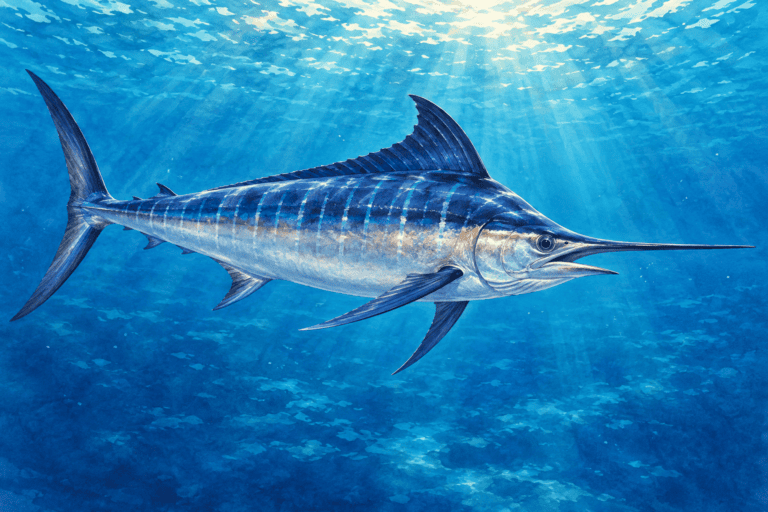
Black Marlin

Spanish name
Marlín negro
Scientific name
Istiompax indica

What Do Pico & Tati Think?

Pico: “How can we tell this marlin apart?”

Tati: “Its stiff side fins are a useful clue.”

Identification

Key Features of the Black Marlin

  • Rigid pectoral fins that do not fold flat against the body.

  • A substantial head and comparatively stout bill.

  • A powerful streamlined body.

Habitat & range

Offshore Pacific waters.

Conservation & care

Observe marine wildlife without feeding, touching or chasing it. Keep litter and discarded fishing line out of waterways. Follow qualified guides and current local rules.

Threats & pressures

Fishing capture is a conservation concern for billfish. Tracking catches and releases helps assess pressures across a migratory range.

View full profile →

Nature Field Guide

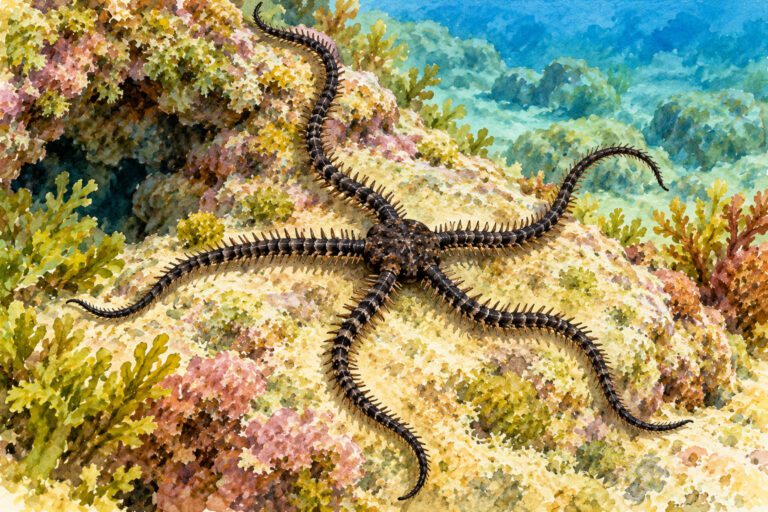
Black Spiny Brittle Star

Spanish name
Ofiura negra espinosa
Scientific name
Ophiocoma aethiops

What Do Pico & Tati Think?

A thin arm at the edge of a shelter can be an entire discovery. Pico waits quietly; Tati draws only what is visible.

Identification

Key Features of the Black Spiny Brittle Star

  • A central disc distinct from the arms

  • Long slender arms with visible spines

  • Only part of the animal may be visible naturally

Habitat & range

Suitable underwater coastal habitat. Use a permitted guided snorkeling or viewing activity appropriate to your family; do not enter the sea just to find this animal.

Conservation & care

Watch without touching, lifting, feeding or collecting. Keep fingers and equipment away from spines and other surface structures. Leave the animal submerged and its habitat undisturbed.

View full profile →

Nature Field Guide

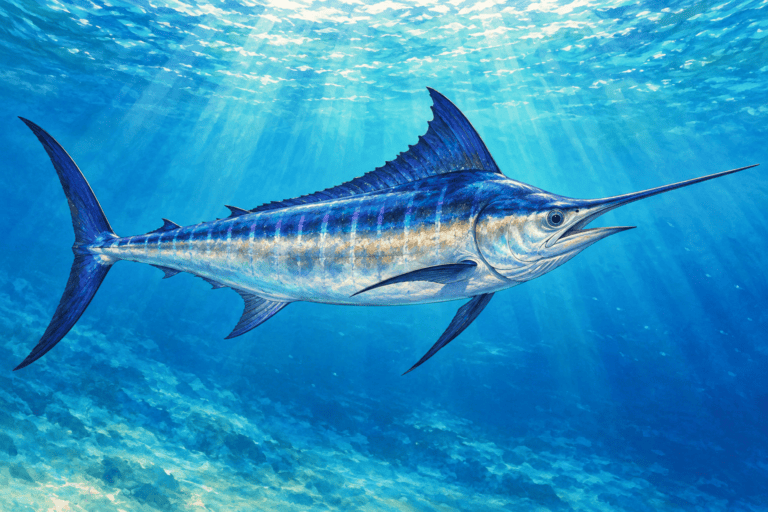
Blue Marlin

Spanish name
Marlín azul
Scientific name
Makaira nigricans

What Do Pico & Tati Think?

Pico: “Its back is such a deep blue!”

Tati: “Let’s compare its fin and bill with the other marlin.”

Identification

Key Features of the Blue Marlin

  • A long spear-shaped bill.

  • A cobalt-blue back and silvery underside.

  • A pronounced front dorsal fin and crescent-shaped tail.

Habitat & range

Warm tropical and subtropical open water.

Seasonal Calendar

Regional presence

Costa Rican Pacific waters

Year-round

FECOP reports year-round Costa Rican Pacific presence and a historical May–September Guanacaste fishing peak. Catch patterns are not exact migration or breeding dates.

Event source ↗

Reported fishing peak

Guanacaste offshore waters

May, Jun, Jul, Aug, Sep

FECOP reports year-round Costa Rican Pacific presence and a historical May–September Guanacaste fishing peak. Catch patterns are not exact migration or breeding dates.

Event source ↗

Conservation & care

Observe marine wildlife without feeding, touching or chasing it. Keep litter and discarded fishing line out of waterways. Follow qualified guides and current local rules.

Threats & pressures

Blue marlin can be caught incidentally in longline fisheries targeting tuna and swordfish. Fishing pressure needs monitoring across its migratory range.

View full profile →

Nature Field Guide

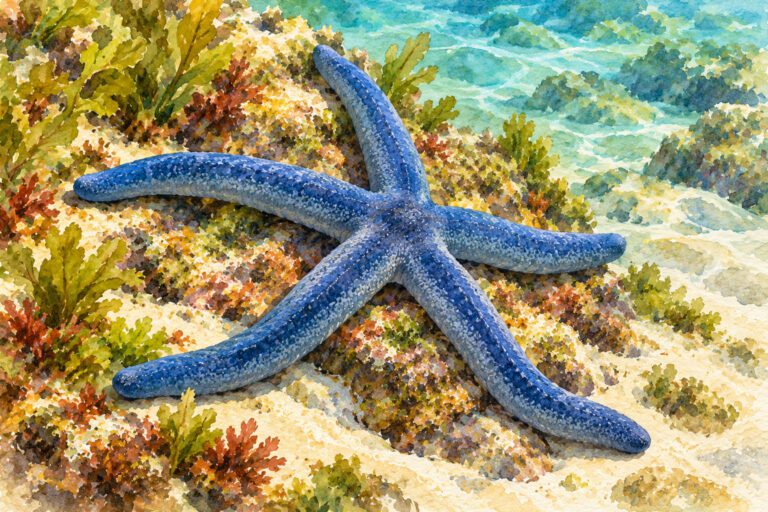
Blue Sea Star

Spanish name
Estrella azul
Scientific name
Phataria unifascialis

What Do Pico & Tati Think?

An ocean star can turn a quiet look underwater into a new question. What details would help you recognize it again?

Identification

Key Features of the Blue Sea Star

  • A central body with spreading arms

  • Record the visible color and pattern

  • Confirm the species using several features together

Habitat & range

Suitable underwater coastal habitat. Use a permitted guided snorkeling or viewing activity appropriate to your family; do not enter the sea just to find this animal.

Conservation & care

Watch without touching, lifting, feeding or collecting. Keep fingers and equipment away from spines and other surface structures. Leave the animal submerged and its habitat undisturbed.

View full profile →

Nature Field Guide

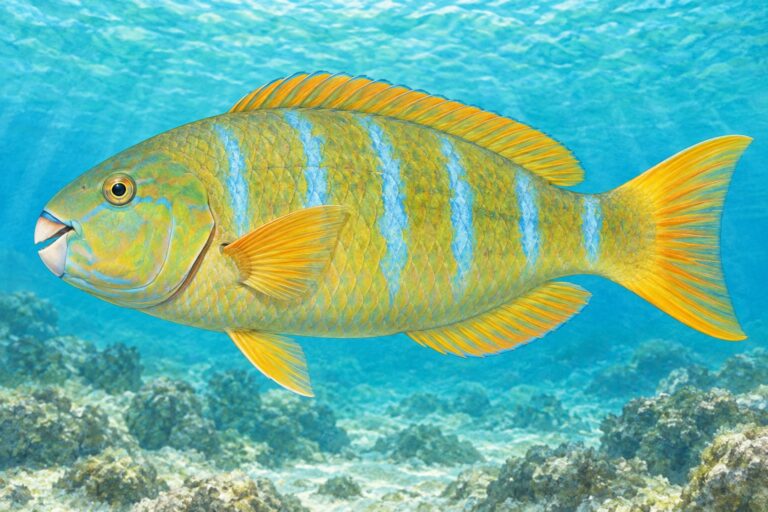
Bluebarred Parrotfish

Spanish name
Loro de bandas azules
Scientific name
Scarus ghobban

What Do Pico & Tati Think?

Pico: “Why is it called a parrotfish?”

Tati: “Its teeth join into plates that look like a beak.”

Identification

Key Features of the Bluebarred Parrotfish

  • Parrot-like dental beak

  • Blue bars in initial phase

  • Large visible scales

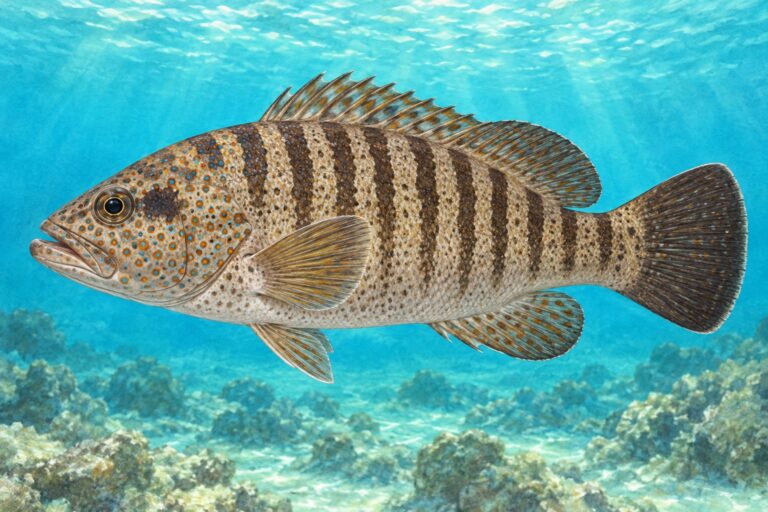
Habitat & range

Pacific rocky reefs and nearby coastal marine habitats. Check the linked species reference for its wider range.

Conservation & care

Observe with a qualified guide. Do not feed, chase or handle fish. Keep fins off the reef and take all litter home.

Threats & pressures

Habitat damage and degraded water quality are pressures to prevent in coastal fish habitats. This profile does not quantify a local decline.

View full profile →

Nature Field Guide

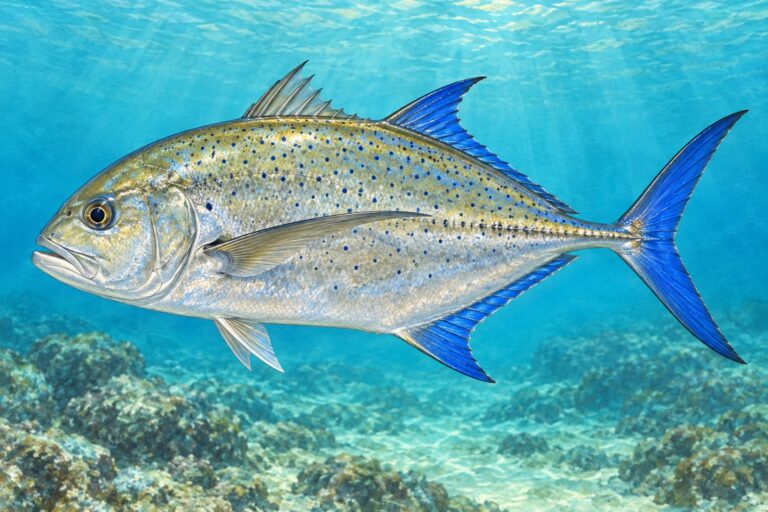
Bluefin Trevally

Spanish name
Jurel aleta azul
Scientific name
Caranx melampygus

What Do Pico & Tati Think?

Pico: “Those blue fins really stand out!”

Tati: “The tiny blue-black spots are another clue in adults.”

Identification

Key Features of the Bluefin Trevally

  • Electric blue fins

  • Blue-black body spots in adults

  • Deeply forked tail

Habitat & range

Pacific rocky reefs and nearby coastal marine habitats. Check the linked species reference for its wider range.

Conservation & care

Observe with a qualified guide. Do not feed, chase or handle fish. Keep fins off the reef and take all litter home.

Threats & pressures

Habitat damage and degraded water quality are pressures to prevent in coastal fish habitats. This profile does not quantify a local decline.

View full profile →

Nature Field Guide

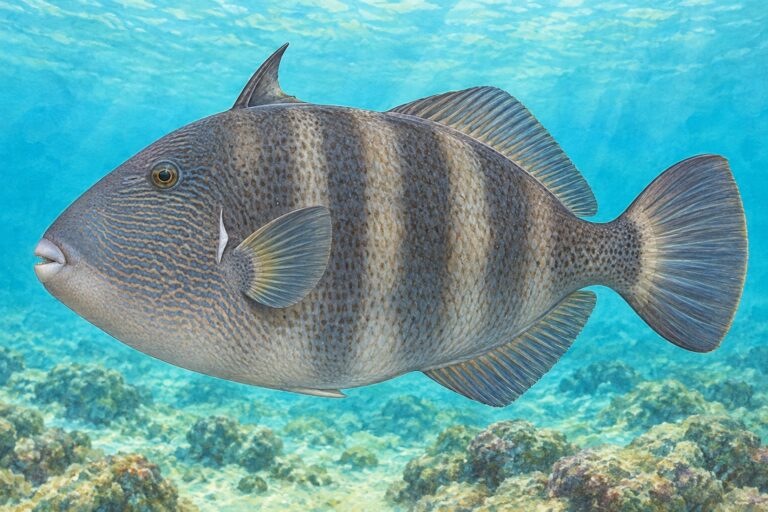
Blunthead Triggerfish

Spanish name
Chancho fisgón
Scientific name
Pseudobalistes naufragium

What Do Pico & Tati Think?

Pico: “Can you see the little white gill opening?”

Tati: “Yes. That and its blunt head are useful clues.”

Identification

Key Features of the Blunthead Triggerfish

  • Thick gray body

  • Pale white gill slit

  • Faint bars and blunt head

Habitat & range

Pacific rocky reefs and nearby coastal marine habitats. Check the linked species reference for its wider range.

Conservation & care

Keep clear of tail-base structures and strong jaws. Observe with a qualified guide. Do not feed, chase or handle fish. Keep fins off the reef and take all litter home.

Threats & pressures

Habitat damage and degraded water quality are pressures to prevent in coastal fish habitats. This profile does not quantify a local decline.

View full profile →

Nature Field Guide

Bradley’s Sea Star

Spanish name
Estrella de mar de Bradley
Scientific name
Mithrodia bradleyi

What Do Pico & Tati Think?

A sea star can look still while its place in the reef is full of life. Pico wants to sketch its outline; Tati wants to compare its arms.

Identification

Key Features of the Bradley’s Sea Star

  • Arms radiating from a central body

  • A textured upper surface

  • Compare the whole outline with a verified species photograph

Habitat & range

Suitable underwater coastal habitat. Use a permitted guided snorkeling or viewing activity appropriate to your family; do not enter the sea just to find this animal.

Conservation & care

Watch without touching, lifting, feeding or collecting. Keep fingers and equipment away from spines and other surface structures. Leave the animal submerged and its habitat undisturbed.

View full profile →

Nature Field Guide

Bull Shark

Spanish name
Tiburón toro
Scientific name
Carcharhinus leucas

What Do Pico & Tati Think?

Pico: “That shark looks strong and stocky!”

Tati: “It can move between salt water and fresh water.”

Identification

Key Features of the Bull Shark

  • A stocky gray body with a pale belly.

  • A short, broad rounded snout and small eyes.

  • A large triangular first dorsal fin.

Habitat & range

Tropical and subtropical coastal waters, estuaries and some freshwater systems.

Conservation & care

Observe marine wildlife without feeding, touching or chasing it. Keep litter and discarded fishing line out of waterways. Follow qualified guides and current local rules.

Threats & pressures

Capture in fisheries affects bull sharks. Coastal development and damage to estuarine nursery habitats can put young animals under additional pressure.

View full profile →

Nature Field Guide

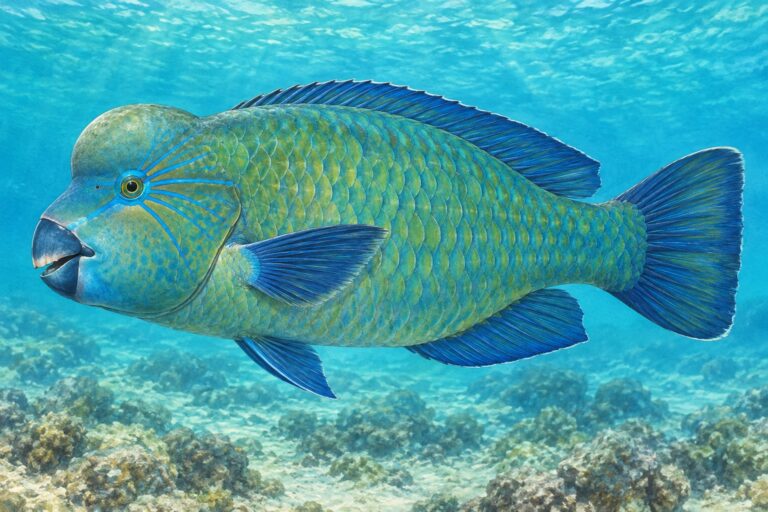
Bumphead Parrotfish

Spanish name
Loro jorobado
Scientific name
Scarus perrico

What Do Pico & Tati Think?

Pico: “Does every fish have that forehead bump?”

Tati: “The hump becomes clearer in large individuals of this species.”

Identification

Key Features of the Bumphead Parrotfish

  • Blue beak

  • Green body and darker fins

  • Forehead hump in large fish

Habitat & range

Pacific rocky reefs and nearby coastal marine habitats. Check the linked species reference for its wider range.

Conservation & care

Observe with a qualified guide. Do not feed, chase or handle fish. Keep fins off the reef and take all litter home.

Threats & pressures

Habitat damage and degraded water quality are pressures to prevent in coastal fish habitats. This profile does not quantify a local decline.

View full profile →

Nature Field Guide

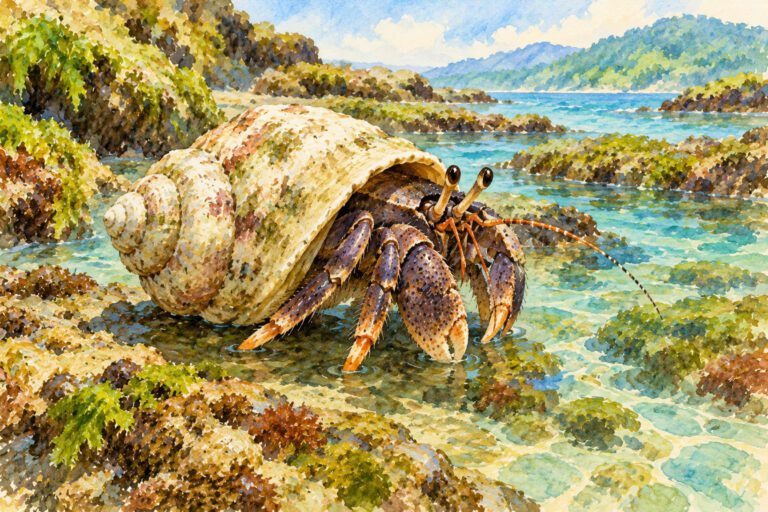
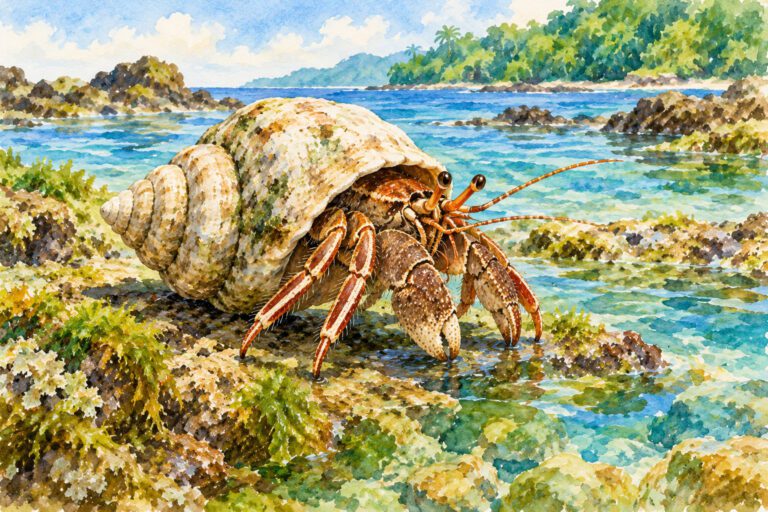
Calcinus Hermit Crab

Spanish name
Cangrejo ermitaño Calcinus
Scientific name
Calcinus obscurus

What Do Pico & Tati Think?

Pico thinks a shell has moved. Tati waits until a small leg appears before writing down what she has seen.

Identification

Key Features of the Calcinus Hermit Crab

  • A marine hermit crab in a borrowed shell

  • Visible legs and claws at the shell opening

  • The shell species and crab species are separate identifications

Habitat & range

Rocky shore and naturally visible tidal habitat. Choose a permitted observation point with an adult; do not turn rocks or reach into holes.

Conservation & care

Give claws and burrow entrances space. Do not handle, feed, chase or collect crabs. Leave rocks and shells where they are, and follow your adult’s route and local signs.

View full profile →

Nature Field Guide

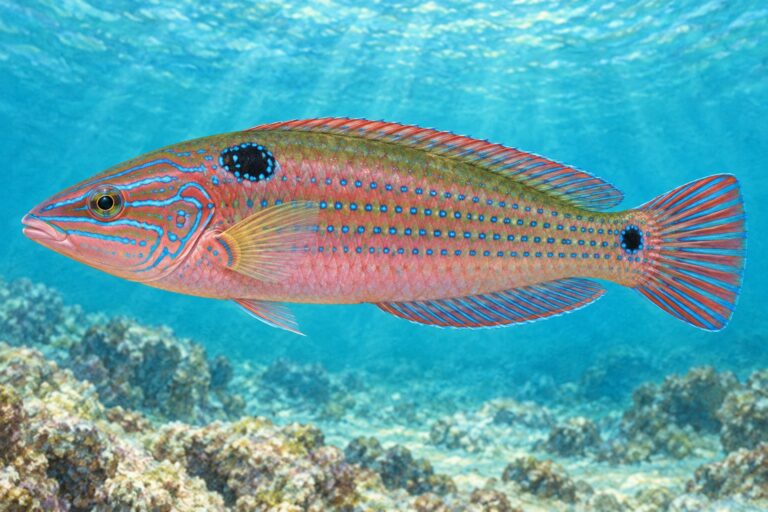
Chameleon Wrasse

Spanish name
Señorita camaleón
Scientific name
Halichoeres dispilus

What Do Pico & Tati Think?

Pico: “This wrasse has so many colors!”

Tati: “Start with the shoulder blotch, then check its other markings.”

Identification

Key Features of the Chameleon Wrasse

  • Slender wrasse body

  • Dark shoulder blotch

  • Blue markings in colorful adults

Habitat & range

Pacific rocky reefs and nearby coastal marine habitats. Check the linked species reference for its wider range.

Conservation & care

Observe with a qualified guide. Do not feed, chase or handle fish. Keep fins off the reef and take all litter home.

Threats & pressures

Habitat damage and degraded water quality are pressures to prevent in coastal fish habitats. This profile does not quantify a local decline.

View full profile →

Nature Field Guide

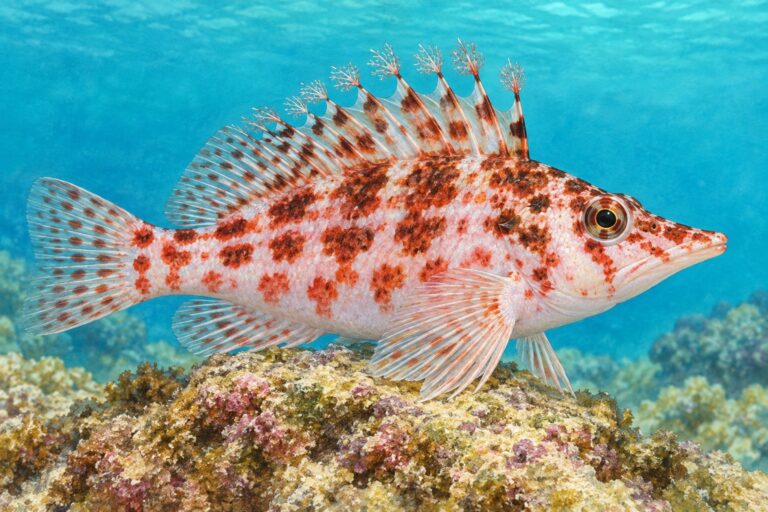
Coral Hawkfish

Spanish name
Halcón de coral
Scientific name
Cirrhitichthys oxycephalus

What Do Pico & Tati Think?

Pico: “It looks like it is keeping watch!”

Tati: “Let’s find the blotches and tiny tufts on its dorsal spines.”

Identification

Key Features of the Coral Hawkfish

  • Red-brown blotches on pale body

  • Pointed snout

  • Tufts on dorsal spine tips

Habitat & range

Pacific rocky reefs and nearby coastal marine habitats. Check the linked species reference for its wider range.

Conservation & care

Observe with a qualified guide. Do not feed, chase or handle fish. Keep fins off the reef and take all litter home.

Threats & pressures

Habitat damage and degraded water quality are pressures to prevent in coastal fish habitats. This profile does not quantify a local decline.

View full profile →

Nature Field Guide

Cortez Angelfish

Spanish name
Ángel de Cortés
Scientific name
Pomacanthus zonipectus

What Do Pico & Tati Think?

Pico: “The young angelfish looks completely different!”

Tati: “The tall body and small mouth are clues in both life stages.”

Identification

Key Features of the Cortez Angelfish

  • Tall flattened body

  • Yellow bands and tail in adults

  • Curved yellow and blue juvenile bars

Habitat & range

Pacific rocky reefs and nearby coastal marine habitats. Check the linked species reference for its wider range.

Conservation & care

Observe with a qualified guide. Do not feed, chase or handle fish. Keep fins off the reef and take all litter home.

Threats & pressures

Habitat damage and degraded water quality are pressures to prevent in coastal fish habitats. This profile does not quantify a local decline.

View full profile →

Nature Field Guide

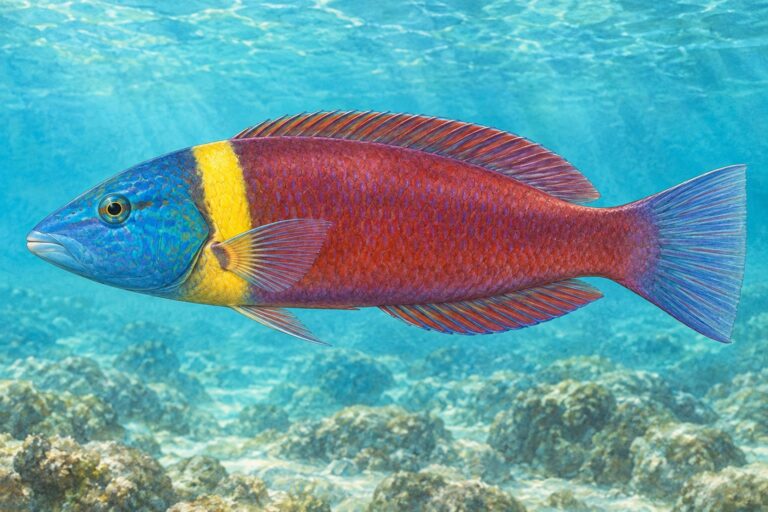
Cortez Rainbow Wrasse

Spanish name
Viejita arco iris
Scientific name
Thalassoma lucasanum

What Do Pico & Tati Think?

Pico: “How can these two wrasses look so different?”

Tati: “Their colors can change with life phase. Let’s compare more than one picture.”

Identification

Key Features of the Cortez Rainbow Wrasse

  • Slender wrasse shape

  • Striped initial phase

  • Blue head and yellow shoulder bar in terminal phase

Habitat & range

Pacific rocky reefs and nearby coastal marine habitats. Check the linked species reference for its wider range.

Conservation & care

Observe with a qualified guide. Do not feed, chase or handle fish. Keep fins off the reef and take all litter home.

Threats & pressures

Habitat damage and degraded water quality are pressures to prevent in coastal fish habitats. This profile does not quantify a local decline.

View full profile →

Nature Field Guide

Crown Sea Urchin

Spanish name
Erizo corona
Scientific name
Astropyga pulvinata

What Do Pico & Tati Think?

One spiny animal is interesting. A gathering of them raises even more questions. Pico and Tati watch without moving closer.

Identification

Key Features of the Crown Sea Urchin

  • Long slender spines

  • Small bright blue body spots may be visible

  • Observe without approaching the spines

Habitat & range

Suitable underwater coastal habitat. Use a permitted guided snorkeling or viewing activity appropriate to your family; do not enter the sea just to find this animal.

Conservation & care

Watch without touching, lifting, feeding or collecting. Keep fingers and equipment away from spines and other surface structures. Leave the animal submerged and its habitat undisturbed.

View full profile →

Nature Field Guide

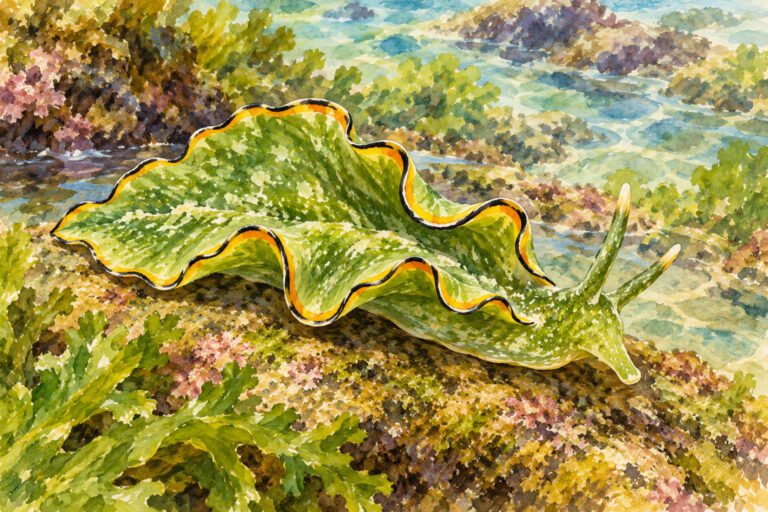
Diomedea Leaf Sea Slug

Spanish name
Babosa marina de hoja
Scientific name
Elysia diomedea

What Do Pico & Tati Think?

Pico spots a leafy-looking shape. Tati asks how an animal can blend into the algae around it.

Identification

Key Features of the Diomedea Leaf Sea Slug

  • A small soft body with folded sides

  • Greenish coloring with contrasting lines

  • Tentacle-like rhinophores on the head

Habitat & range

Suitable underwater coastal habitat. Use a permitted guided snorkeling or viewing activity appropriate to your family; do not enter the sea just to find this animal.

Conservation & care

Watch without touching, lifting, feeding or collecting. Keep fingers and equipment away from spines and other surface structures. Leave the animal submerged and its habitat undisturbed.

View full profile →

Nature Field Guide

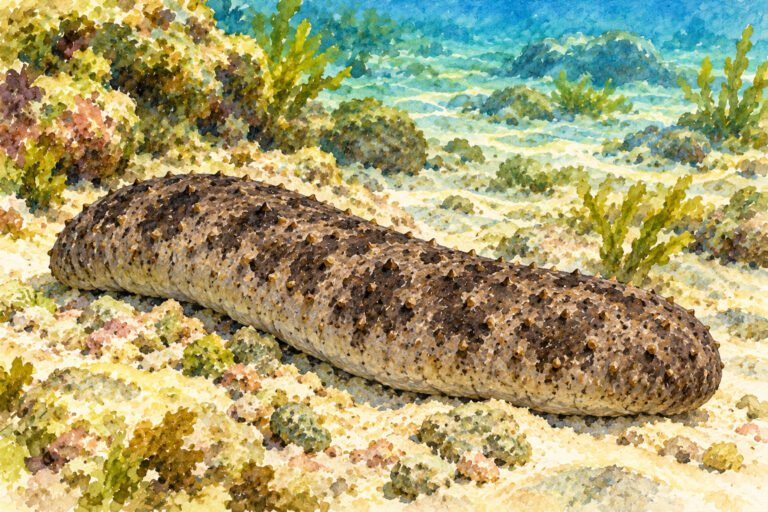
Dusky Sea Cucumber

Spanish name
Pepino de mar
Scientific name
Holothuria fuscocinerea

What Do Pico & Tati Think?

It does not need a star-shaped outline to be related to sea stars. Pico and Tati meet a different kind of echinoderm.

Identification

Key Features of the Dusky Sea Cucumber

  • An elongated body resting on the seabed

  • No radiating arms like a sea star

  • Photograph the animal in place for expert comparison

Habitat & range

Suitable underwater coastal habitat. Use a permitted guided snorkeling or viewing activity appropriate to your family; do not enter the sea just to find this animal.

Conservation & care

Watch without touching, lifting, feeding or collecting. Keep fingers and equipment away from spines and other surface structures. Leave the animal submerged and its habitat undisturbed.

View full profile →

Nature Field Guide

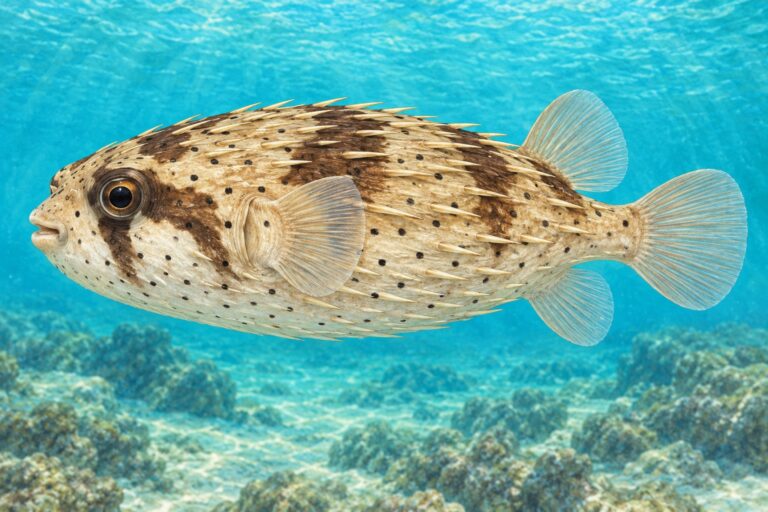
Freckled Porcupinefish

Spanish name
Pez erizo
Scientific name
Diodon holocanthus

What Do Pico & Tati Think?

Pico: “Are those little spines?”

Tati: “Yes. We can study them in a photograph without disturbing the fish.”

Identification

Key Features of the Freckled Porcupinefish

  • Long movable body spines

  • Dark blotches and eye band

  • Pale unspotted fins

Habitat & range

Pacific rocky reefs and nearby coastal marine habitats. Check the linked species reference for its wider range.

Conservation & care

Never touch, collect, eat or deliberately inflate puffers or porcupinefish. Observe with a qualified guide. Do not feed, chase or handle fish. Keep fins off the reef and take all litter home.

Threats & pressures

Habitat damage and degraded water quality are pressures to prevent in coastal fish habitats. This profile does not quantify a local decline.

View full profile →

Nature Field Guide

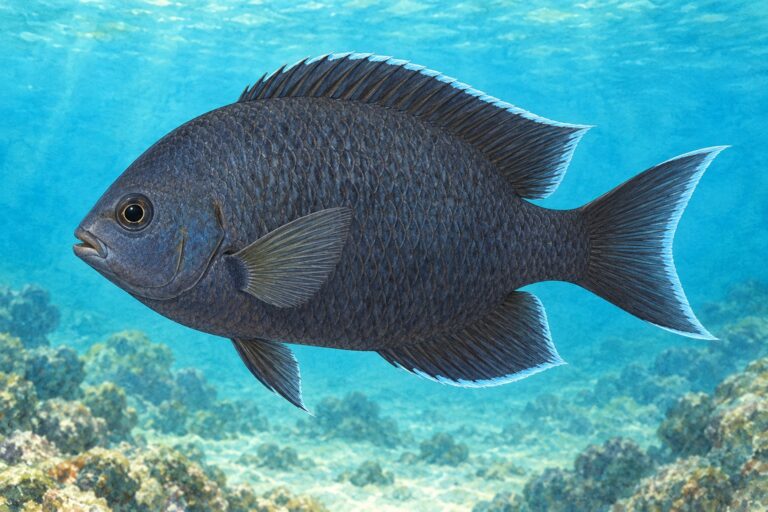
Giant Damselfish

Spanish name
Damisela gigante
Scientific name
Microspathodon dorsalis

What Do Pico & Tati Think?

Pico: “This damselfish looks almost black!”

Tati: “Adults and young can look different. Let’s compare their fin edges.”

Identification

Key Features of the Giant Damselfish

  • Deep dark blue-gray body

  • Narrow pale fin edges

  • No pronounced forehead hump

Habitat & range

Pacific rocky reefs and nearby coastal marine habitats. Check the linked species reference for its wider range.

Conservation & care

Observe with a qualified guide. Do not feed, chase or handle fish. Keep fins off the reef and take all litter home.

Threats & pressures

Habitat damage and degraded water quality are pressures to prevent in coastal fish habitats. This profile does not quantify a local decline.

View full profile →

Nature Field Guide

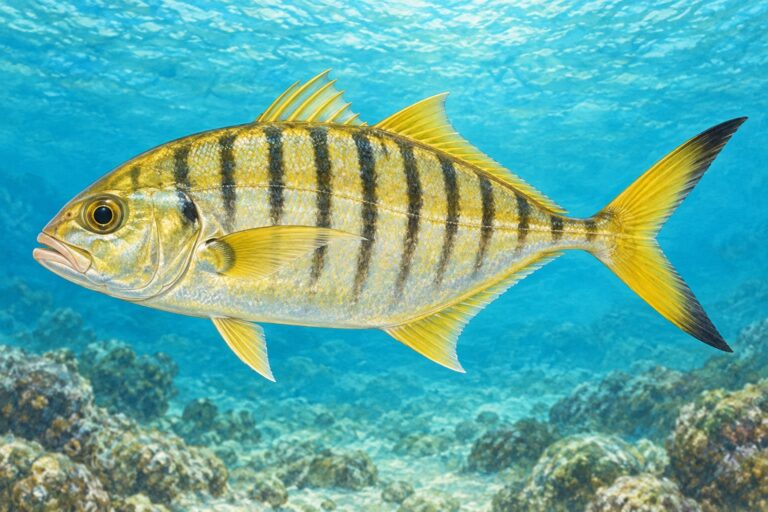
Golden Trevally

Spanish name
Jurel dorado
Scientific name
Gnathanodon speciosus

What Do Pico & Tati Think?

Pico: “This little jack looks golden!”

Tati: “Older fish look more silver. The yellow fins are a useful clue.”

Identification

Key Features of the Golden Trevally

  • Thick fleshy lips

  • Yellow fins

  • Dark bars strongest in young fish

Habitat & range

Pacific coastal waters over sandy and other soft bottoms near reef areas.

Conservation & care

Observe with a qualified guide. Do not feed, chase or handle fish. Keep fins off the reef and take all litter home.

Threats & pressures

Habitat damage and degraded water quality are pressures to prevent in coastal fish habitats. This profile does not quantify a local decline.

View full profile →

Nature Field Guide

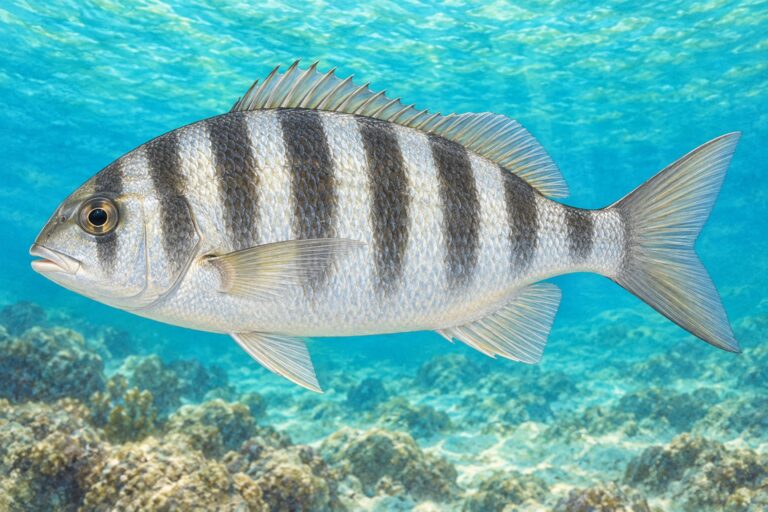
Graybar Grunt

Spanish name
Roncador almejero
Scientific name
Haemulon sexfasciatum

What Do Pico & Tati Think?

Pico: “Are those bars or stripes?”

Tati: “The adult has broad bars. Young fish can show lengthwise stripes.”

Identification

Key Features of the Graybar Grunt

  • About five or six broad bars

  • Silver-white body

  • Forked tail and low mouth

Habitat & range

Pacific rocky reefs and nearby coastal marine habitats. Check the linked species reference for its wider range.

Conservation & care

Observe with a qualified guide. Do not feed, chase or handle fish. Keep fins off the reef and take all litter home.

Threats & pressures

Habitat damage and degraded water quality are pressures to prevent in coastal fish habitats. This profile does not quantify a local decline.

View full profile →

Nature Field Guide

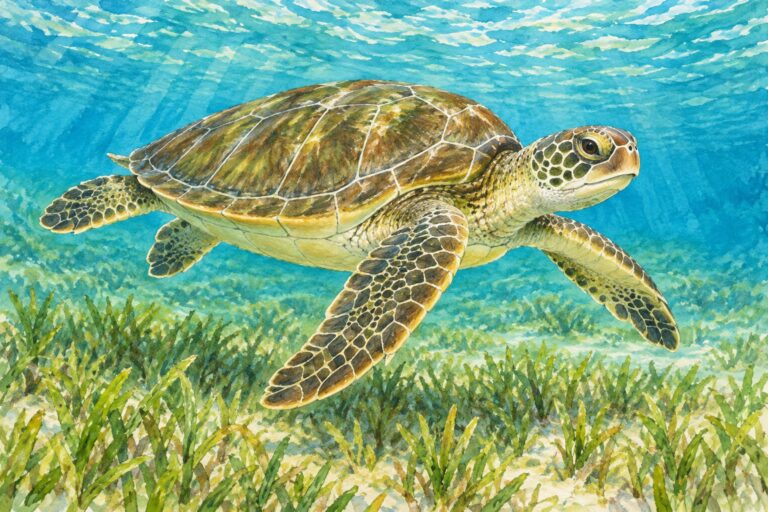
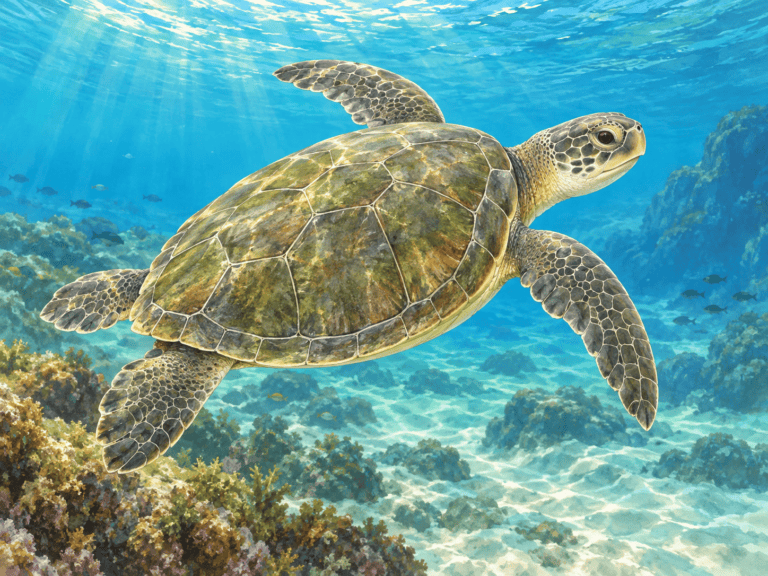
Green Sea Turtle

Spanish name
Tortuga verde / Tortuga negra
Scientific name
Chelonia mydas

What Do Pico & Tati Think?

Pico: “What clues help us recognize this reptile?”

Tati: “Let’s notice its shape, markings and habitat from a respectful distance.”

Identification

Key Features of the Green Sea Turtle

  • Smooth oval carapace

  • Rounded rather than sharply hooked head

  • Four pairs of lateral shell scutes

Habitat & range

Pacific and Caribbean coastal waters; Tortuguero and Cahuita are documented Caribbean examples.

Conservation & care

Never touch, chase, ride or feed a sea turtle. Keep clear of nesting females, eggs and hatchlings. Follow local beach rules and authorized guides; avoid lights and flash photography during nesting observations. Leave shells and wildlife products out of your purchases.

Threats & pressures

Protect nesting beaches and marine habitats. Reduce plastic waste, avoid disturbing wildlife and do not buy turtle products.

View full profile →

Nature Field Guide

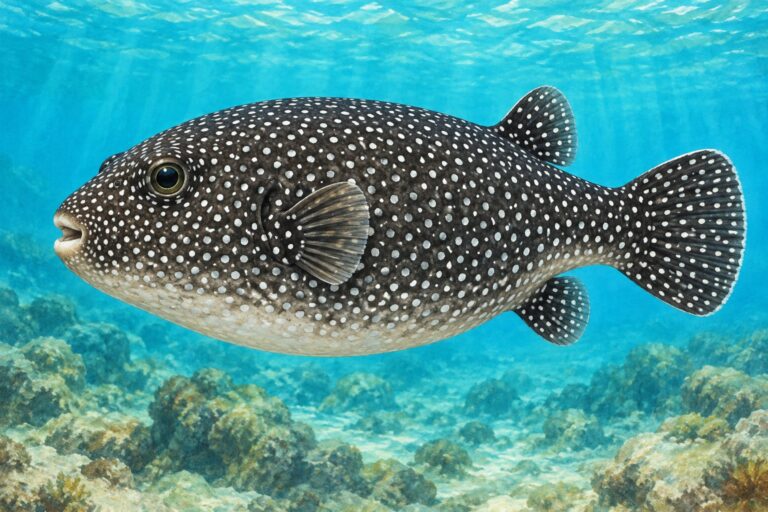
Guineafowl Puffer

Spanish name
Tamboril negro
Scientific name
Arothron meleagris

What Do Pico & Tati Think?

Pico: “Is the yellow puffer a different kind?”

Tati: “This species has different color forms. Shape matters too.”

Identification

Key Features of the Guineafowl Puffer

  • Blunt head and heavy body

  • White dots on the dark form

  • Rounded tail and small rear fins

Habitat & range

Pacific rocky reefs and nearby coastal marine habitats. Check the linked species reference for its wider range.

Conservation & care

Never touch, collect, eat or deliberately inflate puffers or porcupinefish. Observe with a qualified guide. Do not feed, chase or handle fish. Keep fins off the reef and take all litter home.

Threats & pressures

Habitat damage and degraded water quality are pressures to prevent in coastal fish habitats. This profile does not quantify a local decline.

View full profile →

Nature Field Guide

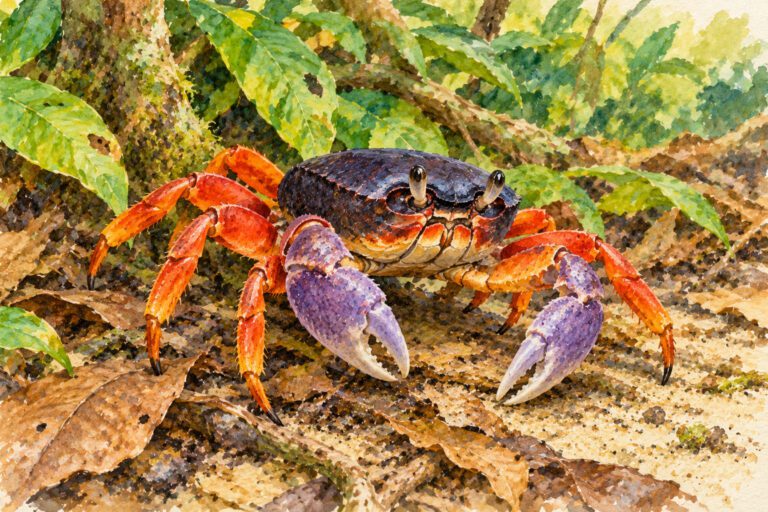
Halloween Land Crab

Spanish name
Cangrejo arlequín
Scientific name
Gecarcinus quadratus

What Do Pico & Tati Think?

Not every coastal crab lives underwater. Pico and Tati look at the ground beside the path without leaving it.

Identification

Key Features of the Halloween Land Crab

  • A crab walking on land near coastal vegetation

  • Burrows may be present in suitable ground

  • Confirm the species from the whole animal, not a burrow alone

Habitat & range

Coastal vegetation and adjacent ground. Stay on established routes and do not search inside burrows.

Conservation & care

Give claws and burrow entrances space. Do not handle, feed, chase or collect crabs. Leave rocks and shells where they are, and follow your adult’s route and local signs.

View full profile →

Nature Field Guide

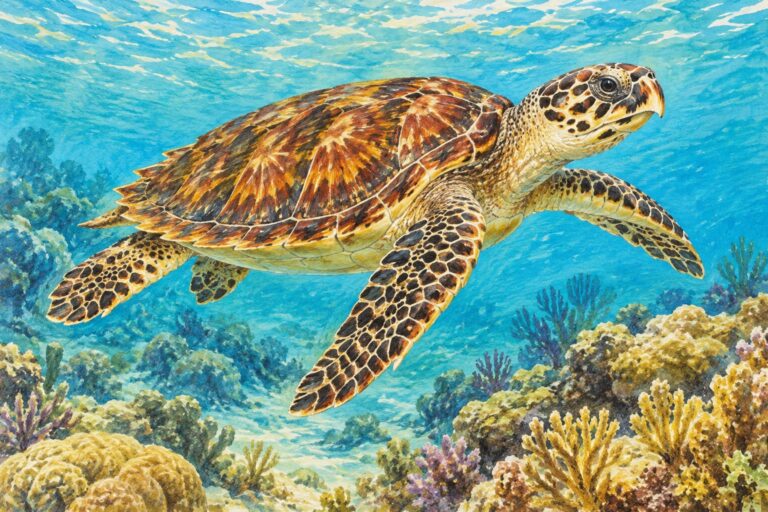
Hawksbill Sea Turtle

Spanish name
Tortuga carey
Scientific name
Eretmochelys imbricata

What Do Pico & Tati Think?

Pico: “What clues help us recognize this reptile?”

Tati: “Let’s notice its shape, markings and habitat from a respectful distance.”

Identification

Key Features of the Hawksbill Sea Turtle

  • Narrow hooked beak

  • Overlapping patterned shell scutes

  • Often a serrated rear shell edge

Habitat & range

Pacific and Caribbean coastal waters and reefs; documented sites include Cahuita and Tortuguero.

Conservation & care

Never touch, chase, ride or feed a sea turtle. Keep clear of nesting females, eggs and hatchlings. Follow local beach rules and authorized guides; avoid lights and flash photography during nesting observations. Leave shells and wildlife products out of your purchases.

Threats & pressures

Protect nesting beaches and marine habitats. Reduce plastic waste, avoid disturbing wildlife and do not buy turtle products.

View full profile →

Nature Field Guide

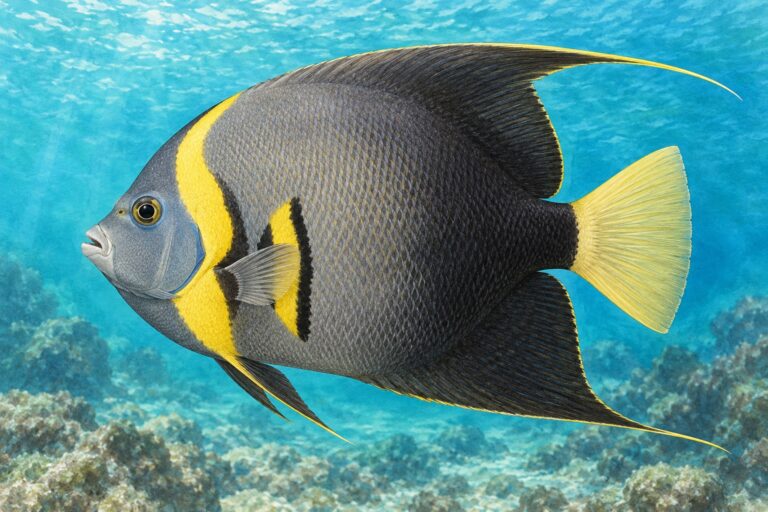
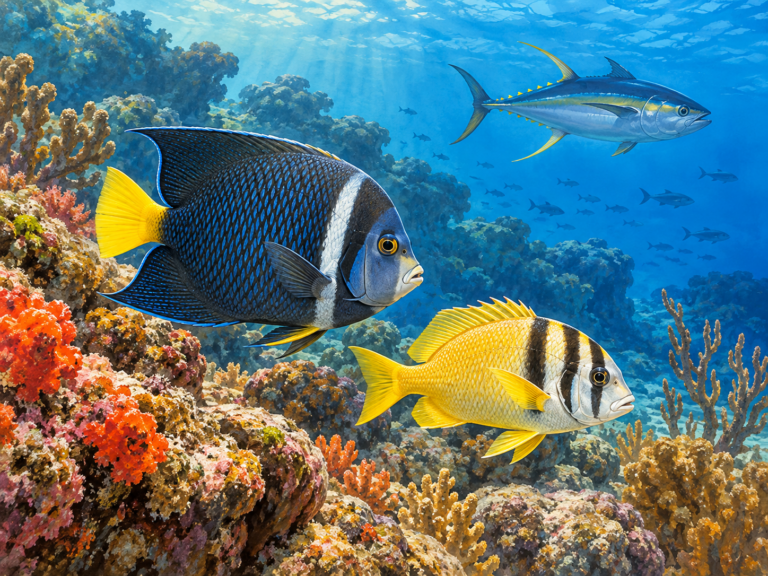
King Angelfish

Spanish name
Ángel real / Ángel bandera
Scientific name
Holacanthus passer

What Do Pico & Tati Think?

Pico: “That fish has a bright stripe!”

Tati: “Let’s compare the adult pattern with a young fish before deciding what we see.”

Identification

Key Features of the King Angelfish

  • A deep, flattened body and small mouth.

  • Adults have a narrow white bar against a dark blue-gray body.

  • A yellow tail; juveniles have a different barred pattern.

Habitat & range

Reef-associated eastern Pacific marine habitats. Costa Rican records used here include Isla del Coco, the Salinas/Santa Elena area of Guanacaste, and Isla del Caño in the South Pacific. These are documented examples, not a complete range map.

Conservation & care

Follow park rules and qualified guides. Do not feed, touch, chase or collect marine wildlife. Maintain distance and avoid contact with reef habitat.

View full profile →

Nature Field Guide

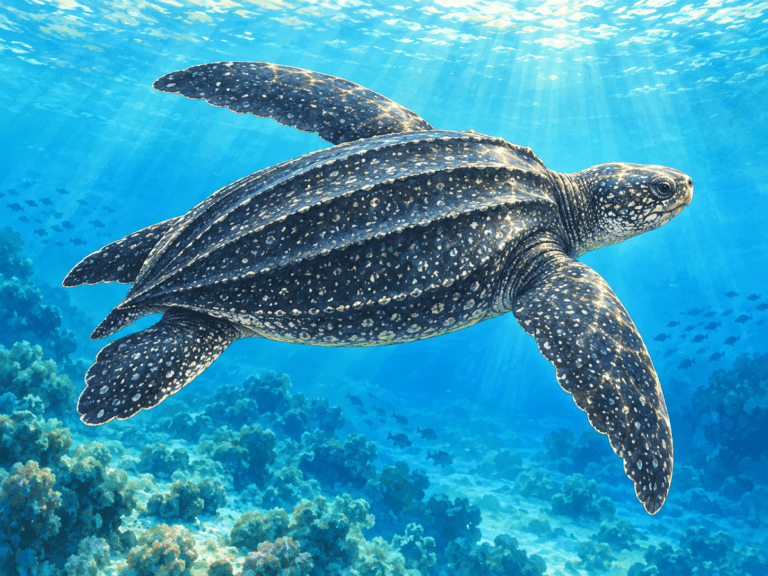
Leatherback Sea Turtle

Spanish name
Tortuga baula
Scientific name
Dermochelys coriacea

What Do Pico & Tati Think?

Pico: “Those ridges make its back look so different.”

Tati: “Let’s find out how this turtle’s life connects the ocean with the beach.”

Identification

Key Features of the Leatherback Sea Turtle

  • A dark, leathery back rather than large hard shell plates.

  • Seven lengthwise ridges along the back.

  • Long front flippers on a very large sea turtle.

Habitat & range

Open ocean feeding habitats and nesting beaches. SINAC identifies Playa Grande, Ventanas and Langosta as nesting areas within Las Baulas.

Seasonal Calendar

Nesting

Las Baulas: Playa Grande, Ventanas and Langosta

Jan, Feb, Oct, Nov, Dec

SINAC lists October–February as the park’s nesting season. Eggs incubate approximately two months; hatching follows individual laying dates. Nesting is distinct from migration. Follow current park access rules; this is not a tour schedule.

Event source ↗

Conservation & care

Never touch a turtle, eggs or hatchlings. Respect beach closures and avoid lights near nesting habitat. Keep plastics and other litter out of the sea.

View full profile →

Nature Field Guide

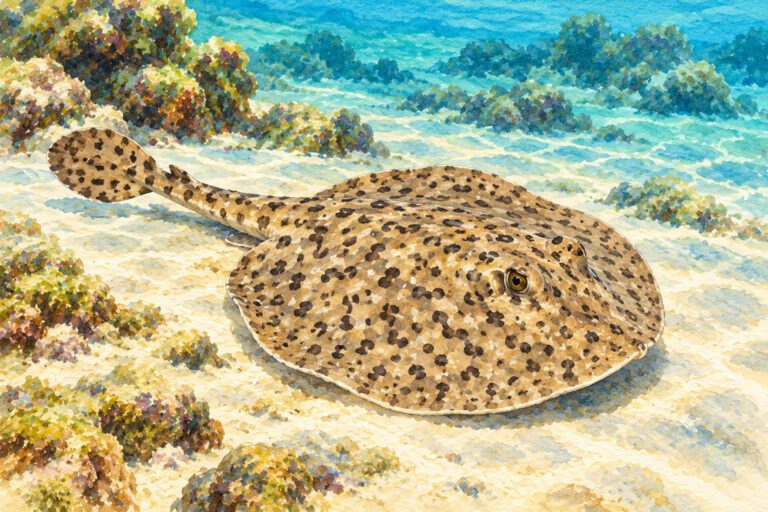
Leopard Roundray

Spanish name
Raya redonda leopardo
Scientific name
Urobatis pardalis

What Do Pico & Tati Think?

A quiet shape on the seabed might be easy to miss. Pico and Tati give rays space and let a marine guide help them observe.

Identification

Key Features of the Leopard Roundray

  • A rounded disc

  • Small dark spots and short wavy markings on a pale brown upper surface

  • A relatively short tail with a rounded fin

Habitat & range

Suitable underwater coastal habitat. Use a permitted guided snorkeling or viewing activity appropriate to your family; do not enter the sea just to find this animal.

Conservation & care

Observe rays without approaching, touching, feeding, cornering or following them. Stay with a qualified local guide and follow their instructions about entering and moving in the water.

View full profile →

Nature Field Guide

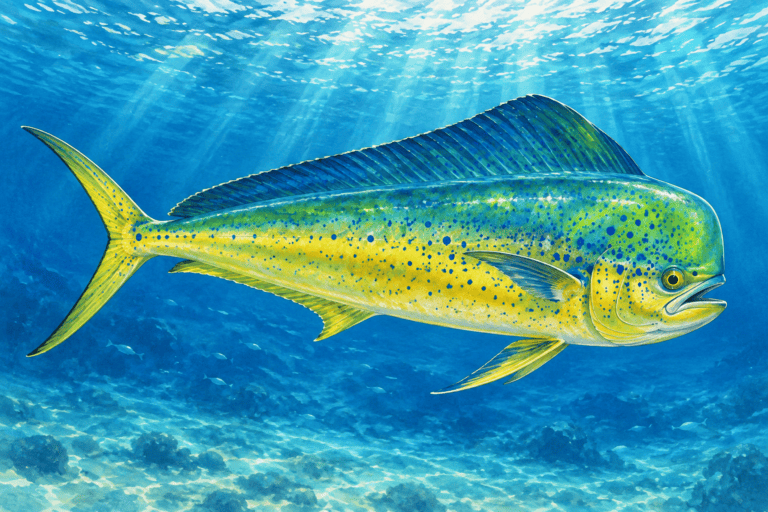
Mahi-mahi (Dorado)

Spanish name
Dorado
Scientific name
Coryphaena hippurus

What Do Pico & Tati Think?

Pico: “It looks green, blue and gold!”

Tati: “Dorado is another name for mahi-mahi—it is a fish, not a dolphin.”

Identification

Key Features of the Mahi-mahi (Dorado)

  • An electric green-blue back with golden sides.

  • A long continuous dorsal fin.

  • A deeply forked tail and spotted body.

Habitat & range

Tropical and subtropical surface waters offshore.

Seasonal Calendar

Regional presence

Costa Rican Pacific waters

Year-round

FECOP reports mahi-mahi throughout the year on Costa Rica’s Pacific coast. Regional presence does not imply constant abundance or guaranteed viewing.

Event source ↗

Conservation & care

Observe marine wildlife without feeding, touching or chasing it. Keep litter and discarded fishing line out of waterways. Follow qualified guides and current local rules.

Threats & pressures

Mahi-mahi are harvested directly and can also be caught incidentally in tuna and swordfish fisheries. Fast growth does not remove the need to monitor fishing pressure.

View full profile →

Nature Field Guide

Mexican Hogfish

Spanish name
Vieja mexicana
Scientific name
Bodianus diplotaenia

What Do Pico & Tati Think?

Pico: “Its tail looks dipped in yellow!”

Tati: “The stripes and sturdy body help us recognize this color phase.”

Identification

Key Features of the Mexican Hogfish

  • Robust wrasse body

  • Two dark stripes in initial phase

  • Yellow tail in initial phase

Habitat & range

Pacific rocky reefs and nearby coastal marine habitats. Check the linked species reference for its wider range.

Conservation & care

Observe with a qualified guide. Do not feed, chase or handle fish. Keep fins off the reef and take all litter home.

Threats & pressures

Habitat damage and degraded water quality are pressures to prevent in coastal fish habitats. This profile does not quantify a local decline.

View full profile →

Nature Field Guide

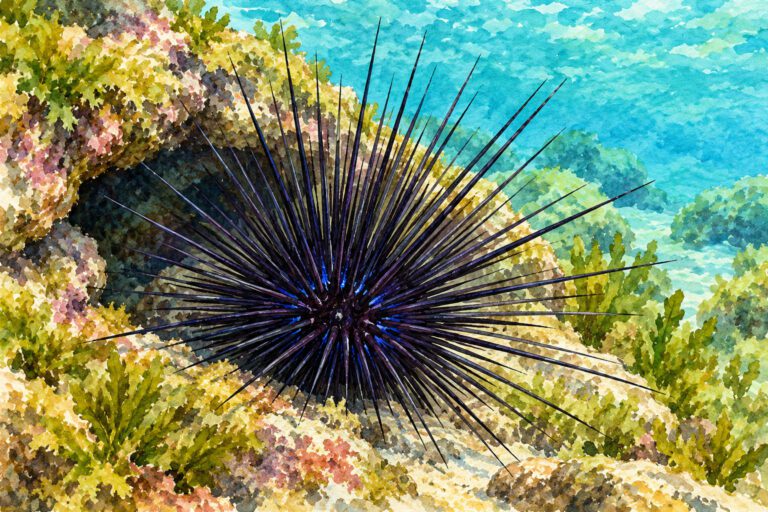
Mexican Long-spined Sea Urchin

Spanish name
Erizo de espinas largas
Scientific name
Diadema mexicanum

What Do Pico & Tati Think?

Long spines make a striking silhouette. Pico draws the shape from a distance while Tati notices the shelter around it.

Identification

Key Features of the Mexican Long-spined Sea Urchin

  • Long thin spines extending beyond the body

  • A shelter or opening among rocks may be nearby

  • A silhouette is a clue, not a complete species identification

Habitat & range

Suitable underwater coastal habitat. Use a permitted guided snorkeling or viewing activity appropriate to your family; do not enter the sea just to find this animal.

Conservation & care

Watch without touching, lifting, feeding or collecting. Keep fingers and equipment away from spines and other surface structures. Leave the animal submerged and its habitat undisturbed.

View full profile →

Nature Field Guide

Mottled Shore Crab

Spanish name
Cangrejo costero moteado
Scientific name
Pachygrapsus transversus

What Do Pico & Tati Think?

Pico waits for a small movement between rocks. Tati records the difference between a hiding place and a feeding place.

Identification

Key Features of the Mottled Shore Crab

  • A small crab on rocky shore

  • Look for movement near existing crevices

  • Use a verified photograph to compare markings and body proportions

Habitat & range

Rocky shore and naturally visible tidal habitat. Choose a permitted observation point with an adult; do not turn rocks or reach into holes.

Conservation & care

Give claws and burrow entrances space. Do not handle, feed, chase or collect crabs. Leave rocks and shells where they are, and follow your adult’s route and local signs.

View full profile →

Nature Field Guide

Olive Ridley Sea Turtle

Spanish name
Tortuga lora
Scientific name
Lepidochelys olivacea

What Do Pico & Tati Think?

Pico: “This turtle has plates on its shell.”

Tati: “Comparing different turtles helps us notice the features that tell them apart.”

Identification

Key Features of the Olive Ridley Sea Turtle

  • An olive or gray-green hard shell.

  • A heart-shaped upper shell with visible plates.

  • A relatively small sea turtle compared with a leatherback.

Habitat & range

Tropical ocean waters, coastal habitats and nesting beaches. The species is recorded by SINAC for Las Baulas.

Seasonal Calendar

Nesting events

Ostional National Wildlife Refuge

Year-round

Ostional reference, not a Tamarindo calendar: arribadas occur across the year, not continuously or on fixed dates. SINAC notes dry-season months may have none and rainy-season months may have multiple events. Confirm timing with the refuge.

Event source ↗

Conservation & care

Leave turtles, nests and hatchlings undisturbed. Respect closures and do not use lights in nesting habitat. Reduce plastic waste and report distressed wildlife to local authorities.

View full profile →

Nature Field Guide

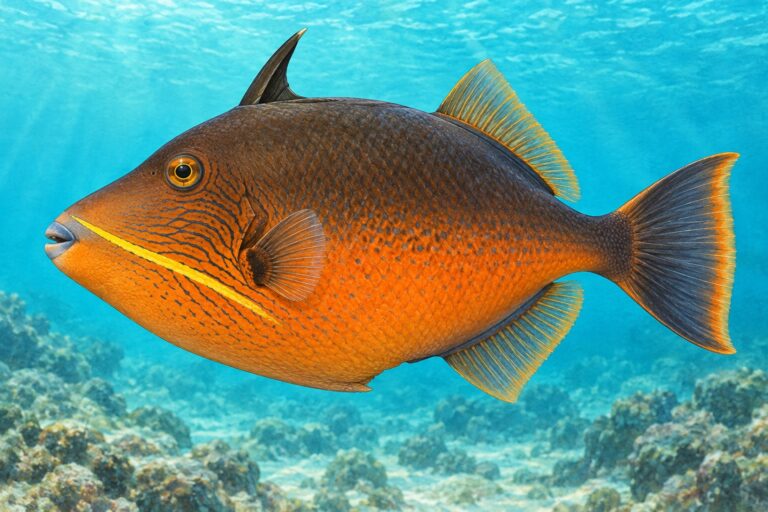
Orangeside Triggerfish

Spanish name
Chancho de costado naranja
Scientific name
Sufflamen verres

What Do Pico & Tati Think?

Pico: “Its lower side is orange!”

Tati: “The yellow mark below the mouth helps us compare triggerfish.”

Identification

Key Features of the Orangeside Triggerfish

  • Brown back and orange lower side

  • Yellow diagonal lower-head mark

  • Deep triggerfish body

Habitat & range

Pacific rocky reefs and nearby coastal marine habitats. Check the linked species reference for its wider range.

Conservation & care

Keep clear of tail-base structures and strong jaws. Observe with a qualified guide. Do not feed, chase or handle fish. Keep fins off the reef and take all litter home.

Threats & pressures

Habitat damage and degraded water quality are pressures to prevent in coastal fish habitats. This profile does not quantify a local decline.

View full profile →

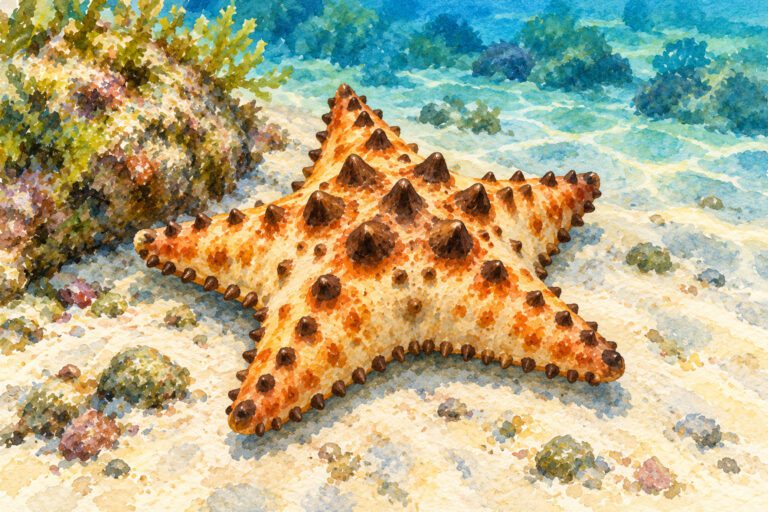
Nature Field Guide

Pacific Chocolate Chip Sea Star

Spanish name
Estrella chocolate del Pacífico
Scientific name
Nidorellia armata

What Do Pico & Tati Think?

Those bumps might remind Pico of chocolate chips, but this star is a living animal. Tati’s rule is simple: look closely and leave it in the water.

Identification

Key Features of the Pacific Chocolate Chip Sea Star

  • A broad star-shaped outline

  • Conspicuous raised knobs on the upper surface

  • Check Nidorellia armata rather than relying on the common name alone

Habitat & range

Suitable underwater coastal habitat. Use a permitted guided snorkeling or viewing activity appropriate to your family; do not enter the sea just to find this animal.

Conservation & care

Watch without touching, lifting, feeding or collecting. Keep fingers and equipment away from spines and other surface structures. Leave the animal submerged and its habitat undisturbed.

View full profile →

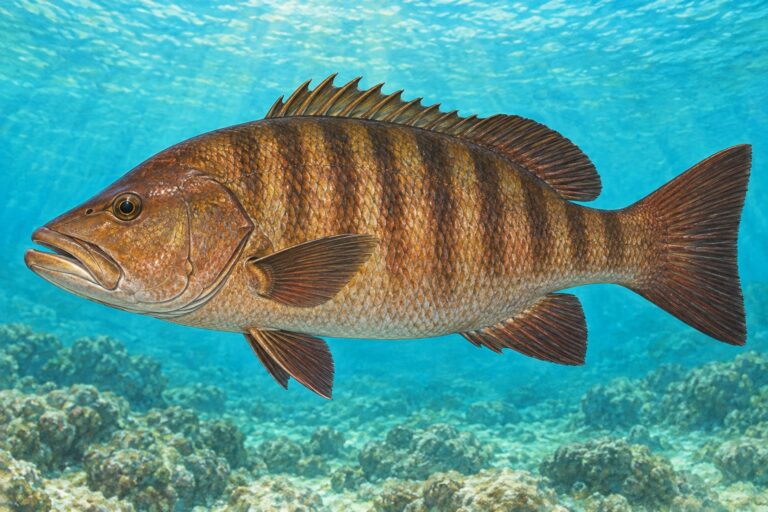
Nature Field Guide

Pacific Cubera Snapper

Spanish name
Pargo dientón
Scientific name
Lutjanus novemfasciatus

What Do Pico & Tati Think?

Pico: “That snapper has such a strong head!”

Tati: “Let’s compare the body bars and tail with other snappers.”

Identification

Key Features of the Pacific Cubera Snapper

  • Large head and mouth

  • Olive or copper body

  • Dusky bars that may fade

Habitat & range

Pacific rocky reefs and nearby coastal marine habitats. Check the linked species reference for its wider range.

Conservation & care

Observe with a qualified guide. Do not feed, chase or handle fish. Keep fins off the reef and take all litter home.

Threats & pressures

Habitat damage and degraded water quality are pressures to prevent in coastal fish habitats. This profile does not quantify a local decline.

View full profile →

Nature Field Guide

Pacific Flower Sea Urchin

Spanish name
Erizo de flor del Pacífico
Scientific name
Toxopneustes roseus

What Do Pico & Tati Think?

A name can sound delicate even when an animal needs plenty of space. Pico and Tati admire this urchin without touching it.

Identification

Key Features of the Pacific Flower Sea Urchin

  • A rounded urchin body

  • Flower-like surface structures may be visible in a verified photograph

  • Observe the complete animal without contact

Habitat & range

Suitable underwater coastal habitat. Use a permitted guided snorkeling or viewing activity appropriate to your family; do not enter the sea just to find this animal.

Conservation & care

Watch without touching, lifting, feeding or collecting. Keep fingers and equipment away from spines and other surface structures. Leave the animal submerged and its habitat undisturbed.

View full profile →

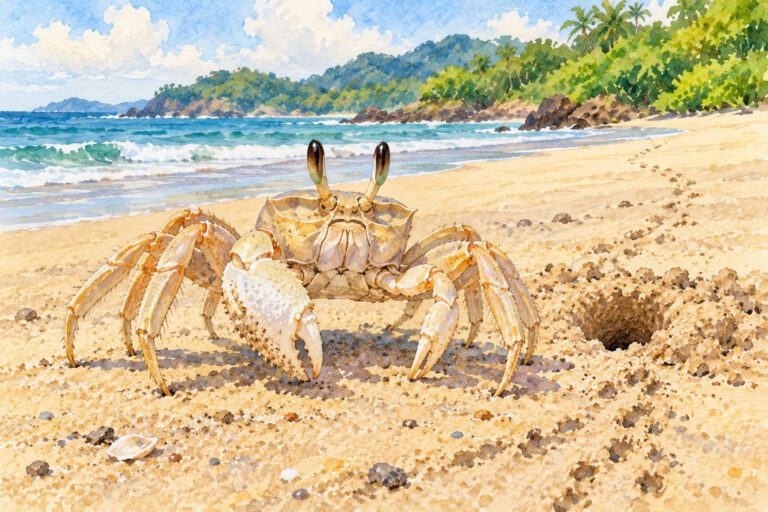
Nature Field Guide

Pacific Ghost Crab

Spanish name
Cangrejo fantasma del Pacífico
Scientific name
Ocypode gaudichaudii

What Do Pico & Tati Think?

A tiny trail across the sand gives Pico a clue. Tati wonders whether the animal is nearby or hidden below.

Identification

Key Features of the Pacific Ghost Crab

  • A crab moving over beach sand

  • Eyes carried above the body on stalks

  • Tracks and burrows are clues but not proof of species

Habitat & range

Sandy beach above the wash of the waves. Observe tracks and any naturally visible crabs from a distance.

Conservation & care

Give claws and burrow entrances space. Do not handle, feed, chase or collect crabs. Leave rocks and shells where they are, and follow your adult’s route and local signs.

View full profile →

Nature Field Guide

Pacific Graysby

Spanish name
Cabrilla panameña
Scientific name
Cephalopholis panamensis

What Do Pico & Tati Think?

Pico: “I spotted a dark patch beside its eye!”

Tati: “Now let’s check the narrow bars and rounded tail.”

Identification

Key Features of the Pacific Graysby

  • Narrow dark vertical bars

  • Dark patch behind the eye

  • Rounded tail

Habitat & range

Pacific rocky reefs and nearby coastal marine habitats. Check the linked species reference for its wider range.

Conservation & care

Observe with a qualified guide. Do not feed, chase or handle fish. Keep fins off the reef and take all litter home.

Threats & pressures

Habitat damage and degraded water quality are pressures to prevent in coastal fish habitats. This profile does not quantify a local decline.

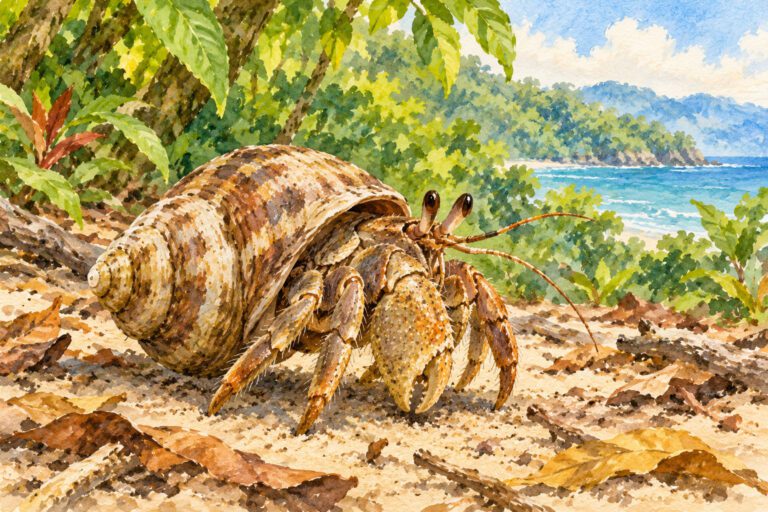
View full profile →

Nature Field Guide

Pacific Land Hermit Crab

Spanish name
Cangrejo ermitaño terrestre del Pacífico
Scientific name
Coenobita compressus

What Do Pico & Tati Think?

Pico calls it a traveling home. Tati remembers that an apparently empty shell may already belong to a crab.

Identification

Key Features of the Pacific Land Hermit Crab

  • A hermit crab walking on land

  • A shell carried over the abdomen

  • Visible legs and claws can retreat inside the opening

Habitat & range

Coastal vegetation and adjacent ground. Stay on established routes and do not search inside burrows.

Conservation & care

Adults are adapted to life on land. Do not place the crab in water, remove its shell, collect it or keep it as a pet. Leave coastal shelters undisturbed.

View full profile →

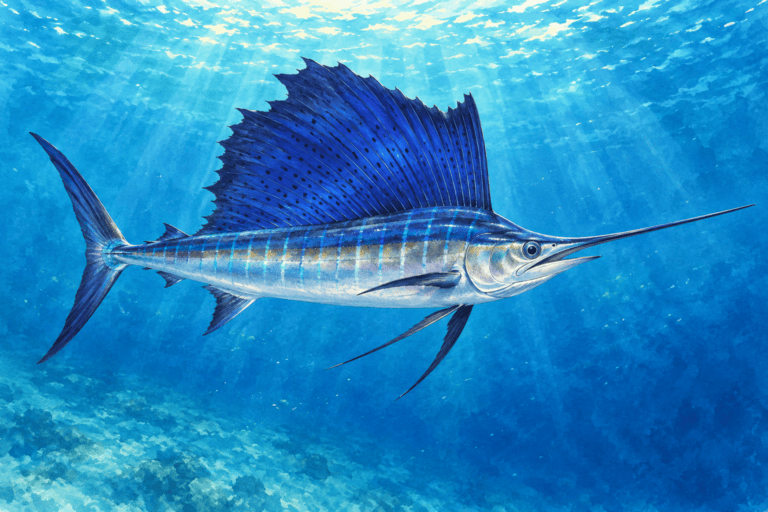
Nature Field Guide

Pacific Sailfish

Spanish name
Pez vela
Scientific name
Istiophorus platypterus

What Do Pico & Tati Think?

Pico: “Its fin looks like a sail!”

Tati: “That tall fin is our best first clue.”

Identification

Key Features of the Pacific Sailfish

  • A very tall sail-like first dorsal fin.

  • A long slender bill.

  • A slender blue-and-silver body.

Habitat & range

Warm Pacific marine waters, including offshore areas.

Seasonal Calendar

Regional presence

Costa Rican Pacific waters

Year-round

FECOP reports sailfish can be encountered throughout the year in Costa Rica. Concentrations vary between northern and central/southern waters. This is regional presence, not a fixed migration season.

Event source ↗

Conservation & care

Observe marine wildlife without feeding, touching or chasing it. Keep litter and discarded fishing line out of waterways. Follow qualified guides and current local rules.

Threats & pressures

Incidental capture in tuna fisheries and other fishing pressure can affect sailfish.

View full profile →

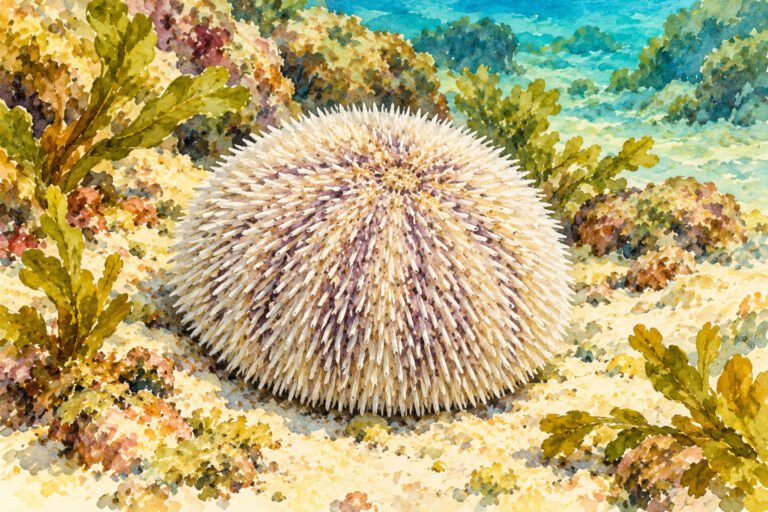
Nature Field Guide

Pacific White Sea Urchin

Spanish name
Erizo blanco del Pacífico
Scientific name
Tripneustes depressus

What Do Pico & Tati Think?

Pico notices a rounded shape on the seabed. Tati wants to compare its small details with other urchins.

Identification

Key Features of the Pacific White Sea Urchin

  • A rounded body

  • Relatively short spines

  • Confirm the species with a correctly labeled reference image

Habitat & range

Suitable underwater coastal habitat. Use a permitted guided snorkeling or viewing activity appropriate to your family; do not enter the sea just to find this animal.

Conservation & care

Watch without touching, lifting, feeding or collecting. Keep fingers and equipment away from spines and other surface structures. Leave the animal submerged and its habitat undisturbed.

View full profile →

Nature Field Guide

Panama Hermit Crab

Spanish name
Cangrejo ermitaño panameño
Scientific name
Clibanarius panamensis

What Do Pico & Tati Think?

A shell can be both a clue and a hiding place. Pico and Tati practice patience while its resident decides whether to appear.

Identification

Key Features of the Panama Hermit Crab

  • Legs or claws extending from a shell

  • An animal carrying the shell as it moves

  • Check the crab’s features with a specialist reference

Habitat & range

Rocky shore and naturally visible tidal habitat. Choose a permitted observation point with an adult; do not turn rocks or reach into holes.

Conservation & care

Give claws and burrow entrances space. Do not handle, feed, chase or collect crabs. Leave rocks and shells where they are, and follow your adult’s route and local signs.

View full profile →

Nature Field Guide

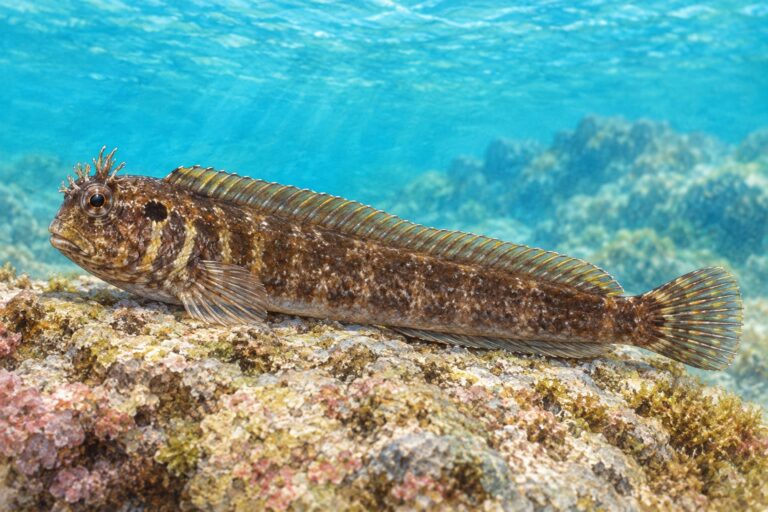
Panamic Fanged Blenny

Spanish name
Blenio de colmillos
Scientific name
Ophioblennius steindachneri

What Do Pico & Tati Think?

Pico: “This fish has a long, low body!”

Tati: “Its blunt head and tiny head appendages give us more clues.”

Identification

Key Features of the Panamic Fanged Blenny

  • Long dark body

  • Short blunt head

  • Small fleshy head appendages

Habitat & range

Shallow Pacific rocky reefs with surge; observe from a safe guided route.

Conservation & care

Observe with a qualified guide. Do not feed, chase or handle fish. Keep fins off the reef and take all litter home.

Threats & pressures

Habitat damage and degraded water quality are pressures to prevent in coastal fish habitats. This profile does not quantify a local decline.

View full profile →

Nature Field Guide

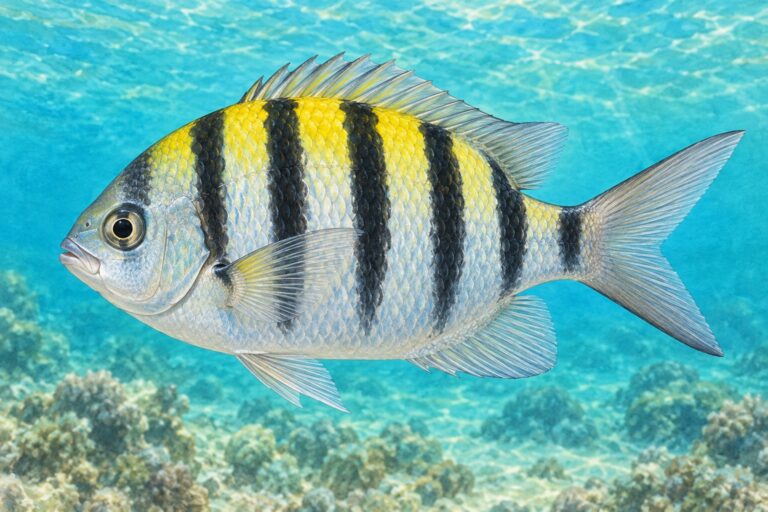
Panamic Sergeant Major

Spanish name
Sargento mayor
Scientific name
Abudefduf troschelii

What Do Pico & Tati Think?

Pico: “That fish is wearing stripes!”

Tati: “Those are vertical bars. Let’s count them and check its yellow back.”

Identification

Key Features of the Panamic Sergeant Major

  • Five vertical black bars

  • Yellow upper back

  • Deep silver body and forked tail

Habitat & range

Pacific rocky reefs and nearby coastal marine habitats. Check the linked species reference for its wider range.

Conservation & care

Observe with a qualified guide. Do not feed, chase or handle fish. Keep fins off the reef and take all litter home.

Threats & pressures

Habitat damage and degraded water quality are pressures to prevent in coastal fish habitats. This profile does not quantify a local decline.

View full profile →

Nature Field Guide

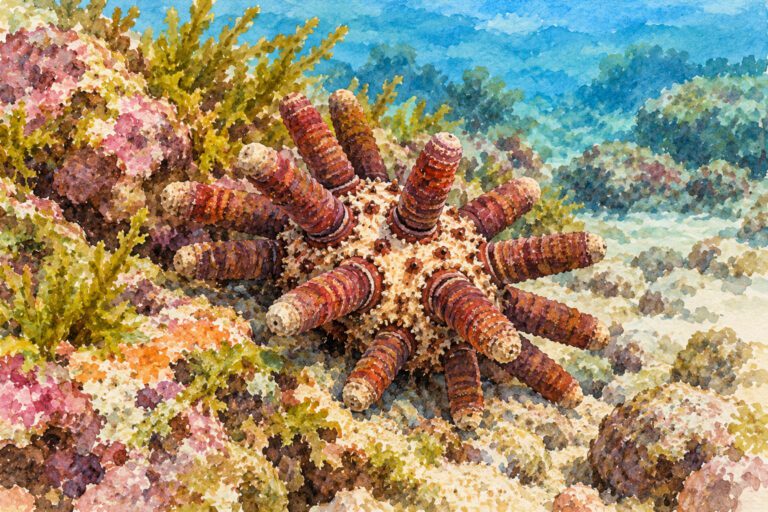
Pencil Sea Urchin

Spanish name
Erizo lapicero
Scientific name
Eucidaris thouarsii

What Do Pico & Tati Think?

Why do some spines look more like pencils than needles? Pico and Tati compare photographs before trying to name an urchin.

Identification

Key Features of the Pencil Sea Urchin

  • Thick pencil-like primary spines

  • A compact body among the spines

  • Compare with Eucidaris thouarsii, not an unlabeled aquarium photograph

Habitat & range

Suitable underwater coastal habitat. Use a permitted guided snorkeling or viewing activity appropriate to your family; do not enter the sea just to find this animal.

Conservation & care

Watch without touching, lifting, feeding or collecting. Keep fingers and equipment away from spines and other surface structures. Leave the animal submerged and its habitat undisturbed.

View full profile →

Nature Field Guide

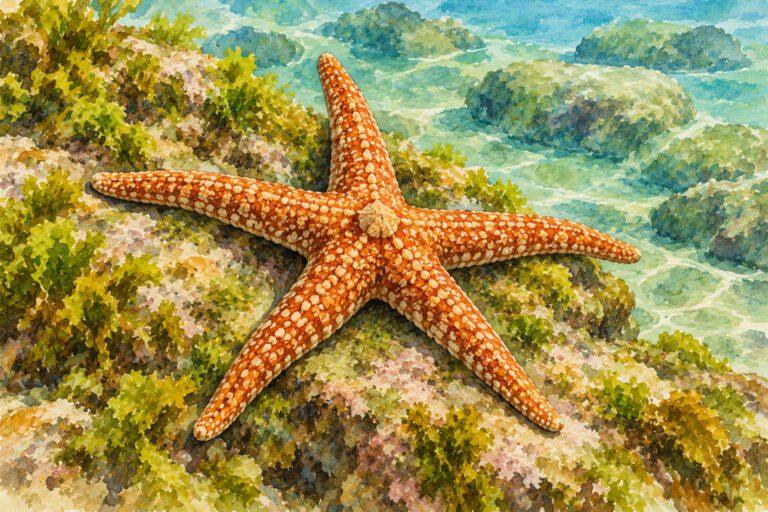
Pyramid Sea Star

Spanish name
Estrella pirámide
Scientific name
Pharia pyramidata

What Do Pico & Tati Think?

How would you draw a star that belongs to the ocean? Pico starts with the outline. Tati adds the small details she notices.

Identification

Key Features of the Pyramid Sea Star

  • A star-shaped body

  • Arms extending from the center

  • Surface details best recorded with a close photograph taken without disturbance

Habitat & range

Suitable underwater coastal habitat. Use a permitted guided snorkeling or viewing activity appropriate to your family; do not enter the sea just to find this animal.

Conservation & care

Watch without touching, lifting, feeding or collecting. Keep fingers and equipment away from spines and other surface structures. Leave the animal submerged and its habitat undisturbed.

View full profile →

Nature Field Guide

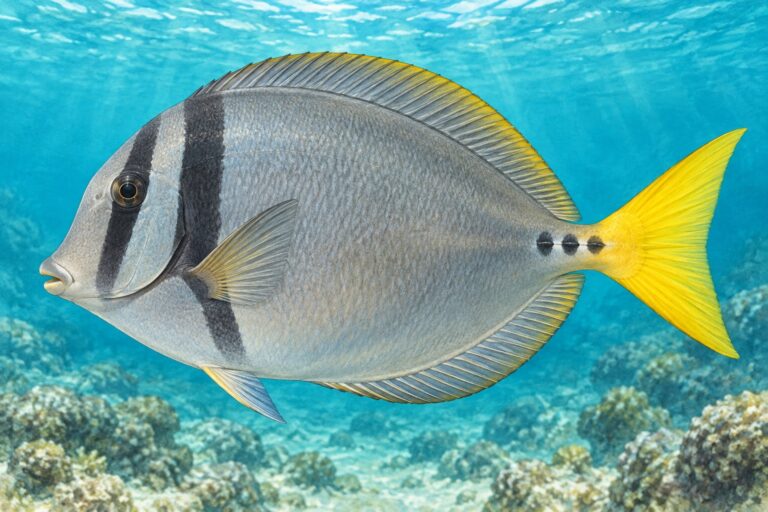
Razor Surgeonfish

Spanish name
Navajón barbero
Scientific name
Prionurus laticlavius

What Do Pico & Tati Think?

Pico: “A yellow tail behind a gray body!”

Tati: “Look at the shape too. We keep our hands away from the tail base.”

Identification

Key Features of the Razor Surgeonfish

  • Gray oval body

  • Bright yellow tail

  • Bony structures at tail base

Habitat & range

Pacific rocky reefs and nearby coastal marine habitats. Check the linked species reference for its wider range.

Conservation & care

Keep clear of tail-base structures and strong jaws. Observe with a qualified guide. Do not feed, chase or handle fish. Keep fins off the reef and take all litter home.

Threats & pressures

Habitat damage and degraded water quality are pressures to prevent in coastal fish habitats. This profile does not quantify a local decline.

View full profile →

Nature Field Guide

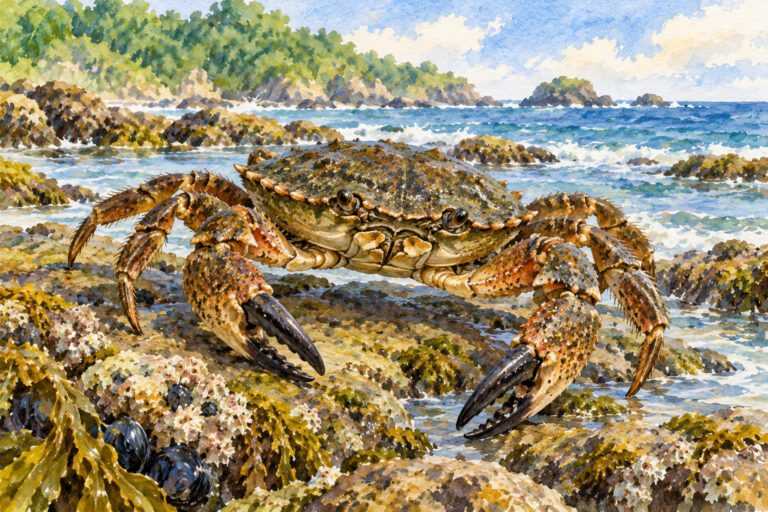
Rough-clawed Rock Crab

Spanish name
Cangrejo de roca de pinzas rugosas
Scientific name
Eriphia squamata

What Do Pico & Tati Think?

Pico notices the claws first. Tati checks the rest of the body before deciding what to write in the journal.

Identification

Key Features of the Rough-clawed Rock Crab

  • A broad carapace

  • Bumpy or rough-looking claw surfaces

  • Several features must agree for a confident identification

Habitat & range

Rocky shore and naturally visible tidal habitat. Choose a permitted observation point with an adult; do not turn rocks or reach into holes.

Conservation & care

Give claws and burrow entrances space. Do not handle, feed, chase or collect crabs. Leave rocks and shells where they are, and follow your adult’s route and local signs.

View full profile →

Nature Field Guide

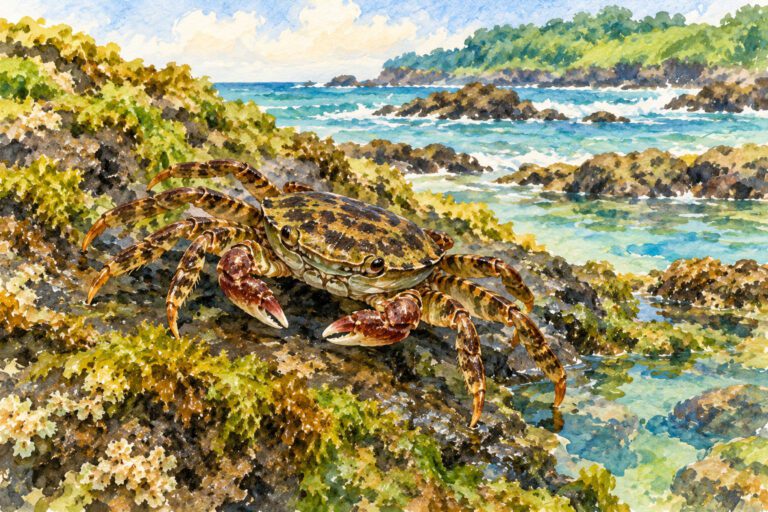
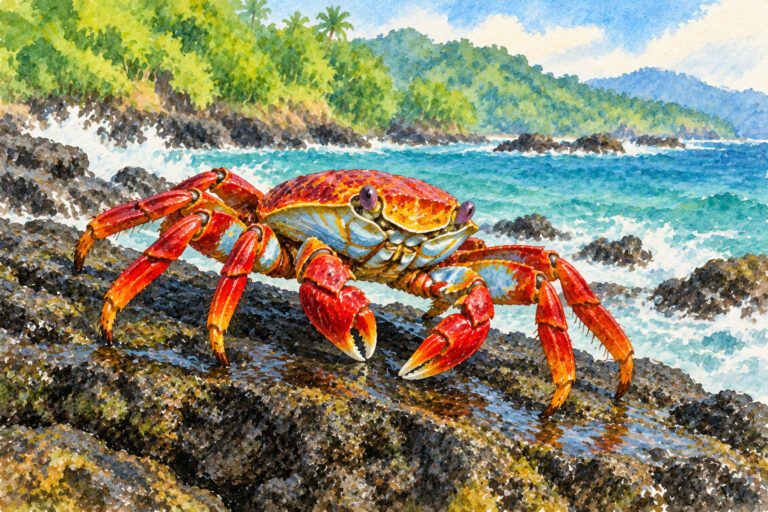
Sally Lightfoot Crab

Spanish name
Cangrejo zayapa
Scientific name
Grapsus grapsus

What Do Pico & Tati Think?

A shore crab’s careful steps can make a rocky coast feel like a busy neighborhood. Pico and Tati watch from stable ground.

Identification

Key Features of the Sally Lightfoot Crab

  • A crab on coastal rocks

  • A broad low body with legs extending sideways

  • Compare color, outline and other details together

Habitat & range

Rocky shore and naturally visible tidal habitat. Choose a permitted observation point with an adult; do not turn rocks or reach into holes.

Conservation & care

Give claws and burrow entrances space. Do not handle, feed, chase or collect crabs. Leave rocks and shells where they are, and follow your adult’s route and local signs.

View full profile →

Nature Field Guide

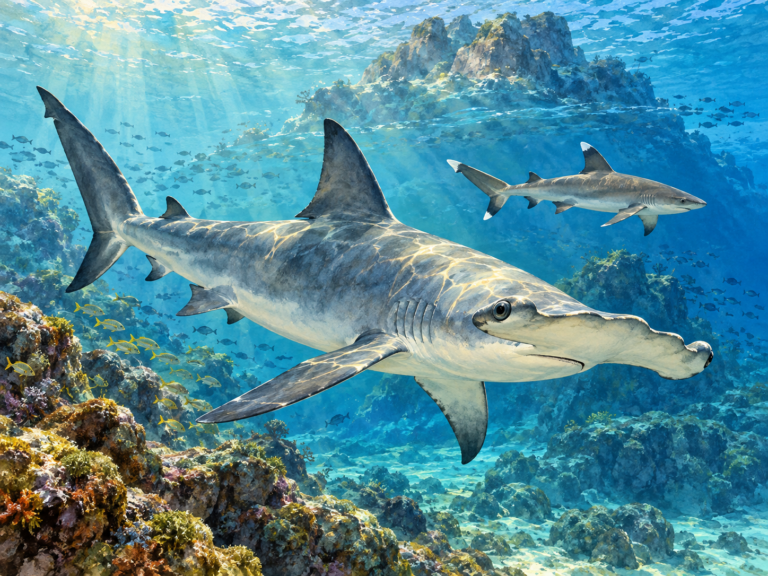
Scalloped Hammerhead Shark

Spanish name
Tiburón martillo común
Scientific name
Sphyrna lewini

What Do Pico & Tati Think?

Pico: “Its head is shaped like a hammer!”

Tati: “The curves and notches help us distinguish this species from other hammerheads.”

Identification

Key Features of the Scalloped Hammerhead Shark

  • A broad hammer-shaped head with a central front notch.

  • A curved, scalloped front edge to the head.

  • A streamlined body and tall first dorsal fin.

Habitat & range

Warm coastal and offshore waters, including island-associated marine habitats at Isla del Coco.

Conservation & care

Follow park rules and qualified guides. Do not feed, touch, chase or collect marine wildlife. Maintain distance and avoid contact with reef habitat.

Threats & pressures

Fishing for fins and meat, incidental capture and pressure on coastal nursery areas affect the species. Sources describe risks across its range; these are not measurements of loss at Isla del Coco.

Conservation assessment

Global IUCN category reported by the Convention on Migratory Species and Florida Museum: Critically Endangered. The linked CMS page does not provide the underlying assessment date. Checked 7 October 2026. This is not a local population count.

View full profile →

Nature Field Guide

Spotted Rose Snapper

Spanish name
Pargo de la mancha
Scientific name
Lutjanus guttatus

What Do Pico & Tati Think?

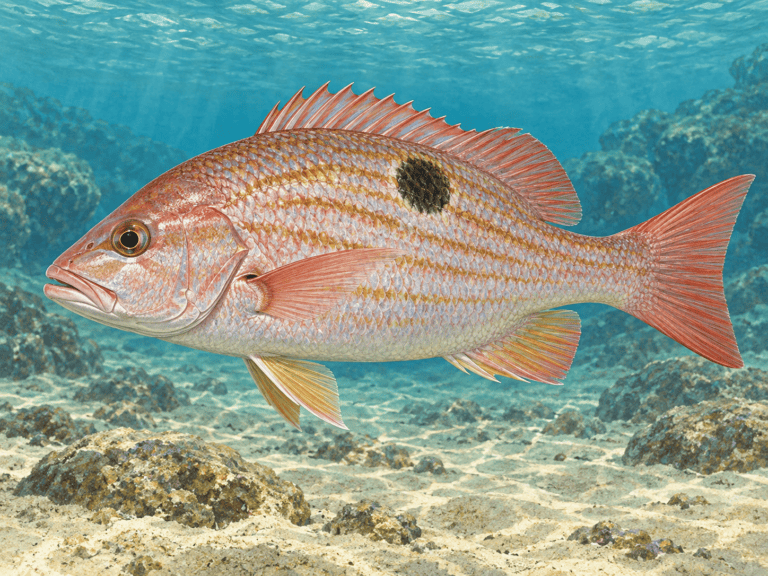
Meet the fish Yeyo shares with Pico and Tati. Spotted rose snapper lives in the eastern Pacific, including Costa Rica’s coastal waters. Look for a silvery-pink body, fine slanting golden-brown stripes and a dark blotch below the dorsal fin.

This fish eats crustaceans and small fish. Researchers in Costa Rica’s Gulf of Nicoya have studied its diet and its role in local fishing. It connects an underwater food web with the meals coastal families prepare and share.

In our story, Yeyo names his catch before lunch. Tati notices the spot, and Pico learns that there is more to discover about a fish than how delicious it smells.

Identification

Key Features of the Spotted Rose Snapper

  • A moderately deep, oval body with a silvery-pink sheen.

  • Fine oblique golden-brown stripes along the sides.

  • A prominent dark blotch high on the side beneath the dorsal fin; the mark can change in intensity.

  • A continuous dorsal fin and a nearly straight or slightly indented tail.

Habitat & range

Pacific coastal waters, including sandy bays and reef-associated habitats. Young fish often use shallow sandy bays.

Conservation & care

Keep fishing line and plastic out of the sea. Observe fish without feeding or chasing them. If your family fishes, follow current local rules and learn from a responsible local fisher.

View full profile →

Nature Field Guide

Spotted Sharpnose Puffer

Spanish name
Tamboril bonito
Scientific name
Canthigaster punctatissima

What Do Pico & Tati Think?

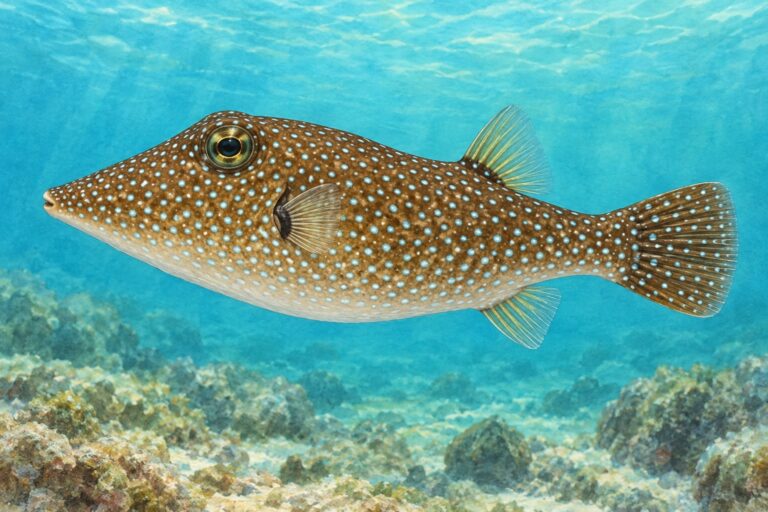
Pico: “That puffer has a tiny pointed nose!”

Tati: “Let’s compare its pale dots and snout with other puffers.”

Identification

Key Features of the Spotted Sharpnose Puffer

  • Pointed snout

  • Dense pale blue-white dots

  • Small fins near the rear

Habitat & range

Pacific rocky reefs and nearby coastal marine habitats. Check the linked species reference for its wider range.

Conservation & care

Never touch, collect, eat or deliberately inflate puffers or porcupinefish. Observe with a qualified guide. Do not feed, chase or handle fish. Keep fins off the reef and take all litter home.

Threats & pressures

Habitat damage and degraded water quality are pressures to prevent in coastal fish habitats. This profile does not quantify a local decline.

View full profile →

Nature Field Guide

Starry Grouper

Spanish name
Cabrilla pinta
Scientific name
Epinephelus labriformis

What Do Pico & Tati Think?

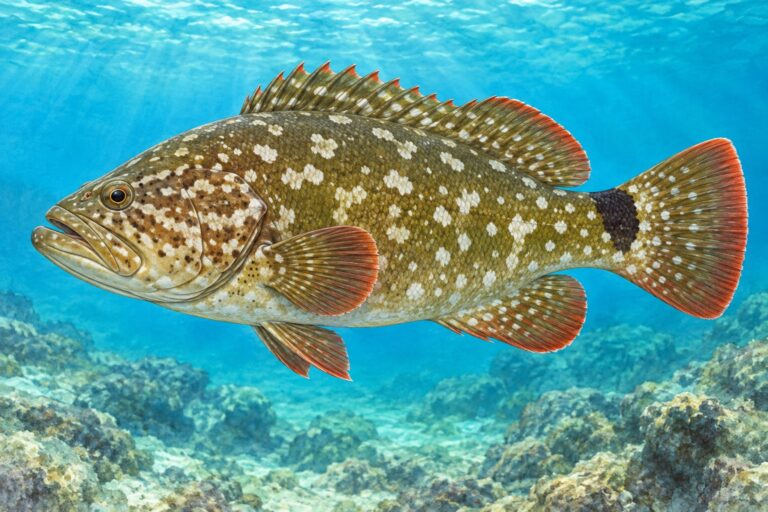
Pico: “It looks covered in stars!”

Tati: “The white patches and dark tail-base saddle help identify it.”

Identification

Key Features of the Starry Grouper

  • Olive body with white marks

  • Black saddle on upper tail base

  • Rounded tail and broad mouth

Habitat & range

Pacific rocky reefs and nearby coastal marine habitats. Check the linked species reference for its wider range.

Conservation & care

Observe with a qualified guide. Do not feed, chase or handle fish. Keep fins off the reef and take all litter home.

Threats & pressures

Habitat damage and degraded water quality are pressures to prevent in coastal fish habitats. This profile does not quantify a local decline.

View full profile →

Nature Field Guide

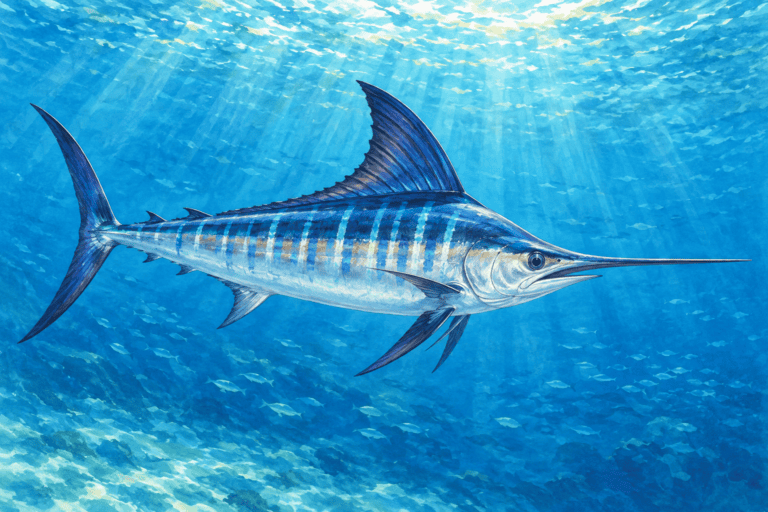
Striped Marlin

Spanish name
Marlín rayado
Scientific name
Kajikia audax

What Do Pico & Tati Think?

Pico: “I can see blue stripes along its sides!”

Tati: “We should check the shape too—other marlin can show stripes.”

Identification

Key Features of the Striped Marlin

  • A long bill and streamlined body.

  • Vertical blue bars that may vary in intensity.

  • A tall front portion of the first dorsal fin.

Habitat & range

Tropical and subtropical Pacific and Indian Ocean waters.

Seasonal Calendar

Regional presence

Costa Rican offshore waters

Year-round

FECOP reports striped marlin throughout the year in Costa Rican offshore waters. No fixed Tamarindo migration or spawning calendar is established here.

Event source ↗

Conservation & care

Observe marine wildlife without feeding, touching or chasing it. Keep litter and discarded fishing line out of waterways. Follow qualified guides and current local rules.

Threats & pressures

Striped marlin are caught incidentally in pelagic longline fisheries. Fishing pressure differs between assessed Pacific stocks.

View full profile →

Nature Field Guide

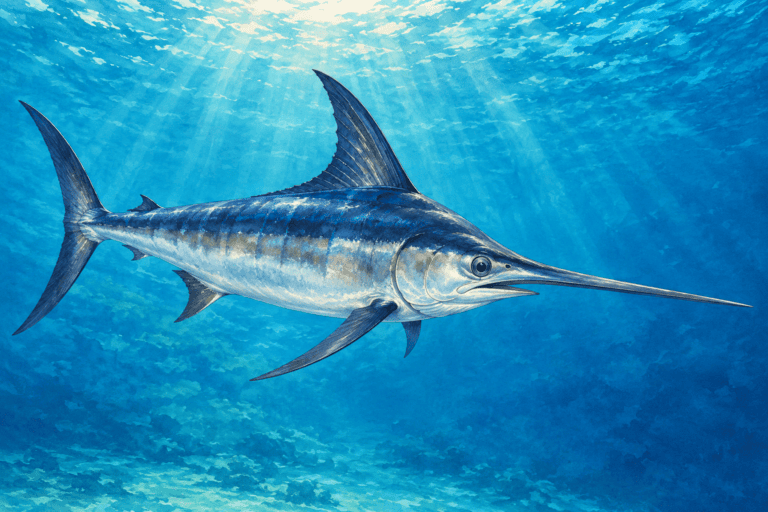
Swordfish

Spanish name
Pez espada
Scientific name
Xiphias gladius

What Do Pico & Tati Think?

Pico: “Its bill looks like a sword!”

Tati: “It is flatter and broader than a marlin’s bill.”

Identification

Key Features of the Swordfish

  • A long broad, flattened sword-like bill.

  • A dark upper body and lighter underside.

  • A streamlined body with a crescent-shaped tail.

Habitat & range

Open-ocean surface and deeper waters.

Conservation & care

Observe marine wildlife without feeding, touching or chasing it. Keep litter and discarded fishing line out of waterways. Follow qualified guides and current local rules.

Threats & pressures

Commercial and recreational fishing affect swordfish. Managing this migratory species requires international cooperation; assessments vary by stock.

View full profile →

Nature Field Guide

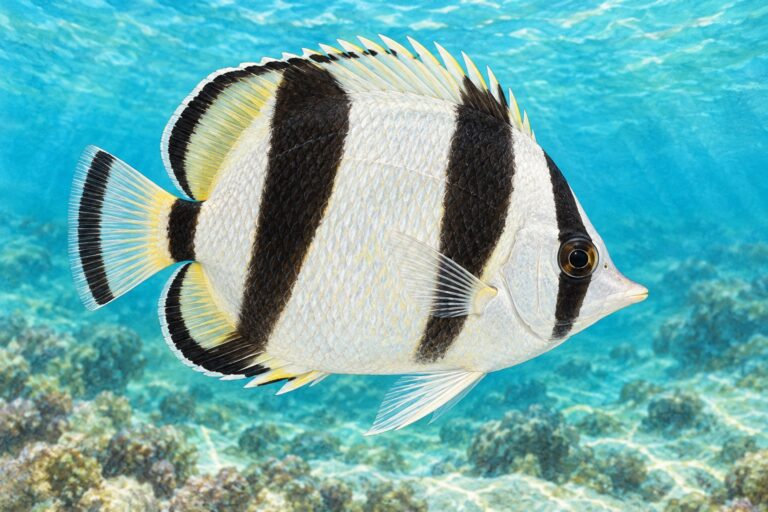
Threebanded Butterflyfish

Spanish name
Mariposa de tres bandas
Scientific name
Chaetodon humeralis

What Do Pico & Tati Think?

Pico: “It looks as thin as a leaf!”

Tati: “Its flattened body and three dark bands give us clues.”

Identification

Key Features of the Threebanded Butterflyfish

  • Flattened oval body

  • Three dark body and head bands

  • Small pointed mouth

Habitat & range

Pacific rocky reefs and nearby coastal marine habitats. Check the linked species reference for its wider range.

Conservation & care

Observe with a qualified guide. Do not feed, chase or handle fish. Keep fins off the reef and take all litter home.

Threats & pressures

Habitat damage and degraded water quality are pressures to prevent in coastal fish habitats. This profile does not quantify a local decline.

View full profile →

Nature Field Guide

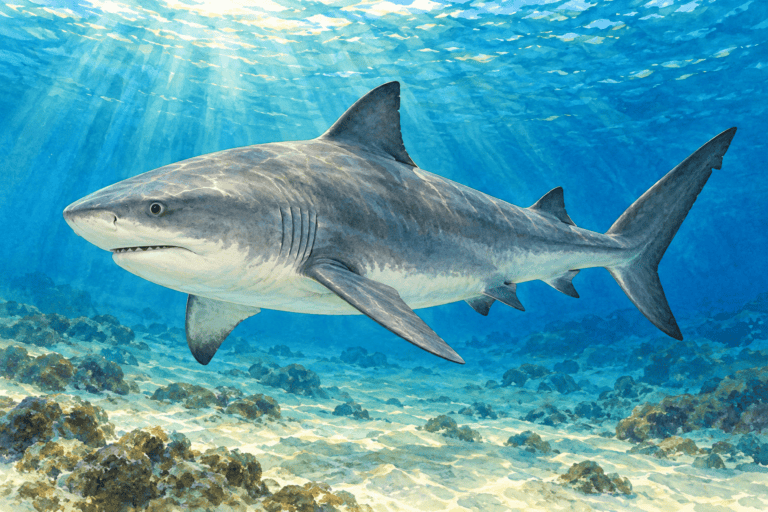
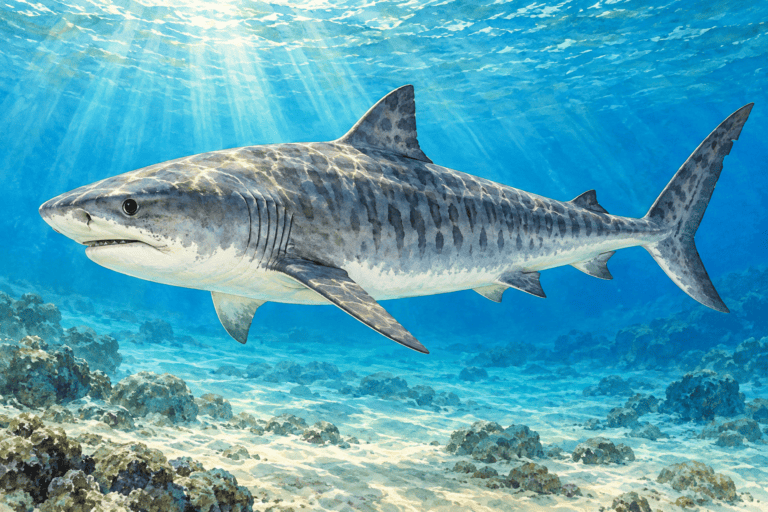
Tiger Shark

Spanish name
Tiburón tigre
Scientific name
Galeocerdo cuvier

What Do Pico & Tati Think?

Pico: “Those stripes explain its name!”

Tati: “They can fade as the shark grows, so shape matters too.”

Identification

Key Features of the Tiger Shark

  • Dark bars or spots, clearest in younger sharks.

  • A broad, blunt snout.

  • A large gray body with a pale underside.

Habitat & range

Warm coastal and offshore seas.

Conservation & care

Observe marine wildlife without feeding, touching or chasing it. Keep litter and discarded fishing line out of waterways. Follow qualified guides and current local rules.

Threats & pressures

Fishing and incidental capture can affect tiger sharks. Marine litter also matters because this predator may swallow floating rubbish.

View full profile →

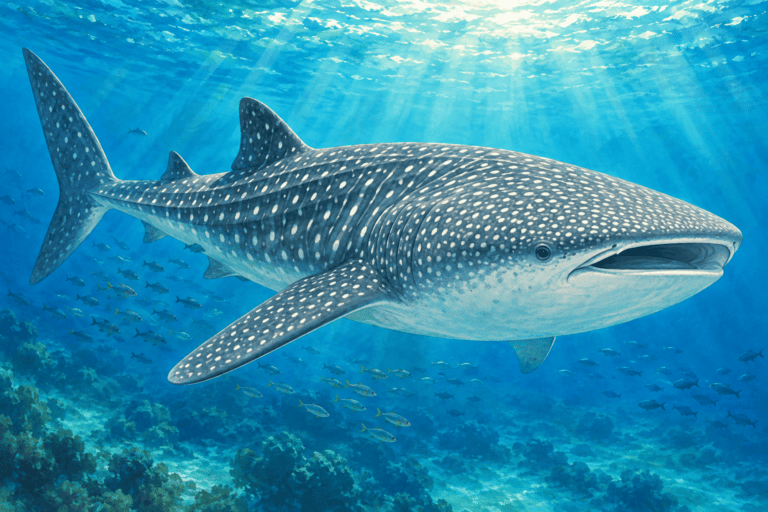
Nature Field Guide

Whale Shark

Spanish name
Tiburón ballena
Scientific name
Rhincodon typus

What Do Pico & Tati Think?

Pico: “A shark with spots—and such a wide mouth!”

Tati: “It is a fish, even though its name includes whale.”

Identification

Key Features of the Whale Shark

  • Pale spots and bars across a darker body.

  • A broad, flattened head with a wide front-facing mouth.

  • A very large body with ridges along the sides.

Habitat & range

Tropical and warm marine waters, including offshore feeding areas. Scientific records connect the species to Isla del Coco.

Conservation & care

Follow park rules and qualified guides. Do not feed, touch, chase or collect marine wildlife. Maintain distance and avoid contact with reef habitat.

Threats & pressures

Fisheries and incidental capture, vessel strikes and poorly managed wildlife tourism can affect whale sharks. Threats vary by location.

Conservation assessment

IUCN global assessment dated 31 March 2025, published 2025: Endangered (A2bd). This global assessment is separate from any local count or legal protection in Costa Rica.

View full profile →

Nature Field Guide

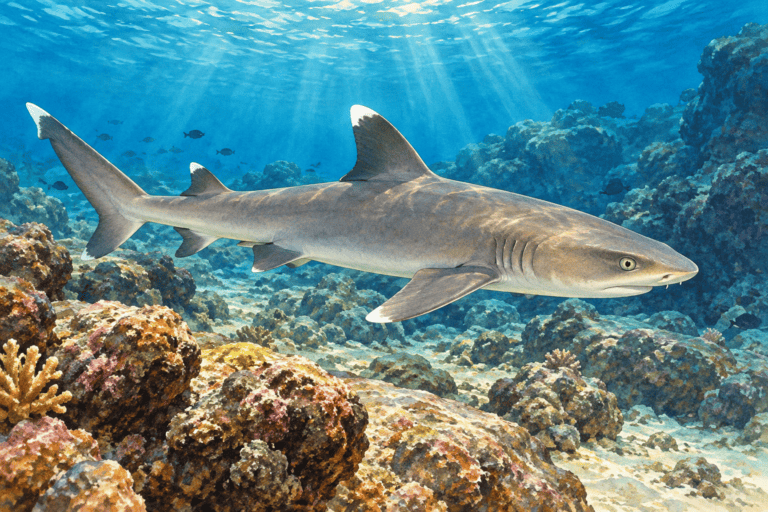
Whitetip Reef Shark

Spanish name
Tiburón punta blanca de arrecife
Scientific name
Triaenodon obesus

What Do Pico & Tati Think?

Pico: “Its fins have little white tips!”

Tati: “We need to compare its whole shape, because other sharks can have white markings too.”

Identification

Key Features of the Whitetip Reef Shark

  • White tips on the first dorsal fin and upper tail fin.

  • A slender gray-brown body.

  • May rest on the bottom in reef shelter.

Habitat & range

Reefs and sheltered bottom habitats. The Isla del Coco connection is supported by park and research records.

Conservation & care

Follow park rules and qualified guides. Do not feed, touch, chase or collect marine wildlife. Maintain distance and avoid contact with reef habitat.

View full profile →

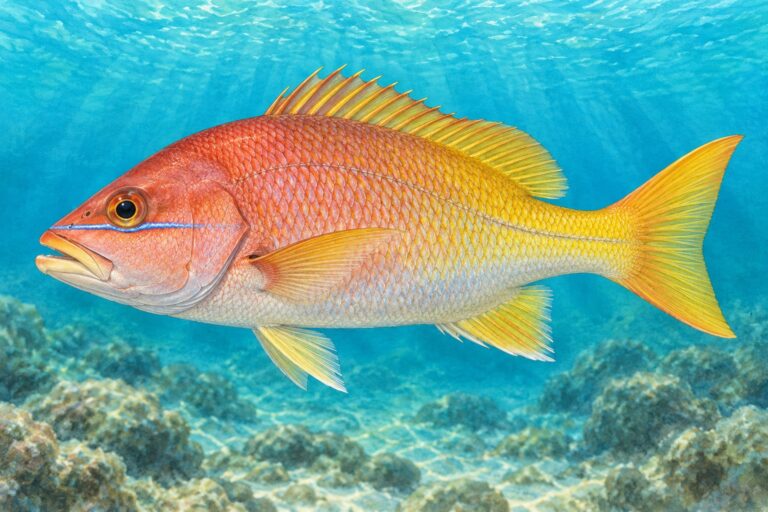
Nature Field Guide

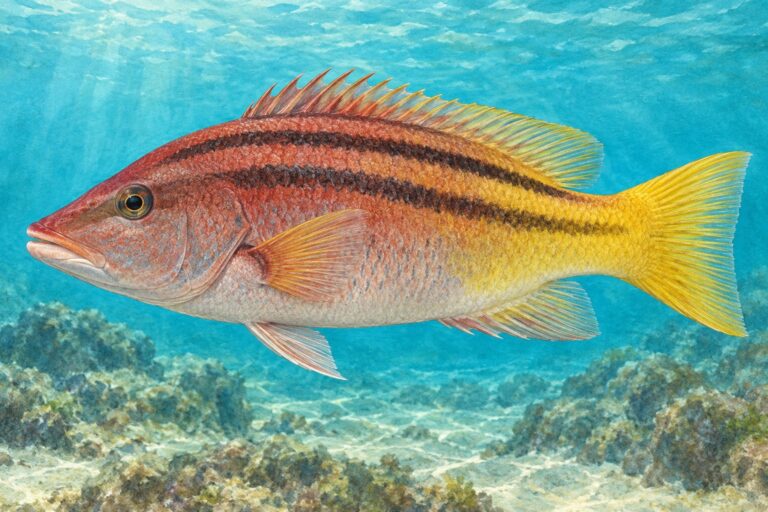
Yellow Snapper

Spanish name
Pargo amarillo
Scientific name
Lutjanus argentiventris

What Do Pico & Tati Think?

Pico: “This snapper looks red and yellow!”

Tati: “Look below its eye for another small color clue.”

Identification

Key Features of the Yellow Snapper

  • Red front and yellow rear

  • Blue mark below the eye

  • Strong snapper body

Habitat & range

Pacific rocky reefs and nearby coastal marine habitats. Check the linked species reference for its wider range.

Conservation & care

Observe with a qualified guide. Do not feed, chase or handle fish. Keep fins off the reef and take all litter home.

Threats & pressures

Habitat damage and degraded water quality are pressures to prevent in coastal fish habitats. This profile does not quantify a local decline.

View full profile →

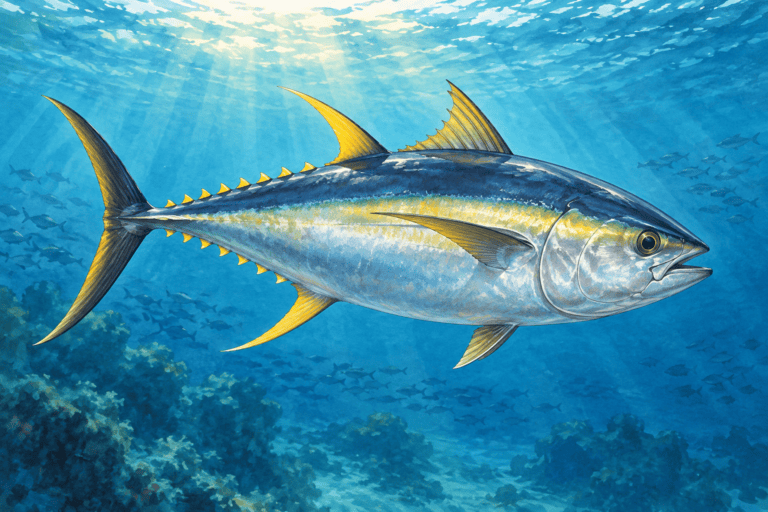
Nature Field Guide

Yellowfin Tuna

Spanish name
Atún aleta amarilla
Scientific name
Thunnus albacares

What Do Pico & Tati Think?

Pico: “Its fins are bright yellow!”

Tati: “Its streamlined shape gives us a clue about life in open water.”

Identification

Key Features of the Yellowfin Tuna

  • A streamlined, torpedo-shaped body.

  • Metallic dark blue upper body with a lighter underside.

  • Bright yellow fins and finlets; larger adults may have elongated dorsal and anal fins.

Habitat & range

Tropical and subtropical open-ocean waters. The offshore Costa Rican connection is supported by SINAC’s Isla del Coco information.

Seasonal Calendar

Regional presence

Costa Rican pelagic waters

Year-round

FECOP’s good-practice guide reports year-round presence in Costa Rican pelagic waters. Migratory schools move between areas; regional presence does not imply residence of one school.

Event source ↗

Conservation & care

Follow park rules and qualified guides. Do not feed, touch, chase or collect marine wildlife. Maintain distance and avoid contact with reef habitat.

Protection & recovery

NOAA summarizes the Eastern Pacific stock as not overfished and not subject to overfishing based on a 2023 stock assessment. This describes a regional fishery stock, not a Costa Rican endangered-species designation or proof of local recovery.

View full profile →

My Tico Explorer Experience

Save nature, towns, discoveries and learning adventures for your next experience.

Your list stays in this browser on this device.