

Nature Field Guide
Cortez Rainbow Wrasse
- Spanish name
- Viejita arco iris
- Scientific name
- Thalassoma lucasanum
What Do Pico & Tati Think?
Pico: “How can these two wrasses look so different?”
Tati: “Their colors can change with life phase. Let’s compare more than one picture.”
Species overview
About the Cortez Rainbow Wrasse
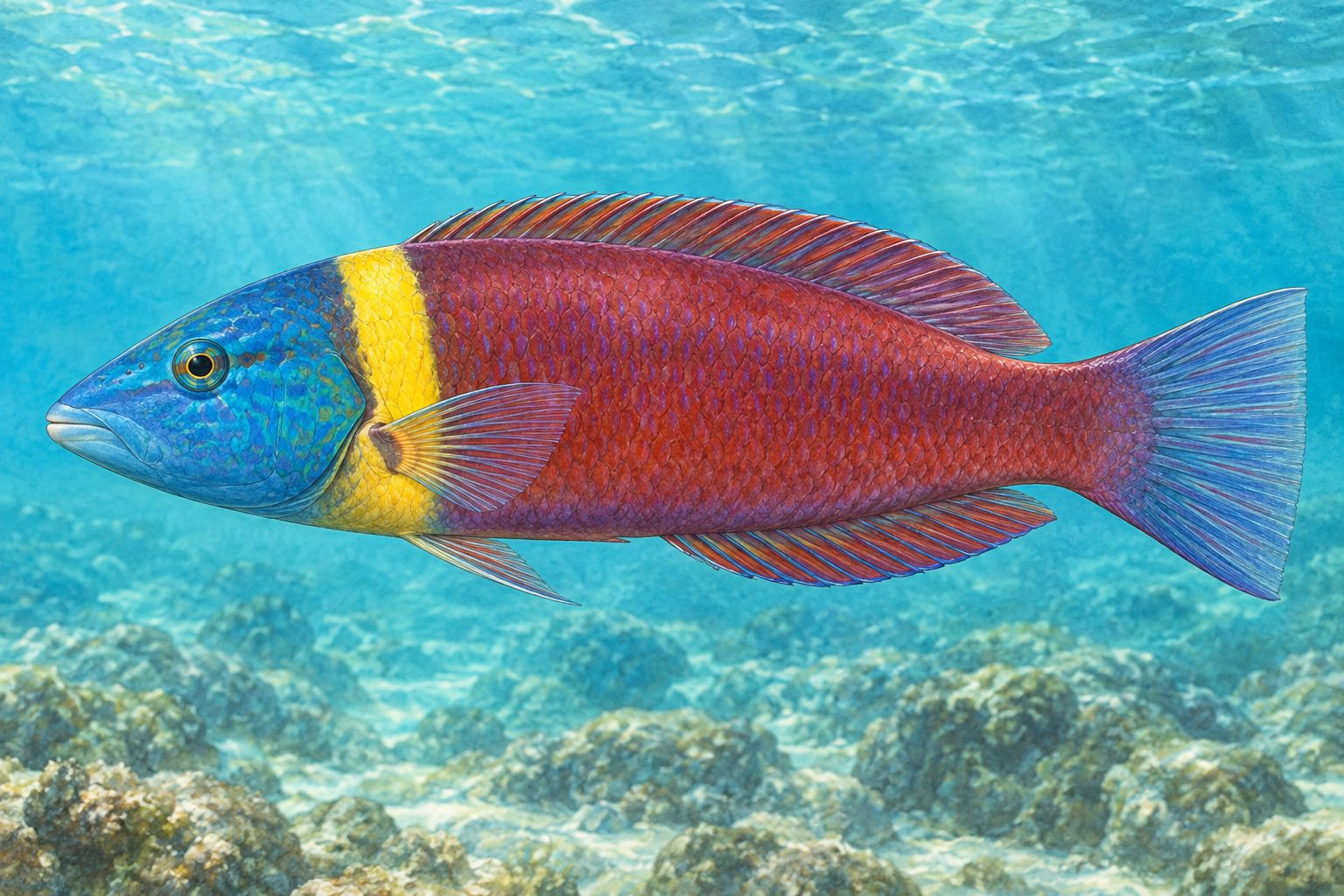
Initial-phase fish wear lengthwise yellow and red stripes beside a darker band. Terminal-phase adults have a blue head, a broad yellow shoulder band and a purplish body.
Groups feed above rocky and coral reefs on plankton and small animals. Young fish sometimes remove parasites from larger fish. Color phase is an important identification clue.
Identification
Key Features of the Cortez Rainbow Wrasse
Slender wrasse shape
Striped initial phase
Blue head and yellow shoulder bar in terminal phase
Habitat & range
Pacific rocky reefs and nearby coastal marine habitats. Check the linked species reference for its wider range.
Local observations
Recorded at Cabo Blanco.
When to observe
Visibility depends on water clarity, currents, depth and conditions. No fixed local viewing or migration season is assigned.
Conservation & care
Observe with a qualified guide. Do not feed, chase or handle fish. Keep fins off the reef and take all litter home.
Threats & pressures
Habitat damage and degraded water quality are pressures to prevent in coastal fish habitats. This profile does not quantify a local decline.
Observation activity
Compare initial-phase and terminal-phase photographs. Draw the direction of their stripes or bands.
Explore by location
Guanacaste · Puntarenas & the Gulf Islands · South Pacific · Ocean & Coastal Life