

Nature Field Guide
Guineafowl Puffer
- Spanish name
- Tamboril negro
- Scientific name
- Arothron meleagris
What Do Pico & Tati Think?
Pico: “Is the yellow puffer a different kind?”
Tati: “This species has different color forms. Shape matters too.”
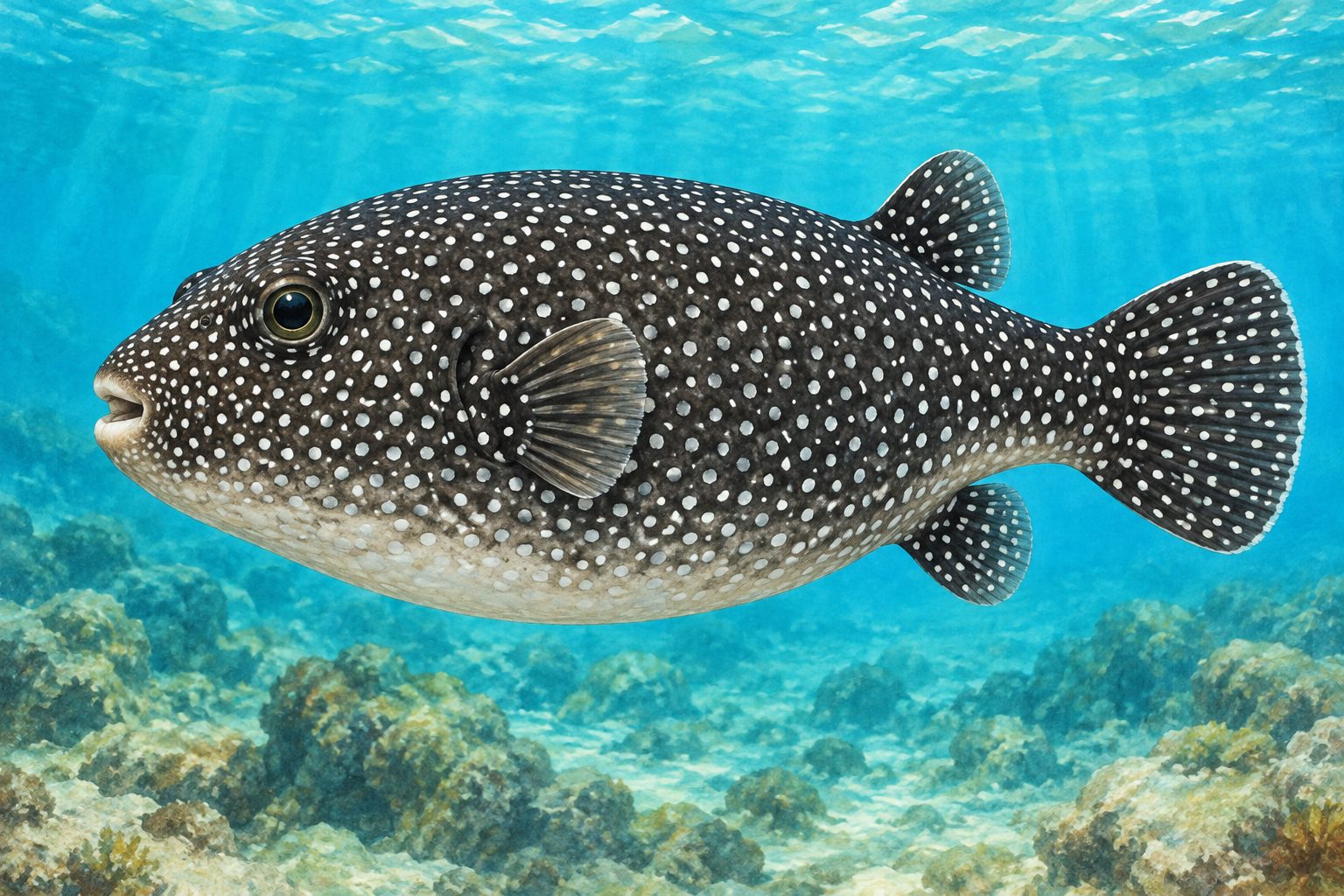
Species overview
About the Guineafowl Puffer
The dark form is densely sprinkled with white dots. Other individuals are yellow, sometimes with dark patches. Both have a blunt head, rounded tail and small fins positioned far back.
Its strong beak-like teeth help it feed on reef organisms. A puffer's natural swimming shape is much smaller than its inflated defensive shape. Never disturb a fish to make it inflate.
Identification
Key Features of the Guineafowl Puffer
Blunt head and heavy body
White dots on the dark form
Rounded tail and small rear fins
Habitat & range
Pacific rocky reefs and nearby coastal marine habitats. Check the linked species reference for its wider range.
Local observations
Recorded at Cabo Blanco.
When to observe
Visibility depends on water clarity, currents, depth and conditions. No fixed local viewing or migration season is assigned.
Conservation & care
Never touch, collect, eat or deliberately inflate puffers or porcupinefish. Observe with a qualified guide. Do not feed, chase or handle fish. Keep fins off the reef and take all litter home.
Threats & pressures
Habitat damage and degraded water quality are pressures to prevent in coastal fish habitats. This profile does not quantify a local decline.
Observation activity
Compare the dark and yellow forms. Which body features stay the same?
Explore by location
Guanacaste · Puntarenas & the Gulf Islands · South Pacific · Ocean & Coastal Life