

Nature Field Guide
Bluebarred Parrotfish
- Spanish name
- Loro de bandas azules
- Scientific name
- Scarus ghobban
What Do Pico & Tati Think?
Pico: “Why is it called a parrotfish?”
Tati: “Its teeth join into plates that look like a beak.”
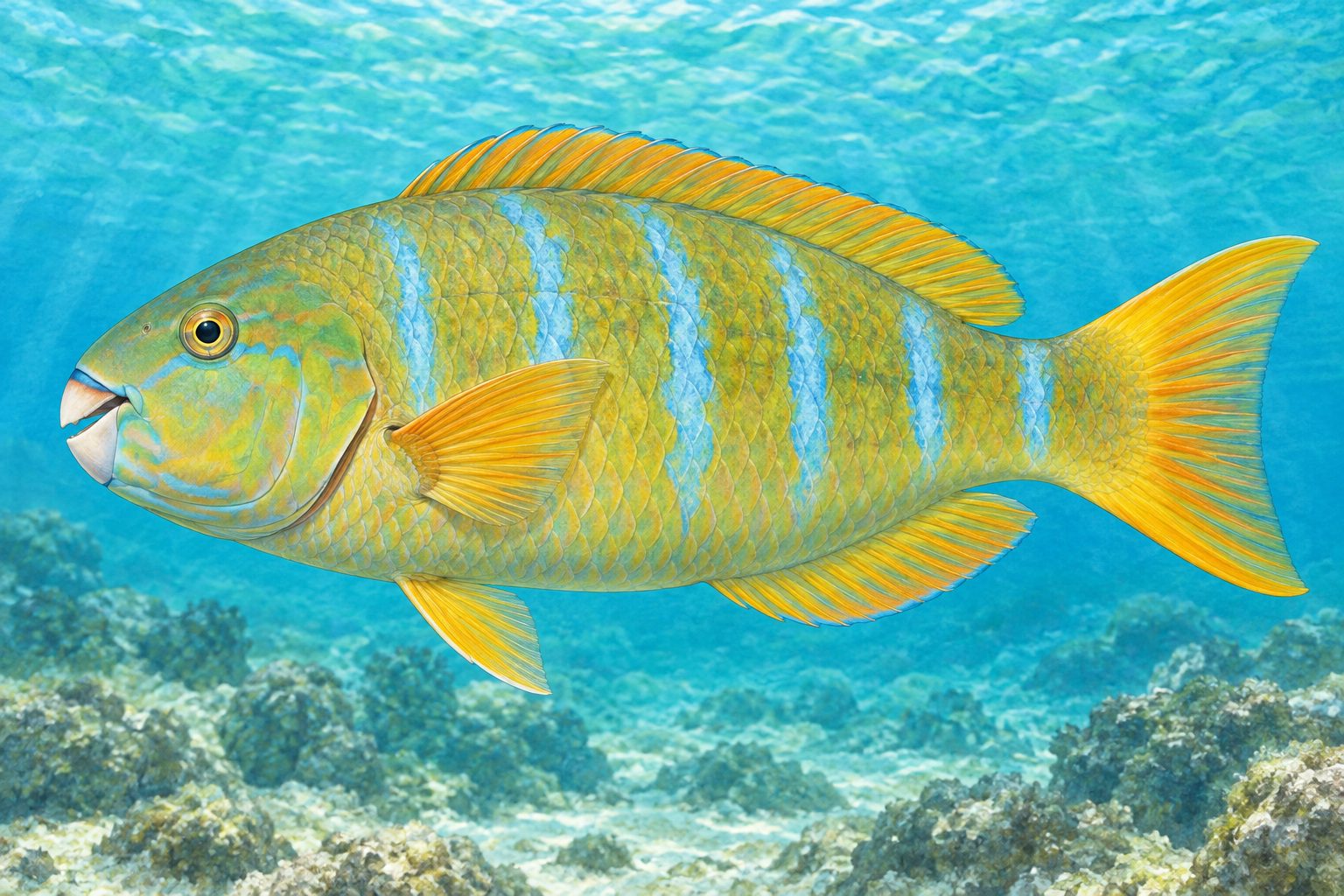
Species overview
About the Bluebarred Parrotfish
Initial-phase fish can be yellowish with pale blue bars. Terminal males have blue-green and salmon-pink scale patterns and blue chin bands. The colors depend on life phase.
It grazes material from reef surfaces. Its fused dental plates are very different from a snapper's separate pointed teeth. Compare photographs from the same life phase when checking identity.
Identification
Key Features of the Bluebarred Parrotfish
Parrot-like dental beak
Blue bars in initial phase
Large visible scales
Habitat & range
Pacific rocky reefs and nearby coastal marine habitats. Check the linked species reference for its wider range.
Local observations
Recorded at Cabo Blanco.
When to observe
Visibility depends on water clarity, currents, depth and conditions. No fixed local viewing or migration season is assigned.
Conservation & care
Observe with a qualified guide. Do not feed, chase or handle fish. Keep fins off the reef and take all litter home.
Threats & pressures
Habitat damage and degraded water quality are pressures to prevent in coastal fish habitats. This profile does not quantify a local decline.
Observation activity
Draw a beak-shaped mouth and compare it with the mouth of a snapper.
Explore by location
Puntarenas & the Gulf Islands · South Pacific · Ocean & Coastal Life