Tico Explorers

Nature Field Guide

Sea Stars & Brittle Stars

Explore wildlife, plants and trees. Learn what to look for and where to find them.

All Nature

7 profiles

Nature Field Guide

Alexander’s Spiny Brittle Star

Spanish name
Ofiura espinosa de Alexander
Scientific name
Ophiocomella alexandri

What Do Pico & Tati Think?

Pico and Tati discover that a brittle star’s scientific name can change as scientists learn more about its relatives.

Identification

Key Features of the Alexander’s Spiny Brittle Star

  • A clearly defined central disc

  • Long flexible arms

  • Check both current and older scientific names when reading a reference

Habitat & range

Suitable underwater coastal habitat. Use a permitted guided snorkeling or viewing activity appropriate to your family; do not enter the sea just to find this animal.

Conservation & care

Watch without touching, lifting, feeding or collecting. Keep fingers and equipment away from spines and other surface structures. Leave the animal submerged and its habitat undisturbed.

View full profile →

Nature Field Guide

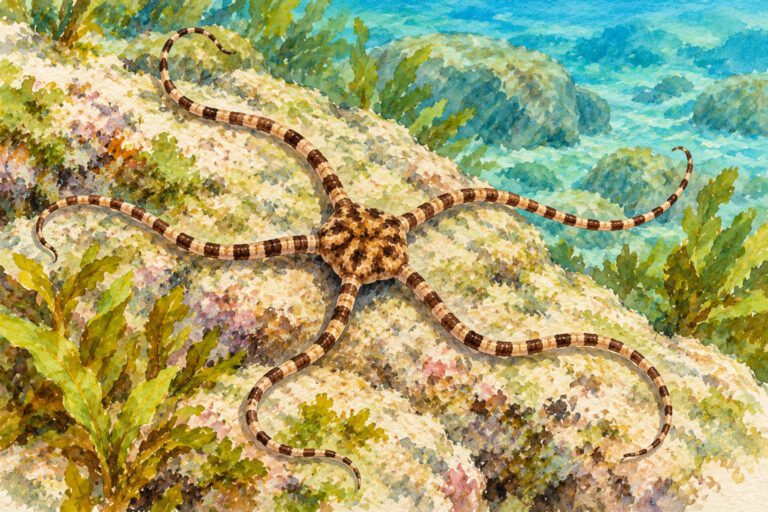
Banded Serpent Brittle Star

Spanish name
Ofiura de brazos anillados
Scientific name
Ophionereis annulata

What Do Pico & Tati Think?

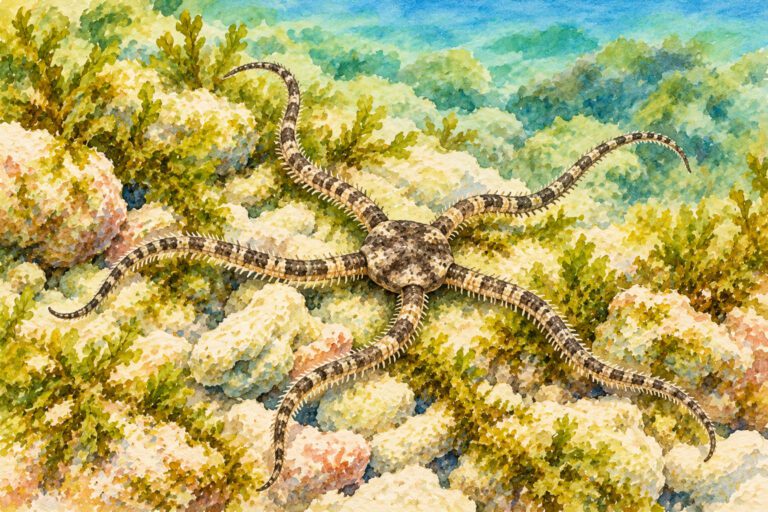
Patterns help Tati remember a discovery. Pico sketches the bands he can see along a slender arm.

Identification

Key Features of the Banded Serpent Brittle Star

  • A small central disc

  • Long flexible arms

  • Darker bands along the arms

Habitat & range

Suitable underwater coastal habitat. Use a permitted guided snorkeling or viewing activity appropriate to your family; do not enter the sea just to find this animal.

Conservation & care

Watch without touching, lifting, feeding or collecting. Keep fingers and equipment away from spines and other surface structures. Leave the animal submerged and its habitat undisturbed.

View full profile →

Nature Field Guide

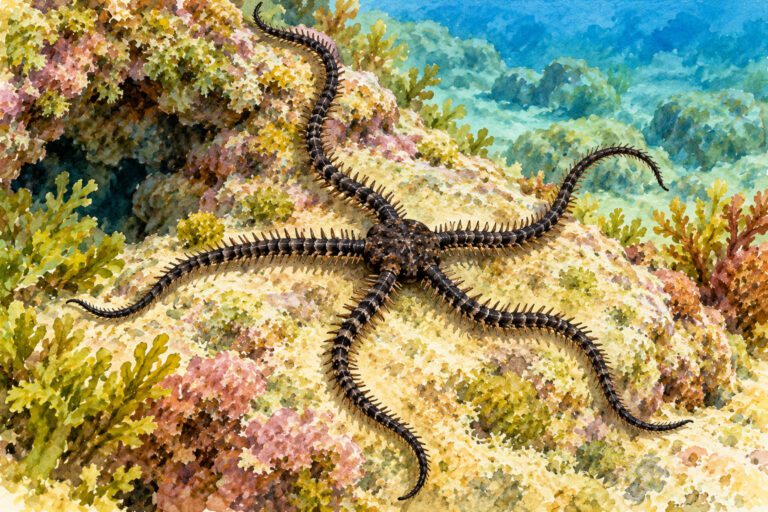
Black Spiny Brittle Star

Spanish name
Ofiura negra espinosa
Scientific name
Ophiocoma aethiops

What Do Pico & Tati Think?

A thin arm at the edge of a shelter can be an entire discovery. Pico waits quietly; Tati draws only what is visible.

Identification

Key Features of the Black Spiny Brittle Star

  • A central disc distinct from the arms

  • Long slender arms with visible spines

  • Only part of the animal may be visible naturally

Habitat & range

Suitable underwater coastal habitat. Use a permitted guided snorkeling or viewing activity appropriate to your family; do not enter the sea just to find this animal.

Conservation & care

Watch without touching, lifting, feeding or collecting. Keep fingers and equipment away from spines and other surface structures. Leave the animal submerged and its habitat undisturbed.

View full profile →

Nature Field Guide

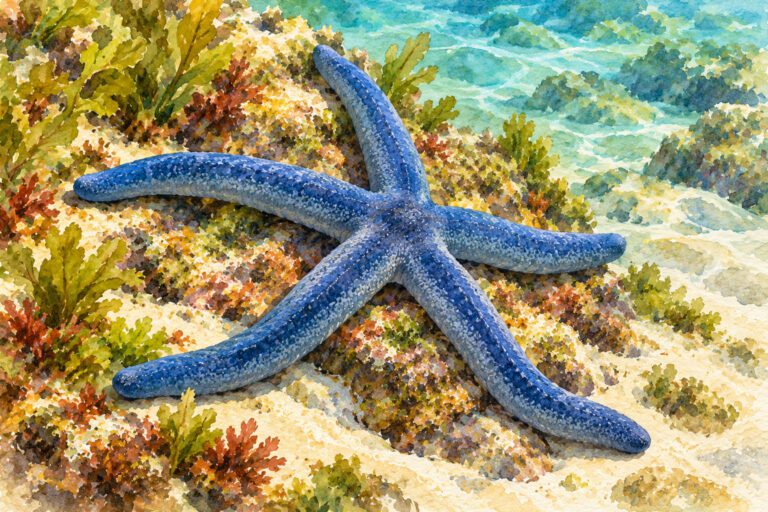
Blue Sea Star

Spanish name
Estrella azul
Scientific name
Phataria unifascialis

What Do Pico & Tati Think?

An ocean star can turn a quiet look underwater into a new question. What details would help you recognize it again?

Identification

Key Features of the Blue Sea Star

  • A central body with spreading arms

  • Record the visible color and pattern

  • Confirm the species using several features together

Habitat & range

Suitable underwater coastal habitat. Use a permitted guided snorkeling or viewing activity appropriate to your family; do not enter the sea just to find this animal.

Conservation & care

Watch without touching, lifting, feeding or collecting. Keep fingers and equipment away from spines and other surface structures. Leave the animal submerged and its habitat undisturbed.

View full profile →

Nature Field Guide

Bradley’s Sea Star

Spanish name
Estrella de mar de Bradley
Scientific name
Mithrodia bradleyi

What Do Pico & Tati Think?

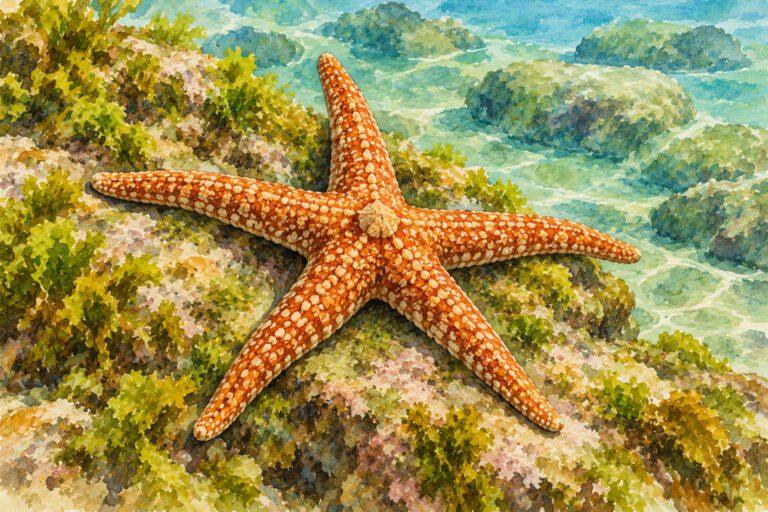
A sea star can look still while its place in the reef is full of life. Pico wants to sketch its outline; Tati wants to compare its arms.

Identification

Key Features of the Bradley’s Sea Star

  • Arms radiating from a central body

  • A textured upper surface

  • Compare the whole outline with a verified species photograph

Habitat & range

Suitable underwater coastal habitat. Use a permitted guided snorkeling or viewing activity appropriate to your family; do not enter the sea just to find this animal.

Conservation & care

Watch without touching, lifting, feeding or collecting. Keep fingers and equipment away from spines and other surface structures. Leave the animal submerged and its habitat undisturbed.

View full profile →

Nature Field Guide

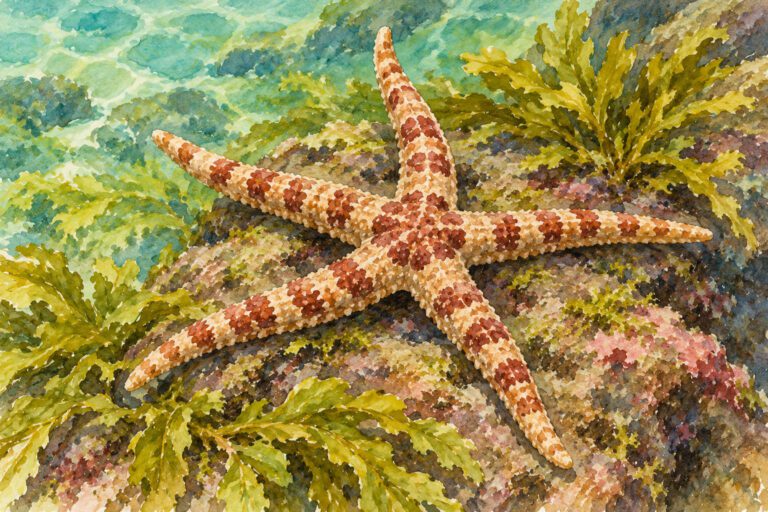
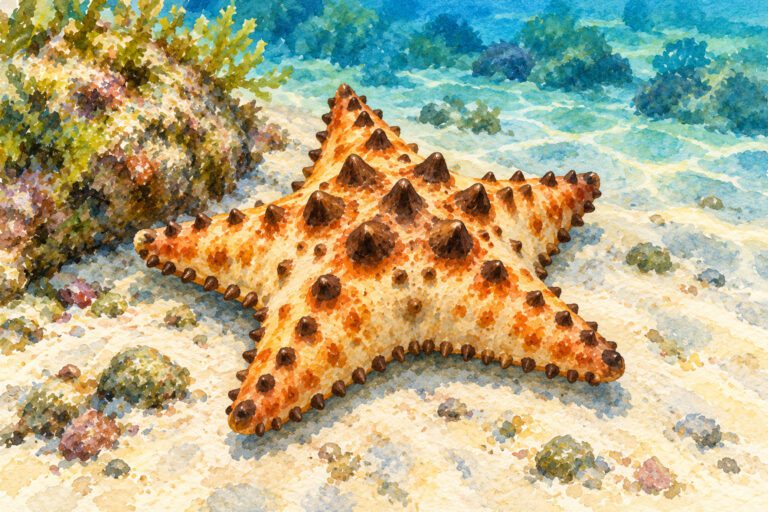
Pacific Chocolate Chip Sea Star

Spanish name
Estrella chocolate del Pacífico
Scientific name
Nidorellia armata

What Do Pico & Tati Think?

Those bumps might remind Pico of chocolate chips, but this star is a living animal. Tati’s rule is simple: look closely and leave it in the water.

Identification

Key Features of the Pacific Chocolate Chip Sea Star

  • A broad star-shaped outline

  • Conspicuous raised knobs on the upper surface

  • Check Nidorellia armata rather than relying on the common name alone

Habitat & range

Suitable underwater coastal habitat. Use a permitted guided snorkeling or viewing activity appropriate to your family; do not enter the sea just to find this animal.

Conservation & care

Watch without touching, lifting, feeding or collecting. Keep fingers and equipment away from spines and other surface structures. Leave the animal submerged and its habitat undisturbed.

View full profile →

Nature Field Guide

Pyramid Sea Star

Spanish name
Estrella pirámide
Scientific name
Pharia pyramidata

What Do Pico & Tati Think?

How would you draw a star that belongs to the ocean? Pico starts with the outline. Tati adds the small details she notices.

Identification

Key Features of the Pyramid Sea Star

  • A star-shaped body

  • Arms extending from the center

  • Surface details best recorded with a close photograph taken without disturbance

Habitat & range

Suitable underwater coastal habitat. Use a permitted guided snorkeling or viewing activity appropriate to your family; do not enter the sea just to find this animal.

Conservation & care

Watch without touching, lifting, feeding or collecting. Keep fingers and equipment away from spines and other surface structures. Leave the animal submerged and its habitat undisturbed.

View full profile →

My Tico Explorer Experience

Save nature, towns, discoveries and learning adventures for your next experience.

Your list stays in this browser on this device.