

Nature Field Guide
Black Marlin
- Spanish name
- Marlín negro
- Scientific name
- Istiompax indica
What Do Pico & Tati Think?
Pico: “How can we tell this marlin apart?”
Tati: “Its stiff side fins are a useful clue.”
Species overview
About the Black Marlin
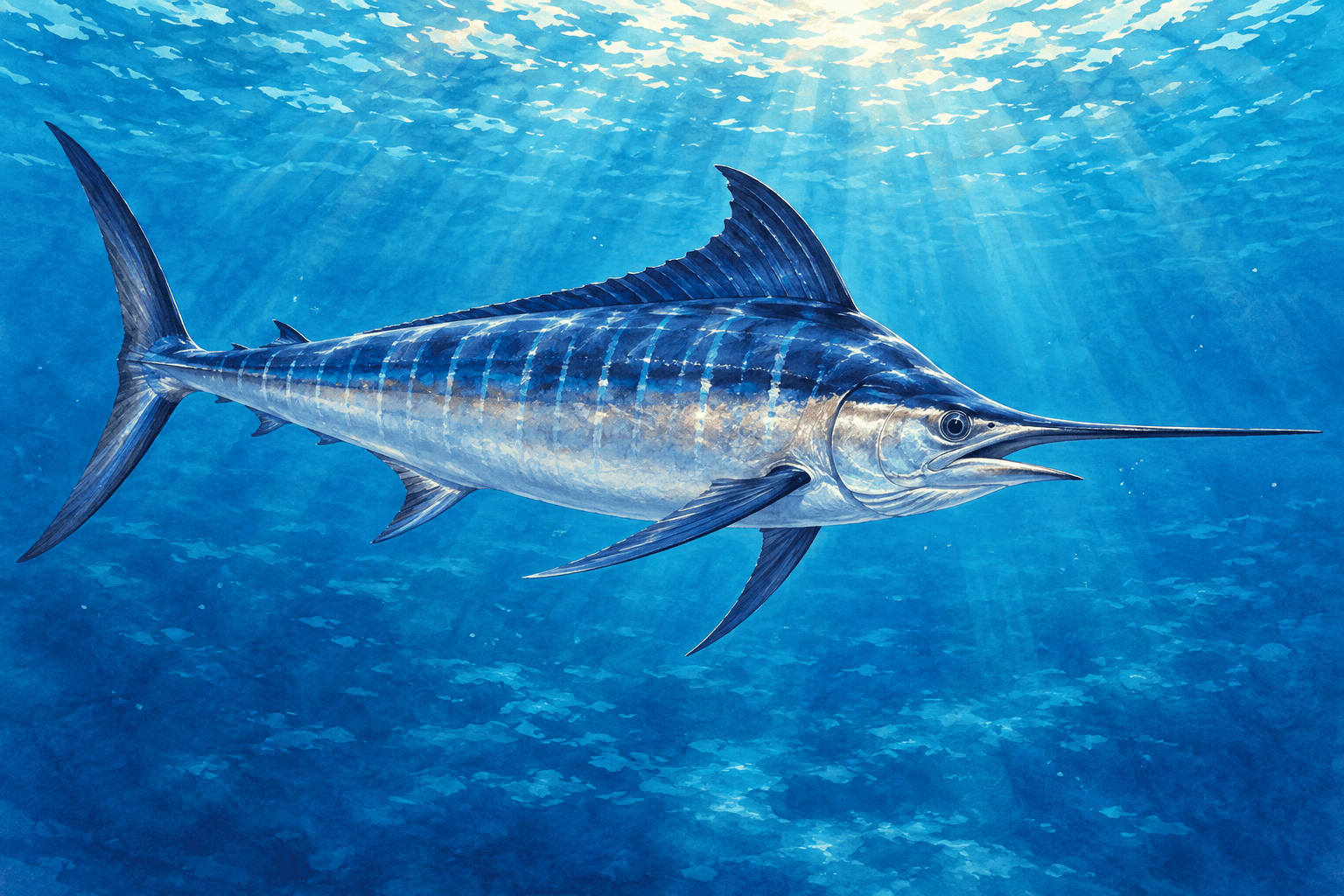
The black marlin is a large billfish with a strong body, a substantial head and a projecting upper-jaw bill. Its name can be misleading: a living fish also shows lighter areas, so a dark color by itself is not enough for identification.
A particularly useful feature is its rigid pectoral fins. Unlike the movable fins of a blue marlin, these do not fold flat against the body. Its head is thicker and its bill is comparatively shorter. Several features should be checked together when comparing marlin species.
Black marlin are recorded among Costa Rica’s offshore fish. These records describe a connection with a broad marine region rather than a permanent home at one beach. They belong with other billfish in the Nature guide.
Identification
Key Features of the Black Marlin
Rigid pectoral fins that do not fold flat against the body.
A substantial head and comparatively stout bill.
A powerful streamlined body.
Habitat & range
Offshore Pacific waters.
Local observations
FECOP includes this species among Costa Rica’s offshore fish. No Tamarindo beach sighting or local population count is implied.
When to observe
Ocean conditions, prey and animal movements affect occurrence. No guaranteed sighting or fixed local viewing season is established here.
Conservation & care
Observe marine wildlife without feeding, touching or chasing it. Keep litter and discarded fishing line out of waterways. Follow qualified guides and current local rules.
Threats & pressures
Fishing capture is a conservation concern for billfish. Tracking catches and releases helps assess pressures across a migratory range.
Observation activity
Compare a reference photograph of the Black Marlin with another marine species. Sketch three differences in body shape, fins or markings.
Explore by location
Central Pacific · Guanacaste · Oceanic Pacific · South Pacific