Tico Explorers

Nature Field Guide

Sharks

Explore wildlife, plants and trees. Learn what to look for and where to find them.

All Nature

5 profiles

Nature Field Guide

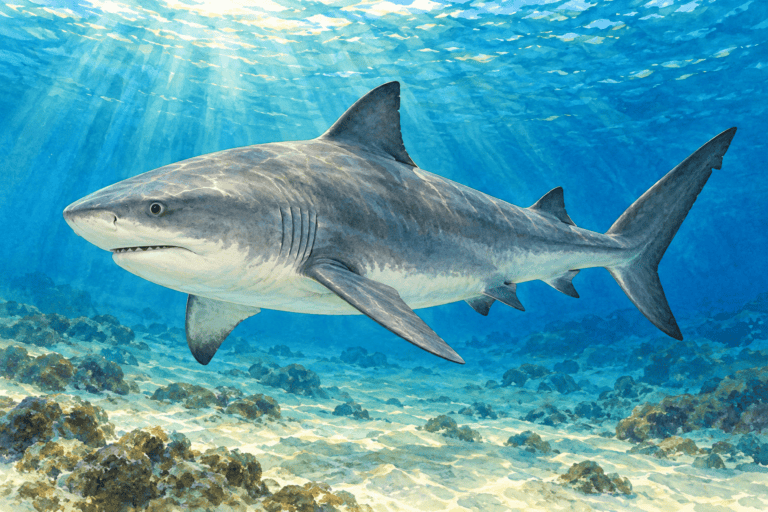
Bull Shark

Spanish name
Tiburón toro
Scientific name
Carcharhinus leucas

What Do Pico & Tati Think?

Pico: “That shark looks strong and stocky!”

Tati: “It can move between salt water and fresh water.”

Identification

Key Features of the Bull Shark

  • A stocky gray body with a pale belly.

  • A short, broad rounded snout and small eyes.

  • A large triangular first dorsal fin.

Habitat & range

Tropical and subtropical coastal waters, estuaries and some freshwater systems.

Conservation & care

Observe marine wildlife without feeding, touching or chasing it. Keep litter and discarded fishing line out of waterways. Follow qualified guides and current local rules.

Threats & pressures

Capture in fisheries affects bull sharks. Coastal development and damage to estuarine nursery habitats can put young animals under additional pressure.

View full profile →

Nature Field Guide

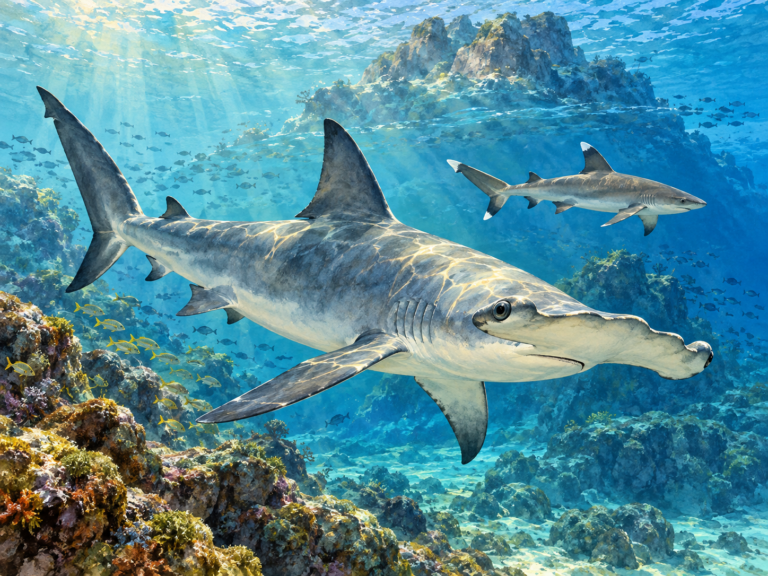
Scalloped Hammerhead Shark

Spanish name
Tiburón martillo común
Scientific name
Sphyrna lewini

What Do Pico & Tati Think?

Pico: “Its head is shaped like a hammer!”

Tati: “The curves and notches help us distinguish this species from other hammerheads.”

Identification

Key Features of the Scalloped Hammerhead Shark

  • A broad hammer-shaped head with a central front notch.

  • A curved, scalloped front edge to the head.

  • A streamlined body and tall first dorsal fin.

Habitat & range

Warm coastal and offshore waters, including island-associated marine habitats at Isla del Coco.

Conservation & care

Follow park rules and qualified guides. Do not feed, touch, chase or collect marine wildlife. Maintain distance and avoid contact with reef habitat.

Threats & pressures

Fishing for fins and meat, incidental capture and pressure on coastal nursery areas affect the species. Sources describe risks across its range; these are not measurements of loss at Isla del Coco.

Conservation assessment

Global IUCN category reported by the Convention on Migratory Species and Florida Museum: Critically Endangered. The linked CMS page does not provide the underlying assessment date. Checked 7 October 2026. This is not a local population count.

View full profile →

Nature Field Guide

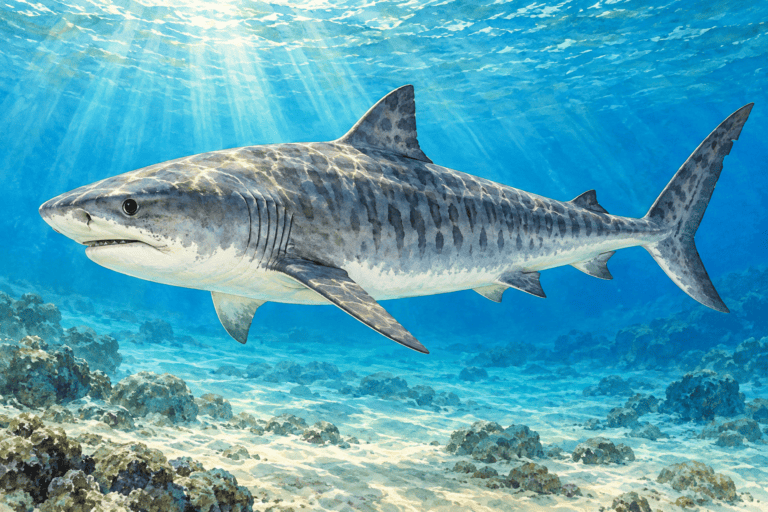
Tiger Shark

Spanish name
Tiburón tigre
Scientific name
Galeocerdo cuvier

What Do Pico & Tati Think?

Pico: “Those stripes explain its name!”

Tati: “They can fade as the shark grows, so shape matters too.”

Identification

Key Features of the Tiger Shark

  • Dark bars or spots, clearest in younger sharks.

  • A broad, blunt snout.

  • A large gray body with a pale underside.

Habitat & range

Warm coastal and offshore seas.

Conservation & care

Observe marine wildlife without feeding, touching or chasing it. Keep litter and discarded fishing line out of waterways. Follow qualified guides and current local rules.

Threats & pressures

Fishing and incidental capture can affect tiger sharks. Marine litter also matters because this predator may swallow floating rubbish.

View full profile →

Nature Field Guide

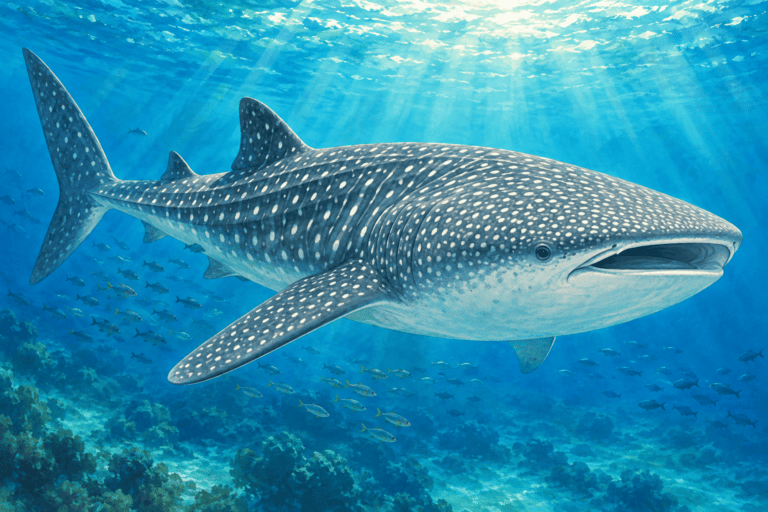
Whale Shark

Spanish name
Tiburón ballena
Scientific name
Rhincodon typus

What Do Pico & Tati Think?

Pico: “A shark with spots—and such a wide mouth!”

Tati: “It is a fish, even though its name includes whale.”

Identification

Key Features of the Whale Shark

  • Pale spots and bars across a darker body.

  • A broad, flattened head with a wide front-facing mouth.

  • A very large body with ridges along the sides.

Habitat & range

Tropical and warm marine waters, including offshore feeding areas. Scientific records connect the species to Isla del Coco.

Conservation & care

Follow park rules and qualified guides. Do not feed, touch, chase or collect marine wildlife. Maintain distance and avoid contact with reef habitat.

Threats & pressures

Fisheries and incidental capture, vessel strikes and poorly managed wildlife tourism can affect whale sharks. Threats vary by location.

Conservation assessment

IUCN global assessment dated 31 March 2025, published 2025: Endangered (A2bd). This global assessment is separate from any local count or legal protection in Costa Rica.

View full profile →

Nature Field Guide

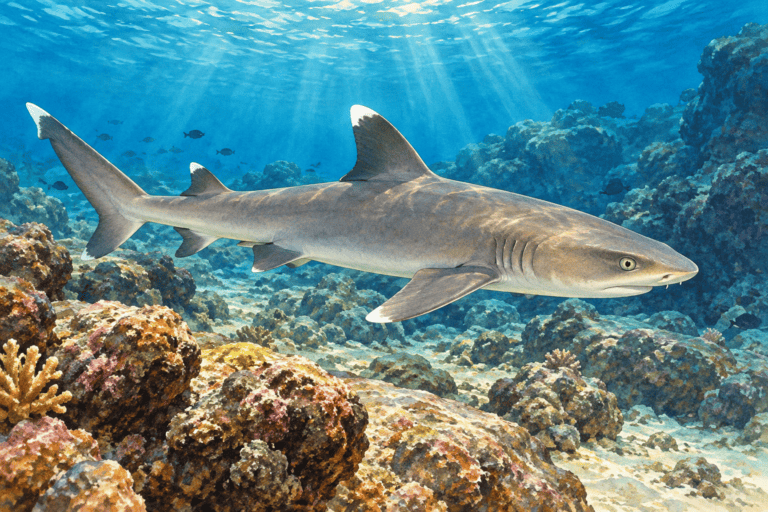
Whitetip Reef Shark

Spanish name
Tiburón punta blanca de arrecife
Scientific name
Triaenodon obesus

What Do Pico & Tati Think?

Pico: “Its fins have little white tips!”

Tati: “We need to compare its whole shape, because other sharks can have white markings too.”

Identification

Key Features of the Whitetip Reef Shark

  • White tips on the first dorsal fin and upper tail fin.

  • A slender gray-brown body.

  • May rest on the bottom in reef shelter.

Habitat & range

Reefs and sheltered bottom habitats. The Isla del Coco connection is supported by park and research records.

Conservation & care

Follow park rules and qualified guides. Do not feed, touch, chase or collect marine wildlife. Maintain distance and avoid contact with reef habitat.

View full profile →

My Tico Explorer Experience

Save nature, towns, discoveries and learning adventures for your next experience.

Your list stays in this browser on this device.