

Nature Field Guide
Scalloped Hammerhead Shark
- Spanish name
- Tiburón martillo común
- Scientific name
- Sphyrna lewini
What Do Pico & Tati Think?
Pico: “Its head is shaped like a hammer!”
Tati: “The curves and notches help us distinguish this species from other hammerheads.”
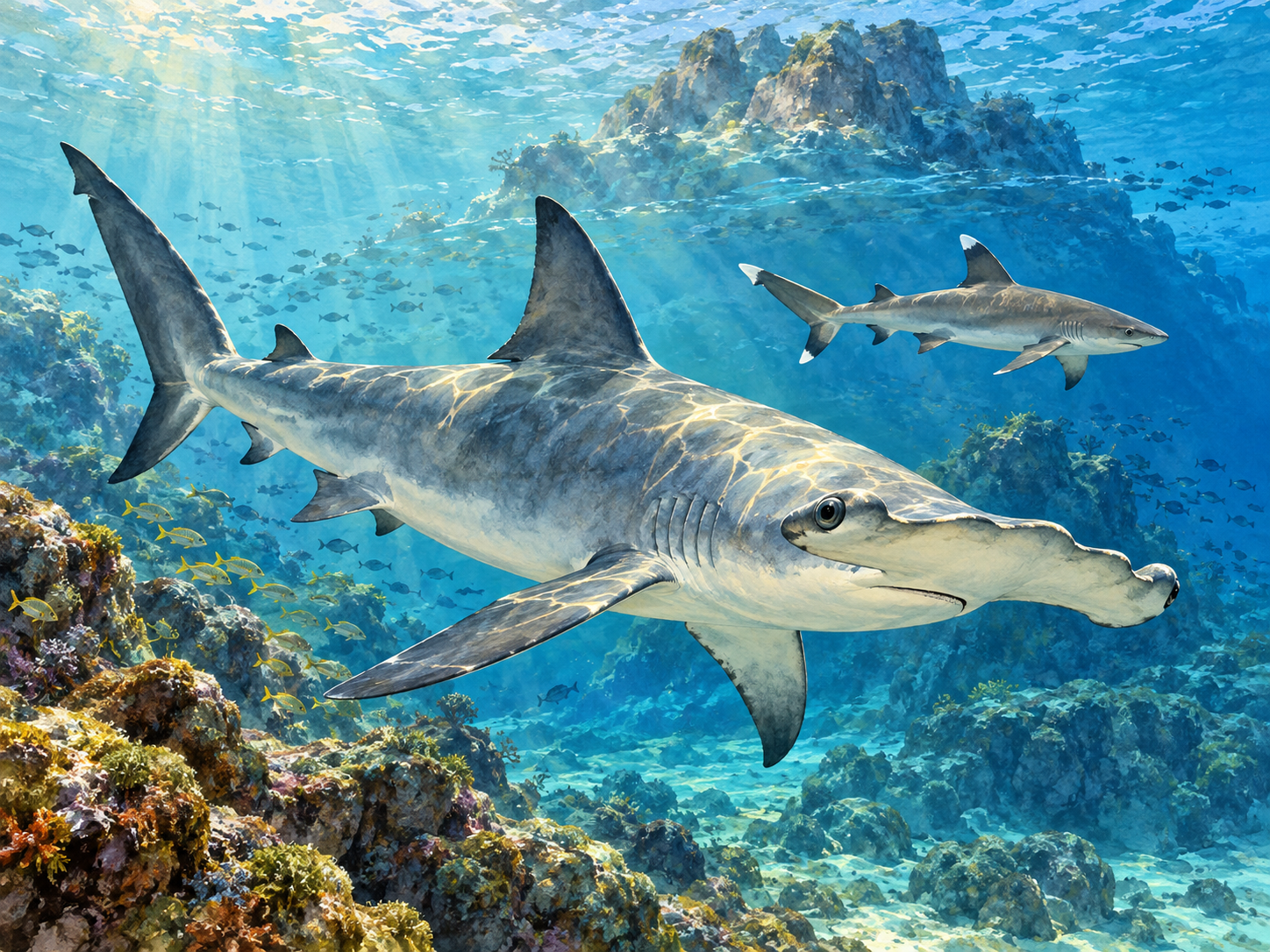
Species overview
About the Scalloped Hammerhead Shark
The scalloped hammerhead has a wide head with a curved front edge and a central indentation. Smaller notches give the front of the head its scalloped appearance. The body is streamlined, with a tall first dorsal fin.
This shark uses coastal and offshore waters and may gather in schools. It feeds on fish and other marine animals. Identification requires comparing the head shape rather than treating every hammerhead as the same species.
Isla del Coco has documented records. A shark can move beyond a protected area, so conservation of a site and conservation of a migratory species address different parts of the same challenge.
Identification
Key Features of the Scalloped Hammerhead Shark
A broad hammer-shaped head with a central front notch.
A curved, scalloped front edge to the head.
A streamlined body and tall first dorsal fin.
Habitat & range
Warm coastal and offshore waters, including island-associated marine habitats at Isla del Coco.
Local observations
The park tourism plan includes scalloped hammerheads among documented marine species. That historical source supports occurrence, not a current abundance count.
When to observe
Observations depend on route, visibility, currents and animal movements. No fixed viewing season or guaranteed sighting is established by this profile.
Conservation & care
Follow park rules and qualified guides. Do not feed, touch, chase or collect marine wildlife. Maintain distance and avoid contact with reef habitat.
Threats & pressures
Fishing for fins and meat, incidental capture and pressure on coastal nursery areas affect the species. Sources describe risks across its range; these are not measurements of loss at Isla del Coco.
Conservation assessment
Global IUCN category reported by the Convention on Migratory Species and Florida Museum: Critically Endangered. The linked CMS page does not provide the underlying assessment date. Checked 7 October 2026. This is not a local population count.
Observation activity
Use a verified identification image to sketch three distinguishing features. During any guided observation, record the place, date and behavior without moving closer to the animal.