

Nature Field Guide
Whale Shark
- Spanish name
- Tiburón ballena
- Scientific name
- Rhincodon typus
What Do Pico & Tati Think?
Pico: “A shark with spots—and such a wide mouth!”
Tati: “It is a fish, even though its name includes whale.”
Species overview
About the Whale Shark
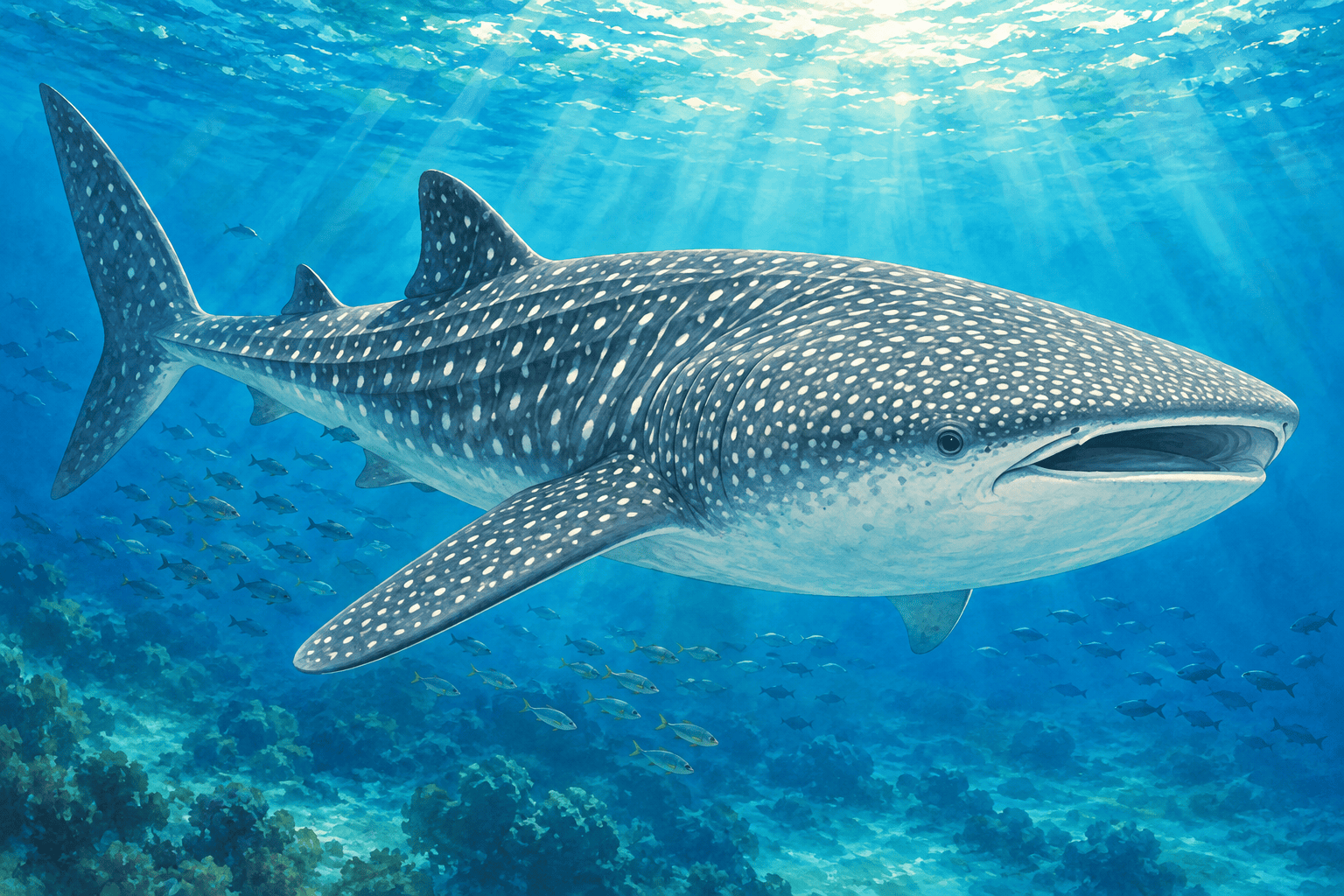
The whale shark is the largest living fish. It has a broad, flattened head and a very wide mouth near the front of the snout. Pale spots and bars form a recognizable pattern over the darker body.
It filters food from water rather than hunting like many other sharks. Its diet includes plankton and other small marine organisms. It uses warm seas and can make extensive movements between feeding areas.
Research records establish its presence at Isla del Coco. These observations do not make it a resident animal at every dive site. Respectful observation gives the shark space to continue feeding and swimming without being followed or touched.
Identification
Key Features of the Whale Shark
Pale spots and bars across a darker body.
A broad, flattened head with a wide front-facing mouth.
A very large body with ridges along the sides.
Habitat & range
Tropical and warm marine waters, including offshore feeding areas. Scientific records connect the species to Isla del Coco.
Local observations
Whale sharks were recorded in published deep-water observations near Isla del Coco. These records confirm occurrence without establishing a reliable visitor viewing schedule.
When to observe
Observations depend on route, visibility, currents and animal movements. No fixed viewing season or guaranteed sighting is established by this profile.
Conservation & care
Follow park rules and qualified guides. Do not feed, touch, chase or collect marine wildlife. Maintain distance and avoid contact with reef habitat.
Threats & pressures
Fisheries and incidental capture, vessel strikes and poorly managed wildlife tourism can affect whale sharks. Threats vary by location.
Conservation assessment
IUCN global assessment dated 31 March 2025, published 2025: Endangered (A2bd). This global assessment is separate from any local count or legal protection in Costa Rica.
Observation activity
Use a verified identification image to sketch three distinguishing features. During any guided observation, record the place, date and behavior without moving closer to the animal.