

Nature Field Guide
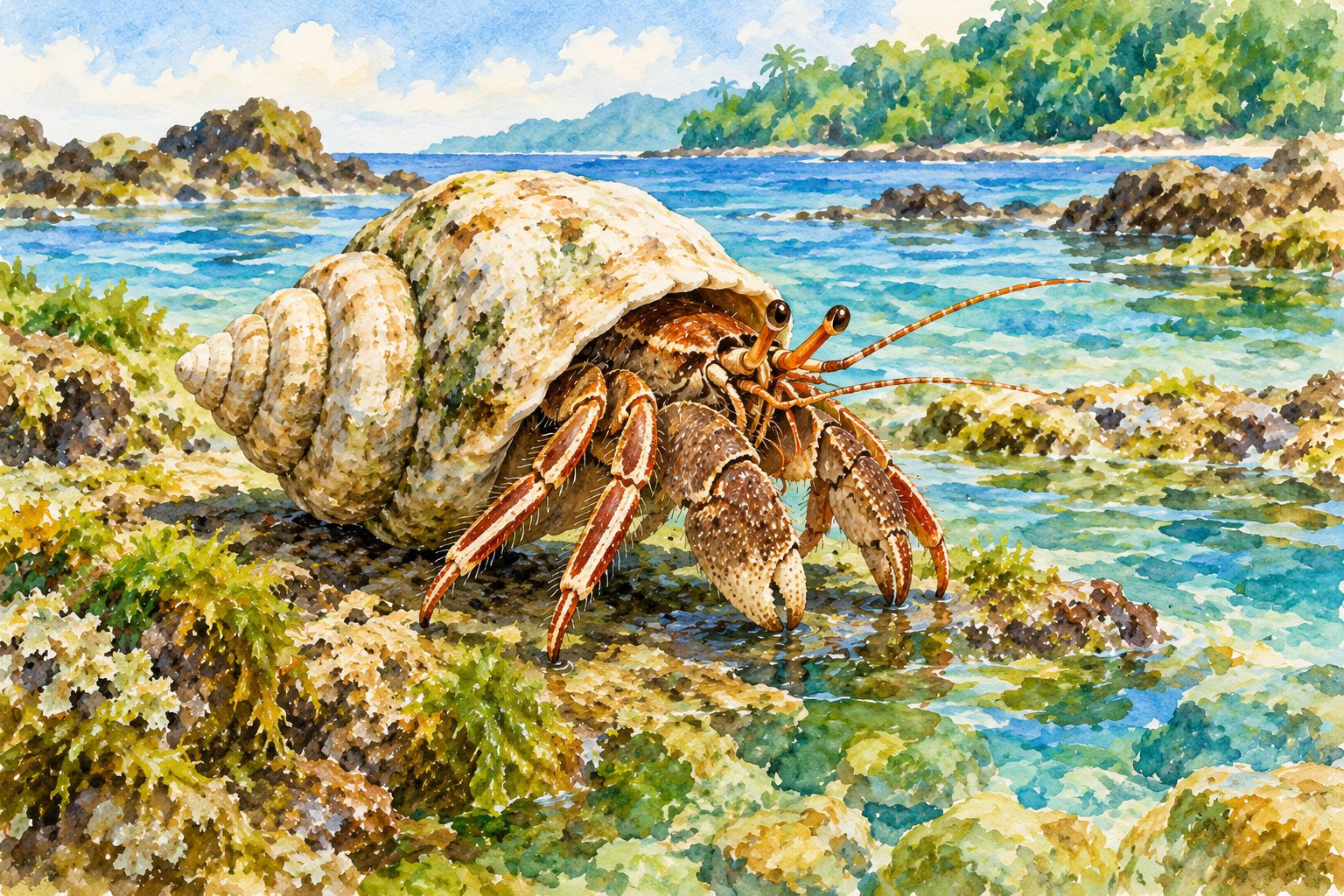
Panama Hermit Crab
- Spanish name
- Cangrejo ermitaño panameño
- Scientific name
- Clibanarius panamensis
What Do Pico & Tati Think?
A shell can be both a clue and a hiding place. Pico and Tati practice patience while its resident decides whether to appear.
Species overview
About the Panama Hermit Crab
Clibanarius panamensis is a marine hermit crab documented in Costa Rican coastal collections. Like other shell-dwelling hermit crabs, it protects its abdomen inside a borrowed shell. Similar hermit crabs can be difficult to separate in the field, so the guide image should show the animal as well as its shell.
Identification
Key Features of the Panama Hermit Crab
Legs or claws extending from a shell
An animal carrying the shell as it moves
Check the crab’s features with a specialist reference
Habitat & range
Rocky shore and naturally visible tidal habitat. Choose a permitted observation point with an adult; do not turn rocks or reach into holes.
Local observations
Documented in Guanacaste. Museum specimens document Gulf of Nicoya/peninsula sites, Central Pacific sites and the Osa Peninsula. Region tags represent documented locations, not an exhaustive range or a promise of occurrence at every beach. Additional regional assignments require locality evidence.
When to observe
Visibility depends on the site, conditions and the animal. Ask a local guide about an appropriate visit; no fixed encounter season is promised.
Conservation & care
Give claws and burrow entrances space. Do not handle, feed, chase or collect crabs. Leave rocks and shells where they are, and follow your adult’s route and local signs.
Observation activity
Watch a naturally visible hermit crab without moving it. Record whether it rests, walks or withdraws.
Explore by location
Central Pacific · Guanacaste · Puntarenas & the Gulf Islands · South Pacific