

Nature Field Guide
Freckled Porcupinefish
- Spanish name
- Pez erizo
- Scientific name
- Diodon holocanthus
What Do Pico & Tati Think?
Pico: “Are those little spines?”
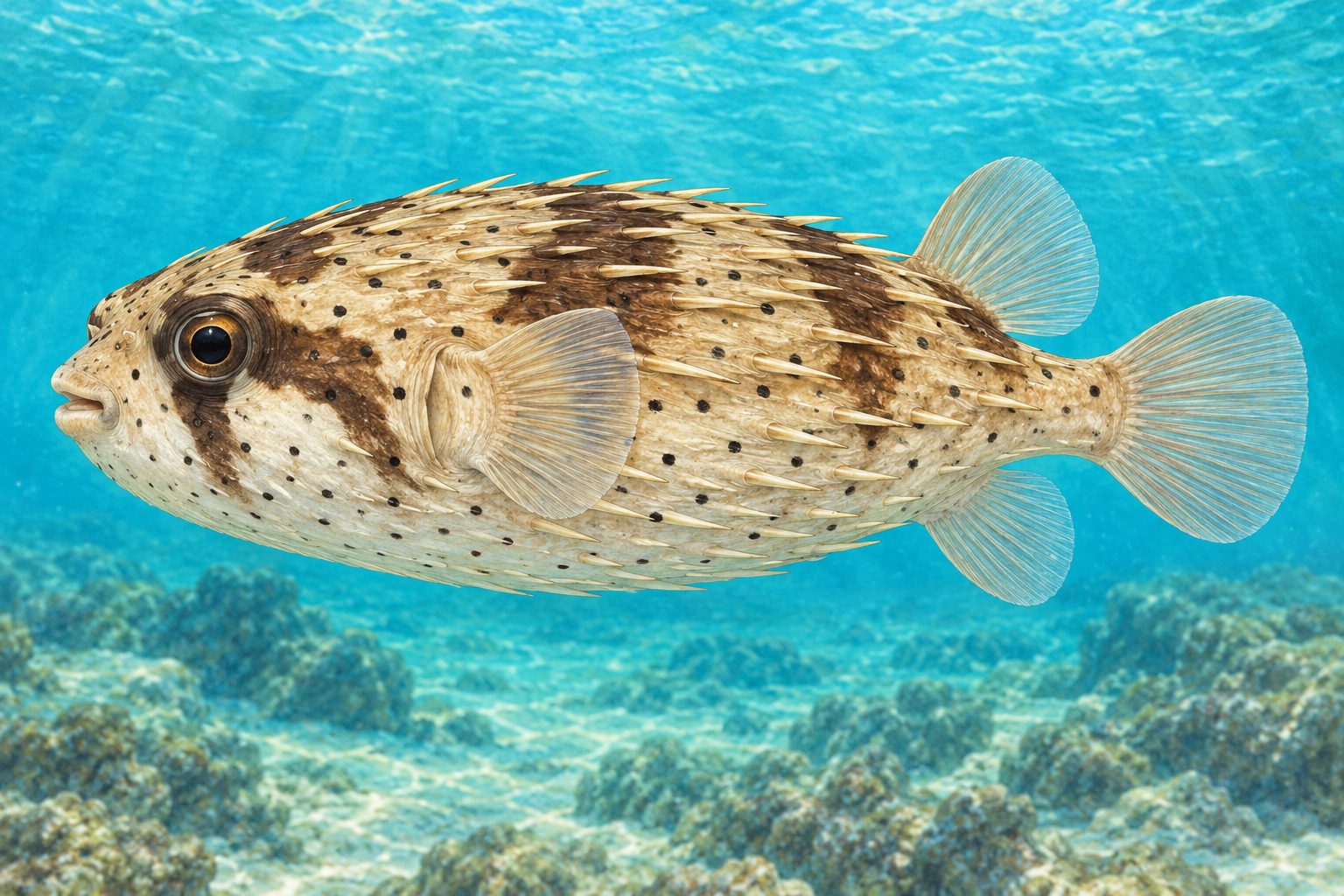
Tati: “Yes. We can study them in a photograph without disturbing the fish.”
Species overview
About the Freckled Porcupinefish
Its pale brown body carries dark blotches, small spots and an eye band. The long movable spines distinguish it from smooth-looking puffers. The fins are pale and lack dark spots.
It uses reef and sandy-rubble habitats and eats bottom animals such as crustaceans and mollusks. Inflation is a defense response. Give it space so it can continue swimming naturally.
Identification
Key Features of the Freckled Porcupinefish
Long movable body spines
Dark blotches and eye band
Pale unspotted fins
Habitat & range
Pacific rocky reefs and nearby coastal marine habitats. Check the linked species reference for its wider range.
Local observations
Recorded in northwestern Costa Rica.
When to observe
Visibility depends on water clarity, currents, depth and conditions. No fixed local viewing or migration season is assigned.
Conservation & care
Never touch, collect, eat or deliberately inflate puffers or porcupinefish. Observe with a qualified guide. Do not feed, chase or handle fish. Keep fins off the reef and take all litter home.
Threats & pressures
Habitat damage and degraded water quality are pressures to prevent in coastal fish habitats. This profile does not quantify a local decline.
Observation activity
Use a photograph to compare body markings with fin markings. Are the fins spotted?