

Nature Field Guide
Laughing Gull
- Spanish name
- Gaviota reidora
- Scientific name
- Leucophaeus atricilla
What Do Pico & Tati Think?
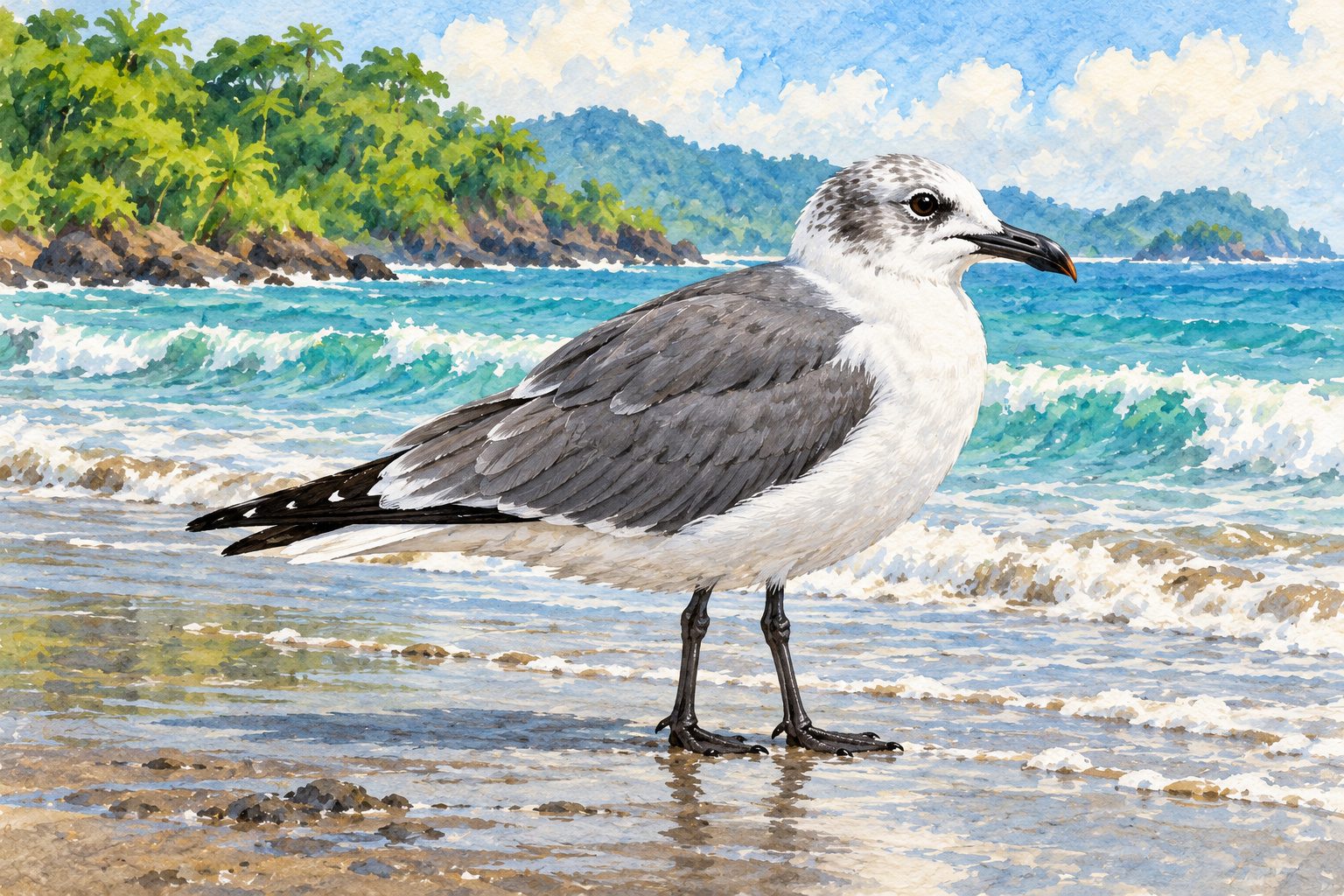
Pico hears a call that sounds like laughter. Tati checks the season before expecting a black hood.
Species overview
About the Laughing Gull
Laughing Gulls are coastal gulls with dark gray backs and blackish wingtips. Breeding adults develop dark heads; nonbreeding birds have much paler heads with dusky markings. Their loud calls are useful clues, but other gulls can look similar. Watching age, season, body shape and bill together gives a stronger identification than the name alone.
Identification
Key Features of the Laughing Gull
Dark gray back and pale body
Blackish wingtips
Breeding adults have a dark hood
Winter head is paler with gray smudges
Habitat & range
Scan coastal waters and undisturbed shoreline resting places from a safe public viewpoint. Keep boats and people away from nesting or resting colonies.
Local observations
A migrant and nonbreeding visitor along both coasts, especially the Gulf of Nicoya and Pacific shore. Northern Plains records include Caño Negro. Local abundance and age composition change seasonally. Oceanic Pacific: accidental visitor in the official Isla del Coco checklist, rather than ordinary year-round habitat.
When to observe
A seasonal visitor rather than a promised year-round sighting. Start with the northern nonbreeding season and migration periods; check recent local observations before a visit. Tide and feeding conditions also matter.
Conservation & care
Give feeding and resting birds space. If a bird stops feeding, repeatedly looks at you or moves away, increase your distance. Keep dogs away from flocks, avoid playback and feeding, and leave nests and natural shoreline debris undisturbed.
Observation activity
Draw the head in two seasons. Add a note that our illustration shows nonbreeding plumage.
Explore by location
Caribbean · Central Pacific · Guanacaste · Northern Plains · Oceanic Pacific · Puntarenas & the Gulf Islands · South Pacific