Tico Explorers

Nature Field Guide

Coastal Birds

Explore wildlife, plants and trees. Learn what to look for and where to find them.

All Nature

25 profiles

Nature Field Guide

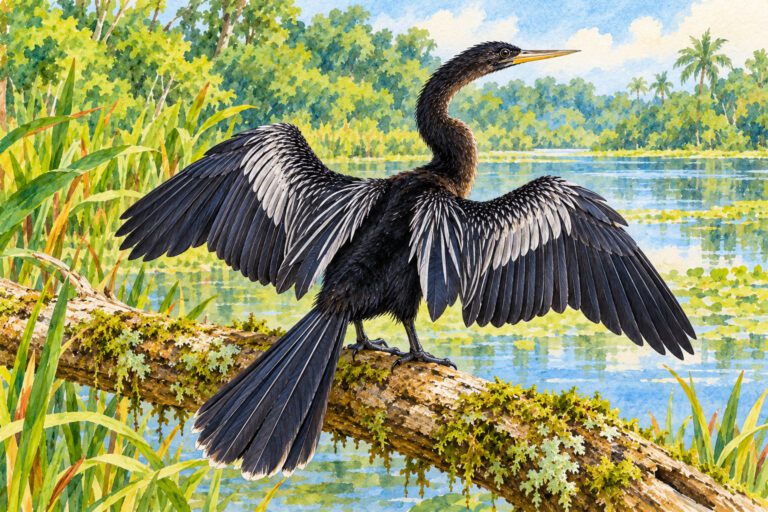
Anhinga

Spanish name
Aninga o pato aguja
Scientific name
Anhinga anhinga

What Do Pico & Tati Think?

A long neck rises above the water like a question mark. Pico waits while Tati looks for the rest of the bird.

Identification

Key Features of the Anhinga

  • Very long slender neck

  • Straight pointed bill

  • Long tail and pale wing markings

  • Often rests with wings spread

Habitat & range

Scan sheltered freshwater wetlands and wooded lagoon margins for swimming birds or a resting bird on a branch. Observe from a permitted viewpoint.

Conservation & care

Give feeding and resting birds space. If a bird stops feeding, repeatedly looks at you or moves away, increase your distance. Keep dogs away from flocks, avoid playback and feeding, and leave nests and natural shoreline debris undisturbed.

View full profile →

Nature Field Guide

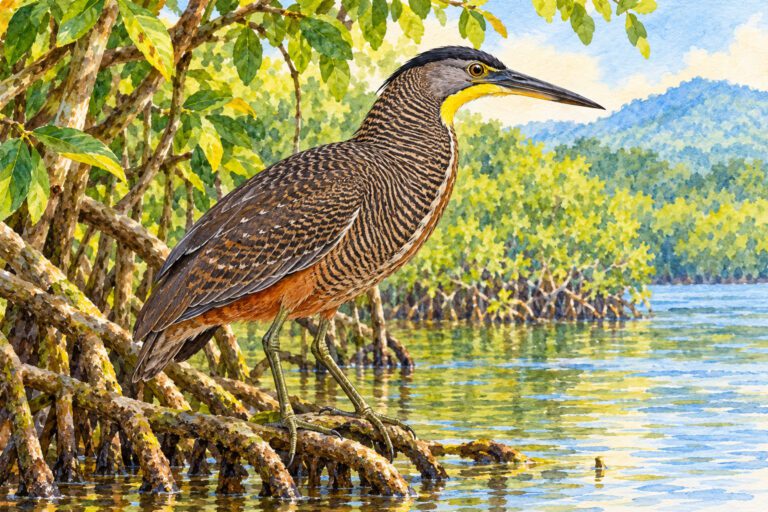
Bare-throated Tiger-Heron

Spanish name
Garza tigre cuellinuda
Scientific name
Tigrisoma mexicanum

What Do Pico & Tati Think?

Pico wonders where the tiger is hiding. Tati points to the fine patterns on a very watchful heron.

Identification

Key Features of the Bare-throated Tiger-Heron

  • Bare yellow throat patch

  • Adult finely barred neck and body

  • Gray cheeks and greenish legs

  • Young birds have bold brown bands

Habitat & range

Scan shallow water, quiet mangrove channels and vegetated wetland margins from an established viewpoint. Follow a local guide’s directions around estuaries.

Conservation & care

Give feeding and resting birds space. If a bird stops feeding, repeatedly looks at you or moves away, increase your distance. Keep dogs away from flocks, avoid playback and feeding, and leave nests and natural shoreline debris undisturbed.

View full profile →

Nature Field Guide

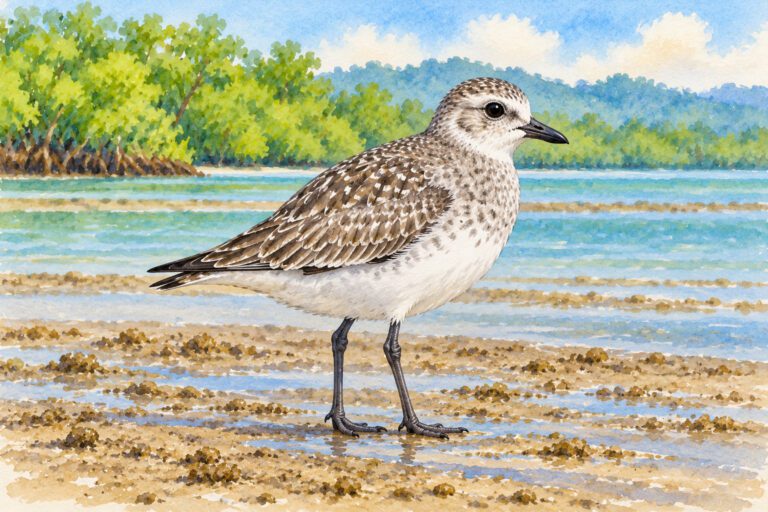
Black-bellied Plover

Spanish name
Chorlito gris
Scientific name
Pluvialis squatarola

What Do Pico & Tati Think?

Pico expects a black belly. Tati’s winter bird has a pale belly and a very different outfit.

Identification

Key Features of the Black-bellied Plover

  • Large round-headed plover

  • Short stout dark bill

  • Gray upperparts and pale nonbreeding belly

  • Dark armpit patch visible in natural flight

Habitat & range

Scan exposed shoreline feeding areas and nearby resting places with binoculars. The tide changes which flats are available; remain on a safe established route.

Conservation & care

Give feeding and resting birds space. If a bird stops feeding, repeatedly looks at you or moves away, increase your distance. Keep dogs away from flocks, avoid playback and feeding, and leave nests and natural shoreline debris undisturbed.

View full profile →

Nature Field Guide

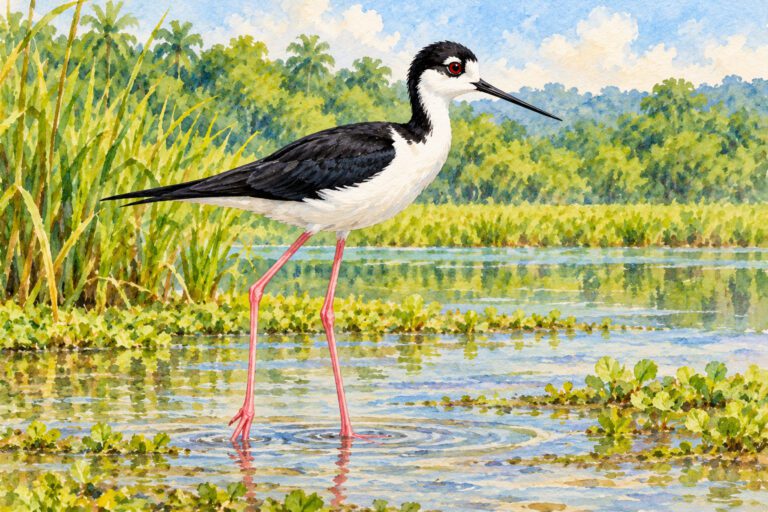
Black-necked Stilt

Spanish name
Cigüeñuela cuellinegra
Scientific name
Himantopus mexicanus

What Do Pico & Tati Think?

Those pink legs look almost too long for Pico’s page. Tati turns the journal upright to draw the whole bird.

Identification

Key Features of the Black-necked Stilt

  • Very long pink legs

  • Thin straight black bill

  • White underparts with dark back and hindneck

Habitat & range

Scan exposed shoreline feeding areas and nearby resting places with binoculars. The tide changes which flats are available; remain on a safe established route.

Conservation & care

Give feeding and resting birds space. If a bird stops feeding, repeatedly looks at you or moves away, increase your distance. Keep dogs away from flocks, avoid playback and feeding, and leave nests and natural shoreline debris undisturbed.

View full profile →

Nature Field Guide

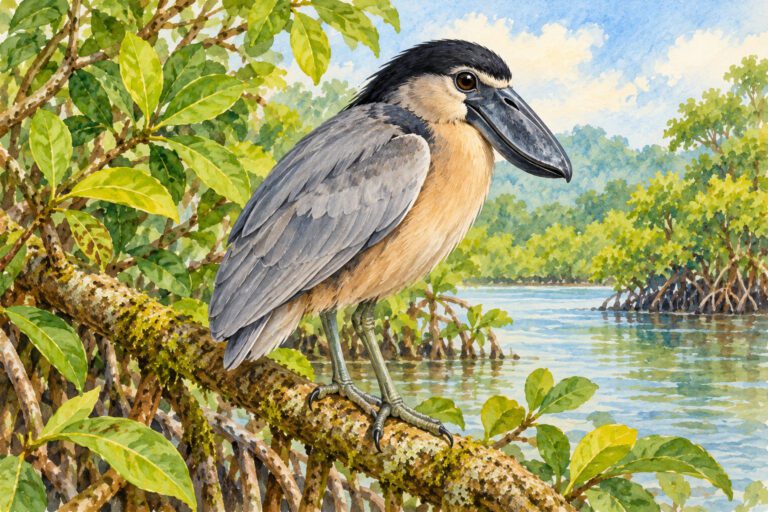
Boat-billed Heron

Spanish name
Chocuaco o picocuchara
Scientific name
Cochlearius cochlearius

What Do Pico & Tati Think?

That broad bill looks unlike the pointed bills Pico has drawn. Tati adds a new shape to the explorer journal.

Identification

Key Features of the Boat-billed Heron

  • Very broad boat-shaped bill

  • Large dark eyes and black crown

  • Stocky body with gray back

Habitat & range

Scan shallow water, quiet mangrove channels and vegetated wetland margins from an established viewpoint. Follow a local guide’s directions around estuaries.

Conservation & care

Give feeding and resting birds space. If a bird stops feeding, repeatedly looks at you or moves away, increase your distance. Keep dogs away from flocks, avoid playback and feeding, and leave nests and natural shoreline debris undisturbed.

View full profile →

Nature Field Guide

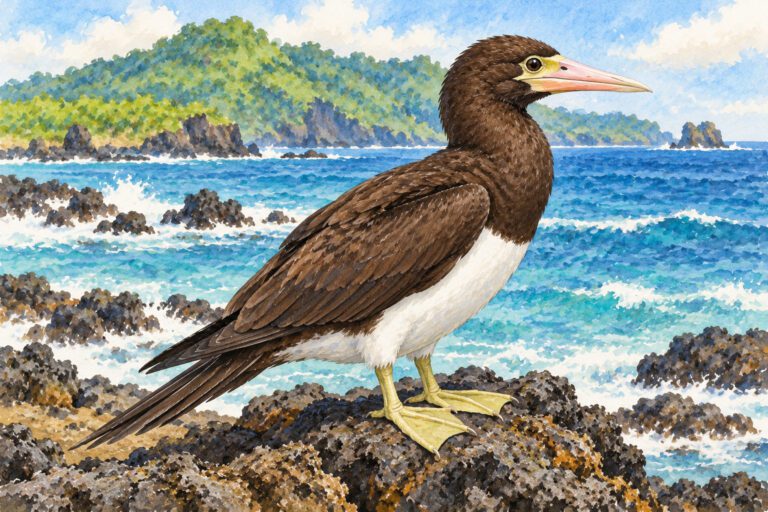
Cocos Booby

Spanish name
Piquero de Cocos
Scientific name
Sula brewsteri

What Do Pico & Tati Think?

Pico meets a familiar-looking seabird with a newer name. Tati keeps the scientific name beside the illustration.

Identification

Key Features of the Cocos Booby

  • Brown adult upperparts and white belly

  • Strong pointed pale bill

  • Short legs and broad webbed feet

  • Identification may require close expert comparison

Habitat & range

Scan Pacific coastal waters and offshore rocks from a safe viewpoint or responsible boat trip. Do not approach seabird colonies or land on nesting islands.

Conservation & care

Give feeding and resting birds space. If a bird stops feeding, repeatedly looks at you or moves away, increase your distance. Keep dogs away from flocks, avoid playback and feeding, and leave nests and natural shoreline debris undisturbed.

View full profile →

Nature Field Guide

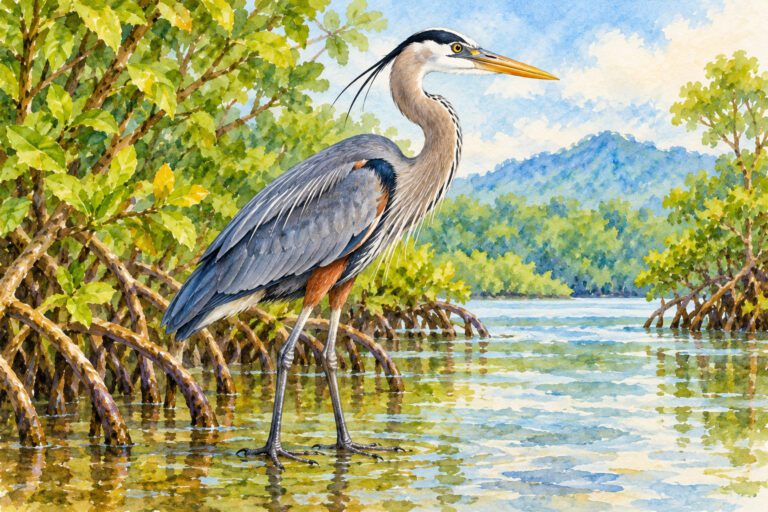
Great Blue Heron

Spanish name
Garzón azulado
Scientific name
Ardea herodias

What Do Pico & Tati Think?

A tall, patient hunter can make the whole shoreline feel still. Pico counts its slow steps while Tati watches its folded neck.

Identification

Key Features of the Great Blue Heron

  • Large blue-gray body

  • Long legs and a heavy yellowish bill

  • Pale head with a dark stripe above the eye

Habitat & range

Scan shallow water, quiet mangrove channels and vegetated wetland margins from an established viewpoint. Follow a local guide’s directions around estuaries.

Conservation & care

Give feeding and resting birds space. If a bird stops feeding, repeatedly looks at you or moves away, increase your distance. Keep dogs away from flocks, avoid playback and feeding, and leave nests and natural shoreline debris undisturbed.

View full profile →

Nature Field Guide

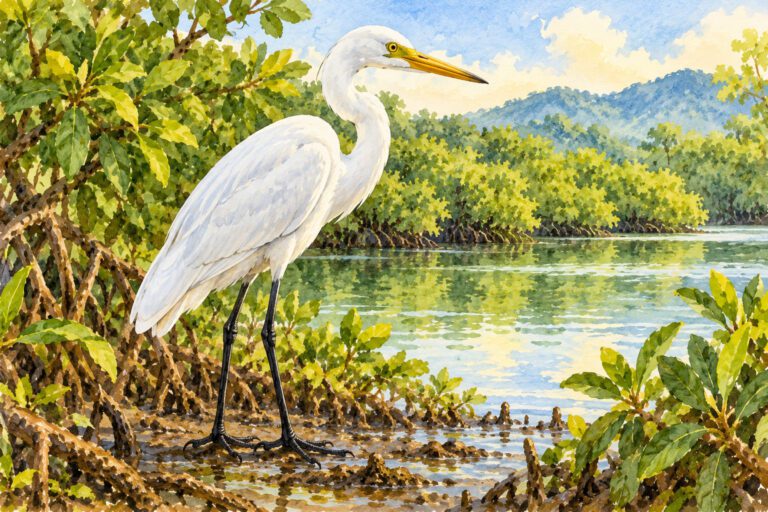
Great Egret

Spanish name
Garceta grande
Scientific name
Ardea alba

What Do Pico & Tati Think?

Pico calls it a bright white shape in the green. Tati checks the bill and feet before giving it a name.

Identification

Key Features of the Great Egret

  • White plumage and long slender neck

  • Yellow bill

  • Black legs and dark feet

Habitat & range

Scan shallow water, quiet mangrove channels and vegetated wetland margins from an established viewpoint. Follow a local guide’s directions around estuaries.

Conservation & care

Give feeding and resting birds space. If a bird stops feeding, repeatedly looks at you or moves away, increase your distance. Keep dogs away from flocks, avoid playback and feeding, and leave nests and natural shoreline debris undisturbed.

View full profile →

Nature Field Guide

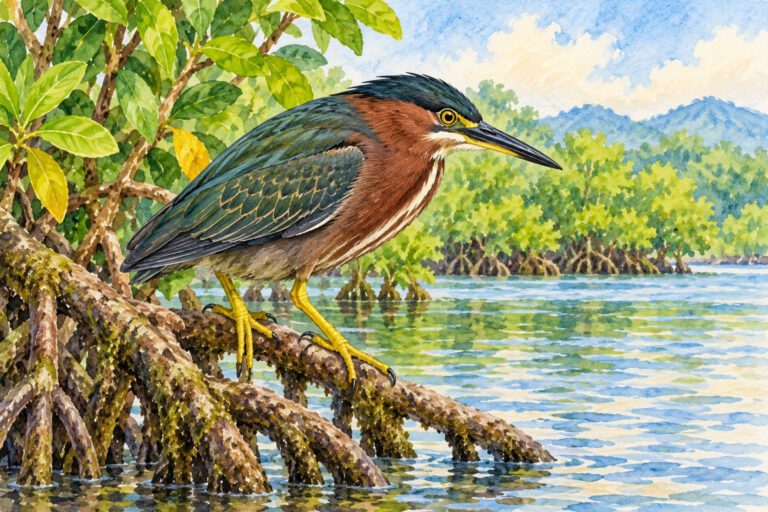
Green Heron

Spanish name
Garcilla verde
Scientific name
Butorides virescens

What Do Pico & Tati Think?

A small hunched shape almost disappears among the roots. Pico and Tati learn that patient looking beats noisy searching.

Identification

Key Features of the Green Heron

  • Small hunched silhouette

  • Greenish back and chestnut neck

  • Straight pointed bill and yellowish legs

Habitat & range

Scan shallow water, quiet mangrove channels and vegetated wetland margins from an established viewpoint. Follow a local guide’s directions around estuaries.

Conservation & care

Give feeding and resting birds space. If a bird stops feeding, repeatedly looks at you or moves away, increase your distance. Keep dogs away from flocks, avoid playback and feeding, and leave nests and natural shoreline debris undisturbed.

View full profile →

Nature Field Guide

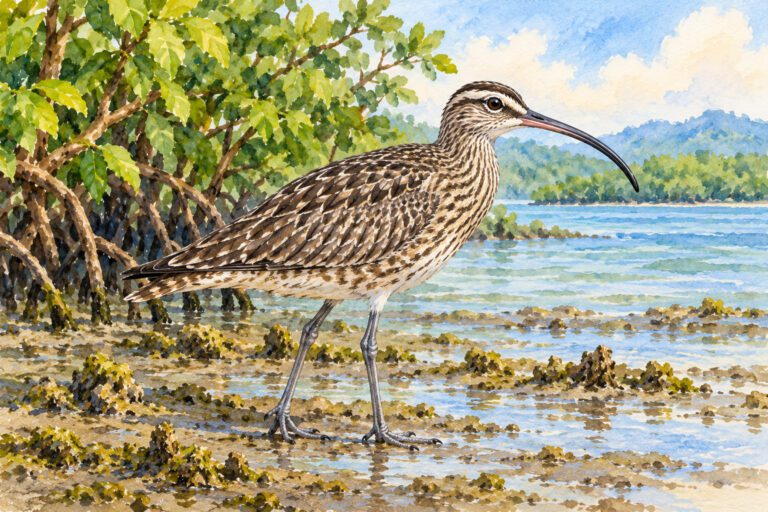
Hudsonian Whimbrel

Spanish name
Zarapito trinador
Scientific name
Numenius hudsonicus

What Do Pico & Tati Think?

Pico curves his pencil line to match the bill. Tati checks the striped head for another clue.

Identification

Key Features of the Hudsonian Whimbrel

  • Long downward-curved bill

  • Striped brown head with a pale central crown stripe

  • Brown patterned body and long legs

Habitat & range

Scan exposed shoreline feeding areas and nearby resting places with binoculars. The tide changes which flats are available; remain on a safe established route.

Conservation & care

Give feeding and resting birds space. If a bird stops feeding, repeatedly looks at you or moves away, increase your distance. Keep dogs away from flocks, avoid playback and feeding, and leave nests and natural shoreline debris undisturbed.

View full profile →

Nature Field Guide

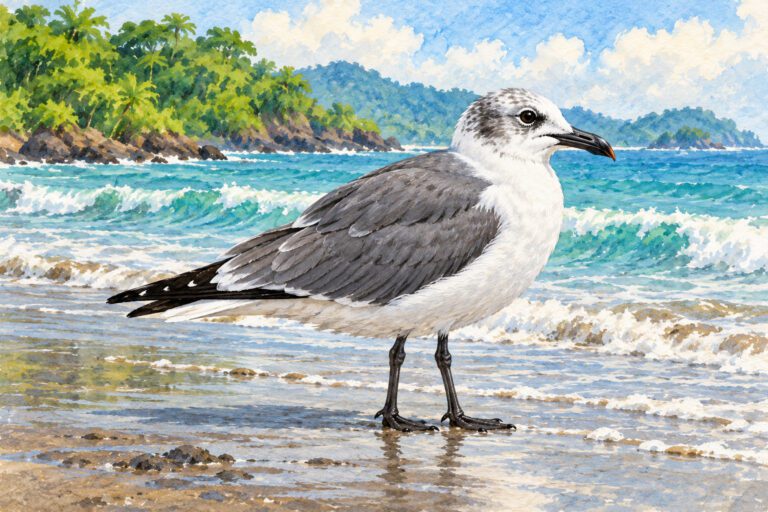
Laughing Gull

Spanish name
Gaviota reidora
Scientific name
Leucophaeus atricilla

What Do Pico & Tati Think?

Pico hears a call that sounds like laughter. Tati checks the season before expecting a black hood.

Identification

Key Features of the Laughing Gull

  • Dark gray back and pale body

  • Blackish wingtips

  • Breeding adults have a dark hood

  • Winter head is paler with gray smudges

Habitat & range

Scan coastal waters and undisturbed shoreline resting places from a safe public viewpoint. Keep boats and people away from nesting or resting colonies.

Conservation & care

Give feeding and resting birds space. If a bird stops feeding, repeatedly looks at you or moves away, increase your distance. Keep dogs away from flocks, avoid playback and feeding, and leave nests and natural shoreline debris undisturbed.

View full profile →

Nature Field Guide

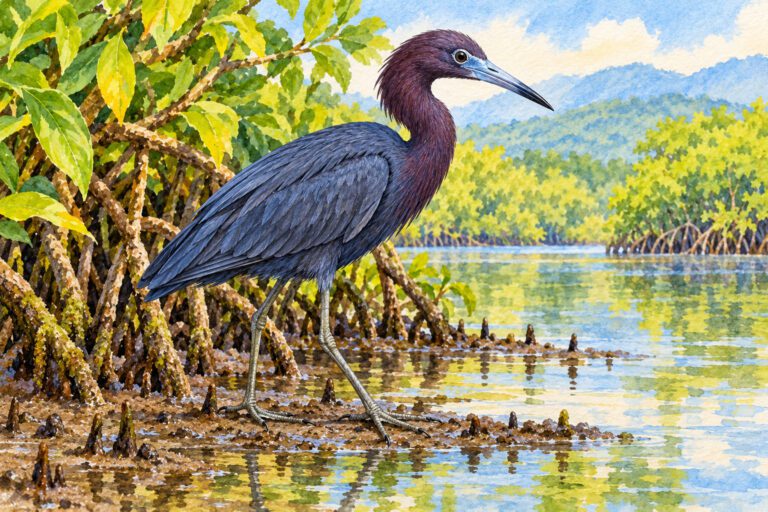
Little Blue Heron

Spanish name
Garceta azul
Scientific name
Egretta caerulea

What Do Pico & Tati Think?

Pico expects every Little Blue Heron to be blue. Tati discovers that young birds tell a different color story.

Identification

Key Features of the Little Blue Heron

  • Adult slate-blue body and purplish neck

  • Two-toned bill with a dark tip

  • Juveniles are white, unlike the illustrated adult

Habitat & range

Scan shallow water, quiet mangrove channels and vegetated wetland margins from an established viewpoint. Follow a local guide’s directions around estuaries.

Conservation & care

Give feeding and resting birds space. If a bird stops feeding, repeatedly looks at you or moves away, increase your distance. Keep dogs away from flocks, avoid playback and feeding, and leave nests and natural shoreline debris undisturbed.

View full profile →

Nature Field Guide

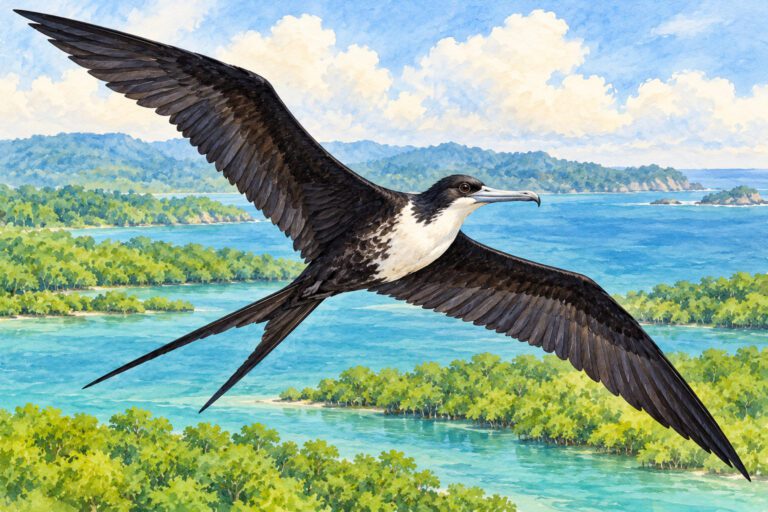
Magnificent Frigatebird

Spanish name
Rabihorcado magnífico
Scientific name
Fregata magnificens

What Do Pico & Tati Think?

Pico draws a bird that barely seems to flap. Tati adds a deeply forked tail to finish its sky silhouette.

Identification

Key Features of the Magnificent Frigatebird

  • Very long angular wings

  • Deeply forked tail

  • Adult male dark with red throat skin

  • Adult female has a white chest

Habitat & range

Scan coastal waters and undisturbed shoreline resting places from a safe public viewpoint. Keep boats and people away from nesting or resting colonies.

Conservation & care

Give feeding and resting birds space. If a bird stops feeding, repeatedly looks at you or moves away, increase your distance. Keep dogs away from flocks, avoid playback and feeding, and leave nests and natural shoreline debris undisturbed.

View full profile →

Nature Field Guide

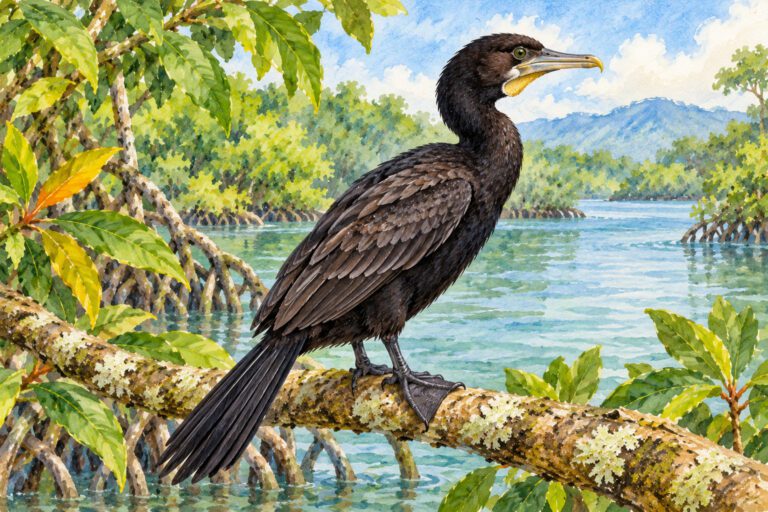
Neotropic Cormorant

Spanish name
Cormorán neotropical
Scientific name
Nannopterum brasilianum

What Do Pico & Tati Think?

Pico watches a dark swimmer vanish below the surface. Tati looks for its hooked bill when it returns.

Identification

Key Features of the Neotropic Cormorant

  • Dark body and long tail

  • Slender neck

  • Bill with a hooked tip

  • Often dives from the water surface

Habitat & range

Look across sheltered wetlands, lagoons and river margins from permitted trails or a responsible guided boat trip.

Conservation & care

Give feeding and resting birds space. If a bird stops feeding, repeatedly looks at you or moves away, increase your distance. Keep dogs away from flocks, avoid playback and feeding, and leave nests and natural shoreline debris undisturbed.

View full profile →

Nature Field Guide

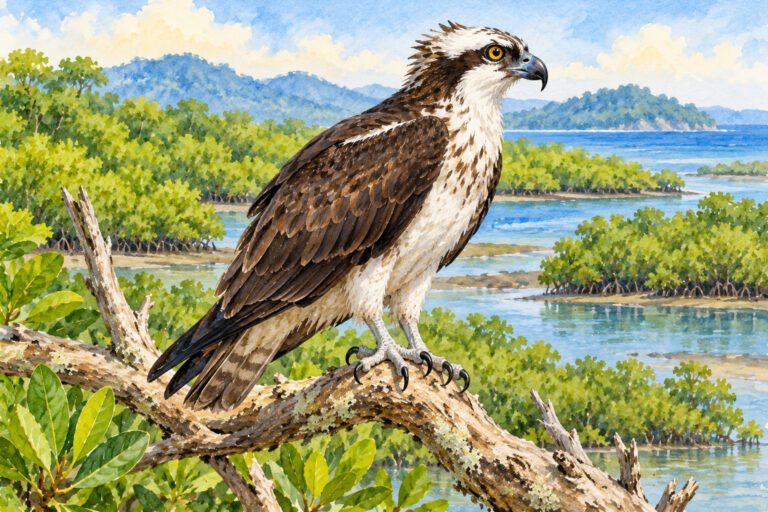
Osprey

Spanish name
Águila pescadora
Scientific name
Pandion haliaetus

What Do Pico & Tati Think?

Pico sees a fish hunter high above the water. Tati follows its shape with binoculars while keeping both feet on the trail.

Identification

Key Features of the Osprey

  • White head with broad dark eye stripe

  • Brown back and pale underparts

  • Hooked bill and powerful feet

  • Long angled wings in flight

Habitat & range

Scan exposed branches and the sky above fish-bearing rivers, estuaries and coastal water. Watch from a safe shore viewpoint.

Conservation & care

Give feeding and resting birds space. If a bird stops feeding, repeatedly looks at you or moves away, increase your distance. Keep dogs away from flocks, avoid playback and feeding, and leave nests and natural shoreline debris undisturbed.

View full profile →

Nature Field Guide

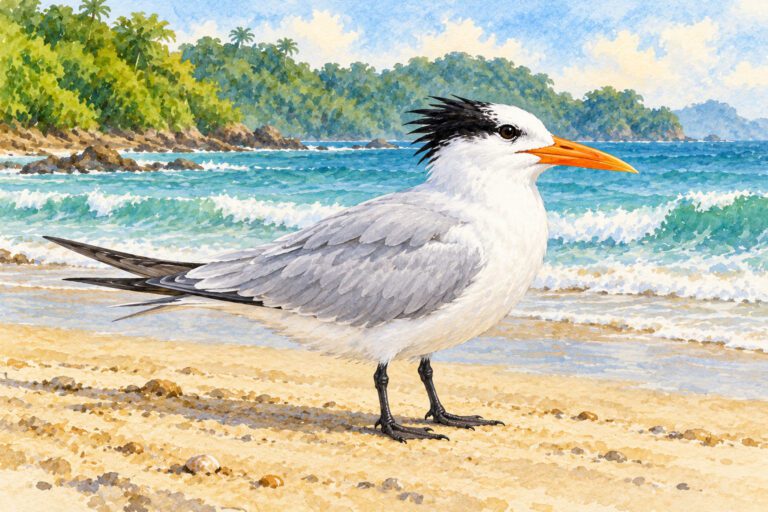
Royal Tern

Spanish name
Pagaza real
Scientific name
Thalasseus maximus

What Do Pico & Tati Think?

Pico notices an orange bill above the tideline. Tati sketches the crest before the tern returns to fishing.

Identification

Key Features of the Royal Tern

  • Large orange pointed bill

  • Pale gray back and white body

  • Black legs

  • Dark rear crest, with a white forehead outside breeding

Habitat & range

Scan coastal waters and undisturbed shoreline resting places from a safe public viewpoint. Keep boats and people away from nesting or resting colonies.

Conservation & care

Give feeding and resting birds space. If a bird stops feeding, repeatedly looks at you or moves away, increase your distance. Keep dogs away from flocks, avoid playback and feeding, and leave nests and natural shoreline debris undisturbed.

View full profile →

Nature Field Guide

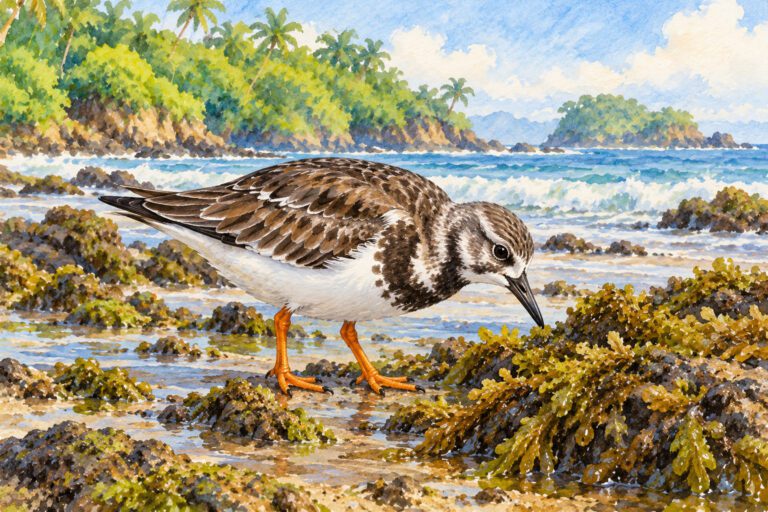
Ruddy Turnstone

Spanish name
Vuelvepiedras rojizo
Scientific name
Arenaria interpres

What Do Pico & Tati Think?

Pico watches a little bird investigate beach debris. Tati leaves the shells exactly where they belong.

Identification

Key Features of the Ruddy Turnstone

  • Short stout slightly upturned bill

  • Orange legs

  • Stocky body and dark breast patches

  • Nonbreeding back is brown rather than bright rusty

Habitat & range

Scan exposed shoreline feeding areas and nearby resting places with binoculars. The tide changes which flats are available; remain on a safe established route.

Conservation & care

Give feeding and resting birds space. If a bird stops feeding, repeatedly looks at you or moves away, increase your distance. Keep dogs away from flocks, avoid playback and feeding, and leave nests and natural shoreline debris undisturbed.

View full profile →

Nature Field Guide

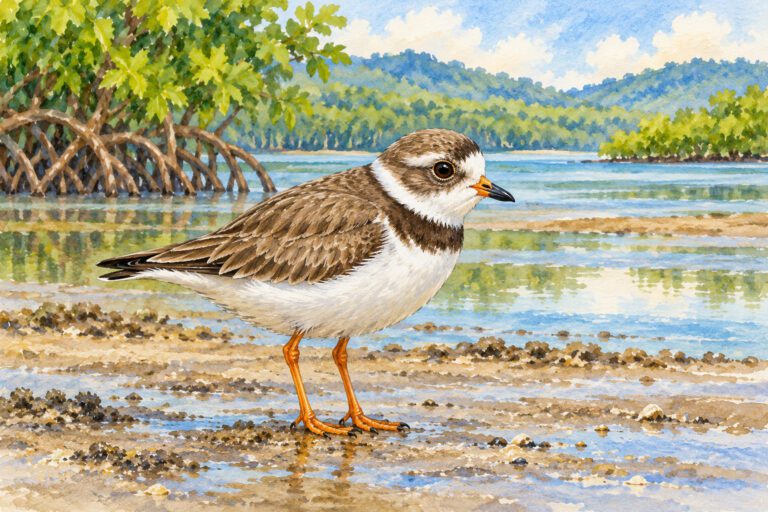
Semipalmated Plover

Spanish name
Chorlitejo semipalmado
Scientific name
Charadrius semipalmatus

What Do Pico & Tati Think?

Pico follows a run, then a stop. Tati notices one breast band on a small round shorebird.

Identification

Key Features of the Semipalmated Plover

  • Small compact brown-and-white body

  • One dark breast band

  • Short bill and orange legs

  • Run-and-pause feeding

Habitat & range

Scan exposed shoreline feeding areas and nearby resting places with binoculars. The tide changes which flats are available; remain on a safe established route.

Conservation & care

Give feeding and resting birds space. If a bird stops feeding, repeatedly looks at you or moves away, increase your distance. Keep dogs away from flocks, avoid playback and feeding, and leave nests and natural shoreline debris undisturbed.

View full profile →

Nature Field Guide

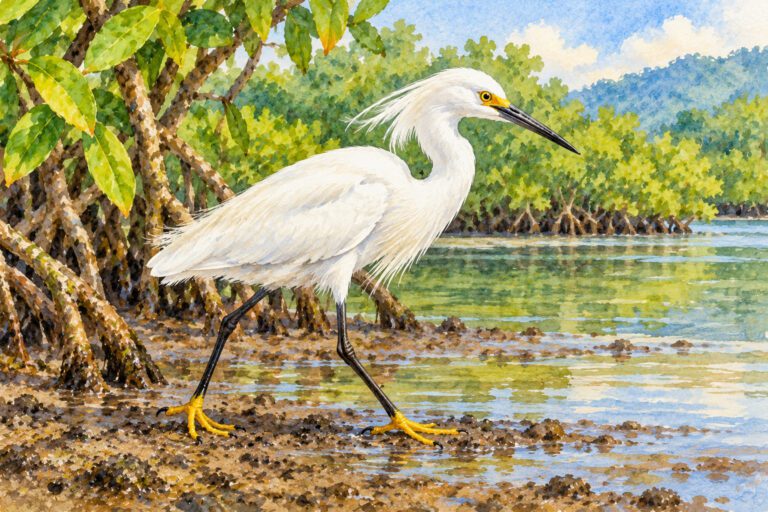
Snowy Egret

Spanish name
Garceta patiamarilla
Scientific name
Egretta thula

What Do Pico & Tati Think?

Those yellow feet catch Pico’s attention. Tati waits to see whether the bird uses them while feeding.

Identification

Key Features of the Snowy Egret

  • White body and slim black bill

  • Black legs with yellow feet

  • Often active in shallow water

Habitat & range

Scan shallow water, quiet mangrove channels and vegetated wetland margins from an established viewpoint. Follow a local guide’s directions around estuaries.

Conservation & care

Give feeding and resting birds space. If a bird stops feeding, repeatedly looks at you or moves away, increase your distance. Keep dogs away from flocks, avoid playback and feeding, and leave nests and natural shoreline debris undisturbed.

View full profile →

Nature Field Guide

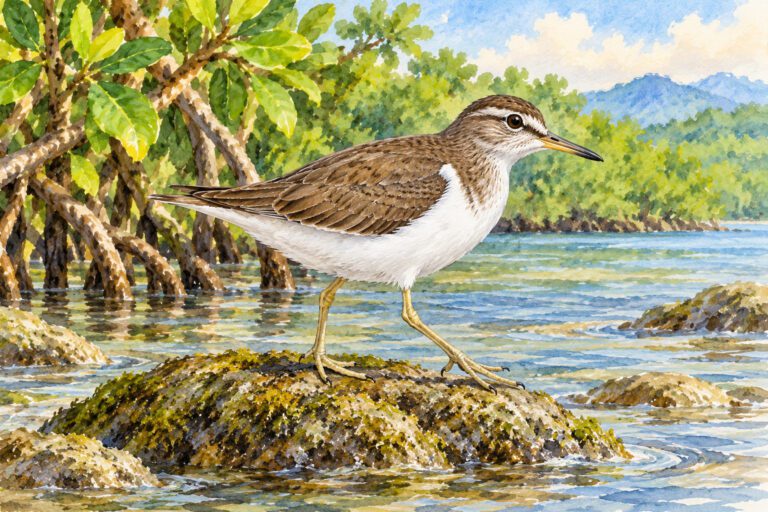
Spotted Sandpiper

Spanish name
Andarríos maculado
Scientific name
Actitis macularius

What Do Pico & Tati Think?

Pico looks for spots but finds a plain white belly. Tati learns that the name does not describe every season.

Identification

Key Features of the Spotted Sandpiper

  • Brown back and white underparts

  • Frequent tail bobbing

  • Short straight bill

  • Belly spots may be absent outside breeding

Habitat & range

Scan exposed shoreline feeding areas and nearby resting places with binoculars. The tide changes which flats are available; remain on a safe established route.

Conservation & care

Give feeding and resting birds space. If a bird stops feeding, repeatedly looks at you or moves away, increase your distance. Keep dogs away from flocks, avoid playback and feeding, and leave nests and natural shoreline debris undisturbed.

View full profile →

Nature Field Guide

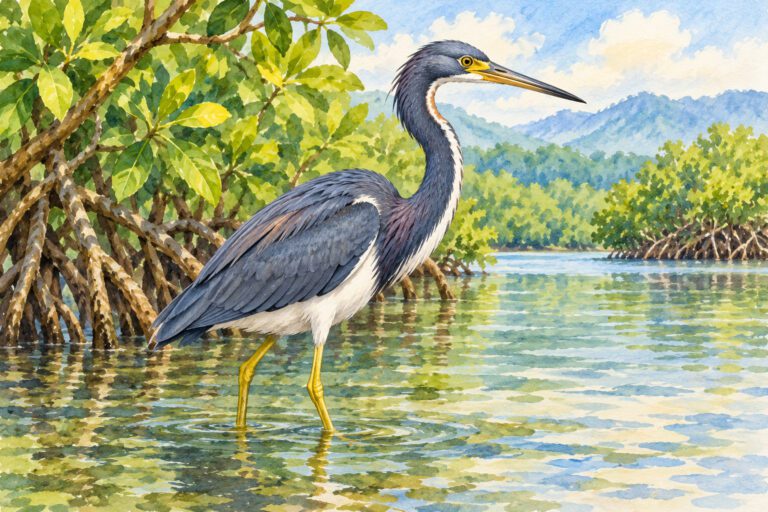
Tricolored Heron

Spanish name
Garceta tricolor
Scientific name
Egretta tricolor

What Do Pico & Tati Think?

Pico follows a quick turn in the shallows. Tati notices the white belly beneath the darker neck.

Identification

Key Features of the Tricolored Heron

  • Dark blue-gray upperparts

  • White belly and pale front-neck stripe

  • Long slim bill and lively feeding movements

Habitat & range

Scan shallow water, quiet mangrove channels and vegetated wetland margins from an established viewpoint. Follow a local guide’s directions around estuaries.

Conservation & care

Give feeding and resting birds space. If a bird stops feeding, repeatedly looks at you or moves away, increase your distance. Keep dogs away from flocks, avoid playback and feeding, and leave nests and natural shoreline debris undisturbed.

View full profile →

Nature Field Guide

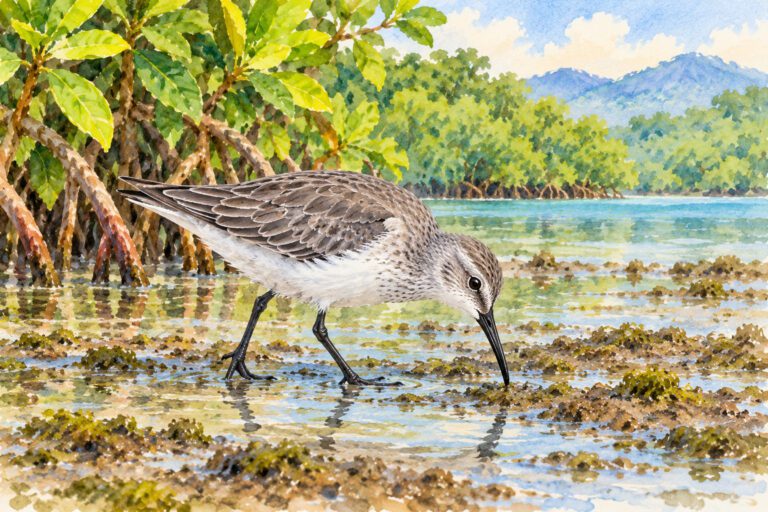
Western Sandpiper

Spanish name
Correlimos occidental
Scientific name
Calidris mauri

What Do Pico & Tati Think?

A tiny gray bird makes Pico slow down. Tati learns that some identifications deserve a question mark.

Identification

Key Features of the Western Sandpiper

  • Very small gray-and-white nonbreeding bird

  • Fine dark bill often slightly downcurved

  • Dark legs

  • Compare carefully with other small sandpipers

Habitat & range

Scan exposed shoreline feeding areas and nearby resting places with binoculars. The tide changes which flats are available; remain on a safe established route.

Conservation & care

Give feeding and resting birds space. If a bird stops feeding, repeatedly looks at you or moves away, increase your distance. Keep dogs away from flocks, avoid playback and feeding, and leave nests and natural shoreline debris undisturbed.

View full profile →

Nature Field Guide

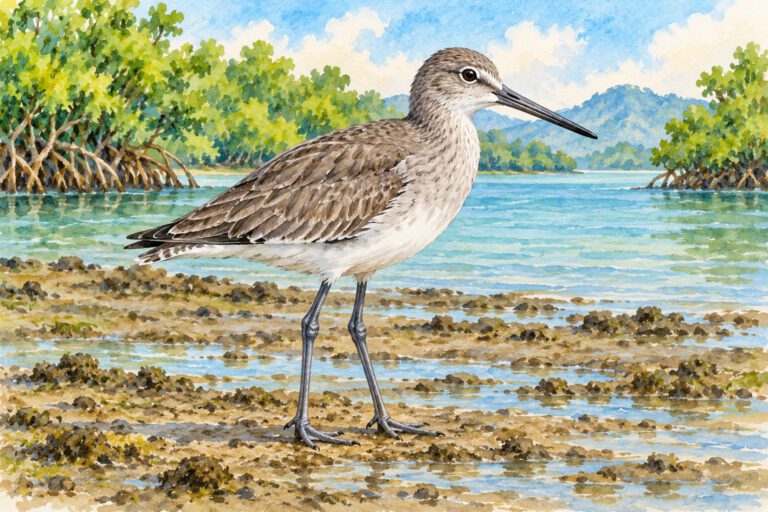
Willet

Spanish name
Pigüilo o playero aliblanco
Scientific name
Tringa semipalmata

What Do Pico & Tati Think?

Pico sees a plain gray shorebird. Tati learns that a bird can reveal a surprising pattern when it takes flight on its own.

Identification

Key Features of the Willet

  • Sturdy long straight bill

  • Long grayish legs

  • Plain gray nonbreeding body

  • Bold black-and-white wings in natural flight

Habitat & range

Scan exposed shoreline feeding areas and nearby resting places with binoculars. The tide changes which flats are available; remain on a safe established route.

Conservation & care

Give feeding and resting birds space. If a bird stops feeding, repeatedly looks at you or moves away, increase your distance. Keep dogs away from flocks, avoid playback and feeding, and leave nests and natural shoreline debris undisturbed.

View full profile →

Nature Field Guide

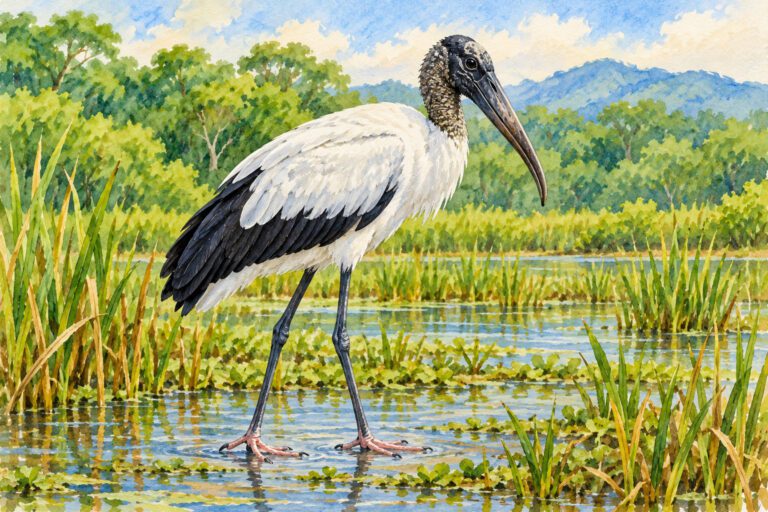
Wood Stork

Spanish name
Cigüeñón
Scientific name
Mycteria americana

What Do Pico & Tati Think?

Pico spots a tall white bird with a very different head. Tati checks its heavy bill before comparing it with the egrets.

Identification

Key Features of the Wood Stork

  • White body with black flight feathers

  • Bare dark adult head

  • Heavy slightly curved bill

  • Long legs

Habitat & range

Look across sheltered wetlands, lagoons and river margins from permitted trails or a responsible guided boat trip.

Conservation & care

Give feeding and resting birds space. If a bird stops feeding, repeatedly looks at you or moves away, increase your distance. Keep dogs away from flocks, avoid playback and feeding, and leave nests and natural shoreline debris undisturbed.

View full profile →

Nature Field Guide

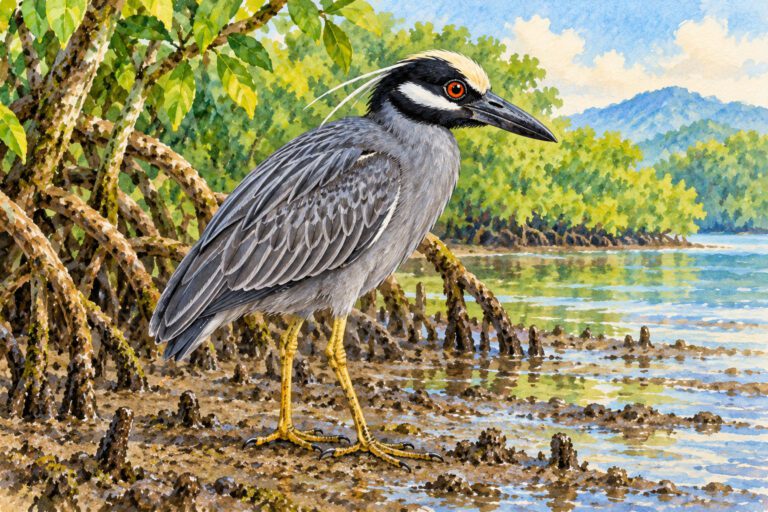
Yellow-crowned Night-Heron

Spanish name
Martinete cabecipinto
Scientific name
Nyctanassa violacea

What Do Pico & Tati Think?

Pico reads the word night and expects an invisible bird. Tati learns that feeding can also happen in daylight.

Identification

Key Features of the Yellow-crowned Night-Heron

  • Adult gray body

  • Dark face with pale cheek and crown

  • Heavy dark bill

  • Juveniles are brown and spotted

Habitat & range

Scan shallow water, quiet mangrove channels and vegetated wetland margins from an established viewpoint. Follow a local guide’s directions around estuaries.

Conservation & care

Give feeding and resting birds space. If a bird stops feeding, repeatedly looks at you or moves away, increase your distance. Keep dogs away from flocks, avoid playback and feeding, and leave nests and natural shoreline debris undisturbed.

View full profile →

My Tico Explorer Experience

Save nature, towns, discoveries and learning adventures for your next experience.

Your list stays in this browser on this device.