

Nature Field Guide
Tricolored Heron
- Spanish name
- Garceta tricolor
- Scientific name
- Egretta tricolor
What Do Pico & Tati Think?
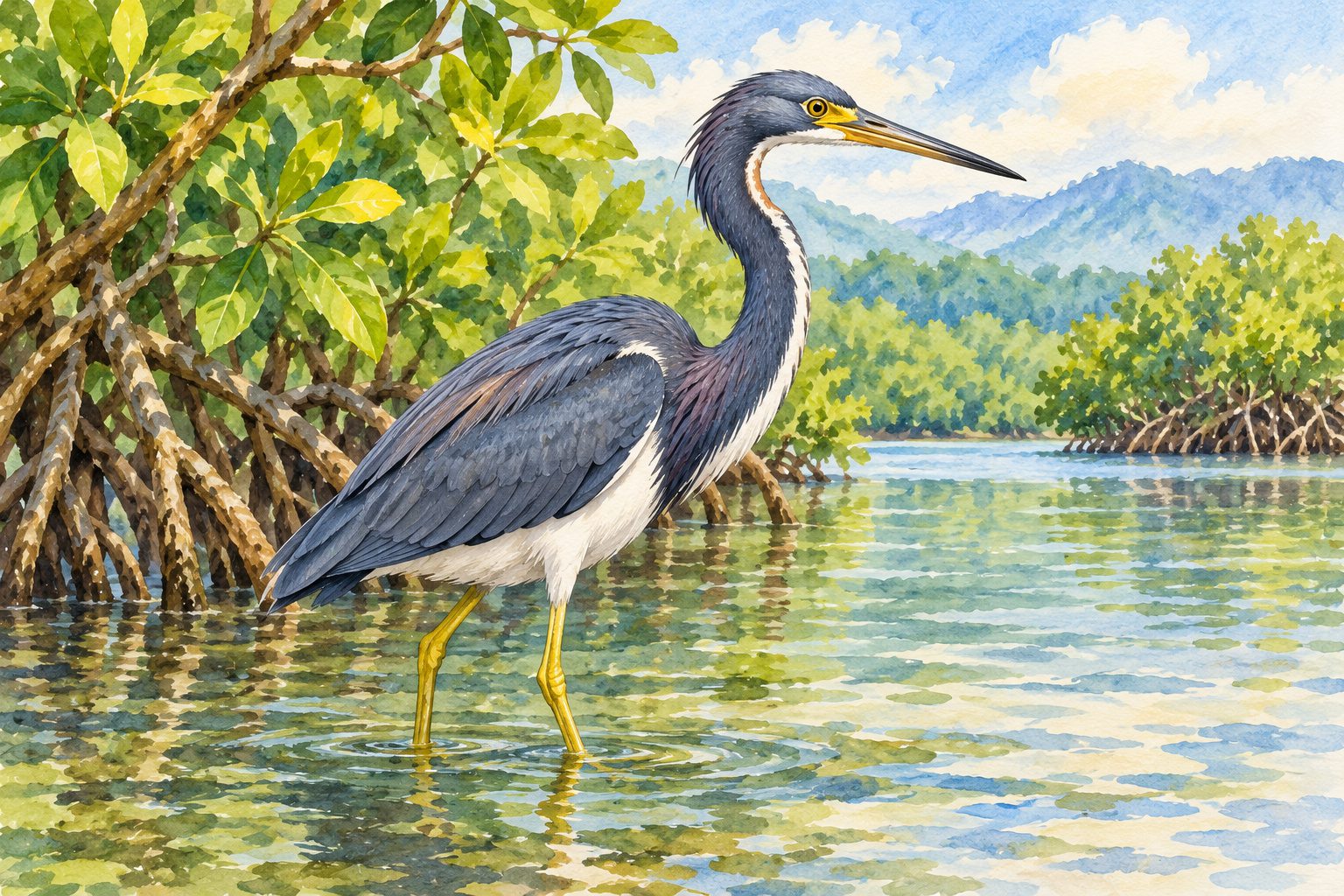
Pico follows a quick turn in the shallows. Tati notices the white belly beneath the darker neck.
Species overview
About the Tricolored Heron
A white belly and pale stripe along the front of the neck distinguish this slender heron from the uniformly dark adult Little Blue Heron. Tricolored Herons may run, pause and turn quickly while pursuing small fish. Their mix of blue-gray, lavender and white is easier to appreciate when a bird naturally turns sideways.
Identification
Key Features of the Tricolored Heron
Dark blue-gray upperparts
White belly and pale front-neck stripe
Long slim bill and lively feeding movements
Habitat & range
Scan shallow water, quiet mangrove channels and vegetated wetland margins from an established viewpoint. Follow a local guide’s directions around estuaries.
Local observations
Lowland wetlands of both slopes, with occasional Central Valley occurrence to about 1500 m. Small breeding numbers occur in the Tempisque basin; most visitors should expect seasonal variation. Oceanic Pacific: rare visitor in the official Isla del Coco checklist, rather than ordinary year-round habitat.
When to observe
Numbers and locations can change with water levels, feeding opportunities and seasonal movement. Check recent local observations; a regional record does not promise a bird on a particular visit.
Conservation & care
Give feeding and resting birds space. If a bird stops feeding, repeatedly looks at you or moves away, increase your distance. Keep dogs away from flocks, avoid playback and feeding, and leave nests and natural shoreline debris undisturbed.
Observation activity
Compare the illustration with the Little Blue Heron card. Find a body-color clue that works while both are standing.
Explore by location
Caribbean · Central Pacific · Central Valley · Guanacaste · Northern Plains · Oceanic Pacific · Puntarenas & the Gulf Islands · South Pacific