

Nature Field Guide
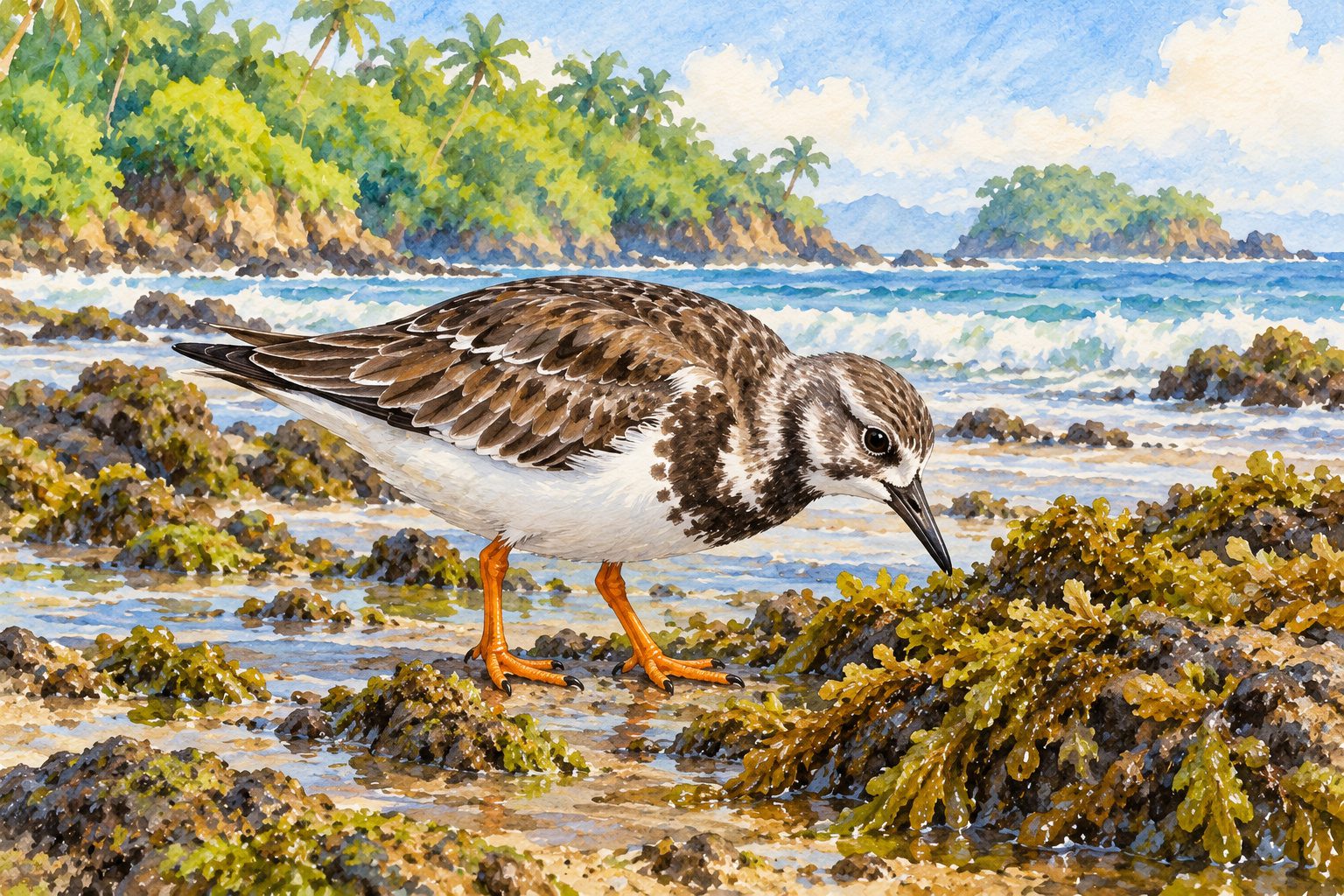
Ruddy Turnstone
- Spanish name
- Vuelvepiedras rojizo
- Scientific name
- Arenaria interpres
What Do Pico & Tati Think?
Pico watches a little bird investigate beach debris. Tati leaves the shells exactly where they belong.
Species overview
About the Ruddy Turnstone
A Ruddy Turnstone uses a short sturdy bill to flip small objects and search for hidden invertebrates. Its orange legs and stocky body remain useful clues outside the striking breeding plumage. Nonbreeding adults are browner and less colorful. Beach wrack is a feeding habitat, so clearing away natural seaweed can remove food and shelter for shore animals.
Identification
Key Features of the Ruddy Turnstone
Short stout slightly upturned bill
Orange legs
Stocky body and dark breast patches
Nonbreeding back is brown rather than bright rusty
Habitat & range
Scan exposed shoreline feeding areas and nearby resting places with binoculars. The tide changes which flats are available; remain on a safe established route.
Local observations
A migrant and nonbreeding visitor on both coasts, generally more numerous on the Pacific. Northern Plains records include Caño Negro; that is a local inland occurrence rather than the species' main habitat. Oceanic Pacific: casual visitor in the official Isla del Coco checklist, rather than ordinary year-round habitat.
When to observe
For migratory shorebirds, November–March is the broad nonbreeding observation window in Costa Rica, with southbound passage mainly August–October and northbound passage April–May. Individual species and sites vary; some birds remain outside these months. Check current local observations and the tide.
Conservation & care
Give feeding and resting birds space. If a bird stops feeding, repeatedly looks at you or moves away, increase your distance. Keep dogs away from flocks, avoid playback and feeding, and leave nests and natural shoreline debris undisturbed.
Observation activity
Write an observation using an action word such as turn, search or pause. Leave all beach debris in place.
Explore by location
Caribbean · Central Pacific · Guanacaste · Northern Plains · Oceanic Pacific · Puntarenas & the Gulf Islands · South Pacific