

Nature Field Guide
Bare-throated Tiger-Heron
- Spanish name
- Garza tigre cuellinuda
- Scientific name
- Tigrisoma mexicanum
What Do Pico & Tati Think?
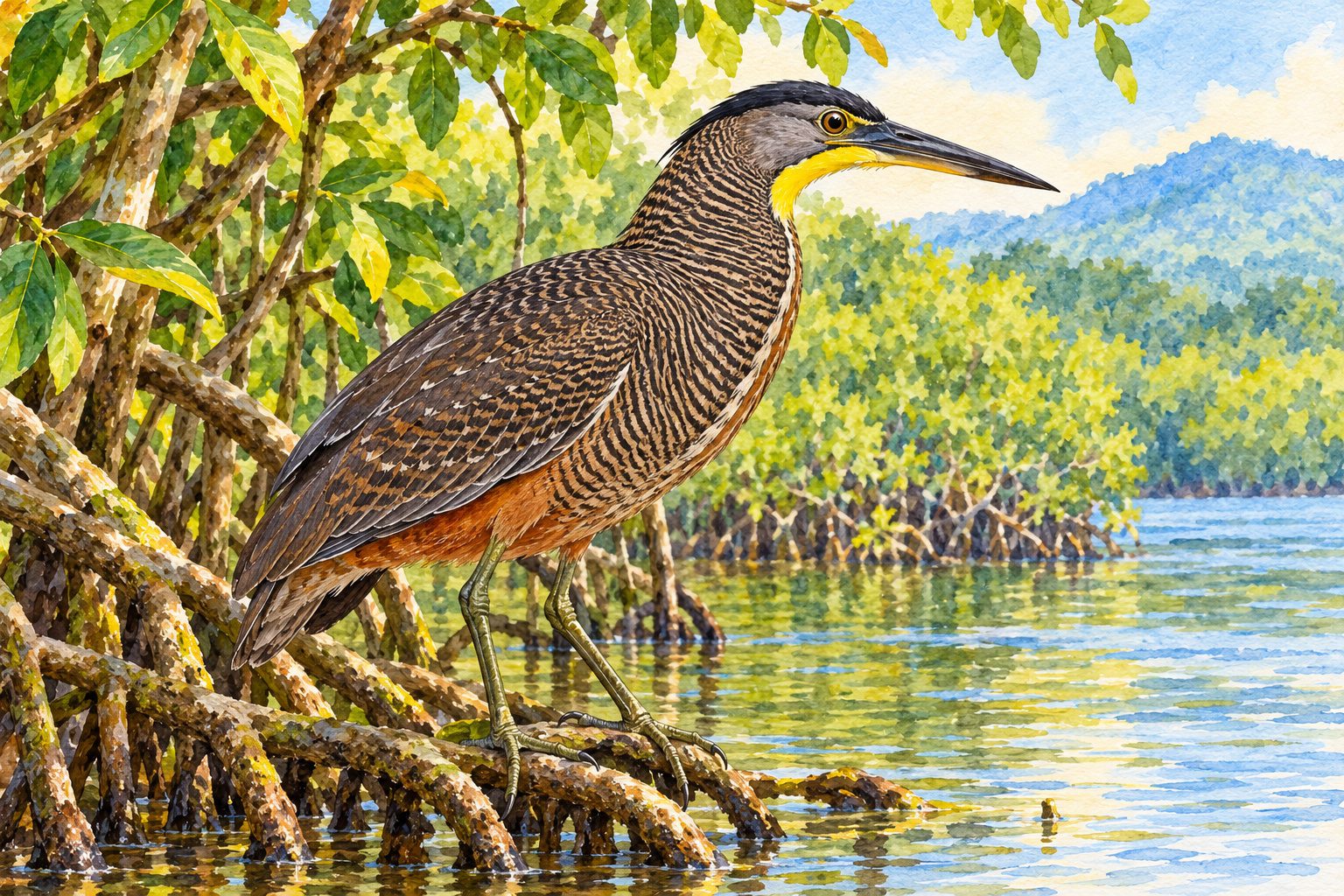
Pico wonders where the tiger is hiding. Tati points to the fine patterns on a very watchful heron.
Species overview
About the Bare-throated Tiger-Heron
This robust tropical heron uses mangroves and freshwater wetlands. Adults show fine barring, gray cheeks and a patch of bare yellow throat skin. Immatures have much bolder brown-and-dark bands. It may stand quietly near vegetation while looking for aquatic prey. The name describes a pattern, not a relationship to a tiger.
Identification
Key Features of the Bare-throated Tiger-Heron
Bare yellow throat patch
Adult finely barred neck and body
Gray cheeks and greenish legs
Young birds have bold brown bands
Habitat & range
Scan shallow water, quiet mangrove channels and vegetated wetland margins from an established viewpoint. Follow a local guide’s directions around estuaries.
Local observations
Resident in suitable lowland wetlands on both slopes. Often associated with Tortuguero, Rio Frio and Tempisque; locally reaches foothills. Isolated higher records do not mean widespread highland habitat.
When to observe
Resident populations occur in suitable habitat. Look during permitted daylight visiting hours; feeding, resting and visibility depend on the site, weather and water levels.
Conservation & care
Give feeding and resting birds space. If a bird stops feeding, repeatedly looks at you or moves away, increase your distance. Keep dogs away from flocks, avoid playback and feeding, and leave nests and natural shoreline debris undisturbed.
Observation activity
Use thin pencil lines to draw adult barring, then wider bands for a young bird. Keep the two life stages separate.
Explore by location
Caribbean · Central Pacific · Guanacaste · Northern Plains · Puntarenas & the Gulf Islands · South Pacific