

Nature Field Guide
Hudsonian Whimbrel
- Spanish name
- Zarapito trinador
- Scientific name
- Numenius hudsonicus
What Do Pico & Tati Think?
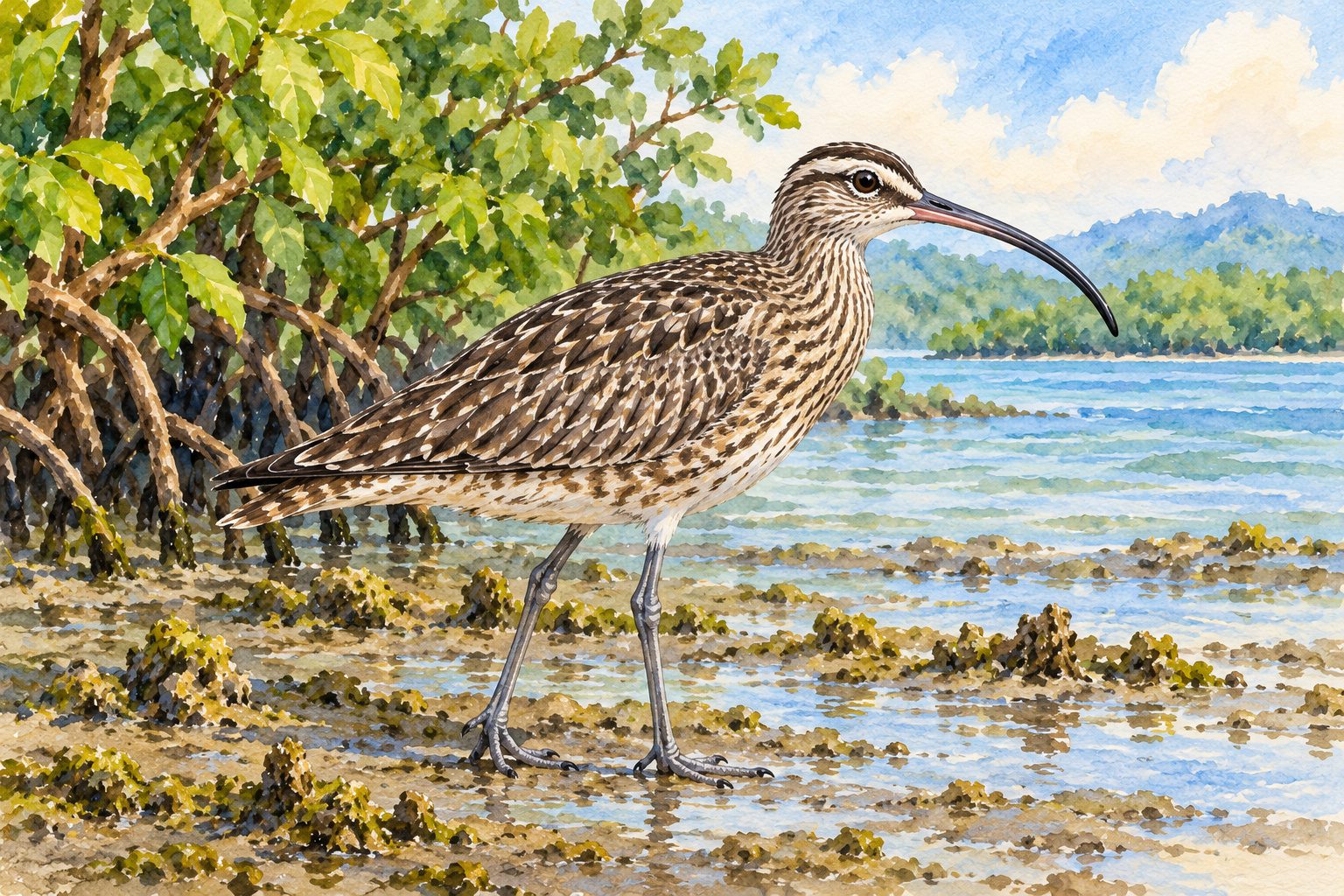
Pico curves his pencil line to match the bill. Tati checks the striped head for another clue.
Species overview
About the Hudsonian Whimbrel
This large shorebird uses its long downward-curved bill to find crabs and other small animals on coastal flats. Strong dark crown stripes help separate it from other long-billed birds. It breeds far north and uses warmer coasts outside breeding. Older Costa Rican references call it Whimbrel, Numenius phaeopus; current Cornell treatment separates the American bird as Hudsonian Whimbrel.
Identification
Key Features of the Hudsonian Whimbrel
Long downward-curved bill
Striped brown head with a pale central crown stripe
Brown patterned body and long legs
Habitat & range
Scan exposed shoreline feeding areas and nearby resting places with binoculars. The tide changes which flats are available; remain on a safe established route.
Local observations
Most numerous on the Pacific coast, especially the Gulf of Nicoya; smaller numbers occur on the Caribbean coast, particularly during migration. Older records use Numenius phaeopus for the former combined Whimbrel treatment. Oceanic Pacific: casual visitor in the official Isla del Coco checklist, rather than ordinary year-round habitat.
When to observe
For migratory shorebirds, November–March is the broad nonbreeding observation window in Costa Rica, with southbound passage mainly August–October and northbound passage April–May. Individual species and sites vary; some birds remain outside these months. Check current local observations and the tide.
Conservation & care
Give feeding and resting birds space. If a bird stops feeding, repeatedly looks at you or moves away, increase your distance. Keep dogs away from flocks, avoid playback and feeding, and leave nests and natural shoreline debris undisturbed.
Observation activity
Draw three bill shapes: straight, upturned and downcurved. Match this bird to the correct one.
Explore by location
Caribbean · Central Pacific · Guanacaste · Oceanic Pacific · Puntarenas & the Gulf Islands · South Pacific