

Nature Field Guide
Managua Skink
- Spanish name
- Escinco de Managua
- Scientific name
- Mesoscincus managuae
What Do Pico & Tati Think?
Pico: “What helps this reptile fit into its habitat?”
Tati: “Let’s look at its shape, colors and surroundings while giving it plenty of space.”
Species overview
About the Managua Skink
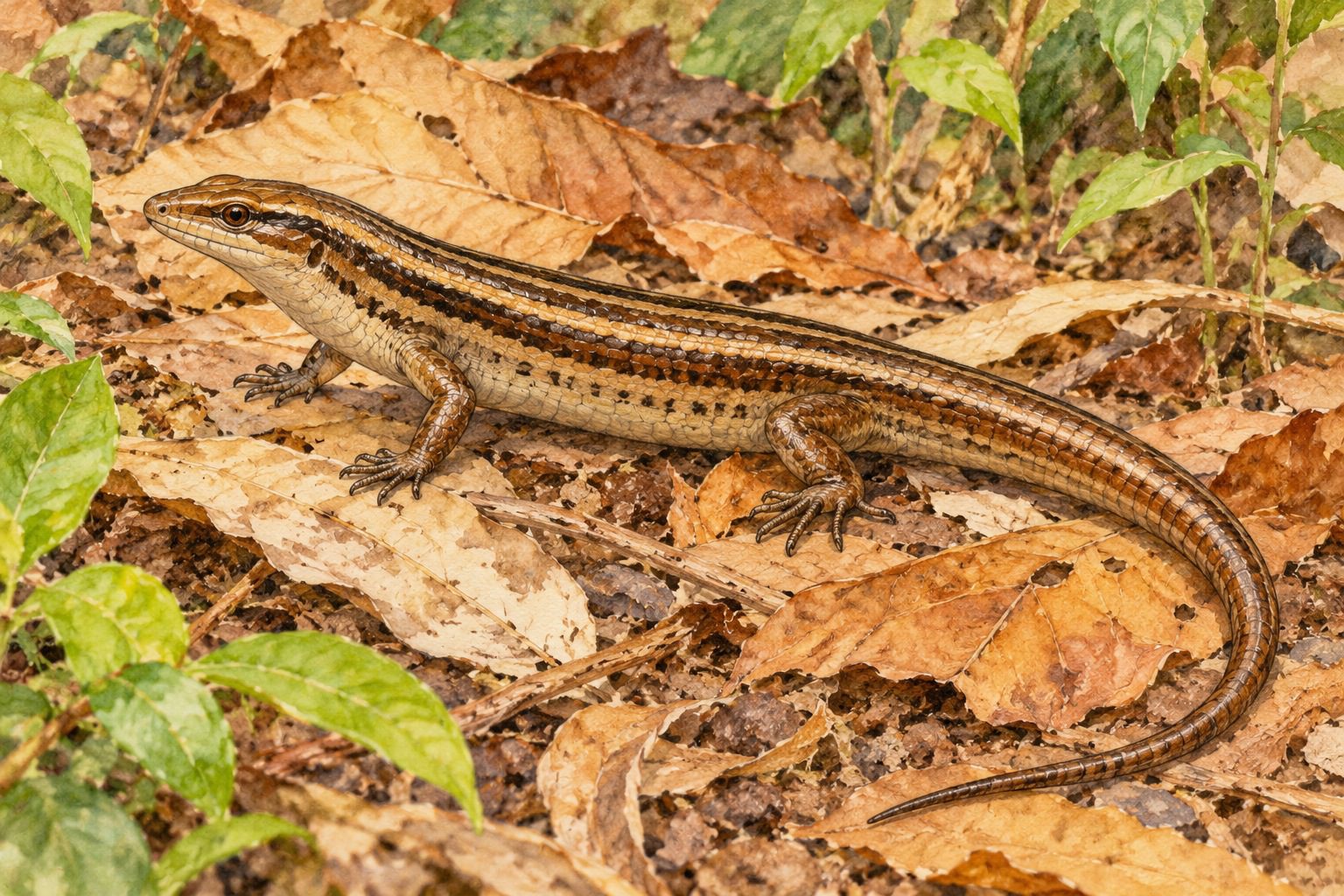
The Managua skink has an elongated body, smooth scales and short legs. Brown tones and darker lengthwise lines give it a different pattern from the spots and crossbars of many anoles. Its long tail follows the body through narrow spaces.
Despite its name, this species occurs in Costa Rica as well as Nicaragua and other Central American countries. Ground cover provides shelter and a place to search for small prey. Let the animal disappear into that cover; chasing it for a closer view removes the very safety its habitat provides.
Identification
Key Features of the Managua Skink
Smooth elongated brown body
Dark lengthwise lines
Short legs and a long tapering tail
Habitat & range
Seasonally dry northwestern Costa Rica, with documented records from Guanacaste including the Ocotal and Diriá areas.
Local observations
Native species recorded in Costa Rica. Sightings depend on suitable habitat and locality.
When to observe
Observe on a suitable guided outing. Activity varies with weather, season and locality; do not disturb a resting or hidden animal.
Conservation & care
Observe with an adult from permitted paths. Do not touch, chase, catch or feed reptiles. Leave bark, logs, stones and leaf litter in place. Keep pets away and allow an open escape route.
Threats & pressures
Protect connected habitat and natural shelters. Avoid collection, unnecessary clearing and deliberate killing. Leave wildlife in place and support responsible observation.
Observation activity
Compare lengthwise lines with the crosswise bars of another lizard. Draw one example of each pattern.