

Nature Field Guide
Mexican Burrowing Python
- Spanish name
- Boa excavadora / Pitón excavadora
- Scientific name
- Loxocemus bicolor
What Do Pico & Tati Think?
Pico: “What helps this reptile fit into its habitat?”
Tati: “Let’s look at its shape, colors and surroundings while giving it plenty of space.”
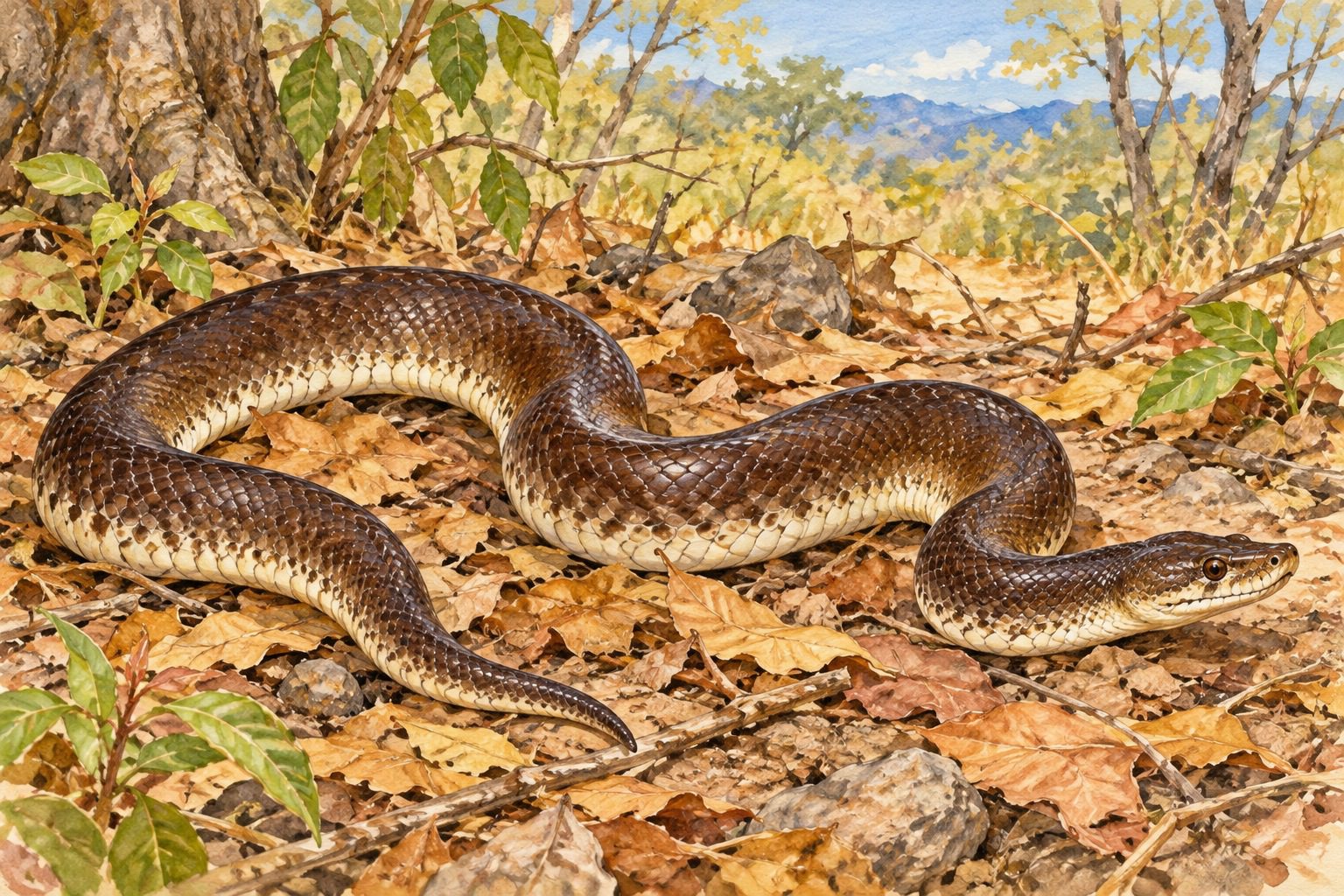
Species overview
About the Mexican Burrowing Python
This snake has a stout body, a small wedge-shaped head and a snout suited to pushing into loose ground. Dark upper surfaces contrast with a paler belly. It belongs to its own distinctive snake family, Loxocemidae.
The English name points to part of its range rather than its only home: it also occurs in Costa Rica. Much of its life can pass out of sight beneath natural cover. Do not dig for it or lift shelters. Protecting a forest also means protecting the soil and quiet spaces below its leaves.
Identification
Key Features of the Mexican Burrowing Python
Stout dark body and pale belly
Small wedge-shaped digging head
Short tapering tail without a rattle
Habitat & range
Dry and seasonally dry forests of northwestern Costa Rica, particularly Guanacaste.
Local observations
Native species recorded in Costa Rica. Sightings depend on suitable habitat and locality.
When to observe
Observe on a suitable guided outing. Activity varies with weather, season and locality; do not disturb a resting or hidden animal.
Conservation & care
Observe from a distance with an adult or qualified guide. Do not touch, catch, corner, feed or move any snake. Keep children and pets away. Colors, head shape and pupil shape must never be used to decide a snake is safe.
Threats & pressures
Protect connected habitat and natural shelters. Avoid collection, unnecessary clearing and deliberate killing. Leave wildlife in place and support responsible observation.
Observation activity
Draw the difference between a pointed digging snout and a broad tree boa’s head using the illustrations.