

Nature Field Guide
Turkey Vulture
- Spanish name
- Zopilote cabecirrojo
- Scientific name
- Cathartes aura
What Do Pico & Tati Think?
Pico: “Its wings look like a gentle V!”
Tati: “That posture and the pale flight feathers give us clues.”
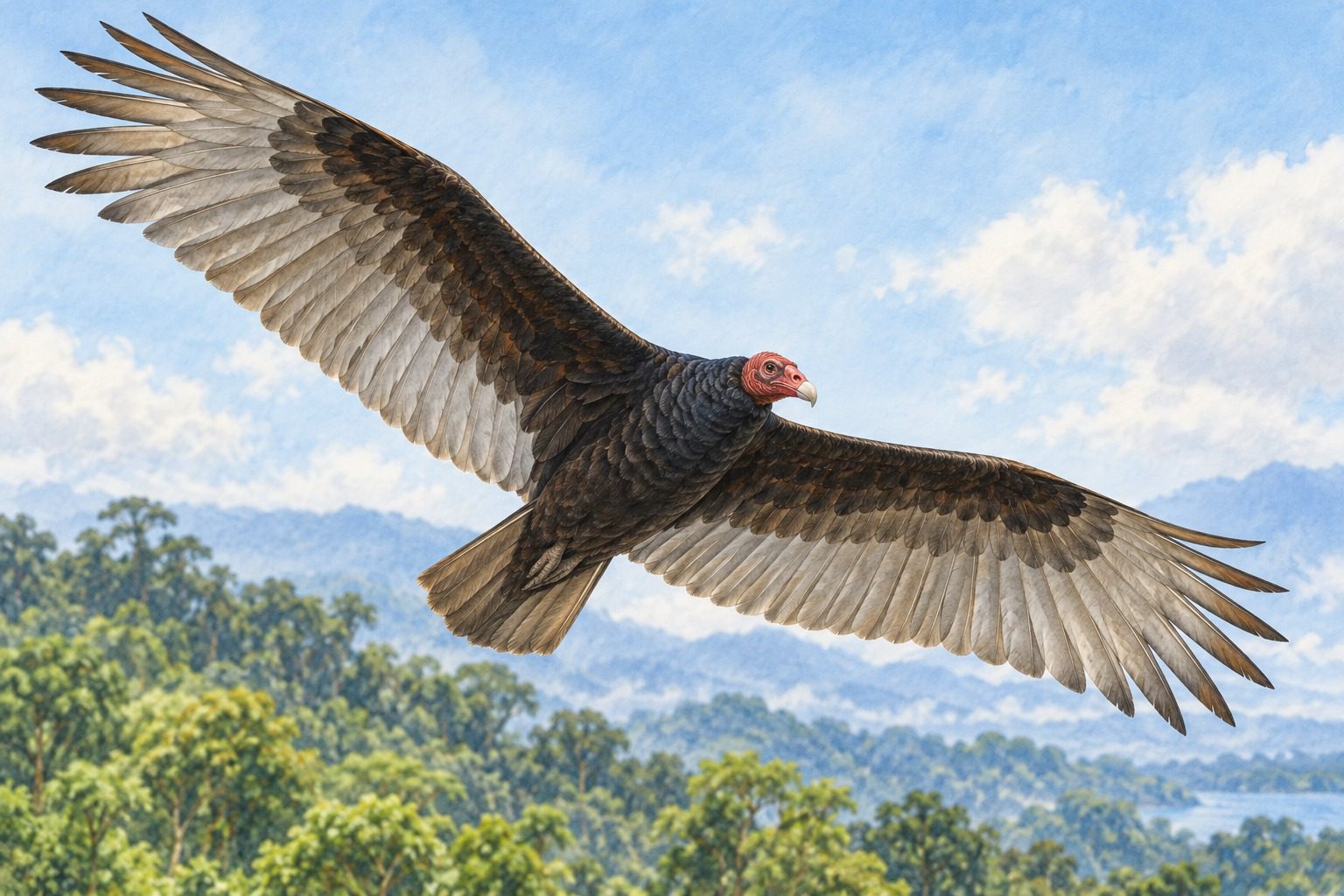
Species overview
About the Turkey Vulture
Adult turkey vultures have a small bare red head and dark body. The undersides of the flight feathers are paler, creating a two-tone wing pattern.
They often soar with the wings raised in a shallow V and gently rock from side to side. Young birds have darker heads. Use wing posture, pale feather placement and tail length together when comparing them with black vultures.
Identification
Key Features of the Turkey Vulture
Red head in adults
Pale flight feathers beneath dark wings
Longer tail and shallow V in flight
Habitat & range
Widespread over open and wooded landscapes, less numerous at high elevations. Resident birds are joined by migrants, with especially conspicuous passage along Caribbean lowlands.
Local observations
Costa Rica: resident.
When to observe
Watch for soaring after the air warms and rising air develops. Perched birds may be visible earlier.
Conservation & care
Observe quietly from trails or established viewing areas. Give nests, roosts and feeding birds space. Do not handle, chase or lure birds with playback. Keep pets away from wildlife.
Threats & pressures
Protect native vegetation, reduce collision hazards around glass and keep cats away from birds. These are practical prevention priorities, not a claim of a measured decline at a specific Costa Rican site.
Observation activity
Sketch the wing position of a soaring turkey vulture. Compare it with a black vulture.
Explore by location
Caribbean · Central Highlands · Central Pacific · Central Valley · Guanacaste · Northern Plains · Puntarenas & the Gulf Islands · South Pacific · Outdoor Adventures · Wildlife & Animals