

Nature Field Guide
White-faced Capuchin
- Spanish name
- Mono carablanca
- Scientific name
- Cebus imitator
What Do Pico & Tati Think?
Pico: “That troop is searching so many branches!”
Tati: “Our snacks are for us, not for the monkeys.”
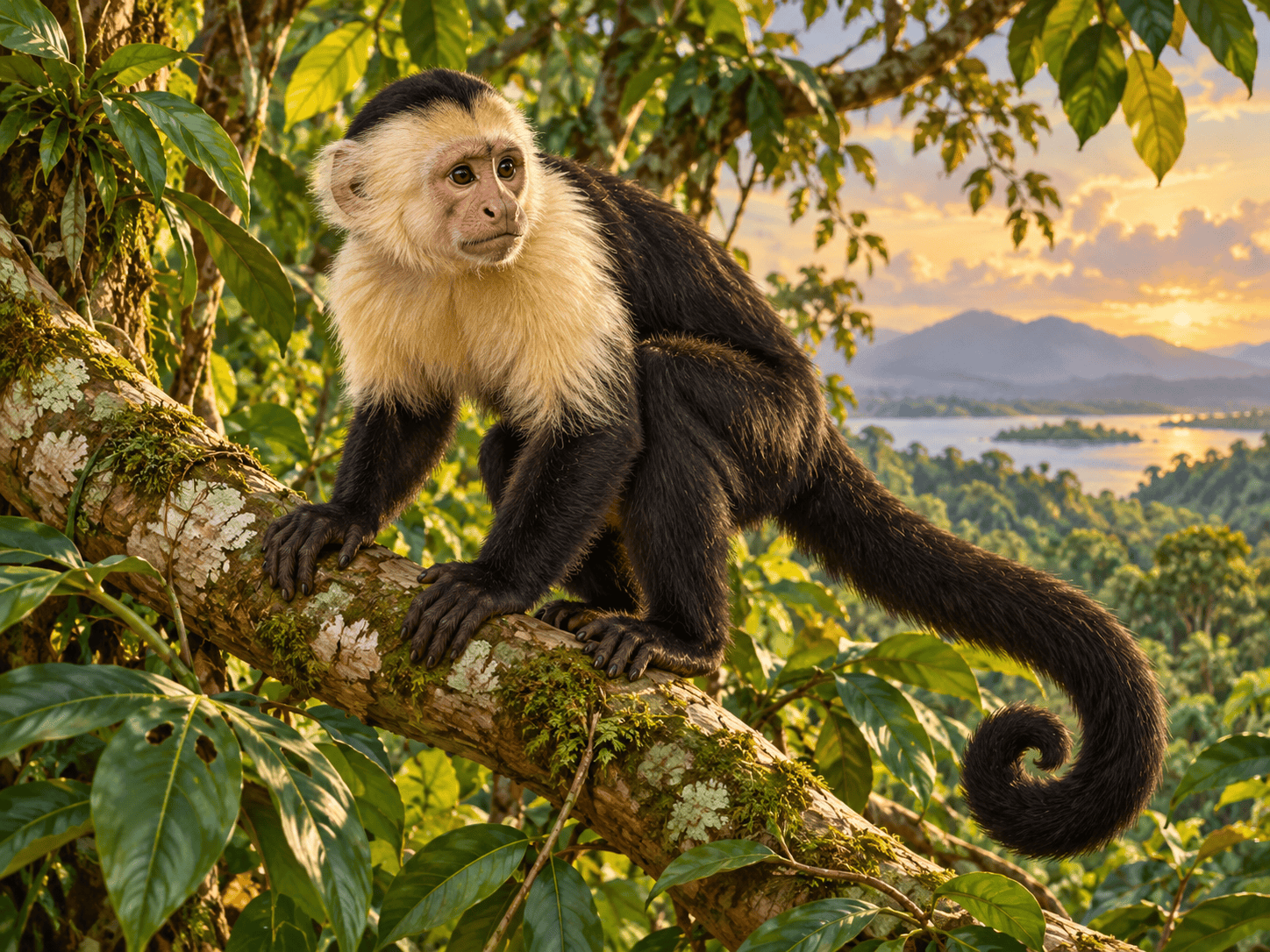
Species overview
About the White-faced Capuchin
The White-faced Capuchin has a dark body with pale fur around its face, neck and shoulders. A pinkish bare face and a curled, grasping tail add useful identification clues. Older Costa Rican sources often list these monkeys as Cebus capucinus; the Costa Rican wildlife guide also recognizes Cebus imitator.
Capuchins are active during the day and travel in social troops. Their varied diet includes fruit, insects, eggs and small animals. They move through trees but can also descend to cross openings or forage. Watching natural food searches reveals their behavior more clearly than feeding them, which changes their interactions with people and creates avoidable conflict.
Identification
Key Features of the White-faced Capuchin
Pale face, chest and shoulders on a dark body.
Pinkish bare facial skin.
Long grasping tail, often curled at the tip.
Habitat & range
Manuel Antonio National Park near Quepos, in forest habitat rather than food stalls or rubbish areas.
Local observations
SINAC’s park mammal list uses the older Cebus capucinus name; the national wildlife guide recognizes Cebus imitator for Costa Rican capuchins.
When to observe
Observe from authorized routes with a local guide. Activity, weather and food availability change encounters; a documented location is not a promise of a sighting.
Conservation & care
Keep a respectful distance and leave an open route for the animal. Stay on authorized paths, secure food and rubbish, and observe without feeding, touching, baiting or chasing.
Threats & pressures
Loss of forest affects habitat. Feeding wild troops can encourage dependence on visitor food and conflict around belongings.
Protection & recovery
Costa Rica’s government wildlife guide explicitly identifies this species as protected nationally. This legal designation is separate from its global IUCN category.
Conservation assessment
Global IUCN category as reported by the linked source, checked 7 October 2026. The source does not give an assessment year here. National legal protection and local abundance are separate questions.
Observation activity
Watch a troop’s natural food search from the trail. Record whether it uses branches, leaves or the ground; keep food packed away.
Explore by location
Central Pacific · Central Valley · Guanacaste · Northern Plains · South Pacific · Heredia · Puntarenas · Manuel Antonio · Quepos