

Nature Field Guide
Gray Fox
- Spanish name
- Zorro gris
- Scientific name
- Urocyon cinereoargenteus
What Do Pico & Tati Think?
Pico: “A fox can use trees too?”
Tati: “Different animals use the forest in different ways.”
Species overview
About the Gray Fox
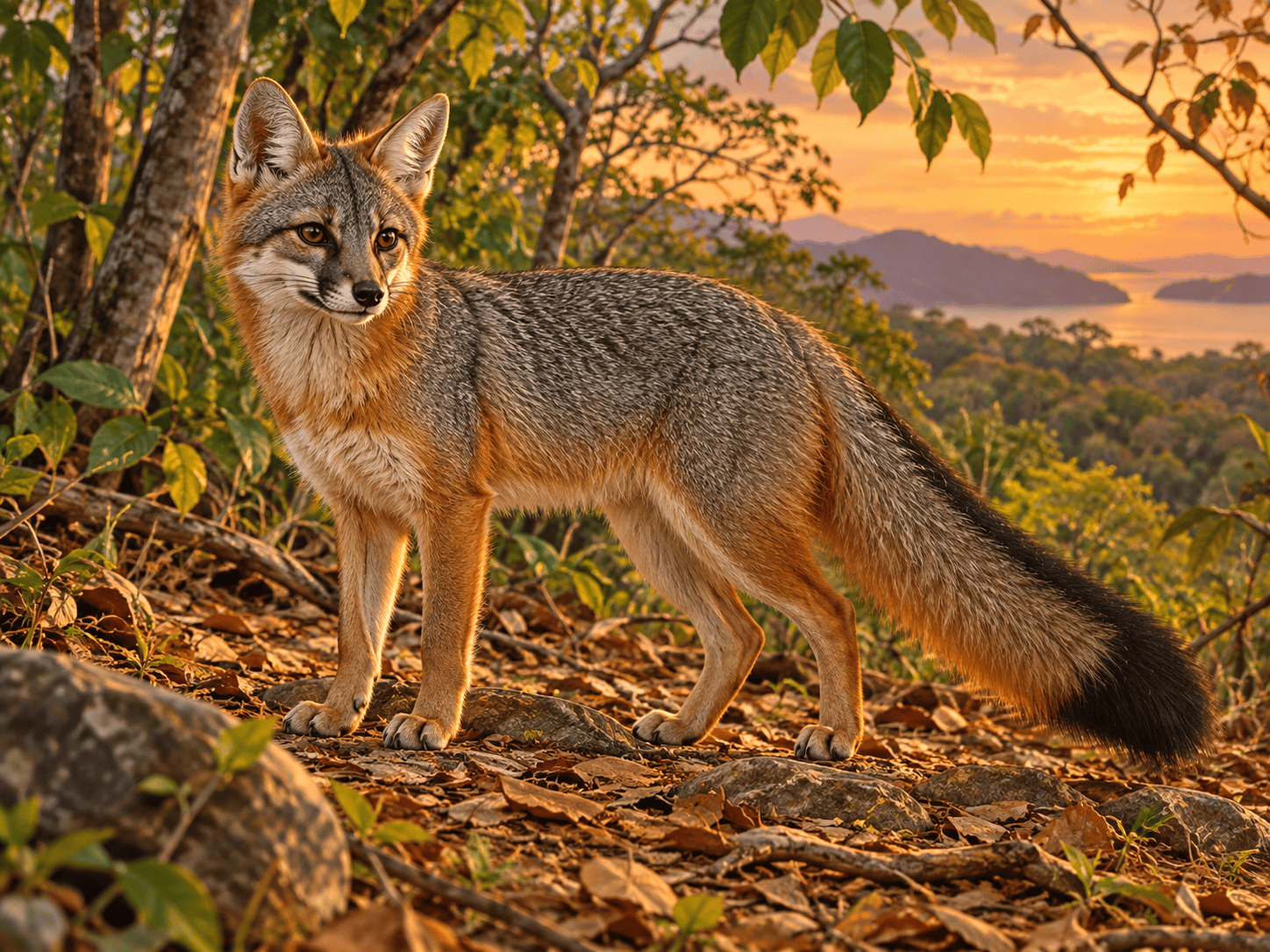
The Gray Fox is a small, slender canid with a gray back, reddish sides and legs, and a paler underside. A pointed muzzle, upright triangular ears and a dark-topped tail help distinguish it from a coati or a small domestic dog.
Gray foxes are usually solitary and often active at night, although daytime activity is possible. They eat small animals, insects, fruit and other available foods. Unlike many familiar canids, they can climb trees, while ground shelters include hollow trunks, vegetation and rocky places. Their ability to use varied habitats makes wooded edges worth studying, without assuming that every adaptable species is equally common.
Identification
Key Features of the Gray Fox
Gray back with reddish sides and legs.
Triangular upright ears and pointed muzzle.
Dark upper surface of the bushy tail.
Habitat & range
Dry-forest and wooded-edge habitat in the Horizontes landscape near Liberia.
Local observations
ACG’s Horizontes account lists Gray Fox. The Liberia town tag identifies access to the landscape, not a fox inside the city.
When to observe
Observe from authorized routes with a local guide. Activity, weather and food availability change encounters; a documented location is not a promise of a sighting.
Conservation & care
Keep a respectful distance and leave an open route for the animal. Stay on authorized paths, secure food and rubbish, and observe without feeding, touching, baiting or chasing.
Observation activity
Compare the fox’s tail and muzzle with a coyote photograph. Keep pets controlled and food waste secure.