

Nature Field Guide
Yellow-headed Gecko
- Spanish name
- Geco cabeza amarilla
- Scientific name
- Gonatodes albogularis
What Do Pico & Tati Think?
Pico: “What clues help us recognize this reptile?”
Tati: “Let’s notice its shape, markings and habitat from a respectful distance.”
Species overview
About the Yellow-headed Gecko
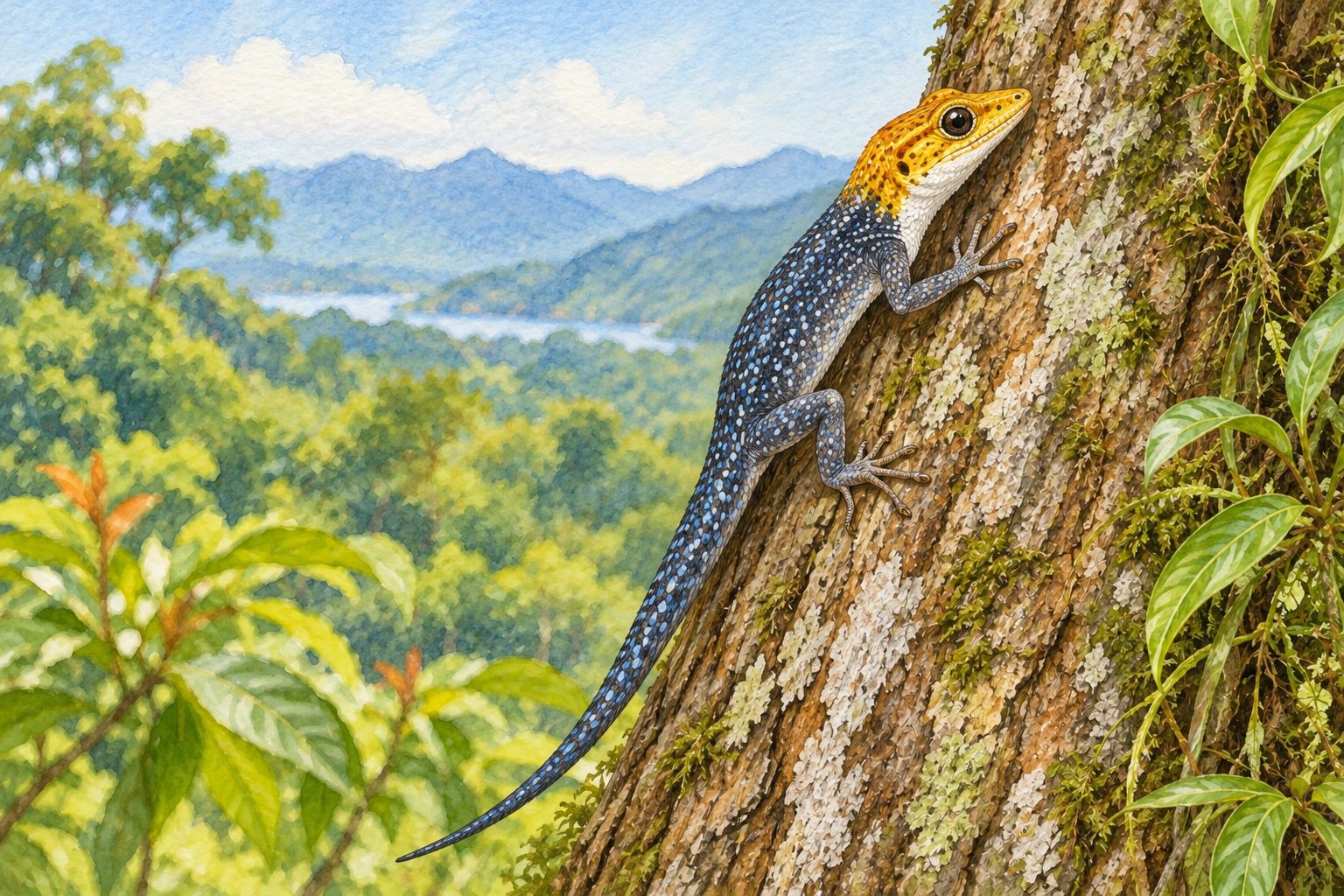
An adult male yellow-headed gecko can have a vivid yellow-orange head and a dark body. Females are much more subdued, so a plain-looking individual may belong to the same species. Its small toes differ from the broad pads of familiar house geckos.
This little gecko is active by day and can use shaded trunks and other sheltered surfaces. Observe from a distance instead of reaching into crevices. Color, sex and age all matter when comparing photographs.
Identification
Key Features of the Yellow-headed Gecko
Adult male with yellow-orange head
Darker male body
Small slender toes and round pupils
Habitat & range
Warm lowland woodland, forest edges and sheltered garden settings on both slopes.
Local observations
Native reptile recorded in Costa Rica. Presence varies with suitable habitat and locality.
When to observe
Visibility varies with weather, habitat and the animal’s activity. Observe on an appropriate guided outing; never disturb a hiding animal to obtain a sighting.
Conservation & care
Observe with an adult from permitted paths. Do not catch, chase, touch or feed reptiles. Leave bark, logs, rocks and leaf litter in place. Keep pets away and allow animals an open escape route.
Threats & pressures
Protect habitat connections and natural shelters. Avoid road mortality, collection and deliberate killing. Leave reptiles in their habitat rather than keeping or relocating them.
Observation activity
Compare verified male and female photographs. Write why color alone could cause confusion.
Explore by location
Caribbean · Central Pacific · Guanacaste · Northern Plains · Puntarenas & the Gulf Islands · South Pacific · Alajuela · Guanacaste · Heredia · Limón · Puntarenas