

Nature Field Guide
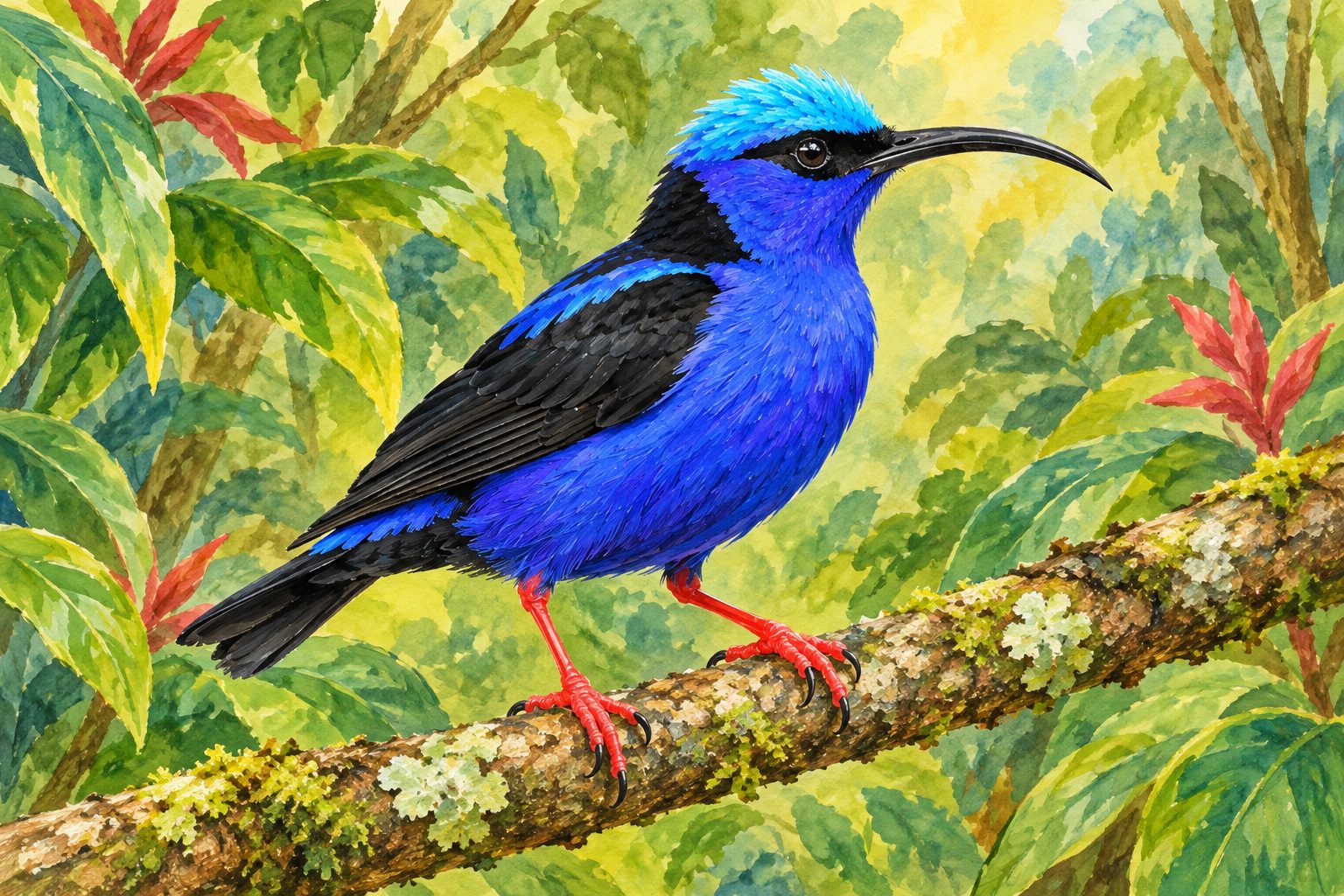
Red-legged Honeycreeper
- Spanish name
- Mielero patirrojo
- Scientific name
- Cyanerpes cyaneus
What Do Pico & Tati Think?
Pico: “Why are its feet so red?”
Tati: “Those red legs help us identify it, even when the body colors differ.”
Species overview
About the Red-legged Honeycreeper
Male red-legged honeycreepers in breeding plumage combine blue body feathers with a turquoise crown and dark wings. The bright red legs and thin downward-curving bill are useful clues.
Females are greener, and males can change to less colorful plumage outside breeding. The bill helps reach food in narrow spaces. The diet includes insects, fruit and nectar, showing why the name honeycreeper does not describe every meal.
Identification
Key Features of the Red-legged Honeycreeper
Bright red legs
Slender decurved bill
Breeding male blue with turquoise crown
Habitat & range
Wooded lowlands, forest edges, gardens and plantations. Common in northern Pacific areas and parts of Rio Frio; elsewhere on the Caribbean slope it is more local. Also occurs in the southern Pacific.
Local observations
Costa Rica: resident.
When to observe
A resident bird; suitable habitat matters throughout the year. Quiet morning observation is a useful starting point, with activity varying by weather and location.
Conservation & care
Observe quietly from trails or established viewing areas. Give nests, roosts and feeding birds space. Do not handle, chase or lure birds with playback. Keep pets away from wildlife.
Threats & pressures
Protect native vegetation, reduce collision hazards around glass and keep cats away from birds. These are practical prevention priorities, not a claim of a measured decline at a specific Costa Rican site.
Observation activity
Compare a breeding male with a female. Find the bill and leg features they share.
Explore by location
Caribbean · Central Pacific · Central Valley · Guanacaste · Northern Plains · Puntarenas & the Gulf Islands · South Pacific · Heredia · San José · Outdoor Adventures · Wildlife & Animals