

Nature Field Guide
Violet Sabrewing
- Spanish name
- Ala de sable violáceo
- Scientific name
- Campylopterus hemileucurus
What Do Pico & Tati Think?
Pico: “It looked dark until it turned!”
Tati: “Iridescent feathers can change appearance as the light changes.”
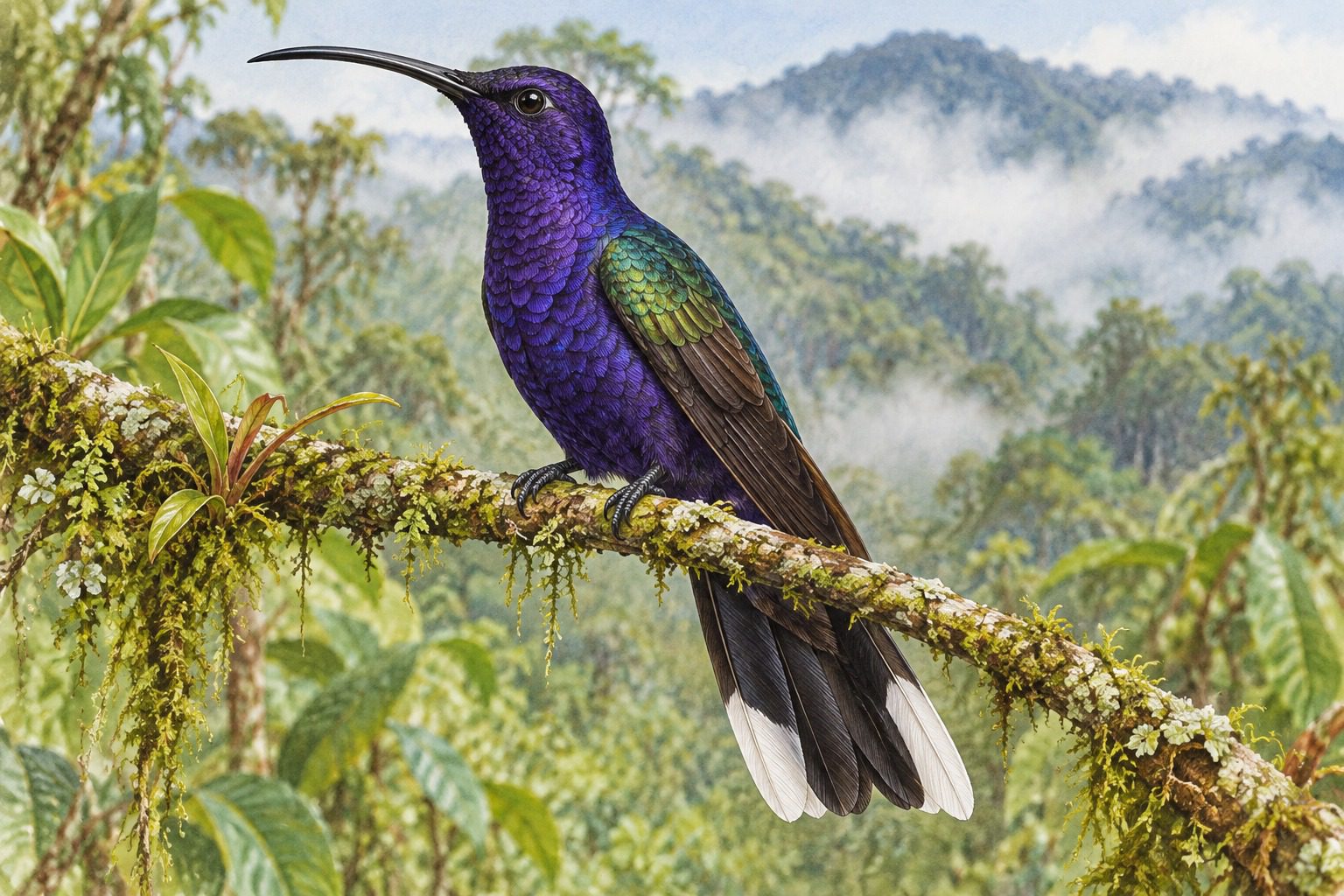
Species overview
About the Violet Sabrewing
The male violet sabrewing can look almost black until light reveals its purple color. A long, thick, curved bill and conspicuous white outer tail areas help identify it.
This hummingbird favors humid forest in foothills and mountains. Females do not show the same all-over violet appearance. Compare size and shape with nearby birds carefully: a perspective difference can make a small bird seem larger.
Identification
Key Features of the Violet Sabrewing
Large hummingbird shape
Thick curved bill
White outer tail corners
Habitat & range
Humid mountain forest and forest edges on both slopes. Breeding is mainly at middle elevations, with seasonal descent into foothills. Guanacaste means humid mountain habitat, not dry beaches.
Local observations
Costa Rica: resident.
When to observe
A resident bird; suitable habitat matters throughout the year. Quiet morning observation is a useful starting point, with activity varying by weather and location.
Conservation & care
Observe quietly from trails or established viewing areas. Give nests, roosts and feeding birds space. Do not handle, chase or lure birds with playback. Keep pets away from wildlife.
Threats & pressures
Protect native vegetation, reduce collision hazards around glass and keep cats away from birds. These are practical prevention priorities, not a claim of a measured decline at a specific Costa Rican site.
Observation activity
Observe how the purple changes with viewing angle in a video or photo series.
Explore by location
Caribbean · Central Highlands · Guanacaste · Northern Plains · South Pacific · Puntarenas · Outdoor Adventures · Wildlife & Animals