Tico Explorers

Escazú

Explore Category

Location

Regions
Central Valley

Towns & nearby places
Escazú

Illustrated landscape of Escazú, Costa Rica

explore escazúArtisan Traditions & Valley Views

Look beyond Escazú’s shops and hotels and you will find another side of the Central Valley: traditional sugar-making, wooden crafts, colorful masquerades and green hills above the city. Spend the morning meeting a local artisan or walking with a guide, then settle in for Costa Rican food with a view. The traditional center, San Rafael and the hillside communities each offer a different experience.

Explore Together
Choose one hosted experience and one relaxed food stop rather than trying to cover the whole canton. Butterfly Kingdom, a booked artisan visit or a sugarcane demonstration can turn a family outing into a memorable encounter with the people and traditions of Escazú.

Discover the Faces of a Masquerade — Escazú

Book a visit with Mascarada Gerardo Montoya y Familia for a lively introduction to one of Costa Rica’s most expressive traditions. Learn how the oversized characters are made and why music and movement belong to their story. Visits require advance reservation.

Enjoy Costa Rican Flavors With a View — Escazú

Make time for a leisurely meal at Mirador Tiquicia, where the setting looks across the Central Valley. It is a rewarding way to pair local cooking with mountain scenery. Reserve directly and ask about any cultural programming offered during your visit.

Follow the Scent of a Traditional Bakery — Escazú

Stop at Panadería Porras for a taste of Escazú’s baking traditions. Choose something fresh to share, pause over a coffee and enjoy a small piece of everyday town life. Check the bakery’s current opening arrangements before making a special trip.

Leave Time for Shopping and a Café Stop — Escazú

Browse Multiplaza Escazú when your itinerary calls for an easy shopping break. Combine a few stores with a relaxed meal or coffee, particularly when rain changes outdoor plans. Keep it as its own stop so you have time for the artisan and hillside experiences too.

Meet the Makers at Biesanz Woodworks — Escazú

Discover how timber becomes beautifully shaped bowls and other wooden pieces during a hosted workshop visit. The appeal is in the details: grain, texture and skilled hands. Arrange your visit in advance and browse for a meaningful keepsake.

Step Into a World of Butterflies — Escazú

Walk among fluttering color at Butterfly Kingdom and discover the life cycle behind these delicate forest visitors. A guided visit makes an easy introduction to Costa Rican nature. Contact the garden ahead to arrange admission and check your group’s needs.

Taste a Sweeter Side of Escazú — Escazú

Arrange a visit to El Trapiche de Tite to follow sugarcane through its traditional transformation. Hear the story behind the equipment, see how the process works and taste the results. Ask which demonstrations are available when you book.

Walk Into the Cerros de Escazú — Escazú

Trade traffic for green slopes on a guided outing with El Brujo Tours. Choose a walk that suits your pace and enjoy the changing views above the valley. Confirm the route, meeting point and conditions with your guide before setting out.

local life + insider tipsA Little Local Know-How

Escazú’s attractions are spread across the canton, including San Rafael and the hills around San Antonio. Plan transport between stops and allow for traffic. Reserve workshops and guided walks directly. Choose hikes for your group’s fitness and check current weather and trail access. This page includes the wider Escazú visitor area, not only the central square.

Look beyond Escazú’s shops and hotels and you will find another side of the Central Valley: traditional sugar-making, wooden crafts, colorful masquerades and green hills above the city. Spend the morning meeting a local artisan or walking with a guide, then settle in for Costa Rican food with a view. The traditional center, San Rafael and the hillside communities each offer a different experience.

Escazú’s attractions are spread across the canton, including San Rafael and the hills around San Antonio. Plan transport between stops and allow for traffic. Reserve workshops and guided walks directly. Choose hikes for your group’s fitness and check current weather and trail access. This page includes the wider Escazú visitor area, not only the central square.

Choose one hosted experience and one relaxed food stop rather than trying to cover the whole canton. Butterfly Kingdom, a booked artisan visit or a sugarcane demonstration can turn a family outing into a memorable encounter with the people and traditions of Escazú.

SAN JOSÉ PROVINCE WEATHER

things to do8 Things to Do Around Escazú

Step Into a World of Butterflies

Walk among fluttering color at Butterfly Kingdom and discover the life cycle behind these delicate forest visitors. A guided visit makes an easy introduction to Costa Rican nature. Contact the garden ahead to arrange admission and check your group’s needs.

Taste a Sweeter Side of Escazú

Arrange a visit to El Trapiche de Tite to follow sugarcane through its traditional transformation. Hear the story behind the equipment, see how the process works and taste the results. Ask which demonstrations are available when you book.

Meet the Makers at Biesanz Woodworks

Discover how timber becomes beautifully shaped bowls and other wooden pieces during a hosted workshop visit. The appeal is in the details: grain, texture and skilled hands. Arrange your visit in advance and browse for a meaningful keepsake.

Discover the Faces of a Masquerade

Book a visit with Mascarada Gerardo Montoya y Familia for a lively introduction to one of Costa Rica’s most expressive traditions. Learn how the oversized characters are made and why music and movement belong to their story. Visits require advance reservation.

Walk Into the Cerros de Escazú

Trade traffic for green slopes on a guided outing with El Brujo Tours. Choose a walk that suits your pace and enjoy the changing views above the valley. Confirm the route, meeting point and conditions with your guide before setting out.

Enjoy Costa Rican Flavors With a View

Make time for a leisurely meal at Mirador Tiquicia, where the setting looks across the Central Valley. It is a rewarding way to pair local cooking with mountain scenery. Reserve directly and ask about any cultural programming offered during your visit.

Follow the Scent of a Traditional Bakery

Stop at Panadería Porras for a taste of Escazú’s baking traditions. Choose something fresh to share, pause over a coffee and enjoy a small piece of everyday town life. Check the bakery’s current opening arrangements before making a special trip.

Leave Time for Shopping and a Café Stop

Browse Multiplaza Escazú when your itinerary calls for an easy shopping break. Combine a few stores with a relaxed meal or coffee, particularly when rain changes outdoor plans. Keep it as its own stop so you have time for the artisan and hillside experiences too.

Explore Nature Field Guide cards from this province and the surrounding travel regions named below. Habitats and species vary by locality.

Nature Field Guide

Nature & Wildlife Around Escazú

Explore wildlife, plants and trees. Learn what to look for and where to find them.

100 profiles
Nature Field Guide

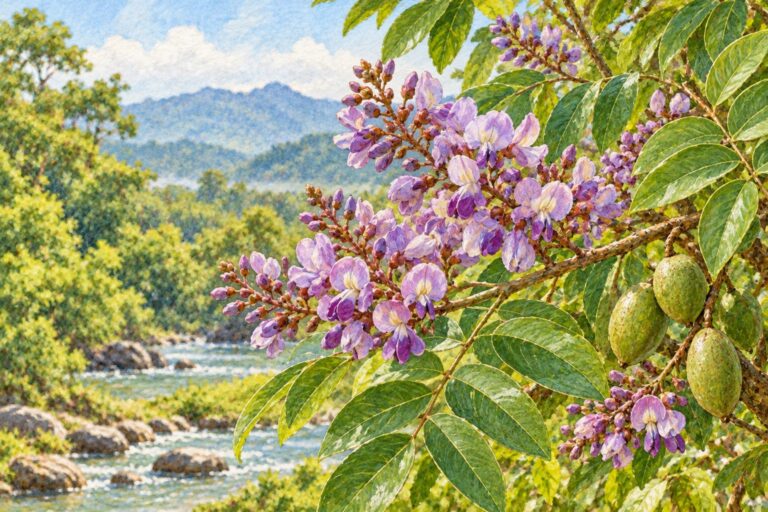
Almendro de Rio

Spanish name
Almendro de río / Almendro de montaña
Scientific name
Andira inermis

What Do Pico & Tati Think?

Pico: “Purple flower clusters stand out against a dense green crown.”

Tati: “Let’s notice the leaves, flowers and habitat without disturbing the plant.”

Identification

Key Features of the Almendro de Rio

  • Pinnate compound leaves

  • Clusters of lavender-purple flowers

  • Oval fruits and a dense leafy crown

Habitat & range

Dry and humid forests across both slopes, including Guanacaste, Nicoya, the Central Valley, Caribbean lowlands and Osa.

Conservation & care

Explore with an adult on permitted paths. Observe and photograph without picking leaves, flowers or fruits. Do not taste plants or let pets chew them. Avoid climbing trees and disturbing roots, seedlings or visiting wildlife.

Threats & pressures

Protect suitable habitat, mature trees and natural regeneration. Avoid trampling, unauthorized clearing and collection.

View full profile →

Nature Field Guide

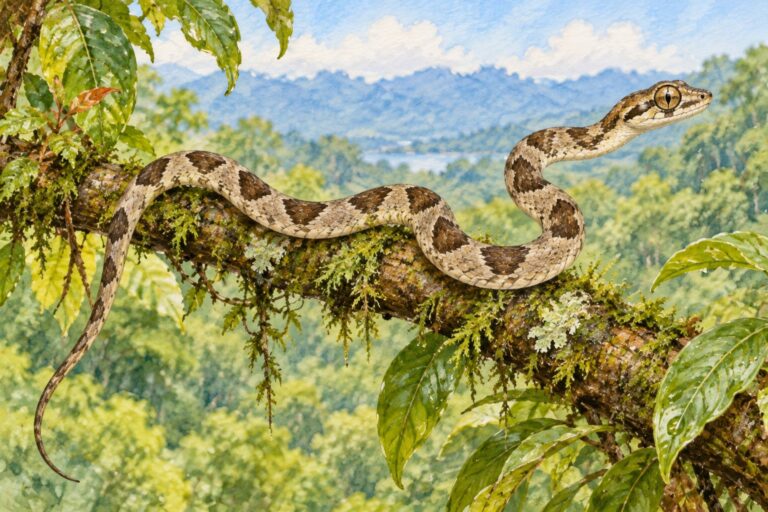
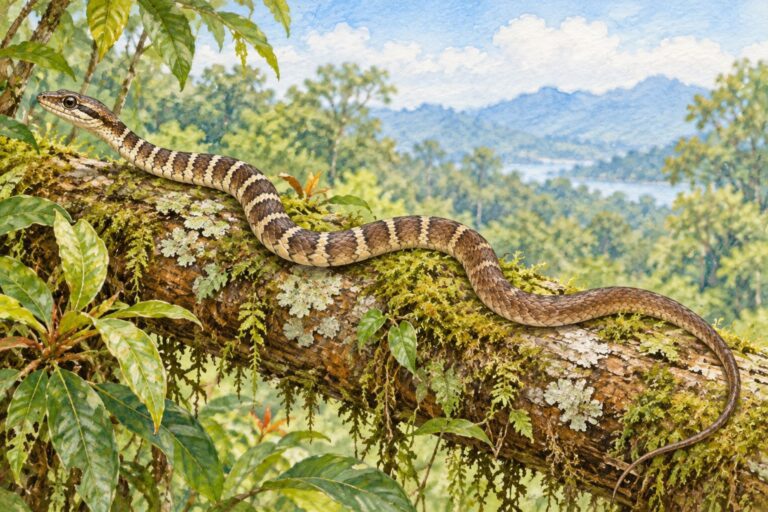
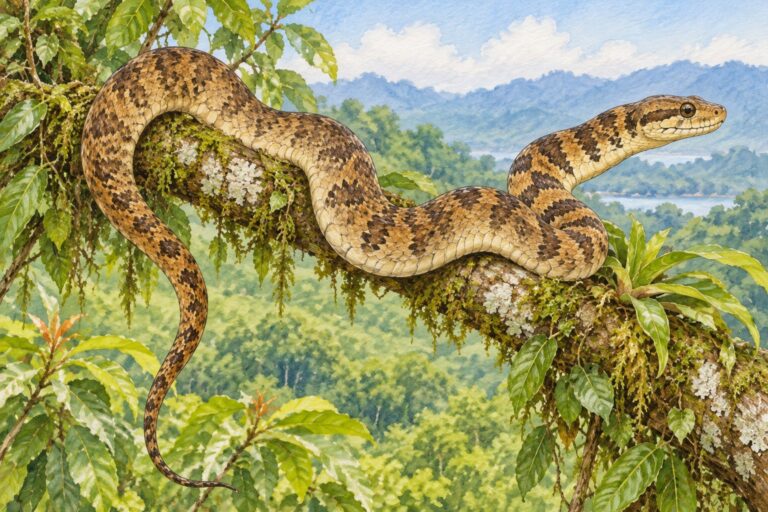
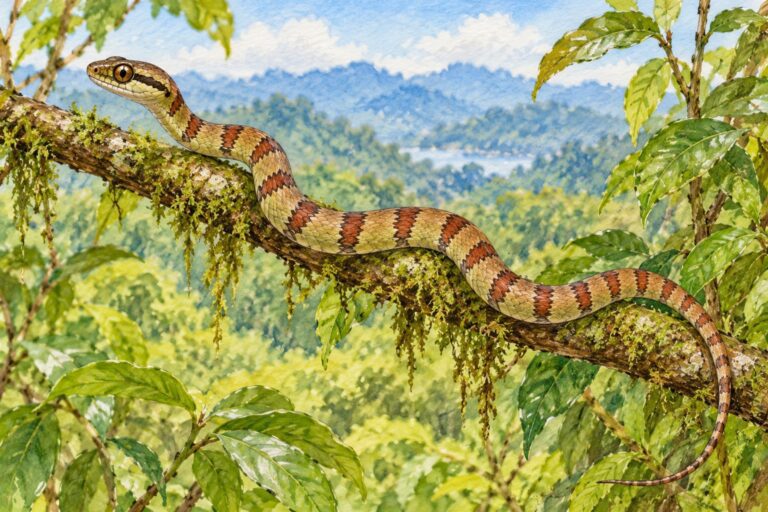
American Snail-eater

Spanish name
Caracolera articulada
Scientific name
Dipsas articulata

What Do Pico & Tati Think?

Pico: “What helps this reptile fit into its habitat?”

Tati: “Let’s look at its shape, colors and surroundings while giving it plenty of space.”

Identification

Key Features of the American Snail-eater

  • Slender body and narrow neck

  • Relatively large head and eyes

  • Dark blotches on a lighter background

Habitat & range

Humid forest and foothill vegetation on the Caribbean slope and in southwestern Costa Rica.

Conservation & care

Observe from a distance with an adult or qualified guide. Do not touch, catch, corner, feed or move any snake. Keep children and pets away. Colors, head shape and pupil shape must never be used to decide a snake is safe.

Threats & pressures

Protect connected habitat and natural shelters. Avoid collection, unnecessary clearing and deliberate killing. Leave wildlife in place and support responsible observation.

View full profile →

Nature Field Guide

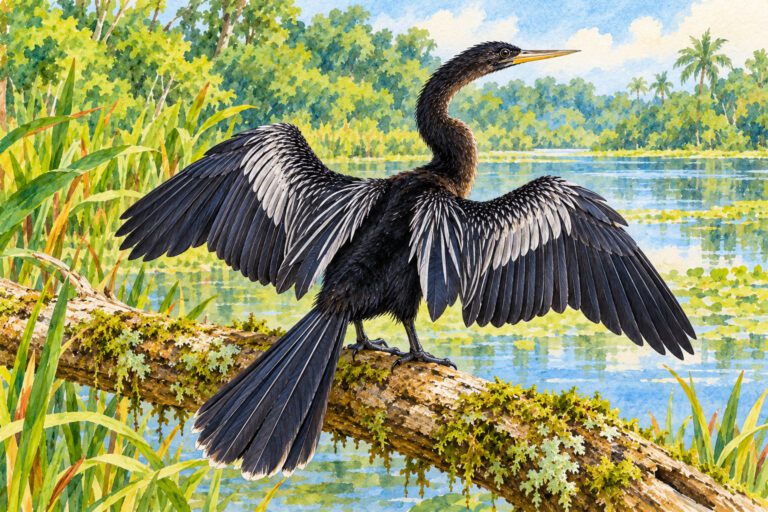
Anhinga

Spanish name
Aninga o pato aguja
Scientific name
Anhinga anhinga

What Do Pico & Tati Think?

A long neck rises above the water like a question mark. Pico waits while Tati looks for the rest of the bird.

Identification

Key Features of the Anhinga

  • Very long slender neck

  • Straight pointed bill

  • Long tail and pale wing markings

  • Often rests with wings spread

Habitat & range

Scan sheltered freshwater wetlands and wooded lagoon margins for swimming birds or a resting bird on a branch. Observe from a permitted viewpoint.

Conservation & care

Give feeding and resting birds space. If a bird stops feeding, repeatedly looks at you or moves away, increase your distance. Keep dogs away from flocks, avoid playback and feeding, and leave nests and natural shoreline debris undisturbed.

View full profile →

Nature Field Guide

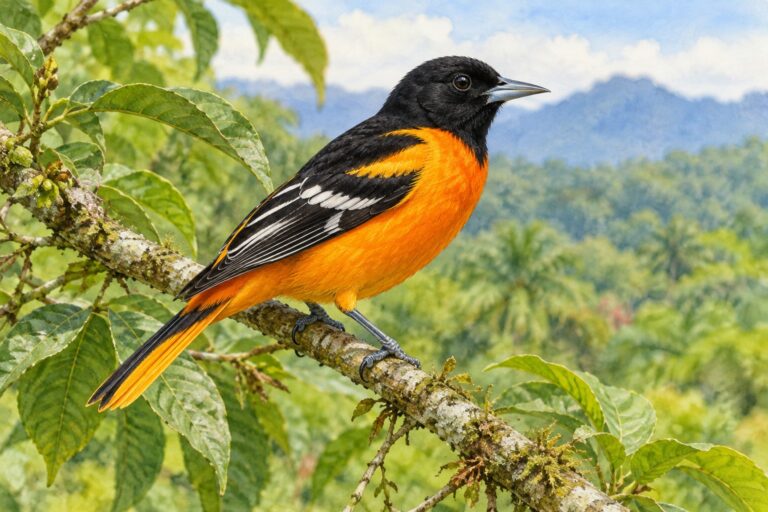
Baltimore Oriole

Spanish name
Bolsero norteño
Scientific name
Icterus galbula

What Do Pico & Tati Think?

Pico: “Did that bird travel here?”

Tati: “Baltimore orioles connect Costa Rica with places farther north.”

Identification

Key Features of the Baltimore Oriole

  • Male orange body and black head

  • White wingbar

  • Slender pointed bill

Habitat & range

A migrant and nonbreeding visitor, generally September to early May. Occurs on both slopes, especially the northern Pacific and Central Valley, in wooded gardens, edges and plantations.

Conservation & care

Observe quietly from trails or established viewing areas. Give nests, roosts and feeding birds space. Do not handle, chase or lure birds with playback. Keep pets away from wildlife.

Threats & pressures

Migrants depend on suitable habitat across their full annual journey. Protect native vegetation, reduce collision hazards around glass and keep cats away from birds. These are practical prevention priorities, not a claim of a measured decline at a specific Costa Rican site.

View full profile →

Nature Field Guide

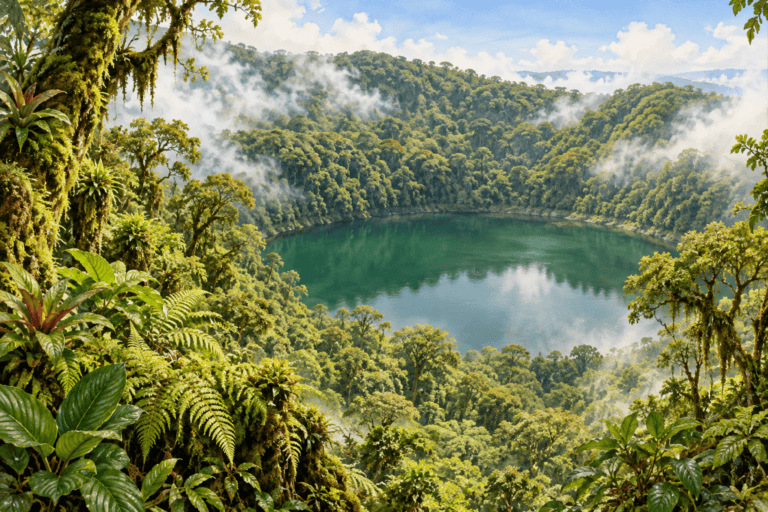
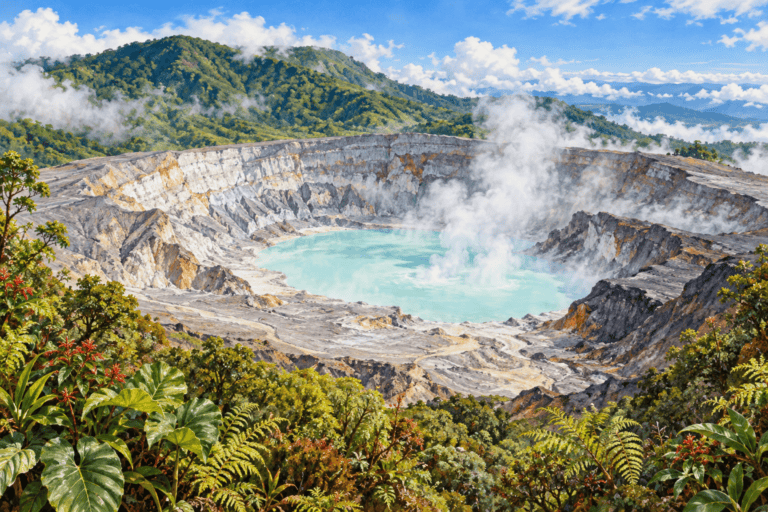
Barva Volcano

Spanish name
Volcán Barva
Scientific name

What Do Pico & Tati Think?

Join Pico and Tati to discover Volcán Barva and learn how volcanoes help shape Costa Rica.

Identification

Key Features of the Barva Volcano

  • A crater lake surrounded by forest.

  • Mossy trees and damp vegetation.

  • Mist around rounded forested slopes.

Habitat & range

Heredia province, in the Barva sector of Braulio Carrillo National Park.

Conservation & care

Explore with an adult. Follow staff instructions, authorized trails, barriers and closures. Leave rocks, plants and wildlife in place and carry out litter. Stay on marked forest trails and out of the crater lake.

Plan Your Visit

Braulio Carrillo National Park — Barva sector entrance

Get Directions ↗

Getting There

Approach via Heredia, Barva, San José de la Montaña, Paso Llano and Sacramento. SINAC recommends a four-wheel-drive vehicle. From the entrance, walk the marked trails toward Laguna Barva.

Before You Go

Check the final road conditions and reservation requirements before leaving. This is a cool, wet mountain hike; bring suitable footwear and rain protection.
Visit information reviewed October 8, 2026. Confirm current access before travel.

View full profile →

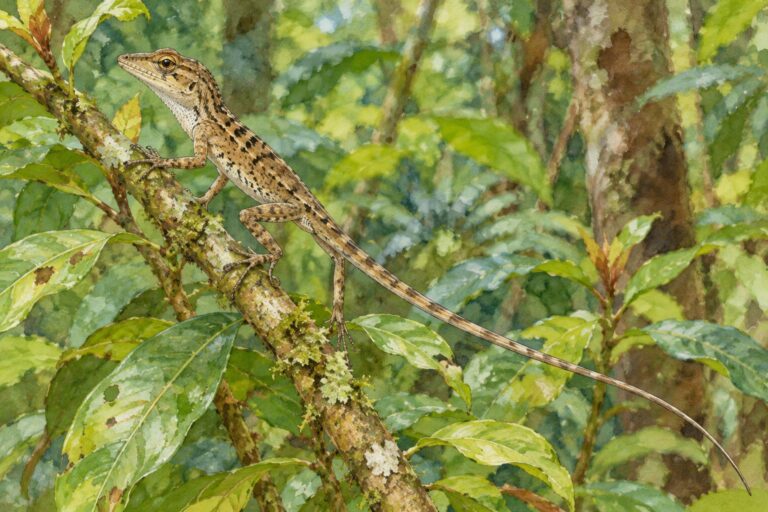
Nature Field Guide

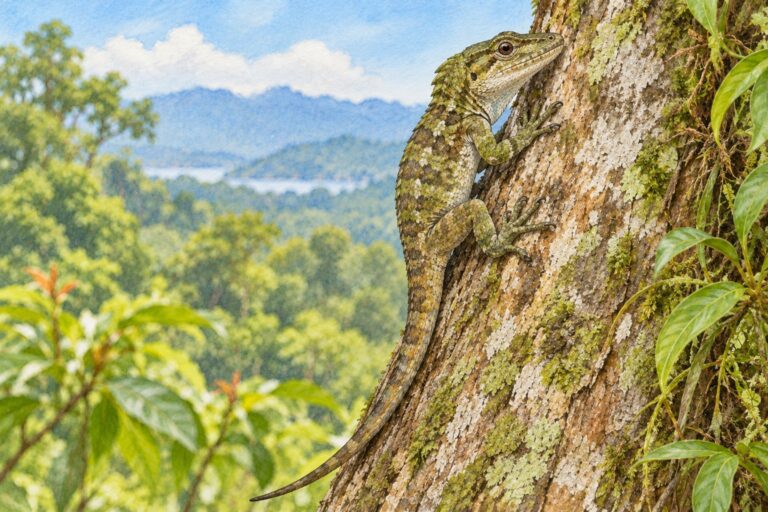
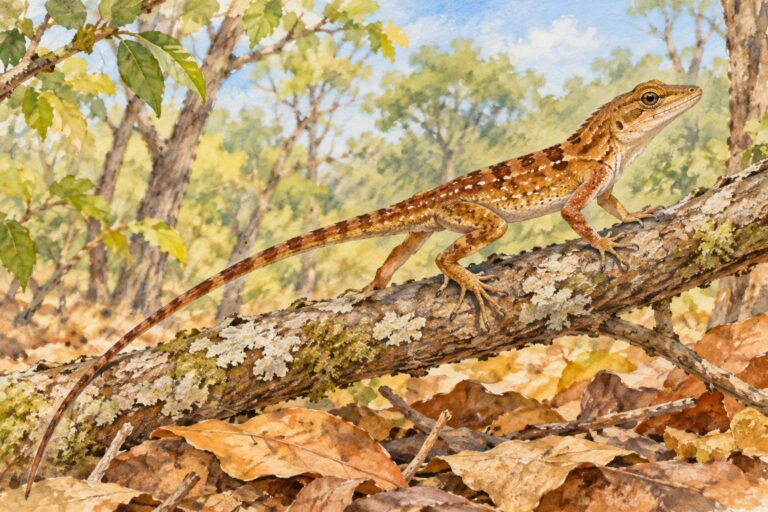
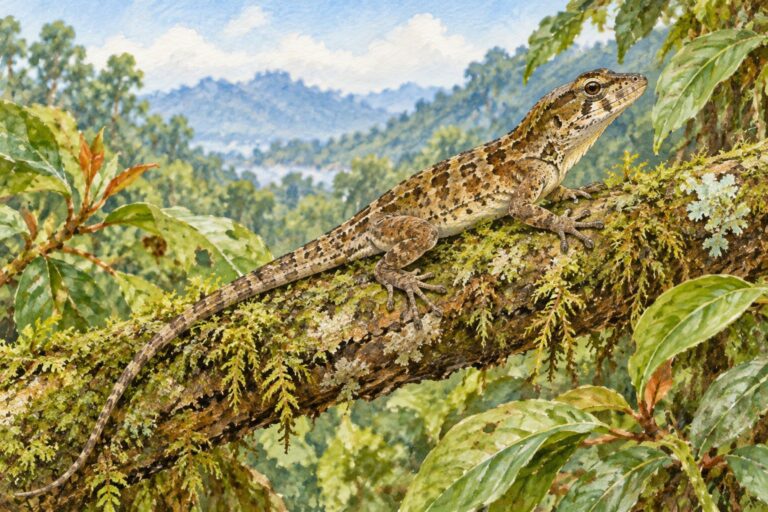
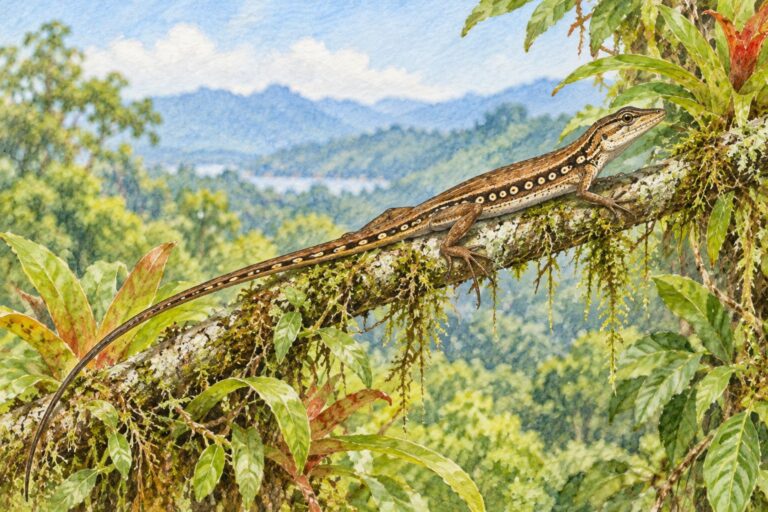
Big-headed Anole

Spanish name
Anolis de cabeza ancha / Anolis jaspeado
Scientific name
Anolis capito

What Do Pico & Tati Think?

Pico: “What clues help us recognize this reptile?”

Tati: “Let’s notice its shape, markings and habitat from a respectful distance.”

Identification

Key Features of the Big-headed Anole

  • Broad relatively large head

  • Mottled brown, olive or greenish body

  • Stout build and bark-colored camouflage

Habitat & range

Shaded Caribbean-slope forest and southwestern rainforest; also documented in humid forest at Rincón de la Vieja.

Conservation & care

Observe with an adult from permitted paths. Do not catch, chase, touch or feed reptiles. Leave bark, logs, rocks and leaf litter in place. Keep pets away and allow animals an open escape route.

Threats & pressures

Protect habitat connections and natural shelters. Avoid road mortality, collection and deliberate killing. Leave reptiles in their habitat rather than keeping or relocating them.

View full profile →

Nature Field Guide

Black Vulture

Spanish name
Zopilote negro
Scientific name
Coragyps atratus

What Do Pico & Tati Think?

Pico: “Which vulture is that one?”

Tati: “Look for the short tail and pale patches just at the wingtips.”

Identification

Key Features of the Black Vulture

  • Bare dark head

  • Short rounded tail

  • White patches at outer wingtips

Habitat & range

Widespread over towns and open landscapes from the coast into the mountains, becoming less frequent above about 2000 m. A regional tag does not identify a nesting site.

Conservation & care

Observe quietly from trails or established viewing areas. Give nests, roosts and feeding birds space. Do not handle, chase or lure birds with playback. Keep pets away from wildlife.

Threats & pressures

Protect native vegetation, reduce collision hazards around glass and keep cats away from birds. These are practical prevention priorities, not a claim of a measured decline at a specific Costa Rican site.

View full profile →

Nature Field Guide

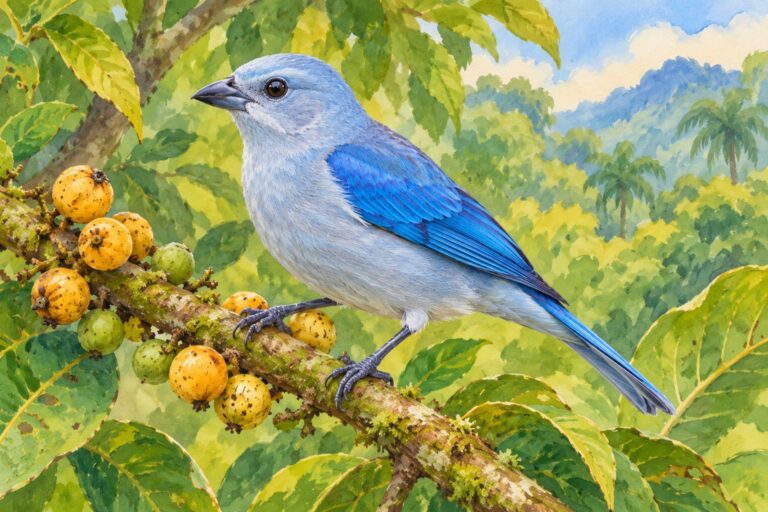
Blue-gray Tanager

Spanish name
Tangara azuleja
Scientific name
Thraupis episcopus

What Do Pico & Tati Think?

Pico: “It looks like a piece of the sky!”

Tati: “Let’s see where the blue is pale and where it is brighter.”

Identification

Key Features of the Blue-gray Tanager

  • Powder blue-gray body

  • Brighter blue wings and shoulder

  • Dark eye and stout bill

Habitat & range

Widespread in gardens, towns and semi-open wooded areas, mainly below about 2000 m. In the dry northwest it is less frequent and associated with moister sites near homes.

Conservation & care

Observe quietly from trails or established viewing areas. Give nests, roosts and feeding birds space. Do not handle, chase or lure birds with playback. Keep pets away from wildlife.

Threats & pressures

Protect native vegetation, reduce collision hazards around glass and keep cats away from birds. These are practical prevention priorities, not a claim of a measured decline at a specific Costa Rican site.

View full profile →

Nature Field Guide

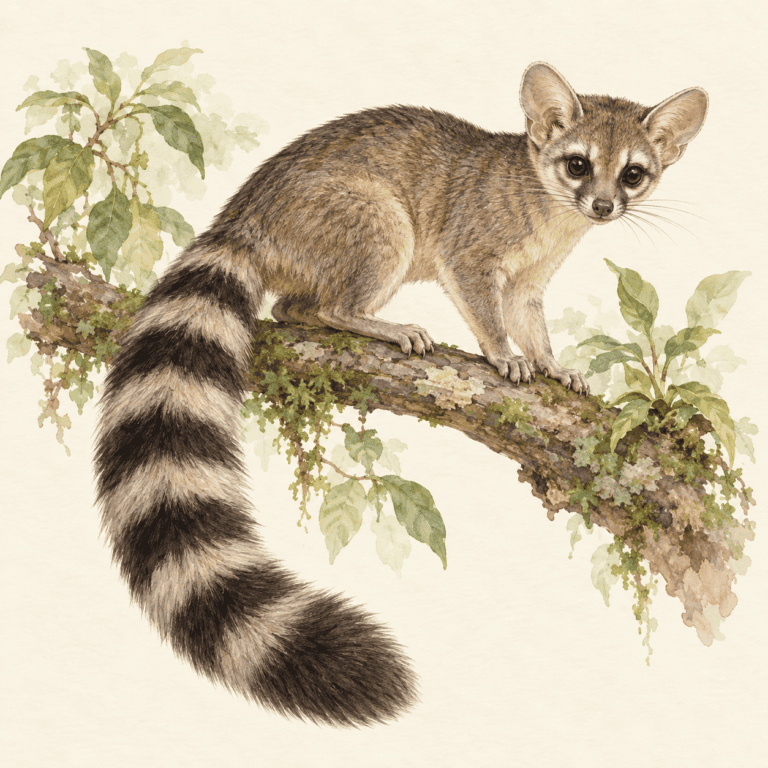
Cacomistle

Spanish name
Ostoche
Scientific name
Bassariscus sumichrasti

What Do Pico & Tati Think?

A cacomistle's long ringed tail is a memorable clue.

Identification

Key Features of the Cacomistle

  • Slender body, pointed face and relatively large ears.

  • Very long bushy tail with alternating pale and dark bands.

  • Usually associated with wooded habitat and climbing.

Habitat & range

Evergreen and mountain forests, with some use of seasonally dry forest.

Conservation & care

Explore with an adult or local guide. Observe quietly from a distance, stay on established trails and leave shelter undisturbed. Do not feed, touch, capture or corner wildlife. Keep pets away.

View full profile →

Nature Field Guide

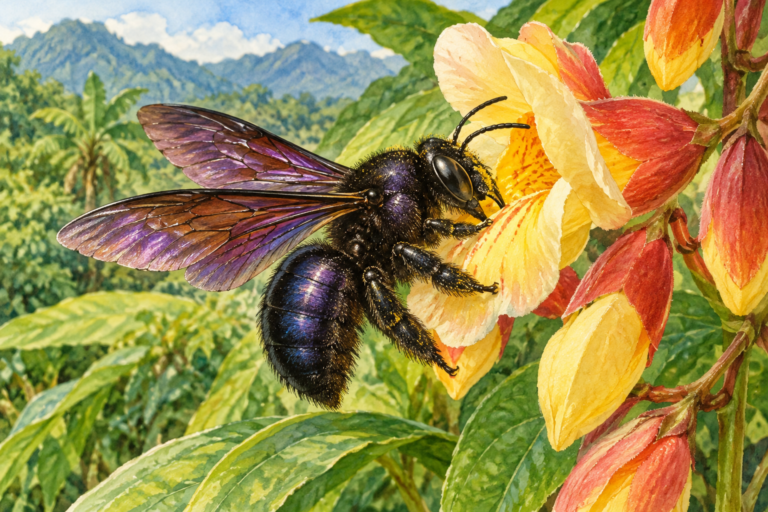
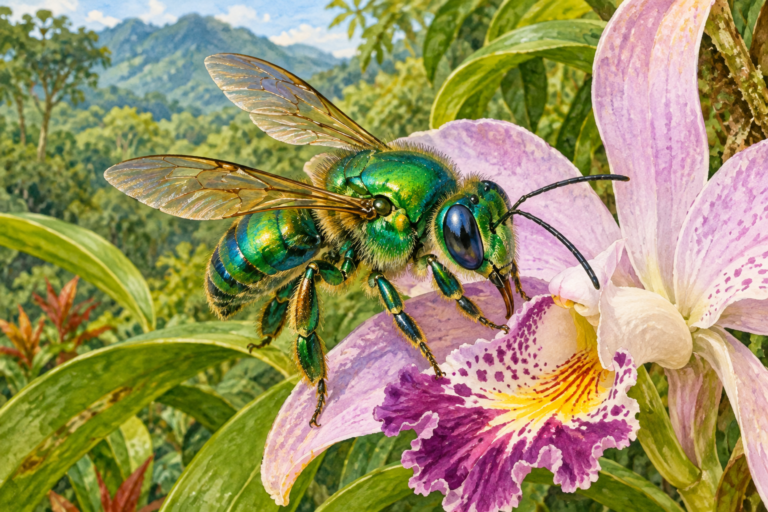
Carpenter Bees

Spanish name
Abejas carpinteras
Scientific name
Xylocopa spp. — genus card

What Do Pico & Tati Think?

Pico: “Let's look closely at the carpenter bees!”

Tati: “We can compare its shape and markings without touching it.”

Identification

Key Features of the Carpenter Bees

  • Robust body

  • often shiny abdomen

  • some nest in wood

Habitat & range

Suitable forest, garden or open habitats; distribution varies with habitat and species.

Conservation & care

Observe without collecting, handling or disturbing insects or nests. Stay on permitted paths. Leave caterpillars and their food plants in place.

View full profile →

Nature Field Guide

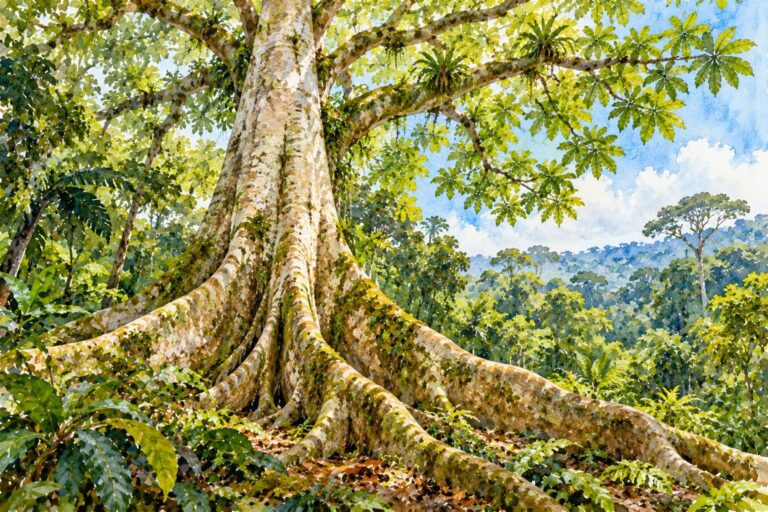
Ceiba Kapok Tree

Spanish name
Ceiba / Puri
Scientific name
Ceiba pentandra

What Do Pico & Tati Think?

Pico: “Huge buttress roots help make a mature ceiba unforgettable.”

Tati: “Let’s notice the leaves, flowers and habitat without disturbing the plant.”

Identification

Key Features of the Ceiba Kapok Tree

  • Large buttress roots on mature trees

  • Palmate leaves with several narrow leaflets

  • Seed capsules containing silky fibers

Habitat & range

Dry, humid and very wet lowland forests on both slopes, including Pacific, Caribbean and northern lowland landscapes.

Conservation & care

Explore with an adult on permitted paths. Observe and photograph without picking leaves, flowers or fruits. Do not taste plants or let pets chew them. Avoid climbing trees and disturbing roots, seedlings or visiting wildlife.

Threats & pressures

Protect suitable habitat, mature trees and natural regeneration. Avoid trampling, unauthorized clearing and collection.

View full profile →

Nature Field Guide

Cenizaro Rain Tree

Spanish name
Cenízaro
Scientific name
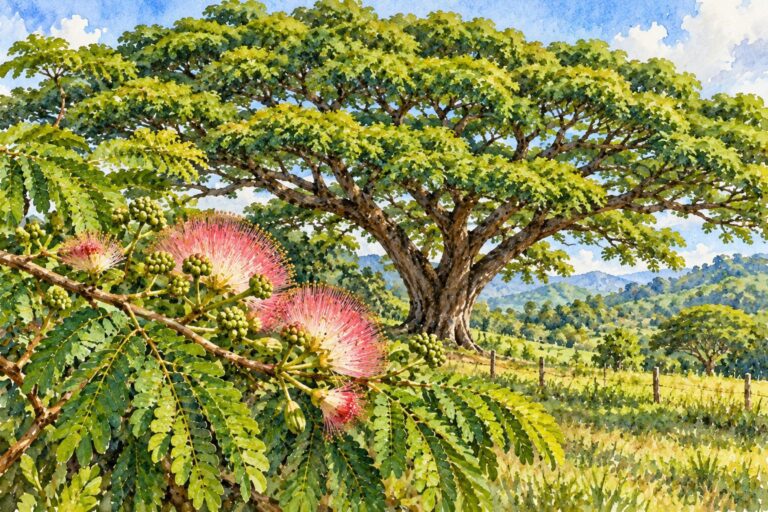
Samanea saman

What Do Pico & Tati Think?

Pico: “An umbrella-shaped crown shelters a world beneath its branches.”

Tati: “Let’s notice the leaves, flowers and habitat without disturbing the plant.”

Identification

Key Features of the Cenizaro Rain Tree

  • Broad umbrella-shaped crown

  • Twice-divided compound leaves

  • Pink-and-white brushlike flowers and dark pods

Habitat & range

Pacific lowlands and open landscapes, also documented in the Northern Plains and around San Ramón.

Conservation & care

Explore with an adult on permitted paths. Observe and photograph without picking leaves, flowers or fruits. Do not taste plants or let pets chew them. Avoid climbing trees and disturbing roots, seedlings or visiting wildlife.

Threats & pressures

Protect suitable habitat, mature trees and natural regeneration. Avoid trampling, unauthorized clearing and collection.

View full profile →

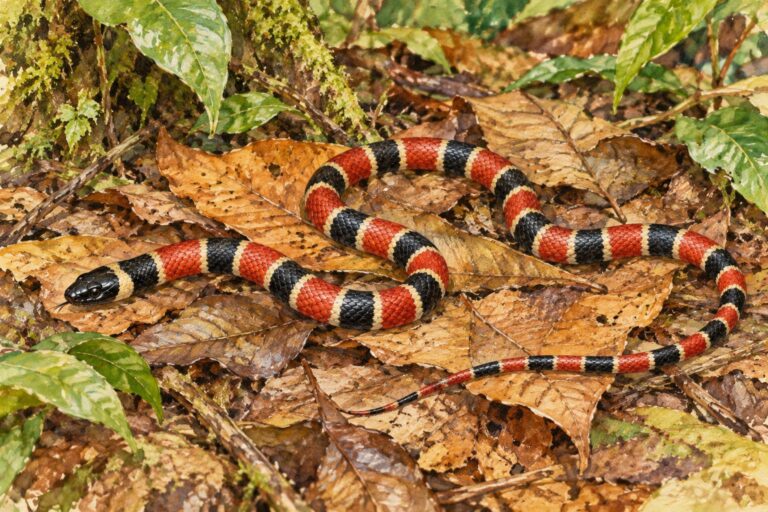
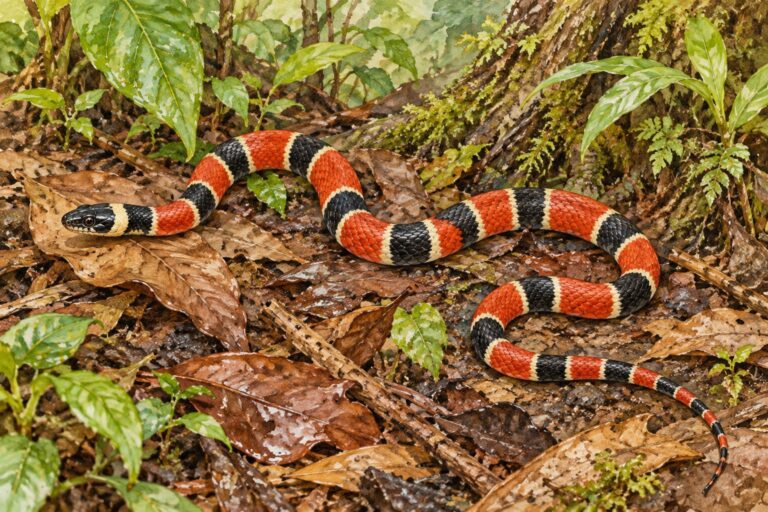
Nature Field Guide

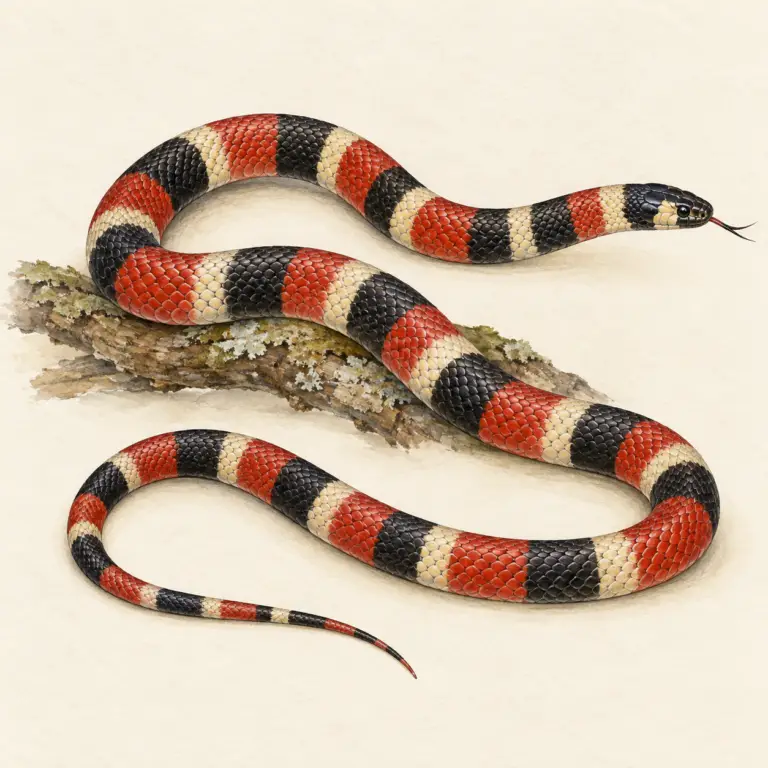
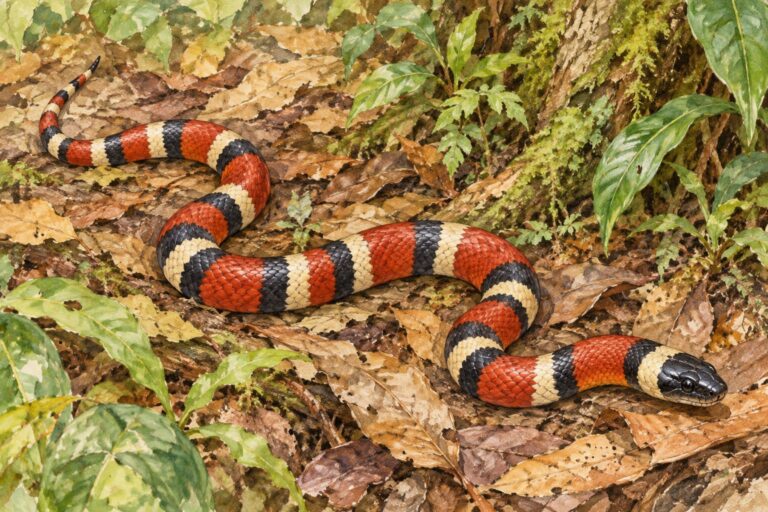
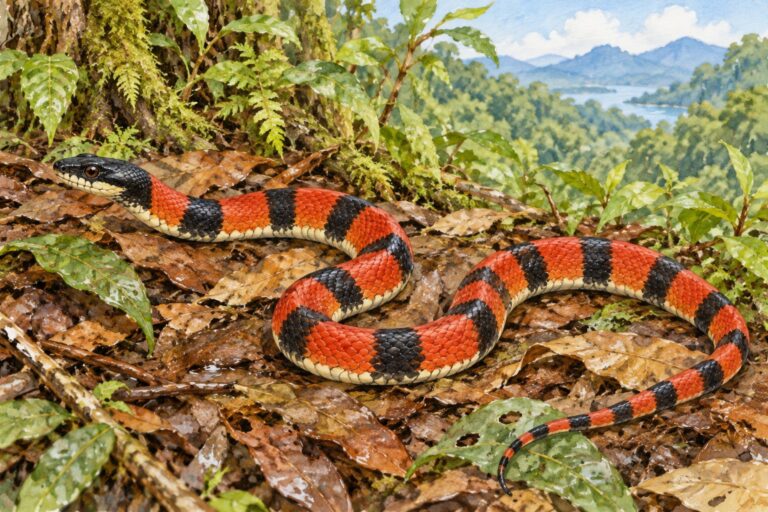
Central American Coral Snake

Spanish name
Coral macho
Scientific name
Micrurus nigrocinctus

What Do Pico & Tati Think?

Pico and Tati invite you to learn about the central american coral snake. Create a ring-pattern drawing from a verified photograph. Write the rule: observe snakes from a distance and tell an adult.

Identification

Key Features of the Central American Coral Snake

  • Red, pale and black rings encircling the body.

  • Relatively small head with little separation from the neck.

  • A slender-to-moderately robust cylindrical body.

Habitat & range

Pacific-slope lowlands and premontane areas, including parts of the Central Valley.

Conservation & care

Never approach, touch, catch or try to move any snake, even if it appears harmless or dead. Keep children and pets away, step back calmly and tell an adult or guide. Do not use colors, head shape or this card to judge safety.

View full profile →

Nature Field Guide

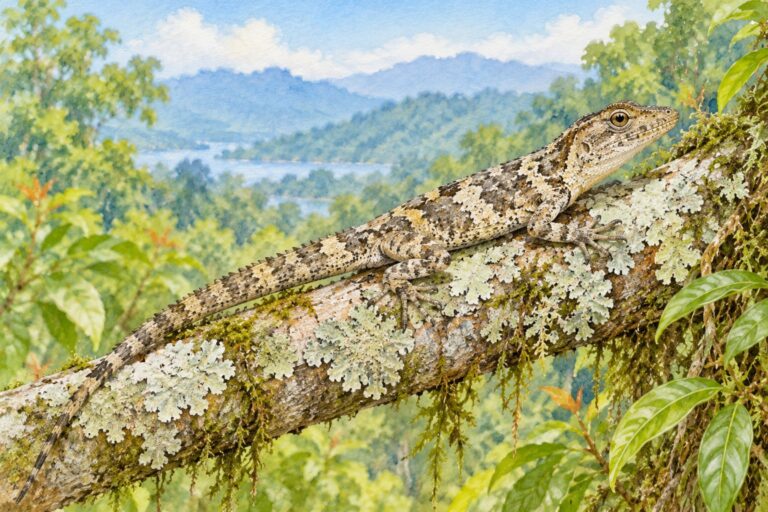
Charles Myers’s Anole

Spanish name
Anolis de Charles Myers
Scientific name
Anolis charlesmyersi

What Do Pico & Tati Think?

Pico: “What can we learn from this reptile’s shape?”

Tati: “Let’s notice its markings and habitat while leaving it plenty of space.”

Identification

Key Features of the Charles Myers’s Anole

  • Very short limbs

  • Lichenlike pale and dark mottling

  • Relatively short tail with a low serrated ridge

Habitat & range

Pacific lowland and adjoining foothill habitats in Costa Rica, including the Central and South Pacific.

Conservation & care

Observe from permitted paths with an adult. Do not touch, chase, catch or feed reptiles. Leave bark, stones, logs and leaf litter in place. Keep pets away and give animals an open escape route.

Threats & pressures

Protect natural shelters and connected habitat. Avoid collection, unnecessary clearing and deliberate killing. Leave wildlife in its habitat and support responsible observation.

View full profile →

Nature Field Guide

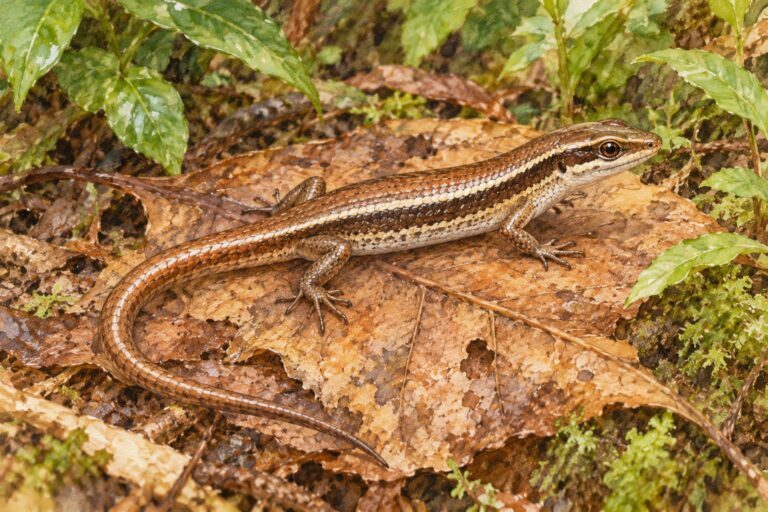
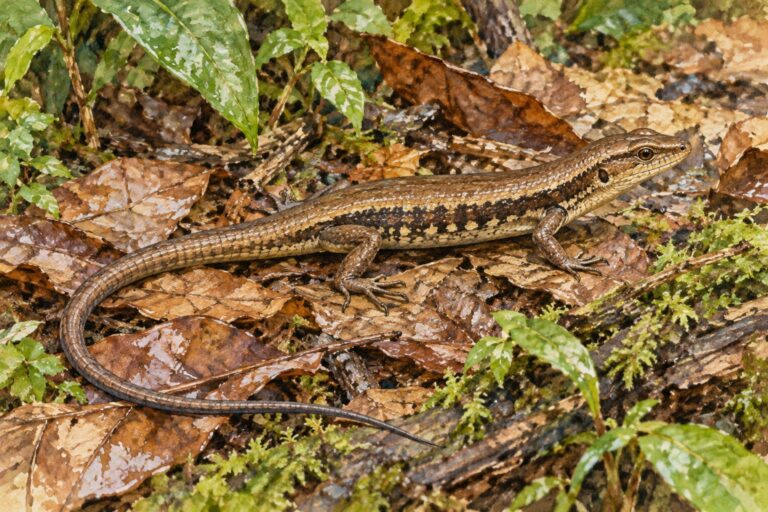
Cherrie’s Ground Skink

Spanish name
Eslaboncillo pardo / Escinco de Cherrie
Scientific name
Scincella cherriei

What Do Pico & Tati Think?

Pico: “What clues help us recognize this reptile?”

Tati: “Let’s notice its shape, markings and habitat from a respectful distance.”

Identification

Key Features of the Cherrie’s Ground Skink

  • Smooth glossy-looking scales

  • Dark lateral stripe

  • Short legs and a tapering tail

Habitat & range

Pacific-slope forest floor and wooded edges, including southwestern Costa Rica and the Monteverde foothill area.

Conservation & care

Observe with an adult from permitted paths. Do not catch, chase, touch or feed reptiles. Leave bark, logs, rocks and leaf litter in place. Keep pets away and allow animals an open escape route.

Threats & pressures

Protect habitat connections and natural shelters. Avoid road mortality, collection and deliberate killing. Leave reptiles in their habitat rather than keeping or relocating them.

View full profile →

Nature Field Guide

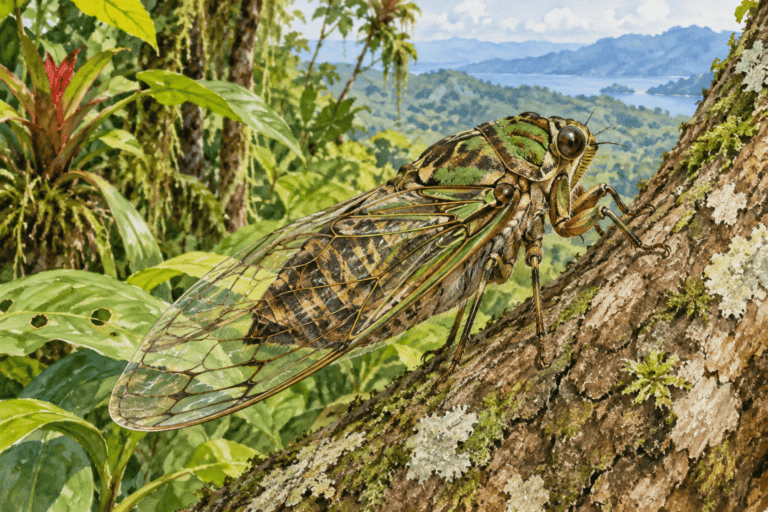
Cicadas

Spanish name
Chicharras
Scientific name
Cicadidae — family card

What Do Pico & Tati Think?

Pico: “Let's look closely at the cicadas!”

Tati: “We can compare its shape and markings without touching it.”

Identification

Key Features of the Cicadas

  • Large transparent wings

  • broad head

  • loud calls from some males

Habitat & range

Suitable forest, garden or open habitats; distribution varies with habitat and species.

Conservation & care

Observe without collecting, handling or disturbing insects or nests. Stay on permitted paths. Leave caterpillars and their food plants in place.

View full profile →

Nature Field Guide

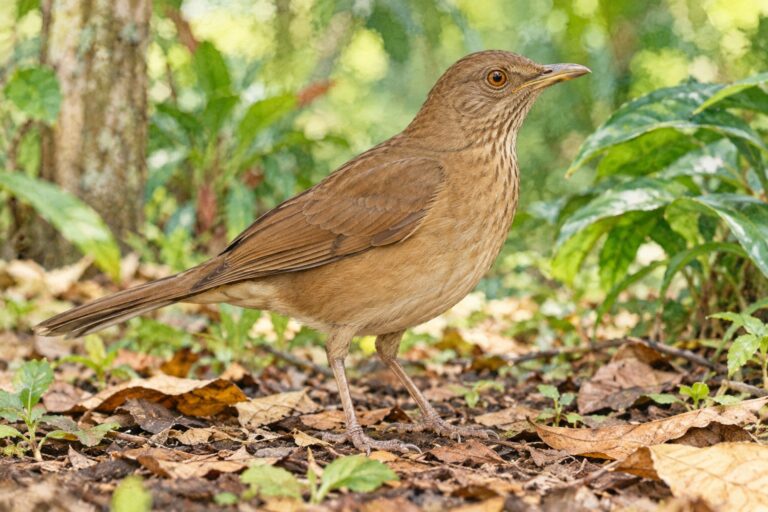
Clay-colored Thrush

Spanish name
Mirlo pardo / Yigüirro
Scientific name
Turdus grayi

What Do Pico & Tati Think?

Pico: “That brown bird has a beautiful song!”

Tati: “That is the yigüirro. We can learn its voice as well as its colors.”

Identification

Key Features of the Clay-colored Thrush

  • Warm brown plumage

  • Yellowish bill

  • Fine throat streaks and orange-brown eye

Habitat & range

Widespread across Costa Rica from lowlands to about 2450 m, in gardens, farms, secondary growth and wooded urban areas. Less numerous in the dry northwest and higher mountains.

Conservation & care

Observe quietly from trails or established viewing areas. Give nests, roosts and feeding birds space. Do not handle, chase or lure birds with playback. Keep pets away from wildlife.

Threats & pressures

Protect native vegetation, reduce collision hazards around glass and keep cats away from birds. These are practical prevention priorities, not a claim of a measured decline at a specific Costa Rican site.

View full profile →

Nature Field Guide

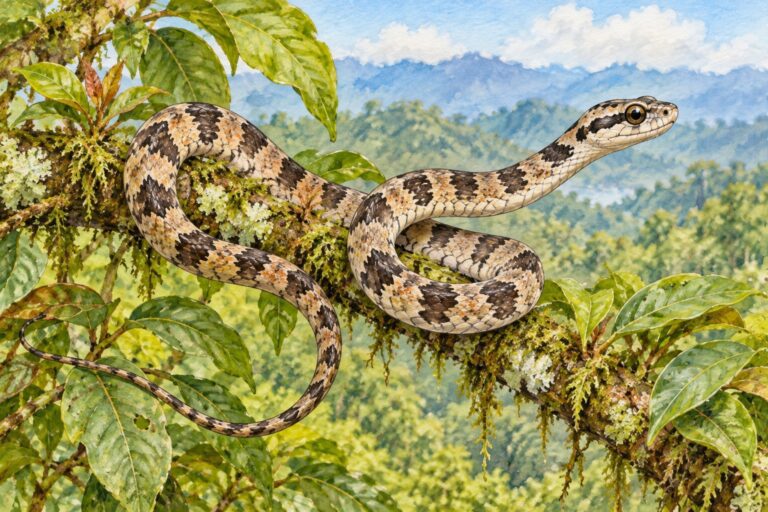
Clouded Snail-eater

Spanish name
Caracolera nublada
Scientific name
Sibon nebulatus

What Do Pico & Tati Think?

Pico: “What helps this reptile fit into its habitat?”

Tati: “Let’s look at its shape, colors and surroundings while giving it plenty of space.”

Identification

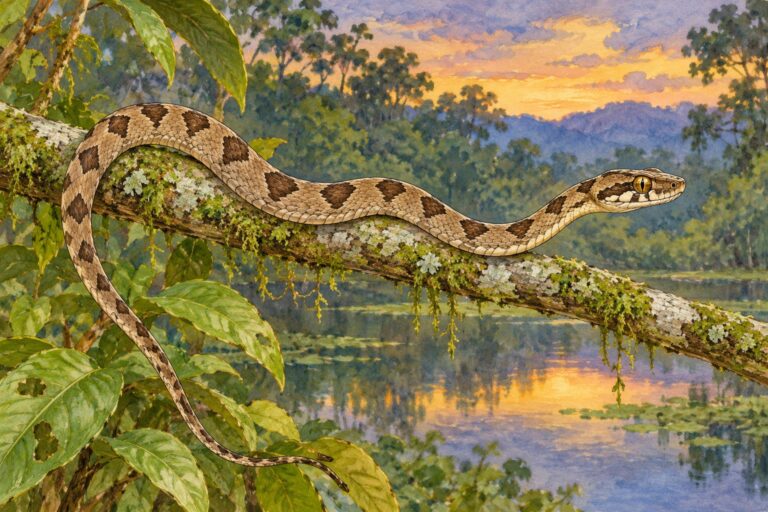
Key Features of the Clouded Snail-eater

  • Slender climbing body

  • Large rounded head and prominent eyes

  • Irregular dark markings on a lighter body

Habitat & range

Caribbean and Pacific humid forests and edges, including northern lowland wet forest.

Conservation & care

Observe from a distance with an adult or qualified guide. Do not touch, catch, corner, feed or move any snake. Keep children and pets away. Colors, head shape and pupil shape must never be used to decide a snake is safe.

Threats & pressures

Protect connected habitat and natural shelters. Avoid collection, unnecessary clearing and deliberate killing. Leave wildlife in place and support responsible observation.

View full profile →

Nature Field Guide

Coffee

Spanish name
Café
Scientific name
Coffea arabica

What Do Pico & Tati Think?

Pico: “The coffee bean starts inside a fruit!”

Tati: “Let's find the cherry before we think about the bean.”

Identification

Key Features of the Coffee

  • Glossy leaves arranged in pairs

  • Small fruits clustered along branches

  • Ripe cherries are often red, though some varieties ripen yellow

  • Small white flowers when flowering

Habitat & range

Cultivated farms in several Costa Rican coffee zones, including the Central and Western Valleys, Los Santos, Turrialba, Orosi, Tres Rios, Guanacaste and Brunca. ICAFE also documents production in San Carlos and Sarapiqui, mapped here to Northern Plains. Coffee requires suitable elevation and local growing conditions; a regional tag does not mean all climates within that region are suitable.

Conservation & care

Visit farms only with permission and follow the host's instructions. Stay clear of machinery, chemical applications and working areas. Do not pick or taste plants without a responsible adult and the host's approval.

View full profile →

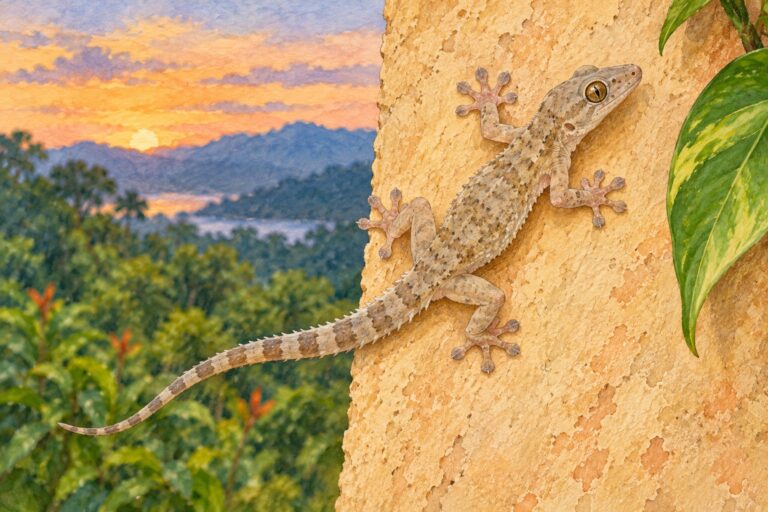
Nature Field Guide

Common House Gecko

Spanish name
Geco casero común
Scientific name
Hemidactylus frenatus

What Do Pico & Tati Think?

Pico: “What helps this reptile fit into its habitat?”

Tati: “Let’s look at its shape, colors and surroundings while giving it plenty of space.”

Identification

Key Features of the Common House Gecko

  • Pale gray-to-beige coloration

  • Broad spreading toe pads

  • Often on walls near night lighting

Habitat & range

Buildings, gardens and disturbed habitats across much of Costa Rica, especially warm lowlands and settled areas. Documented at Tirimbina and San Luis de Monteverde.

Conservation & care

Observe with an adult from permitted paths. Do not touch, chase, catch or feed reptiles. Leave bark, logs, stones and leaf litter in place. Keep pets away and allow an open escape route.

Threats & pressures

Prevent accidental transport of introduced geckos and their eggs in belongings or plant materials. Protect native reptile habitats and avoid moving animals between places.

View full profile →

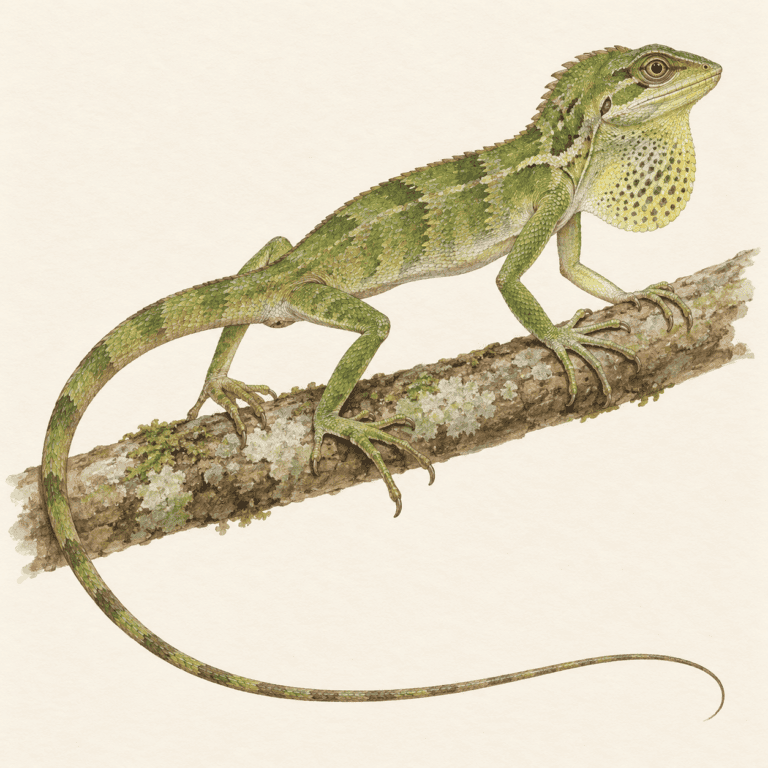
Nature Field Guide

Common Monkey Lizard

Spanish name
Lagartija de dosel
Scientific name
Polychrus gutturosus

What Do Pico & Tati Think?

Pico and Tati invite you to learn about the common monkey lizard. Look at a reference photograph and mark the outline of the tail. Compare its proportions with a basilisk.

Identification

Key Features of the Common Monkey Lizard

  • Laterally flattened body.

  • Long limbs, toes and whip-like tail.

  • Greenish coloration and an expandable throat region.

Habitat & range

Primarily humid forest canopy. A documented Hojancha record extends coverage into Guanacaste, where persistent streamside vegetation provides a moist refuge within the dry landscape. Also documented at Reserva Los Campesinos in San Jose province. Regional occurrence depends on suitable wooded microhabitat.

Conservation & care

Watch wildlife with an adult from a safe path. Do not touch, feed, capture or move reptiles, and keep pets away. Leave eggs, shelters and vegetation undisturbed.

View full profile →

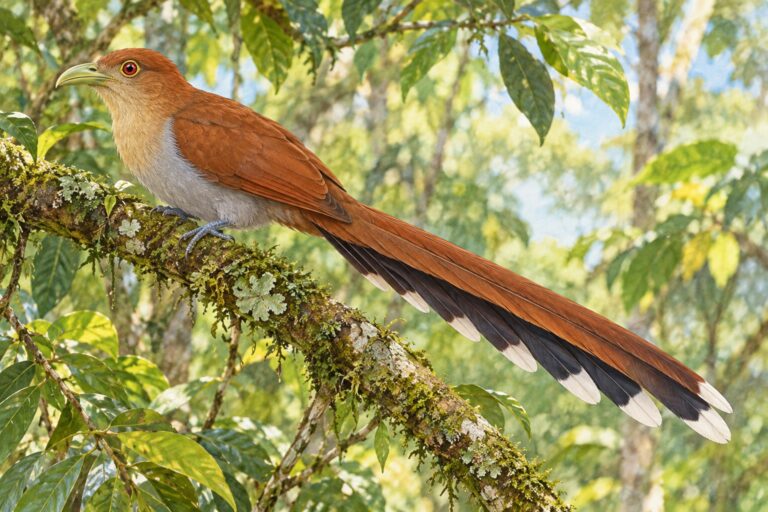
Nature Field Guide

Common Squirrel-Cuckoo

Spanish name
Cuco ardilla
Scientific name
Piaya cayana

What Do Pico & Tati Think?

Pico: “That tail is longer than I expected!”

Tati: “Follow its movement through the branches without chasing it.”

Identification

Key Features of the Common Squirrel-Cuckoo

  • Rusty upperparts

  • Very long graduated white-tipped tail

  • Greenish-yellow bill

Habitat & range

Widespread in wooded habitats on both slopes, including forest canopy, secondary growth, plantations and tree-rich gardens. It can occur well above the lowlands where trees remain.

Conservation & care

Observe quietly from trails or established viewing areas. Give nests, roosts and feeding birds space. Do not handle, chase or lure birds with playback. Keep pets away from wildlife.

Threats & pressures

Protect native vegetation, reduce collision hazards around glass and keep cats away from birds. These are practical prevention priorities, not a claim of a measured decline at a specific Costa Rican site.

View full profile →

Nature Field Guide

Cope’s False Coral Snake

Spanish name
Falsa coral de Cope
Scientific name
Pliocercus euryzonus

What Do Pico & Tati Think?

Pico: “What helps this reptile fit into its habitat?”

Tati: “Let’s look at its shape, colors and surroundings while giving it plenty of space.”

Identification

Key Features of the Cope’s False Coral Snake

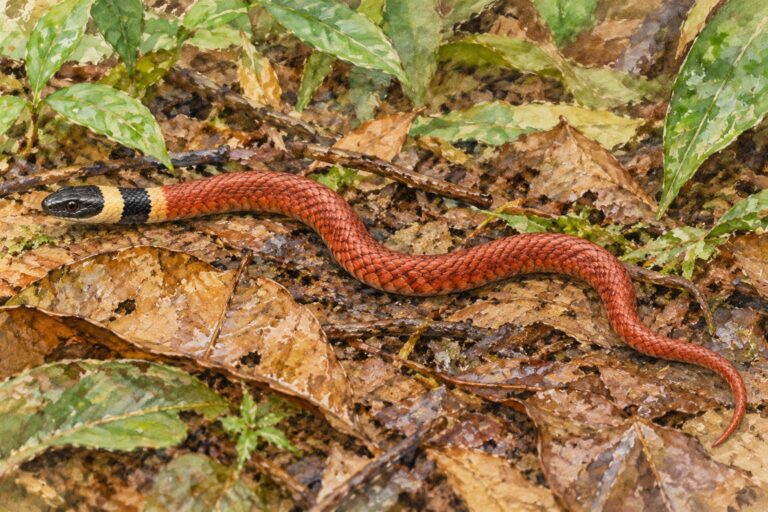
  • Slender banded body

  • Long fine tail

  • Dark head and contrasting reddish markings

Habitat & range

Humid Caribbean-slope forests and southern Pacific forest habitats; documented at Tirimbina.

Conservation & care

Observe from a distance with an adult or qualified guide. Do not touch, catch, corner, feed or move any snake. Keep children and pets away. Colors, head shape and pupil shape must never be used to decide a snake is safe.

Threats & pressures

Protect connected habitat and natural shelters. Avoid collection, unnecessary clearing and deliberate killing. Leave wildlife in place and support responsible observation.

View full profile →

Nature Field Guide

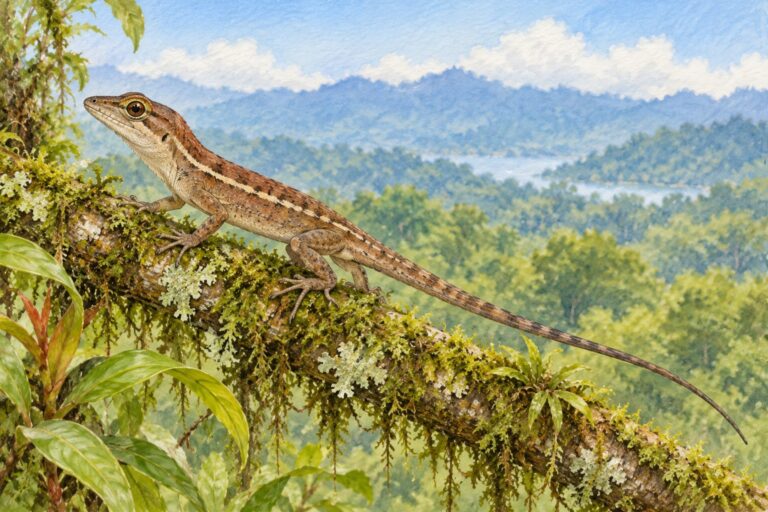
Copper Anole

Spanish name
Anolis cobrizo
Scientific name
Anolis cupreus

What Do Pico & Tati Think?

Pico: “What can we learn from this reptile’s shape?”

Tati: “Let’s notice its markings and habitat while leaving it plenty of space.”

Identification

Key Features of the Copper Anole

  • Tan-to-coppery brown body

  • Variable spots, bars or darker markings

  • Long tail and low-perching posture

Habitat & range

Northwestern and western Pacific slope, including Guanacaste, Monteverde and Quepos, with populations in the Central Valley.

Conservation & care

Observe from permitted paths with an adult. Do not touch, chase, catch or feed reptiles. Leave bark, stones, logs and leaf litter in place. Keep pets away and give animals an open escape route.

Threats & pressures

Protect natural shelters and connected habitat. Avoid collection, unnecessary clearing and deliberate killing. Leave wildlife in its habitat and support responsible observation.

View full profile →

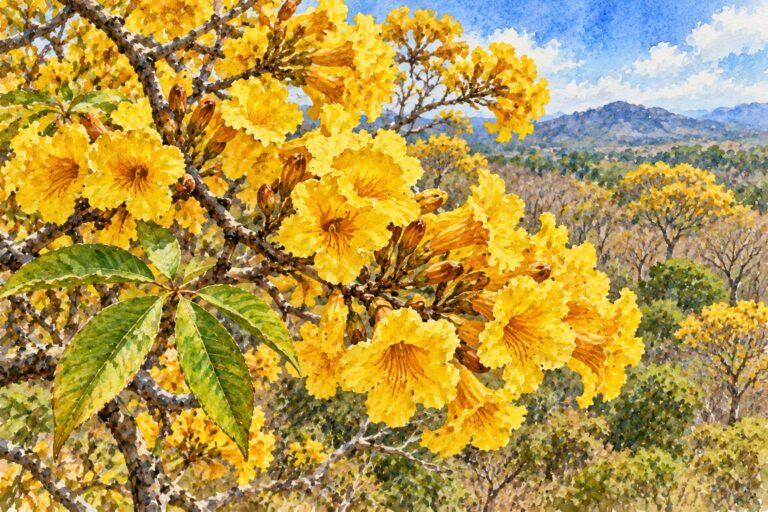
Nature Field Guide

Cortez Amarillo

Spanish name
Cortés amarillo / Cortez amarillo
Scientific name
Handroanthus ochraceus

What Do Pico & Tati Think?

Pico: “Golden trumpet flowers can brighten the branches of an almost leafless tree.”

Tati: “Let’s notice the leaves, flowers and habitat without disturbing the plant.”

Identification

Key Features of the Cortez Amarillo

  • Yellow trumpet-shaped flowers

  • Palmately compound leaves

  • Flowering branches may be nearly leafless

Habitat & range

Seasonally dry Pacific forests and wooded edges, including Guanacaste, the Central Pacific and the Térraba valley.

Conservation & care

Explore with an adult on permitted paths. Observe and photograph without picking leaves, flowers or fruits. Do not taste plants or let pets chew them. Avoid climbing trees and disturbing roots, seedlings or visiting wildlife.

Threats & pressures

Protect suitable habitat, mature trees and natural regeneration. Avoid trampling, unauthorized clearing and collection.

View full profile →

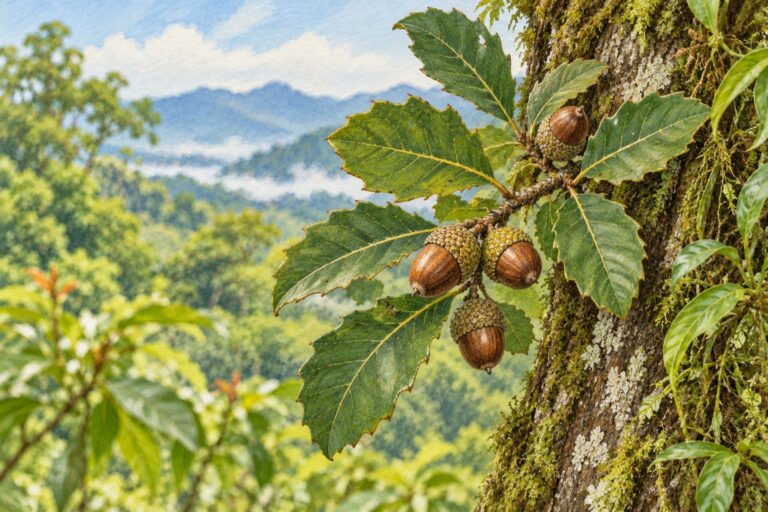
Nature Field Guide

Costa Rican Oak

Spanish name
Roble / Encino
Scientific name
Quercus costaricensis

What Do Pico & Tati Think?

Pico: “Acorns and leathery leaves belong to this mountain-forest oak.”

Tati: “Let’s notice the leaves, flowers and habitat without disturbing the plant.”

Identification

Key Features of the Costa Rican Oak

  • Acorns in scaly cups

  • Simple leathery leaves

  • Mountain-forest habitat

Habitat & range

Highland forests of the Talamanca range, including Dota, Chirripó and adjoining mountain slopes.

Conservation & care

Explore with an adult on permitted paths. Observe and photograph without picking leaves, flowers or fruits. Do not taste plants or let pets chew them. Avoid climbing trees and disturbing roots, seedlings or visiting wildlife.

Threats & pressures

Protect suitable habitat, mature trees and natural regeneration. Avoid trampling, unauthorized clearing and collection.

View full profile →

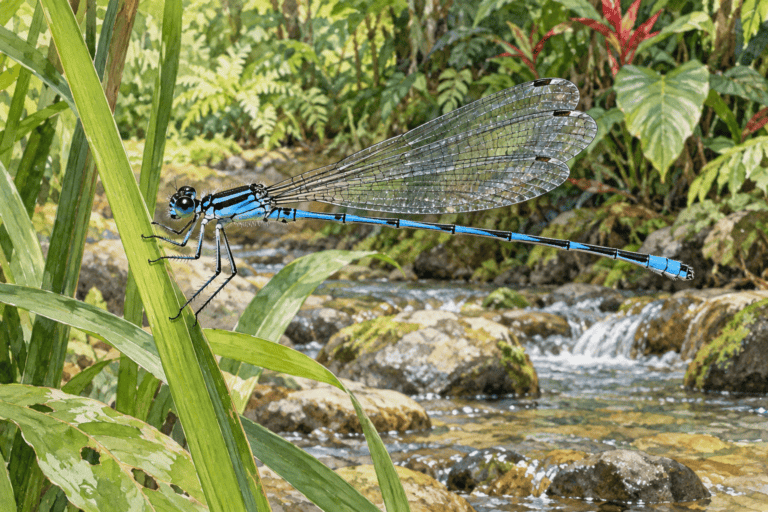
Nature Field Guide

Damselflies

Spanish name
Caballitos del diablo
Scientific name
Odonata: Zygoptera — group card

What Do Pico & Tati Think?

Pico: “Let's look closely at the damselflies!”

Tati: “We can compare its shape and markings without touching it.”

Identification

Key Features of the Damselflies

  • Slender body

  • widely separated eyes

  • many fold wings above abdomen

Habitat & range

Vegetation near ponds, wetlands and streams; individual species use different waters.

Conservation & care

Observe without collecting, handling or disturbing insects or nests. Stay on permitted paths. Leave caterpillars and their food plants in place.

View full profile →

Nature Field Guide

Decorated Anole

Spanish name
Anolis decorado / Lagartija gigante de bandas
Scientific name
Anolis insignis

What Do Pico & Tati Think?

Pico: “What helps this reptile fit into its habitat?”

Tati: “Let’s look at its shape, colors and surroundings while giving it plenty of space.”

Identification

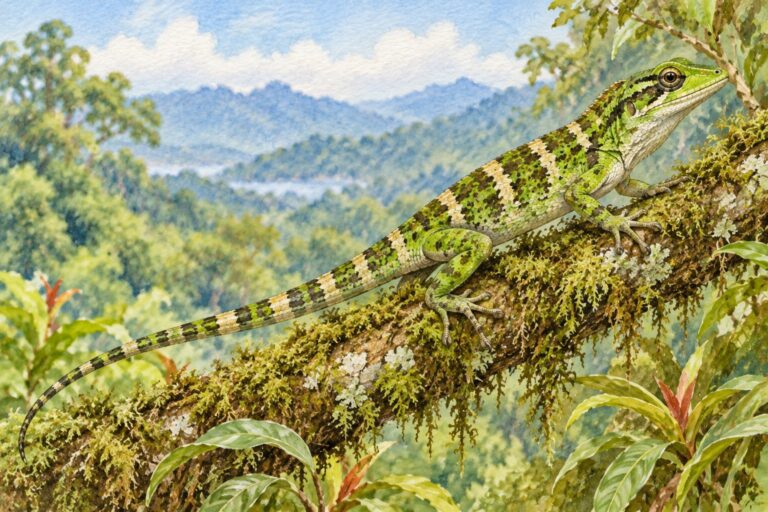
Key Features of the Decorated Anole

  • Large anole with a broad head

  • Green body with pale markings

  • Long tail and tree-perching posture

Habitat & range

Humid foothill and montane forests, including the Guanacaste volcanic range and the central mountains. Documented at San Gerardo Biological Station in Área de Conservación Guanacaste.

Conservation & care

Observe with an adult from permitted paths. Do not touch, chase, catch or feed reptiles. Leave bark, logs, stones and leaf litter in place. Keep pets away and allow an open escape route.

Threats & pressures

Protect connected habitat and natural shelters. Avoid collection, unnecessary clearing and deliberate killing. Leave wildlife in place and support responsible observation.

View full profile →

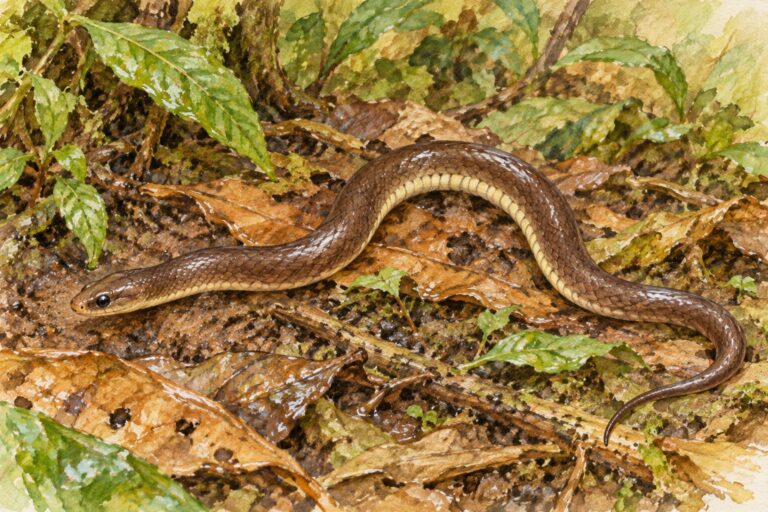
Nature Field Guide

Decorated Forest Snake

Spanish name
Hojarasquera rayada
Scientific name
Rhadinaea decorata

What Do Pico & Tati Think?

Pico: “What can we learn from this reptile’s shape?”

Tati: “Let’s notice its markings and habitat while leaving it plenty of space.”

Identification

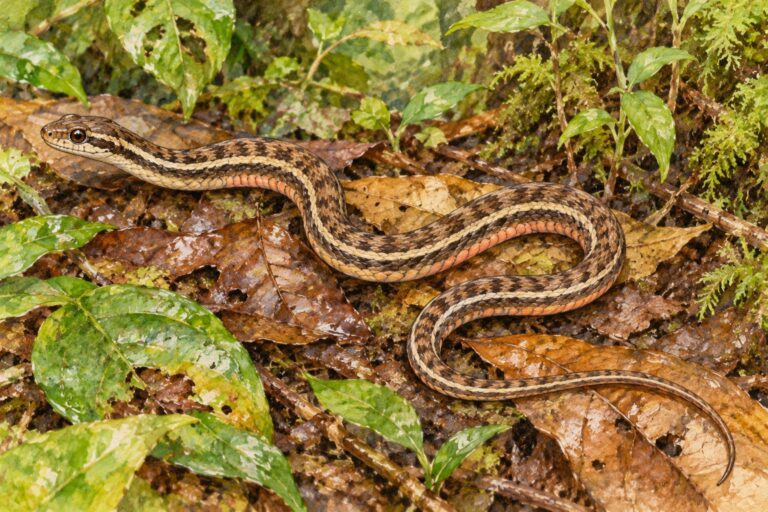
Key Features of the Decorated Forest Snake

  • Small slender brown body

  • Fine pale and dark lengthwise stripes

  • Forest-floor camouflage

Habitat & range

Humid Caribbean and Pacific forests and foothills, including northern lowlands and southwestern Costa Rica.

Conservation & care

Observe only from a distance with an adult or qualified guide. Never touch, catch, feed, corner or move any snake. Keep children and pets away. Colors, head shape and pupil shape must never be used to decide a snake is safe.

Threats & pressures

Protect natural shelters and connected habitat. Avoid collection, unnecessary clearing and deliberate killing. Leave wildlife in its habitat and support responsible observation.

View full profile →

Nature Field Guide

Dice’s Cottontail

Spanish name
Conejo de Dice
Scientific name
Sylvilagus dicei

What Do Pico & Tati Think?

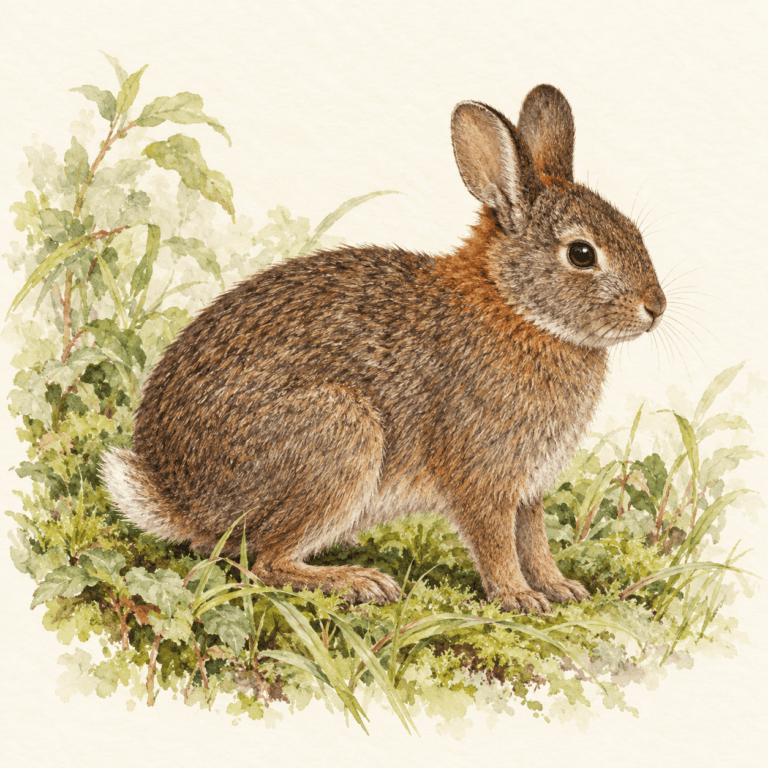
Dice's cottontail is a mountain rabbit found in Costa Rica and western Panama.

Identification

Key Features of the Dice’s Cottontail

  • Small brown rabbit with fairly short ears.

  • Often a darker or reddish area around the nape.

  • Highland locality is important; appearance alone may be insufficient.

Habitat & range

Costa Rican highlands, including the Talamanca mountain region.

Conservation & care

Explore with an adult or local guide. Observe quietly from a distance, stay on established trails and leave shelter undisturbed. Do not feed, touch, capture or corner wildlife. Keep pets away.

Conservation assessment

Global IUCN category reported by Mammal Diversity Database, checked October 2026. Vulnerable means assessed as facing a high risk of extinction in the wild; it does not mean every local population has the same condition.

View full profile →

Nature Field Guide

Dragonflies

Spanish name
Libélulas
Scientific name
Odonata: Anisoptera — group card

What Do Pico & Tati Think?

Pico: “Let's look closely at the dragonflies!”

Tati: “We can compare its shape and markings without touching it.”

Identification

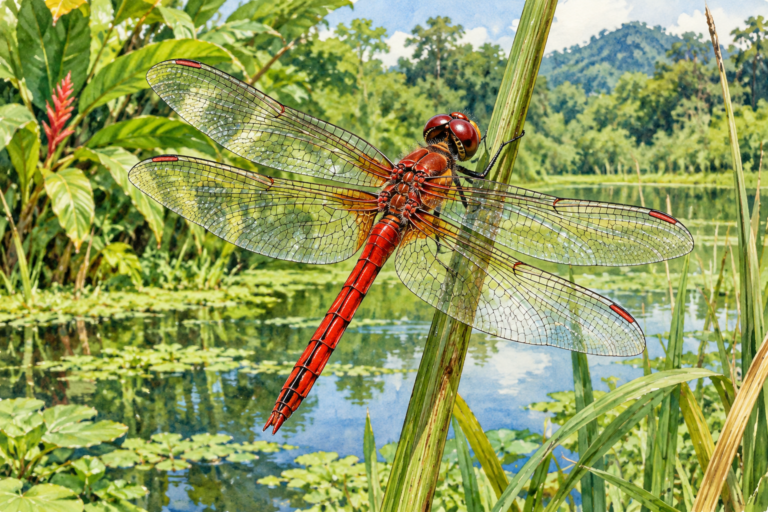
Key Features of the Dragonflies

  • Large eyes

  • two pairs of wings

  • wings usually held open at rest

Habitat & range

Vegetation near ponds, wetlands and streams; individual species use different waters.

Conservation & care

Observe without collecting, handling or disturbing insects or nests. Stay on permitted paths. Leave caterpillars and their food plants in place.

View full profile →

Nature Field Guide

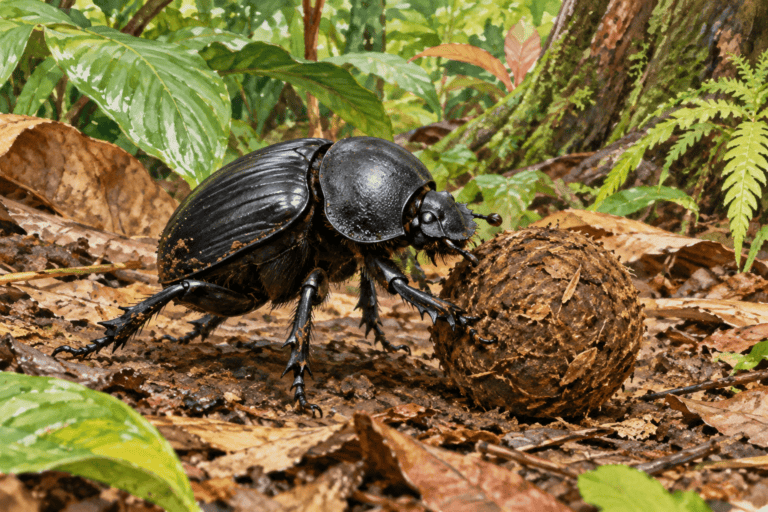
Dung Beetles

Spanish name
Escarabajos estercoleros
Scientific name
Scarabaeinae — subfamily card

What Do Pico & Tati Think?

Pico: “Let's look closely at the dung beetles!”

Tati: “We can compare its shape and markings without touching it.”

Identification

Key Features of the Dung Beetles

  • Compact beetle body

  • digging legs

  • some species roll dung balls

Habitat & range

Suitable forest, garden or open habitats; distribution varies with habitat and species.

Conservation & care

Observe without collecting, handling or disturbing insects or nests. Stay on permitted paths. Leave caterpillars and their food plants in place.

View full profile →

Nature Field Guide

Ecuadorian Milksnake

Spanish name
Falsa coral / Serpiente de leche
Scientific name
Lampropeltis micropholis

What Do Pico & Tati Think?

Pico: “What can we learn from this reptile’s shape?”

Tati: “Let’s notice its markings and habitat while leaving it plenty of space.”

Identification

Key Features of the Ecuadorian Milksnake

  • Young animals may have red, pale and dark bands

  • Smooth-looking scales

  • Appearance can darken with age

Habitat & range

Eastern and southern Costa Rican forest landscapes and mountain slopes; province assignments refer to suitable habitat rather than all parts of each province.

Conservation & care

Observe only from a distance with an adult or qualified guide. Never touch, catch, feed, corner or move any snake. Keep children and pets away. Colors, head shape and pupil shape must never be used to decide a snake is safe.

Threats & pressures

Protect natural shelters and connected habitat. Avoid collection, unnecessary clearing and deliberate killing. Leave wildlife in its habitat and support responsible observation.

View full profile →

Nature Field Guide

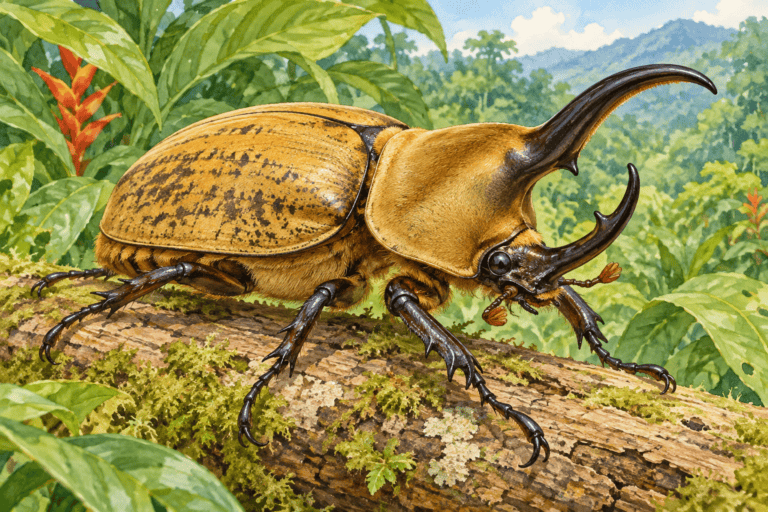
Elephant Beetle

Spanish name
Escarabajo elefante
Scientific name
Megasoma elephas

What Do Pico & Tati Think?

Pico: “Let's look closely at the elephant beetle!”

Tati: “We can compare its shape and markings without touching it.”

Identification

Key Features of the Elephant Beetle

  • Large rounded beetle

  • fine golden body hairs

  • males have a forward horn

Habitat & range

Most often associated with lowland wooded habitats; larvae develop in decaying wood and damp plant material. A documented Tortuguero record supports Caribbean rainforest habitat. A Costa Rican specialist account places most records below 500 m, with some to 1,500 m. Existing broad region tags require further locality checks and should not be read as presence throughout the highlands.

Conservation & care

Observe without collecting, handling or disturbing insects or nests. Stay on permitted paths. Leave caterpillars and their food plants in place.

View full profile →

Nature Field Guide

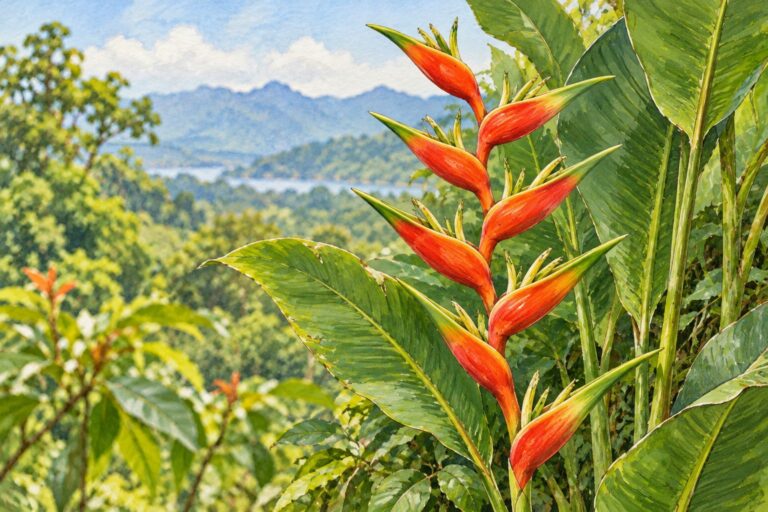
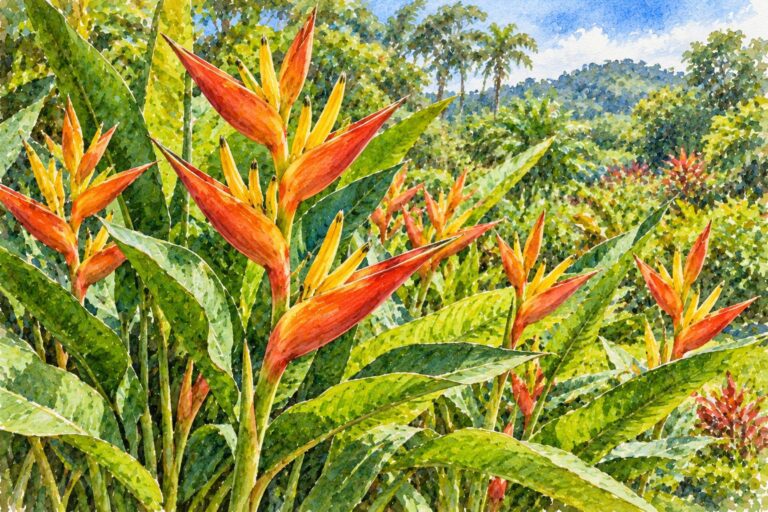
Expanded Lobster Claw

Spanish name
Platanilla / Caliguate
Scientific name
Heliconia latispatha

What Do Pico & Tati Think?

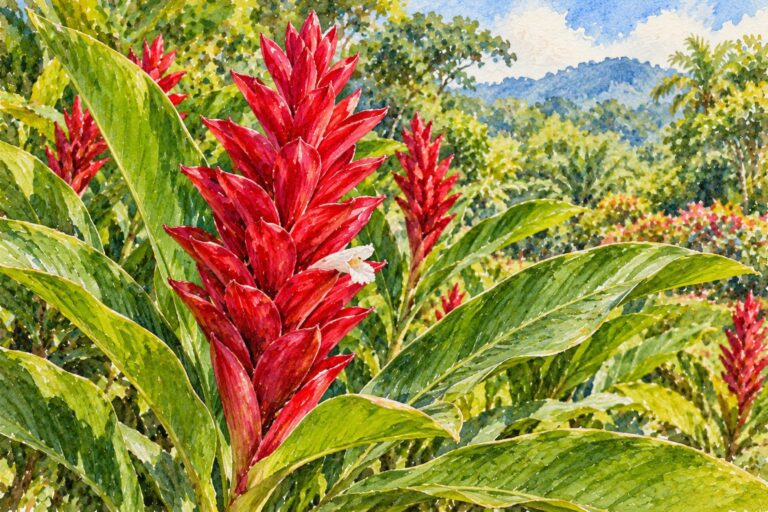
Pico: “An upright open arrangement of colorful bracts rises among broad green leaves.”

Tati: “Let’s notice the leaves, flowers and habitat without disturbing the plant.”

Identification

Key Features of the Expanded Lobster Claw

  • Broad banana-like leaves

  • Upright open inflorescence

  • Separated orange-to-red bracts holding small flowers

Habitat & range

Both slopes, including Guanacaste, the Northern Plains, Caribbean, Central Pacific and Osa; also cultivated in gardens.

Conservation & care

Explore with an adult on permitted paths. Observe and photograph without picking leaves, flowers or fruits. Do not taste plants or let pets chew them. Avoid climbing trees and disturbing roots, seedlings or visiting wildlife.

Threats & pressures

Protect suitable habitat, mature trees and natural regeneration. Avoid trampling, unauthorized clearing and collection.

View full profile →

Nature Field Guide

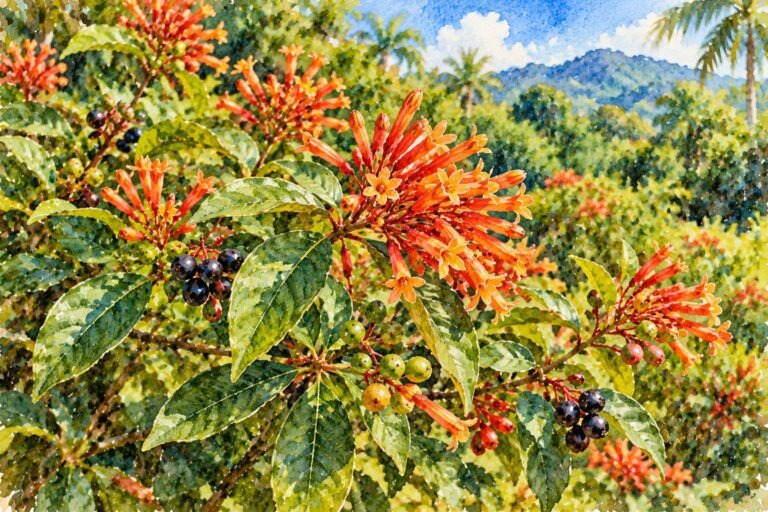
Firebush

Spanish name
Coralillo
Scientific name
Hamelia patens

What Do Pico & Tati Think?

Pico wants to sketch the plant’s shapes. Tati suggests looking for three clues before guessing its name. What would you notice first?

Identification

Key Features of the Firebush

  • Narrow orange-red tubular flowers

  • Simple leaves often arranged in whorls

  • Small rounded fruits that darken with age

Habitat & range

Clearings, roadsides, forest edges and gardens.

Conservation & care

Observe from paths and leave leaves, bark, flowers and fruits attached. Do not taste wild plants or offer them to pets. Ask a knowledgeable guide to confirm the species.

View full profile →

Nature Field Guide

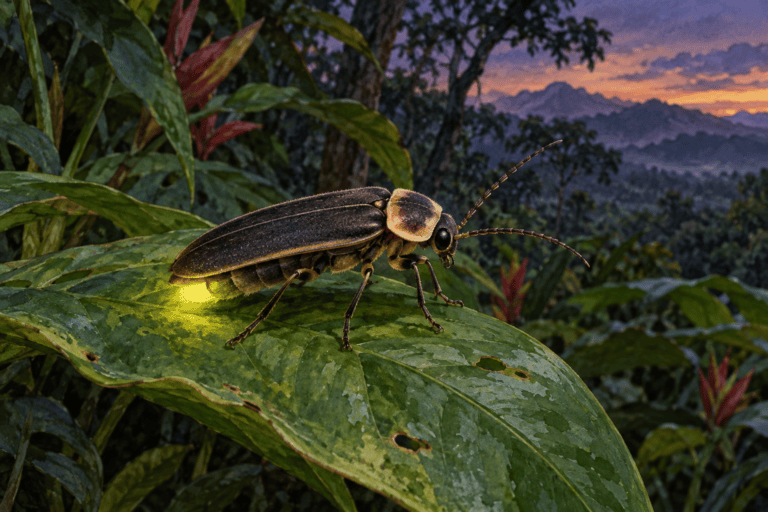
Fireflies

Spanish name
Luciérnagas
Scientific name
Lampyridae — family card

What Do Pico & Tati Think?

Pico: “Let's look closely at the fireflies!”

Tati: “We can compare its shape and markings without touching it.”

Identification

Key Features of the Fireflies

  • Soft beetle wing covers

  • some show glowing abdominal segments

  • light patterns vary

Habitat & range

Suitable forest, garden or open habitats; distribution varies with habitat and species.

Conservation & care

Observe without collecting, handling or disturbing insects or nests. Stay on permitted paths. Leave caterpillars and their food plants in place.

View full profile →

Nature Field Guide

Forest Flame Snake

Spanish name
Falsa coral de bosque
Scientific name
Oxyrhopus petolarius

What Do Pico & Tati Think?

Pico: “What helps this reptile fit into its habitat?”

Tati: “Let’s look at its shape, colors and surroundings while giving it plenty of space.”

Identification

Key Features of the Forest Flame Snake

  • Dark head

  • Red-to-orange areas with dark crossbands

  • Slender body with variable markings

Habitat & range

Humid Caribbean-slope and southern Pacific forests and their edges in Costa Rica.

Conservation & care

Observe from a distance with an adult or qualified guide. Do not touch, catch, corner, feed or move any snake. Keep children and pets away. Colors, head shape and pupil shape must never be used to decide a snake is safe.

Threats & pressures

Protect connected habitat and natural shelters. Avoid collection, unnecessary clearing and deliberate killing. Leave wildlife in place and support responsible observation.

View full profile →

Nature Field Guide

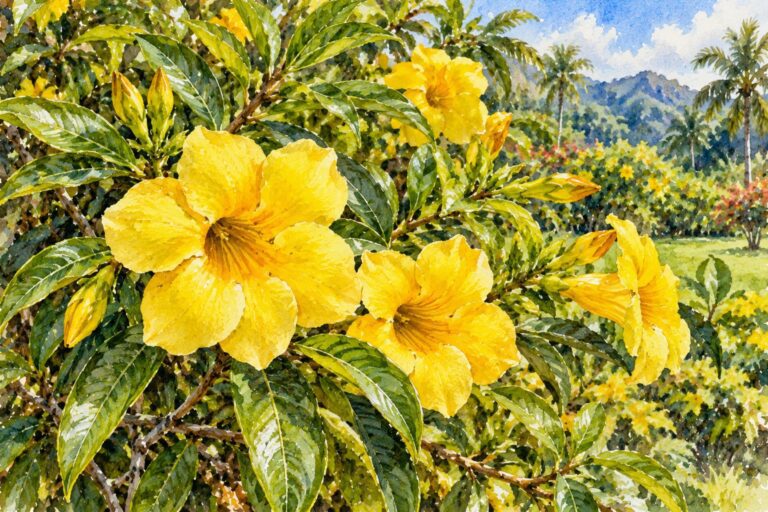
Golden Trumpet

Spanish name
Campana amarilla
Scientific name
Allamanda cathartica

What Do Pico & Tati Think?

Pico wants to sketch the plant’s shapes. Tati suggests looking for three clues before guessing its name. What would you notice first?

Identification

Key Features of the Golden Trumpet

  • Large yellow funnel-shaped flowers

  • Glossy leaves in whorls

  • Climbing or sprawling woody stems

Habitat & range

Gardens and disturbed moist to seasonally dry sites.

Conservation & care

Observe from paths and leave leaves, bark, flowers and fruits attached. Do not taste wild plants or offer them to pets. Ask a knowledgeable guide to confirm the species. Avoid contact with milky sap.

View full profile →

Nature Field Guide

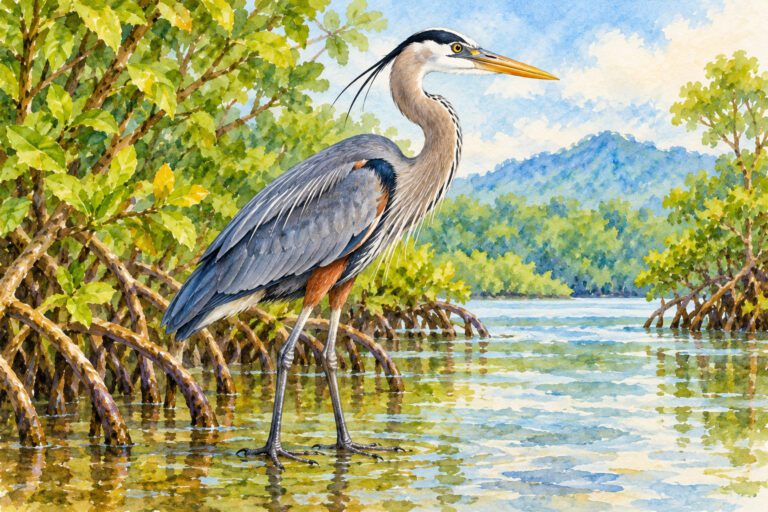
Great Blue Heron

Spanish name
Garzón azulado
Scientific name
Ardea herodias

What Do Pico & Tati Think?

A tall, patient hunter can make the whole shoreline feel still. Pico counts its slow steps while Tati watches its folded neck.

Identification

Key Features of the Great Blue Heron

  • Large blue-gray body

  • Long legs and a heavy yellowish bill

  • Pale head with a dark stripe above the eye

Habitat & range

Scan shallow water, quiet mangrove channels and vegetated wetland margins from an established viewpoint. Follow a local guide’s directions around estuaries.

Conservation & care

Give feeding and resting birds space. If a bird stops feeding, repeatedly looks at you or moves away, increase your distance. Keep dogs away from flocks, avoid playback and feeding, and leave nests and natural shoreline debris undisturbed.

View full profile →

Nature Field Guide

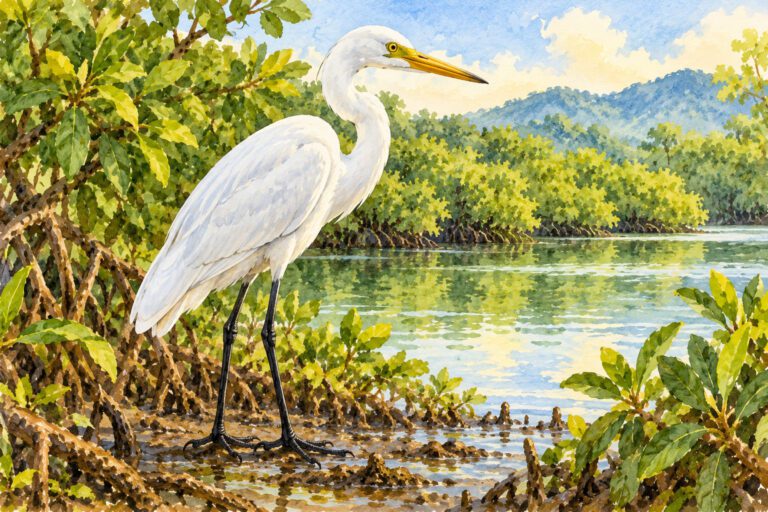
Great Egret

Spanish name
Garceta grande
Scientific name
Ardea alba

What Do Pico & Tati Think?

Pico calls it a bright white shape in the green. Tati checks the bill and feet before giving it a name.

Identification

Key Features of the Great Egret

  • White plumage and long slender neck

  • Yellow bill

  • Black legs and dark feet

Habitat & range

Scan shallow water, quiet mangrove channels and vegetated wetland margins from an established viewpoint. Follow a local guide’s directions around estuaries.

Conservation & care

Give feeding and resting birds space. If a bird stops feeding, repeatedly looks at you or moves away, increase your distance. Keep dogs away from flocks, avoid playback and feeding, and leave nests and natural shoreline debris undisturbed.

View full profile →

Nature Field Guide

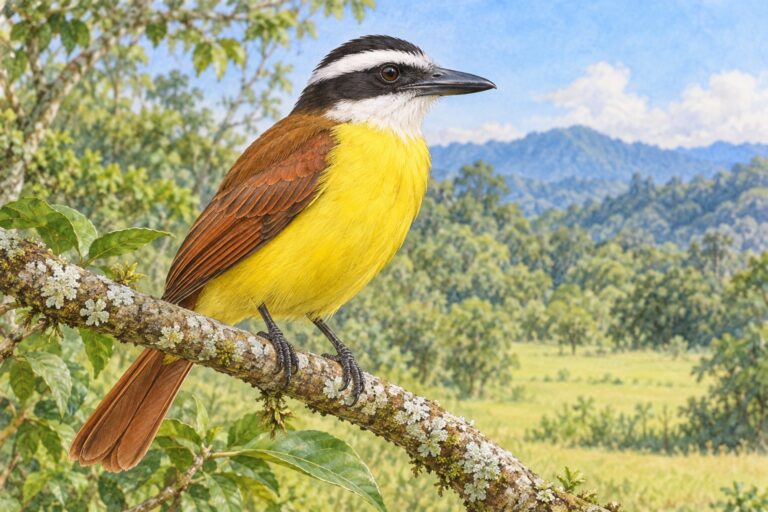
Great Kiskadee

Spanish name
Bienteveo grande
Scientific name
Pitangus sulphuratus

What Do Pico & Tati Think?

Pico: “It sounds like it is calling its own name!”

Tati: “Let’s also check its bold eyebrow and strong bill.”

Identification

Key Features of the Great Kiskadee

  • Black-and-white head pattern

  • Bright yellow belly

  • Heavy bill and reddish-brown wings

Habitat & range

Open wooded country and settled areas, often near water, on both slopes, mainly below about 1500 m. Less frequent in some southern Pacific areas; not a high-mountain specialist.

Conservation & care

Observe quietly from trails or established viewing areas. Give nests, roosts and feeding birds space. Do not handle, chase or lure birds with playback. Keep pets away from wildlife.

Threats & pressures

Protect native vegetation, reduce collision hazards around glass and keep cats away from birds. These are practical prevention priorities, not a claim of a measured decline at a specific Costa Rican site.

View full profile →

Nature Field Guide

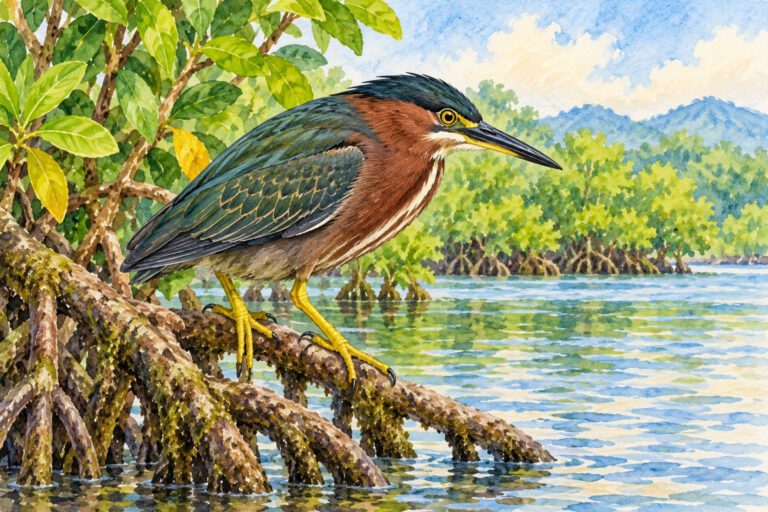
Green Heron

Spanish name
Garcilla verde
Scientific name
Butorides virescens

What Do Pico & Tati Think?

A small hunched shape almost disappears among the roots. Pico and Tati learn that patient looking beats noisy searching.

Identification

Key Features of the Green Heron

  • Small hunched silhouette

  • Greenish back and chestnut neck

  • Straight pointed bill and yellowish legs

Habitat & range

Scan shallow water, quiet mangrove channels and vegetated wetland margins from an established viewpoint. Follow a local guide’s directions around estuaries.

Conservation & care

Give feeding and resting birds space. If a bird stops feeding, repeatedly looks at you or moves away, increase your distance. Keep dogs away from flocks, avoid playback and feeding, and leave nests and natural shoreline debris undisturbed.

View full profile →

Nature Field Guide

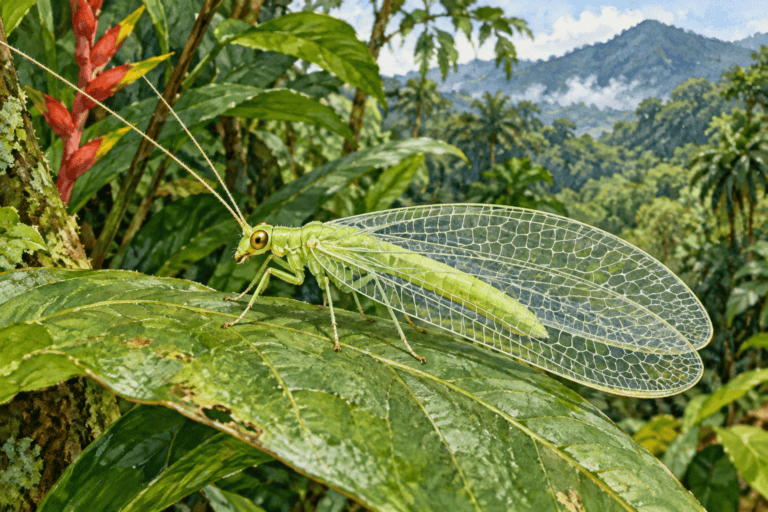
Green Lacewings

Spanish name
Crisopas verdes
Scientific name
Chrysopidae — family card

What Do Pico & Tati Think?

Pico: “Let's look closely at the green lacewings!”

Tati: “We can compare its shape and markings without touching it.”

Identification

Key Features of the Green Lacewings

  • Delicate green body

  • finely veined wings

  • long antennae

Habitat & range

Suitable forest, garden or open habitats; distribution varies with habitat and species.

Conservation & care

Observe without collecting, handling or disturbing insects or nests. Stay on permitted paths. Leave caterpillars and their food plants in place.

View full profile →

Nature Field Guide

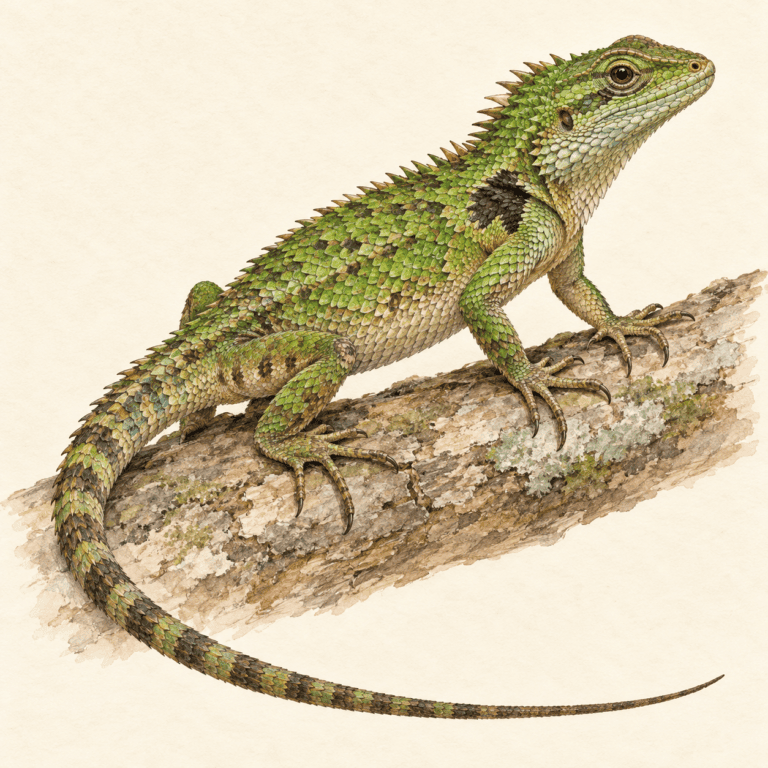
Green Spiny Lizard

Spanish name
Lagartija espinosa verde
Scientific name
Sceloporus malachiticus

What Do Pico & Tati Think?

Pico and Tati invite you to learn about the green spiny lizard. Compare a photo of its rough scales with a smooth-looking anole. Describe texture without touching either animal.

Identification

Key Features of the Green Spiny Lizard

  • Pointed, strongly textured body scales.

  • A dark shoulder marking.

  • Adult males often show green coloration.

Habitat & range

Costa Rican uplands, including suitable forest edges and rocky or open perches.

Conservation & care

Watch wildlife with an adult from a safe path. Do not touch, feed, capture or move reptiles, and keep pets away. Leave eggs, shelters and vegetation undisturbed.

View full profile →

Nature Field Guide

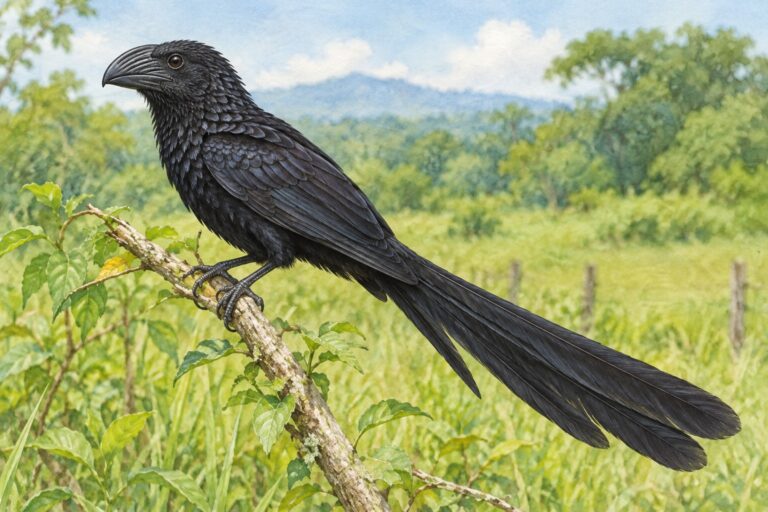
Groove-billed Ani

Spanish name
Garrapatero piquiestriado / Tijo
Scientific name
Crotophaga sulcirostris

What Do Pico & Tati Think?

Pico: “Its beak has tiny lines!”

Tati: “Those grooves are helpful, but we need a clear view.”

Identification

Key Features of the Groove-billed Ani

  • All-black plumage

  • Long loosely held tail

  • Heavy upper bill with grooves

Habitat & range

Open and shrubby country, pasture margins and settled areas across Costa Rica, reaching middle elevations. It is less frequent in much of the southern Pacific, where Smooth-billed Ani predominates.

Conservation & care

Observe quietly from trails or established viewing areas. Give nests, roosts and feeding birds space. Do not handle, chase or lure birds with playback. Keep pets away from wildlife.

Threats & pressures

Protect native vegetation, reduce collision hazards around glass and keep cats away from birds. These are practical prevention priorities, not a claim of a measured decline at a specific Costa Rican site.

View full profile →

Nature Field Guide

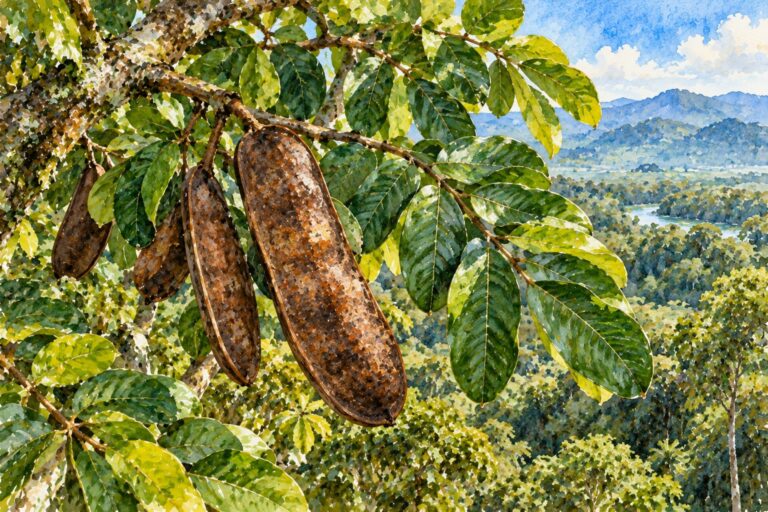
Guapinol

Spanish name
Guapinol
Scientific name
Hymenaea courbaril

What Do Pico & Tati Think?

Pico: “Paired leaflets and hard brown pods identify a forest tree with an important wildlife role.”

Tati: “Let’s notice the leaves, flowers and habitat without disturbing the plant.”

Identification

Key Features of the Guapinol

  • Two leaflets in each compound leaf

  • Thick brown woody pods

  • Large spreading forest-tree form

Habitat & range

Pacific lowlands and western Central Valley; Guanacaste dry forest is one documented setting.

Conservation & care

Explore with an adult on permitted paths. Observe and photograph without picking leaves, flowers or fruits. Do not taste plants or let pets chew them. Avoid climbing trees and disturbing roots, seedlings or visiting wildlife.

Threats & pressures

Protect suitable habitat, mature trees and natural regeneration. Avoid trampling, unauthorized clearing and collection.

View full profile →

Nature Field Guide

Guaria Morada Orchid

Spanish name
Guaria morada
Scientific name
Guarianthe skinneri

What Do Pico & Tati Think?

Pico: “Costa Rica’s national flower carries pink-purple blossoms above fleshy leaves.”

Tati: “Let’s notice the leaves, flowers and habitat without disturbing the plant.”

Identification

Key Features of the Guaria Morada Orchid

  • Pink-purple orchid flowers with a shaped lip

  • Fleshy oblong leaves

  • Thickened stem bases and roots on a support

Habitat & range

Native Central American orchid, also cultivated in Costa Rican homes and gardens. The Greater Metropolitan Area supports both native flora records and a strong garden tradition.

Conservation & care

Do not collect wild orchids, remove roots or climb supporting trees. Observe with an adult from the ground. Any garden plant should come from a documented lawful nursery source.

Threats & pressures

Wild collection and habitat loss are conservation concerns. Leave forest plants in place and support protection of their habitat.

View full profile →

Nature Field Guide

Hanging Lobster Claw

Spanish name
Platanillo colgante
Scientific name
Heliconia rostrata

What Do Pico & Tati Think?

Pico wants to sketch the plant’s shapes. Tati suggests looking for three clues before guessing its name. What would you notice first?

Identification

Key Features of the Hanging Lobster Claw

  • Hanging zigzag inflorescence

  • Red bracts with yellow-green tips

  • Broad banana-like leaves

Habitat & range

Planted tropical gardens.

Conservation & care

Observe from paths and leave leaves, bark, flowers and fruits attached. Do not taste wild plants or offer them to pets. Ask a knowledgeable guide to confirm the species.

View full profile →

Nature Field Guide

Heavy-footed Anole

Spanish name
Anolis de patas robustas
Scientific name
Anolis pachypus

What Do Pico & Tati Think?

Pico: “What can we learn from this reptile’s shape?”

Tati: “Let’s notice its markings and habitat while leaving it plenty of space.”

Identification

Key Features of the Heavy-footed Anole

  • Compact brown mountain anole

  • Stout-looking feet

  • Camouflaged body and long tapering tail

Habitat & range

Middle and upper elevations of the Talamanca mountain system in southern Costa Rica.

Conservation & care

Observe from permitted paths with an adult. Do not touch, chase, catch or feed reptiles. Leave bark, stones, logs and leaf litter in place. Keep pets away and give animals an open escape route.

Threats & pressures

Protect natural shelters and connected habitat. Avoid collection, unnecessary clearing and deliberate killing. Leave wildlife in its habitat and support responsible observation.

View full profile →

Nature Field Guide

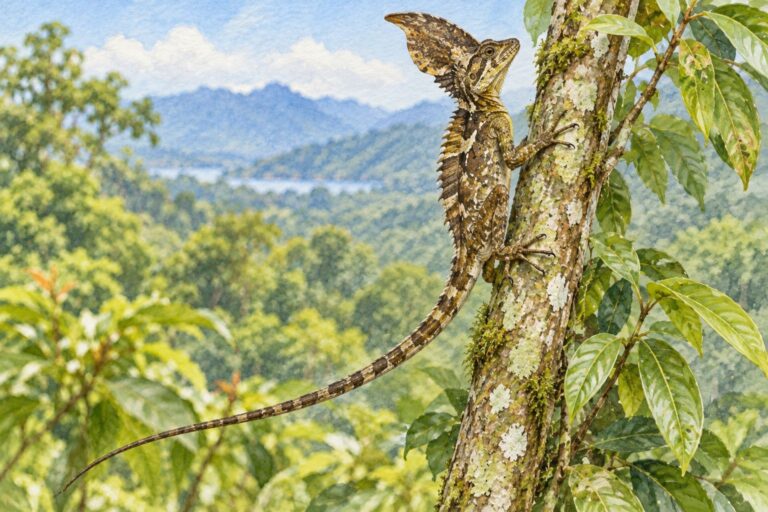
Helmeted Iguana

Spanish name
Iguana de casco / Lagartija de casco
Scientific name
Corytophanes cristatus

What Do Pico & Tati Think?

Pico: “What can we learn from this reptile’s shape?”

Tati: “Let’s notice its markings and habitat while leaving it plenty of space.”

Identification

Key Features of the Helmeted Iguana

  • Tall helmetlike casque

  • Long tail and grasping limbs

  • Mottled bark-colored camouflage

Habitat & range

Humid Caribbean and Pacific forests and foothills, including northern wet forests and the southwest.

Conservation & care

Observe from permitted paths with an adult. Do not touch, chase, catch or feed reptiles. Leave bark, stones, logs and leaf litter in place. Keep pets away and give animals an open escape route.

Threats & pressures

Protect natural shelters and connected habitat. Avoid collection, unnecessary clearing and deliberate killing. Leave wildlife in its habitat and support responsible observation.

View full profile →

Nature Field Guide

High Anole

Spanish name
Anolis de altura
Scientific name
Anolis altae

What Do Pico & Tati Think?

Pico: “What can we learn from this reptile’s shape?”

Tati: “Let’s notice its markings and habitat while leaving it plenty of space.”

Identification

Key Features of the High Anole

  • Small slender brown body

  • Relatively short legs

  • Long tail and subtle camouflage

Habitat & range

Central volcanic highlands, including the Barva, Irazú and northern Alajuela mountain areas.

Conservation & care

Observe from permitted paths with an adult. Do not touch, chase, catch or feed reptiles. Leave bark, stones, logs and leaf litter in place. Keep pets away and give animals an open escape route.

Threats & pressures

Protect natural shelters and connected habitat. Avoid collection, unnecessary clearing and deliberate killing. Leave wildlife in its habitat and support responsible observation.

View full profile →

Nature Field Guide

Hoffmann’s Earth Snake

Spanish name
Culebra de tierra de Hoffmann
Scientific name
Geophis hoffmanni

What Do Pico & Tati Think?

Pico: “What can we learn from this reptile’s shape?”

Tati: “Let’s notice its markings and habitat while leaving it plenty of space.”

Identification

Key Features of the Hoffmann’s Earth Snake

  • Small head and dark slender body

  • Usually plain dark upper surfaces

  • Paler underside; young may have a pale neck mark

Habitat & range

Humid lowland and foothill habitats and central mountain slopes, including the Monteverde area.

Conservation & care

Observe only from a distance with an adult or qualified guide. Never touch, catch, feed, corner or move any snake. Keep children and pets away. Colors, head shape and pupil shape must never be used to decide a snake is safe.

Threats & pressures

Protect natural shelters and connected habitat. Avoid collection, unnecessary clearing and deliberate killing. Leave wildlife in its habitat and support responsible observation.

View full profile →

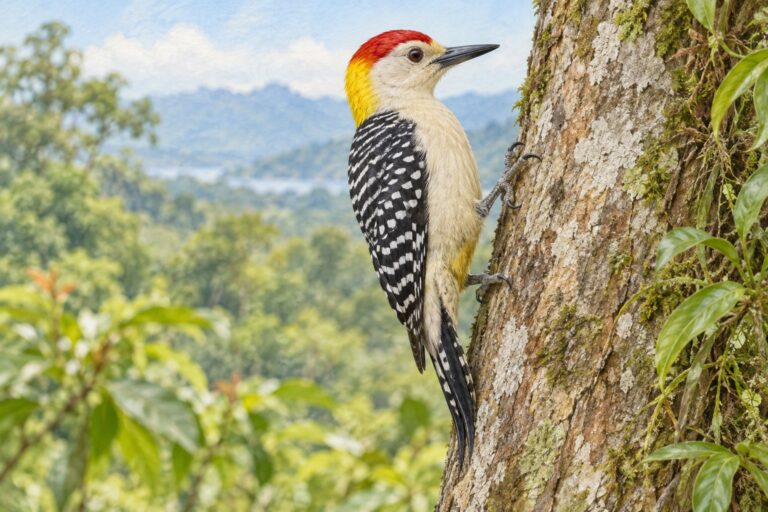
Nature Field Guide

Hoffmann’s Woodpecker

Spanish name
Carpintero de Hoffmann
Scientific name
Melanerpes hoffmannii

What Do Pico & Tati Think?

Pico: “Its back looks like a striped pattern!”

Tati: “Look at the crown too. Males and females differ there.”

Identification

Key Features of the Hoffmann’s Woodpecker

  • Black-and-white barred back

  • Yellow nape

  • Male has a red crown

Habitat & range

Strongest in the northern Pacific and Central Valley, extending south toward Tarcoles and locally into Rio Frio. Occurs along parts of the Reventazon corridor; avoid treating all Caribbean rainforest as typical habitat.

Conservation & care

Observe quietly from trails or established viewing areas. Give nests, roosts and feeding birds space. Do not handle, chase or lure birds with playback. Keep pets away from wildlife.

Threats & pressures

Protect native vegetation, reduce collision hazards around glass and keep cats away from birds. These are practical prevention priorities, not a claim of a measured decline at a specific Costa Rican site.

View full profile →

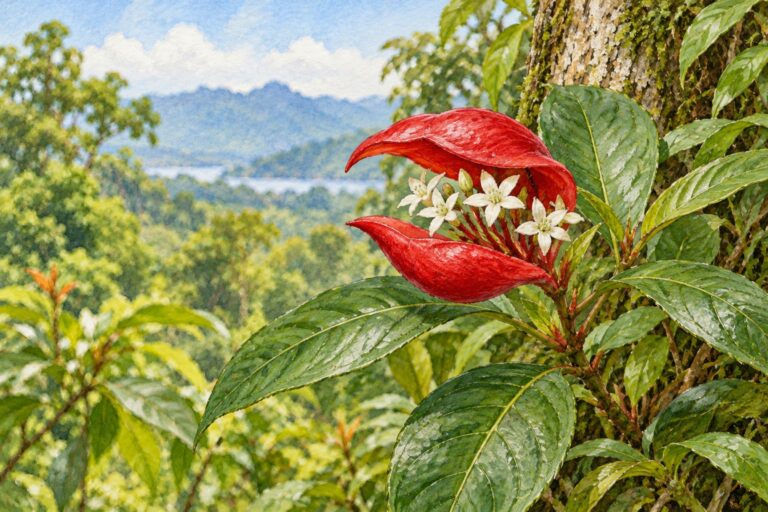
Nature Field Guide

Hot Lips Plant

Spanish name
Labios ardientes / Botón rojo
Scientific name
Palicourea elata

What Do Pico & Tati Think?

Pico: “Two bright red bracts surround tiny pale flowers in the forest understory.”

Tati: “Let’s notice the leaves, flowers and habitat without disturbing the plant.”

Identification

Key Features of the Hot Lips Plant

  • Two conspicuous red floral bracts

  • Small white or creamy flowers

  • Opposite glossy leaves

Habitat & range

Humid understory and forest edges on both slopes, with records from Guanacaste, Sarapiquí, Talamanca, Cartago and Osa.

Conservation & care

Explore with an adult on permitted paths. Observe and photograph without picking leaves, flowers or fruits. Do not taste plants or let pets chew them. Avoid climbing trees and disturbing roots, seedlings or visiting wildlife.

Threats & pressures

Protect suitable habitat, mature trees and natural regeneration. Avoid trampling, unauthorized clearing and collection.

View full profile →

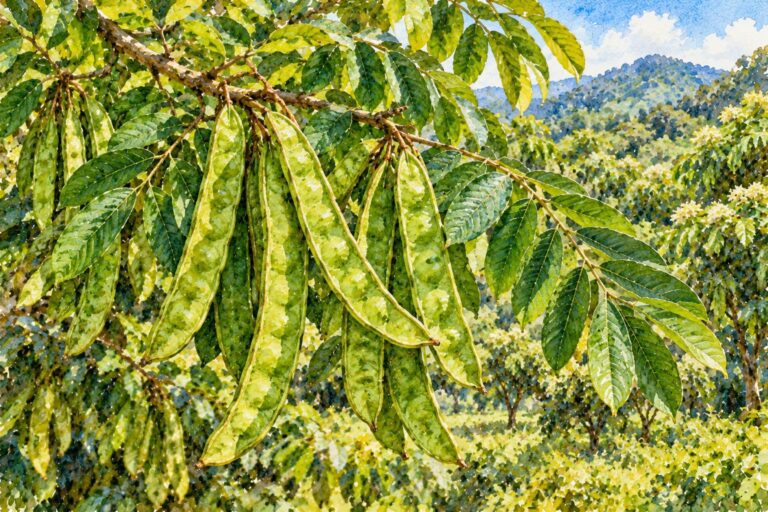
Nature Field Guide

Ice Cream Bean

Spanish name
Guaba
Scientific name
Inga edulis

What Do Pico & Tati Think?

Pico wants to sketch the tree’s silhouette. Tati suggests looking for three clues before guessing its name. What would you notice first?

Identification

Key Features of the Ice Cream Bean

  • Very long ribbed pods

  • Paired leaflets

  • Winged central leaf stalk

Habitat & range

Moist forest margins, farms and planted orchards.

Conservation & care

Observe from paths and leave leaves, bark, flowers and fruits attached. Do not taste wild plants or offer them to pets. Ask a knowledgeable guide to confirm the species.

View full profile →

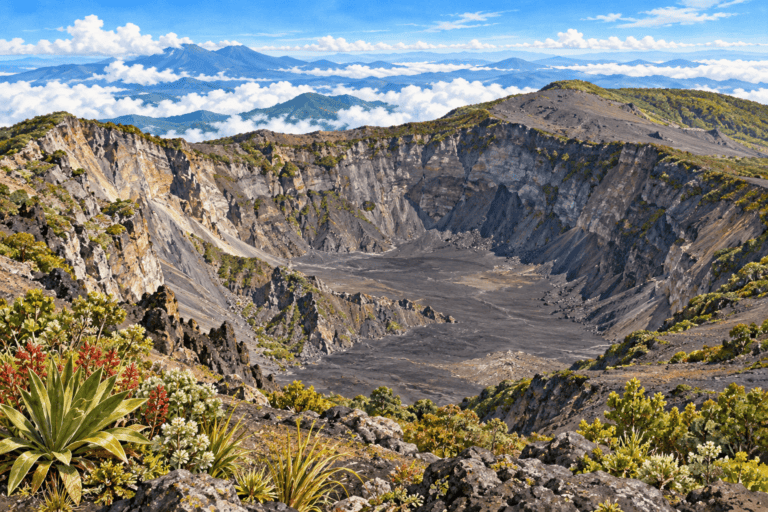
Nature Field Guide

Irazú Volcano

Spanish name
Volcán Irazú
Scientific name

What Do Pico & Tati Think?

Join Pico and Tati to discover Volcán Irazú and learn how volcanoes help shape Costa Rica.

Identification

Key Features of the Irazú Volcano

  • Broad crater depressions.

  • Gray volcanic ground.

  • Low vegetation and mist at high elevation.

Habitat & range

Cartago province, in the Central Volcanic Mountain Range.

Conservation & care

Explore with an adult. Follow staff instructions, authorized trails, barriers and closures. Leave rocks, plants and wildlife in place and carry out litter. Bring suitable layers for the cold summit and remain behind crater barriers.

Plan Your Visit

Irazú Volcano National Park — Craters sector

Get Directions ↗

Getting There

From Cartago, follow the signed road toward Irazú and the Craters sector. Use the visitor parking and marked paths to the crater viewpoints.

Before You Go

Choose Sector Cráteres when reserving; Sector Prusia is a different forest visitor area. Check current admission arrangements with SINAC.
Visit information reviewed October 8, 2026. Confirm current access before travel.

View full profile →

Nature Field Guide

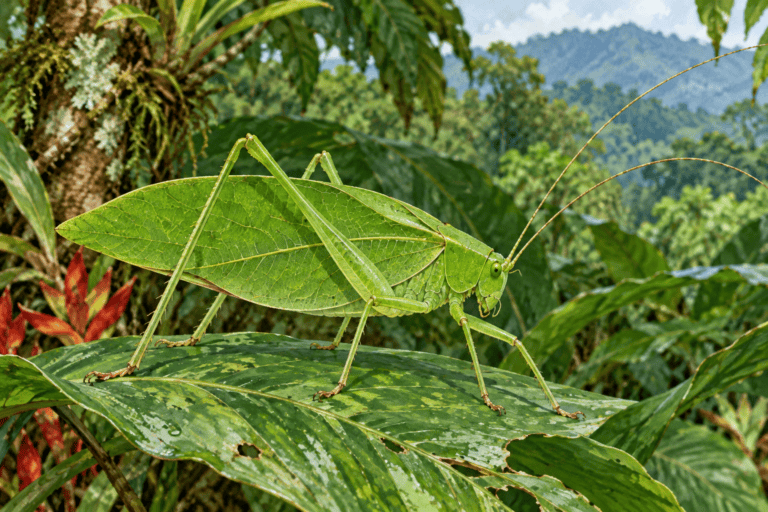
Katydids

Spanish name
Esperanzas
Scientific name
Tettigoniidae — family card

What Do Pico & Tati Think?

Pico: “Let's look closely at the katydids!”

Tati: “We can compare its shape and markings without touching it.”

Identification

Key Features of the Katydids

  • Very long antennae

  • leaf-like wings in many species

  • strong jumping hindlegs

Habitat & range

Suitable forest, garden or open habitats; distribution varies with habitat and species.

Conservation & care

Observe without collecting, handling or disturbing insects or nests. Stay on permitted paths. Leave caterpillars and their food plants in place.

View full profile →

Nature Field Guide

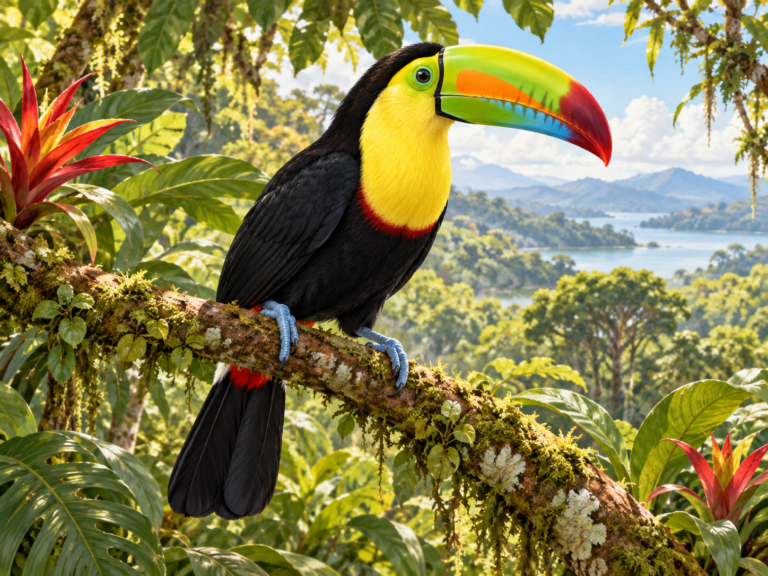
Keel-billed Toucan

Spanish name
Tucán pico arco iris / Pico canoa
Scientific name
Ramphastos sulfuratus

What Do Pico & Tati Think?

Pico: “Its bill has so many colors!”

Tati: “Let’s look at the throat and body too.”

Identification

Key Features of the Keel-billed Toucan

  • Large bill with several bright colors.

  • Yellow throat and dark body.

  • Compare the entire silhouette with other toucans.

Habitat & range

Most frequent in wooded Caribbean lowlands. Also occurs in suitable northern Pacific woodland, Nicoya hills, foothills and parts of the Central Valley; generally less frequent there.

Conservation & care

Stay on authorized trails or viewing routes. Give birds space, keep voices low and leave nests undisturbed. Observe without bait, feeding or recorded calls.

Conservation assessment

Costa Rica’s government wildlife guide reports IUCN Near Threatened and a decreasing trend; the page does not supply the assessment year. Source checked 7 October 2026. This is a global species category, not a count of birds in the tagged towns.

View full profile →

Nature Field Guide

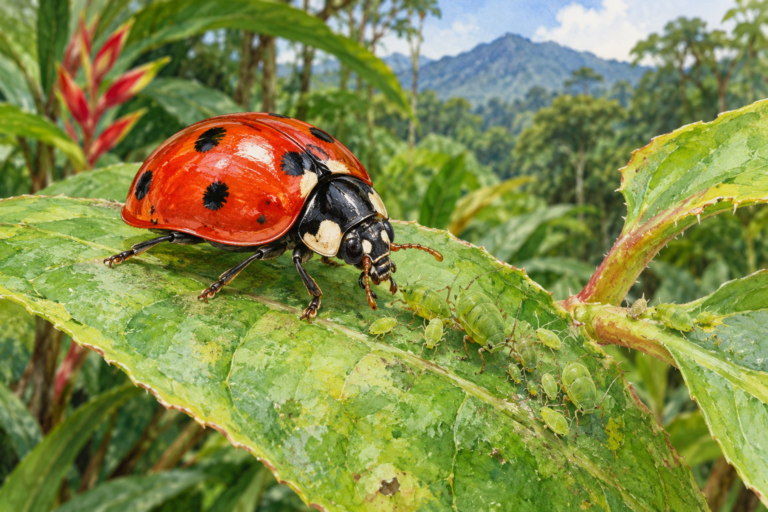
Lady Beetles

Spanish name
Mariquitas
Scientific name
Coccinellidae — family card

What Do Pico & Tati Think?

Pico: “Let's look closely at the lady beetles!”

Tati: “We can compare its shape and markings without touching it.”

Identification

Key Features of the Lady Beetles

  • Rounded beetle body

  • hard wing covers

  • spot patterns vary

Habitat & range

Suitable forest, garden or open habitats; distribution varies with habitat and species.

Conservation & care

Observe without collecting, handling or disturbing insects or nests. Stay on permitted paths. Leave caterpillars and their food plants in place.

View full profile →

Nature Field Guide

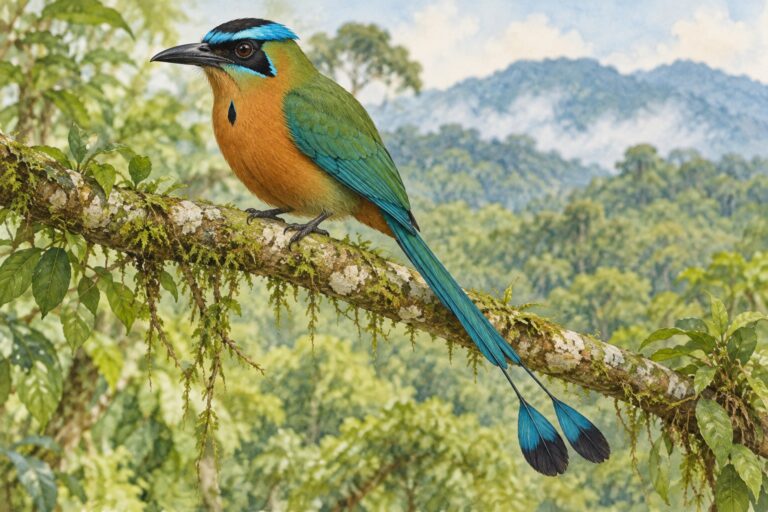
Lesson’s Motmot

Spanish name
Momoto coroniazul
Scientific name
Momotus lessonii

What Do Pico & Tati Think?

Pico: “Its tail has tiny paddles!”

Tati: “They are feather tips. Let’s compare the crown with our other motmot.”

Identification

Key Features of the Lesson’s Motmot

  • Blue crown with dark center

  • Dark eye mask

  • Long central tail feathers with racket tips

Habitat & range

Pacific lowlands and middle elevations, the Central Valley and locally northern areas. In the dry northwest it is associated especially with gallery forest. Most Caribbean lowlands are outside its usual range.

Conservation & care

Observe quietly from trails or established viewing areas. Give nests, roosts and feeding birds space. Do not handle, chase or lure birds with playback. Keep pets away from wildlife.

Threats & pressures

Protect native vegetation, reduce collision hazards around glass and keep cats away from birds. These are practical prevention priorities, not a claim of a measured decline at a specific Costa Rican site.

View full profile →

Nature Field Guide

Linnaeus’s Sipo

Spanish name
Bejuquilla verde de bosque
Scientific name
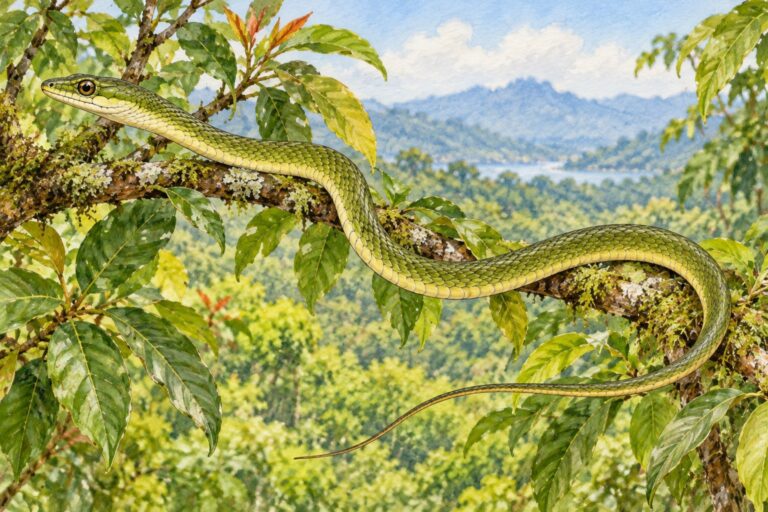
Chironius exoletus

What Do Pico & Tati Think?

Pico: “What can we learn from this reptile’s shape?”

Tati: “Let’s notice its markings and habitat while leaving it plenty of space.”

Identification

Key Features of the Linnaeus’s Sipo

  • Long green-to-olive body

  • Large eyes and elongated head

  • Very long tapering tail

Habitat & range

Humid Caribbean and Pacific forests and adjoining foothills in Costa Rica.

Conservation & care

Observe only from a distance with an adult or qualified guide. Never touch, catch, feed, corner or move any snake. Keep children and pets away. Colors, head shape and pupil shape must never be used to decide a snake is safe.

Threats & pressures

Protect natural shelters and connected habitat. Avoid collection, unnecessary clearing and deliberate killing. Leave wildlife in its habitat and support responsible observation.

View full profile →

Nature Field Guide

Little Blue Heron

Spanish name
Garceta azul
Scientific name
Egretta caerulea

What Do Pico & Tati Think?

Pico expects every Little Blue Heron to be blue. Tati discovers that young birds tell a different color story.

Identification

Key Features of the Little Blue Heron

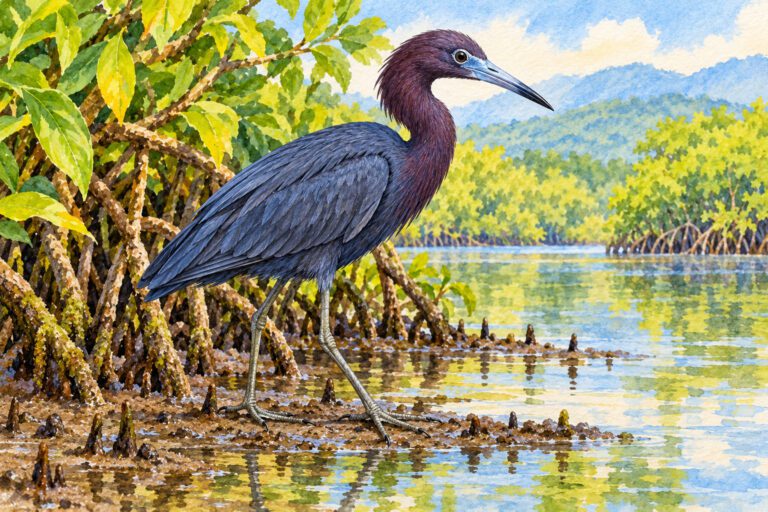
  • Adult slate-blue body and purplish neck

  • Two-toned bill with a dark tip

  • Juveniles are white, unlike the illustrated adult

Habitat & range

Scan shallow water, quiet mangrove channels and vegetated wetland margins from an established viewpoint. Follow a local guide’s directions around estuaries.

Conservation & care

Give feeding and resting birds space. If a bird stops feeding, repeatedly looks at you or moves away, increase your distance. Keep dogs away from flocks, avoid playback and feeding, and leave nests and natural shoreline debris undisturbed.

View full profile →

Nature Field Guide

Long-tailed Manakin

Spanish name
Saltarín toledo
Scientific name
Chiroxiphia linearis

What Do Pico & Tati Think?

Pico: “Two birds are moving together on the branches!”

Tati: “We can watch the rhythm without interrupting.”

Identification

Key Features of the Long-tailed Manakin

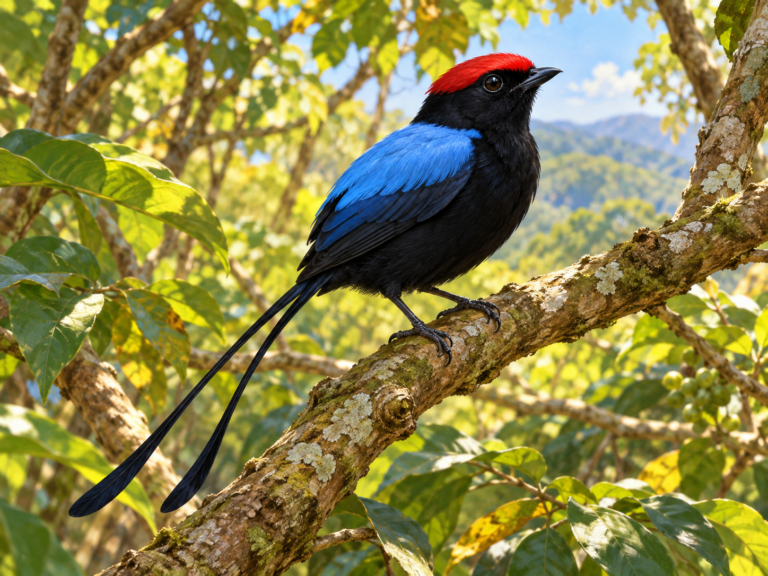
  • Adult male: black body, blue back and red crown.

  • Long central tail feathers in males.

  • Female: less conspicuous greenish plumage.

Habitat & range

Gallery forest, mature secondary woodland and mangrove edges in the northern Pacific, extending toward Carara, the Central Valley and suitable Dota slopes. Shaded woodland is essential.

Conservation & care

Stay on authorized trails or viewing routes. Give birds space, keep voices low and leave nests undisturbed. Observe without bait, feeding or recorded calls.

View full profile →

Nature Field Guide

Long-tailed Weasel

Spanish name
Comadreja de cola larga
Scientific name
Neogale frenata

What Do Pico & Tati Think?

A long-tailed weasel has a narrow flexible body that helps it move through cover and investigate small spaces.

Identification

Key Features of the Long-tailed Weasel

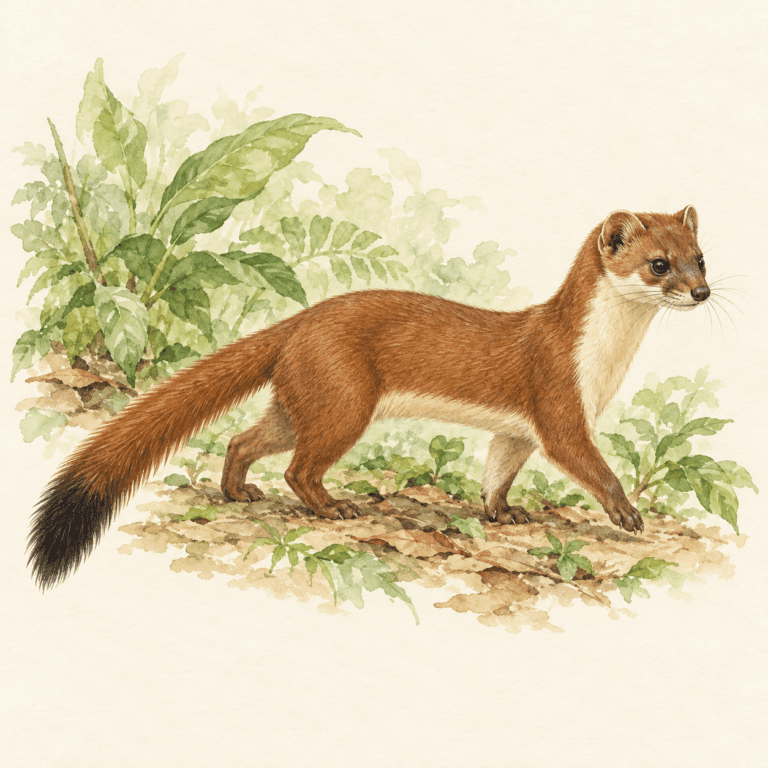
  • Very slender body with short legs and a small head.

  • Brown upper coat and pale underside.

  • Long tail with a black tip.

Habitat & range

Wooded edges, scrub and other suitable partly open landscapes.

Conservation & care

Explore with an adult or local guide. Observe quietly from a distance, stay on established trails and leave shelter undisturbed. Do not feed, touch, capture or corner wildlife. Keep pets away.

View full profile →

Nature Field Guide

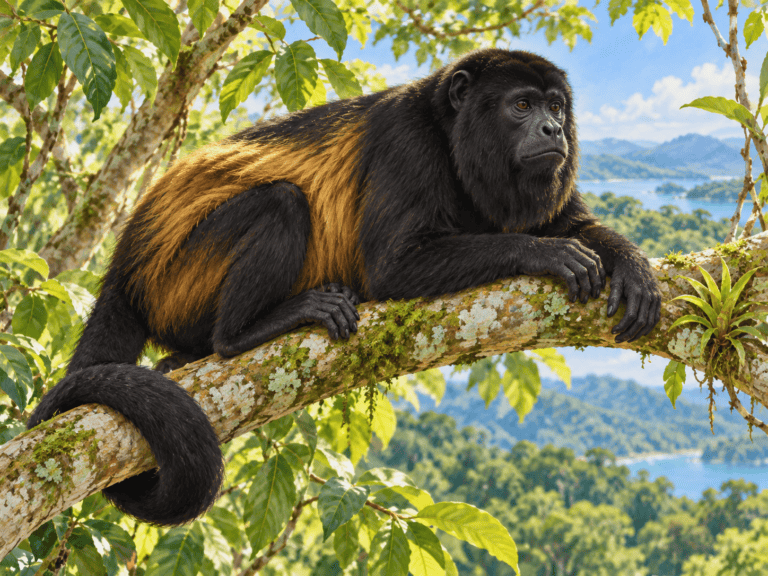
Mantled Howler Monkey

Spanish name
Mono congo / Mono aullador
Scientific name
Alouatta palliata

What Do Pico & Tati Think?

Pico: “We heard the monkeys before we could see them!”

Tati: “Let’s stay quiet and see what they’re doing in the branches.”

Identification

Key Features of the Mantled Howler Monkey

  • A mostly dark coat with a lighter mantle along the sides.

  • A long, grasping tail used while moving through trees.

  • Deep calls that may carry beyond the visible group.

Habitat & range

Tropical forest canopy and wooded corridors. Around the estuary, observe canopy habitat from a guided route rather than following animals into the forest.

Seasonal Calendar

Breeding

General species biology; local schedule unverified

Year-round

Mantled howlers breed throughout the year. Species-level biology, not a schedule of births in a particular troop.

Event source ↗

Conservation & care

Never offer food or try to touch a monkey. Avoid playback and shouting, and give groups space to move through the canopy.

View full profile →

Nature Field Guide

Many-scaled Anole

Spanish name
Anolis de muchas escamas
Scientific name
Anolis polylepis

What Do Pico & Tati Think?

Pico: “What helps this reptile fit into its habitat?”

Tati: “Let’s look at its shape, colors and surroundings while giving it plenty of space.”

Identification

Key Features of the Many-scaled Anole

  • Slender brown body

  • Long hind legs and a fine tail

  • Orange male throat fan when naturally displayed

Habitat & range

Humid Central and South Pacific forests and foothills, including San Vito. Osa populations have also been treated as Anolis osa in some references.

Conservation & care

Observe with an adult from permitted paths. Do not touch, chase, catch or feed reptiles. Leave bark, logs, stones and leaf litter in place. Keep pets away and allow an open escape route.

Threats & pressures

Protect connected habitat and natural shelters. Avoid collection, unnecessary clearing and deliberate killing. Leave wildlife in place and support responsible observation.

View full profile →

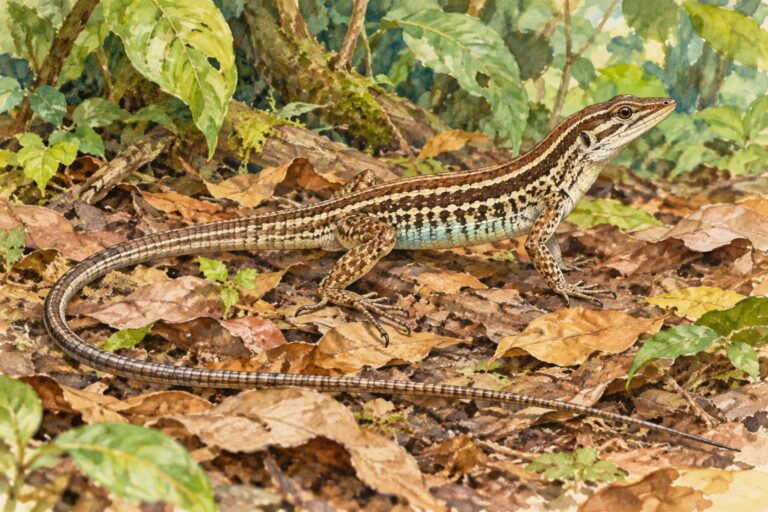
Nature Field Guide

Middle American Ameiva

Spanish name
Ameiva centroamericana
Scientific name
Holcosus festivus

What Do Pico & Tati Think?

Pico: “What clues help us recognize this reptile?”

Tati: “Let’s notice its shape, markings and habitat from a respectful distance.”

Identification

Key Features of the Middle American Ameiva

  • Long tail and pointed snout

  • Strong limbs suited to ground movement

  • Contrasting stripes and patterned flanks

Habitat & range

Humid lowlands and forest-edge openings on both slopes, including the southwestern Pacific.

Conservation & care

Observe with an adult from permitted paths. Do not catch, chase, touch or feed reptiles. Leave bark, logs, rocks and leaf litter in place. Keep pets away and allow animals an open escape route.

Threats & pressures

Protect habitat connections and natural shelters. Avoid road mortality, collection and deliberate killing. Leave reptiles in their habitat rather than keeping or relocating them.

View full profile →

Nature Field Guide

Mimic False Coral Snake

Spanish name
Falsa coral imitadora
Scientific name
Erythrolamprus mimus

What Do Pico & Tati Think?

Pico: “What helps this reptile fit into its habitat?”

Tati: “Let’s look at its shape, colors and surroundings while giving it plenty of space.”

Identification

Key Features of the Mimic False Coral Snake

  • Contrasting red, dark and pale bands

  • Slender forest-snake body

  • Coral-snake resemblance

Habitat & range

Humid Caribbean and southwestern Pacific forests and foothills, including San Vito.

Conservation & care

Observe from a distance with an adult or qualified guide. Do not touch, catch, corner, feed or move any snake. Keep children and pets away. Colors, head shape and pupil shape must never be used to decide a snake is safe.

Threats & pressures

Protect connected habitat and natural shelters. Avoid collection, unnecessary clearing and deliberate killing. Leave wildlife in place and support responsible observation.

View full profile →

Nature Field Guide

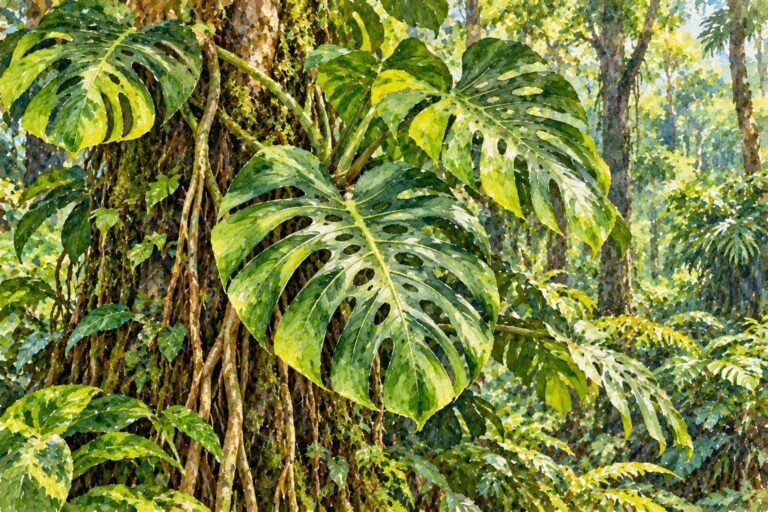
Monstera

Spanish name
Costilla de Adán
Scientific name
Monstera deliciosa

What Do Pico & Tati Think?

Pico: “Large split leaves with natural holes make this cultivated climber easy to notice.”

Tati: “Let’s notice the leaves, flowers and habitat without disturbing the plant.”

Identification

Key Features of the Monstera

  • Large heart-shaped mature leaves

  • Natural holes and deep splits

  • Climbing stem with aerial roots

Habitat & range

Cultivated gardens and collections, including plants documented at the University of Costa Rica campus in San José.

Conservation & care

Observe without handling. Do not chew or taste leaves, stems or unripe fruit. Keep children and pets from mouthing plant parts. Ask the garden owner before approaching a planted specimen.

Threats & pressures

Protect suitable habitat, mature trees and natural regeneration. Avoid trampling, unauthorized clearing and collection.

View full profile →

Nature Field Guide

Montezuma Oropendola

Spanish name
Oropéndola de Moctezuma
Scientific name
Psarocolius montezuma

What Do Pico & Tati Think?

Pico: “Those nests hang like long baskets!”

Tati: “We can admire their shape from a distance and leave the colony quiet.”

Identification

Key Features of the Montezuma Oropendola

  • Black head and chestnut body

  • Yellow outer tail feathers

  • Large patterned bill and bare cheek area

Habitat & range

Most frequent in Caribbean lowlands, with distribution through the Reventazon basin and parts of the Central Valley. Local in the northwest, especially near mountain bases; not uniformly common across Guanacaste.

Conservation & care

Observe quietly from trails or established viewing areas. Give nests, roosts and feeding birds space. Do not handle, chase or lure birds with playback. Keep pets away from wildlife.

Threats & pressures

Protect native vegetation, reduce collision hazards around glass and keep cats away from birds. These are practical prevention priorities, not a claim of a measured decline at a specific Costa Rican site.

View full profile →

Nature Field Guide

Mountain Alligator Lizard

Spanish name
Dragón de altura
Scientific name
Abronia monticola

What Do Pico & Tati Think?

Pico: “What clues help us recognize this reptile?”

Tati: “Let’s notice its shape, markings and habitat from a respectful distance.”

Identification

Key Features of the Mountain Alligator Lizard

  • Elongated body with short legs

  • Distinct rows of armored-looking scales

  • Brown-gray highland camouflage

Habitat & range

Cool highlands, including the Irazú region and the Talamanca mountain range.

Conservation & care

Observe with an adult from permitted paths. Do not catch, chase, touch or feed reptiles. Leave bark, logs, rocks and leaf litter in place. Keep pets away and allow animals an open escape route.

Threats & pressures

Protect habitat connections and natural shelters. Avoid road mortality, collection and deliberate killing. Leave reptiles in their habitat rather than keeping or relocating them.

View full profile →

Nature Field Guide

Mountain Immortelle

Spanish name
Poró gigante
Scientific name
Erythrina poeppigiana

What Do Pico & Tati Think?

Pico wants to sketch the tree’s silhouette. Tati suggests looking for three clues before guessing its name. What would you notice first?

Identification

Key Features of the Mountain Immortelle

  • Orange flower clusters

  • Three leaflets per leaf

  • Large shade tree in farm landscapes

Habitat & range

Planted shade areas, farms and disturbed moist landscapes.

Conservation & care

Observe from paths and leave leaves, bark, flowers and fruits attached. Do not taste wild plants or offer them to pets. Ask a knowledgeable guide to confirm the species.

View full profile →

Nature Field Guide

Mussurana

Spanish name
Zopilota / Musurana
Scientific name
Clelia clelia

What Do Pico & Tati Think?

Pico: “What clues help us recognize this reptile?”

Tati: “Let’s notice its shape, markings and habitat from a respectful distance.”

Identification

Key Features of the Mussurana

  • Adult dark gray-to-black body

  • Paler underside

  • Juveniles may be red with a dark head and pale collar

Habitat & range

Lowland and lower foothill woodland on both slopes, including humid and secondary forest.

Conservation & care

Observe only from a distance with an adult or qualified guide. Do not touch, catch, corner or attempt to move any snake. Step back and tell your adult; keep children and pets away. Do not use colors, head shape or pupil shape to decide a snake is safe.

Threats & pressures

Protect habitat connections and natural shelters. Avoid road mortality, collection and deliberate killing. Leave reptiles in their habitat rather than keeping or relocating them.

View full profile →

Nature Field Guide

Nauyaca Waterfalls

Spanish name
Cataratas Nauyaca
Scientific name

What Do Pico & Tati Think?

Join Pico and Tati to discover Nauyaca Waterfalls and learn how water shapes Costa Rica’s landscapes.

Identification

Key Features of the Nauyaca Waterfalls

  • A tall upper waterfall.

  • A lower fall spreading over steps of rock.

  • Forest around a broad canyon and pools.

Habitat & range

Barú area near Platanillo and Dominical. Look for the waterfall’s river, rock formations and surrounding vegetation from approved viewing areas.

Conservation & care

Visit with an adult and follow the site’s current access rules and staff guidance. Stay on authorized trails and behind barriers. Wet rocks, steep drops, strong currents and sudden rises in water can be dangerous. Do not jump from waterfalls or climb wet rock faces. Enter water only where explicitly permitted and conditions are approved by site staff. Leave plants, rocks and wildlife undisturbed and carry out all litter.

Plan Your Visit

Nauyaca Waterfall Nature Park — San Salvador office

Get Directions ↗

Getting There

For this entrance, approach via Route 243 to Tinamastes and follow the operator’s signs toward San Salvador and its office. Check in for the hiking or transport option.

Before You Go

Nauyaca has two separately operated entrances. This map selects Nauyaca Waterfall Nature Park, not the other operator. Match your ticket to this office and confirm the recommended vehicle route.
Visit information reviewed October 8, 2026. Confirm current access before travel.

View full profile →

Nature Field Guide

Neotropic Cormorant

Spanish name
Cormorán neotropical
Scientific name
Nannopterum brasilianum

What Do Pico & Tati Think?

Pico watches a dark swimmer vanish below the surface. Tati looks for its hooked bill when it returns.

Identification

Key Features of the Neotropic Cormorant

  • Dark body and long tail

  • Slender neck

  • Bill with a hooked tip

  • Often dives from the water surface

Habitat & range

Look across sheltered wetlands, lagoons and river margins from permitted trails or a responsible guided boat trip.

Conservation & care

Give feeding and resting birds space. If a bird stops feeding, repeatedly looks at you or moves away, increase your distance. Keep dogs away from flocks, avoid playback and feeding, and leave nests and natural shoreline debris undisturbed.

View full profile →

Nature Field Guide

Neotropical Whipsnake

Spanish name
Sabanera / Corredora de sabana
Scientific name
Masticophis mentovarius

What Do Pico & Tati Think?

Pico: “What can we learn from this reptile’s shape?”

Tati: “Let’s notice its markings and habitat while leaving it plenty of space.”

Identification

Key Features of the Neotropical Whipsnake

  • Long slender body

  • Very long whiplike tail

  • Pale chin below a brown-to-olive head

Habitat & range

Northwestern and western Pacific-slope dry and open wooded habitats, including Guanacaste, western lowlands and suitable Central Valley areas.

Conservation & care

Observe only from a distance with an adult or qualified guide. Never touch, catch, feed, corner or move any snake. Keep children and pets away. Colors, head shape and pupil shape must never be used to decide a snake is safe.

Threats & pressures

Protect natural shelters and connected habitat. Avoid collection, unnecessary clearing and deliberate killing. Leave wildlife in its habitat and support responsible observation.

View full profile →

Nature Field Guide

Northern Forest Racer

Spanish name
Corredora de bosque
Scientific name
Dendrophidion percarinatum

What Do Pico & Tati Think?

Pico: “What can we learn from this reptile’s shape?”

Tati: “Let’s notice its markings and habitat while leaving it plenty of space.”

Identification

Key Features of the Northern Forest Racer

  • Slender body and long fine tail

  • Relatively large eyes

  • Narrow crossmarks along the body

Habitat & range

Humid lowland and foothill forests, including southwestern Costa Rica, Monteverde and Caribbean-slope localities.

Conservation & care

Observe only from a distance with an adult or qualified guide. Never touch, catch, feed, corner or move any snake. Keep children and pets away. Colors, head shape and pupil shape must never be used to decide a snake is safe.

Threats & pressures

Protect natural shelters and connected habitat. Avoid collection, unnecessary clearing and deliberate killing. Leave wildlife in its habitat and support responsible observation.

View full profile →

Nature Field Guide

O’Shaughnessy’s Galliwasp

Spanish name
Lagartija de hojarasca
Scientific name
Mesoamericus bilobatus

What Do Pico & Tati Think?

Pico: “What helps this reptile fit into its habitat?”

Tati: “Let’s look at its shape, colors and surroundings while giving it plenty of space.”

Identification

Key Features of the O’Shaughnessy’s Galliwasp

  • Elongated smooth-looking body

  • Four short legs

  • Brown coloration and a long tail

Habitat & range

Humid forests of the Caribbean slope and southwestern Pacific, including a documented population at Tirimbina.

Conservation & care

Observe with an adult from permitted paths. Do not touch, chase, catch or feed reptiles. Leave bark, logs, stones and leaf litter in place. Keep pets away and allow an open escape route.

Threats & pressures

Protect connected habitat and natural shelters. Avoid collection, unnecessary clearing and deliberate killing. Leave wildlife in place and support responsible observation.

View full profile →

Nature Field Guide

Ocellated Anadia

Spanish name
Anadia ocelada
Scientific name
Anadia ocellata

What Do Pico & Tati Think?

Pico: “What can we learn from this reptile’s shape?”

Tati: “Let’s notice its markings and habitat while leaving it plenty of space.”

Identification

Key Features of the Ocellated Anadia

  • Elongated body and short limbs

  • Long tapering tail

  • Small eyelike flank markings

Habitat & range

Forested foothill and upland habitats in Costa Rica, including Monteverde, the Aguacate mountains and humid mountain slopes.

Conservation & care

Observe from permitted paths with an adult. Do not touch, chase, catch or feed reptiles. Leave bark, stones, logs and leaf litter in place. Keep pets away and give animals an open escape route.

Threats & pressures

Protect natural shelters and connected habitat. Avoid collection, unnecessary clearing and deliberate killing. Leave wildlife in its habitat and support responsible observation.

View full profile →

Nature Field Guide

Orange-fronted Parakeet

Spanish name
Perico frentinaranja / Catano
Scientific name
Eupsittula canicularis

What Do Pico & Tati Think?

Pico: “That little flock turns so quickly!”

Tati: “Let’s look for orange above the bill when one lands.”

Identification

Key Features of the Orange-fronted Parakeet

  • Orange forehead above the bill.

  • Pale yellow eye ring and green body.

  • Long pointed tail; agile flock flight.

Habitat & range

Northern Pacific lowlands, Tilaran and Nicoya hills. Occurs locally in the western Central Valley. Regional tags do not imply abundance in every town.

Seasonal Calendar

Year-round presence

Santa Rosa, ACG

Year-round

Source describes presence in nearly any season; La Cruz is the gateway, not the observation site.

Event source ↗

Fledgling family activity

Santa Rosa / lowland ACG

May, Jun

Source describes begging fledglings in May and June; not a fixed date for every nest.

Event source ↗

Conservation & care

Stay on authorized trails or viewing routes. Give birds space, keep voices low and leave nests undisturbed. Observe without bait, feeding or recorded calls.

Threats & pressures

ACG documents capture of nestlings for the pet trade outside the protected area. Habitat and safe nesting sites also matter.

View full profile →

Nature Field Guide

Orchid Bees

Spanish name
Abejas de las orquídeas
Scientific name
Euglossini — group card

What Do Pico & Tati Think?

Pico: “Let's look closely at the orchid bees!”

Tati: “We can compare its shape and markings without touching it.”

Identification

Key Features of the Orchid Bees

  • Often metallic colors

  • two pairs of wings

  • males may visit scented flowers

Habitat & range

Suitable forest, garden or open habitats; distribution varies with habitat and species.

Conservation & care

Observe without collecting, handling or disturbing insects or nests. Stay on permitted paths. Leave caterpillars and their food plants in place.

View full profile →

Nature Field Guide

Osprey

Spanish name
Águila pescadora
Scientific name
Pandion haliaetus

What Do Pico & Tati Think?

Pico sees a fish hunter high above the water. Tati follows its shape with binoculars while keeping both feet on the trail.

Identification

Key Features of the Osprey

  • White head with broad dark eye stripe

  • Brown back and pale underparts

  • Hooked bill and powerful feet

  • Long angled wings in flight

Habitat & range

Scan exposed branches and the sky above fish-bearing rivers, estuaries and coastal water. Watch from a safe shore viewpoint.

Conservation & care

Give feeding and resting birds space. If a bird stops feeding, repeatedly looks at you or moves away, increase your distance. Keep dogs away from flocks, avoid playback and feeding, and leave nests and natural shoreline debris undisturbed.

View full profile →

Nature Field Guide

Parrot’s Beak Heliconia

Spanish name
Platanillo
Scientific name
Heliconia psittacorum

What Do Pico & Tati Think?

Pico wants to sketch the plant’s shapes. Tati suggests looking for three clues before guessing its name. What would you notice first?

Identification

Key Features of the Parrot’s Beak Heliconia

  • Upright slender flower clusters

  • Pointed orange to red bracts

  • Narrow lance-shaped leaves

Habitat & range

Planted tropical gardens and garden borders.

Conservation & care

Observe from paths and leave leaves, bark, flowers and fruits attached. Do not taste wild plants or offer them to pets. Ask a knowledgeable guide to confirm the species.

View full profile →

Nature Field Guide

Peach Palm / Pejibaye

Spanish name
Pejibaye
Scientific name
Bactris gasipaes

What Do Pico & Tati Think?

Pico: “These palm fruits are orange!”

Tati: “Let's learn why pejibaye is served cooked.”

Identification

Key Features of the Peach Palm / Pejibaye

  • Palm with featherlike fronds

  • Dense clusters of small colored fruits

  • Many forms have spines on the trunk

  • Cooked fruit has a firm, starchy interior

Habitat & range

Warm Caribbean-side settings and cultivated farms around Tucurrique, Cartago. The site's Central Valley tag represents the Cartago cultivation example, not a claim that all valley climates suit this palm.

Conservation & care

Avoid trunk spines, climbing and hanging fruit clusters. Taste only properly prepared fruit offered by a responsible adult or host.

Visit farms only with permission and follow the host's instructions. Stay clear of machinery, chemical applications and working areas. Do not pick or taste plants without a responsible adult and the host's approval.

View full profile →

Nature Field Guide

Picado’s Pitviper

Spanish name
Mano de piedra costarricense
Scientific name
Atropoides picadoi

What Do Pico & Tati Think?

Pico: “What helps this reptile fit into its habitat?”

Tati: “Let’s look at its shape, colors and surroundings while giving it plenty of space.”

Identification

Key Features of the Picado’s Pitviper

  • Very robust body

  • Broad head and rough-looking keeled scales

  • Dark angular blotches on a lighter background

Habitat & range

Wet Caribbean-slope forests, including northern foothills and the Central Volcanic and Talamanca mountain systems.

Conservation & care

VENOMOUS. Observe only from a distance with a qualified guide. Keep children and pets well away. Never approach, touch, catch or provoke this snake, and do not reach into nearby vegetation.

Threats & pressures

Protect connected habitat and natural shelters. Avoid collection, unnecessary clearing and deliberate killing. Leave wildlife in place and support responsible observation.

View full profile →

Nature Field Guide

Poás Volcano

Spanish name
Volcán Poás
Scientific name

What Do Pico & Tati Think?

Join Pico and Tati to discover Volcán Poás and learn how volcanoes help shape Costa Rica.

Identification

Key Features of the Poás Volcano

  • A very wide main crater.

  • Exposed volcanic rock and crater walls.

  • Cloud forest around the volcanic landscape.

Habitat & range

Alajuela province, in the Central Volcanic Mountain Range.

Conservation & care

Explore with an adult. Follow staff instructions, authorized trails, barriers and closures. Leave rocks, plants and wildlife in place and carry out litter. Follow park instructions about volcanic gases, protective equipment and time at viewing areas.

Plan Your Visit

Poás Volcano National Park — visitor entrance

Get Directions ↗

Getting There

Travel through Poasito and follow signs to the national-park visitor entrance. Continue to the viewpoint only along the authorized visitor route.

Before You Go

Book through the SINAC reservation system. Volcanic activity can change access; confirm current opening and follow ranger instructions.
Visit information reviewed October 8, 2026. Confirm current access before travel.

View full profile →

Nature Field Guide

Praying Mantises

Spanish name
Mantis
Scientific name
Mantodea — order card

What Do Pico & Tati Think?

Pico: “Let's look closely at the praying mantises!”

Tati: “We can compare its shape and markings without touching it.”

Identification

Key Features of the Praying Mantises

  • Triangular head

  • grasping front legs

  • alert upright posture

Habitat & range

Suitable forest, garden or open habitats; distribution varies with habitat and species.

Conservation & care

Observe without collecting, handling or disturbing insects or nests. Stay on permitted paths. Leave caterpillars and their food plants in place.

View full profile →

Nature Field Guide

Puffing Snake

Spanish name
Pajarera / Culebra pajarera
Scientific name
Phrynonax poecilonotus

What Do Pico & Tati Think?

Pico: “What can we learn from this reptile’s shape?”

Tati: “Let’s notice its markings and habitat while leaving it plenty of space.”

Identification

Key Features of the Puffing Snake

  • Large elongated forest snake

  • Variable colors and darker markings

  • Distinct head and long climbing body

Habitat & range

Forests and wooded edges on both Costa Rican slopes, including lowlands and foothills; documented in the Monteverde area.

Conservation & care

Observe only from a distance with an adult or qualified guide. Never touch, catch, feed, corner or move any snake. Keep children and pets away. Colors, head shape and pupil shape must never be used to decide a snake is safe.

Threats & pressures

Protect natural shelters and connected habitat. Avoid collection, unnecessary clearing and deliberate killing. Leave wildlife in its habitat and support responsible observation.

View full profile →

Nature Field Guide

Puma

Spanish name
Puma / León de montaña
Scientific name
Puma concolor

What Do Pico & Tati Think?

Pico: “This cat has no rosettes!”

Tati: “Its shape helps us tell it apart from a jaguar.”

Identification

Key Features of the Puma

  • Uniform tawny adult coat, without jaguar rosettes.

  • Long tail with a darker tip.

  • Relatively small head and long legs.

Habitat & range

Reserva Sierra Zapote, Las Juntas district, Abangares, and suitable forests elsewhere in Costa Rica.

Conservation & care

Keep a respectful distance and leave an open route for the animal. Stay on authorized paths, secure food and rubbish, and observe without feeding, touching, baiting or chasing.

Threats & pressures

Forest fragmentation and loss of prey are habitat-level pressures relevant to wide-ranging predators.

View full profile →

Nature Field Guide

Rainforest Hognosed Pitviper

Spanish name
Tamagá
Scientific name
Porthidium nasutum

What Do Pico & Tati Think?

Pico: “What helps this reptile fit into its habitat?”

Tati: “Let’s look at its shape, colors and surroundings while giving it plenty of space.”

Identification

Key Features of the Rainforest Hognosed Pitviper

  • Pointed upturned snout

  • Stout body and short tail

  • Dark blotches and a narrow back line

Habitat & range

Caribbean lowlands and foothills and southwestern Pacific wet forests, mainly below the higher mountain zones.

Conservation & care

VENOMOUS. Observe only from a distance with a qualified guide. Keep children and pets well away. Never approach, touch, catch or provoke this snake, and do not reach into nearby vegetation.

Threats & pressures

Protect connected habitat and natural shelters. Avoid collection, unnecessary clearing and deliberate killing. Leave wildlife in place and support responsible observation.

View full profile →

Nature Field Guide

Red Ginger

Spanish name
Jengibre rojo
Scientific name
Alpinia purpurata

What Do Pico & Tati Think?

Pico wants to sketch the plant’s shapes. Tati suggests looking for three clues before guessing its name. What would you notice first?

Identification

Key Features of the Red Ginger

  • Upright red or pink bract spike

  • Small pale true flowers

  • Long simple leaves on leafy stems

Habitat & range

Moist planted gardens.

Conservation & care

Observe from paths and leave leaves, bark, flowers and fruits attached. Do not taste wild plants or offer them to pets. Ask a knowledgeable guide to confirm the species.

View full profile →

Nature Field Guide

Red-legged Honeycreeper

Spanish name
Mielero patirrojo
Scientific name
Cyanerpes cyaneus

What Do Pico & Tati Think?

Pico: “Why are its feet so red?”

Tati: “Those red legs help us identify it, even when the body colors differ.”

Identification

Key Features of the Red-legged Honeycreeper

  • Bright red legs

  • Slender decurved bill

  • Breeding male blue with turquoise crown

Habitat & range

Wooded lowlands, forest edges, gardens and plantations. Common in northern Pacific areas and parts of Rio Frio; elsewhere on the Caribbean slope it is more local. Also occurs in the southern Pacific.

Conservation & care

Observe quietly from trails or established viewing areas. Give nests, roosts and feeding birds space. Do not handle, chase or lure birds with playback. Keep pets away from wildlife.

Threats & pressures

Protect native vegetation, reduce collision hazards around glass and keep cats away from birds. These are practical prevention priorities, not a claim of a measured decline at a specific Costa Rican site.

View full profile →

Nature Field Guide

Redback Coffee Snake

Spanish name
Dormilona común / Culebra de cafetal
Scientific name
Ninia sebae

What Do Pico & Tati Think?

Pico: “What clues help us recognize this reptile?”

Tati: “Let’s notice its shape, markings and habitat from a respectful distance.”

Identification

Key Features of the Redback Coffee Snake

  • Red or brick-colored upper body

  • Dark head

  • Pale neck collar and small eyes

Habitat & range

Lowland and foothill ground cover in suitable wooded and disturbed habitats on both slopes.

Conservation & care

Observe only from a distance with an adult or qualified guide. Do not touch, catch, corner or attempt to move any snake. Step back and tell your adult; keep children and pets away. Do not use colors, head shape or pupil shape to decide a snake is safe.

Threats & pressures

Protect habitat connections and natural shelters. Avoid road mortality, collection and deliberate killing. Leave reptiles in their habitat rather than keeping or relocating them.

View full profile →

Nature Field Guide

Resplendent Quetzal

Spanish name
Quetzal
Scientific name
Pharomachrus mocinno

What Do Pico & Tati Think?

Pico: “Can you find green feathers among the green leaves?”

Tati: “Let’s watch the fruiting trees quietly.”

Identification

Key Features of the Resplendent Quetzal

  • Shimmering green upperparts and a red belly.

  • Adult males have very long upper-tail feathers.

  • Look in forest trees, especially where fruit is available.

Habitat & range

Forested mountains from the Tilaran range south through the Central and Talamanca ranges, principally cloud forest at suitable elevations. Lower-elevation seasonal movements need site-specific treatment.

Conservation & care

Stay on authorized trails or viewing routes. Give birds space, keep voices low and leave nests undisturbed. Observe without bait, feeding or recorded calls.

Threats & pressures

Forest loss and fragmentation can remove nesting cavities and interrupt access to seasonal feeding habitat.

Conservation assessment

American Bird Conservancy reports Near Threatened and a decreasing population trend. Source checked 7 October 2026. This is a global species category, not a count of birds in the tagged towns.

View full profile →

Nature Field Guide

Rhombic Cat-eyed Snake

Spanish name
Culebra ojo de gato / Escombrera
Scientific name
Leptodeira rhombifera

What Do Pico & Tati Think?

Pico: “What clues help us recognize this reptile?”

Tati: “Let’s notice its shape, markings and habitat from a respectful distance.”

Identification

Key Features of the Rhombic Cat-eyed Snake

  • Large eyes

  • Dark rhombic or saddle-shaped back blotches

  • Slender body and long tail

Habitat & range

Lowland and foothill habitats, with published Costa Rican observations in Guanacaste and the Pacific landscape.

Conservation & care

Observe only from a distance with an adult or qualified guide. Do not touch, catch, corner or attempt to move any snake. Step back and tell your adult; keep children and pets away. Do not use colors, head shape or pupil shape to decide a snake is safe.

Threats & pressures

Protect habitat connections and natural shelters. Avoid road mortality, collection and deliberate killing. Leave reptiles in their habitat rather than keeping or relocating them.

View full profile →

Nature Field Guide

Ringed Snail-eating Snake

Spanish name
Caracolera anillada
Scientific name
Sibon annulatus

What Do Pico & Tati Think?

Pico: “What clues help us recognize this reptile?”

Tati: “Let’s notice its shape, markings and habitat from a respectful distance.”

Identification

Key Features of the Ringed Snail-eating Snake

  • Slender body with contrasting rings

  • Large eyes

  • Branch-climbing posture

Habitat & range

Humid Caribbean-slope forest and foothills, with records around Cartago and northern mountain forests.

Conservation & care

Observe only from a distance with an adult or qualified guide. Do not touch, catch, corner or attempt to move any snake. Step back and tell your adult; keep children and pets away. Do not use colors, head shape or pupil shape to decide a snake is safe.

Threats & pressures

Protect habitat connections and natural shelters. Avoid road mortality, collection and deliberate killing. Leave reptiles in their habitat rather than keeping or relocating them.

View full profile →

Nature Field Guide

Roadside Hawk

Spanish name
Gavilán chapulinero
Scientific name
Rupornis magnirostris

What Do Pico & Tati Think?

Pico: “I can see stripes across its belly!”

Tati: “Those bars and its yellow eye help us check the identification.”

Identification

Key Features of the Roadside Hawk

  • Yellow eye

  • Rufous-and-white barred belly

  • Broad dark tail bands

Habitat & range

Lowland woodland edges, second growth and open country with trees on both slopes. More frequent in northern Pacific lowlands; local in the Central Valley and other areas.

Conservation & care

Observe quietly from trails or established viewing areas. Give nests, roosts and feeding birds space. Do not handle, chase or lure birds with playback. Keep pets away from wildlife.

Threats & pressures

Protect native vegetation, reduce collision hazards around glass and keep cats away from birds. These are practical prevention priorities, not a claim of a measured decline at a specific Costa Rican site.

View full profile →

Nature Field Guide

Roble de Sabana

Spanish name
Roble de sabana
Scientific name
Tabebuia rosea

What Do Pico & Tati Think?

Pico: “A native tree whose pink trumpet flowers brighten forest edges and open landscapes.”

Tati: “Let’s notice the leaves, flowers and habitat without disturbing the plant.”

Identification

Key Features of the Roble de Sabana

  • Pink or pale pink trumpet flowers

  • Five leaflets spreading from one point

  • Long narrow seed capsules

Habitat & range

Lowland forest and edges on both slopes; records include Guanacaste, the Central Pacific, Osa and the Caribbean lowlands.

Conservation & care

Explore with an adult on permitted paths. Observe and photograph without picking leaves, flowers or fruits. Do not taste plants or let pets chew them. Avoid climbing trees and disturbing roots, seedlings or visiting wildlife.

Threats & pressures

Protect suitable habitat, mature trees and natural regeneration. Avoid trampling, unauthorized clearing and collection.

View full profile →

Nature Field Guide

Rufous-tailed Hummingbird

Spanish name
Colibrí rabirrufo
Scientific name
Amazilia tzacatl

What Do Pico & Tati Think?

Pico: “That hummingbird has a rusty tail!”

Tati: “Let’s check its bill and belly too.”

Identification

Key Features of the Rufous-tailed Hummingbird

  • Rusty rufous tail

  • Green head and chest

  • Reddish bill with dark tip

Habitat & range

Widespread on both slopes from sea level locally to about 1850 m. Flowering gardens, secondary growth and river corridors are useful habitat; occurrence is more local in the dry northwest.

Conservation & care

Observe quietly from trails or established viewing areas. Give nests, roosts and feeding birds space. Do not handle, chase or lure birds with playback. Keep pets away from wildlife.

Threats & pressures

Protect native vegetation, reduce collision hazards around glass and keep cats away from birds. These are practical prevention priorities, not a claim of a measured decline at a specific Costa Rican site.

View full profile →

learning adventuresLet the Story Spark a New Adventure.

Keep exploring with Pico and Tati through activities and discoveries inspired by this story. Ask questions. Try something new. Find little ways to care for God’s creation.

My Tico Explorer Experience

Save nature, towns, discoveries and learning adventures for your next experience.

Your list stays in this browser on this device.