

Nature Field Guide
Monstera
- Spanish name
- Costilla de Adán
- Scientific name
- Monstera deliciosa
What Do Pico & Tati Think?
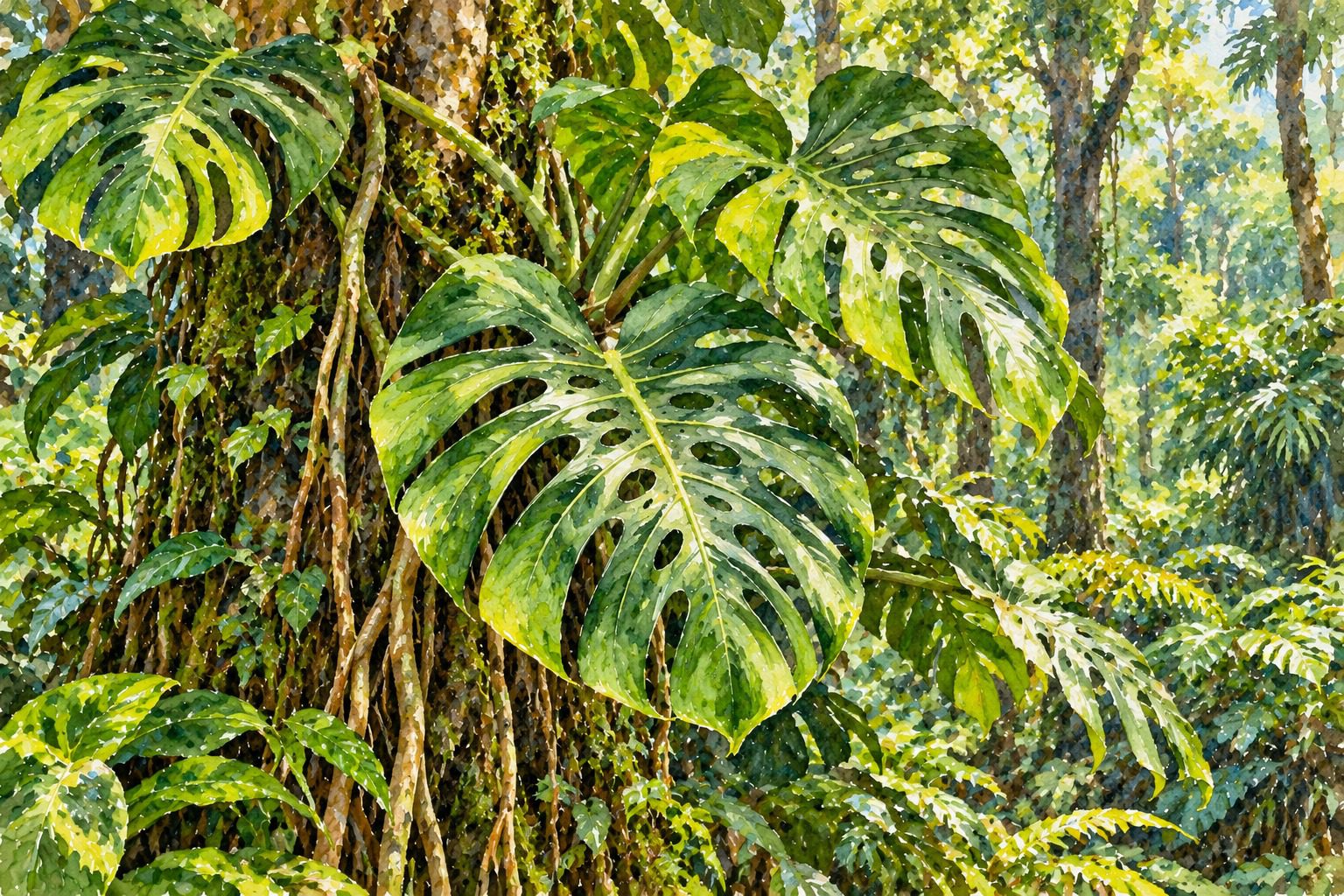
Pico: “Large split leaves with natural holes make this cultivated climber easy to notice.”
Tati: “Let’s notice the leaves, flowers and habitat without disturbing the plant.”
Species overview
About the Monstera
Mature Monstera deliciosa leaves can have both deep edge splits and holes within the blade. Younger leaves may be much simpler. Aerial roots help the plant climb and reach a support.
Current references distinguish this cultivated species from wild Costa Rican plants formerly placed under the same name, including Monstera tacanaensis. This card describes the ornamental Monstera deliciosa, not every wild split-leaf climber. Observe garden plants with permission and leave all parts untouched.
Identification
Key Features of the Monstera
Large heart-shaped mature leaves
Natural holes and deep splits
Climbing stem with aerial roots
Habitat & range
Cultivated gardens and collections, including plants documented at the University of Costa Rica campus in San José.
Local observations
Introduced cultivated ornamental under the current narrow species concept. Local presence and abundance depend on suitable habitat and growing conditions.
When to observe
Leaves and growth form can be observed whenever the plant is accessible. Flowering and fruiting vary with location, weather and the individual plant; ask a local guide about current conditions.
Conservation & care
Observe without handling. Do not chew or taste leaves, stems or unripe fruit. Keep children and pets from mouthing plant parts. Ask the garden owner before approaching a planted specimen.
Threats & pressures
Protect suitable habitat, mature trees and natural regeneration. Avoid trampling, unauthorized clearing and collection.
Observation activity
Compare a young leaf and a mature leaf in photographs. Record which holes and splits appear with growth.