

Nature Field Guide
American Snail-eater
- Spanish name
- Caracolera articulada
- Scientific name
- Dipsas articulata
What Do Pico & Tati Think?
Pico: “What helps this reptile fit into its habitat?”
Tati: “Let’s look at its shape, colors and surroundings while giving it plenty of space.”
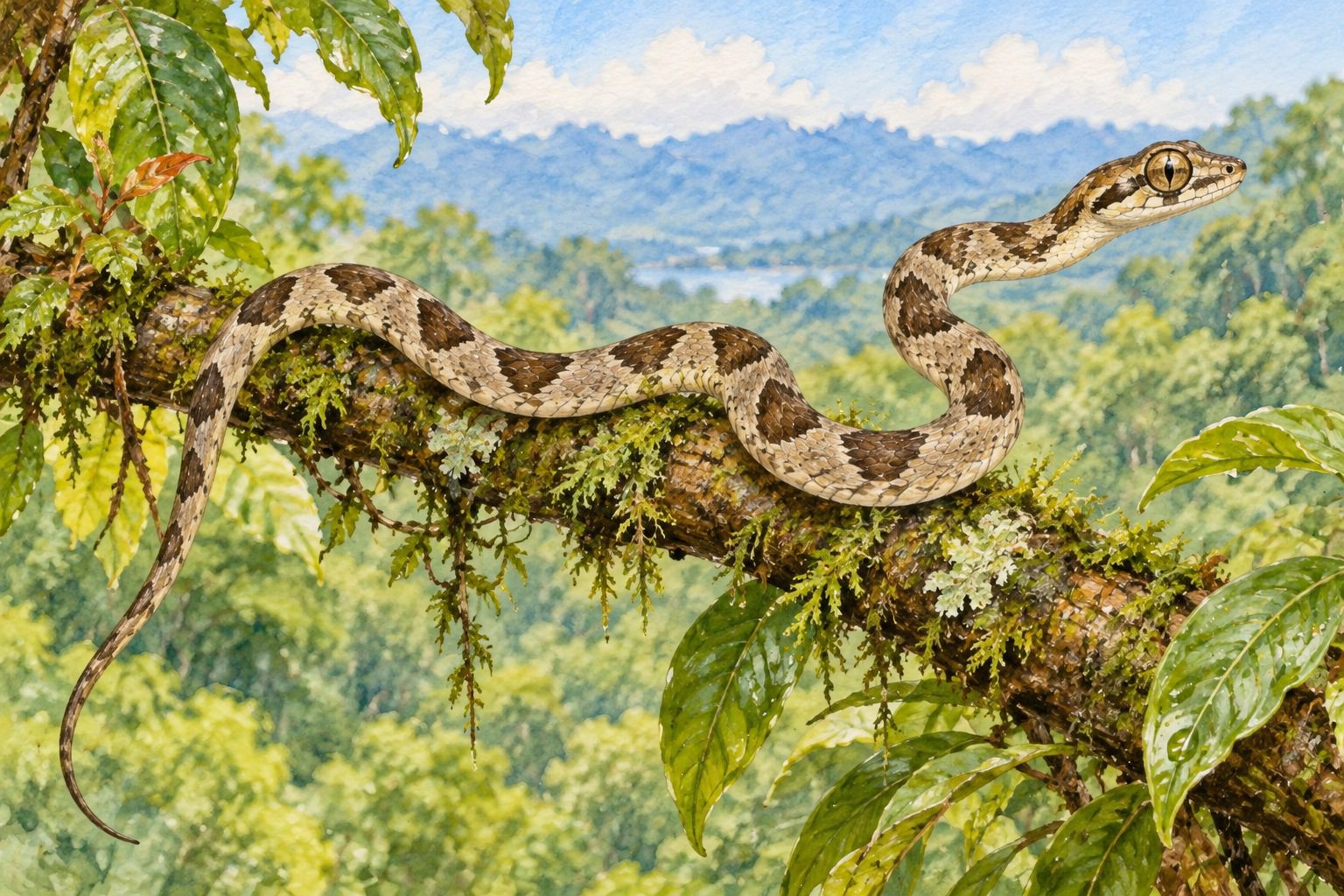
Species overview
About the American Snail-eater
This snail-eating snake has a slender body, a narrow neck and a head that looks relatively large. Dark blotches contrast with a lighter background. Its proportions suit careful movement through low vegetation.
Snail-eating snakes show that different snakes can use very different foods and hunting places. They belong to the same forest community as the snails and slugs they eat. Watch the plant from a distance instead of lifting the animal from its perch, and do not offer food to wild snakes.
Identification
Key Features of the American Snail-eater
Slender body and narrow neck
Relatively large head and eyes
Dark blotches on a lighter background
Habitat & range
Humid forest and foothill vegetation on the Caribbean slope and in southwestern Costa Rica.
Local observations
Native species recorded in Costa Rica. Sightings depend on suitable habitat and locality.
When to observe
Observe on a suitable guided outing. Activity varies with weather, season and locality; do not disturb a resting or hidden animal.
Conservation & care
Observe from a distance with an adult or qualified guide. Do not touch, catch, corner, feed or move any snake. Keep children and pets away. Colors, head shape and pupil shape must never be used to decide a snake is safe.
Threats & pressures
Protect connected habitat and natural shelters. Avoid collection, unnecessary clearing and deliberate killing. Leave wildlife in place and support responsible observation.
Observation activity
Draw a simple food chain linking a plant, a snail and a snail-eating snake.
Explore by location
Caribbean · Central Pacific · Northern Plains · South Pacific · Alajuela · Heredia · Limón · Puntarenas · San José