

Nature Field Guide
Middle American Ameiva
- Spanish name
- Ameiva centroamericana
- Scientific name
- Holcosus festivus
What Do Pico & Tati Think?
Pico: “What clues help us recognize this reptile?”
Tati: “Let’s notice its shape, markings and habitat from a respectful distance.”
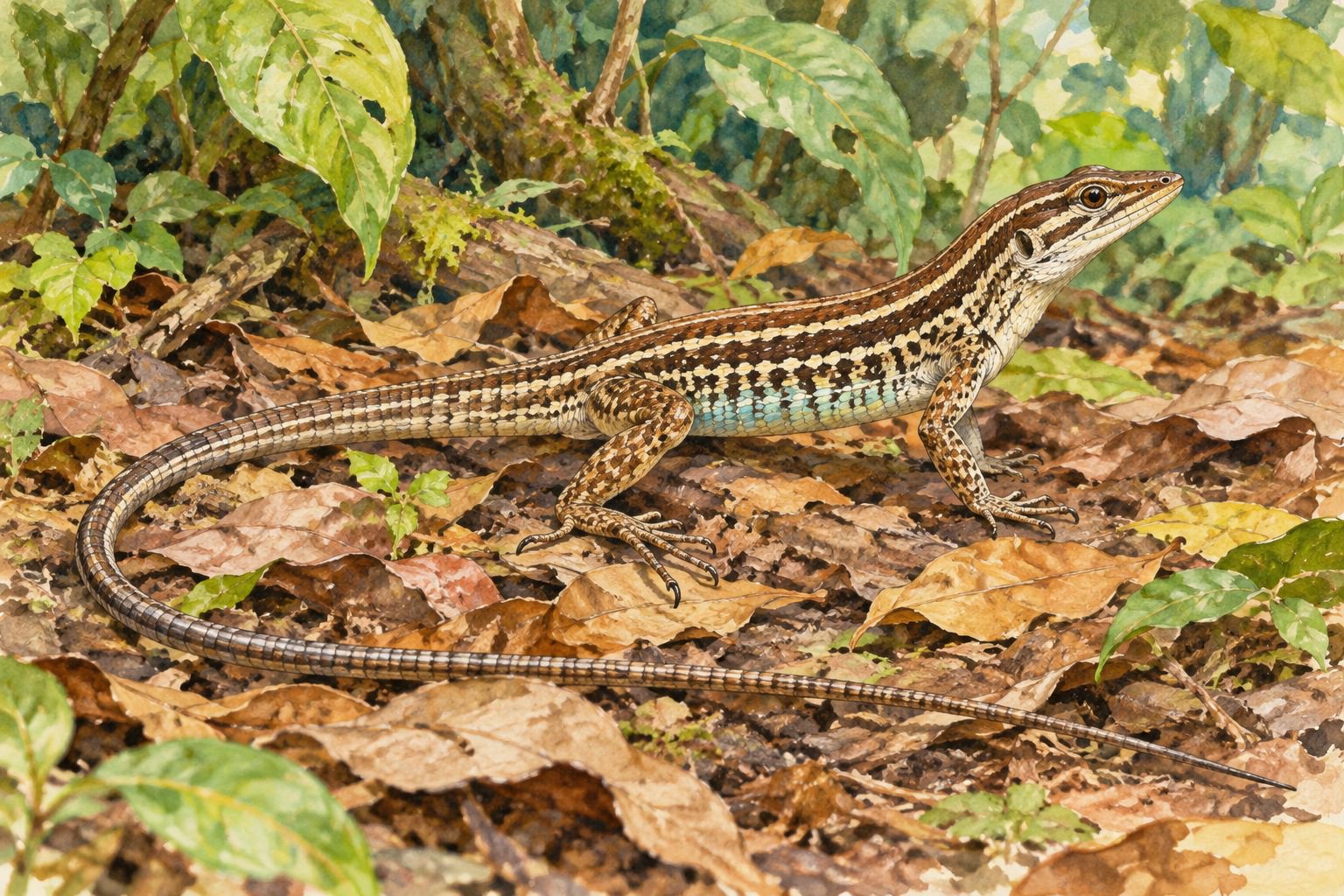
Species overview
About the Middle American Ameiva
Ameivas are active ground lizards with long tails, pointed heads and strong legs. Holcosus festivus can show a combination of brown, pale stripes and patterned flanks; appearance changes with age and between populations.
It is easy to confuse related ameivas, especially in a quick glimpse. Study the body pattern together with habitat and locality. Let a passing lizard continue its search through the leaf litter rather than blocking its route for a photograph.
Identification
Key Features of the Middle American Ameiva
Long tail and pointed snout
Strong limbs suited to ground movement
Contrasting stripes and patterned flanks
Habitat & range
Humid lowlands and forest-edge openings on both slopes, including the southwestern Pacific.
Local observations
Native reptile recorded in Costa Rica. Presence varies with suitable habitat and locality.
When to observe
Visibility varies with weather, habitat and the animal’s activity. Observe on an appropriate guided outing; never disturb a hiding animal to obtain a sighting.
Conservation & care
Observe with an adult from permitted paths. Do not catch, chase, touch or feed reptiles. Leave bark, logs, rocks and leaf litter in place. Keep pets away and allow animals an open escape route.
Threats & pressures
Protect habitat connections and natural shelters. Avoid road mortality, collection and deliberate killing. Leave reptiles in their habitat rather than keeping or relocating them.
Observation activity
Compare an ameiva’s legs and body shape with a skink’s. Describe their different outlines.
Explore by location
Caribbean · Central Pacific · Northern Plains · South Pacific · Alajuela · Heredia · Limón · Puntarenas · San José