

Nature Field Guide
Rufous-tailed Hummingbird
- Spanish name
- Colibrí rabirrufo
- Scientific name
- Amazilia tzacatl
What Do Pico & Tati Think?
Pico: “That hummingbird has a rusty tail!”
Tati: “Let’s check its bill and belly too.”
Species overview
About the Rufous-tailed Hummingbird
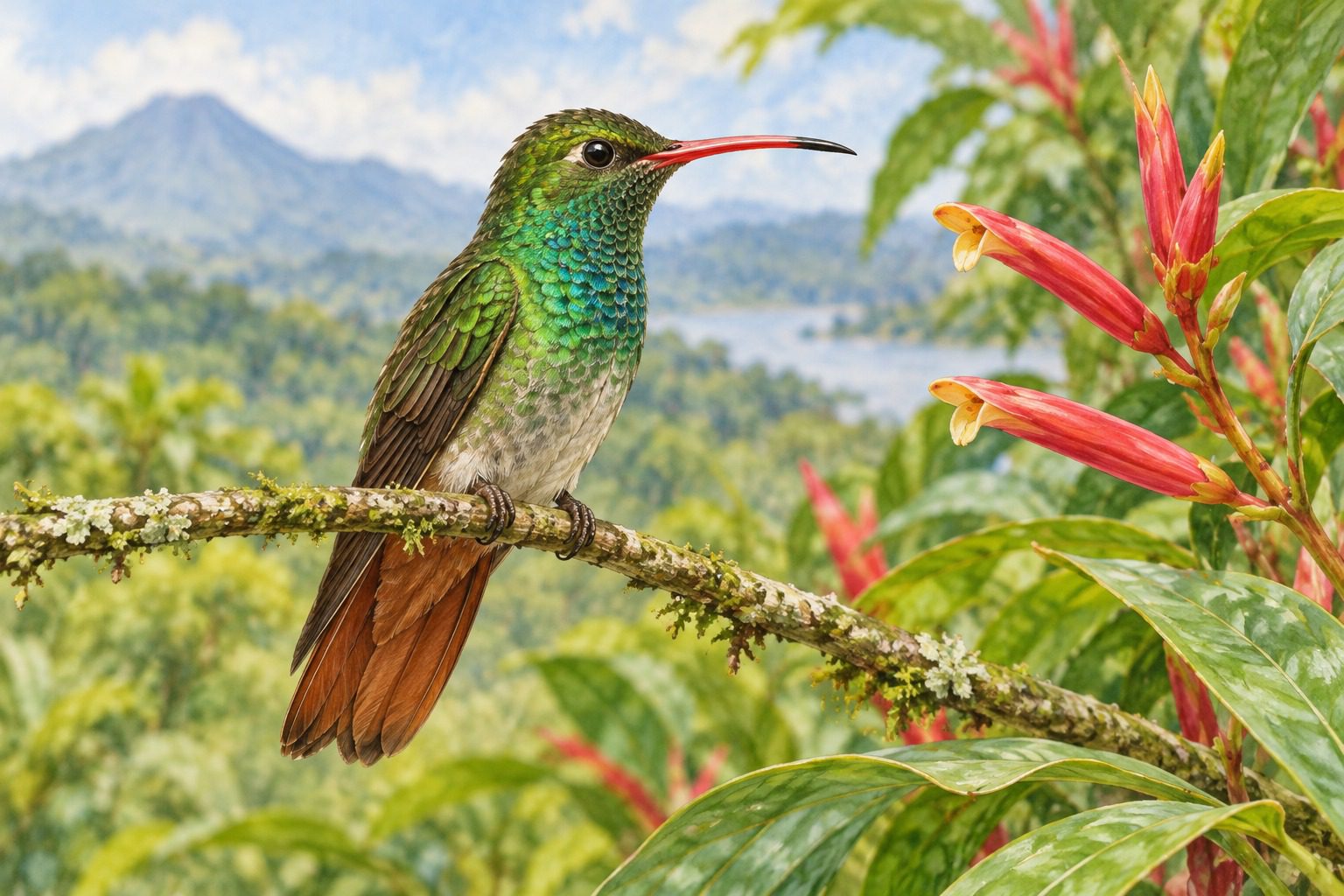
The rufous-tailed hummingbird has a green head and chest, a grayish lower belly and a rich rusty tail. Its mostly reddish bill has a darker tip.
It uses flowers in woodland edges, second growth and gardens. Watch both the tail and underparts when comparing similar hummingbirds. Light can change how strongly the green shines, and a brief flash of color is not always enough to name a species.
Identification
Key Features of the Rufous-tailed Hummingbird
Rusty rufous tail
Green head and chest
Reddish bill with dark tip
Habitat & range
Widespread on both slopes from sea level locally to about 1850 m. Flowering gardens, secondary growth and river corridors are useful habitat; occurrence is more local in the dry northwest.
Local observations
Costa Rica: resident.
When to observe
A resident bird; suitable habitat matters throughout the year. Quiet morning observation is a useful starting point, with activity varying by weather and location.
Conservation & care
Observe quietly from trails or established viewing areas. Give nests, roosts and feeding birds space. Do not handle, chase or lure birds with playback. Keep pets away from wildlife.
Threats & pressures
Protect native vegetation, reduce collision hazards around glass and keep cats away from birds. These are practical prevention priorities, not a claim of a measured decline at a specific Costa Rican site.
Observation activity
Watch a flowering plant without approaching it. Record hovering, feeding and perching.
Explore by location
Caribbean · Central Pacific · Central Valley · Guanacaste · Northern Plains · Puntarenas & the Gulf Islands · South Pacific · Outdoor Adventures · Wildlife & Animals