

Nature Field Guide
Mountain Alligator Lizard
- Spanish name
- Dragón de altura
- Scientific name
- Abronia monticola
What Do Pico & Tati Think?
Pico: “What clues help us recognize this reptile?”
Tati: “Let’s notice its shape, markings and habitat from a respectful distance.”
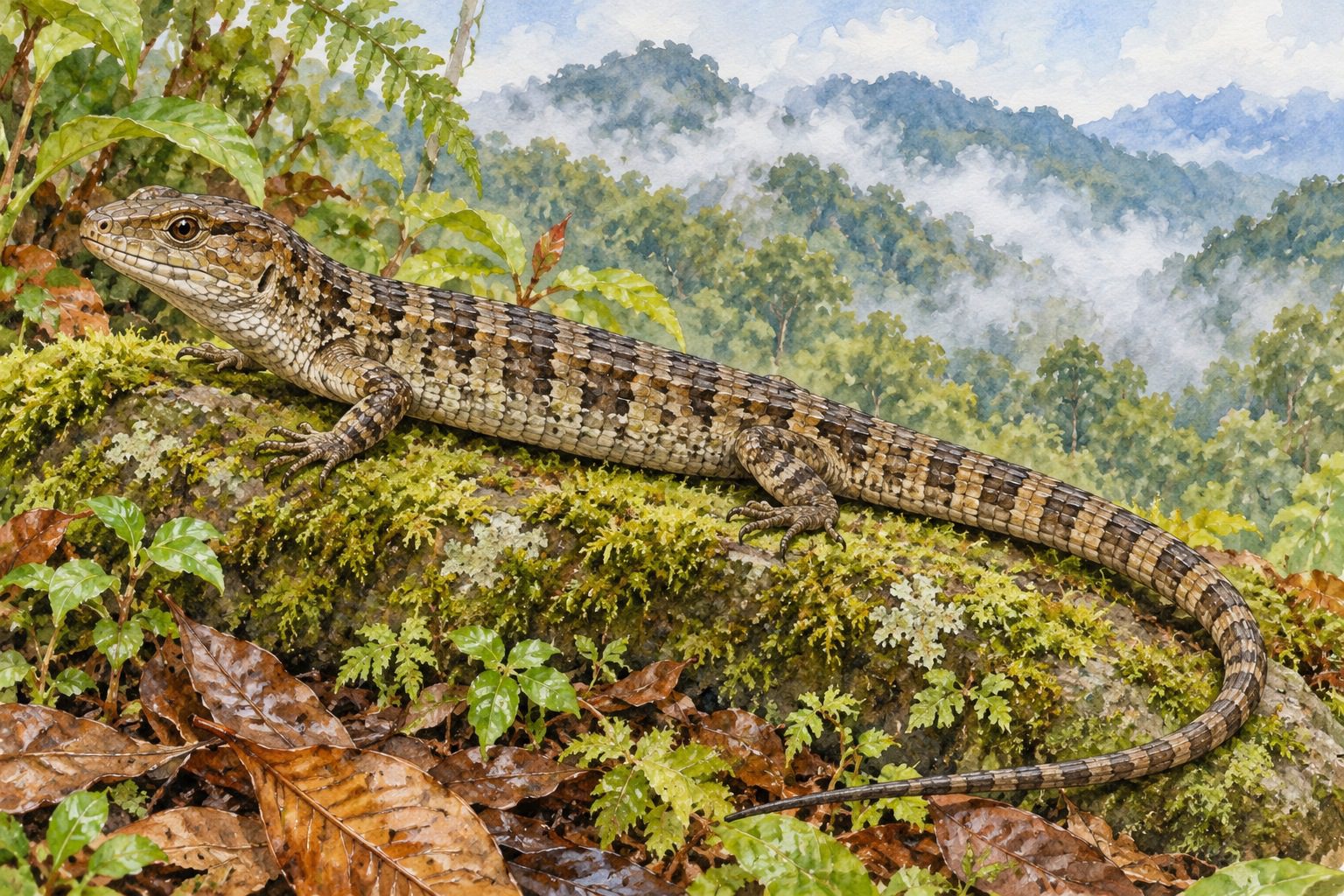
Species overview
About the Mountain Alligator Lizard
The mountain alligator lizard has an elongated body, short legs and distinct rows of scales. Brown, gray and olive tones can blend with highland ground cover. It is not the bright turquoise Mexican species often pictured under the general name Abronia.
This reptile occurs in Costa Rica and western Panama. The Museo Nacional records it in the Irazú region. Its mountain habitat reminds us that Costa Rican reptiles are not restricted to hot lowland rainforest.
Identification
Key Features of the Mountain Alligator Lizard
Elongated body with short legs
Distinct rows of armored-looking scales
Brown-gray highland camouflage
Habitat & range
Cool highlands, including the Irazú region and the Talamanca mountain range.
Local observations
Native reptile recorded in Costa Rica. Presence varies with suitable habitat and locality.
When to observe
Visibility varies with weather, habitat and the animal’s activity. Observe on an appropriate guided outing; never disturb a hiding animal to obtain a sighting.
Conservation & care
Observe with an adult from permitted paths. Do not catch, chase, touch or feed reptiles. Leave bark, logs, rocks and leaf litter in place. Keep pets away and allow animals an open escape route.
Threats & pressures
Protect habitat connections and natural shelters. Avoid road mortality, collection and deliberate killing. Leave reptiles in their habitat rather than keeping or relocating them.
Observation activity
Place a mountain lizard and a coastal iguana on a drawing showing warm lowlands and cool highlands.