

Nature Field Guide
Baltimore Oriole
- Spanish name
- Bolsero norteño
- Scientific name
- Icterus galbula
What Do Pico & Tati Think?
Pico: “Did that bird travel here?”
Tati: “Baltimore orioles connect Costa Rica with places farther north.”
Species overview
About the Baltimore Oriole
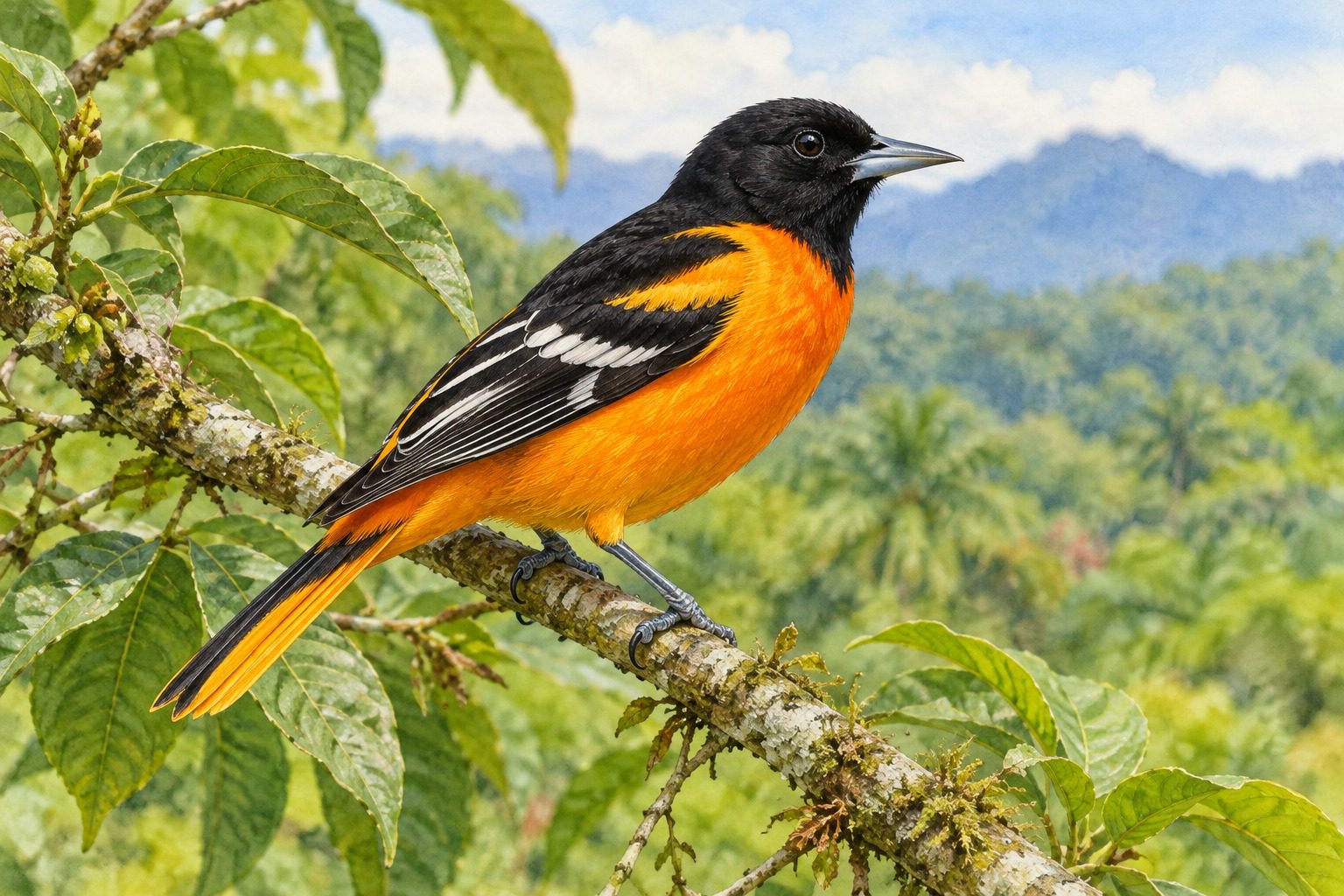
Adult male Baltimore orioles have an orange body, black head and contrasting white wing markings. Females and younger birds are less uniform, often showing yellow or orange with less black.
They migrate between North American breeding areas and warmer nonbreeding regions. In Costa Rica they are seasonal visitors rather than the same kind of resident as a yigüirro. Do not use North American nesting dates as a Costa Rican nesting calendar.
Identification
Key Features of the Baltimore Oriole
Male orange body and black head
White wingbar
Slender pointed bill
Habitat & range
A migrant and nonbreeding visitor, generally September to early May. Occurs on both slopes, especially the northern Pacific and Central Valley, in wooded gardens, edges and plantations.
Local observations
Costa Rica: migrant.
When to observe
A seasonal visitor during migration and the northern nonbreeding season. Exact arrival and departure dates vary by place and year.
Conservation & care
Observe quietly from trails or established viewing areas. Give nests, roosts and feeding birds space. Do not handle, chase or lure birds with playback. Keep pets away from wildlife.
Threats & pressures
Migrants depend on suitable habitat across their full annual journey. Protect native vegetation, reduce collision hazards around glass and keep cats away from birds. These are practical prevention priorities, not a claim of a measured decline at a specific Costa Rican site.
Observation activity
Mark its breeding and nonbreeding regions on a map. Draw an arrow connecting them.
Explore by location
Caribbean · Central Pacific · Central Valley · Guanacaste · Northern Plains · Puntarenas & the Gulf Islands · South Pacific · Outdoor Adventures · Wildlife & Animals