

Nature Field Guide
Clay-colored Thrush
- Spanish name
- Mirlo pardo / Yigüirro
- Scientific name
- Turdus grayi
What Do Pico & Tati Think?
Pico: “That brown bird has a beautiful song!”
Tati: “That is the yigüirro. We can learn its voice as well as its colors.”
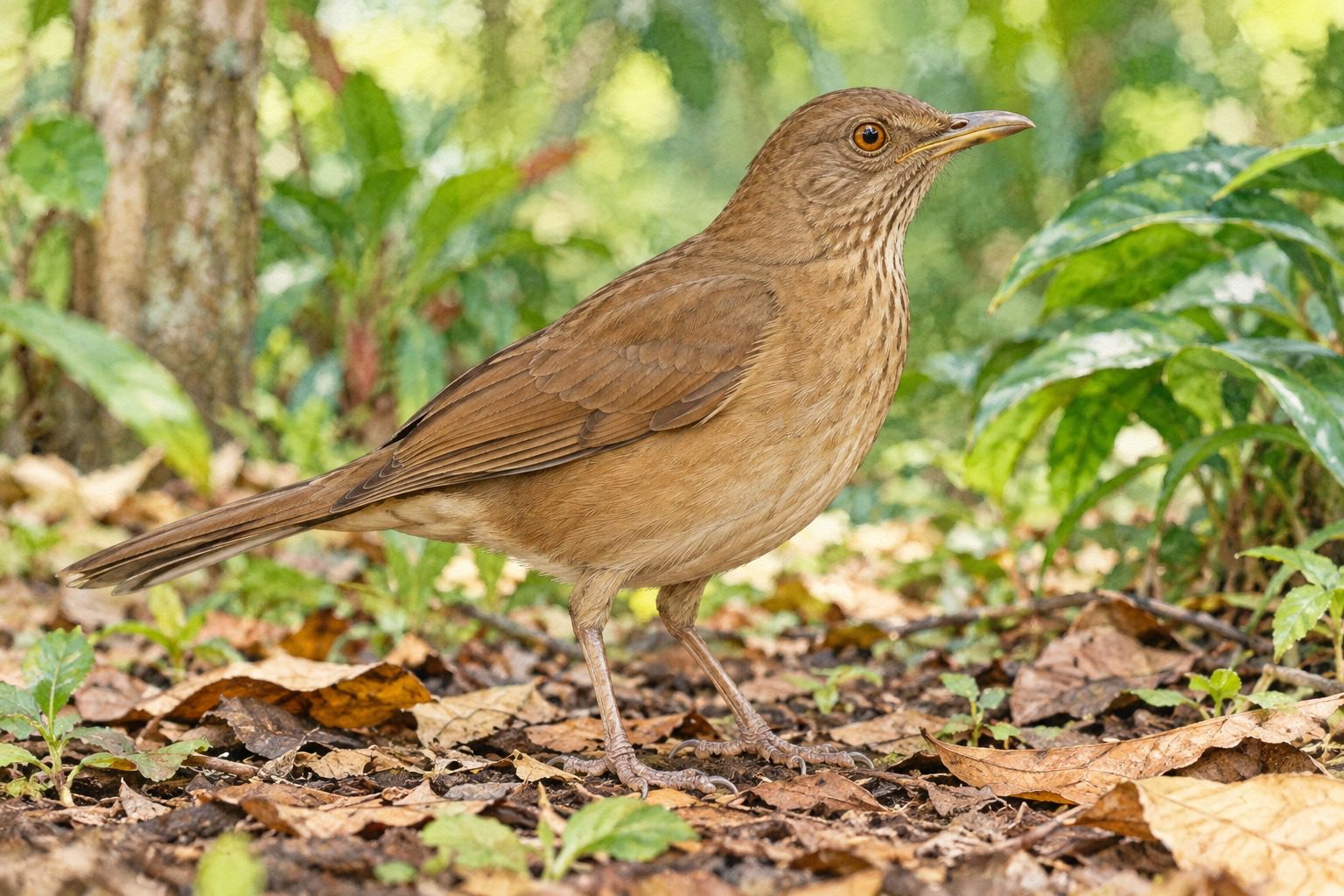
Species overview
About the Clay-colored Thrush
The clay-colored thrush is known locally as the yigüirro. Its warm brown plumage, yellowish bill and orange-brown eye look modest beside a toucan, but its musical song makes it memorable.
It searches the ground for small invertebrates and also eats fruit. Gardens, parks and lightly wooded spaces provide places to watch it. Juveniles can show more spotting than adults, so check age as well as color.
Identification
Key Features of the Clay-colored Thrush
Warm brown plumage
Yellowish bill
Fine throat streaks and orange-brown eye
Habitat & range
Widespread across Costa Rica from lowlands to about 2450 m, in gardens, farms, secondary growth and wooded urban areas. Less numerous in the dry northwest and higher mountains.
Local observations
Costa Rica: resident.
When to observe
A resident bird; suitable habitat matters throughout the year. Quiet morning observation is a useful starting point, with activity varying by weather and location.
Conservation & care
Observe quietly from trails or established viewing areas. Give nests, roosts and feeding birds space. Do not handle, chase or lure birds with playback. Keep pets away from wildlife.
Threats & pressures
Protect native vegetation, reduce collision hazards around glass and keep cats away from birds. These are practical prevention priorities, not a claim of a measured decline at a specific Costa Rican site.
Observation activity
Listen quietly for a song, then record whether the bird is on the ground or in a tree.
Explore by location
Caribbean · Central Highlands · Central Pacific · Central Valley · Guanacaste · Northern Plains · Puntarenas & the Gulf Islands · South Pacific · Outdoor Adventures · Wildlife & Animals