

Nature Field Guide
Great Kiskadee
- Spanish name
- Bienteveo grande
- Scientific name
- Pitangus sulphuratus
What Do Pico & Tati Think?
Pico: “It sounds like it is calling its own name!”
Tati: “Let’s also check its bold eyebrow and strong bill.”
Species overview
About the Great Kiskadee
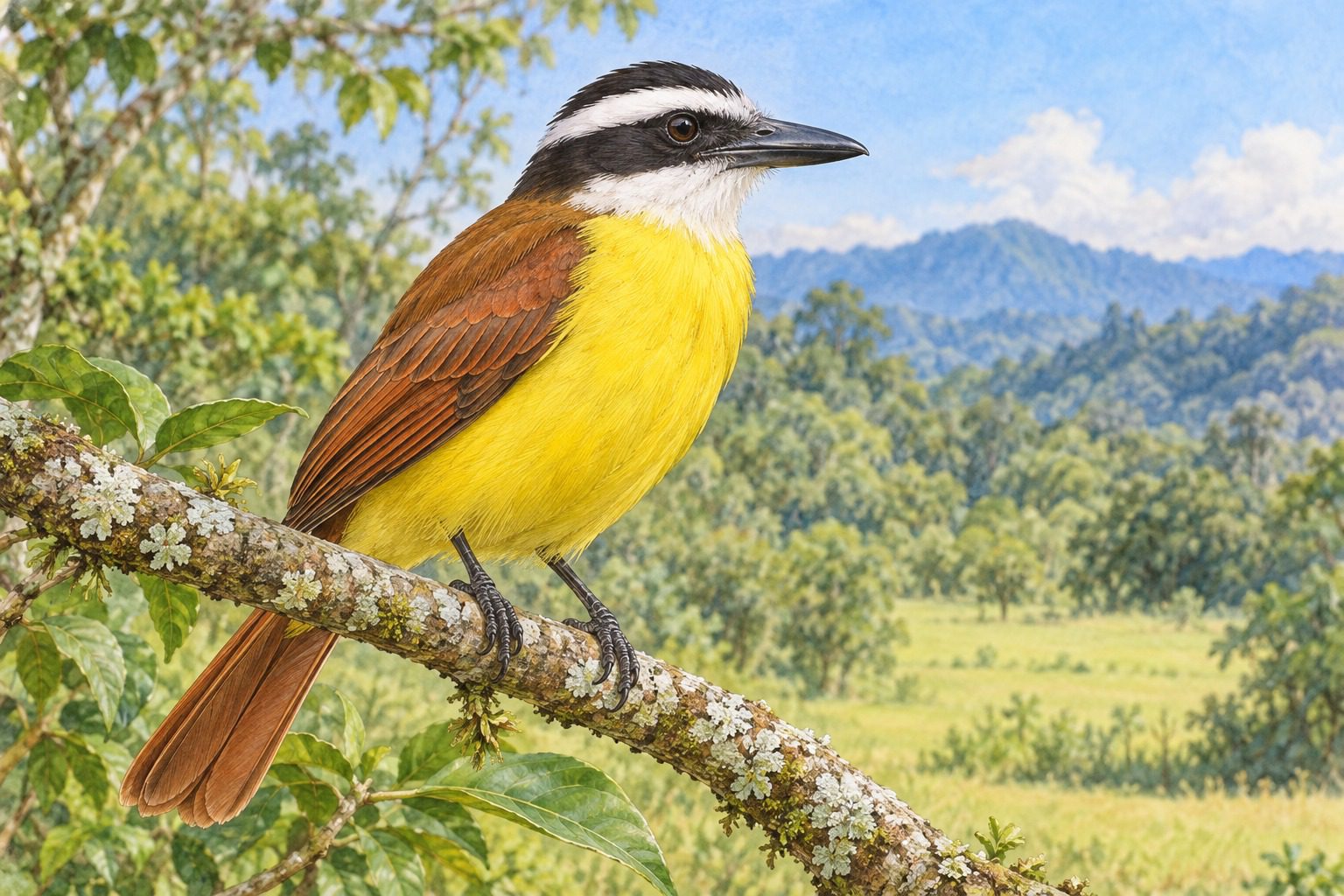
The great kiskadee has a stocky body, broad head and stout bill. A bold white eyebrow crosses above the dark eye mask, and a white throat contrasts with the yellow belly.
It watches from exposed perches and takes a varied diet that includes insects and fruit. Its loud call is a useful clue, but similar flycatchers make checking shape worthwhile. Look for the warm reddish-brown wings and tail.
Identification
Key Features of the Great Kiskadee
Black-and-white head pattern
Bright yellow belly
Heavy bill and reddish-brown wings
Habitat & range
Open wooded country and settled areas, often near water, on both slopes, mainly below about 1500 m. Less frequent in some southern Pacific areas; not a high-mountain specialist.
Local observations
Costa Rica: resident.
When to observe
A resident bird; suitable habitat matters throughout the year. Quiet morning observation is a useful starting point, with activity varying by weather and location.
Conservation & care
Observe quietly from trails or established viewing areas. Give nests, roosts and feeding birds space. Do not handle, chase or lure birds with playback. Keep pets away from wildlife.
Threats & pressures
Protect native vegetation, reduce collision hazards around glass and keep cats away from birds. These are practical prevention priorities, not a claim of a measured decline at a specific Costa Rican site.
Observation activity
Compare its head pattern and bill with a tropical kingbird in photographs.
Explore by location
Caribbean · Central Pacific · Central Valley · Guanacaste · Northern Plains · Puntarenas & the Gulf Islands · South Pacific · Outdoor Adventures · Wildlife & Animals