

Nature Field Guide
Ringed Snail-eating Snake
- Spanish name
- Caracolera anillada
- Scientific name
- Sibon annulatus
What Do Pico & Tati Think?
Pico: “What clues help us recognize this reptile?”
Tati: “Let’s notice its shape, markings and habitat from a respectful distance.”
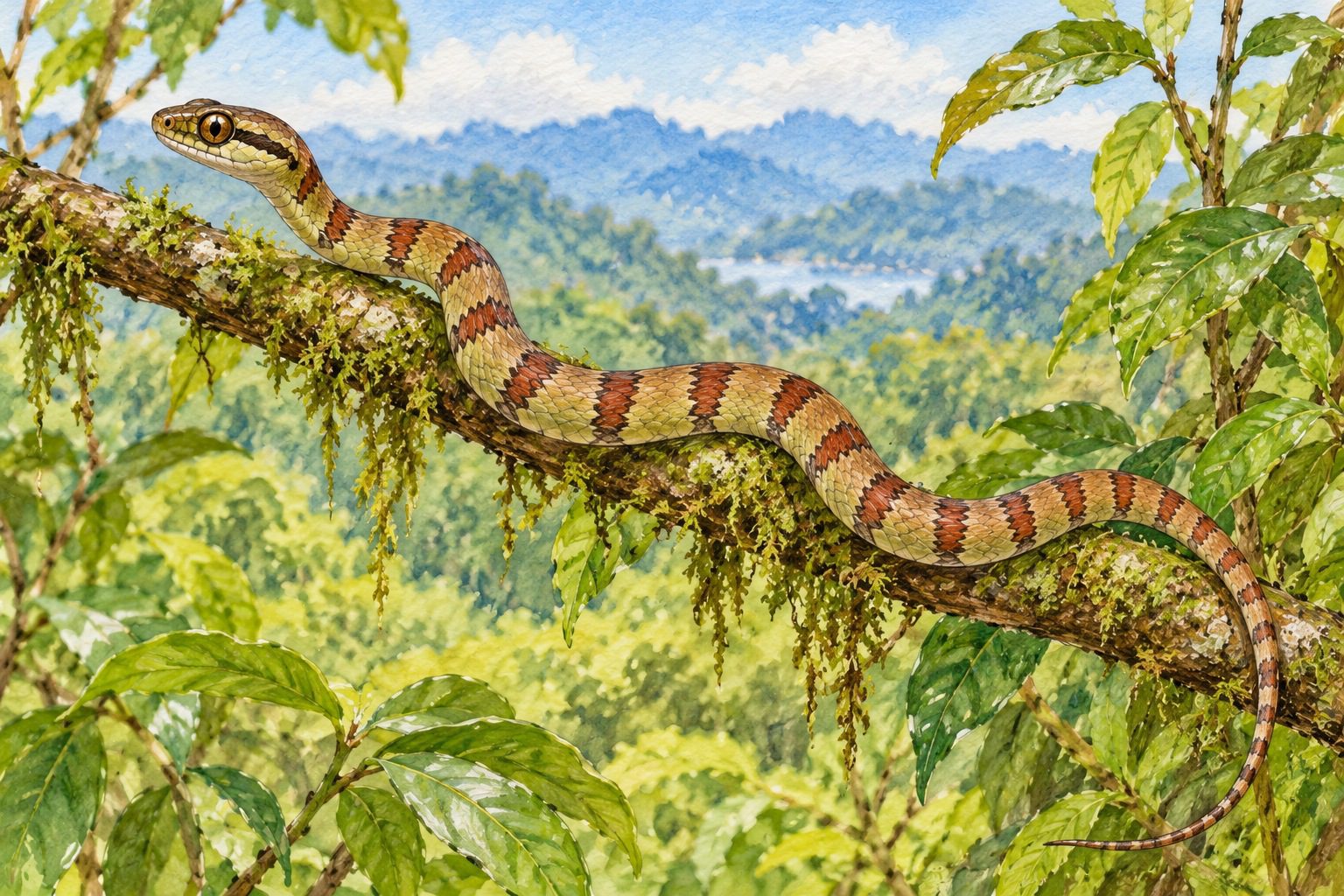
Species overview
About the Ringed Snail-eating Snake
The ringed snail-eating snake is slender and has large eyes. Its body shows contrasting bands or rings, with colors that vary between individuals and lighting conditions. It belongs to a group known for feeding on soft-bodied invertebrates.
Several Sibon species occur in Costa Rica. Pattern, head details and locality matter, and an illustration is a starting point rather than a certain field identification. Observe quietly with a guide and do not collect snails to feed a snake.
Identification
Key Features of the Ringed Snail-eating Snake
Slender body with contrasting rings
Large eyes
Branch-climbing posture
Habitat & range
Humid Caribbean-slope forest and foothills, with records around Cartago and northern mountain forests.
Local observations
Native reptile recorded in Costa Rica. Presence varies with suitable habitat and locality.
When to observe
Visibility varies with weather, habitat and the animal’s activity. Observe on an appropriate guided outing; never disturb a hiding animal to obtain a sighting.
Conservation & care
Observe only from a distance with an adult or qualified guide. Do not touch, catch, corner or attempt to move any snake. Step back and tell your adult; keep children and pets away. Do not use colors, head shape or pupil shape to decide a snake is safe.
Threats & pressures
Protect habitat connections and natural shelters. Avoid road mortality, collection and deliberate killing. Leave reptiles in their habitat rather than keeping or relocating them.
Observation activity
Draw the body rings and record one question about how this snake finds its food.
Explore by location
Caribbean · Central Highlands · Central Valley · Northern Plains · Alajuela · Cartago · Heredia · Limón