

Nature Field Guide
White-necked Jacobin
- Spanish name
- Jacobino nuquiblanco
- Scientific name
- Florisuga mellivora
What Do Pico & Tati Think?
Pico: “Its tail opened like a little white fan!”
Tati: “The white tail and blue hood are useful clues in a male.”
Species overview
About the White-necked Jacobin
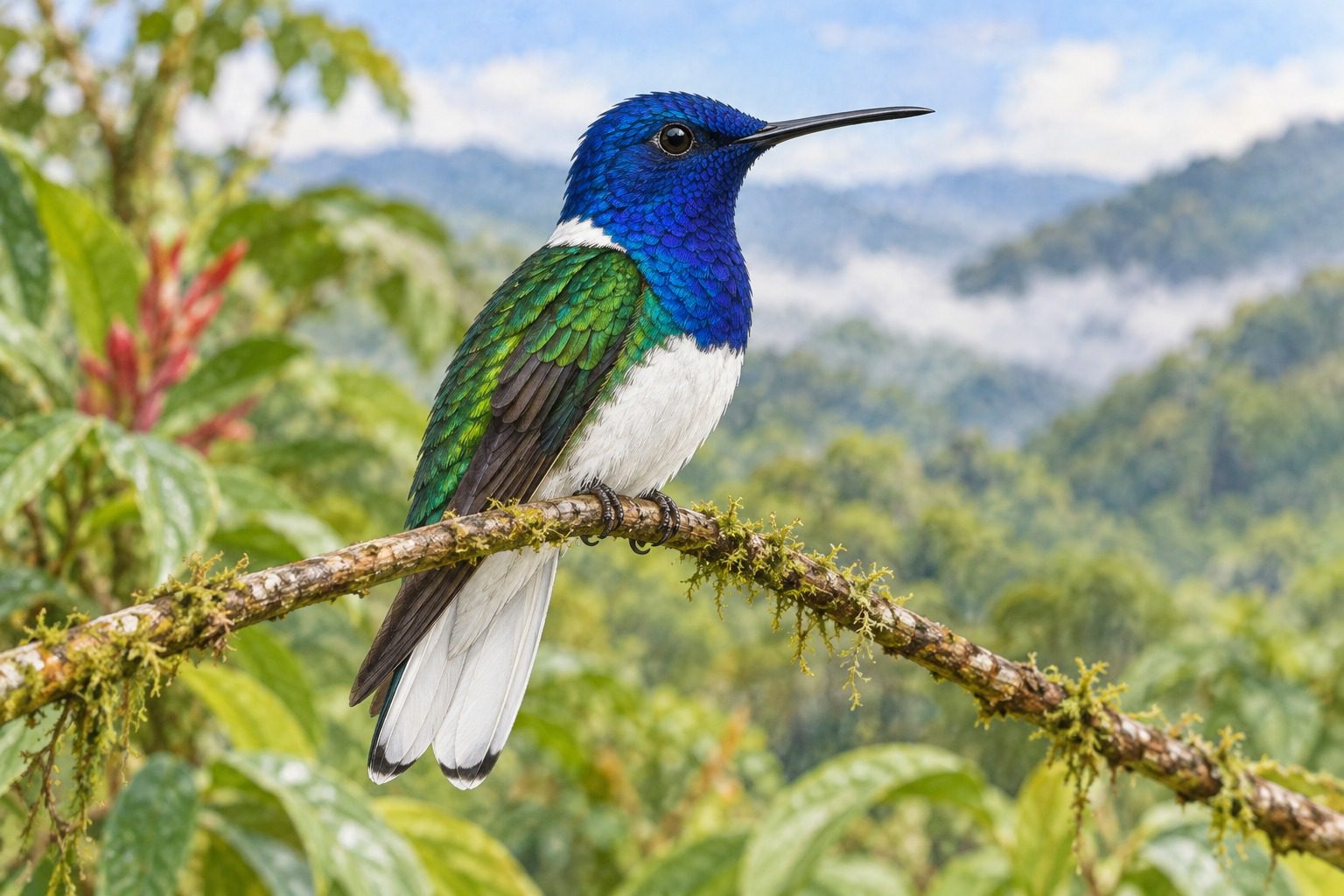
Male white-necked jacobins have a deep blue head and throat, green upperparts and white underparts. The narrow white nape collar can be harder to see than the bright belly.
The tail opens to reveal extensive white. Females vary: some resemble males, while others look greener and more spotted below. It uses forest edges and flowering clearings, often feeding above eye level.
Identification
Key Features of the White-necked Jacobin
Male has blue hood
White belly and tail in males
Green back and white nape collar
Habitat & range
Humid lowlands and lower slopes of the Caribbean and southern Pacific, especially forest canopy, clearings and flowering edges. It is not a general dry-northwest garden hummingbird.
Local observations
Costa Rica: resident.
When to observe
A resident bird; suitable habitat matters throughout the year. Quiet morning observation is a useful starting point, with activity varying by weather and location.
Conservation & care
Observe quietly from trails or established viewing areas. Give nests, roosts and feeding birds space. Do not handle, chase or lure birds with playback. Keep pets away from wildlife.
Threats & pressures
Protect native vegetation, reduce collision hazards around glass and keep cats away from birds. These are practical prevention priorities, not a claim of a measured decline at a specific Costa Rican site.
Observation activity
Compare a perched photograph with one showing the open tail. What becomes visible?
Explore by location
Caribbean · Northern Plains · South Pacific · Outdoor Adventures · Wildlife & Animals