

Nature Field Guide
Collared Aracari
- Spanish name
- Tucancillo collarejo
- Scientific name
- Pteroglossus torquatus
What Do Pico & Tati Think?
Pico: “Is that a little toucan?”
Tati: “An aracari belongs to the toucan family. Its shape and bill give us clues.”
Species overview
About the Collared Aracari
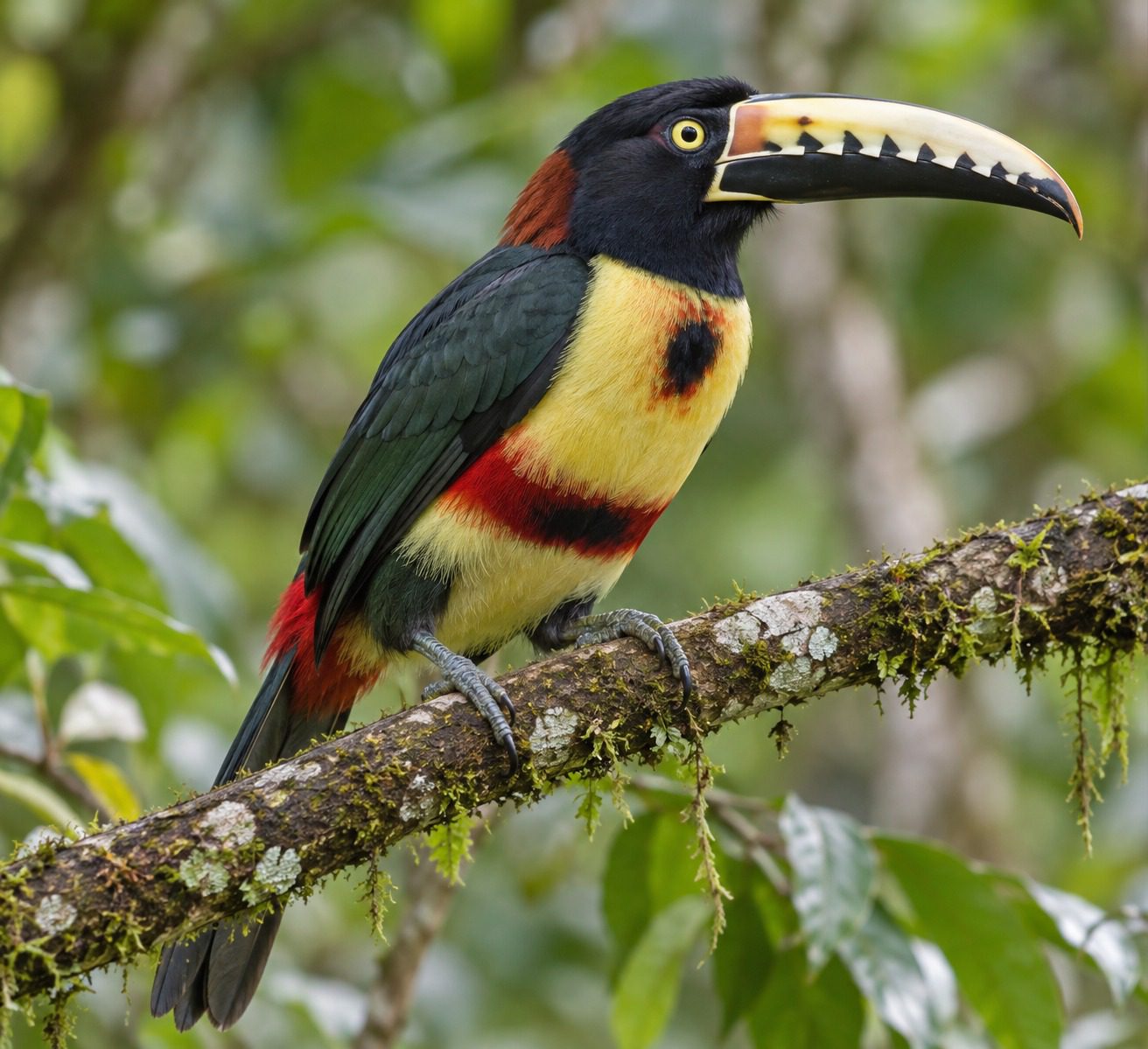
The collared aracari has a long bill, dark head and yellow underparts crossed by red and black markings. A pale upper bill shows a dark serrated-looking pattern along the edge.
Small groups move through fruiting trees and cross gaps with direct flight. Its slimmer body and long tail give a different outline from a large toucan. Keep the bill pattern in view when comparing similar aracaris.
Identification
Key Features of the Collared Aracari
Dark head and throat
Yellow chest with red and black marks
Patterned pale upper bill
Habitat & range
Commoner in Caribbean lowlands and foothills; also occurs locally in the northern Pacific, including Nicoya woodland and lower Guanacaste slopes. Central Valley records are exceptional rather than a core range.
Local observations
Costa Rica: resident.
When to observe
A resident bird; suitable habitat matters throughout the year. Quiet morning observation is a useful starting point, with activity varying by weather and location.
Conservation & care
Observe quietly from trails or established viewing areas. Give nests, roosts and feeding birds space. Do not handle, chase or lure birds with playback. Keep pets away from wildlife.
Threats & pressures
Protect native vegetation, reduce collision hazards around glass and keep cats away from birds. These are practical prevention priorities, not a claim of a measured decline at a specific Costa Rican site.
Observation activity
Sketch the bill outline and compare body proportions with a large toucan.
Explore by location
Caribbean · Guanacaste · Northern Plains · Puntarenas & the Gulf Islands · Outdoor Adventures · Wildlife & Animals